
Vintage Bar Stool Makeover with Sleek Black Faux Leather
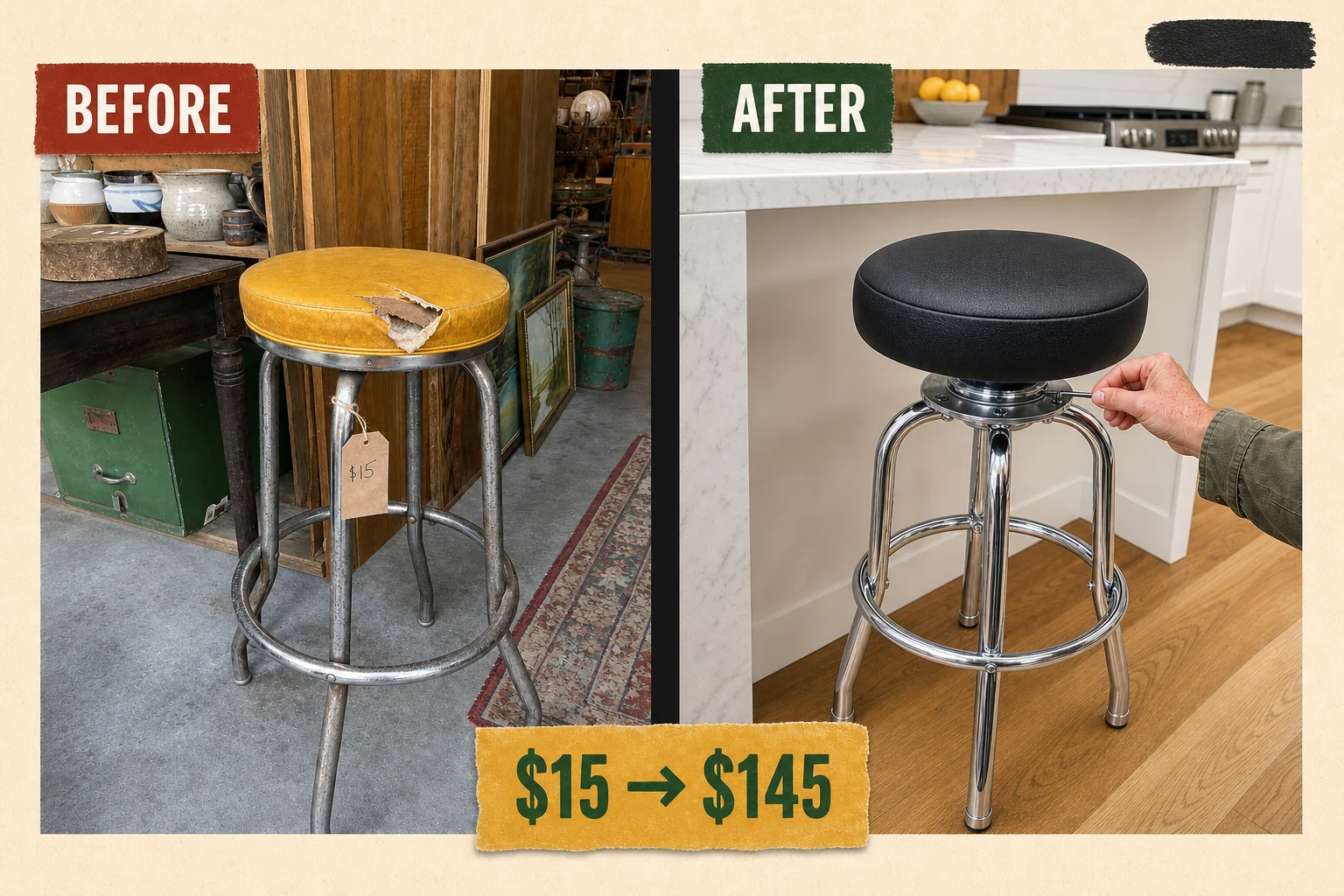
Tucked between retro suitcases at an antique market, this 1970s bar stool had a solid base but a ruined seat. Replacing the cracked mustard vinyl with matte black faux leather transforms it into a sleek, modern accent piece.
Step 1: Assess the Vintage Condition
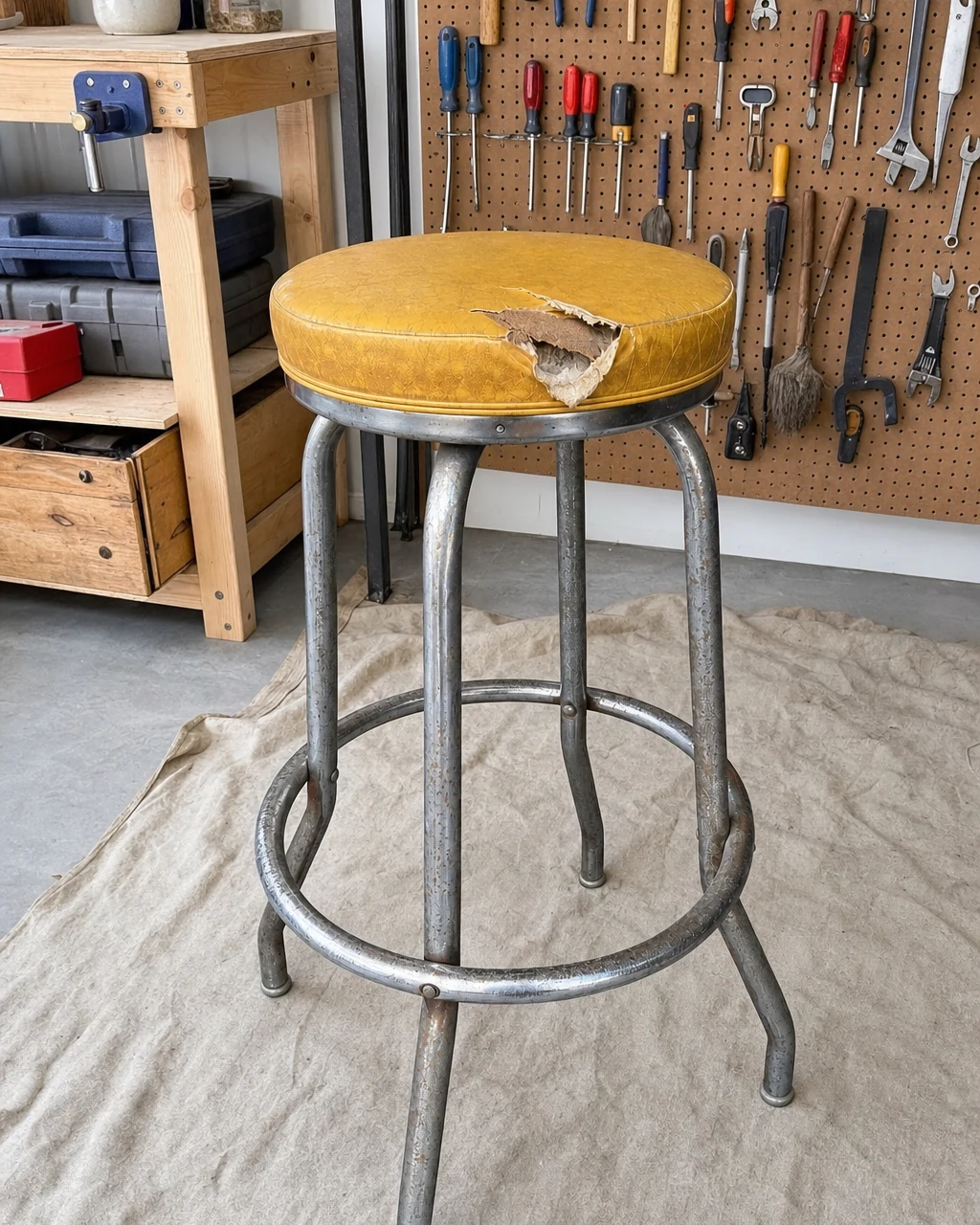
Tucked between a stack of retro suitcases and a wooden crate at an indoor antique market, this 1970s bar stool required a thorough evaluation. The welded tubular steel base felt structurally sound, but the attached cushion was completely ruined. Ensure the stool is stable before applying torque to any rusty screws during the teardown.
- The mustard vinyl featured a deep split across the surface, exposing brittle, discolored foam that made the seat unhygienic and visually unappealing.
- The seat profile was compressed to less than an inch thick at the center, providing zero support and ruining the intended rounded profile.
- Dull, cloudy patches and light surface rust speckled the tubular legs, hiding the reflective mid-century aesthetic of the chrome finish.
To start the makeover, flip the stool upside down on a protected workbench surface to access the mounting hardware. Remove the four screws connecting the ball-bearing swivel plate to the circular plywood seat base. Separating the two halves completely isolates the chrome frame, ensuring you avoid scratching the vintage metal during the messy upholstery removal.
Step 2: Restore the Chrome
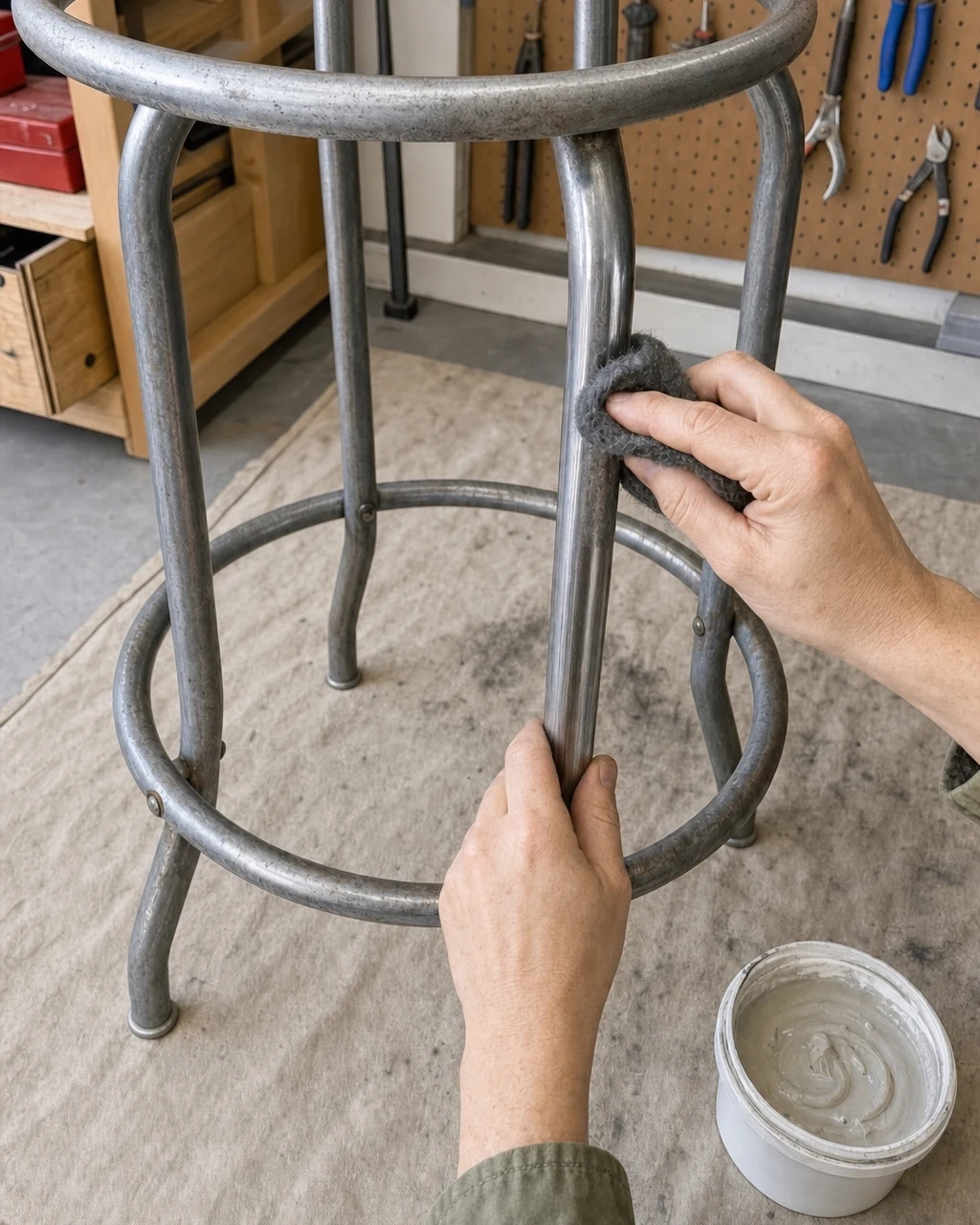
Apply a quality metal polish directly to a pad of fine steel wool. Scrub the tubular legs vigorously to remove the surface rust and cloudy oxidation without scratching the chrome. Wear gloves to keep black oxidation residue off your skin while working through the heavy tarnish on the vintage metal frame.
Wiping the frame clean with a microfiber cloth reveals a brilliant, rust-free shine. This instantly revives the reflective mid-century aesthetic of the heavy metal base. Restoring the original chrome is a highly satisfying process that completely erases decades of neglect, leaving the circular footrest ring looking brand new.
Step 3: Strip the Old Seat
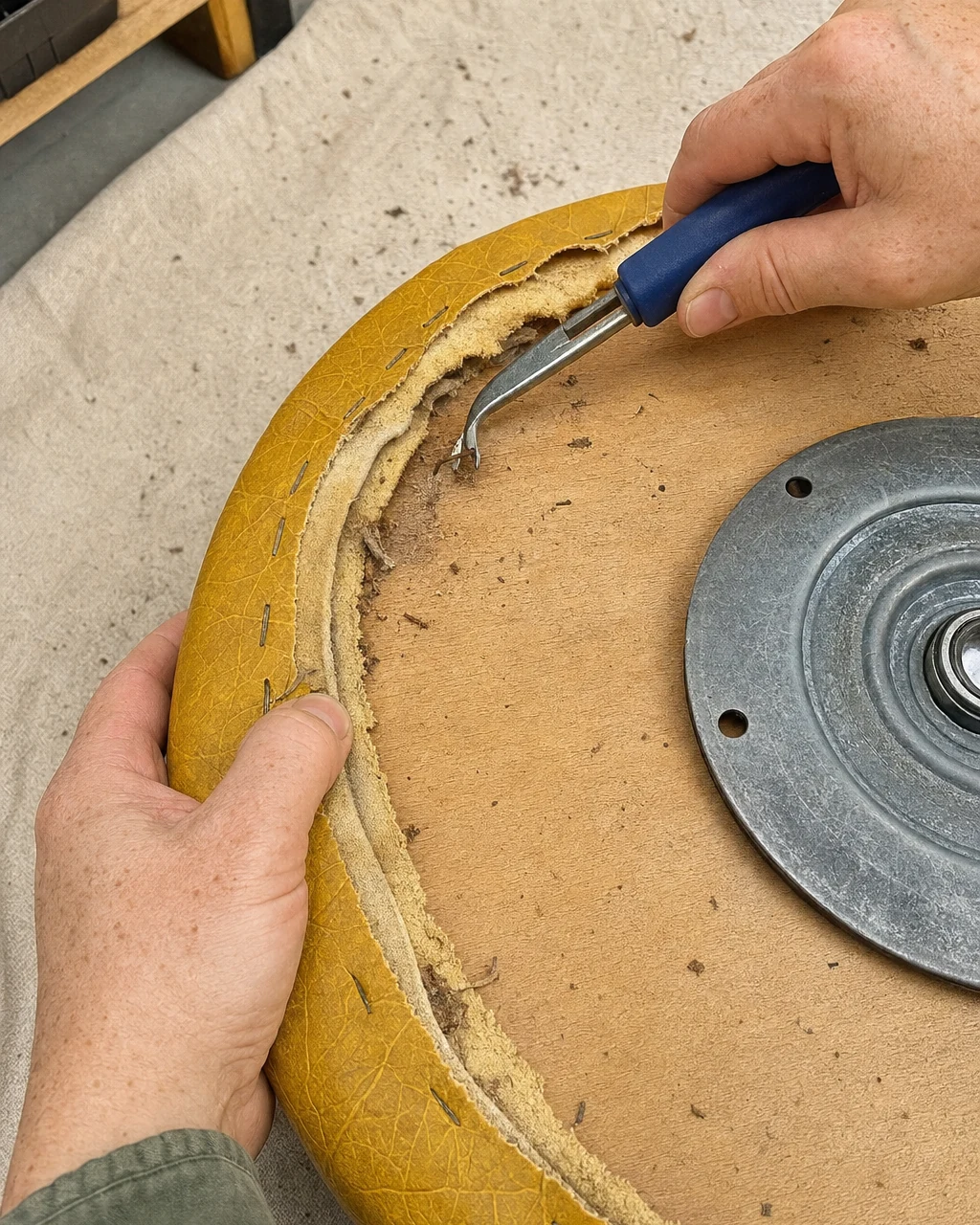
Use an upholstery staple remover to pry out all the original rusty fasteners from the wooden seat base. Peel away the ruined mustard vinyl and discard it immediately. Wear a dust mask when handling crumbling vintage foam to avoid inhaling the degraded polyurethane particles during the stripping process.
Materials checklist
Scrape the degraded, crumbling foam completely off the circular plywood base. Starting with a bare, clean wooden surface is essential for the new adhesive to bond properly. Removing all the old material ensures a smooth, professional foundation for the fresh upholstery layers, preventing any lumps in the final seat cushion.
Step 4: Attach New Foam
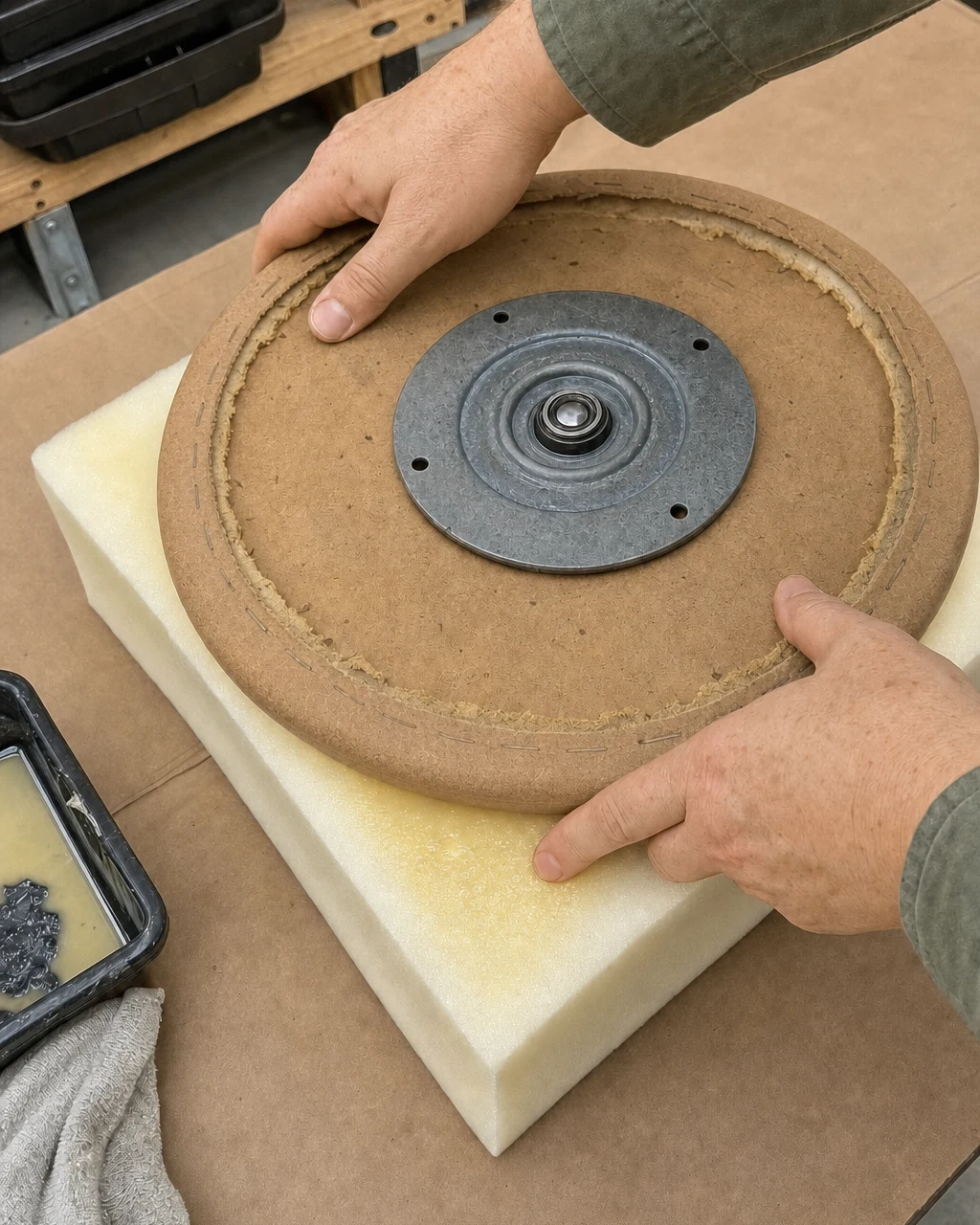
Coat both the bare wooden base and a square of new high-density upholstery foam with spray adhesive. Wait two minutes for the glue to become tacky. Press the circular wooden base firmly down onto the foam block to bond them together. Use a utility knife to trim the excess foam flush with the wooden edge. Use spray adhesive only in a well-ventilated area.
Step 5: Staple the New Cover
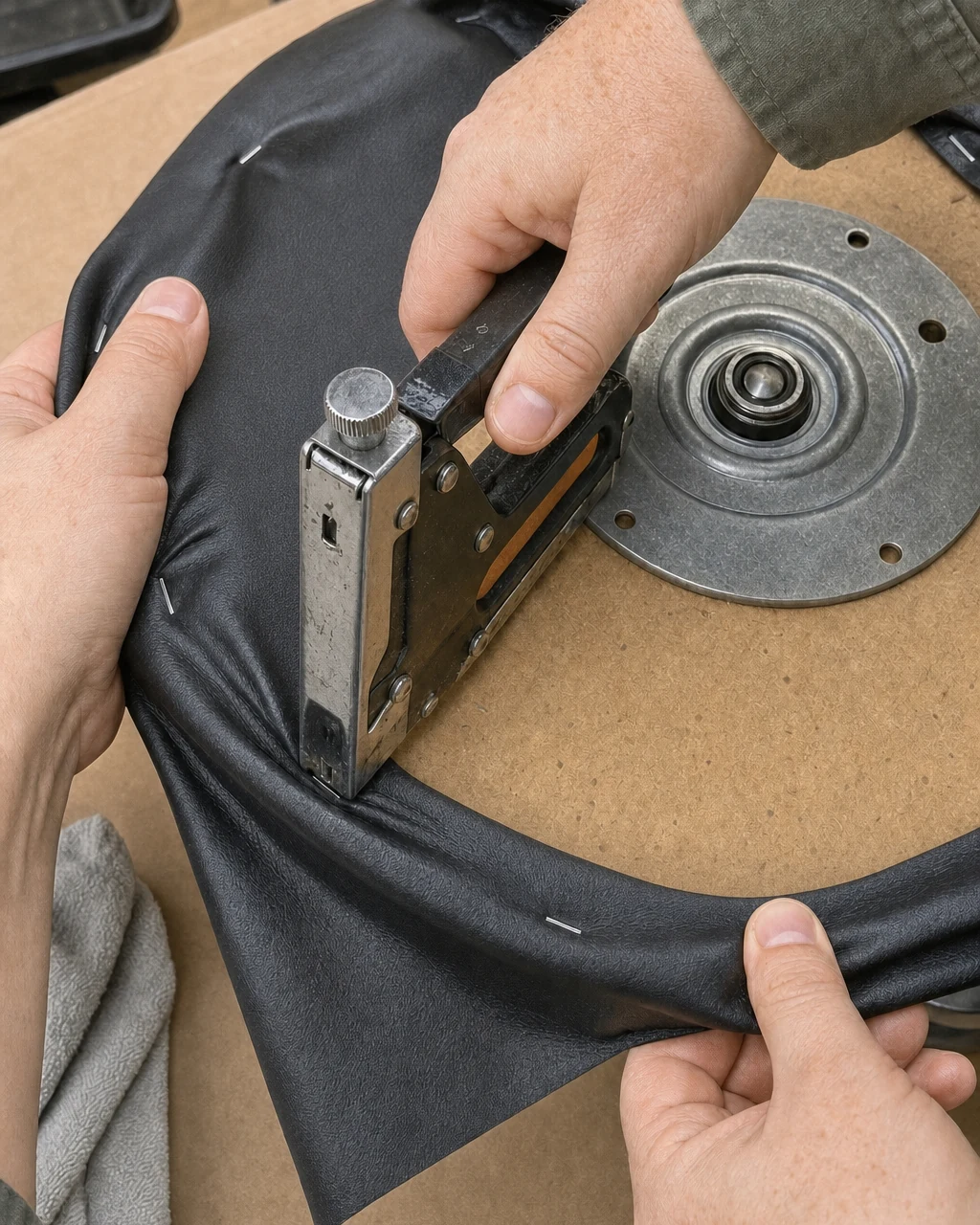
Wrap the foam-covered base loosely in the new black faux leather. Stretch the fabric tightly over the foam edge and drive a heavy-duty staple into the underside of the wood. Keep fingers clear of the staple gun discharge area while securing the durable, modern new seat cover to the plywood base.
Work in a star pattern across the circular base, pulling the material taut before placing each staple. This guarantees even tension and a flawlessly smooth, pebble-textured seat. Trimming the excess fabric inside the staple line leaves a clean finish for reassembly, ensuring the swivel mechanism will sit perfectly flat.
Step 6: Reassemble the Stool
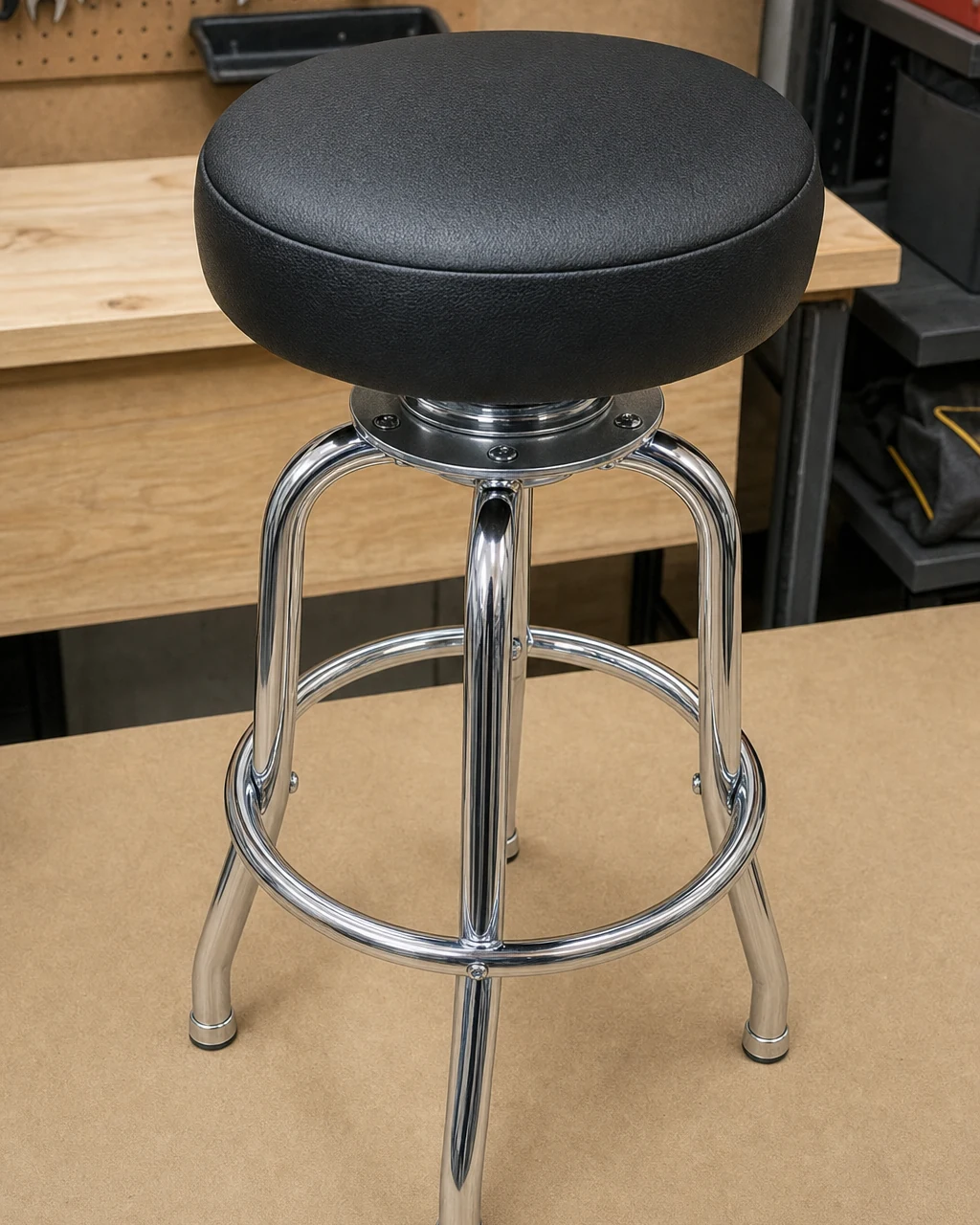
Place the newly upholstered black seat cushion upside down on the workbench. Align the metal swivel plate with the original screw holes on the bottom of the wood. Do not overtighten screws into vintage plywood to avoid stripping the holes. Drive the original mounting screws back through the plate to secure the entire assembly.
| Item | Cost |
|---|---|
| Stool Purchase | $15 |
| Chrome Polish | $8 |
| Fine Steel Wool | $4 |
| Upholstery Foam | $12 |
| Spray Adhesive | $7 |
| Faux Leather | $15 |
| Heavy-Duty Staples | $4 |
| Total Investment | $65 |
| Estimated Resale Value | $145 |
| Value Gain | $80 |
Mid-century modern chrome stools are highly sought after in the current vintage furniture market. Replacing the ruined vinyl with a neutral, high-quality black finish broadens its appeal to contemporary buyers. This targeted material upgrade transforms a damaged find into a sleek accent piece. Please note that the resale value remains an editorial estimate rather than a completed sale.
Step 7: Style in the Kitchen
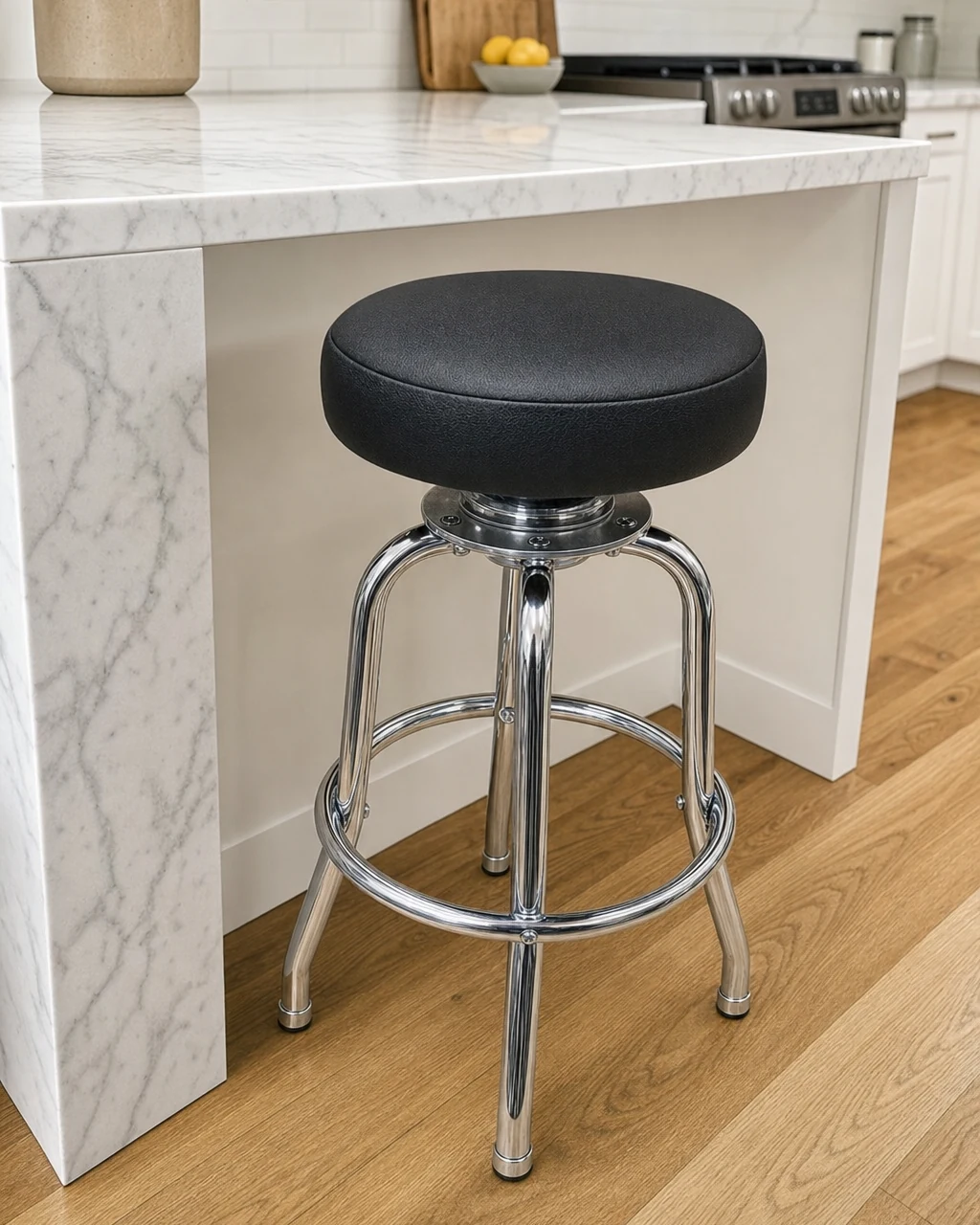
Move the fully assembled, restored bar stool into a