
Pine Entryway Bench Before and After: Dark Oil & Woven Seat
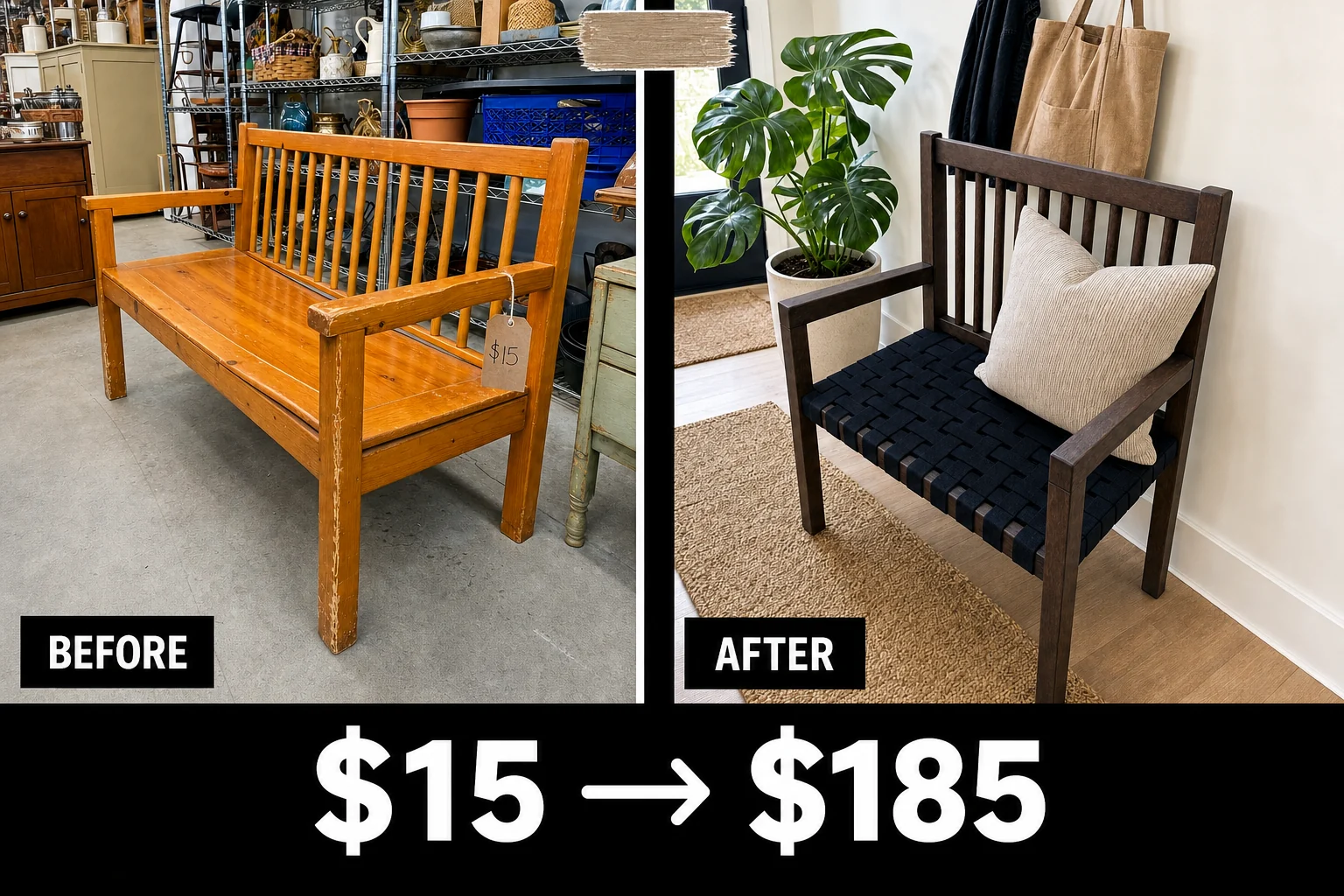
Spotted this sturdy 1980s pine bench wedged between broken particleboard desks at a thrift store for just $15. By stripping the dated orange lacquer and replacing the warped seat with woven webbing, it became a modern entryway staple.
Evaluating the 1980s Pine Bench
A real charity thrift-store furniture aisle featured this rectangular frame with a spindle backrest and straight square legs sitting on crowded metal shelving. It sported a handwritten $15 price tag among mixed donated objects. The solid pine frame featured strong mortise and tenon joints, but the original glossy tinted lacquer was visibly degrading.
- The thin edge-glued pine seat sagged downward by two inches in the center, making the bench uncomfortable and visually warped.
- Deep indentations and scratches on the lower half of the front legs trapped dirt and ruined the smooth profile of the wood.
- A glossy, yellowed clear coat was chipping along the armrests, which would prevent any new oil finish from penetrating the wood grain.
Step 1: Assess the Frame and Dismantle the Seat
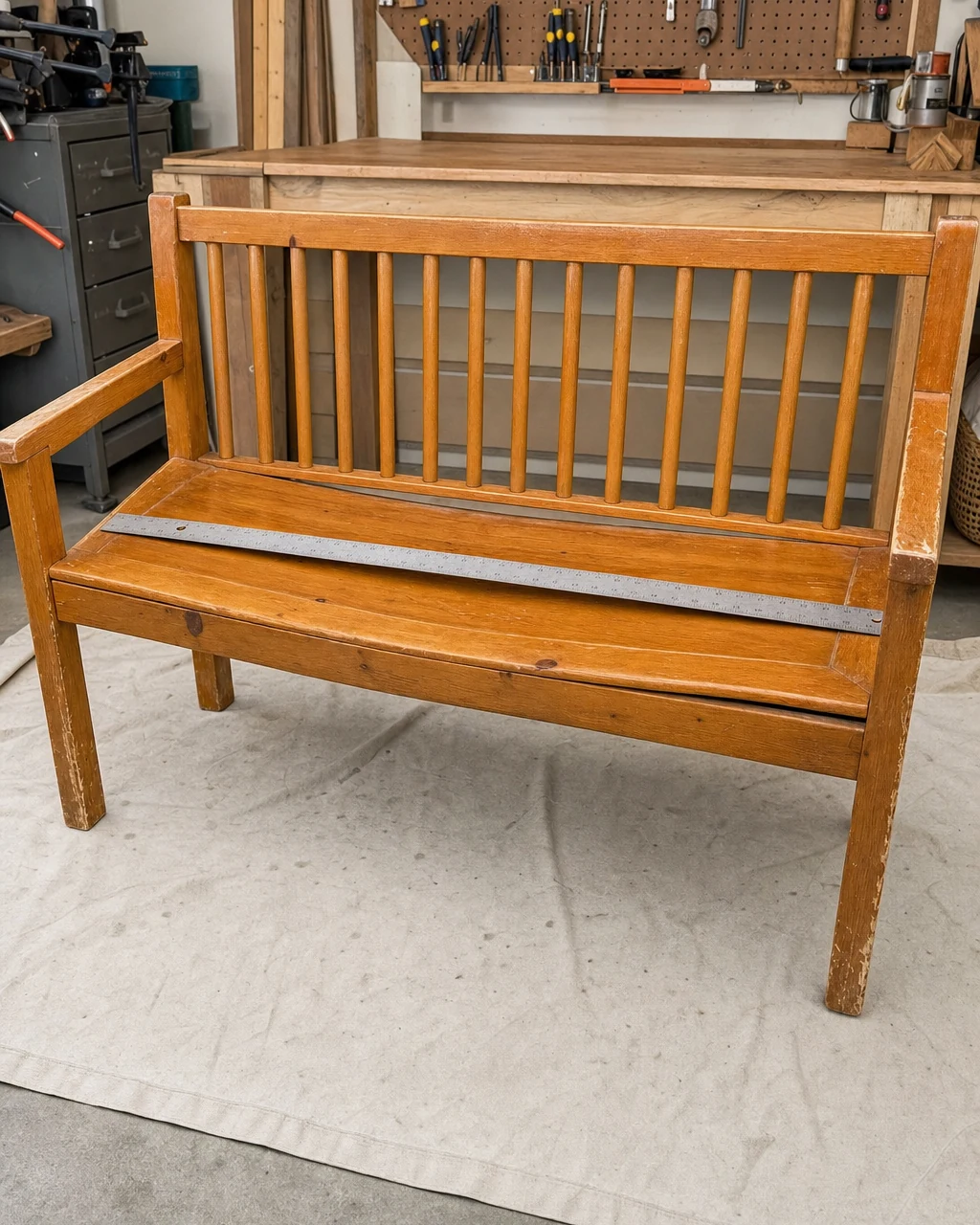
The first step requires evaluating the warped seat panel to determine the extent of the damage using a metal straight edge. You must carefully unscrew the retaining clips underneath the frame with a drill/driver to safely remove and discard the bowed pine board. Documenting the severe downward bow proves the necessity of this removal. Always ensure the bench is stable before applying pressure during dismantling.
| Item | Cost |
|---|---|
| Thrift Store Purchase | $15 |
| Sanding Discs | $10 |
| Dark Hardwax Oil | $25 |
| Black Cotton Webbing | $18 |
| Upholstery Staples | $5 |
| Materials Total | $58 |
| Total Investment | $73 |
| Estimated Resale Value | $185 |
| Total Value Gain | $112 |
Step 2: Strip the Lacquer and Sand the Wood
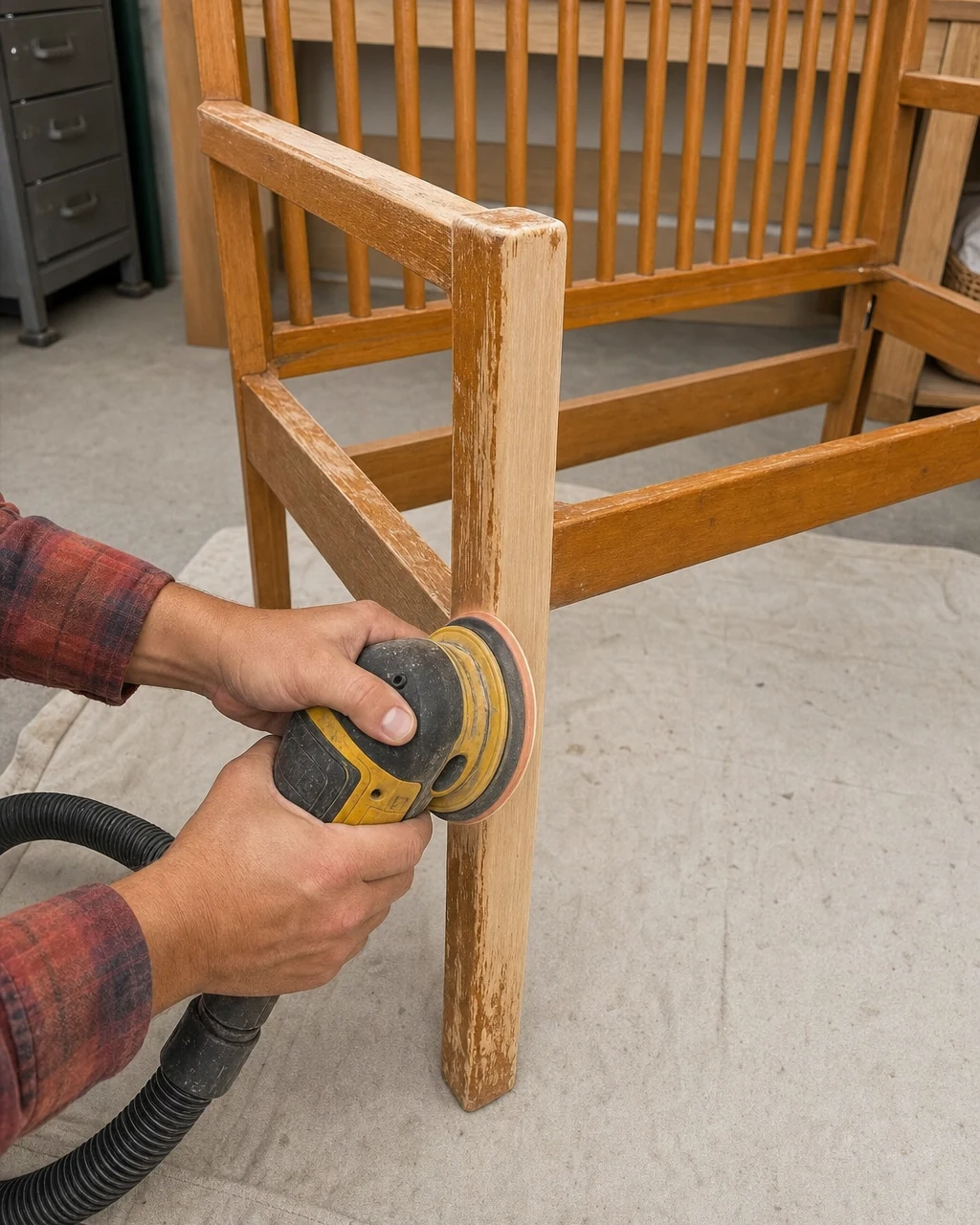
Grab your random orbital sander and a shop vacuum to sand the entire frame with 120-grit discs, completely removing the old glossy lacquer. Focus heavily on the front legs to smooth out the deep gouges, blending them away entirely. Finish the entire piece with 220-grit for a perfectly smooth surface. Wear a respirator mask and safety glasses when sanding old finishes.
Step 3: Apply the Dark Hardwax Oil Finish
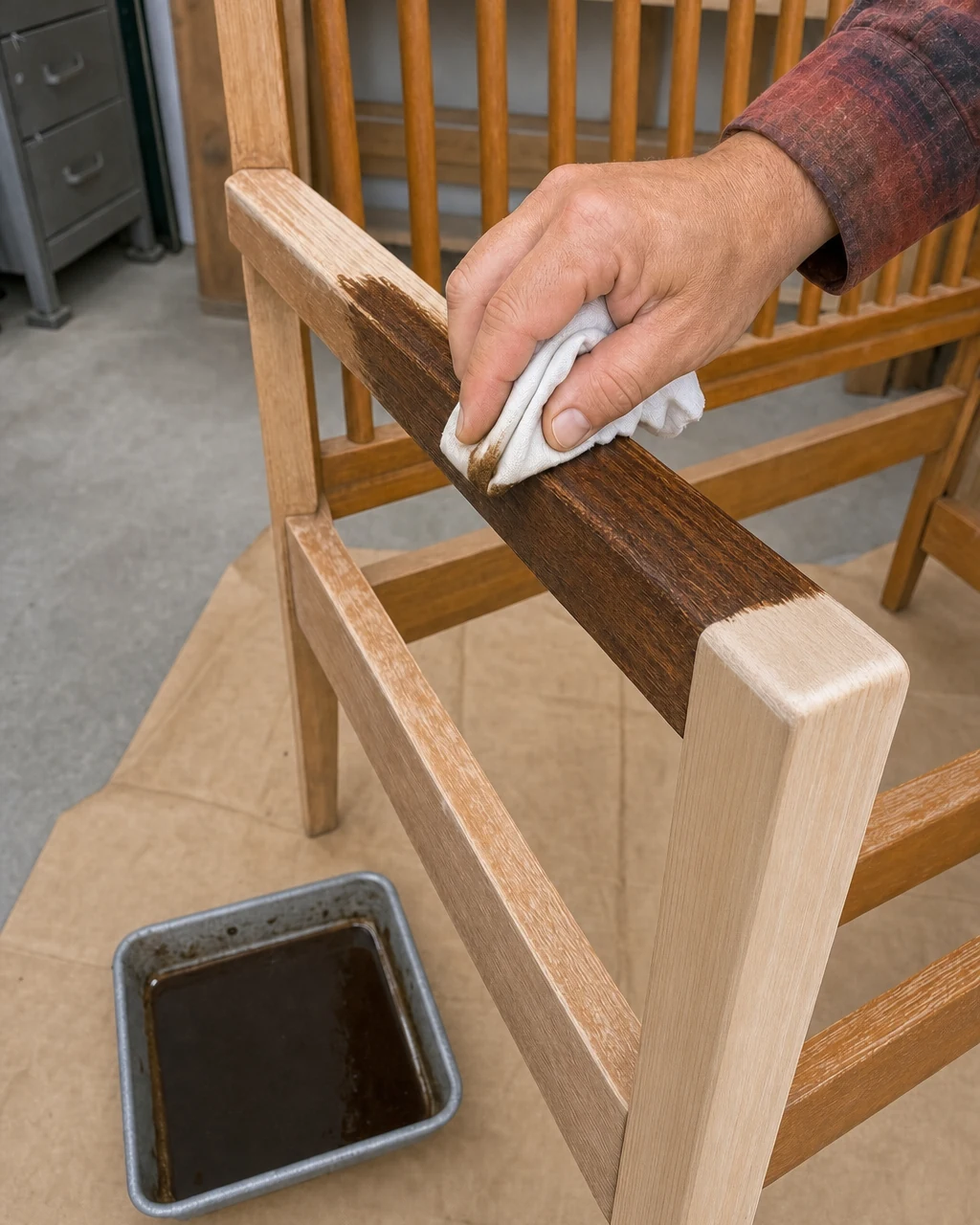
With the bare pine frame completely free of dust, rub the dark tinted hardwax oil into the raw wood grain using a clean, lint-free cotton cloth. Let the oil penetrate the pine for 15 minutes before thoroughly buffing off any excess to reveal a rich matte brown on the armrests. Lay oil-soaked rags flat outside to dry to prevent spontaneous combustion.
Materials checklist
Step 4: Install the Vertical Cotton Webbing
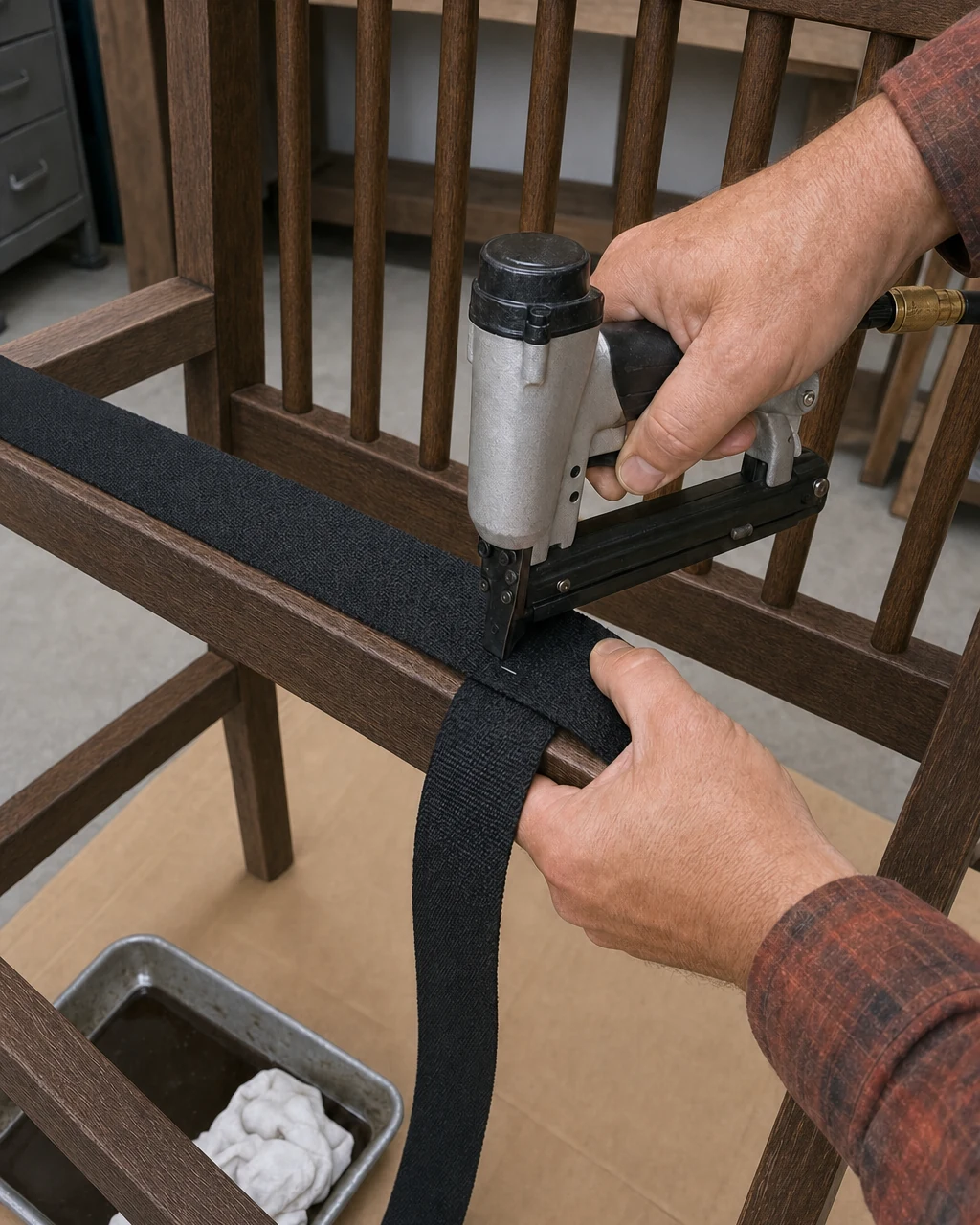
Working with the fully oiled and cured open bench frame, use a pneumatic upholstery stapler and an air compressor to attach the base straps. Staple strips of heavy-duty black cotton webbing from the back rail to the front rail, spacing the vertical straps evenly across the open seat frame to establish the base tension. Keep fingers clear of the stapler nose when firing.
Step 5: Weave the Horizontal Webbing Strips
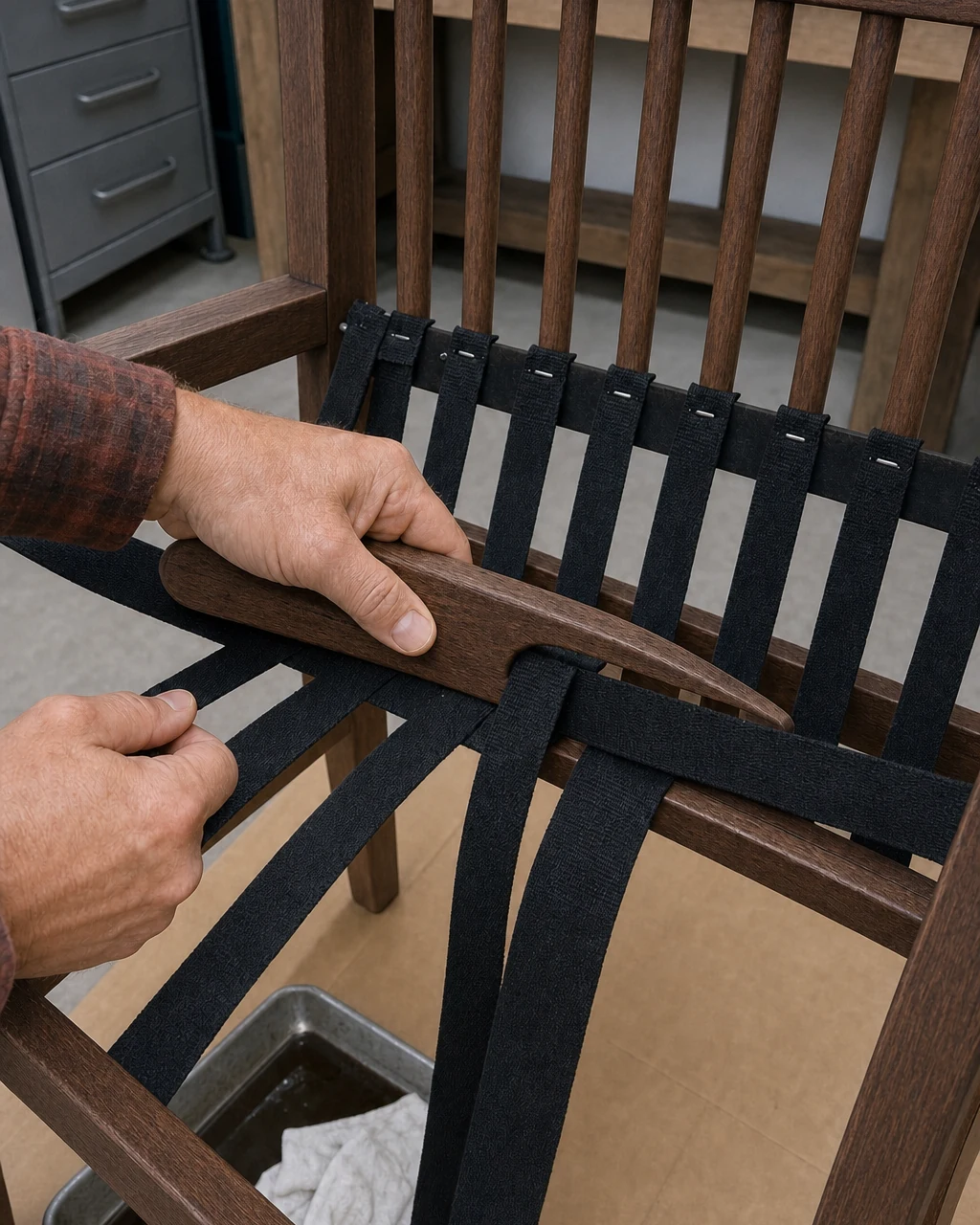
Now that the vertical strips are attached front-to-back, weave the horizontal webbing strips over and under the vertical straps to create the pattern. Use a wooden webbing stretcher to pull each strip taut before stapling it securely to the side rails, ensuring a tight interwoven canvas surface. Maintain a firm grip on the stretcher tool to prevent it from snapping back.
Step 6: Complete the Final Workshop Polish
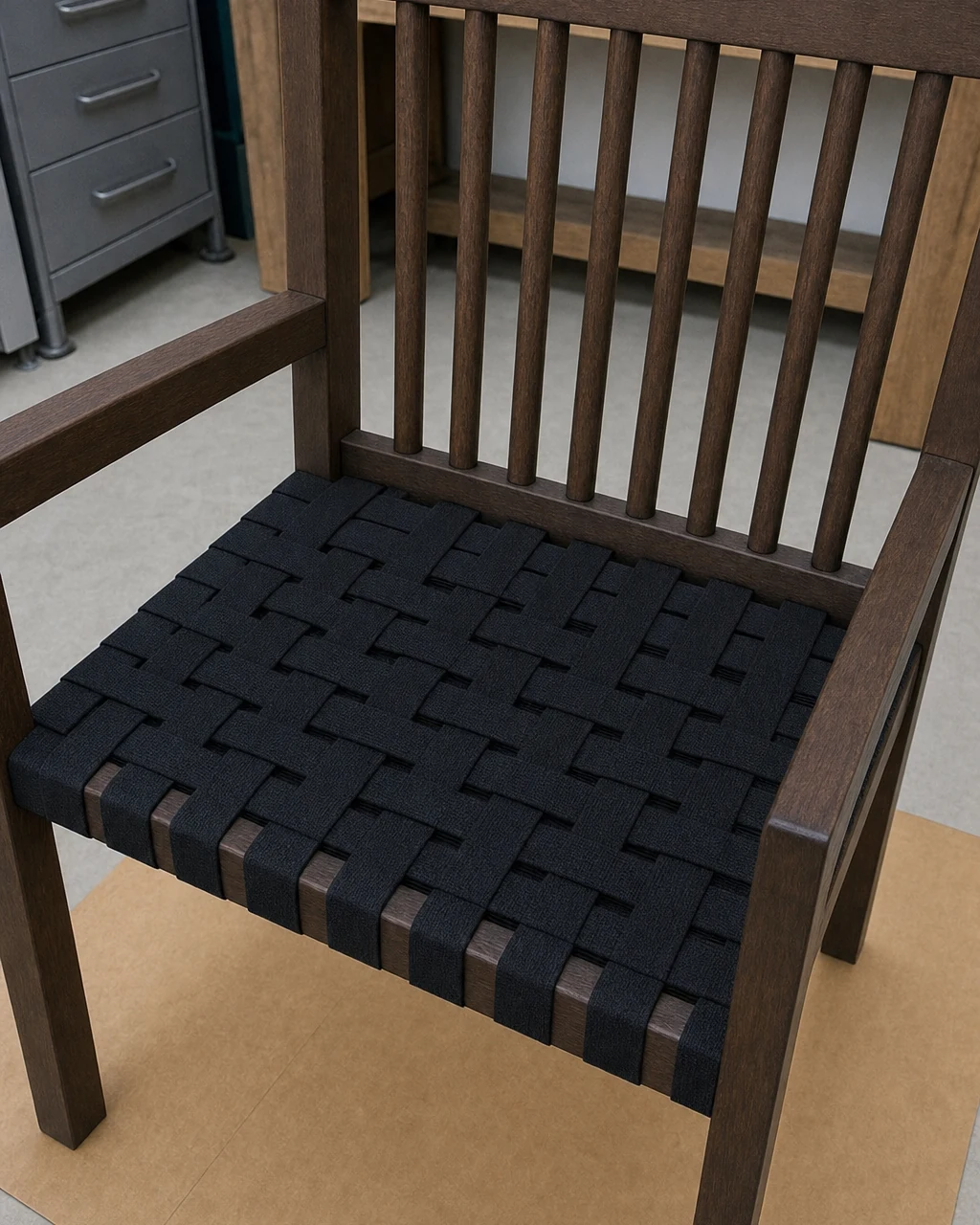
Inspect the fully assembled bench with its new woven seat and dark oiled frame. Trim any overhanging webbing from the underside of the rails using sharp scissors to keep the lines clean. Give the oiled wood a final buff with a clean cloth to remove any lingering workshop dust, and ensure all staples are fully seated flush with the wood.
Step 7: Style the Finished Bench in the Entryway
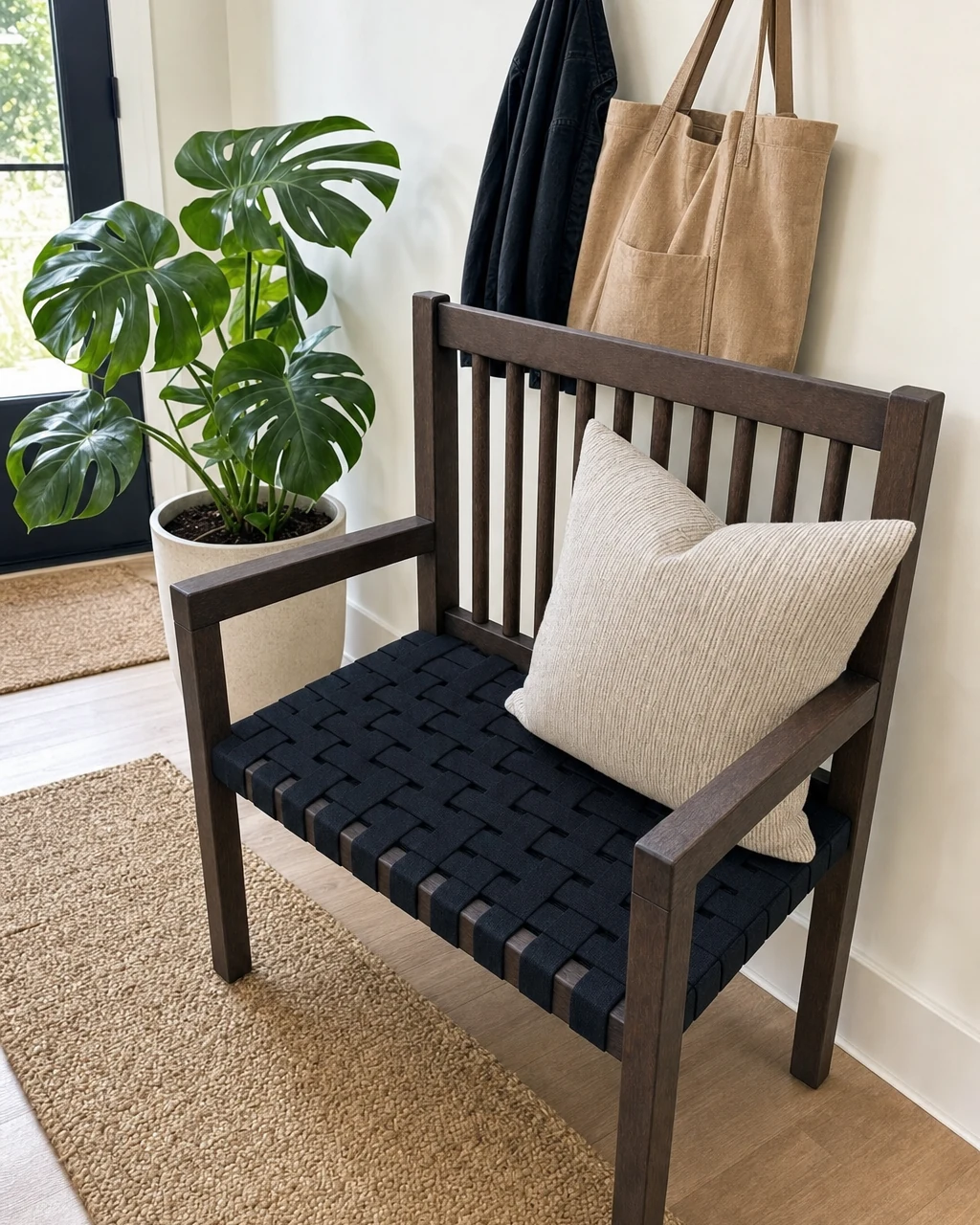
Use a soft brush to dust the area, then move the completed bench into a bright modern entryway to serve its new purpose. Style it beneath a minimalist coat rack with a textured neutral throw pillow to highlight the graphic black woven seat against the dark oiled pine. Always lift the bench from the lower frame, not the armrests, when moving it.
Valuation and Resale Potential
The dramatic transition from dated glossy orange pine to a modern Scandinavian-inspired woven bench elevates this piece to boutique furniture pricing. While the total project investment was only $73, the estimated resale value reaches $185, resulting in a $112 value gain. This valuation is strictly an editorial estimate rather than a completed sale, reflecting the impact of the modern materials.