
This Silk Map Became an Attic Bedroom
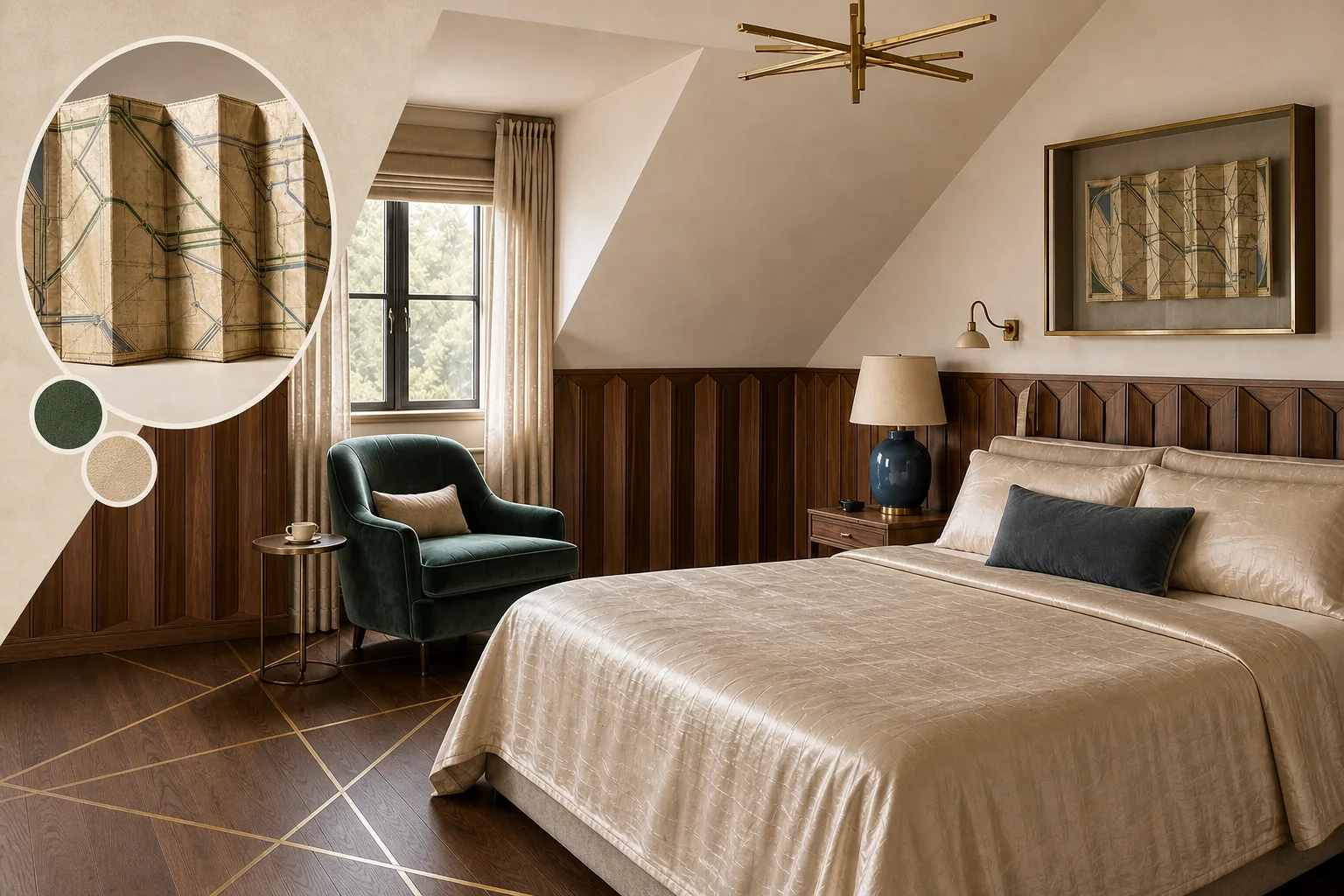
A vintage art-deco silk accordion map provides a masterclass in texture and geometry, inspiring an attic bedroom transformation. By translating its rhythmic folds and faded jewel-toned routes into architectural details, rhythmic geometry softened by time-worn, tactile materials creates a serene retreat that feels both cozy and deliberately crafted.
Sculpting the walls with accordion folds
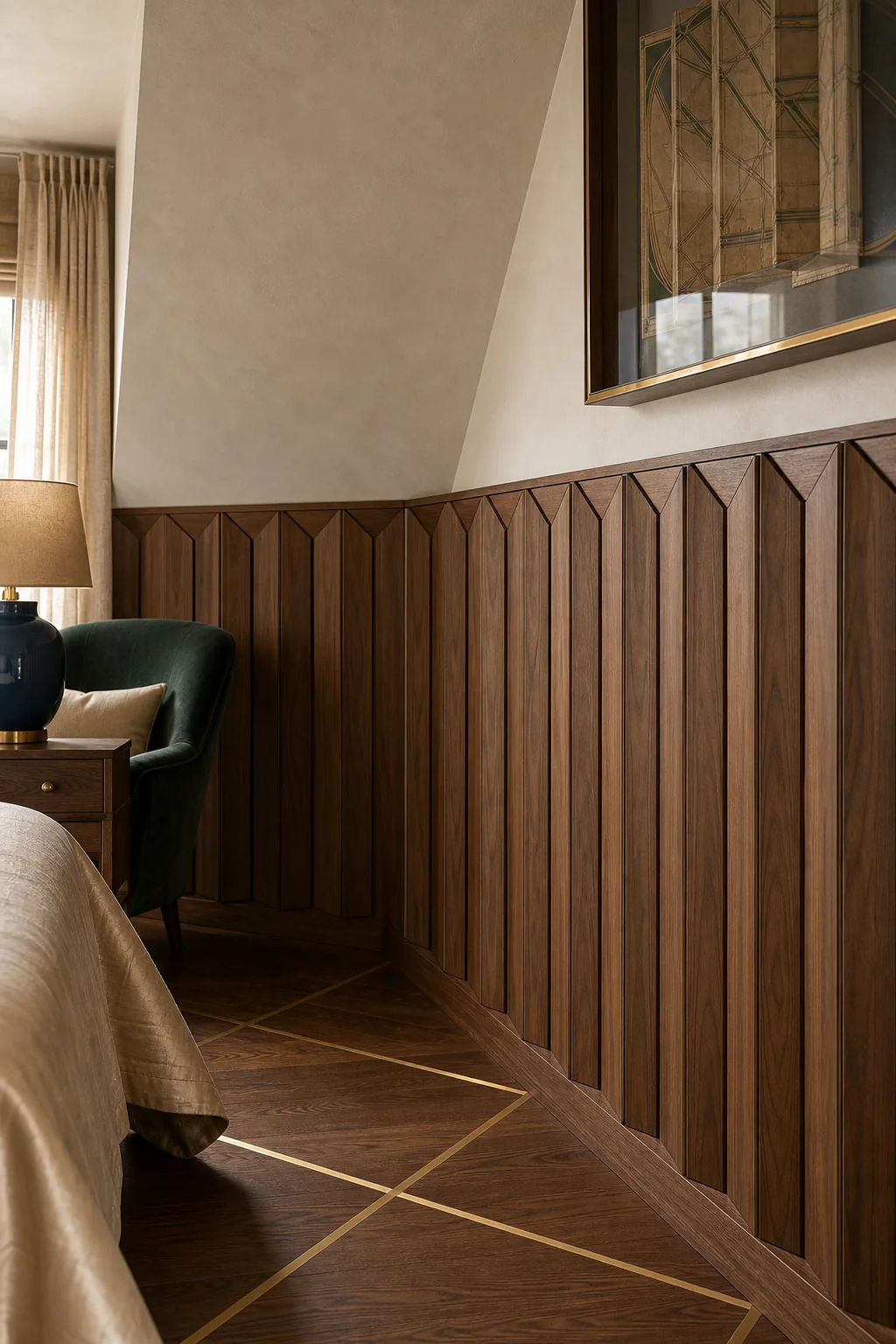
The map’s physical structure becomes the room’s architectural baseline, grounding the sloped ceilings with rhythmic verticality. Custom lower-wall wainscoting is built from shallow, angled vertical wood panels to mimic the artifact’s repeating zig-zag creases. This foundational move transforms flat drywall into a tactile surface that plays with light. To maintain a serene atmosphere, the wall treatment is painted warm ivory to blend seamlessly with the plaster above, ensuring you keep the architectural lines sharp without harshness. Follow these implementation steps to build the foundation.
- Measure and mark the perimeter for the wainscoting height to ensure a level guideline before the sloped ceiling begins.
- Cut wood panels at shallow alternating angles for zig-zags so the assembled panels form a continuous, rhythmic accordion fold.
- Apply warm ivory plaster to the upper walls and ceiling to provide a soft champagne backdrop resembling aged silk.
- Install the angled wainscoting and paint it to match, creating structural, monochromatic folds that ground the airy attic space.
Charting routes in faded jewel tones
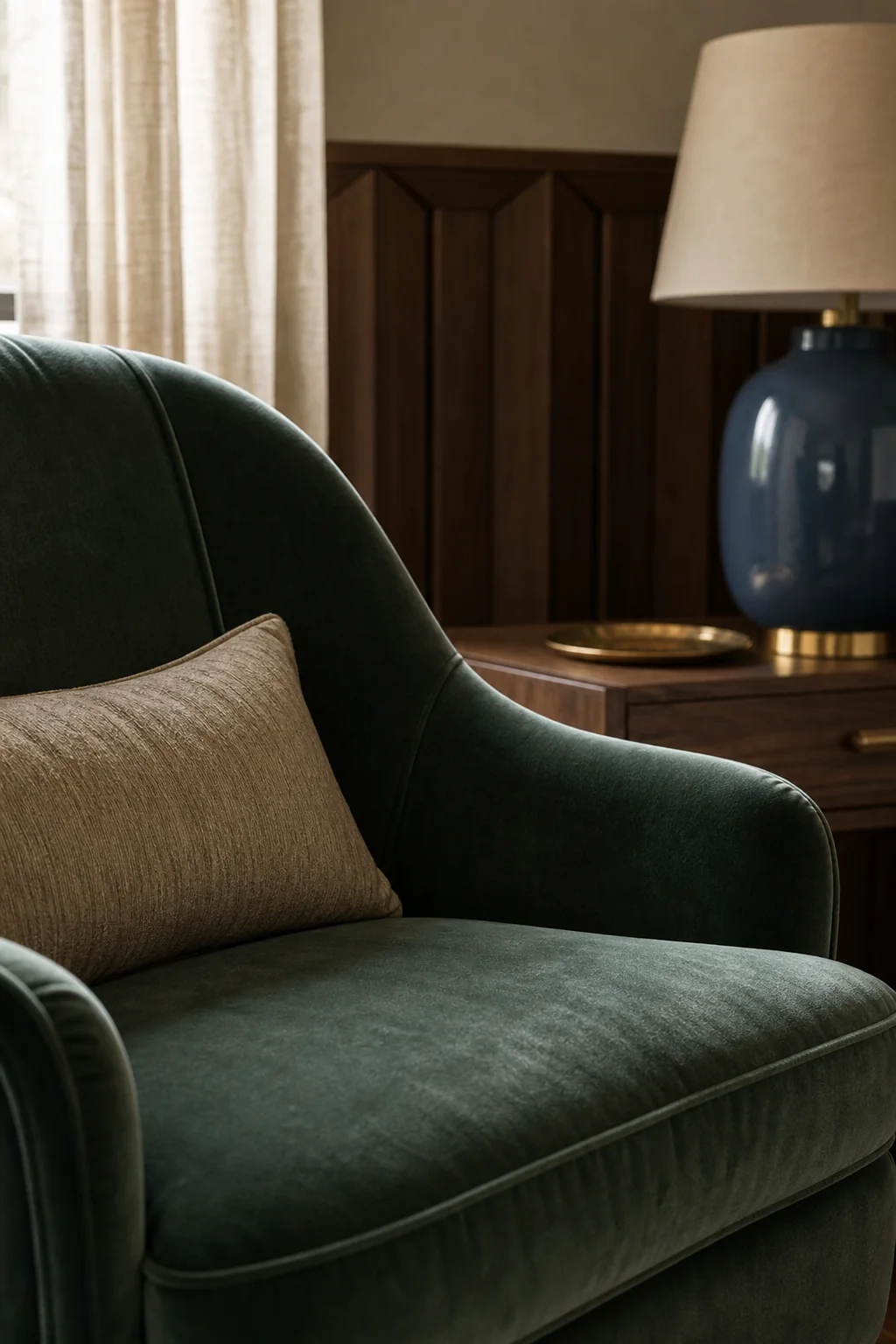
The champagne silk background translates to warm ivory plaster walls, allowing the faded jewel tones to act as deliberate wayfinding accents throughout the bedroom. A faded emerald velvet reading chair anchors the dormer window nook, creating a cozy destination for morning coffee. Meanwhile, muted sapphire blue is introduced through a ceramic bedside lamp, contrasting gently against the warm walls. This careful translation of the muted emerald and sapphire ink used for the travel routes ensures the room remains a tailored, serene retreat. By treating these saturated colors as intentional pathways rather than overwhelming blocks of paint, the design respects the delicate balance of the original vintage map.
| Source trait | Visible evidence | Room move |
|---|---|---|
| Accordion Folds | The repeating vertical zig-zag creases of the folded map structure | Angled vertical wood wainscoting mimics the map’s accordion creases. |
| Faded Jewel Routes | The muted emerald and sapphire ink used for the travel routes on the champagne background | Emerald velvet and sapphire ceramics reflect the faded transit ink. |
| Aged Silk Sheen | The soft, slightly worn luster of the map’s silk fabric | Raw silk drapery and bedding capture the map’s worn luster. |
| Intersecting Paths | The linear, geometric art-deco transit lines crossing the map | Brass floor inlays and a geometric pendant echo transit lines. |
Sapphire accents against warm plaster
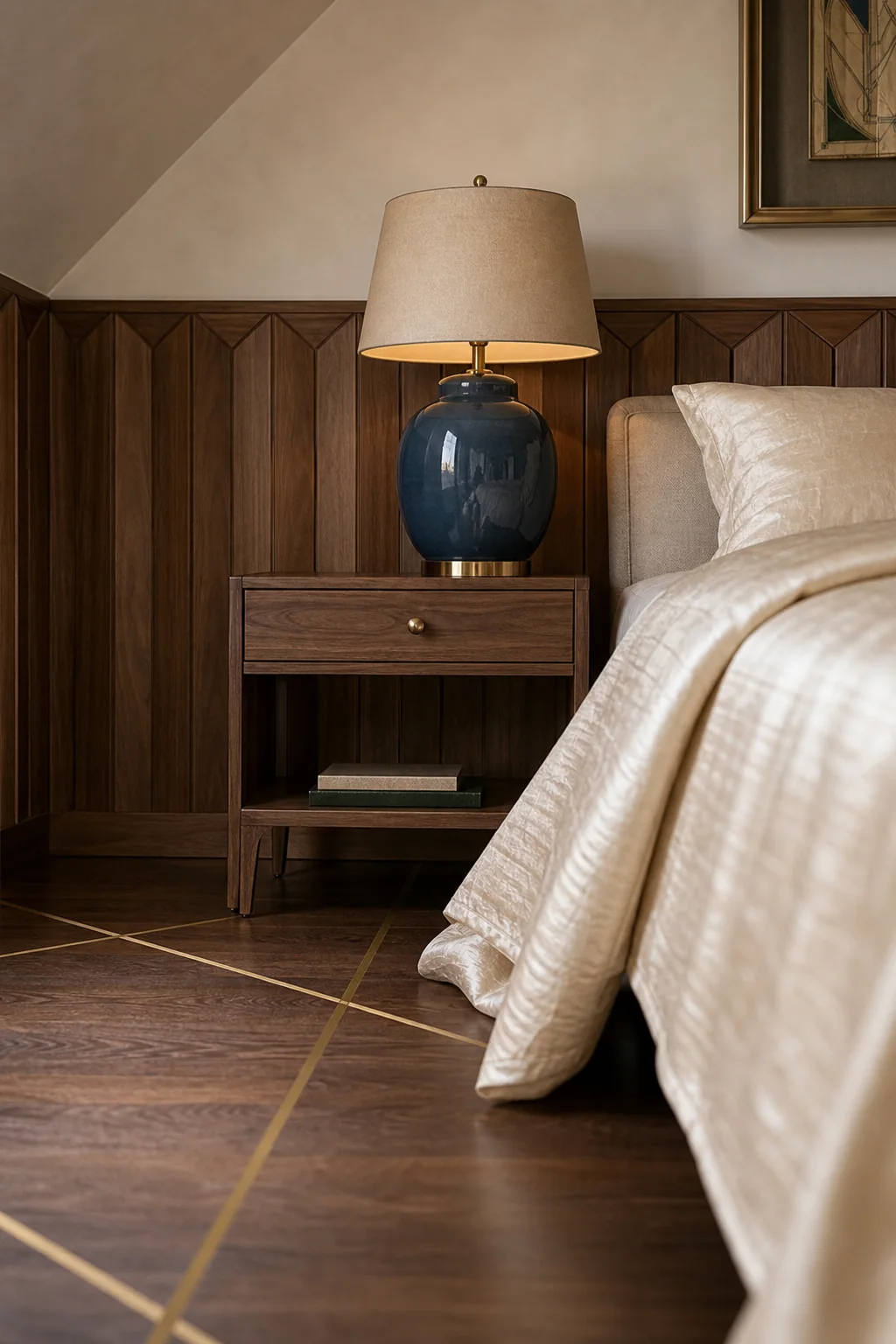
The sapphire ceramic lamp reflects the map’s blue transit ink, offering a concentrated pop of color that draws the eye without overwhelming the muted palette. By placing this cool-toned ceramic piece against the warm ivory plaster, the design replicates the striking contrast of vintage typography printed on aged champagne silk. This deliberate placement acts as a subtle nod to the source material’s intricate wayfinding details. The glossy finish of the ceramic also provides a necessary textural break from the matte walls, ensuring the sapphire hue catches the ambient light just as the original metallic ink caught the sun.
Balance the cool jewel tones of the emerald chair and sapphire lamp by ensuring the surrounding ivory plaster leans warm, mimicking the aged champagne silk.
Draping the space in aged silk sheen
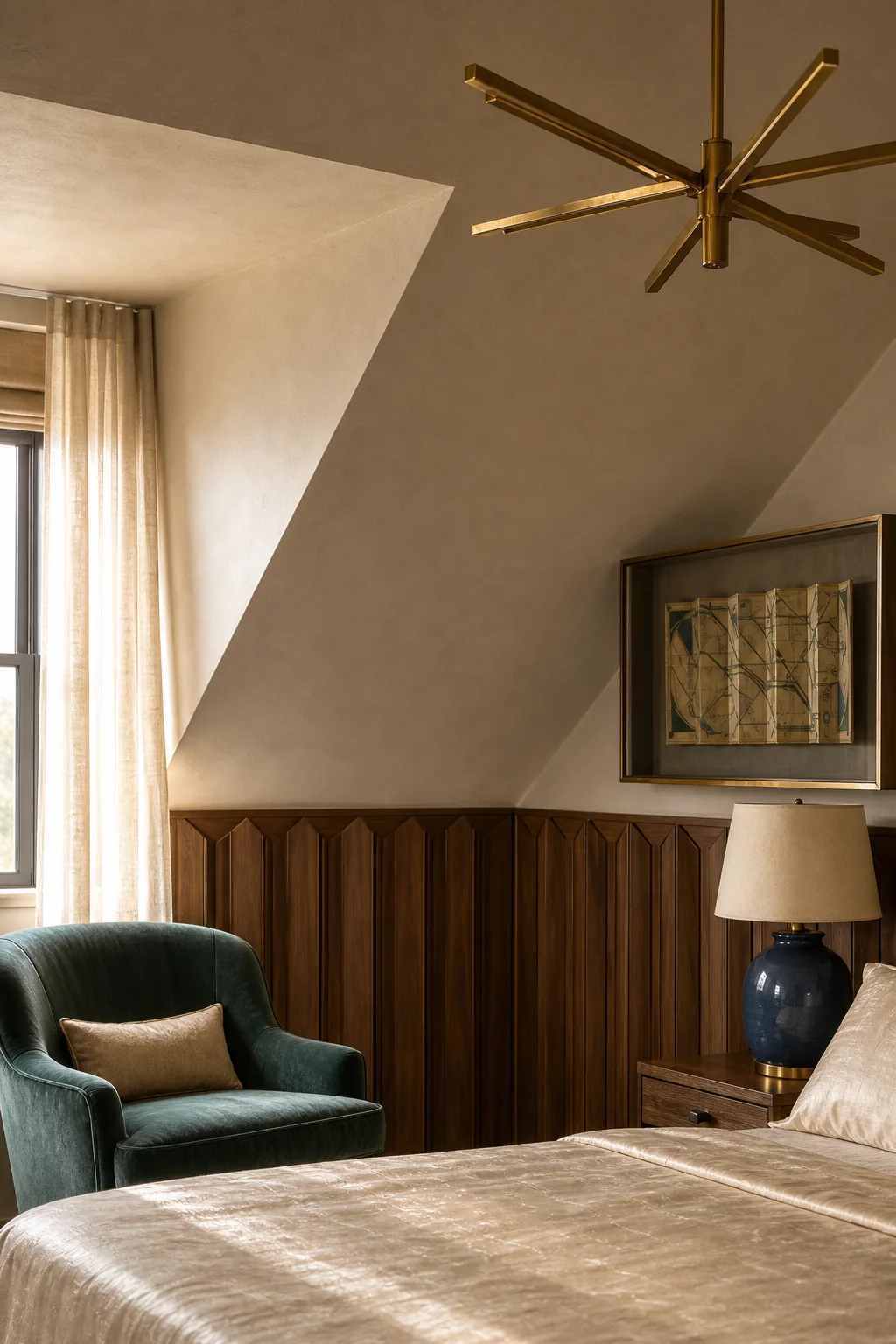
The tactile delicacy of the original artifact is scaled up to envelop the bed and dormer window, softening the room’s sharp architectural angles. Raw silk drapery at the dormer window catches the morning light, illuminating the fabric’s natural slubs. Simultaneously, a silk-blend bedspread adds a subtle, worn luster that echoes the vintage map’s fragile surface. These textile choices execute the rhythmic geometry softened by time-worn finishes, ensuring the space feels inviting rather than overly rigid. Use this material checklist to source the right textures.
Intersecting paths and art-deco geometry
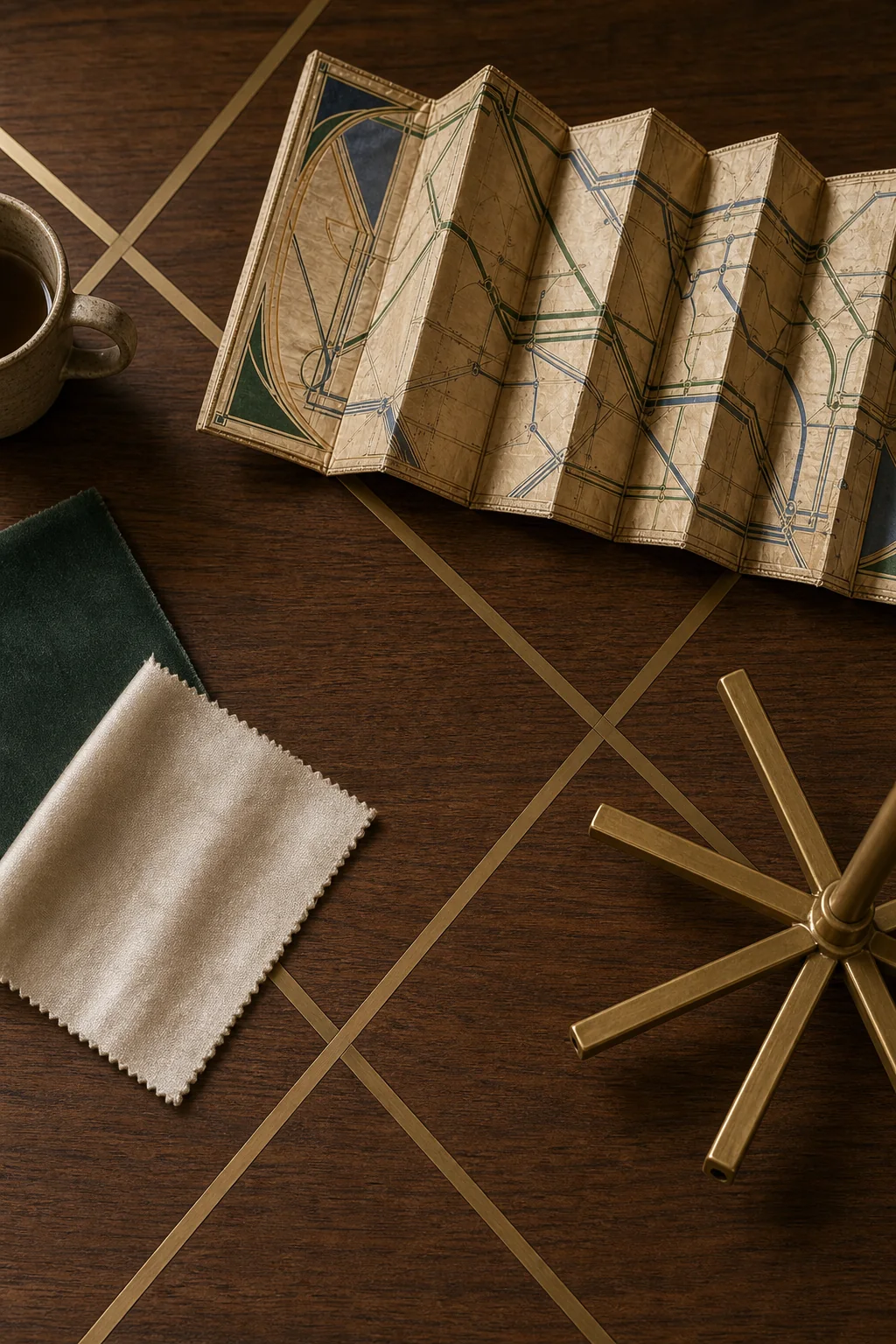
The streamlined curves and intersecting routes of the map’s typography are echoed in the room’s metallic accents and lighting fixtures. Tarnished brass linear inlays are embedded into the matte walnut floor, while a geometric brass pendant light with intersecting arms hangs gracefully from the sloped ceiling. These metallic elements trace delicate pathways through the room, reinforcing the art-deco influence without relying on literal globe or compass motifs. The tarnished finish is crucial here; highly polished metals would disrupt the aged aesthetic, but muted brass perfectly captures the essence of a well-traveled, historic artifact seamlessly integrated into a modern sanctuary.
Keep metallic accents sparse and linear to mimic delicate transit routes. Too much brass will overwhelm the serene space and break the subtle art-deco illusion.
Mapping routes on the walnut floor
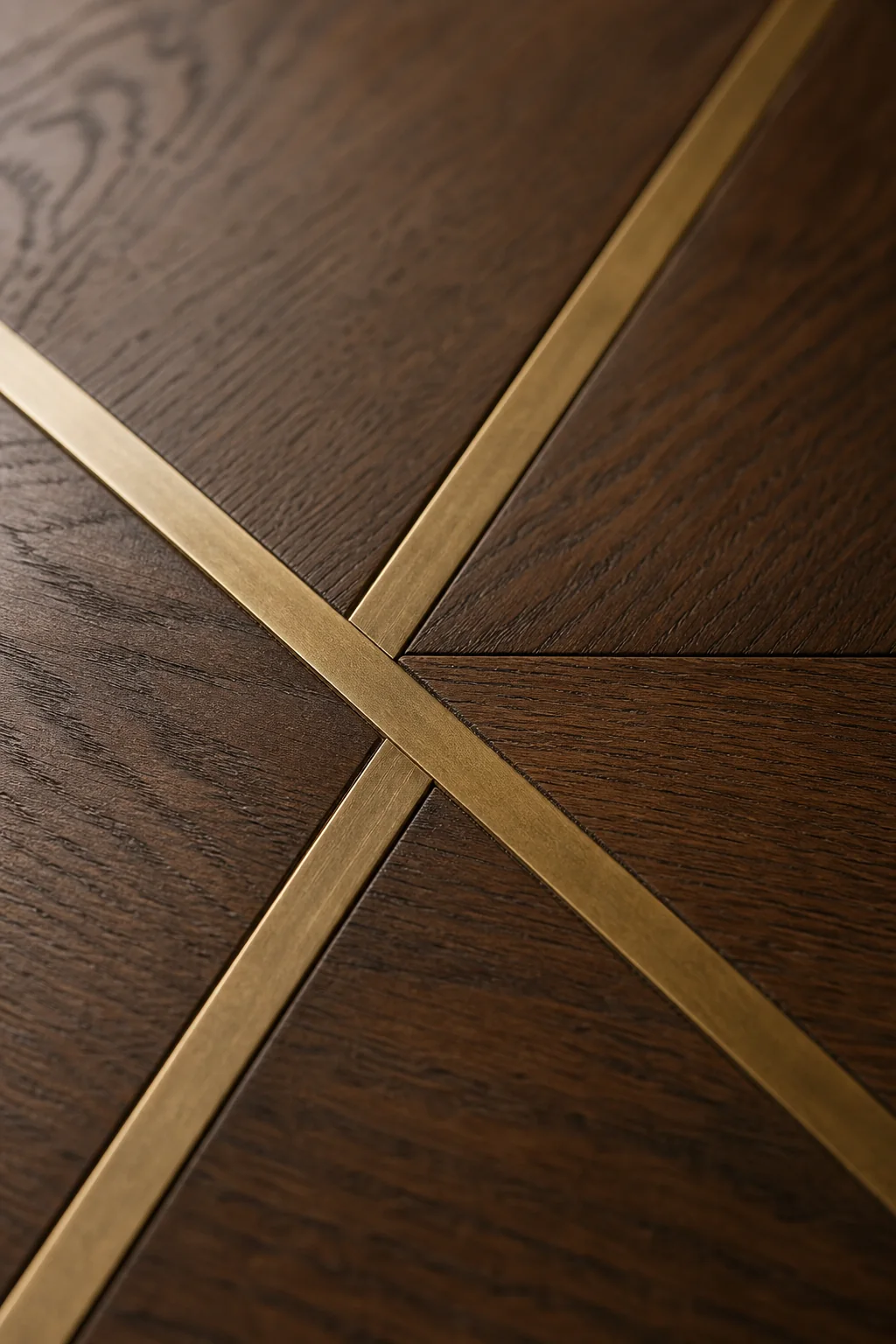
Tarnished brass floor inlays intersect like art-deco transit routes, grounding the design in a balanced intensity that pairs architectural wainscoting with faded emerald and sapphire textiles. If you prefer a subtle approach, focus entirely on the champagne silk textures and warm ivory plaster with just one small sapphire accent piece. Conversely, a bold execution might paint the accordion wainscoting in faded emerald green and increase the density of the brass floor inlays alongside a large-scale geometric chandelier. Regardless of the intensity, the matte walnut floorboards provide a rich, dark canvas that allows these metallic transit lines to shine softly.