
This Glass Sculpture Became an Art Studio
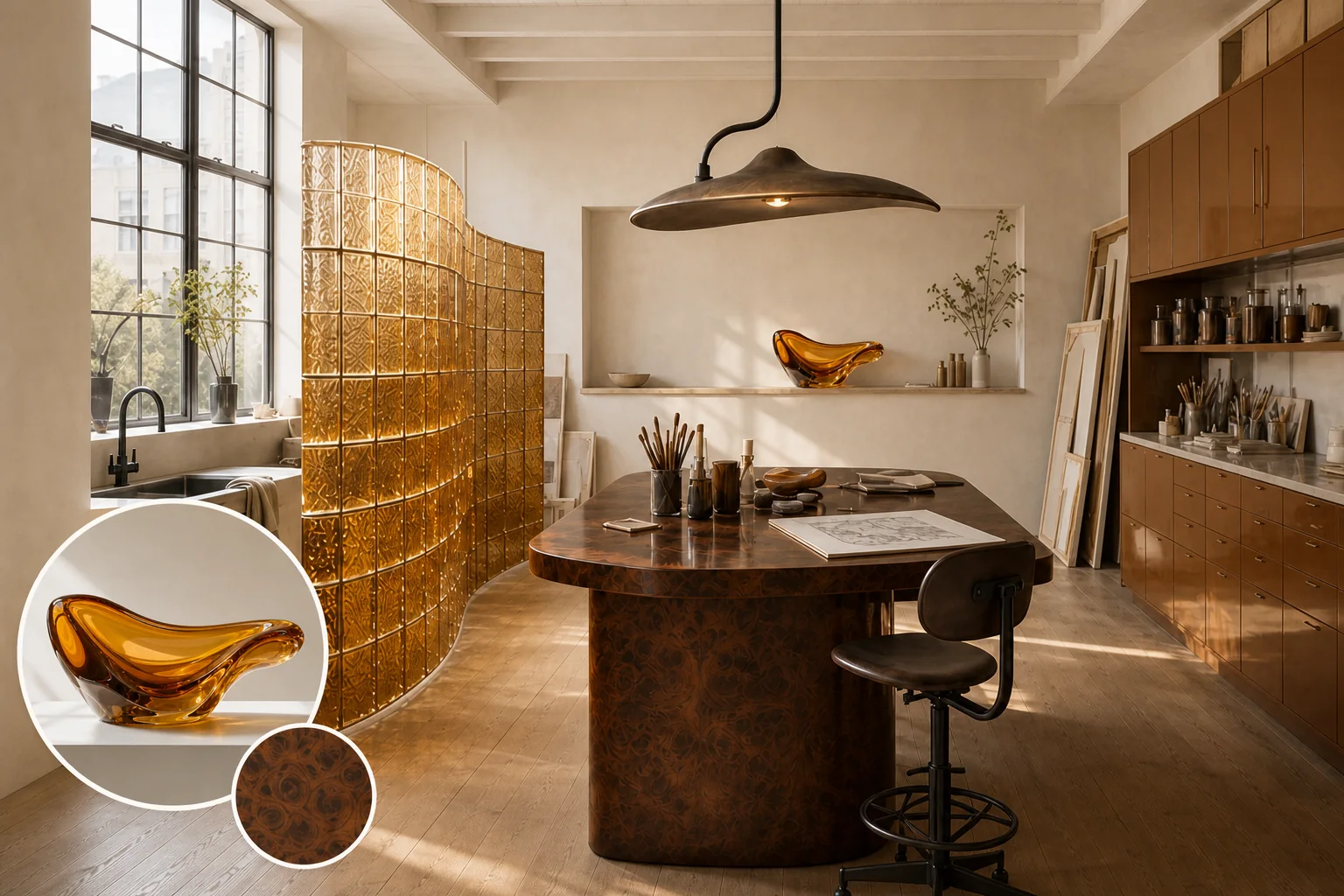
Discover how the organic curves and shifting honey tones of a blown glass sculpture inspired a balanced, light-filled residential art studio. By anchoring high-gloss, translucent amber elements with quiet, matte plaster walls, this design manipulates natural light and warm gradients to create an inspiring atmosphere without visual fatigue.
Shaping Light with Translucent Boundaries
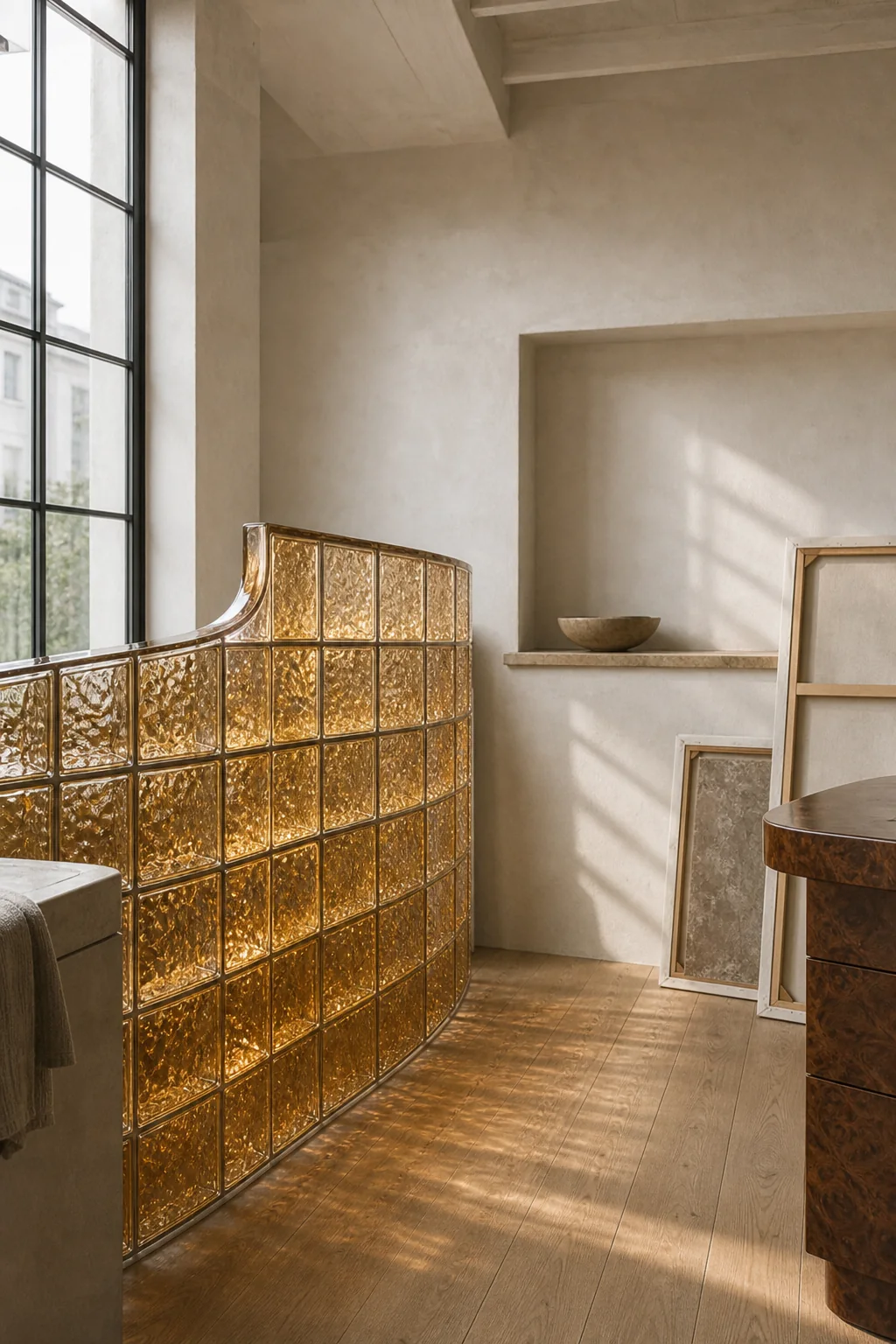
By using textured glass blocks as a spatial divider, the studio captures the sculpture’s ability to pool and filter natural light without sacrificing functional zoning. Amber glass blocks mimic the sculpture’s glowing, translucent base, separating the wet sink area from the main workspace while maintaining an open, airy feel. Position this partition to catch north-facing window light, ensuring the studio remains bright and visually engaging throughout the day. Follow these core implementation steps to establish the room’s architectural shell and properly direct the flow of natural light across your creative zones.
- Erect a half-height partition for the wet zone to separate the utility sink area without blocking overall room light.
- Install textured amber glass blocks in the partition so natural daylight filters through, creating a warm, distorted glow.
- Apply matte off-white plaster to all main walls to provide a flat, non-reflective canvas for the vibrant room elements.
- Paint out exposed ceiling beams to match the walls, ensuring the architecture feels high, unobtrusive, and cohesive.
Layering a Honey and Burl Gradient
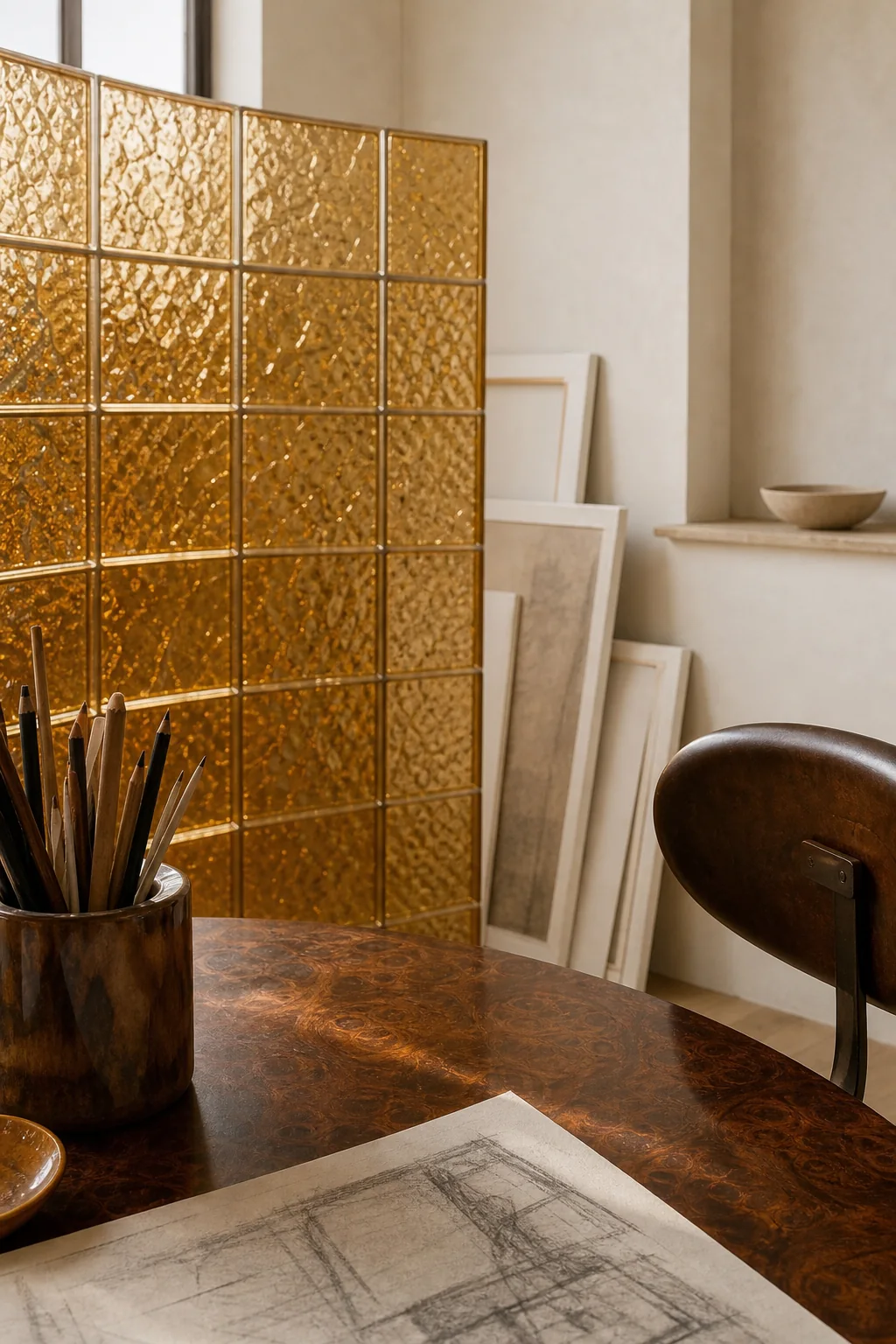
The sculpture’s shifting amber hues translate into a tonal layering of warm woods, grounding the bright studio with rich, organic color. Wood tones recreate the shifting gradient of the glass, moving from pale oak floors to deeper, resonant shades in the furniture. Keeping the walls a matte off-white lets these wood tones stand out, ensuring the workspace feels both warm and highly focused. By avoiding literal interpretations like amber glass drawer pulls, the space remains sophisticated. This visual-DNA mapping table illustrates exactly how the source artwork’s traits inform the room’s functional design moves.
| Source trait | Visible evidence | Room move |
|---|---|---|
| Translucent pooling | The thickest, light-refracting base of the sculpture that glows when hit by sunlight | A curved, half-height partition made of textured amber glass blocks separating the wet sink area |
| Amber gradient | The shifting tones of orange, honey, and brown where the glass varies in thickness | A tonal layering of warm woods, moving from pale oak floors to a deep burl wood table |
| Fluid gloss | The ultra-smooth, molten surface finish of the blown glass | High-gloss, caramel-lacquered flat-front cabinetry for supply storage |
| Continuous curves | The uninterrupted, sweeping asymmetrical lines of the sculpture’s silhouette | An organically shaped, sweeping bronze task lamp suspended over the work table |
Anchoring the Room with Deep Burl
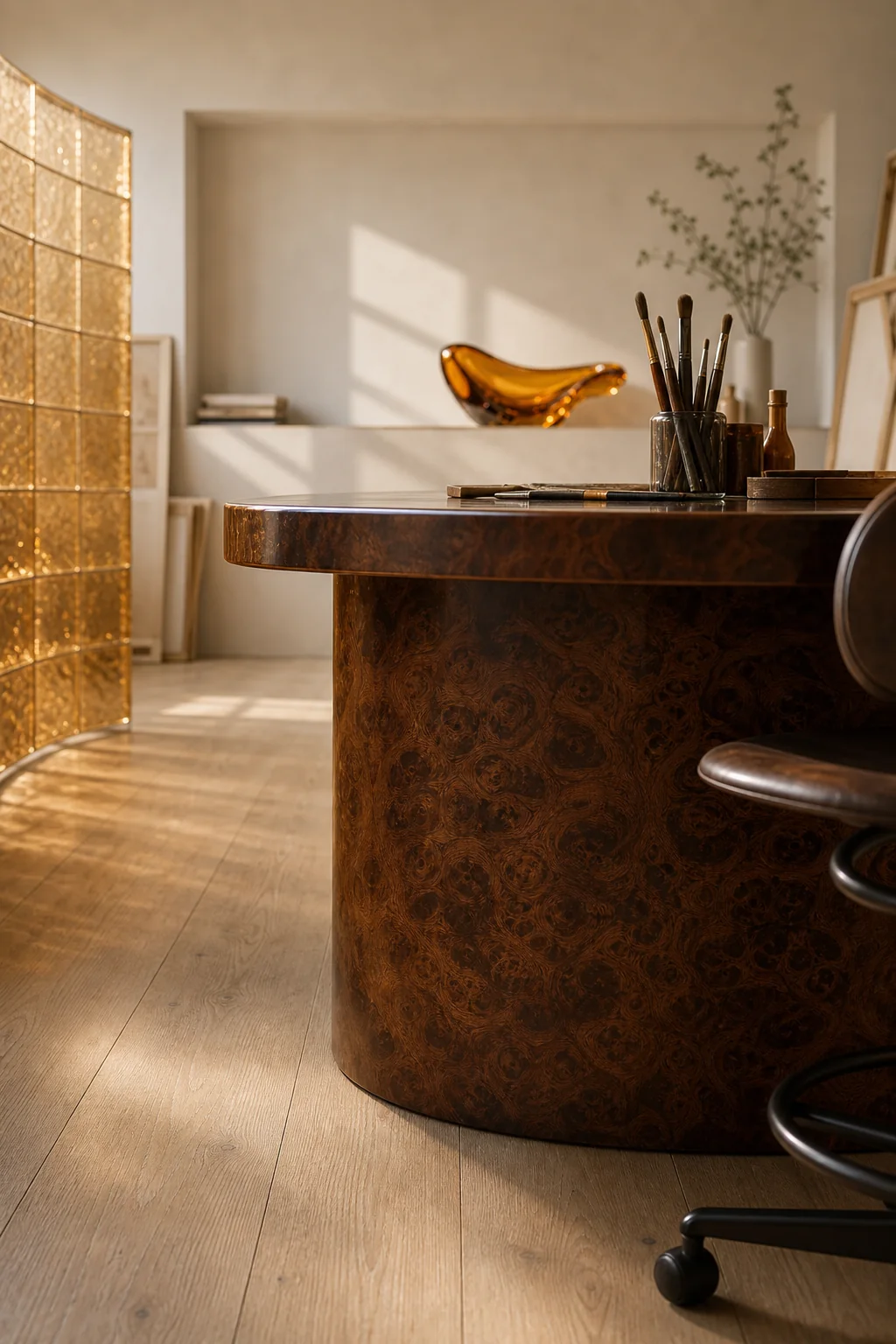
A deep brown burl wood work table anchors the room, echoing the sculpture’s darkest amber pooling. This central piece provides a durable surface for creative work while introducing a rich, swirling grain that mimics the organic variations found in blown glass. By pairing this heavy, grounded base with lighter surrounding elements, the studio achieves a perfect equilibrium between weight and airiness, essential for a productive environment. Ensure the surface is sealed for durability against paints and solvents. Use this checklist to source the essential materials for the space.
Contrasting Molten Gloss with Matte Plaster
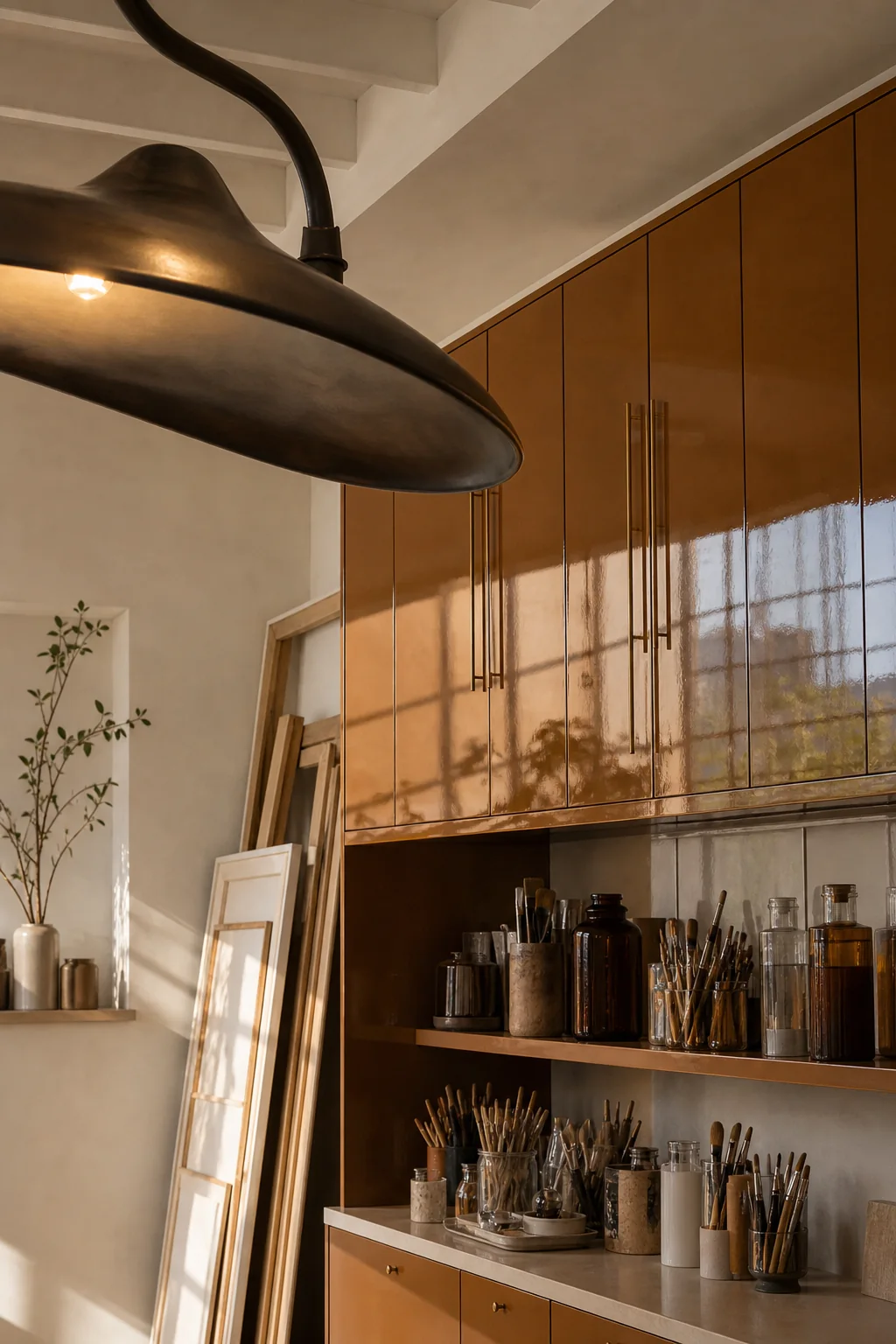
Replicating the sculpture’s slick surface through high-gloss cabinetry introduces a dynamic, reflective energy that contrasts beautifully against quiet architectural finishes. Glossy caramel cabinets replicate the sculpture’s smooth molten finish, providing concealed storage for art supplies and canvases. Specifying flat-front cabinets maximizes the uninterrupted glossy surface, while the matte plaster walls prevent the room’s reflective elements from causing visual fatigue. This balance ensures the molten surface finish of the inspiration piece is felt without overwhelming the eye, keeping the focus entirely on the artist’s canvas.
Reflecting Light with Caramel Lacquer
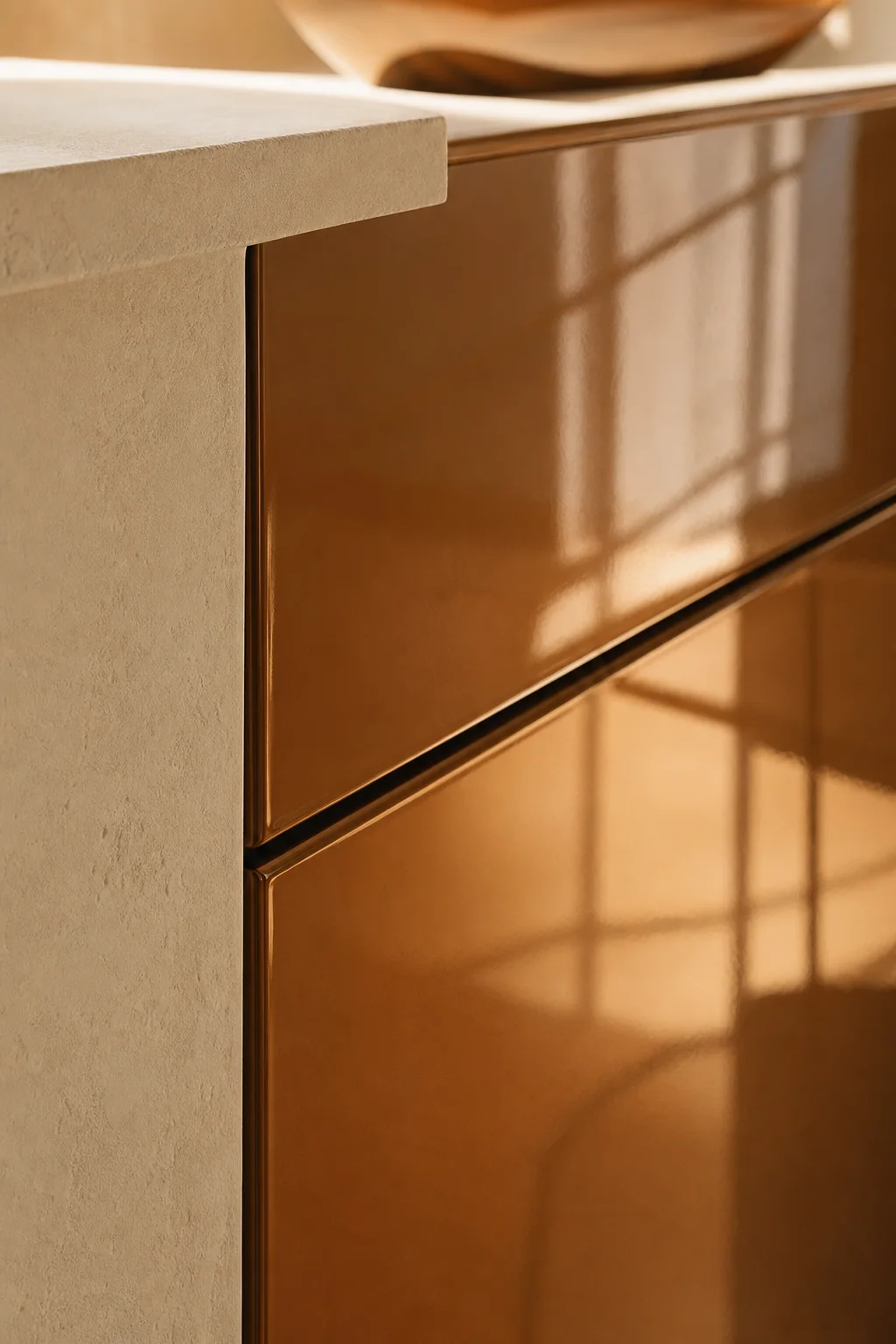
These reflective cabinet fronts mimic the glass’s slick exterior, catching the light from the large north-facing industrial windows. The caramel lacquer deepens the room’s amber palette, offering a sleek counterpoint to the organic textures of the burl wood and glass blocks. This strategic use of high-gloss finishes ensures the studio feels polished and intentional, hiding the inevitable clutter of an active workspace behind a luminous facade. The resulting atmosphere is both highly functional and visually serene, proving that an industrial workspace can still feel incredibly refined.
Introducing Sweeping, Unbroken Lines
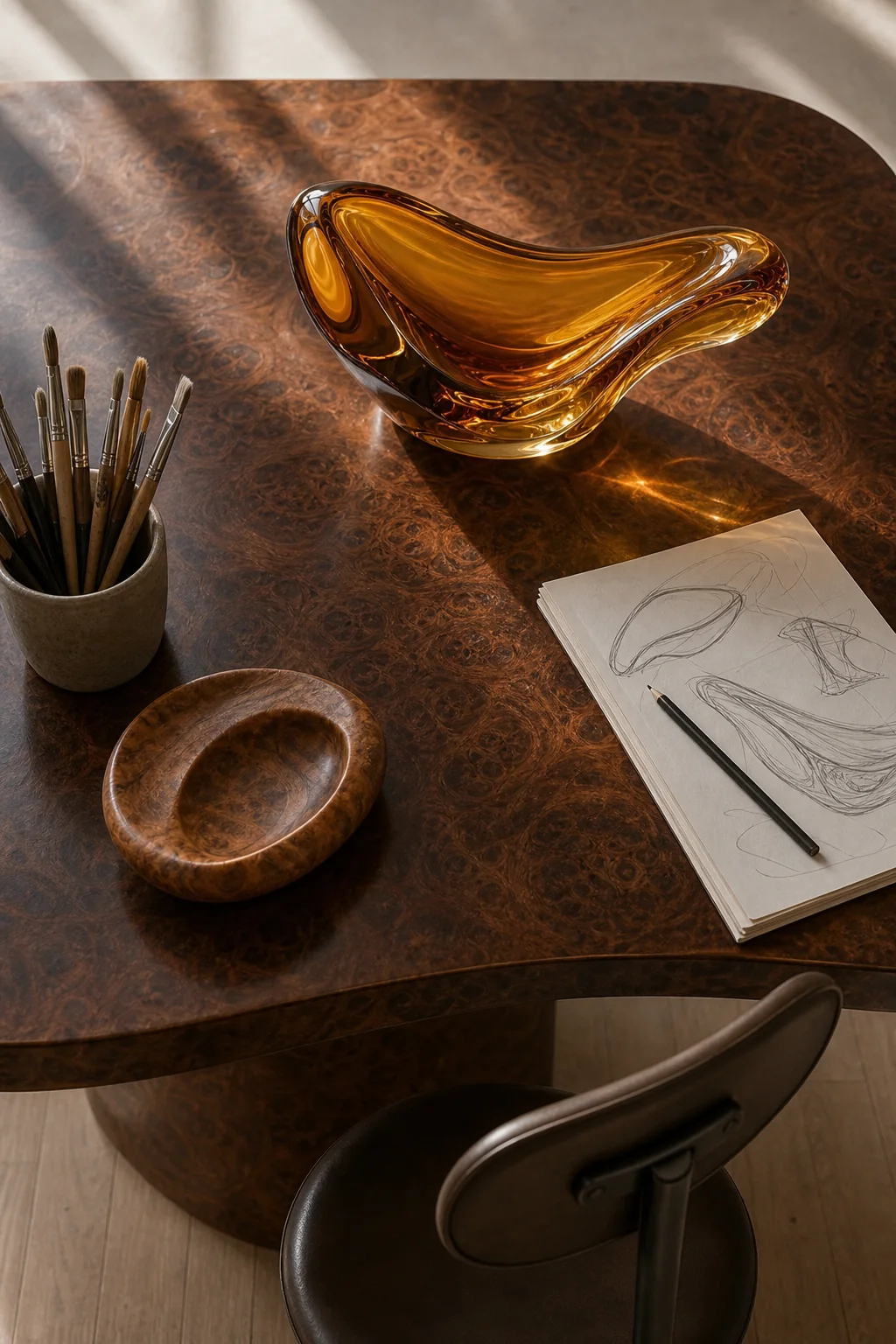
To soften the studio’s rigid storage and industrial windows, organically shaped lighting introduces the sculpture’s continuous, asymmetrical rhythm. A sweeping bronze lamp mimics these fluid curves perfectly, contrasting with the linear cabinetry. You can control this energy: a subtle approach limits amber tones to small accessories and uses clear glass blocks, while a balanced style layers warm oak and burl woods against matte plaster. For a bold statement, wrap the entire wet zone in amber glass blocks, paint the ceiling a deep honey tone, and use high-gloss burl wood for the cabinetry.
Choose a drafting stool with a rounded backrest to subtly echo the sculpture’s continuous curves without compromising on ergonomic support.