
This Lotus Seedpod Became a Primary Bedroom
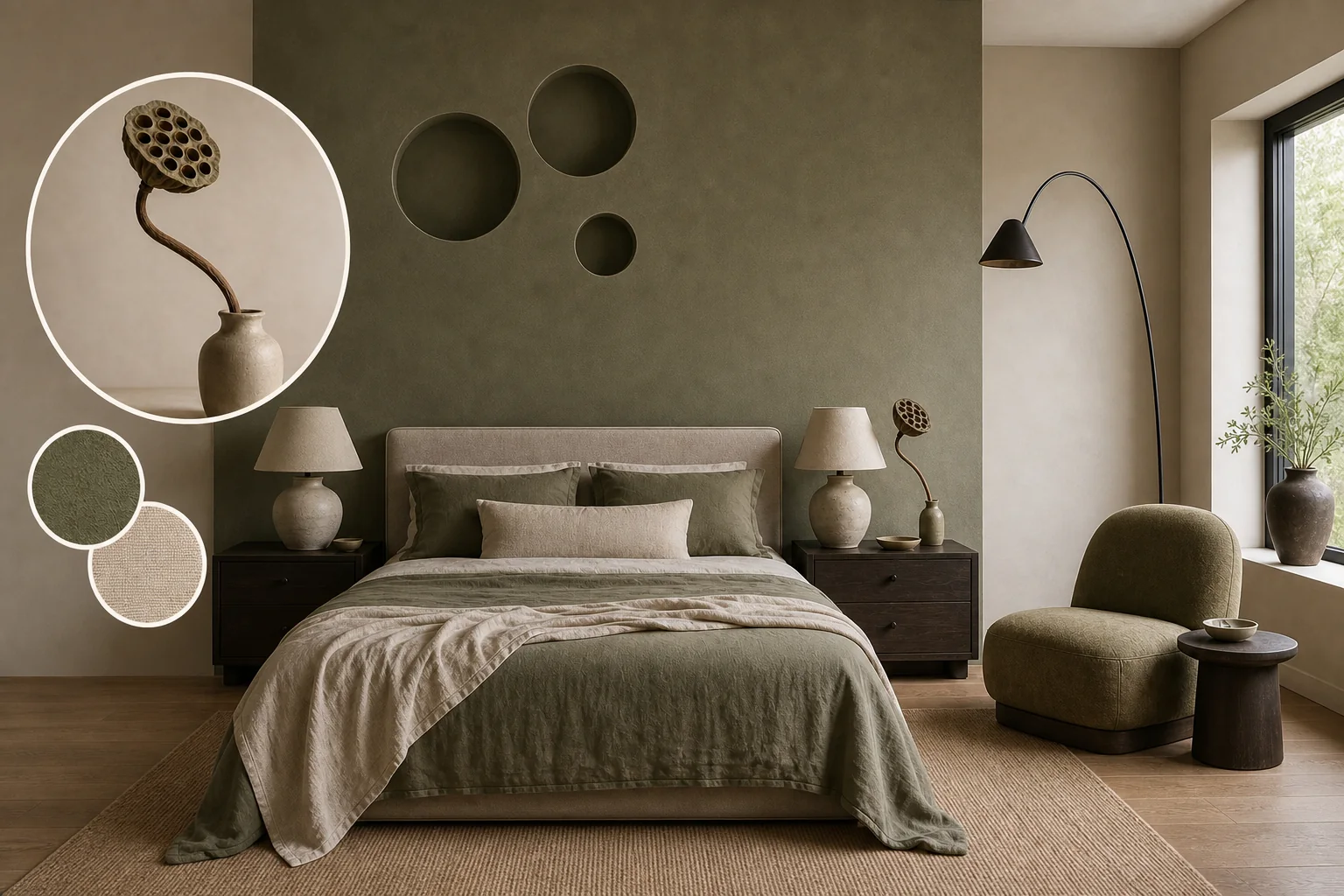
A sculptural botanical relic defined by deep rhythmic voids and dry, papery textures offers a masterclass in earthy restraint, providing the perfect blueprint for a calming primary bedroom. This serene, minimalist retreat embraces matte, light-absorbing surfaces and deliberate negative space, offsetting heavy, grounded volumes with a single sweeping, graceful line.
Carving out architectural depth
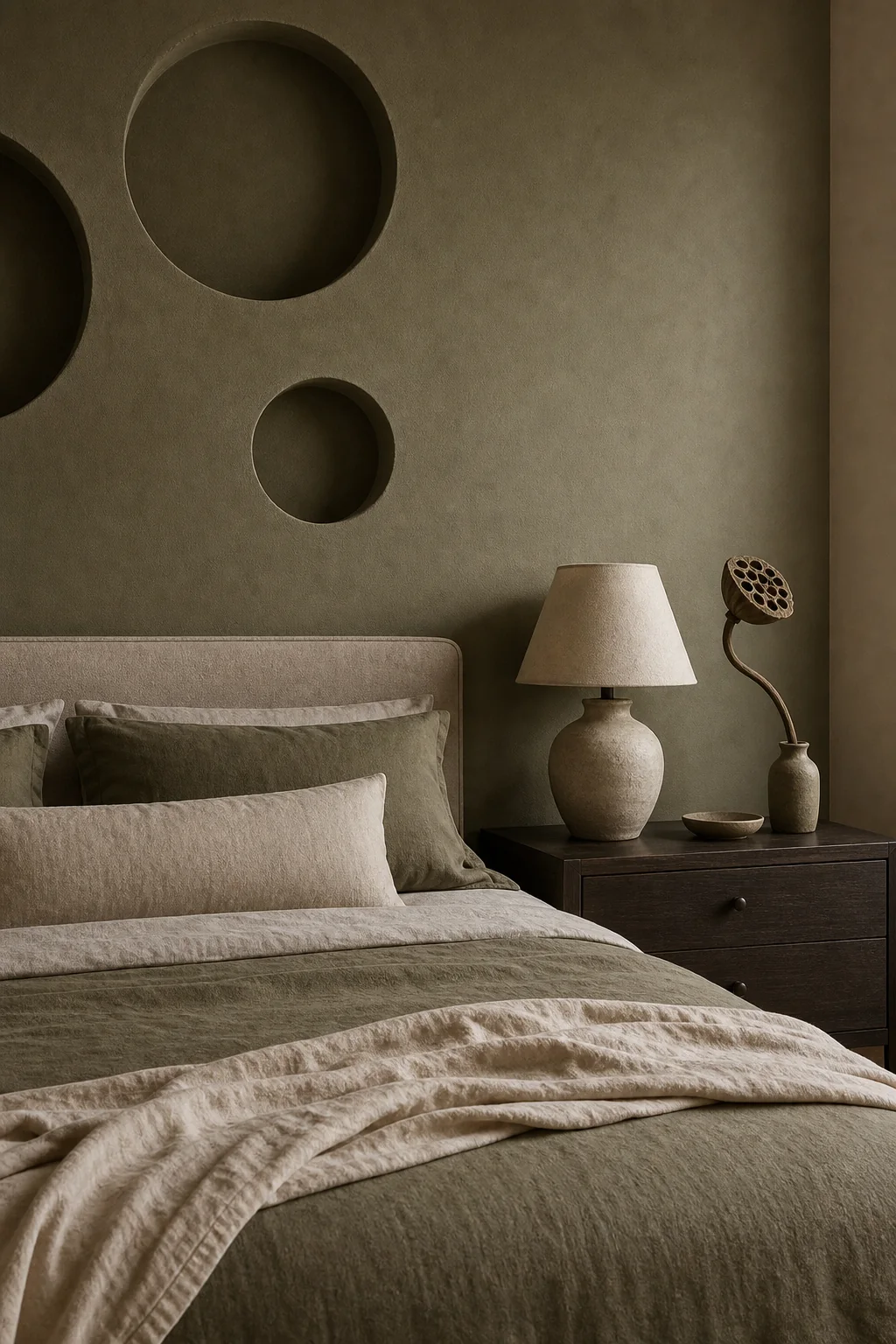
Translating the pod’s signature punctured plane into the room’s architecture establishes a foundation built entirely on shadow and negative space, directly mimicking the deep circular seed chambers. By building out a false wall to allow for recessed circular wall niches, you create profound architectural depth that feels organic rather than starkly modern. Finishing these asymmetrical niches in the exact same matte plaster as the surrounding walls keeps the visual focus entirely on the dramatic shadows they cast, turning a simple flat plane into a quiet, rhythmic focal point directly above the sleeping area that anchors the entire room.
- Frame a false wall behind the bed to house recessed niches.
- Cut three asymmetrical circular voids into the drywall.
- Apply a matte olive plaster finish across the entire wall.
- Install low-glare reading lights inside the recessed niches.
Grounding the room in desiccated olive and shadow
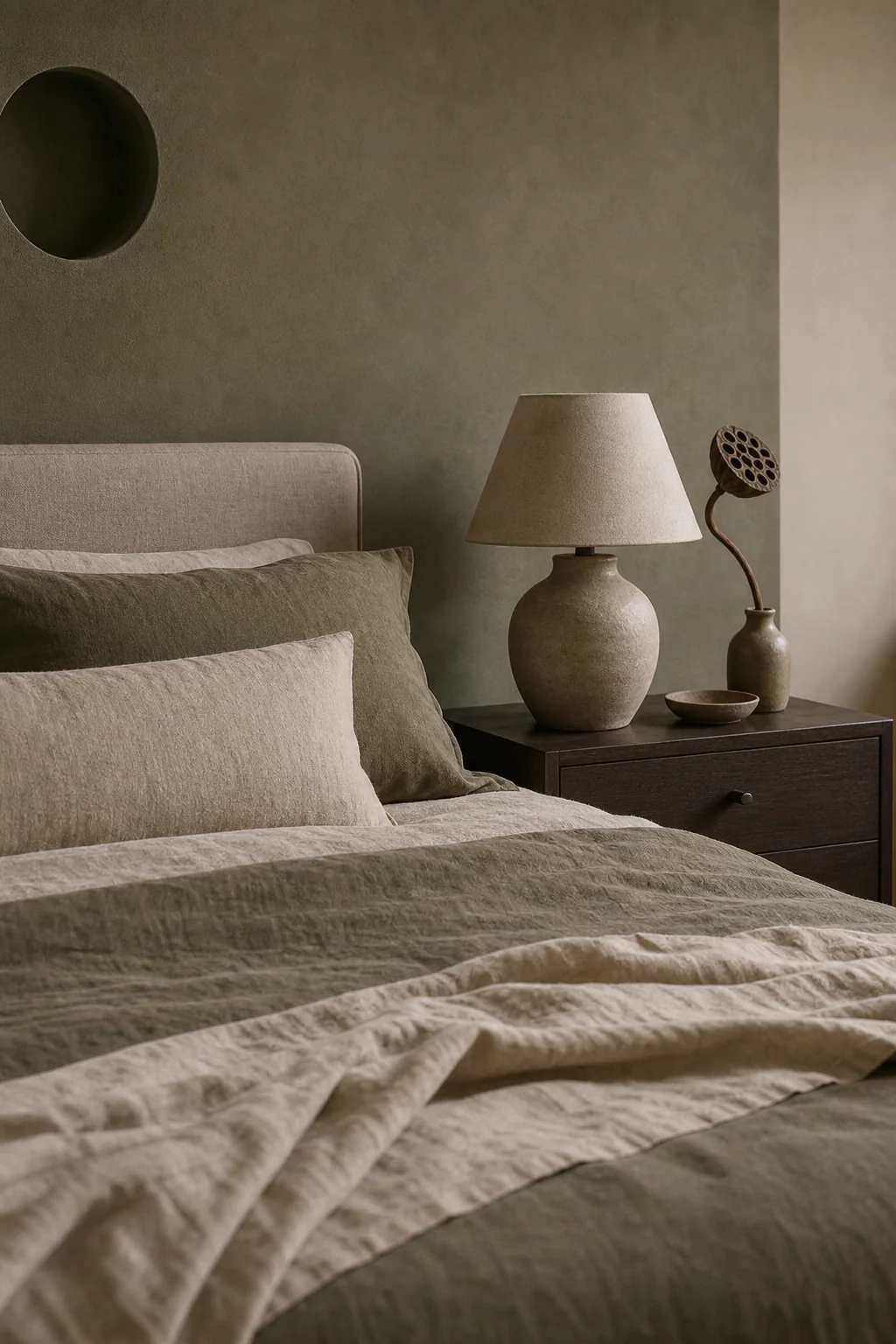
The palette relies heavily on muted, earthy tones that absorb light, using near-black accents to replicate the profound depth of the pod’s empty chambers. Layering warm chalk and dusty olive across large surface areas sets a serene, grounded base, while dark espresso or patinated bronze elements are used sparingly to anchor the lighter tones. This visual-DNA mapping table illustrates exactly how the faded, dusty green-brown of the dried pod and its contrasting voids directly inform the room’s color story, structural moves, and material selections to achieve a perfectly balanced atmosphere.
| Source trait | Visible evidence | Room move |
|---|---|---|
| Punctured Plane | The flat top face of the pod interrupted by deep, shadowed circular seed chambers. | A custom deep-olive plaster headboard wall featuring three asymmetrical, recessed circular niches that cast deep architectural shadows. |
| Desiccated Olive & Shadow | The faded, dusty green-brown of the dried pod contrasting with the near-black depth of the empty seed holes. | Walls and bedding layered in muted olive and warm chalk, grounded by dark espresso-brown bedside tables acting as the visual ‘voids’. |
| Papery & Porous | The dry, brittle, matte skin of the aged botanical structure. | Heavyweight stonewashed linen bedding and porous, unglazed ceramic table lamps that absorb light rather than reflecting it. |
| Sweeping Linear Support | The solitary, gracefully curved stem holding the heavy, geometric pod. | A slender, sweeping dark-bronze floor lamp arcing gracefully over a low, heavy lounge chair in the corner. |
Anchoring with dark voids
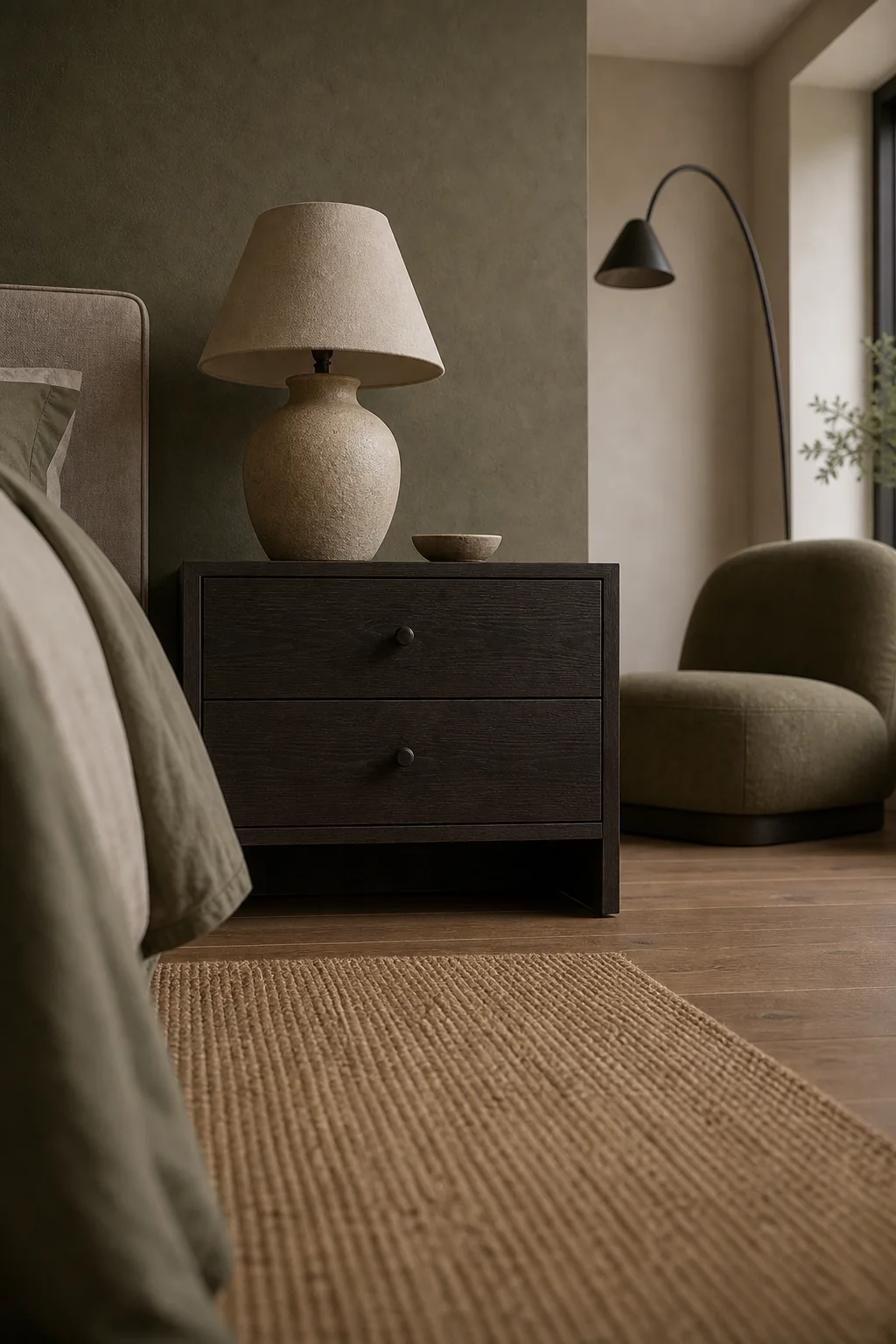
Dark oak bedside tables replicate the pod’s near-black empty seed holes, acting as essential visual voids against the matte olive plaster walls. These deep, shadow-like accents are absolutely crucial for balance, preventing the lighter, dusty tones from feeling washed out, overly uniform, or visually flat in the soft morning light. By introducing these concentrated moments of darkness through functional, everyday furniture, the bedroom design maintains the rhythmic negative space of the botanical source without ever relying on literal floral patterns, botanical wallpaper, or oversized artificial sculptures that might disrupt the room’s sophisticated, earthy calm.
Layering papery and porous finishes
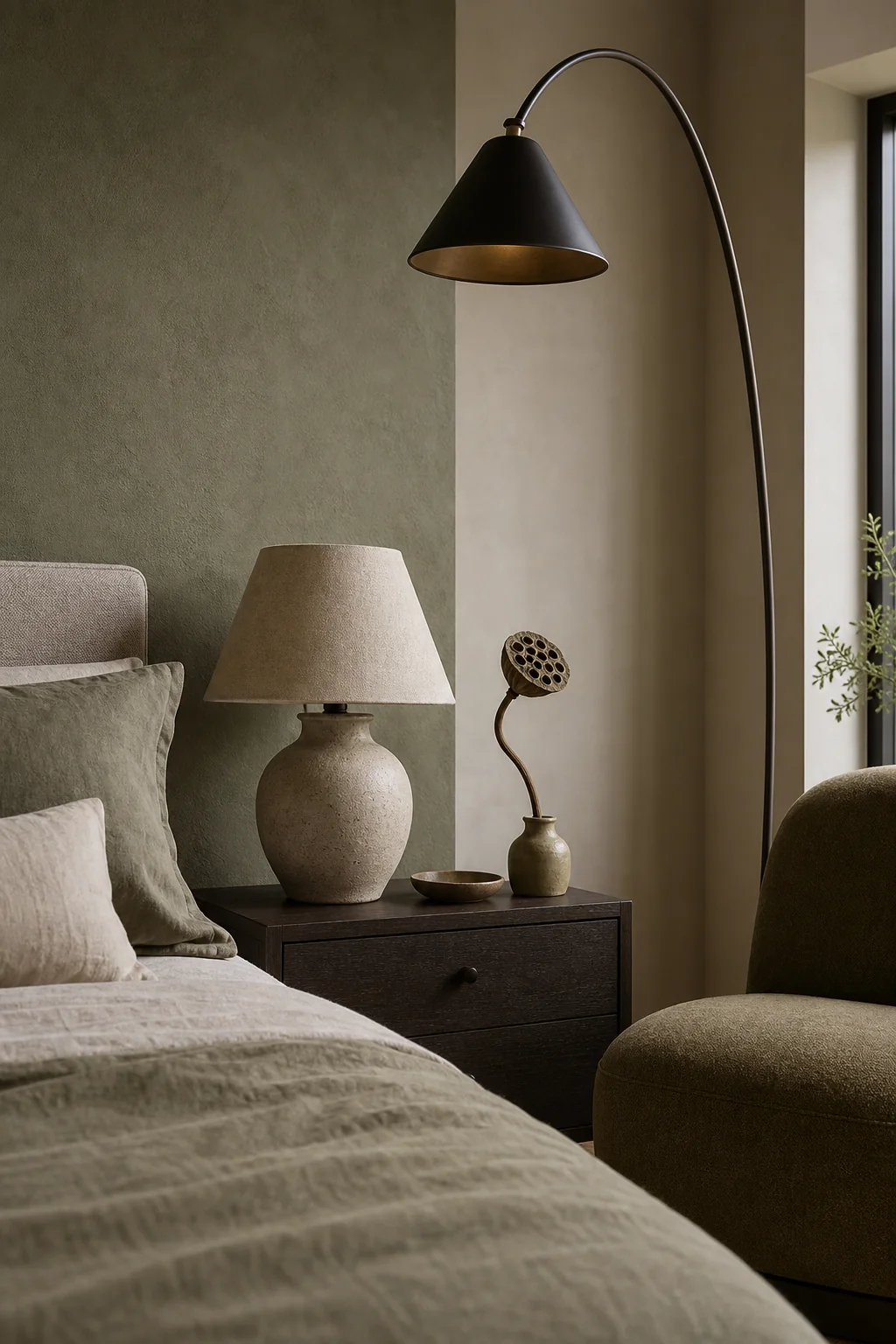
To capture the tactile essence of the dried botanical, every surface in the room must prioritize matte, light-absorbing finishes over anything glossy, polished, or highly reflective. Stonewashed linen bedding echoes the pod’s dry, papery outer skin, while unglazed, porous ceramics for lighting and decor maintain a raw, earthy surface logic throughout the space. This carefully curated material edit ensures the bedroom feels physically soothing and visually quiet, successfully translating the brittle, aged texture of the seedpod into a luxurious, highly tactile sanctuary designed for ultimate rest and relaxation.
Embracing dry textiles
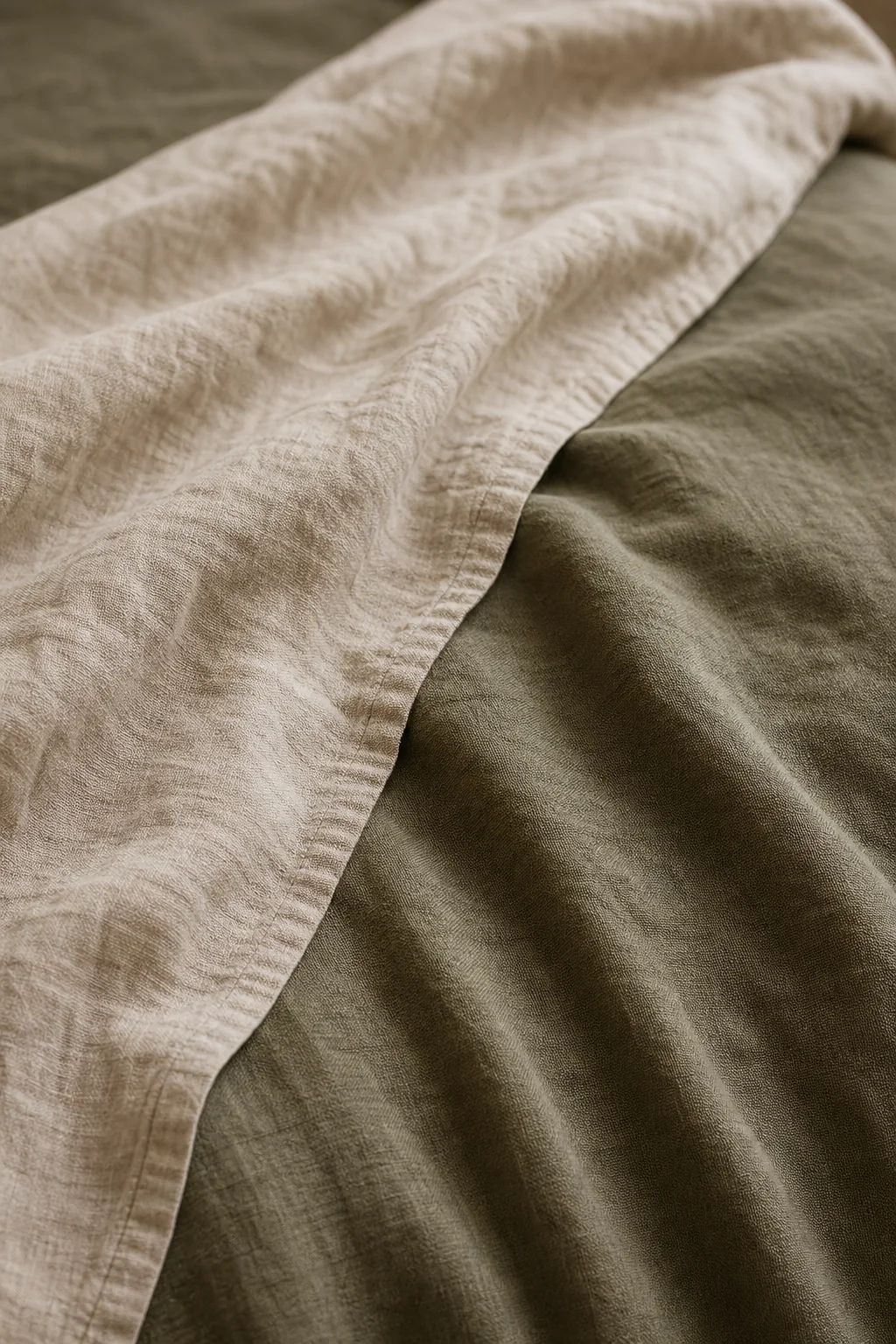
Dressing the bed in heavyweight stonewashed linen perfectly mimics the dry, papery texture of the pod, adding essential tactile warmth to the minimalist architecture. The naturally rumpled, light-absorbing quality of the fabric in dusty sage and warm chalk beautifully softens the flat, heavy planes of the room and invites immediate rest. This deliberate choice of dry, papery textiles ensures the sleeping area feels instantly inviting and deeply grounded, successfully avoiding the sterile, unapproachable atmosphere that can sometimes accompany highly sculptural, minimalist interior design focused strictly on clean geometry and bare surfaces.
Balancing heavy volumes with sweeping lines
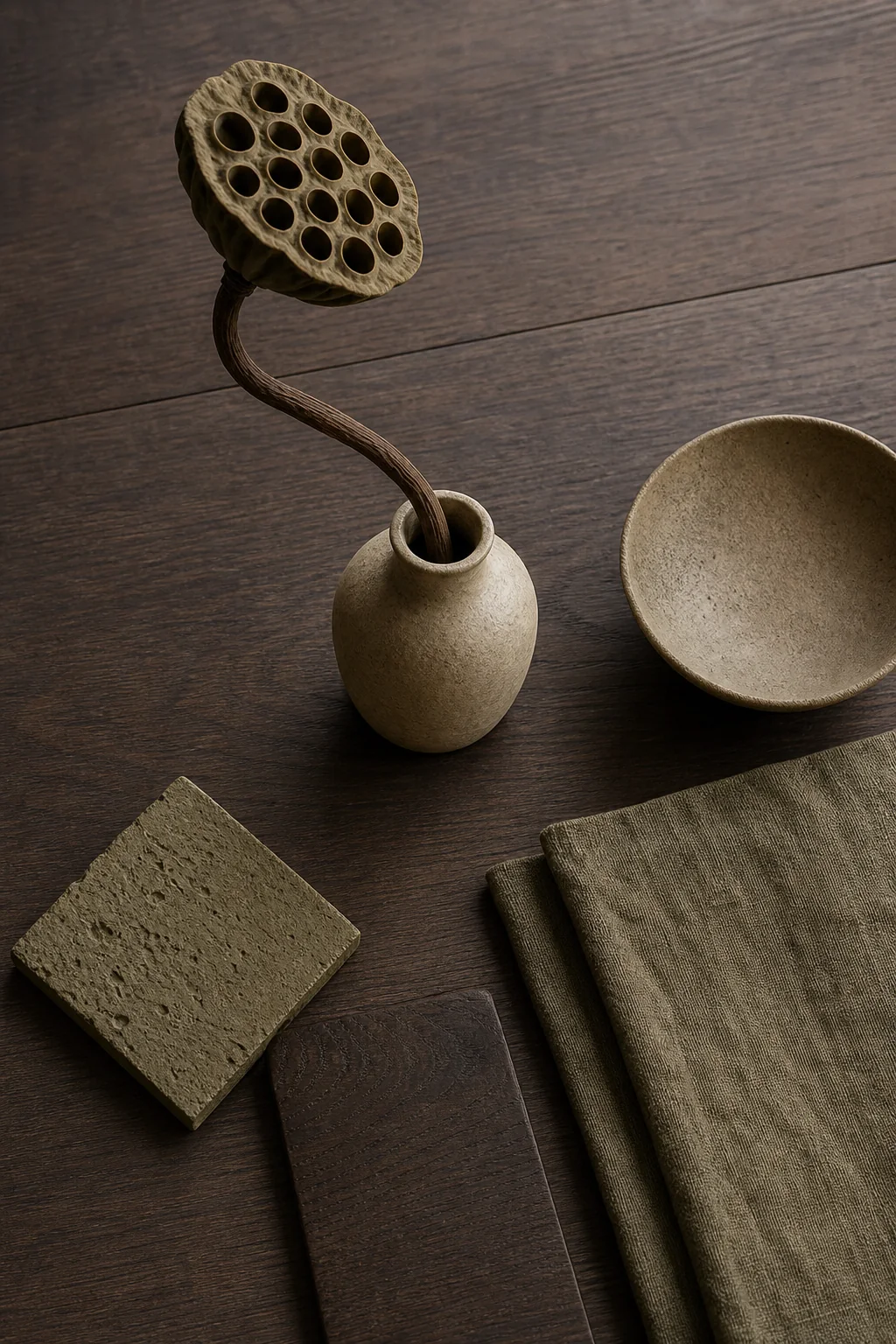
The room’s heavy, grounded elements are kept from feeling oppressive by introducing a single sweeping, graceful line that draws the eye upward, much like the solitary stem holding the geometric pod. An arcing bronze floor lamp mimics this sweeping botanical support, contrasting beautifully with a low, heavy lounge chair. You can easily adjust this concept’s intensity: a subtle approach introduces the olive palette through textiles alone, a balanced execution implements the recessed niches and sweeping lamp, while a bold design drenches the entire room and ceiling in dark olive plaster for a deeply immersive retreat.
Position your sweeping floor lamp so it arcs over a low seating area. This creates an intimate zone for reading while visually lifting the corner of the room.