
This Lotus Seedpod Became a Powder Room
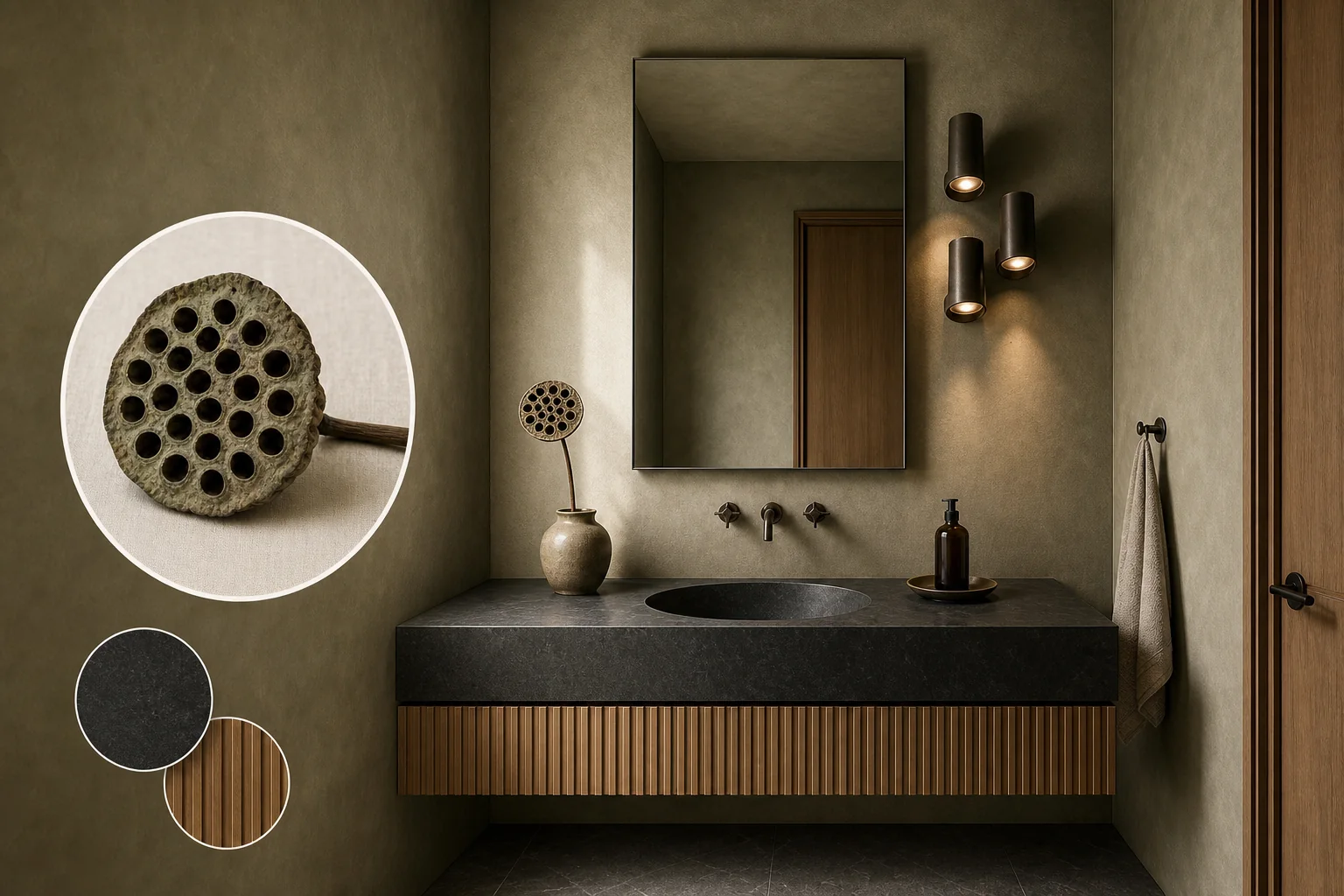
Nature often provides the best blueprints for striking interior architecture. By studying the geometry and texture of a dried lotus seedpod, a small, windowless space transforms into a moody, tactile powder room defined by the interplay of continuous, matte surfaces interrupted by deep, deliberate voids.
Carving Out the Cavities
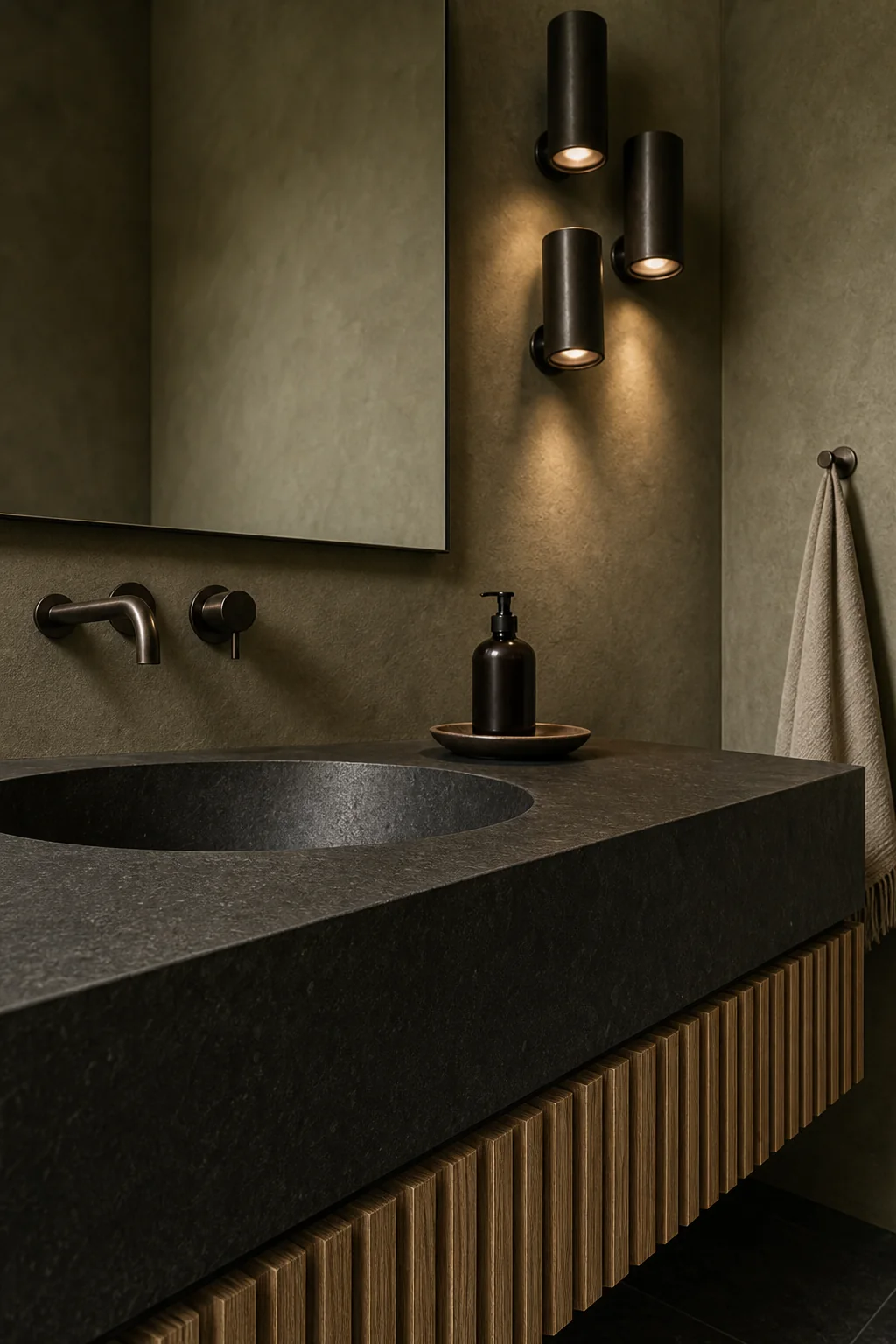
The room establishes its architectural weight by mimicking the pod’s flat face punctured by deep recessed cavities. A deep circular basin sinks into the thick basalt vanity, translating the dark, perfectly circular holes where seeds once sat into a functional centerpiece. To execute this heavy, carved top, install a floating vanity and choose an integrated sink to maintain a perfectly flat horizontal plane. Following these foundational steps ensures the structure feels carved rather than built, prioritizing mass and shadow over standard cabinetry.
- Frame the softly coved ceiling corners to eliminate sharp 90-degree angles.
- Install the heavy floating vanity supports, securing steel brackets to studs.
- Mount the slatted white oak vanity base to conceal the plumbing while adding vertical texture.
- Set the honed basalt vanity top and basin so the dark stone sits perfectly flat.
- Wire the asymmetrical sconce cluster in a tight, irregular grouping beside the mirror location.
Enveloping the Space in Patina
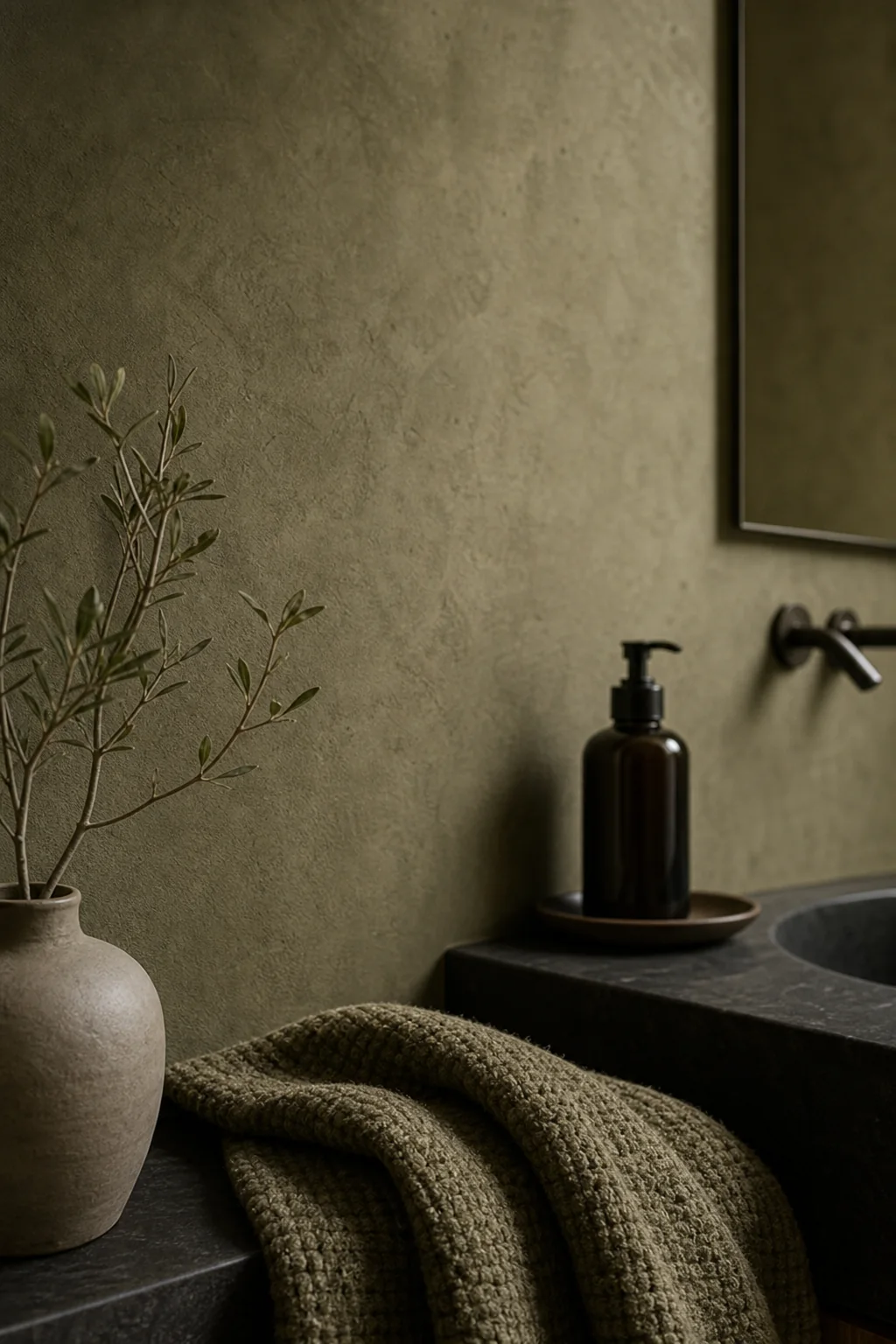
Wrapping the entire space in a single, desaturated hue replicates the continuous, dusty skin of the dried botanical. Olive Roman clay plaster blurs the boundaries of the room, echoing the dusty, muted olive-green exterior of the pod. Apply this matte finish across walls and ceilings to absorb light rather than reflect it, ensuring the background remains completely uniform so the asymmetrical, clustered focal points do not overwhelm the small space. This visual-DNA mapping table details the core translations from natural artifact to interior architecture.
| Source trait | Visible evidence | Room move |
|---|---|---|
| Deep recessed cavities | The dark, perfectly circular holes in the flat top of the pod where seeds once sat | A thick, floating vanity carved from dark, honed basalt featuring a deep, steep-sided, perfectly circular recessed basin |
| Desaturated botanical patina | The dusty, muted olive-green skin of the dried pod exterior | Walls and ceiling completely enveloped in a matte, olive-toned Roman clay plaster that blurs the room’s boundaries |
| Fibrous woody structure | The dry, rigid, textured stem supporting the heavy pod | A slatted, wire-brushed white oak vanity base and matching solid core door, introducing dry, linear tactile warmth |
| Clustered circles | The irregular but dense grouping of seed holes on the pod’s face | An asymmetrical cluster of three deep, cylindrical dark bronze wall sconces mounted near the mirror, casting focused pools of light |
Softening the Architectural Shell
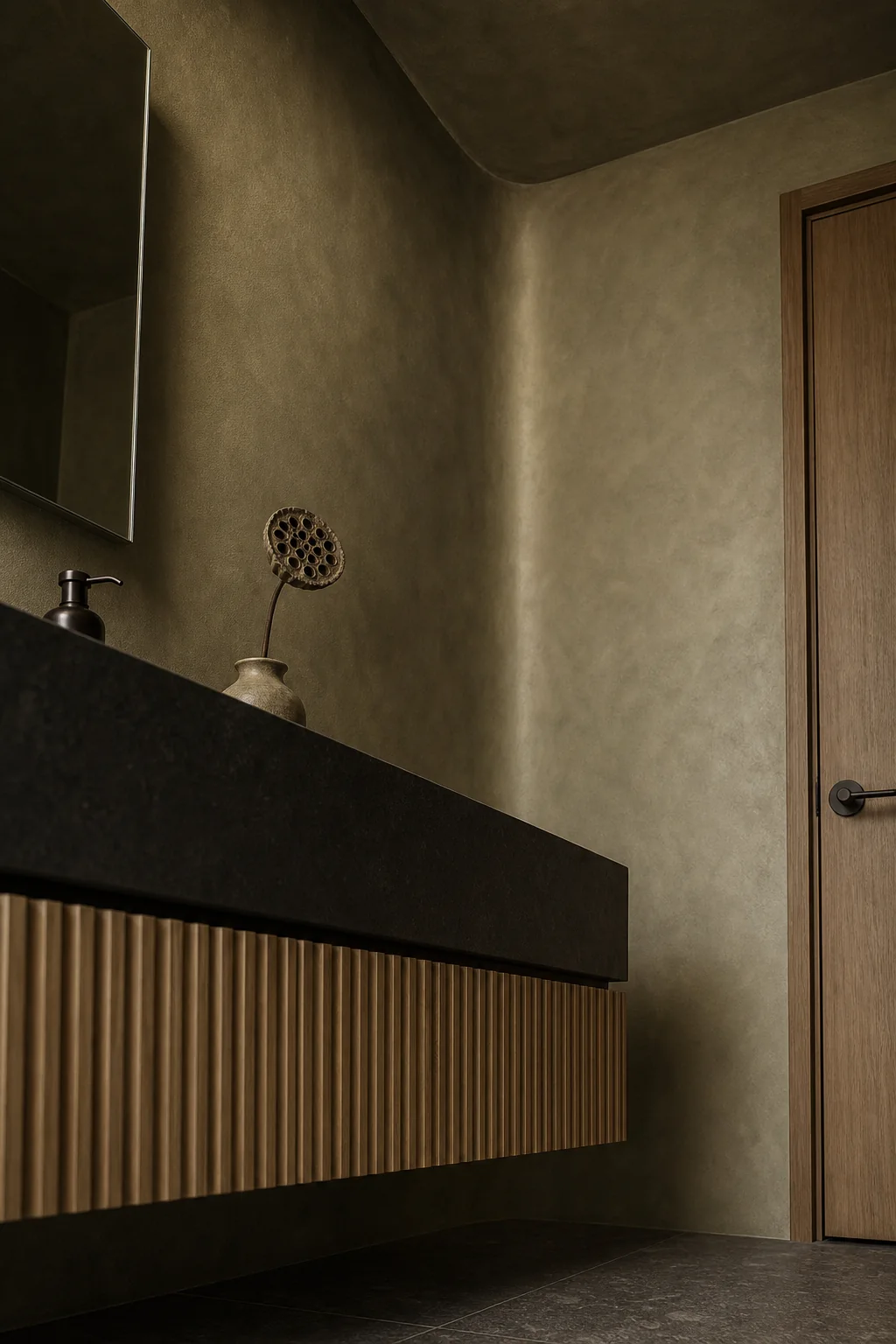
Coved corners replicate the softly rounded outer contours of the pod, transforming a standard boxy room into a continuous, enveloping shell. By curving the transitions from wall to ceiling, the olive Roman clay plaster catches soft directional light without casting harsh corner shadows. This architectural softening reinforces the organic nature of the botanical source, deliberately avoiding literal interpretations like floral wallpaper or oversized wooden sculptures while maintaining a moody, tactile retreat that feels inherently natural.
Grounding with Fibrous Warmth
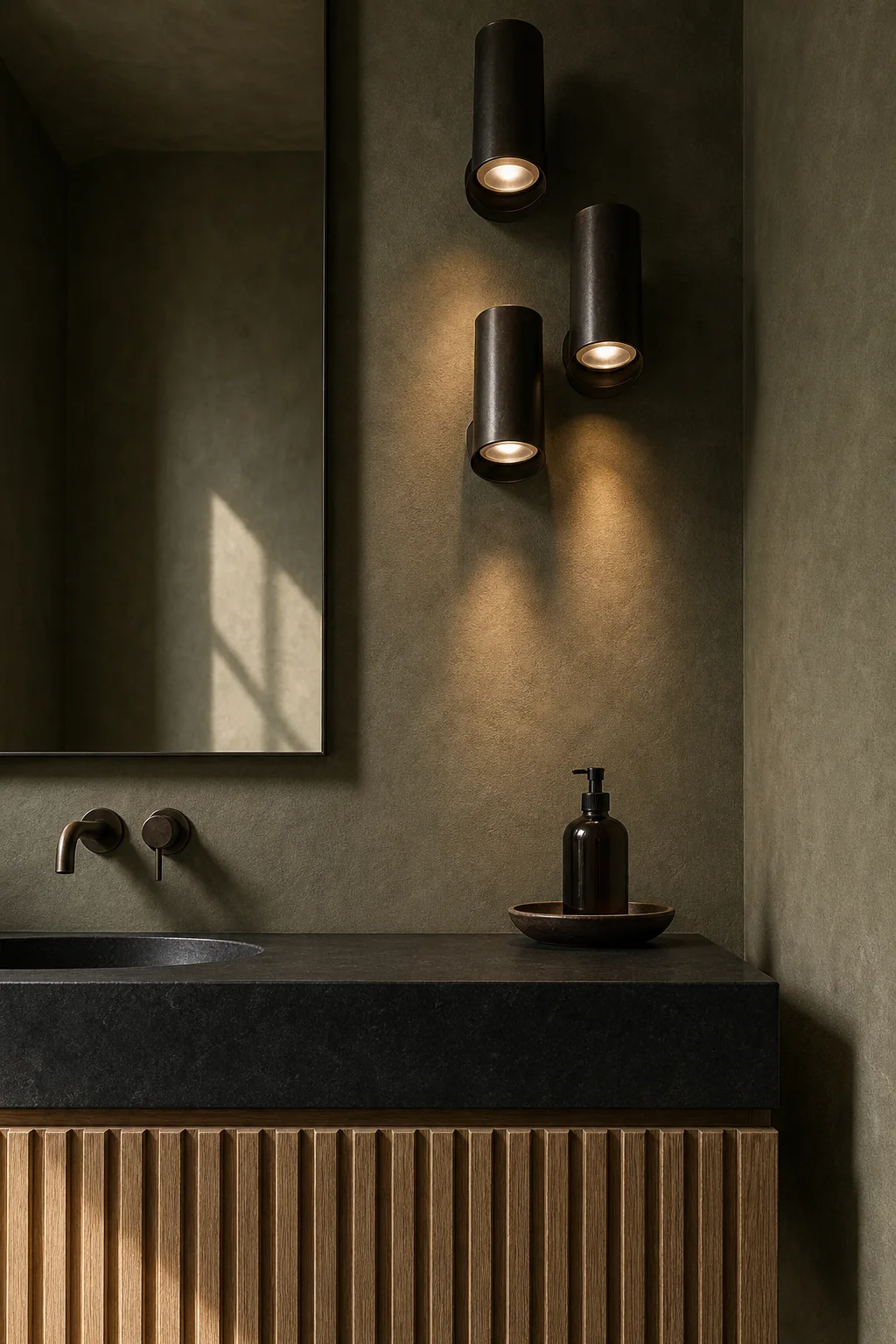
Contrasting the smooth plaster with heavily grained wood introduces the necessary tactile friction found in the pod’s rigid stem. Wire-brushed oak slats introduce the dry texture of the stem, grounding the heavy stone vanity above. Specify wire-brushed finishes to highlight the natural grain without adding gloss, and use vertical slats to echo the linear nature of a fibrous woody structure. The following material checklist provides the exact finishes needed to achieve this desaturated botanical patina and build a cohesive, texture-driven material palette.
Honing the Stone Surface
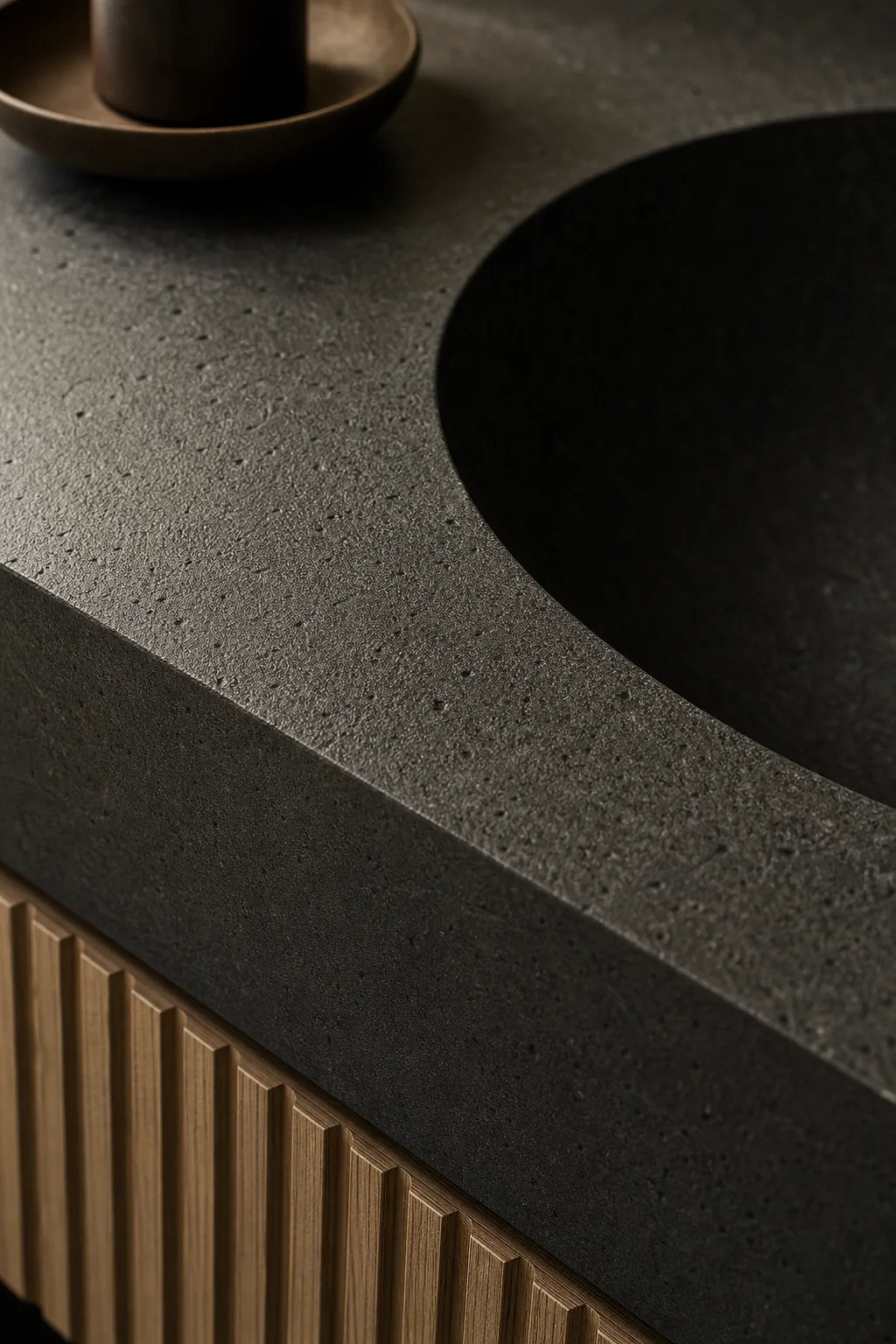
Honed basalt mimics the matte, porous surface of the seedpod, providing a stark material contrast to the dry wood below. The dark stone sits perfectly flat, featuring a deep, seamlessly integrated circular sink that drops off sharply, much like the empty seed cavities. Keeping the stone honed rather than polished is crucial; a glossy finish would ruin the illusion of a dry, natural element, whereas a matte and porous overall surface absorbs light beautifully and enhances the room’s quiet, subterranean atmosphere.
Clustering the Light
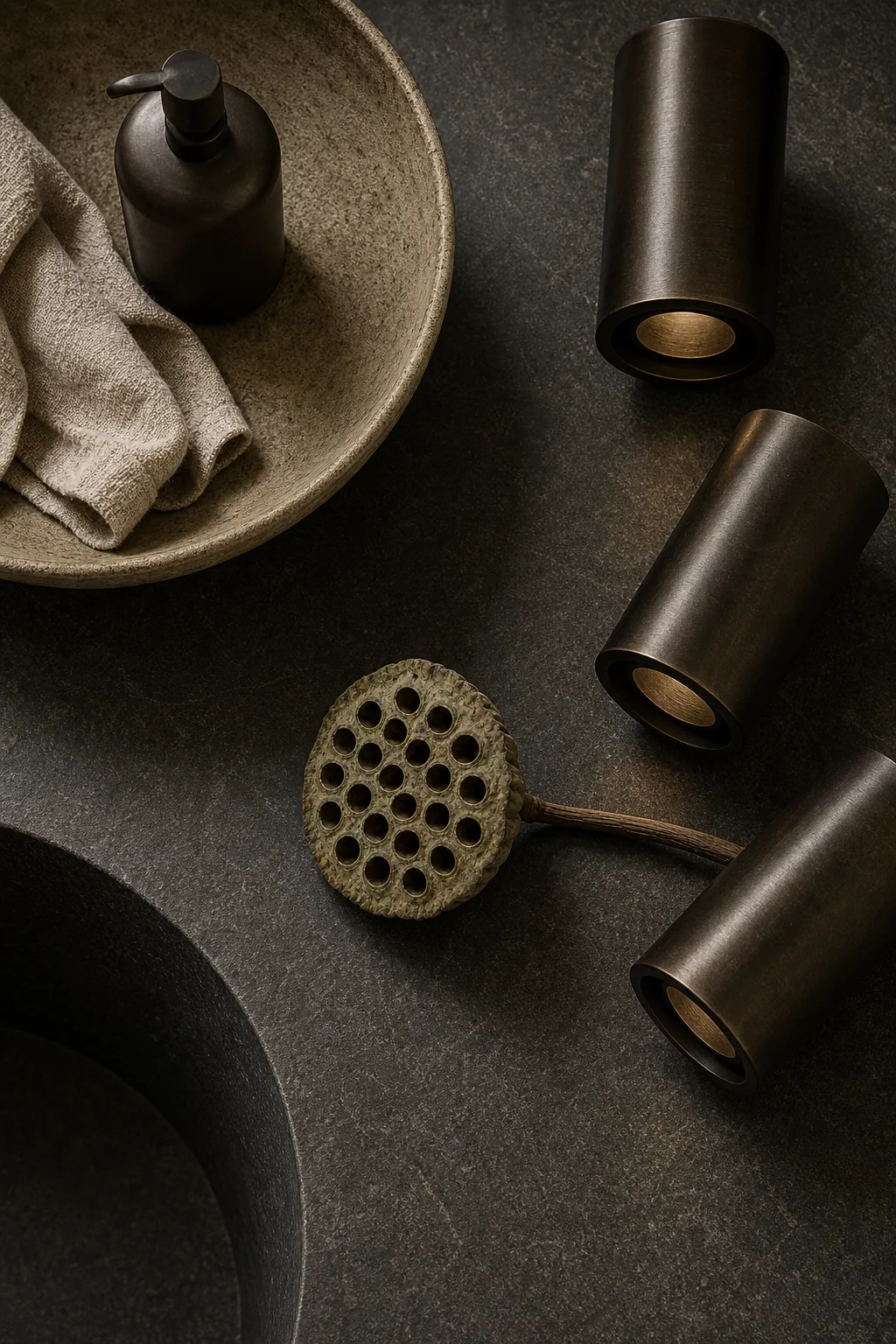
Grouping the lighting asymmetrically against a quiet background captures the organic, clustered rhythm of the seedpod’s face. Asymmetrical bronze sconces cluster together like seeds in the pod, casting warm, focused light. You can scale this concept: a subtle approach introduces a single circular sink and muted paint; a balanced execution commits to clay plaster and wire-brushed oak; while a bold design carves the entire vanity from massive basalt and plunges the room into deeply saturated olive tones.
Use narrow-beam bulbs in cylindrical sconces to create dramatic, defined pools of light that mimic the depth of empty seed cavities.