
This Peacock Feather Became a Dressing Room
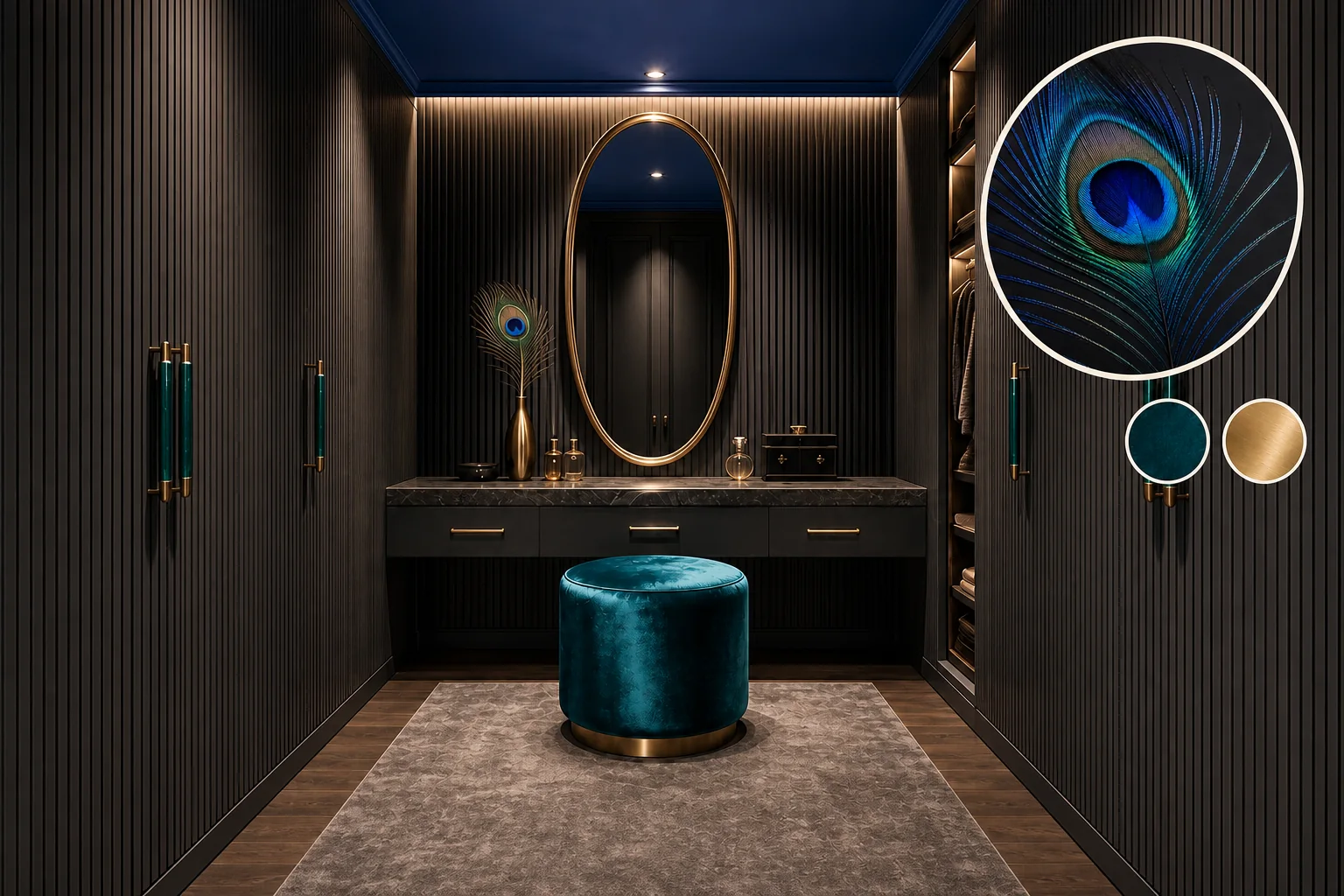
A peacock feather’s mesmerizing structural color meets the intimate utility of a modern dressing room. This translation relies on the interplay of dark, rhythmic backgrounds allowing singular moments of intense color to shine, keeping the foundation entirely matte so the iridescent accents feel intentional rather than overwhelming.
Building a rhythmic charcoal shell
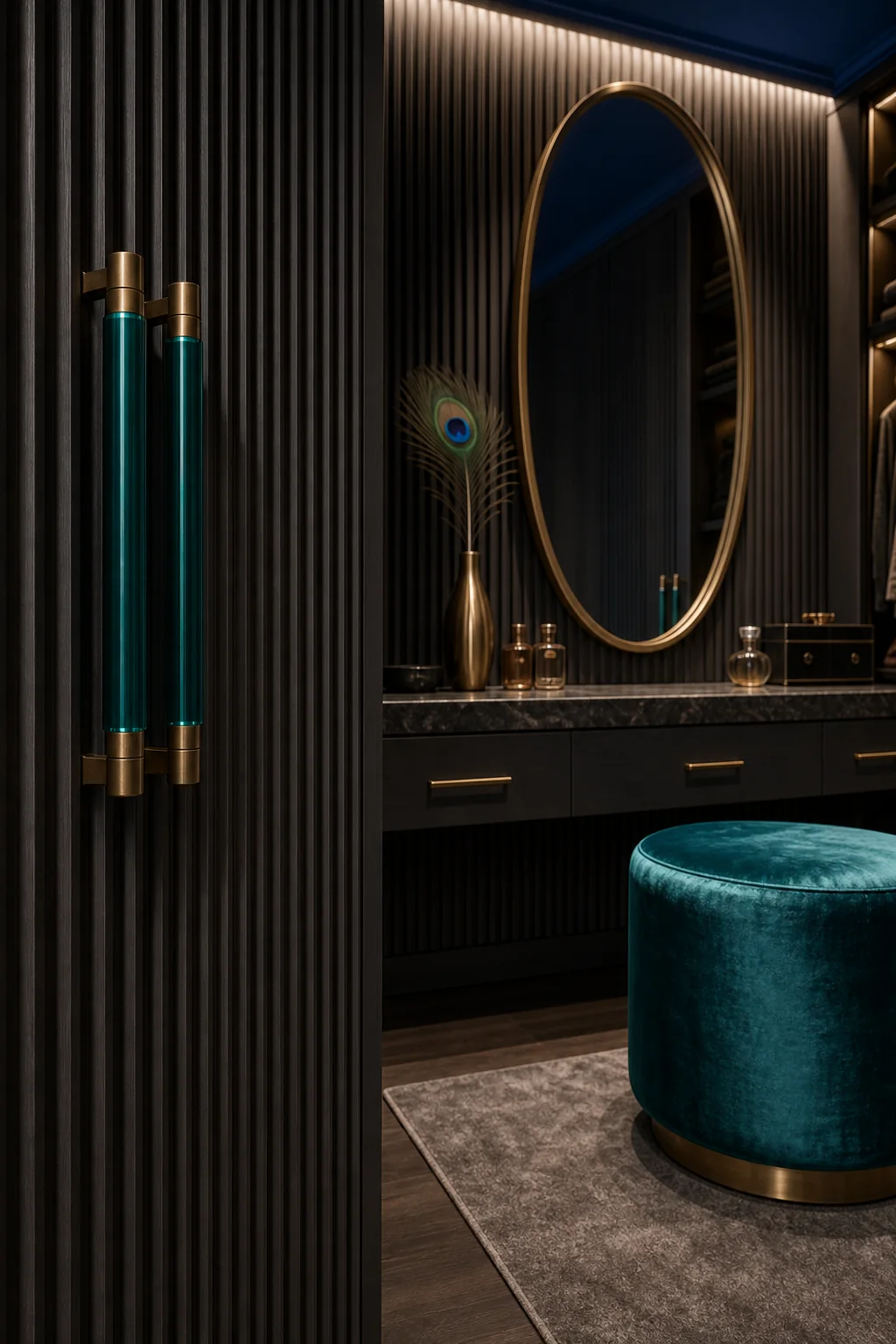
By wrapping the room in heavily textured, dark millwork, we create a quiet architectural shell that grounds the bolder elements to come, directly mimicking the dense, parallel filaments extending outward from the feather’s central shaft. Specifying floor-to-ceiling fluted panels maximizes this vertical rhythm, drawing the eye upward while concealing the room’s functional storage. Utilizing a flat or matte paint finish ensures these surfaces absorb light and recede visually, so the intimate space feels enveloping rather than overwhelming. To achieve this foundational texture, follow these core construction phases.
- Install floor-to-ceiling fluted wall panels across all available vertical surfaces to establish a continuous, rhythmic architectural texture.
- Paint the newly installed millwork in a matte charcoal finish to absorb ambient light and create a quiet, moody shell.
- Integrate flush, hardware-free doors for concealed storage that remains completely hidden within the continuous fluted wall pattern.
- Build a central recessed vanity niche that intentionally breaks the fluting to house the dressing table and mirror.
- Add soft ambient cove lighting above the millwork to wash gently downward, highlighting the ribbed texture of the walls.
Seamless wardrobe integration
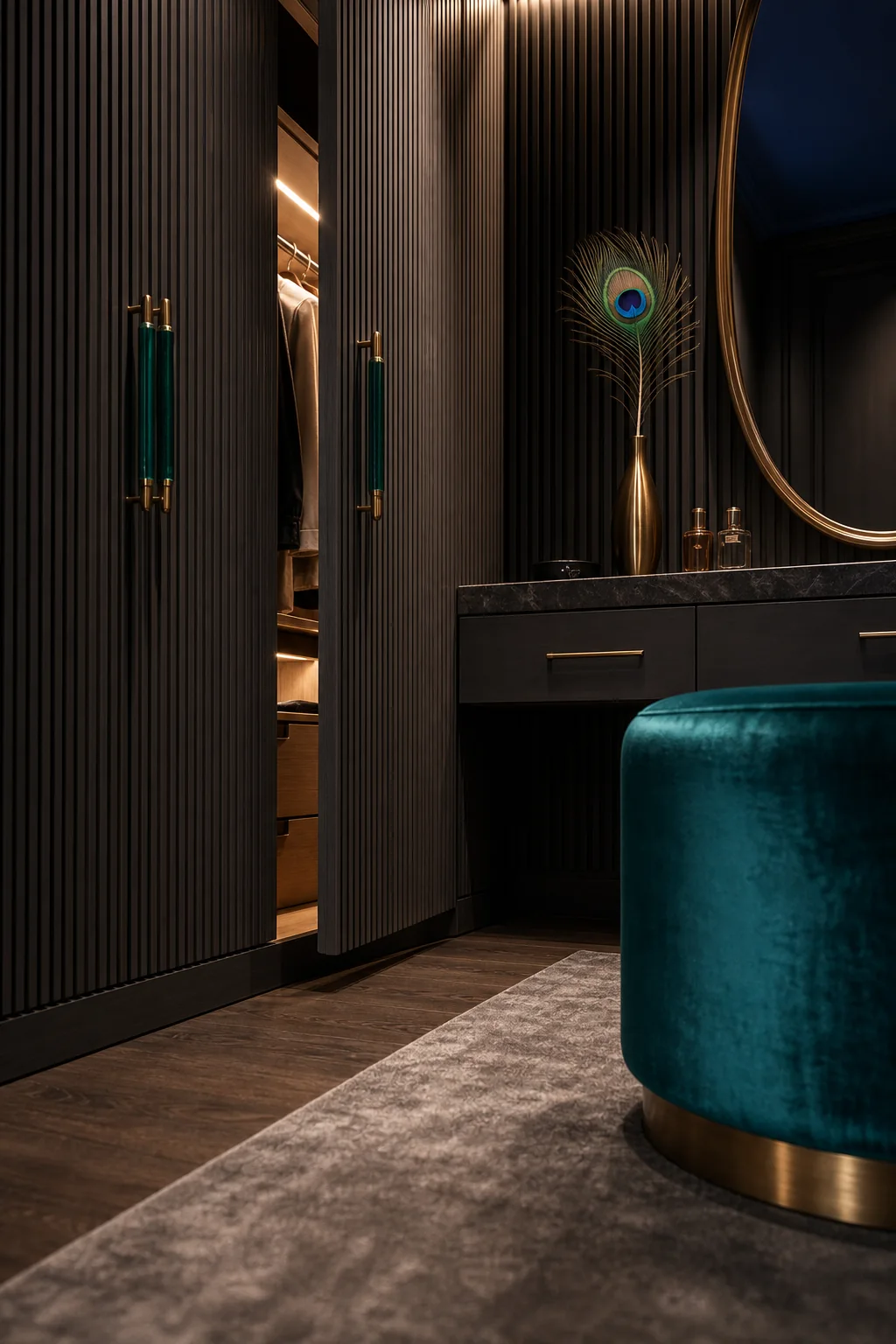
Fluted panels brilliantly conceal the dressing room’s extensive wardrobe storage, ensuring the rhythmic charcoal shell remains completely unbroken by visual clutter. A flush, floor-to-ceiling door seamlessly integrates into the surrounding millwork, opening to reveal warm oak interiors that contrast beautifully with the matte charcoal base. This hidden utility maintains the room’s serene, highly tailored atmosphere while fulfilling its primary function as a dedicated space for clothing and daily preparation, proving that high design and practical storage can coexist effortlessly.
Harnessing structural iridescence
Rather than painting every wall bright blue, concentrating the intense cobalt on the ceiling mimics how the feather’s iridescent eye emerges dramatically from its dark surroundings. Carrying the ceiling color down slightly onto the top trim blurs the boundary between the vertical and horizontal planes, creating a canopy effect. Introducing emerald green exclusively through small touchpoints, like glass cabinet hardware, adds necessary depth without competing for attention. This visual-DNA mapping table illustrates how these shifting cobalt and emerald hues directly inform the room’s design.
| Source trait | Visible evidence | Room move |
|---|---|---|
| Radiating Barbs | The dense, parallel filaments extending outward from the feather’s central shaft. | Floor-to-ceiling fluted millwork painted matte charcoal creates a textured, rhythmic shell. |
| Structural Iridescence | The shifting cobalt and emerald hues of the feather’s eye that emerge from a dark base. | A deep cobalt blue ceiling washes down into the dark millwork, accented by emerald pulls. |
| Directional Sheen | The smooth, light-catching surface of the central plumage that changes brightness depending on the angle. | A vanity stool upholstered in heavy teal silk velvet catches the light dynamically. |
| The Ocellus (Eye) | The distinct, smooth oval shape at the apex of the feather, serving as its visual anchor. | A large, elongated oval vanity mirror framed in brushed bronze serves as a luminous focal point. |
Introducing directional sheen
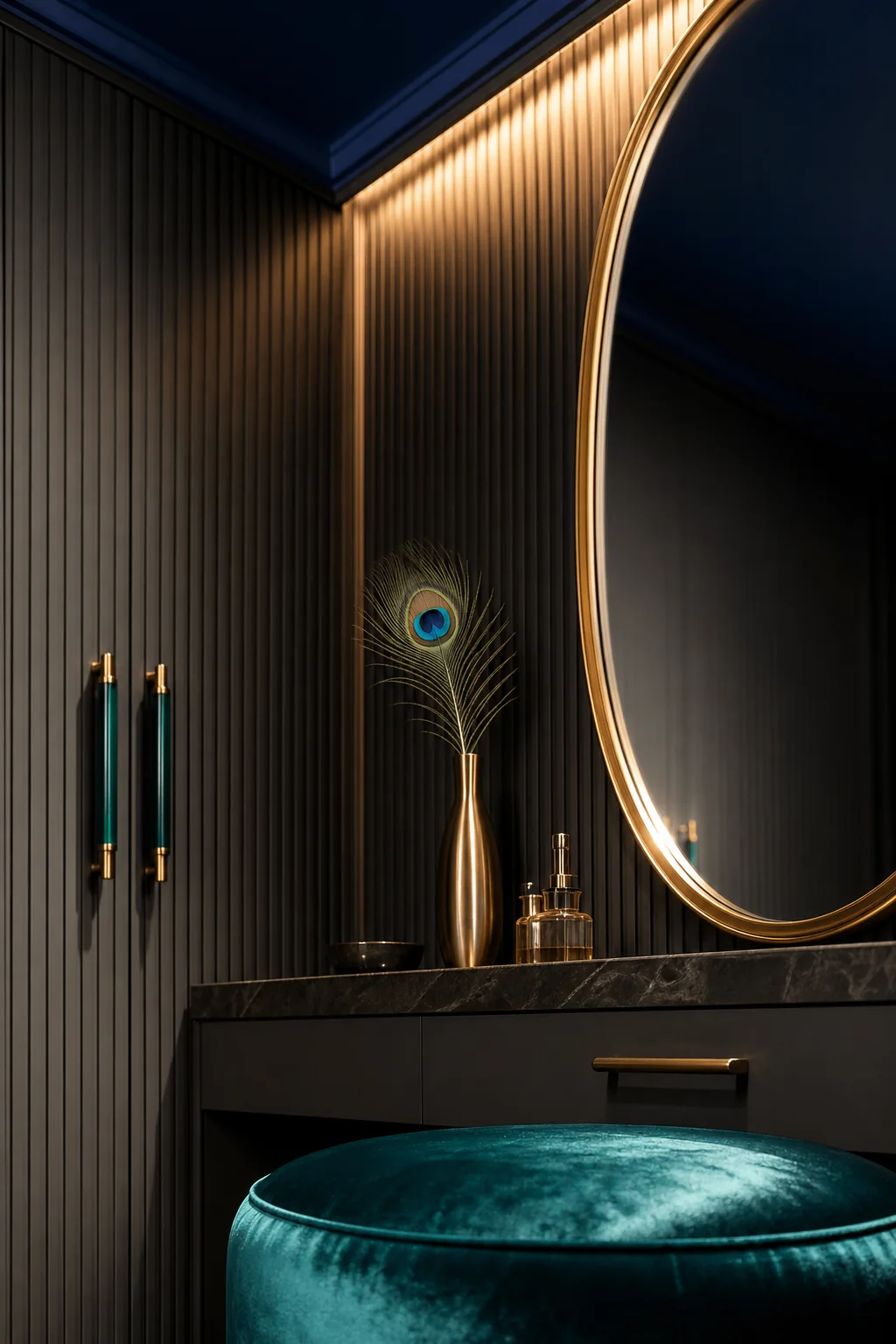
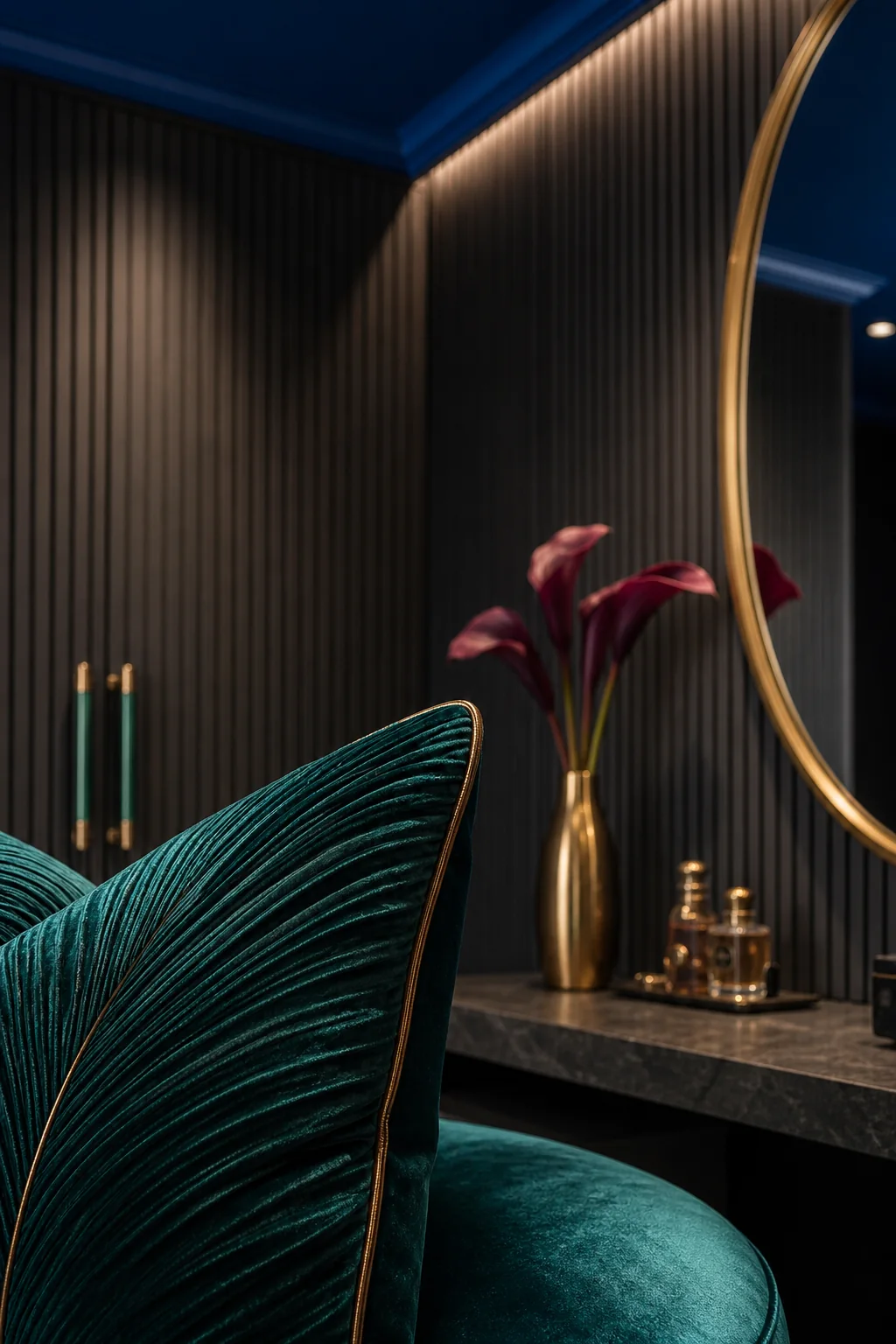
To capture the feather’s dynamic light response without resorting to literal metallic paints, we rely on textiles that possess a natural directional nap. Selecting a heavy silk velvet for the vanity seating provides both everyday durability and an unmistakable luster, activating its color-shifting properties as you move around the space and interact with the light. Ensuring the cove lighting is positioned to graze the velvet maximizes this effect. Gather these essential finishes to build the room’s tactile palette.
Capturing the light
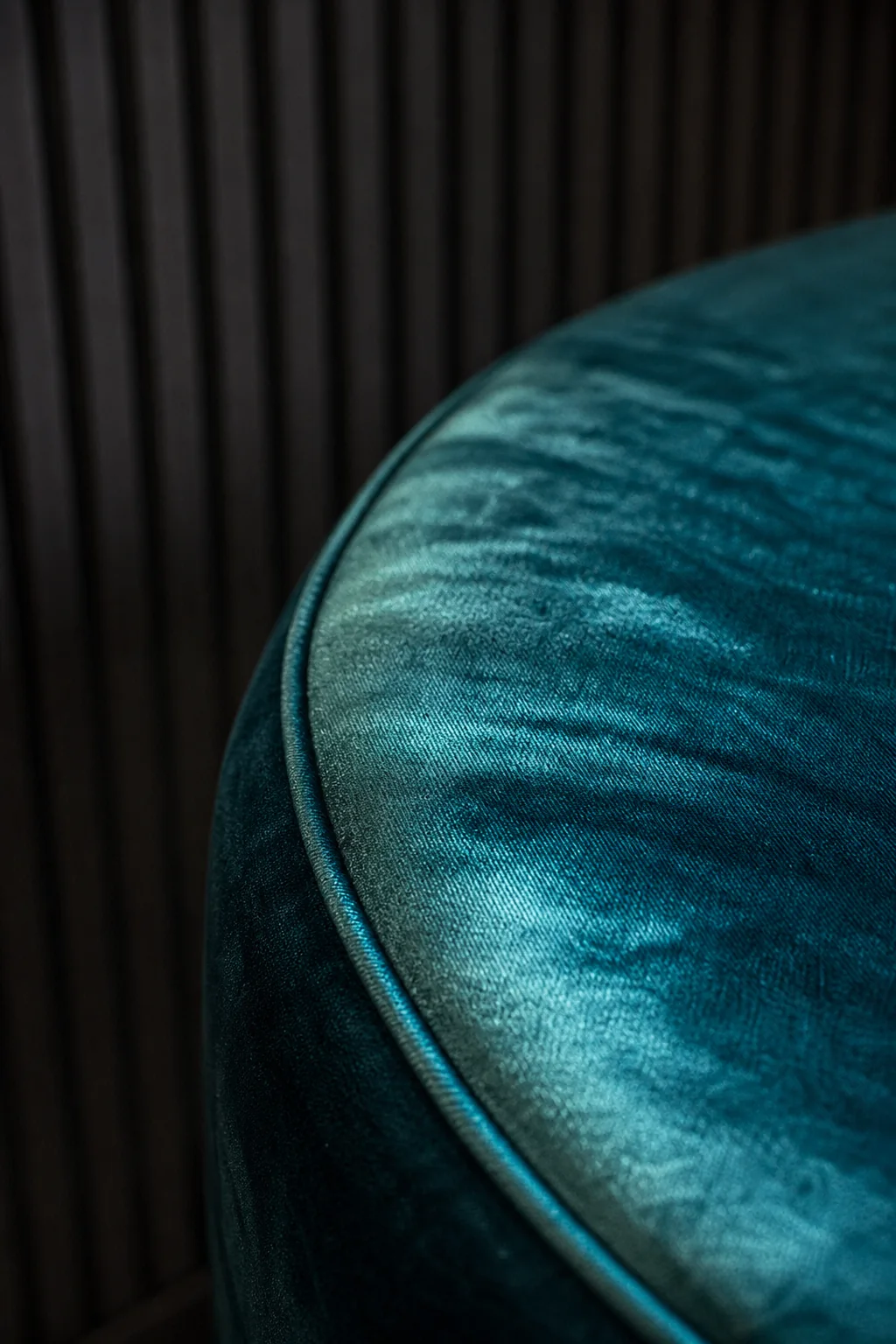
A macro view of the vanity stool reveals exactly how the teal silk velvet upholstery mimics the feather’s shifting sheen. The directional nap catches the soft cove lighting, creating highlights and shadows that change depending on the viewing angle and the time of day. This deliberate textile choice ensures the iridescent color shifting feels highly sophisticated and firmly grounded within the dark, heavily textured charcoal environment, avoiding any risk of the space feeling overly theatrical or unrefined.
Anchoring with the ocellus
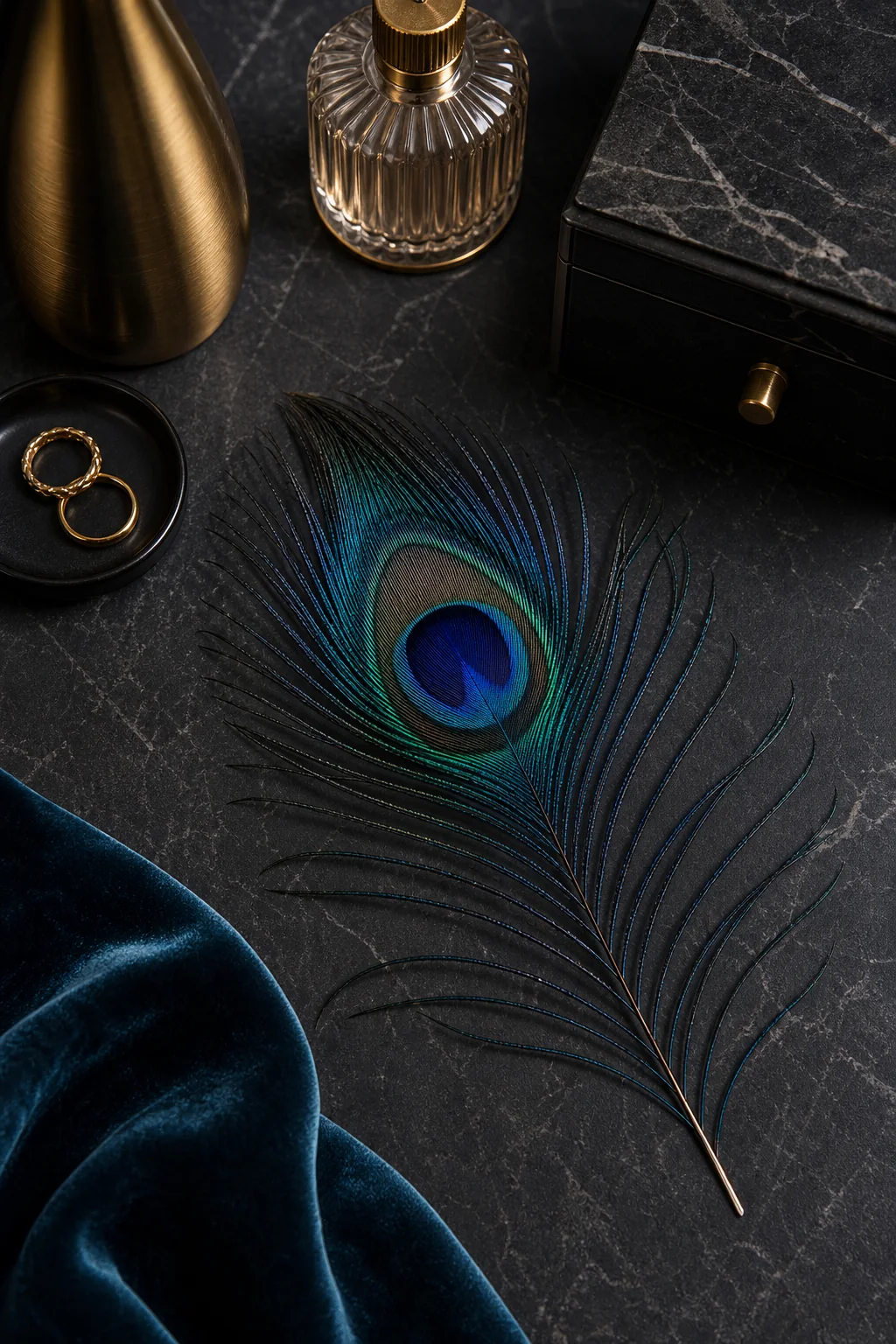
An elongated oval mirror anchors the textured charcoal walls, providing a smooth, luminous resting place for the eye that directly references the feather’s distinct ocellus. Framing this central mirror in brushed bronze adds essential warmth against the cool tones. You can easily scale this design’s intensity: for a subtle approach, limit cobalt blue to wardrobe interiors, keep the ceiling charcoal, and use a standard flat weave fabric; for a balanced execution, pair teal velvet seating with a deep cobalt ceiling; for a bold statement, extend the cobalt down the walls with a high-gloss ceiling to amplify the light reflection.
Backlight the oval mirror with warm LED strips to separate it from the dark fluted walls and emphasize its smooth geometry.