
This Willow Teacup Became a Window Reading Nook
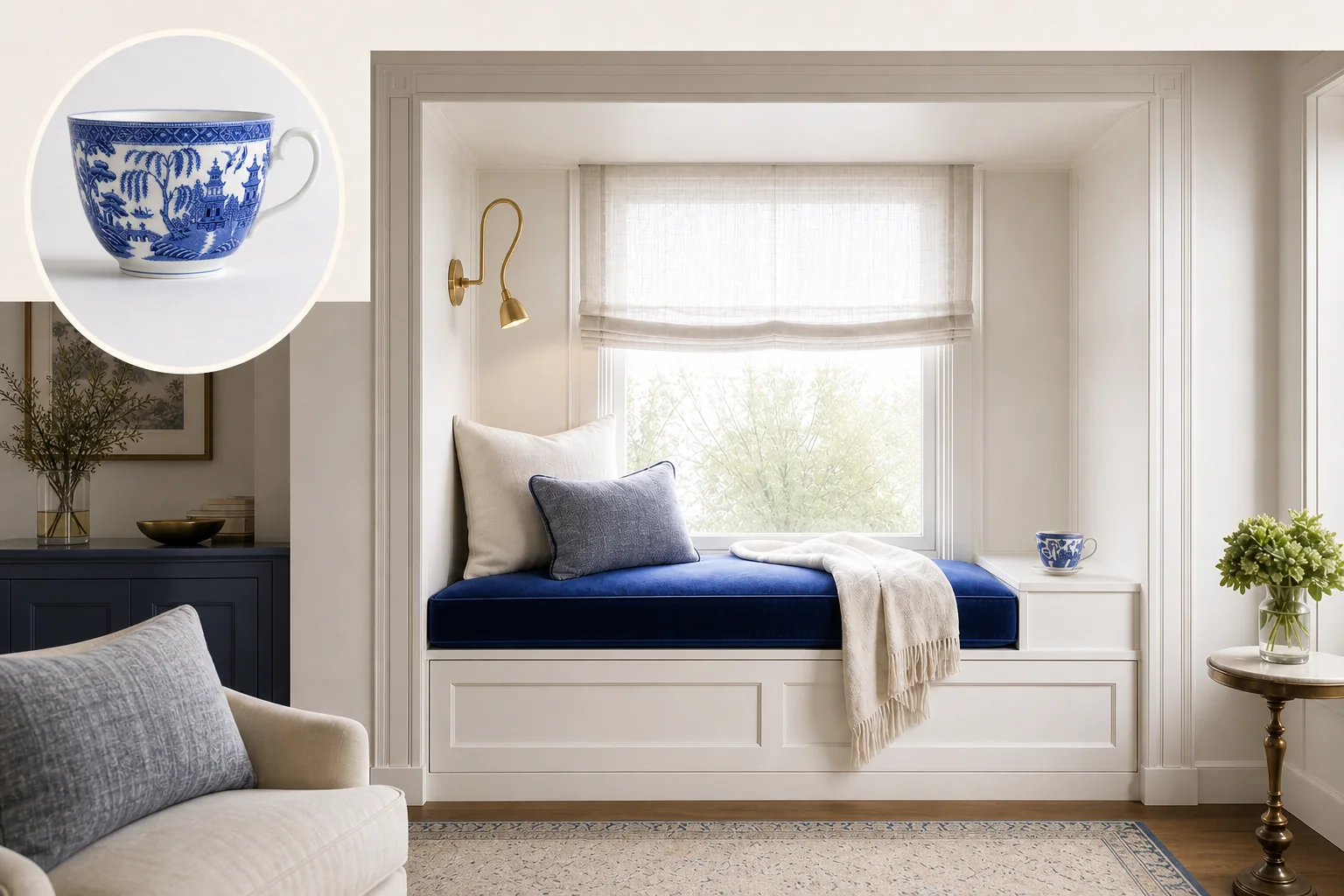
Explore how the delicate balance of a classic porcelain teacup and its crisp contrasts inspire a tranquil, architectural window reading nook. Keep the architectural shell stark and geometric to let the saturated textiles and delicate curves stand out, ensuring the final space feels both deeply rooted in tradition and refreshingly serene.
Framing the architectural vignette
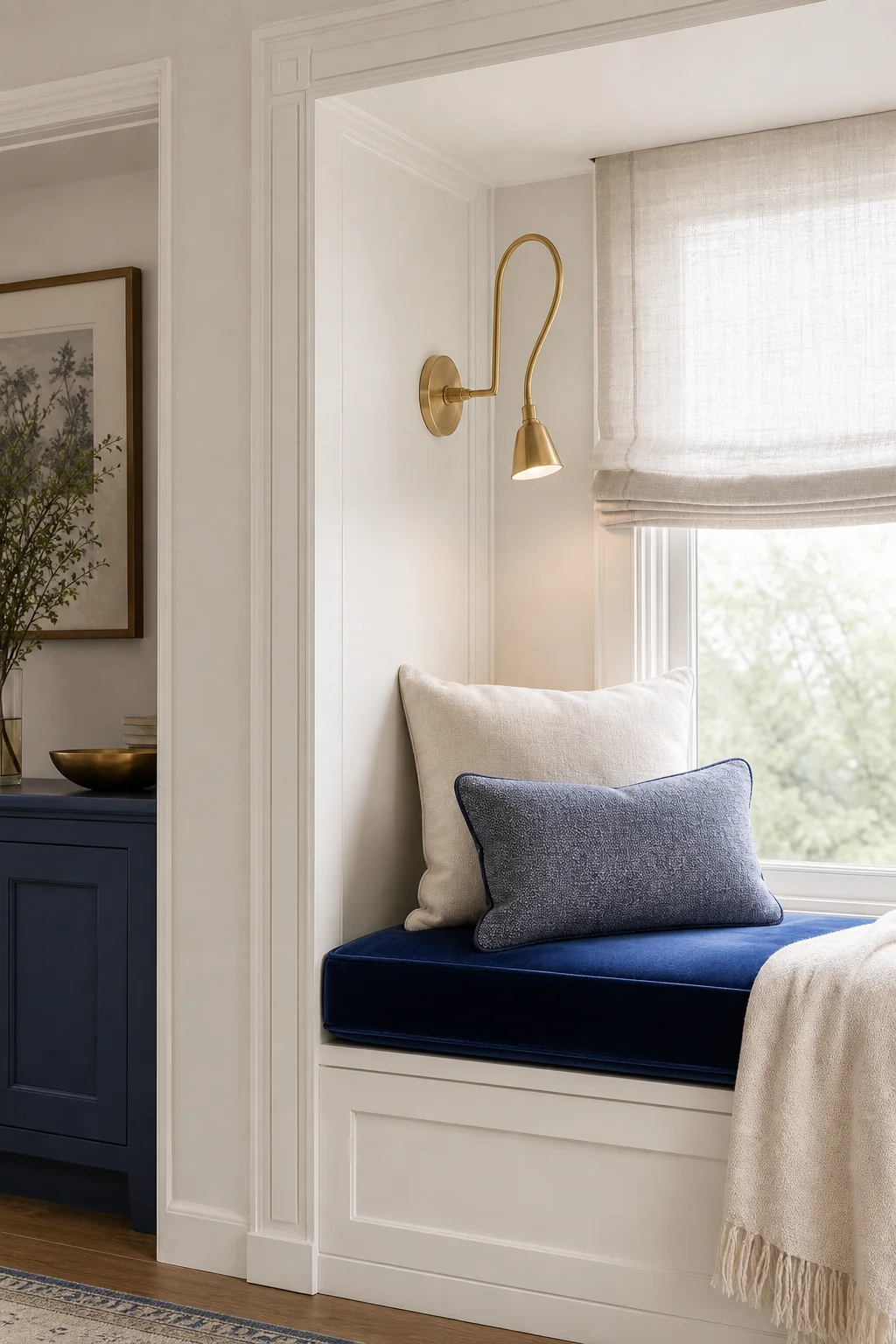
Just as the teacup’s painted border contains its sprawling landscape, crisp millwork creates a defined architectural boundary for the reading space. Utilizing crisp framing rectangles establishes a structured foundation, allowing the recessed alcove walls to carve out a deep sense of enclosure before applying the final high-gloss finishes. This structural approach mirrors the geometric fretwork border of the porcelain, transforming a simple window into a deliberate, room-defining feature. By building out the surrounding walls, the architecture itself becomes a protective shell, inviting readers to step inside a beautifully framed, three-dimensional vignette that perfectly captures the essence of classic transferware.
- Frame the window alcove with flat-panel millwork to create a crisp, recessed architectural boundary around the glass.
- Build a deep bench seat across the alcove base so a solid, structural resting surface spans the entire width of the nook.
- Route subtle geometric lines into the facing trim to ensure clean, traditional fretwork details frame the opening without overwhelming it.
- Paint the entire millwork assembly in a high-gloss white so the architectural shell reflects light like a glazed porcelain teacup.
Anchoring with cobalt and glaze
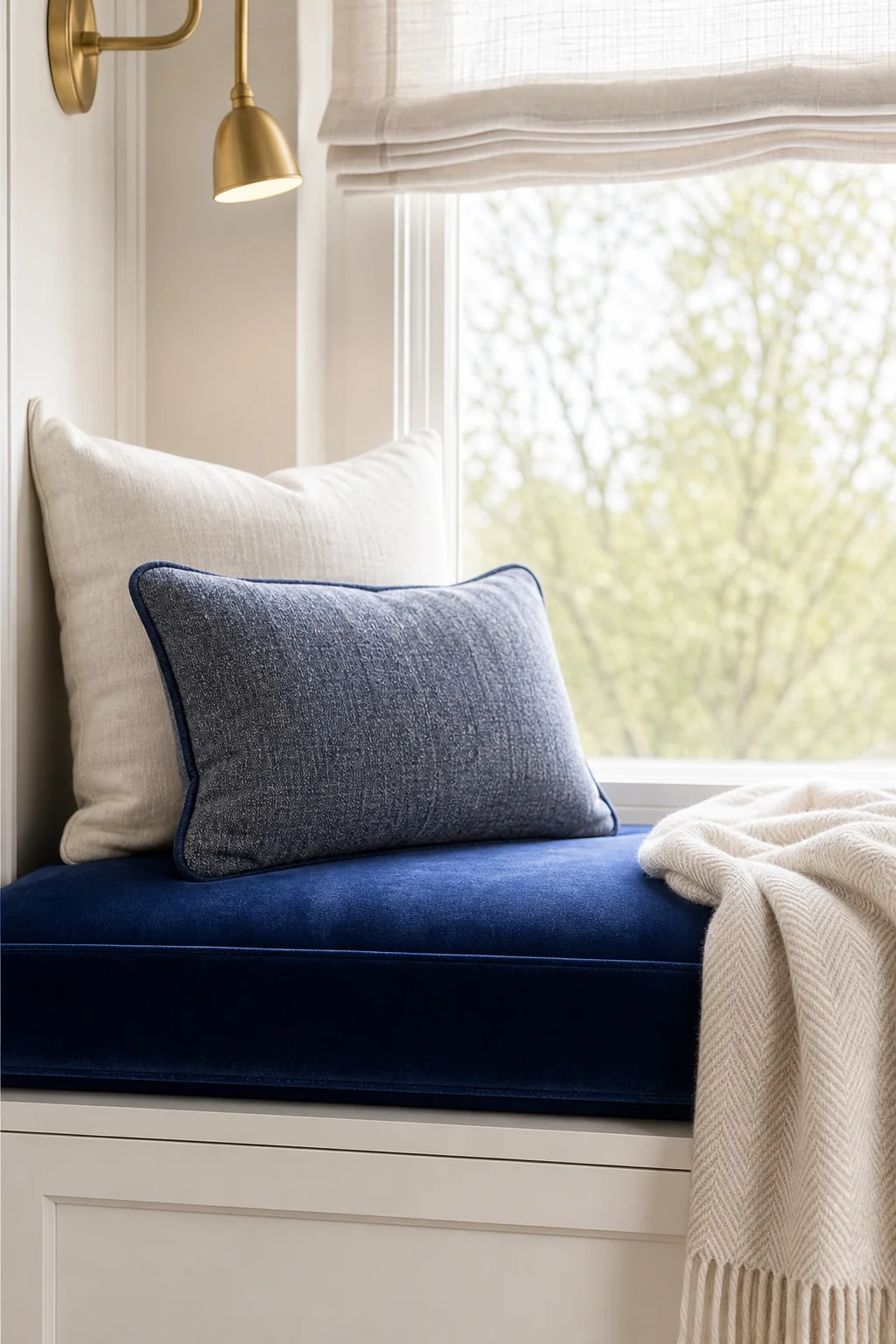
The high-contrast relationship between deep blue pigment and stark white porcelain translates directly into the nook’s foundational color blocking. A visually heavy, saturated base grounds the bright, gallery-white architectural shell, ensuring the deep blue remains exclusively concentrated on the heavy bottom seat cushion to anchor the entire composition. This deliberate separation of color prevents the space from feeling overwhelmingly themed, relying instead on stark, graphic contrasts to evoke the source material. By keeping the surrounding walls and trim a unified porcelain white, the vibrant seating area naturally draws the eye, creating an inviting focal point within the minimalist framework.
| Source trait | Visible evidence | Room move |
|---|---|---|
| Framed Vignette | The geometric fretwork border that frames the teacup’s central painted landscape | A deep built-in window alcove framed in crisp white, flat-panel millwork with subtle geometric routing |
| Cobalt & Glaze | The stark contrast of deep blue pigment against translucent white porcelain | A saturated cobalt blue velvet seat cushion anchoring the bright, gallery-white architectural shell |
| Weeping Canopy | The cascading, delicate leaves of the painted willow tree motif | A sheer, lightweight linen Roman shade with a subtle vertical slub that filters light like a tree canopy |
| Delicate Loop | The thin, gracefully curved porcelain handle attached to the cylindrical cup | A slender, looping brass wall sconce mounted inside the reading alcove to provide reading light |
Grounding the base with velvet
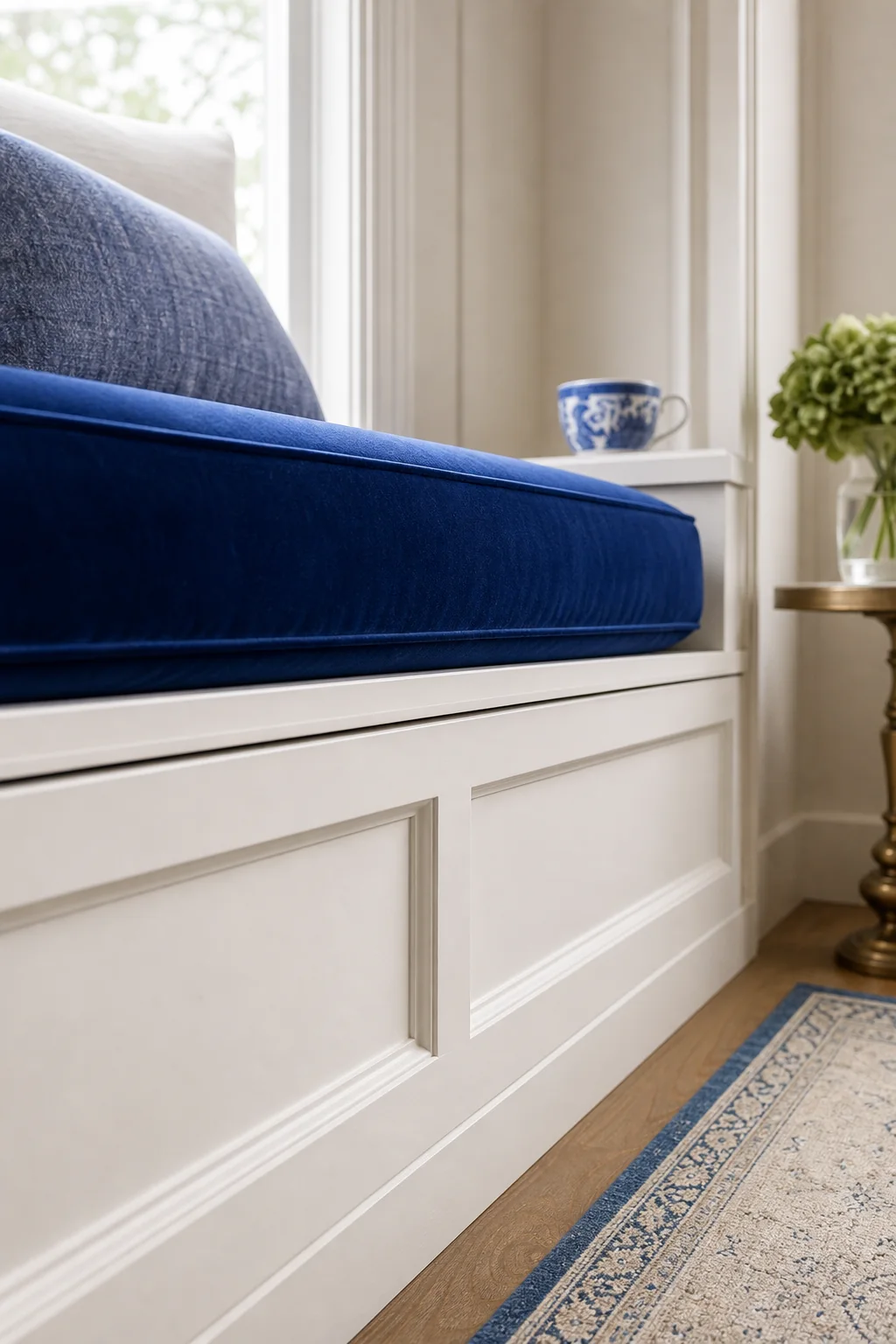
Matte velvet translated the dense blue pigment against glossy trim, anchoring the space with a solid cobalt velvet seat cushion against pure white architectural millwork for a beautifully balanced intensity. To shift this dynamic, a subtle approach limits the cobalt blue to a single throw pillow while keeping the bench cushion a neutral white, offering a whisper of the original motif. Conversely, a bold execution paints the entire interior of the window alcove in a high-gloss cobalt blue, leaving only the outer room walls white, completely immersing the reader in the rich, saturated tones of the classic willow landscape.
Filtering light through a weeping canopy
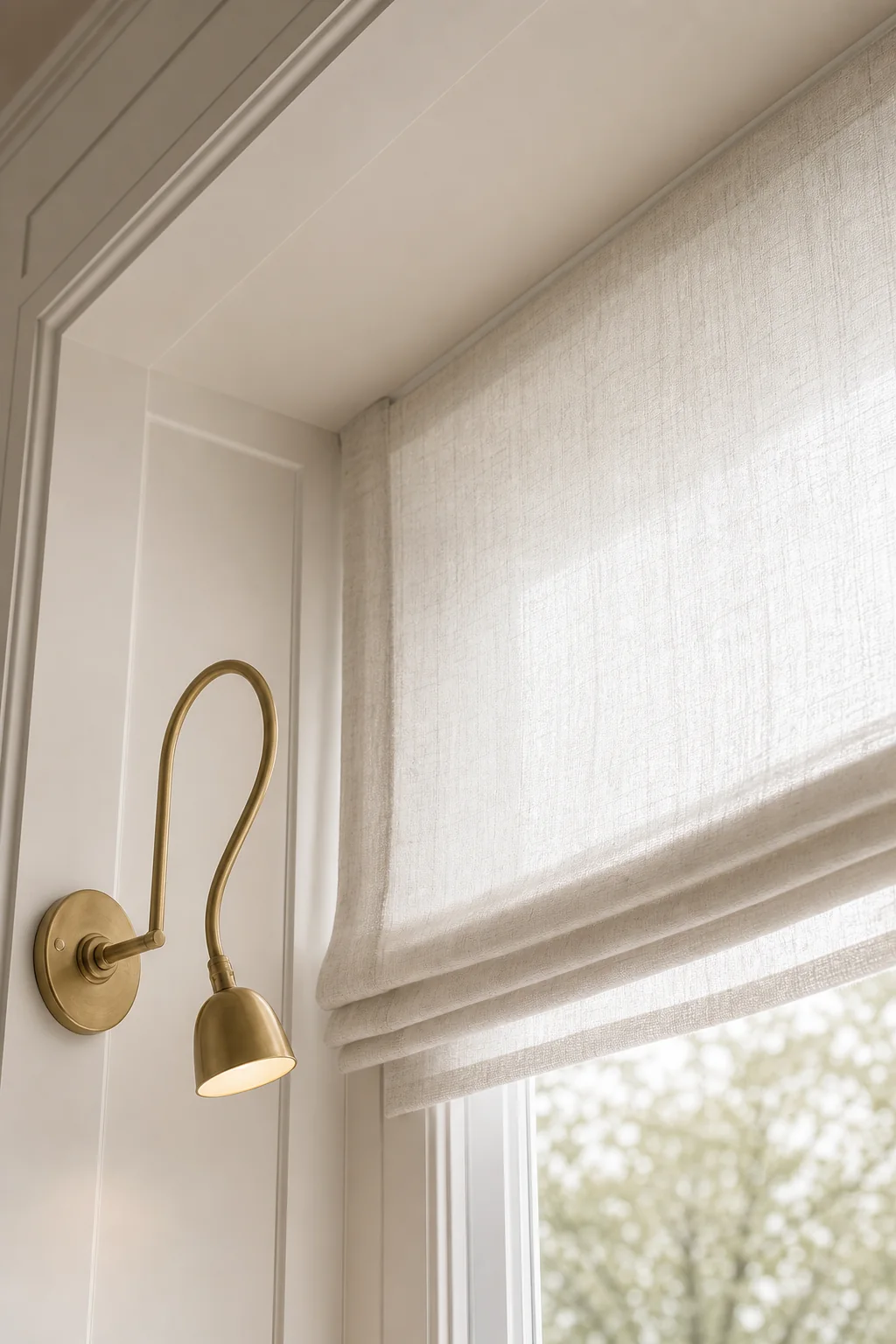
The delicate, cascading nature of the painted willow leaves is reimagined as a tactile, light-filtering textile treatment. By introducing sheer slubbed linen, the design achieves a light, airy, and translucent upper volume that perfectly balances the heavy, saturated base of the seating area. Mounting the Roman shade high maximizes the natural daylight while creating a soft, organic texture that mimics a weeping tree canopy. This strategic use of fabric softens the rigid architectural lines, ensuring the reading nook remains a comfortable, glare-free environment perfectly suited for extended afternoon reading sessions without sacrificing the crisp, high-contrast aesthetic.
Softening the rigid frame
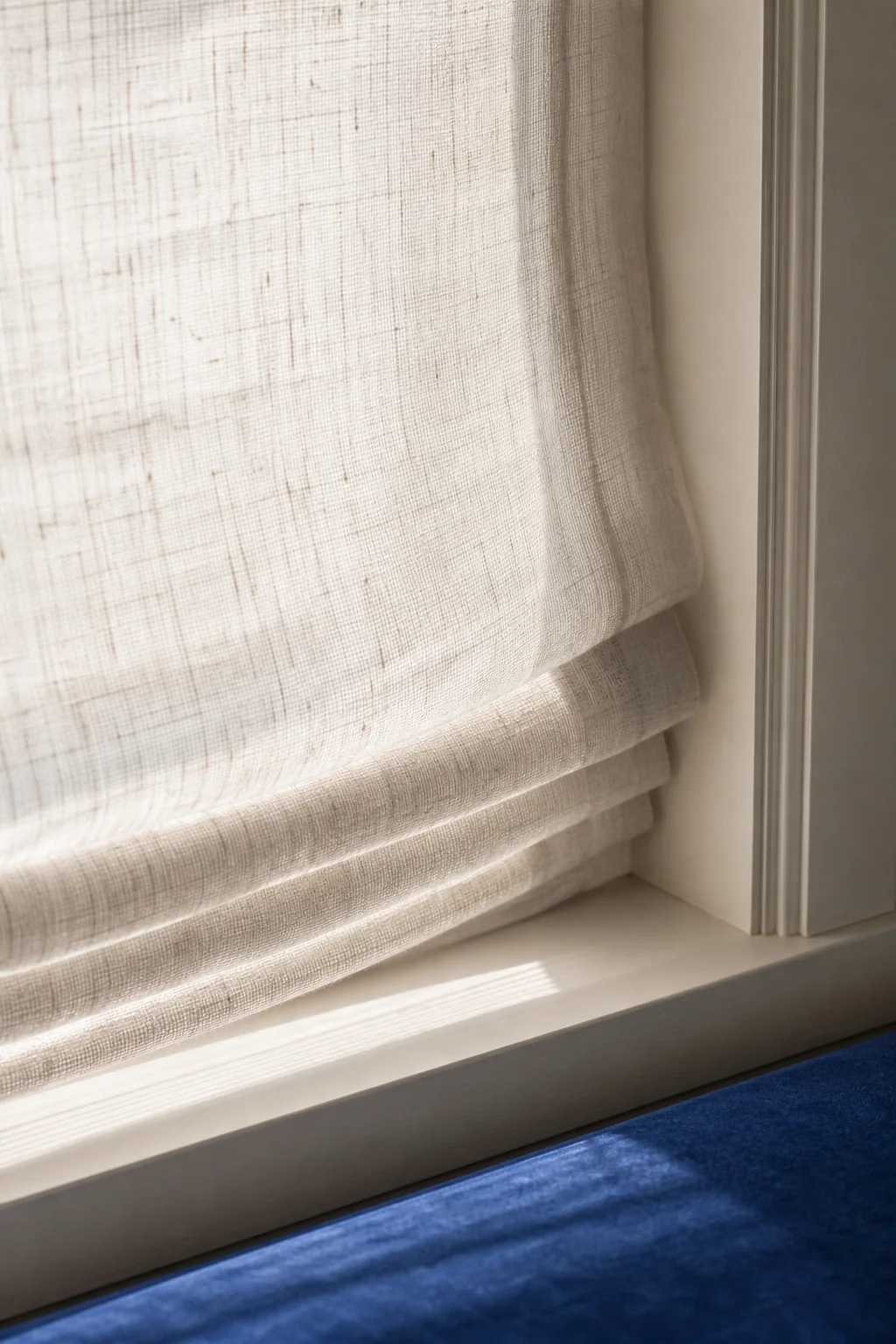
Slubbed linen filtered light like the painted willow tree canopy, providing a soft counterpoint to the rigid architectural boundaries. This careful layering of high-gloss architectural trim framing matte textiles ensures the natural daylight remains gently diffused, casting a serene, dappled glow over the reading nook throughout the afternoon. The visible vertical weave of the fabric adds a vital layer of organic texture, preventing the stark white millwork from feeling clinical. By contrasting the reflective, hard surfaces with lightweight, unlined drapery, the space captures the delicate fragility of fine porcelain while remaining entirely functional for daily use.
Introducing the delicate loop
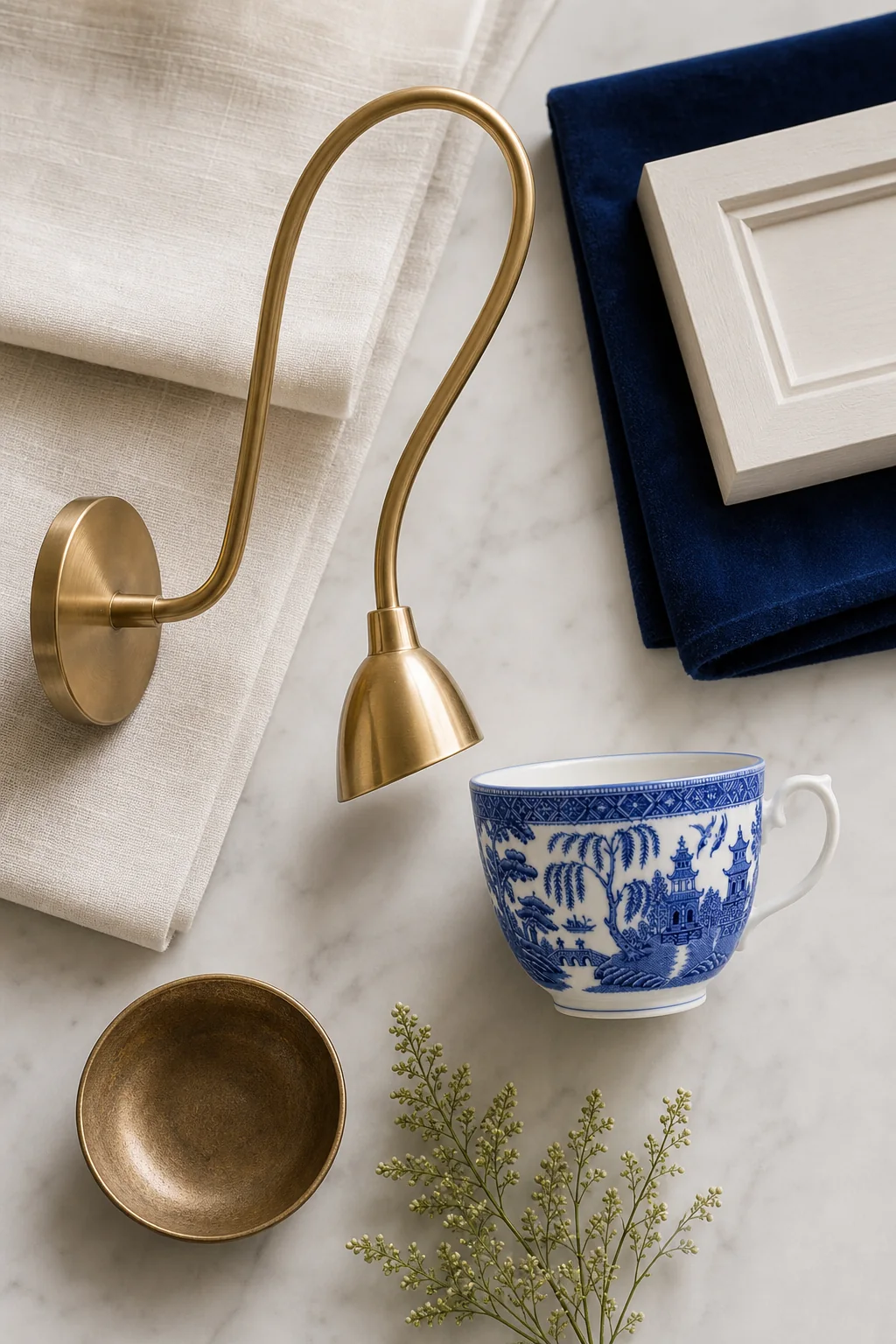
The graceful, looping curve of the teacup handle introduces a necessary moment of organic metallic warmth against the rigid millwork. Incorporating delicate looping curves via polished brass lighting fixtures prevents the crisp framing rectangles from feeling overly sterile, perfectly echoing the fragile elegance of the original porcelain inspiration. Installing a slender brass wall sconce directly inside the alcove provides targeted task lighting for pages while serving as a subtle, sculptural nod to the teaware. This singular metallic accent breaks up the stark blue-and-white palette, adding a touch of sophisticated warmth that completes the tranquil, architectural reading retreat.
Choose a sconce with a thin, delicate profile. A bulky fixture will overpower the crisp millwork and ruin the teacup’s fragile illusion.