
This Moon Vase Became a Meditation Corner
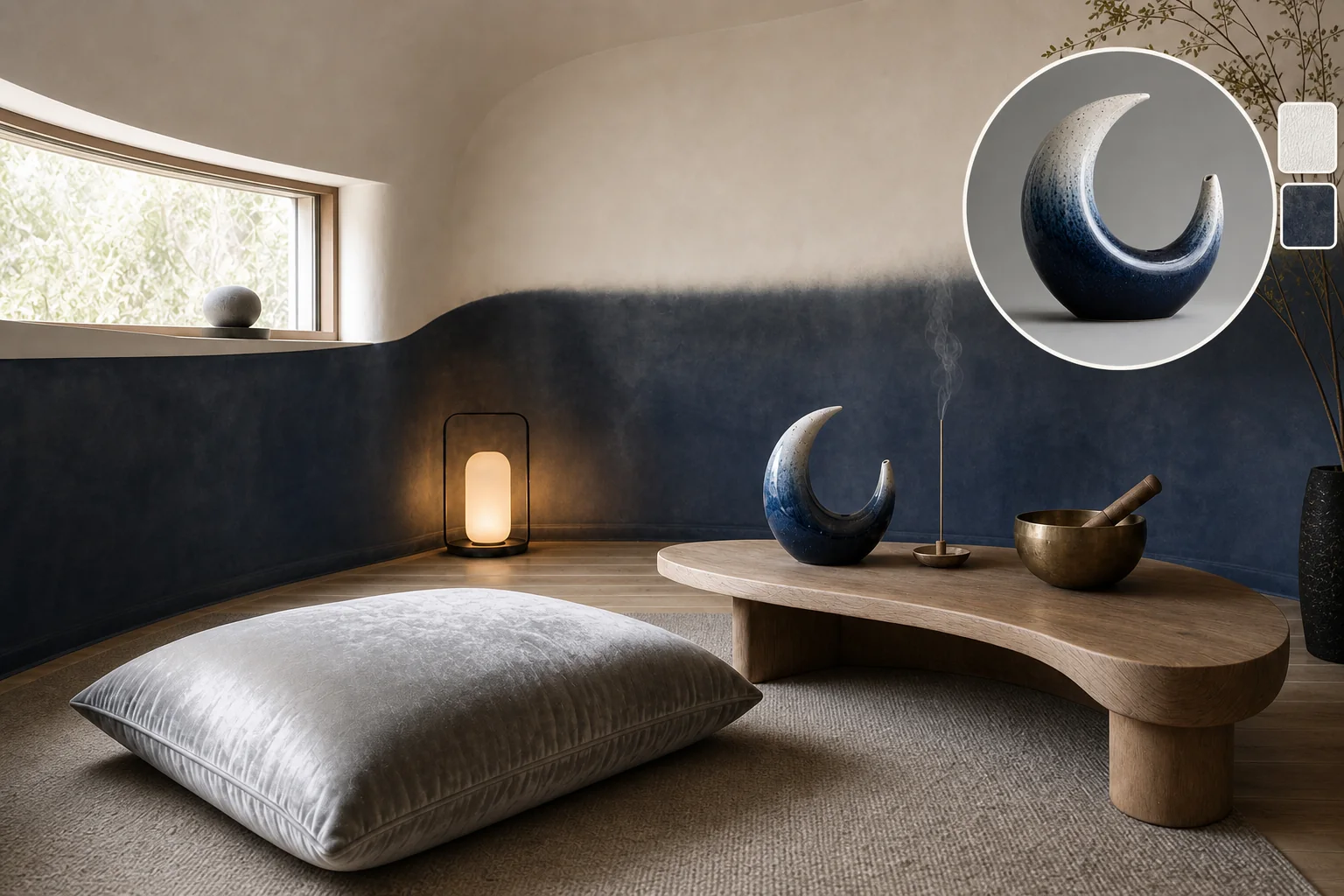
Explore how the asymmetrical arcs and deep indigo glazes of a ceramic crescent moon vase inform the architecture of a quiet meditation corner. By balancing a heavy, grounded base with matte, milky white upper surfaces, this space translates the object’s rising visual lightness into a calming sanctuary designed for introspection and physical comfort.
Shaping the sweeping alcove
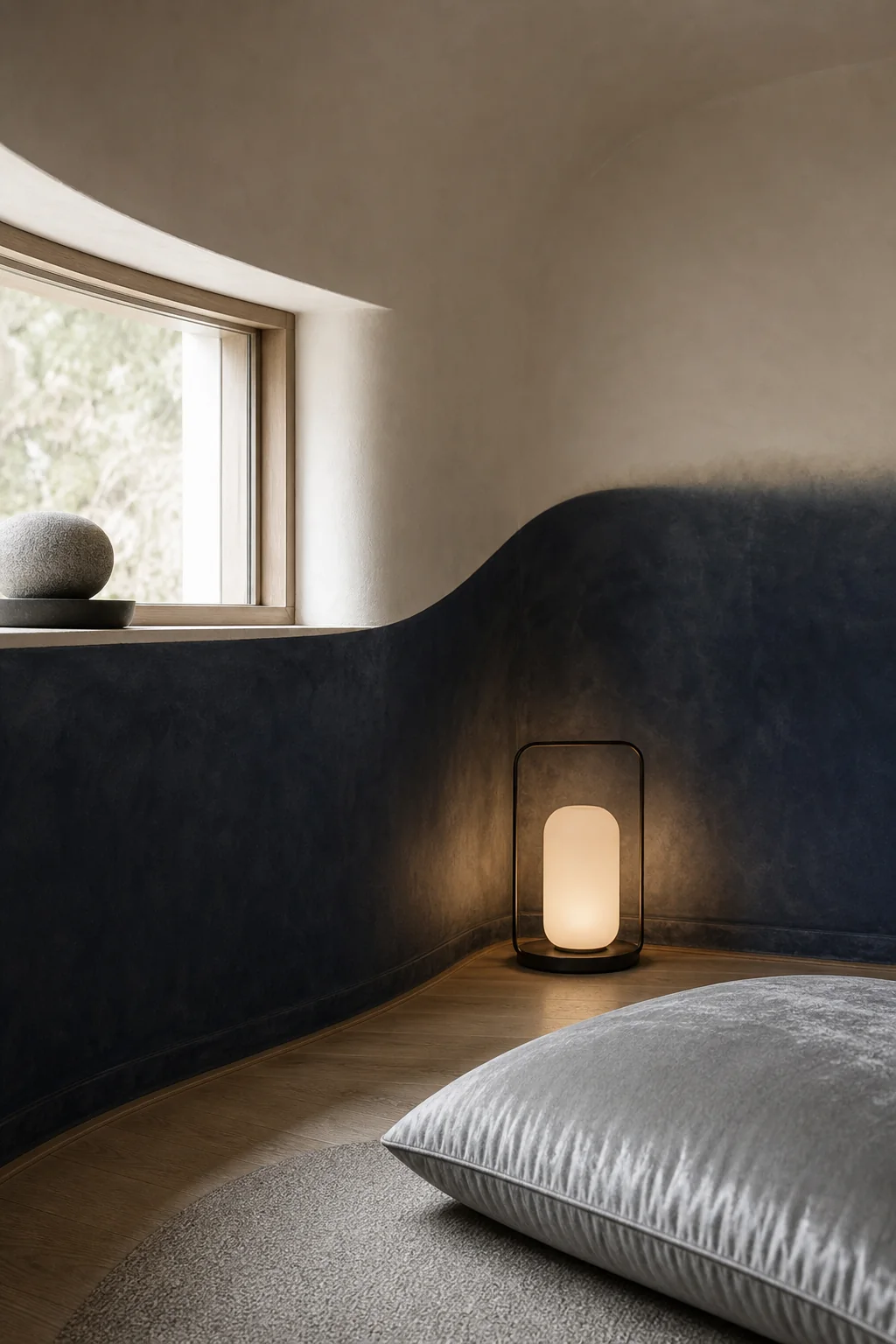
The continuous curve of the crescent translates into a seamless architectural alcove that wraps around the sitter, effectively eliminating the harsh 90-degree corner. Plastering over the corner creates a soft, shadowless envelope that promotes deep focus and acoustic dampening for quiet reflection. A low horizontal window introduces diffused daylight without breaking the curve, ensuring the space feels connected to the outdoors while remaining entirely private. To build this sweeping architectural alcove and establish the room’s foundational geometry, follow these precise structural steps.
- Frame a curved corner structure using flexible plywood to ensure the harsh 90-degree angle is completely hidden behind a smooth, continuous curve.
- Apply a base coat of plaster over the curved framing so the wall surface feels continuous and lacks visible seams or joints.
- Install a low horizontal window to allow diffused natural daylight to enter the space at floor level without causing harsh glare.
- Sand the plaster to a perfectly smooth, shadowless finish so the curved alcove sweeps seamlessly from one side of the room to the other.
Pooling the indigo glaze
Replicating the vase’s reactive glaze grounds the lower half of the room in deep, introspective color while keeping the ceiling airy and expansive. The deep indigo glaze that settles heavily at the bottom of the ceramic vessel inspires walls that fade upward organically. It is crucial to avoid a harsh painted line to maintain the illusion of a reactive, pooled surface that rises into a matte milky white expanse. This visual DNA mapping table details the core translations from the original ceramic object to the architectural room design.
| Source trait | Visible evidence | Room move |
|---|---|---|
| Sweeping Arc | The asymmetrical, continuous curve of the crescent shape. | A custom curved plaster wall treatment that rounds out the harsh 90-degree corner, creating a seamless, sweeping architectural alcove. |
| Pooled Glaze | The deep indigo glaze that settles heavily at the bottom of the vase and fades upward. | A deep indigo polished tadelakt finish on the lower half of the walls that softly gradients into a matte milky white ceiling. |
| Ceramic Sheen | The smooth, light-catching surface of the fired ceramic. | A large, plush silk-velvet floor cushion in silvery grey that catches the daylight with a subtle, glaze-like sheen. |
| Tapered Negative Space | The hollow center and tapering tips of the moon silhouette. | A low, asymmetrical ash wood altar table with a sweeping, tapered edge that frames the negative space of the floor. |
The soft gradient transition
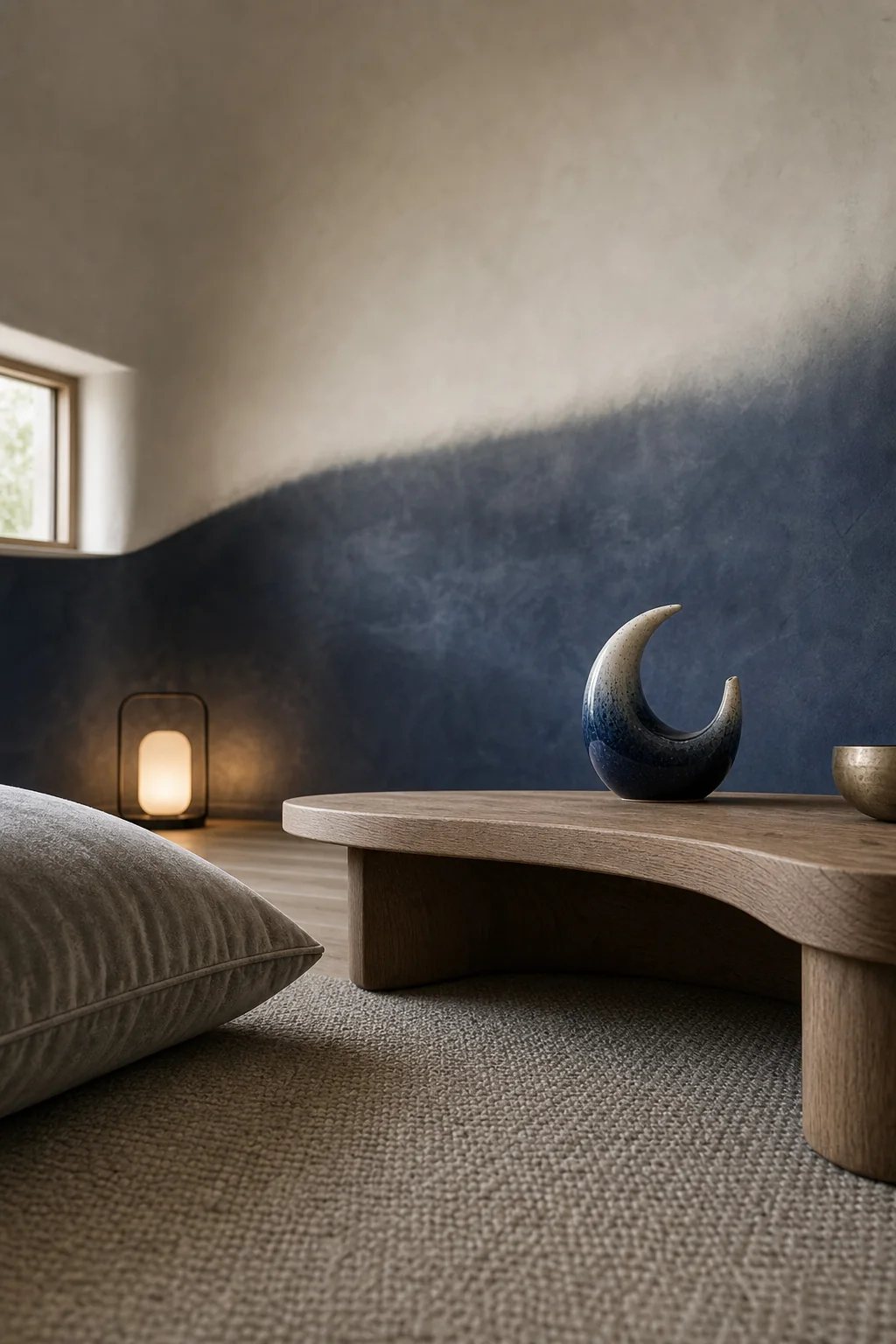
The wall gradient mimics the vase’s reactive glaze pooling effect, and you can scale this indigo tadelakt finish to suit your comfort level. A subtle approach limits the indigo color to a small floor rug while keeping the walls entirely milky white, focusing purely on the sweeping curved architecture rather than the dramatic glaze. A balanced execution applies the deep indigo plaster to the lower half of the walls, allowing it to fade organically into a white ceiling. For a bold statement, wrap the entire alcove in the dark plaster, using silvery grey velvet and pale ash wood as stark, high-contrast focal points in the dark space.
Capturing the ceramic sheen
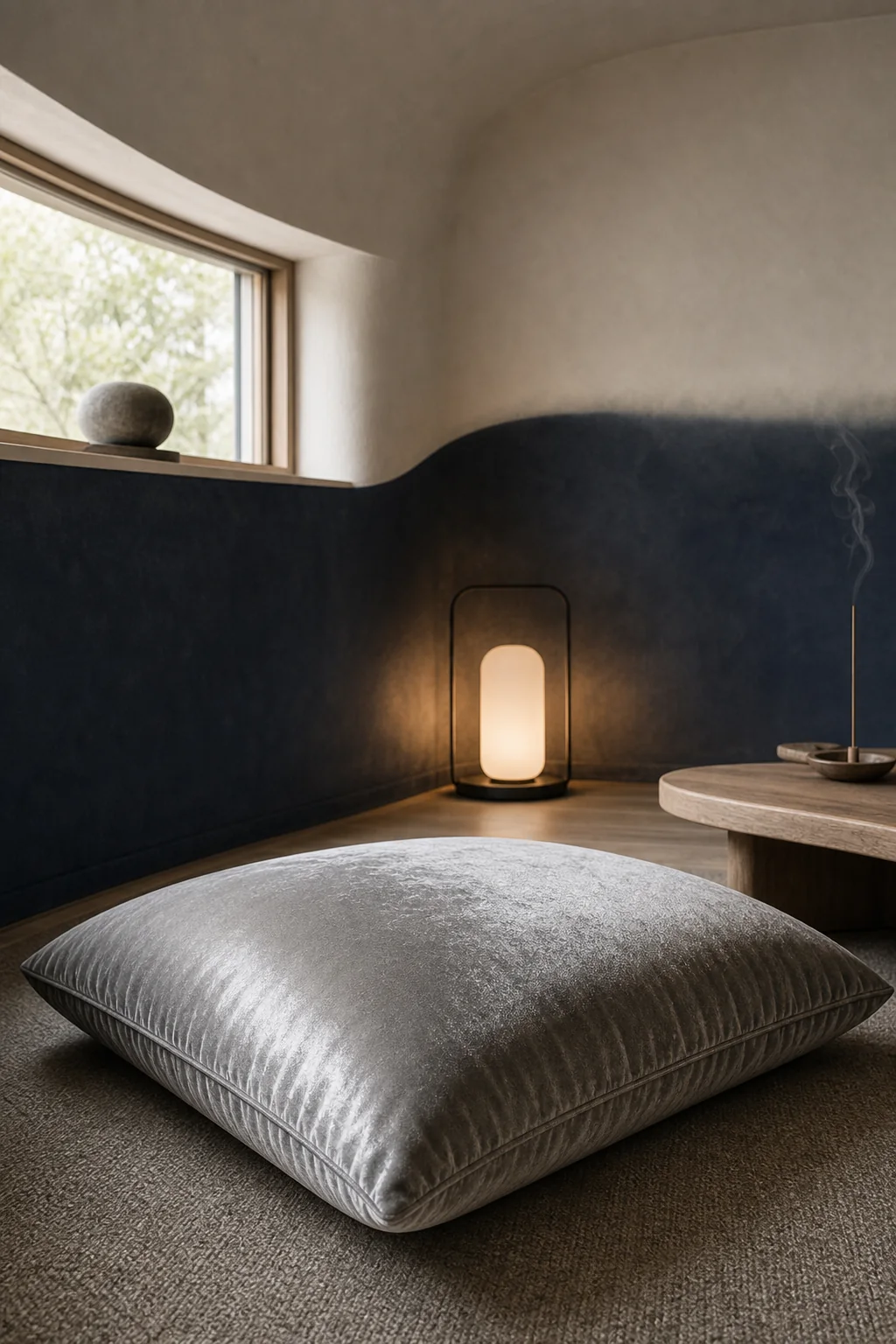
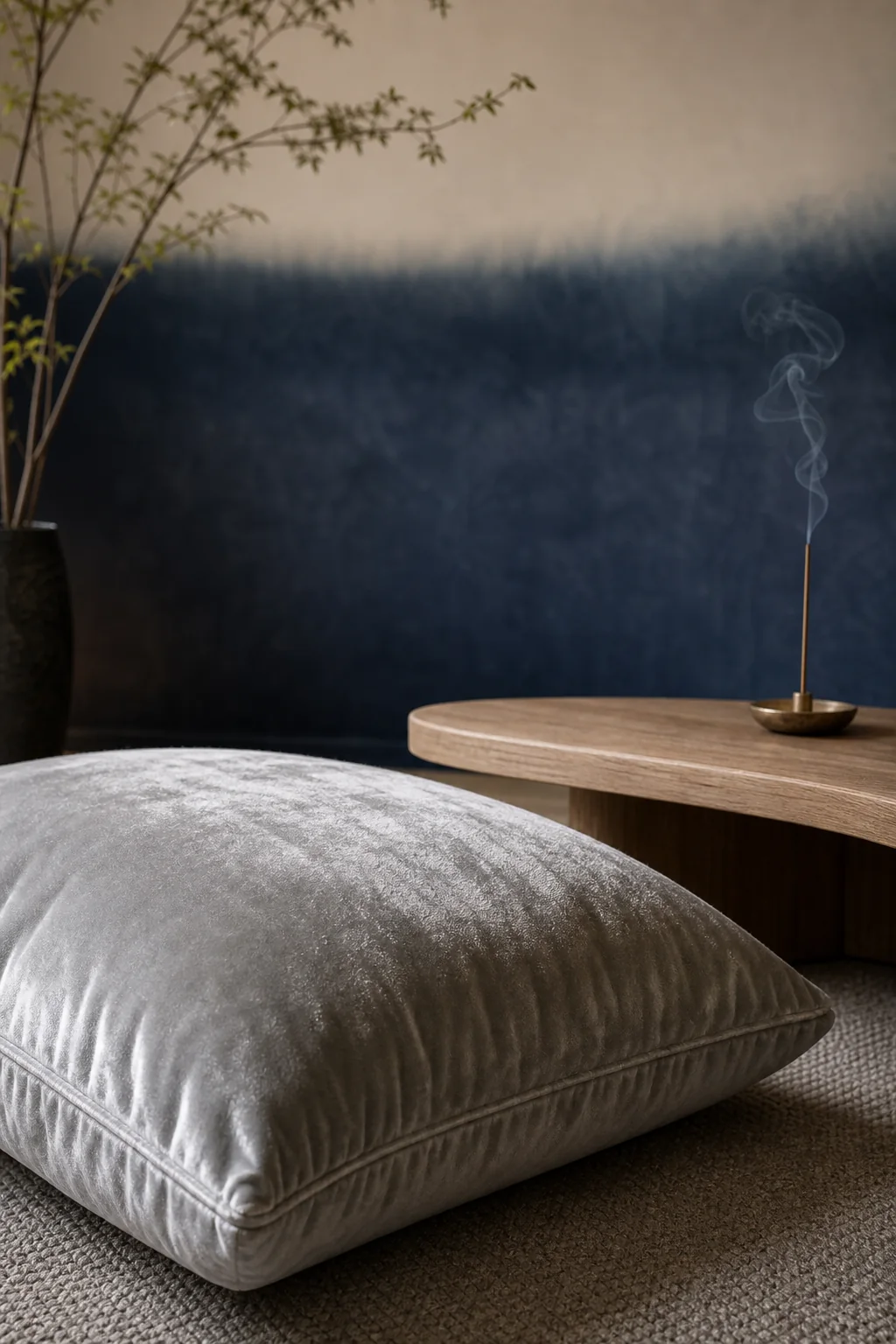
The cool, light-reflecting surface of the vase is softened into a plush floor cushion that catches the diffused window light. Silk-blend velvet provides the necessary subtle sheen without looking synthetic, capturing the essence of fired ceramic in a tactile format. Meanwhile, matte ash wood elements contrast with this soft luster to keep the room balanced and prevent the textiles from feeling overly opulent. Gather these specific tactile elements to complete your meditation corner materials, ensuring you select high-quality finishes to bring the concept to life.
The light-catching cushion
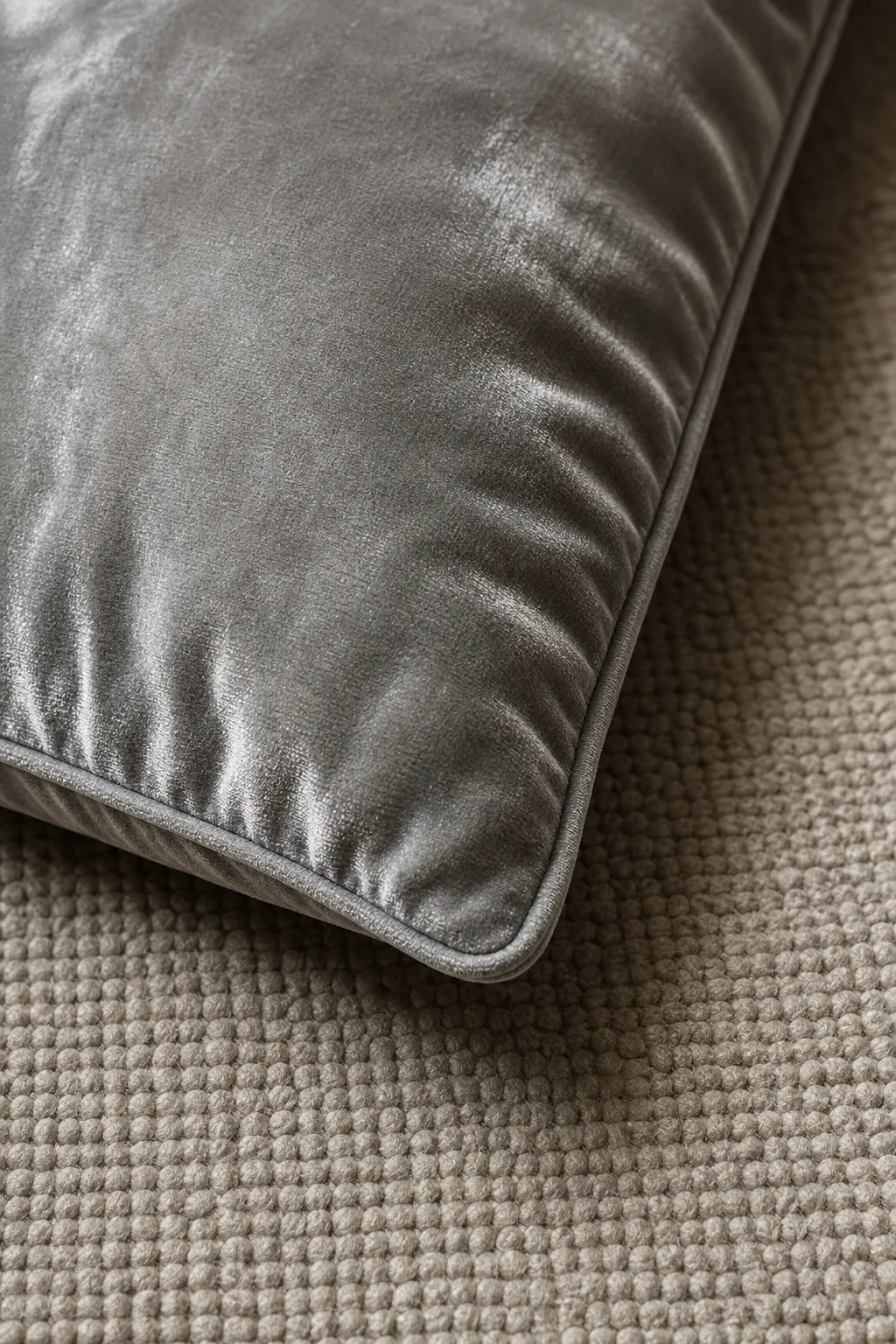
Silvery silk-velvet catches light just like the smooth ceramic surface, creating a luminous focal point against the matte floor. This light-reflecting sheen prevents the deep indigo base from feeling overly heavy or light-absorbent, bouncing the soft window glow back into the room. By centering this plush, reflective textile in the alcove, the design honors the fired ceramic’s smooth finish while providing the essential physical comfort required for a grounded, quiet sanctuary dedicated to daily reflection and restorative meditation practices.
Framing the negative space
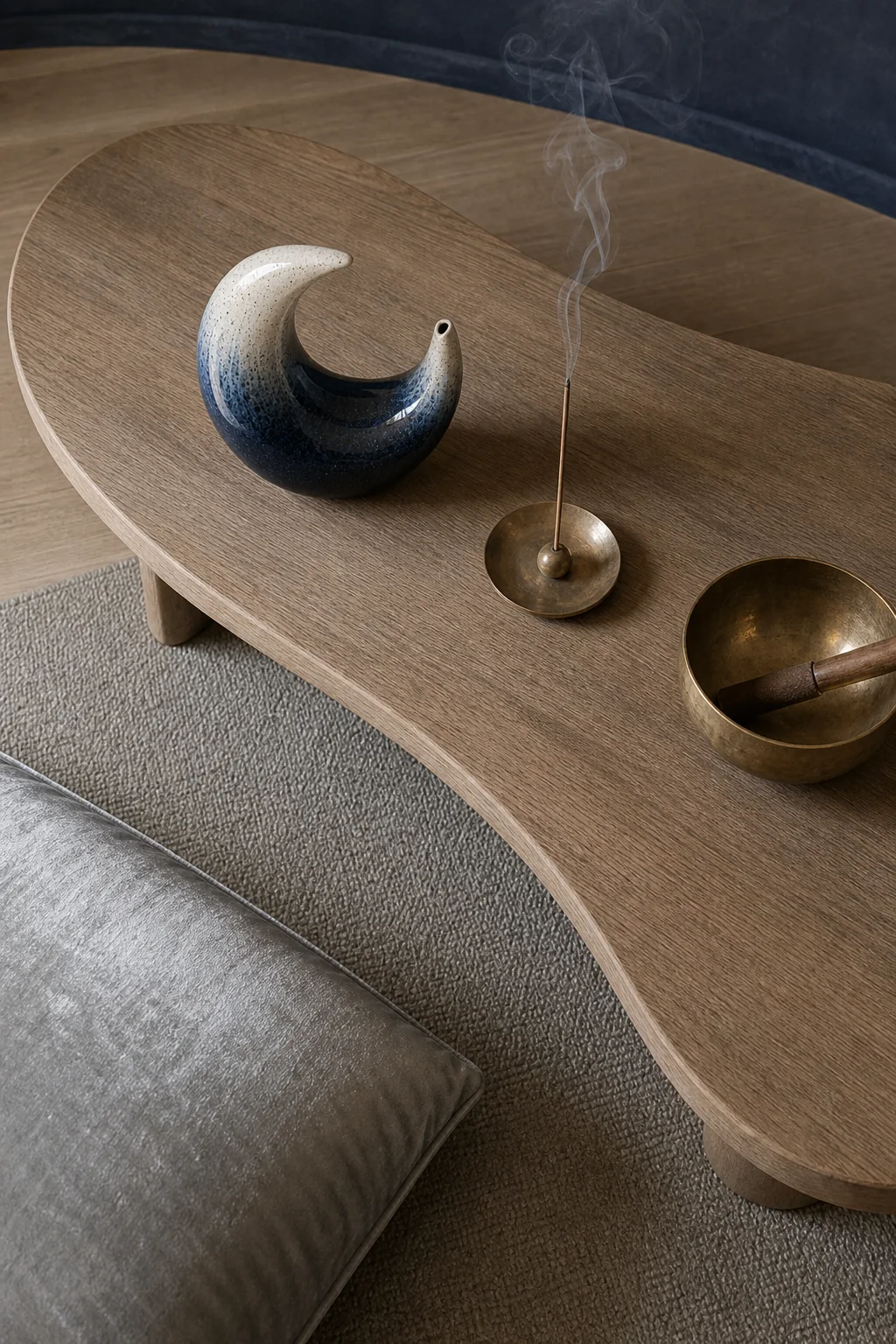
The tapered ends of the crescent inspire a low, sweeping altar table that anchors the room’s functional center while framing the negative space of the floor. Keeping the table low to the ground maintains the room’s heavy base, and the asymmetrical edge naturally directs focus toward the central meditation cushion. This asymmetrical ash wood altar ensures the room feels anchored without cluttering the sweeping architectural lines, honoring the hollow negative space that gives the original moon vase its distinctive, airy silhouette and sense of rising calm.
Ensure all functional items stay below eye level when seated to maintain the rising visual lightness of the walls and keep the room grounded.