This Murano Decanter Became a Cocktail Corner
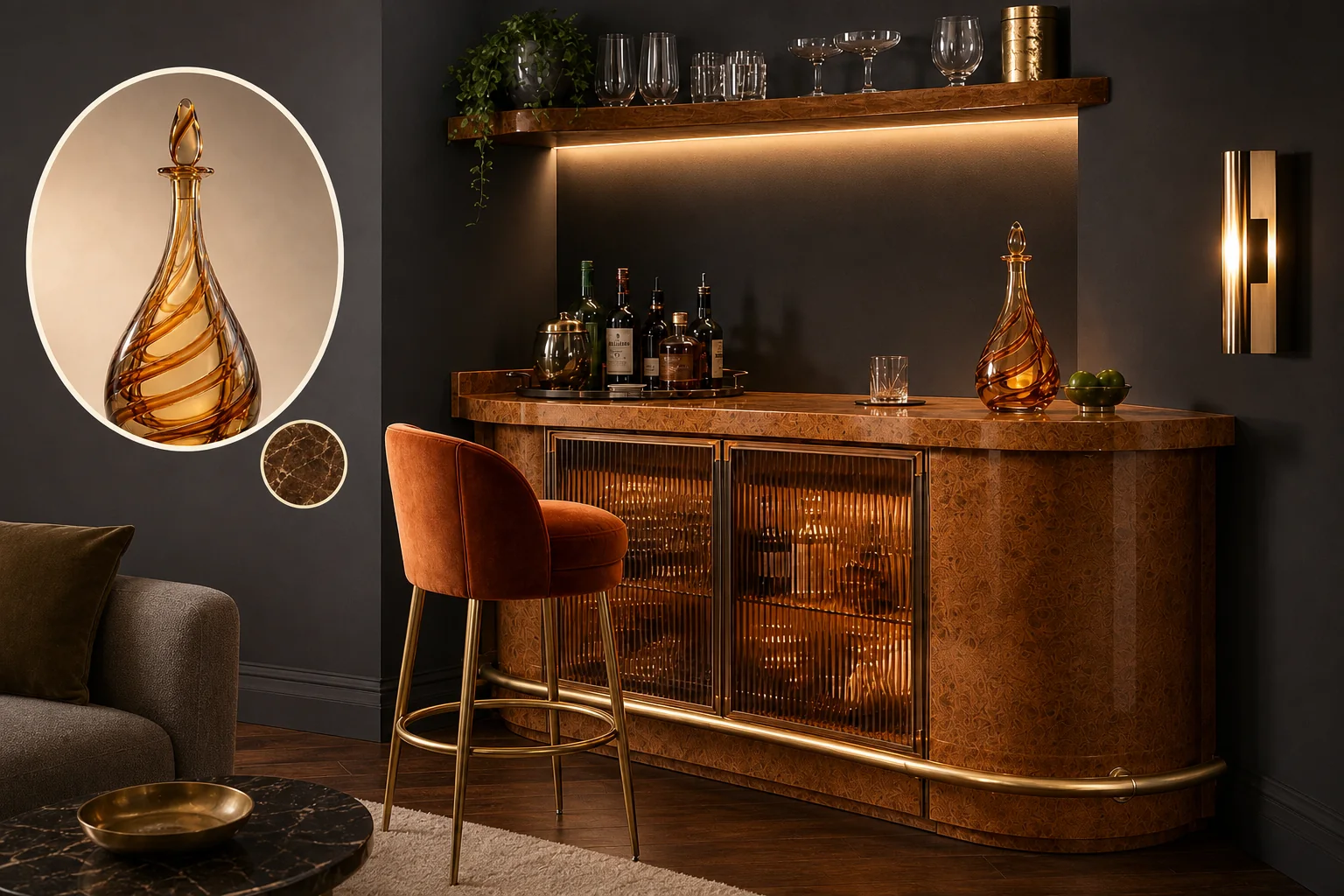
We break down how the fluid midcentury elegance of an amber Murano glass decanter translates into a sophisticated home cocktail corner. By grounding sweeping curves and warm translucent depth against moody charcoal walls, you can create an inviting evening retreat without visual overload.
Anchoring the space with tapered volume
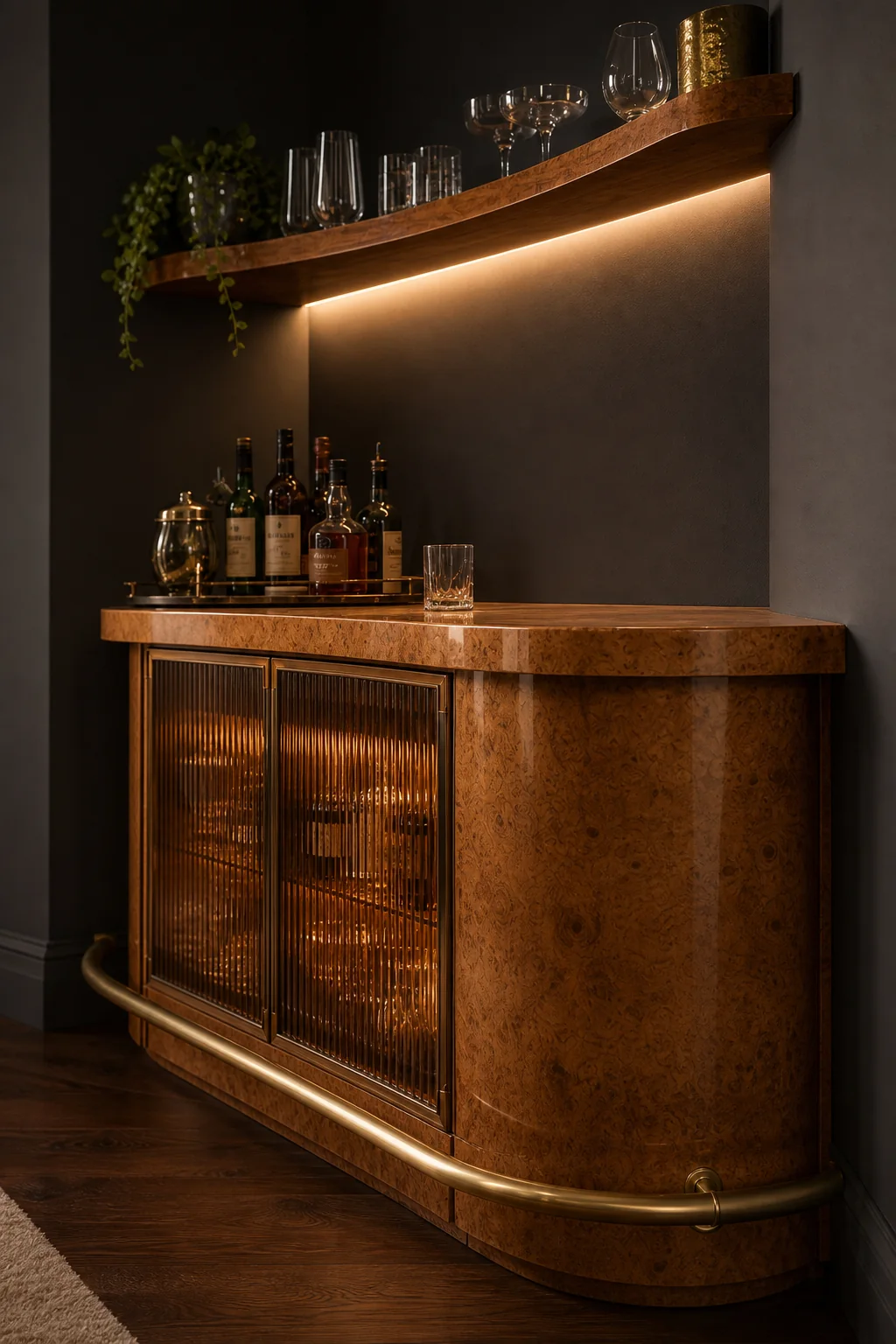
The room mimics the vessel’s heavy base and delicate neck by grounding the bar with a substantial lower cabinet that gracefully thins out above. To achieve this tapered volume, design the lower cabinetry with a subtle outward curve at the base and keep upper shelving minimal to emphasize the transition. By anchoring the high-gloss amber and brass elements with deep, matte charcoal walls, you prevent visual overload and maintain a sophisticated architectural focus. This careful balance of heavy foundations and light upper zones creates an inviting evening retreat that feels both grounded and elegantly airy. Follow these implementation steps:
- Build a corner console with a curved, bottom-heavy base
- Install a slender floating shelf above the main counter
- Paint the surrounding walls and architectural niche deep charcoal
- Integrate warm ambient task lighting under the floating shelf
Warming the shadows with an amber glow
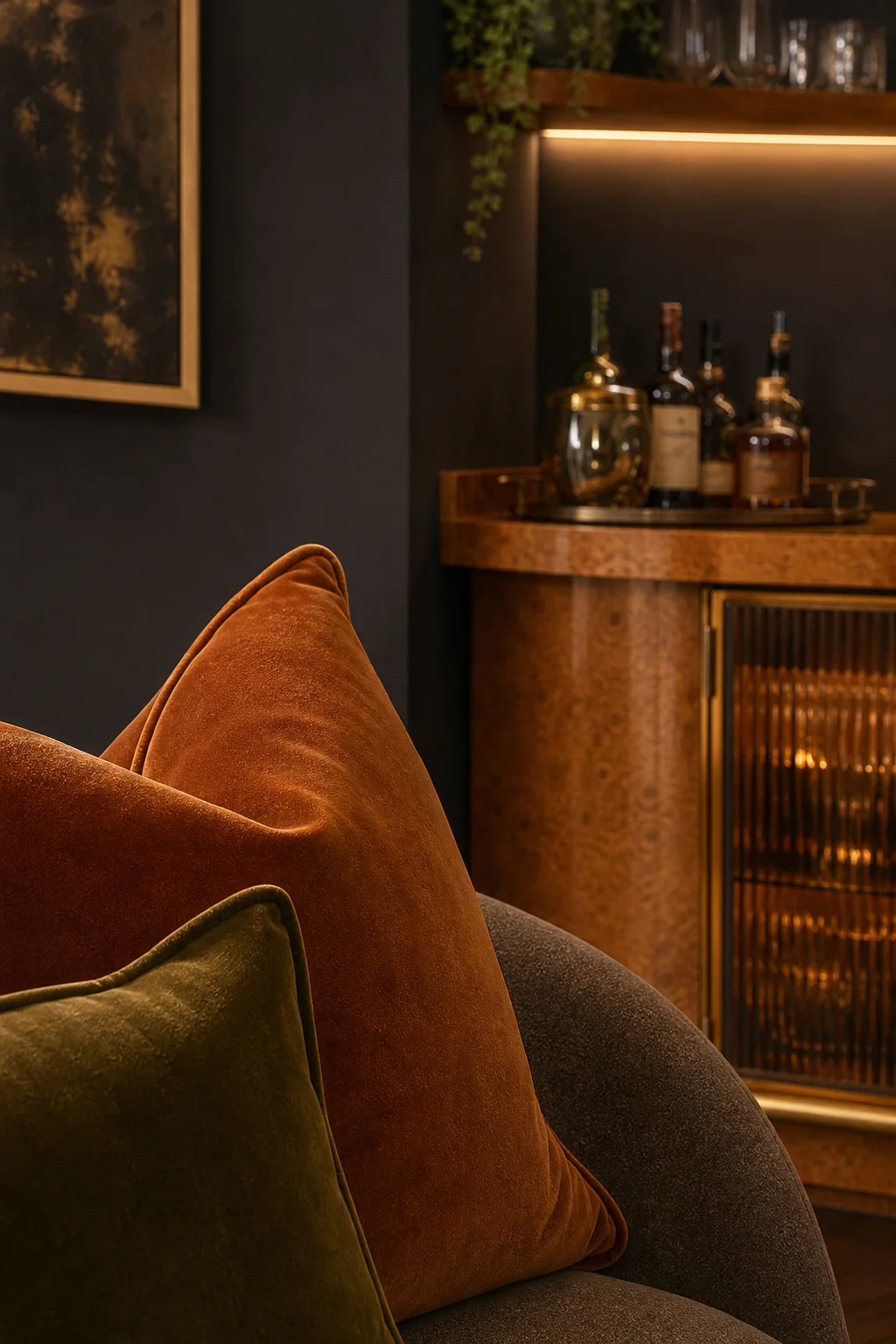
Deep charcoal walls act as the dark room while honey and caramel tones replicate the backlit warmth of the glass. Using matte charcoal paint absorbs light to let the amber tones pop, while introducing burnt caramel through upholstery softens the hard surfaces and anchors the palette. The interplay between the dark, moody void of the architectural niche and the glowing, translucent qualities of the bar elements perfectly captures the essence of the midcentury teardrop decanter. The table below maps these specific color, material, and form translations from the original art glass directly into the room’s interior architecture.
| Source trait | Visible evidence | Room move |
|---|---|---|
| Tapered Volume | The decanter’s bottom-heavy teardrop silhouette | A built-in corner bar console that curves outward at the base and tapers upward into a slender floating shelf |
| Amber Glow | The warm, glowing honey tones of the glass | A rich palette of honey-toned burl wood millwork paired with a burnt caramel velvet bar stool |
| Ribboned Transparency | The internal glass swirls wrapping the vessel | Fluted amber glass cabinet fronts that distort the bottles behind them and catch the ambient light |
| Helical Sweep | The continuous, wrapping motion of the colored glass ribbons | A sweeping, asymmetrical polished brass footrail that curves continuously around the base of the bar |
Softening the glow with burnt caramel velvet
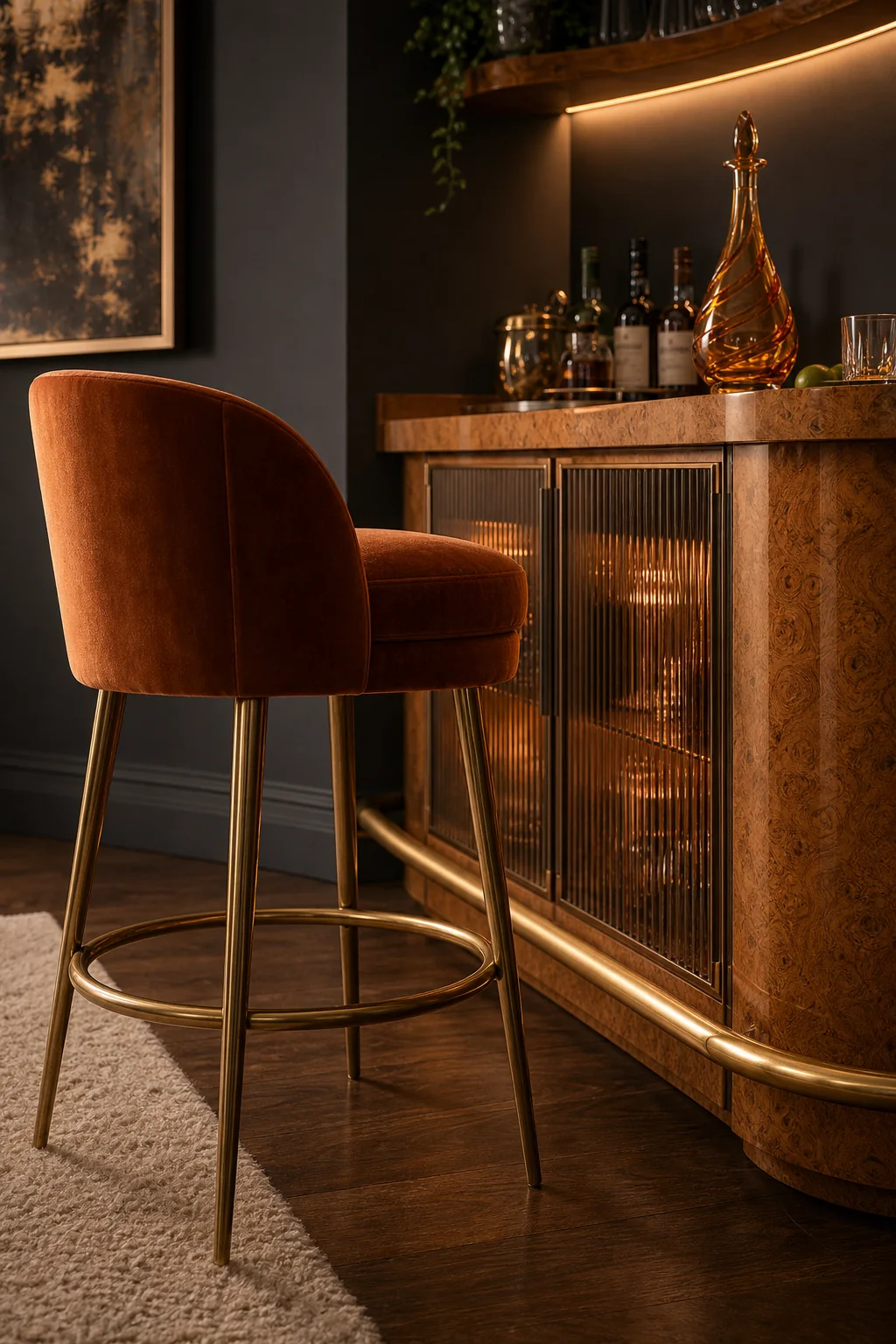
Caramel velvet upholstery echoes the decanter’s deepest amber ribbons, providing a tactile contrast to the high-gloss surfaces of the surrounding cabinetry. Selecting a dense mohair pile that catches light similarly to polished glass ensures the seating feels integrated into the overall warm evening mood. This rich, burnt caramel hue bridges the gap between the dark charcoal walls and the bright honey burl wood, adding a layer of plush comfort that invites guests to linger. By focusing the warmest tones on the seating, the design creates a natural focal point that beautifully grounds the lighter, floating elements above.
Translating ribboned transparency into texture
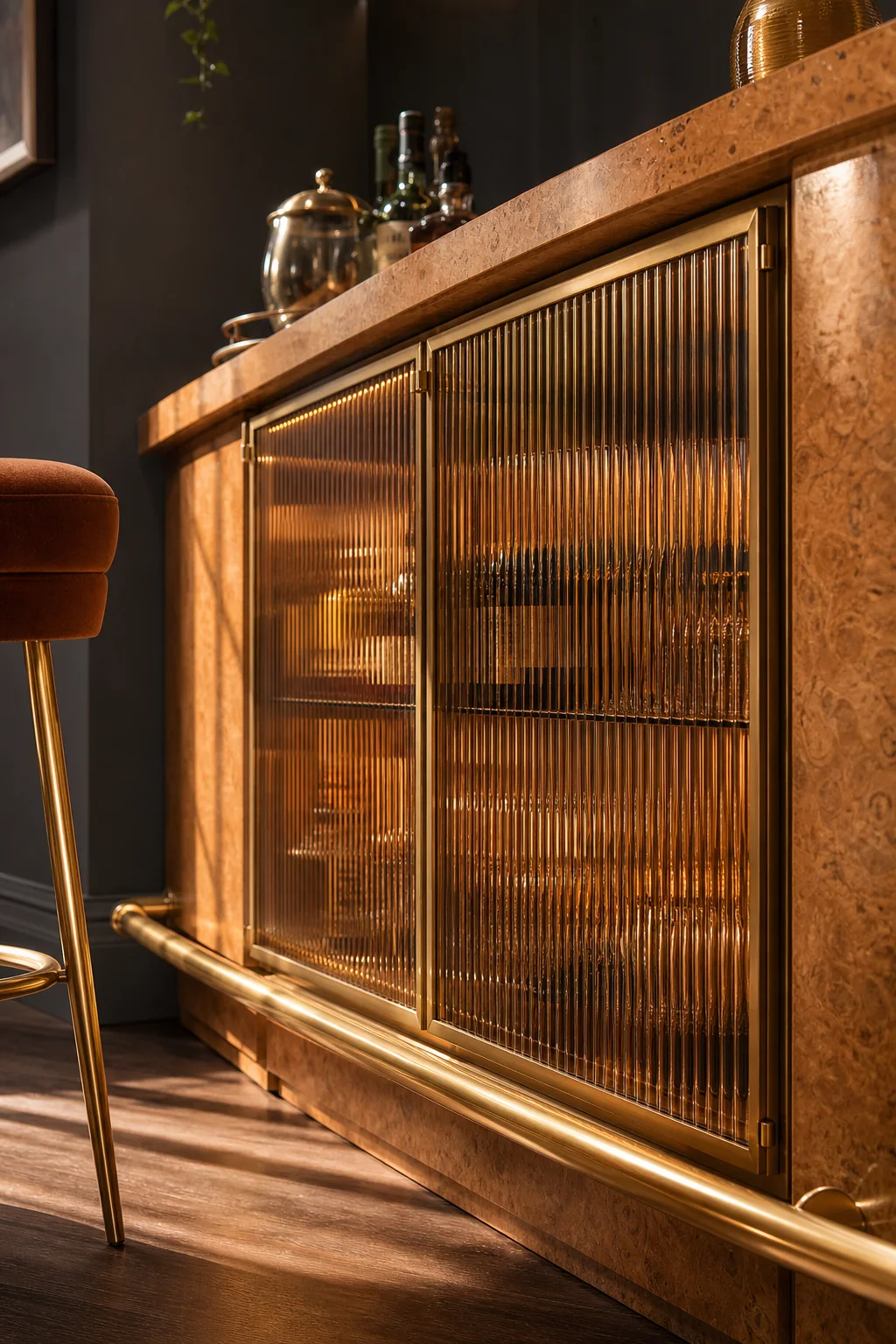
Instead of literal glass ribbons, fluted amber cabinet fronts recreate the decanter’s optical distortion and tactile surface. Pairing this fluted glass with high-gloss honey burl doubles down on reflective surfaces, especially when backlit to emphasize the translucent effect. The continuous sweeping curves of the wood grain mimic the organic, swirling warmth of the art glass, transforming standard storage into a luminous display. By carefully selecting finishes that play with light and shadow, you can capture the fluid midcentury elegance of the original vessel. Room-ready material edit:
Distorting light through fluted amber glass
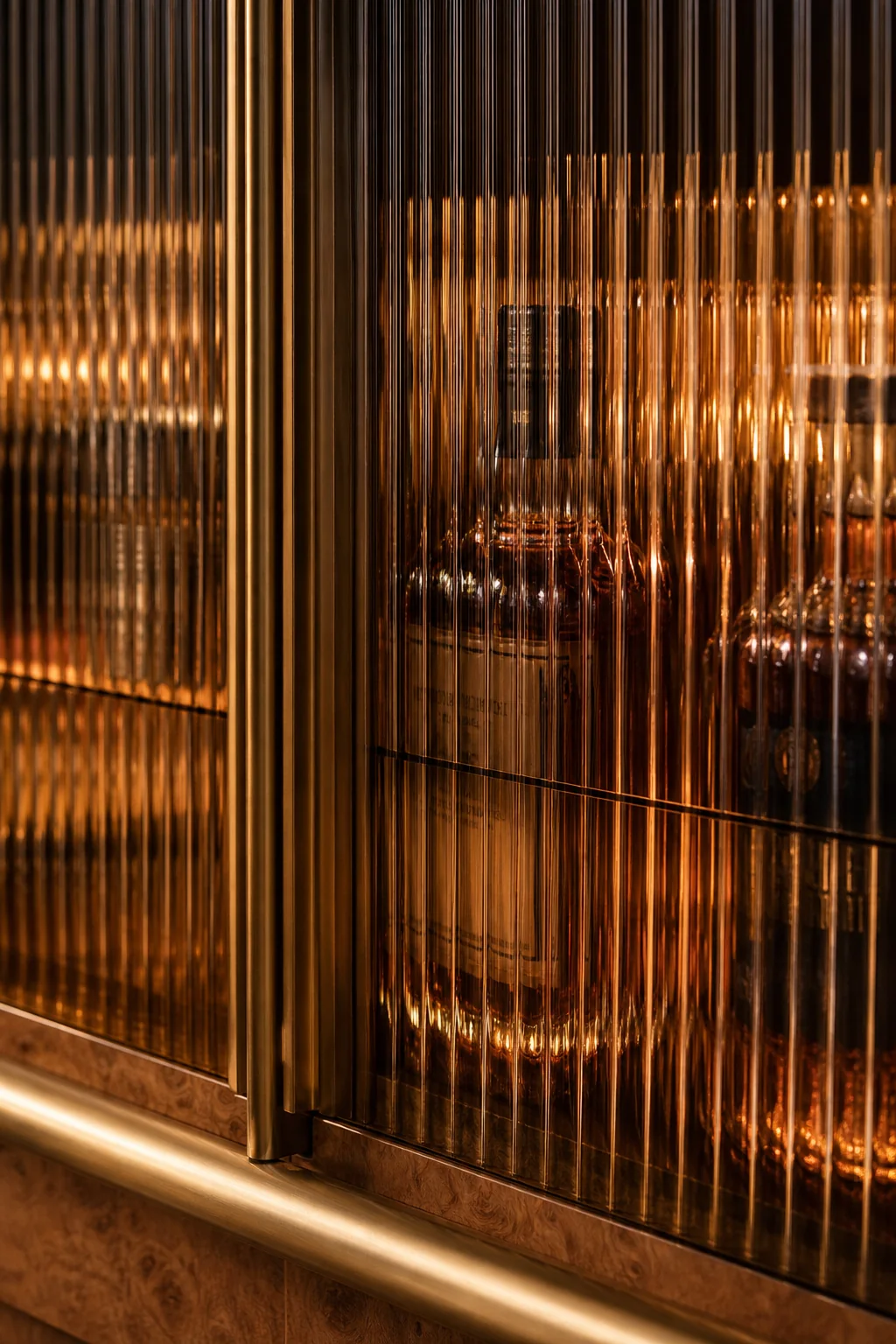
Fluted glass recreates the optical distortion of the swirling ribbons, obscuring the bottles inside while glowing from within. This textural choice transforms standard storage into a luminous focal point, perfectly balancing the sophisticated midcentury contemporary style of the surrounding millwork. The vertical lines of the fluting draw the eye upward, complementing the tapering vertical lines of the floating shelves while adding a layer of ribbed transparency. When illuminated by integrated ambient task lighting, the amber glass casts warm, distorted reflections across the dark charcoal walls, capturing the exact translucent depth of the original Murano teardrop decanter.
To keep the sweeping brass footrail looking intentional rather than chaotic, ensure it follows the natural curve of the cabinetry. A single continuous line always feels more elegant.
Guiding the eye with a helical sweep
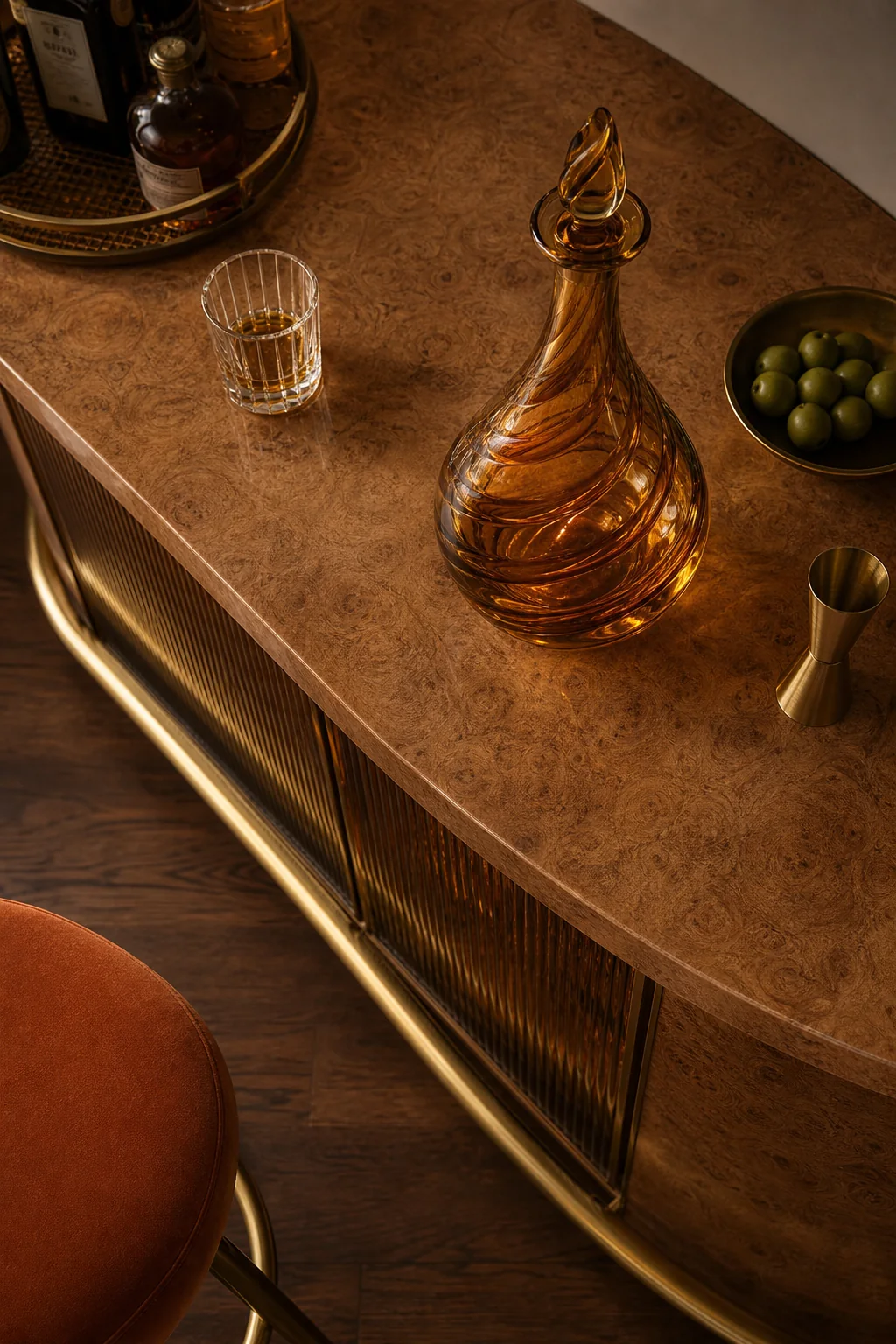
The dynamic, wrapping energy of the glass swirls is captured by an asymmetrical polished brass footrail that curves continuously around the base. Avoiding sharp angles in the metalwork maintains this fluid illusion, allowing the footrail to extend slightly past the cabinetry to emphasize the wrapping motion. To scale this concept, a subtle approach limits amber to glassware against dark cabinets, a balanced execution pairs high-gloss honey burl with fluted glass, and a bold design wraps the entire niche in burl paneling. Each intensity level relies on continuous sweeping curves to guide the eye through the space.