This Dip Pen Became a Writing Nook
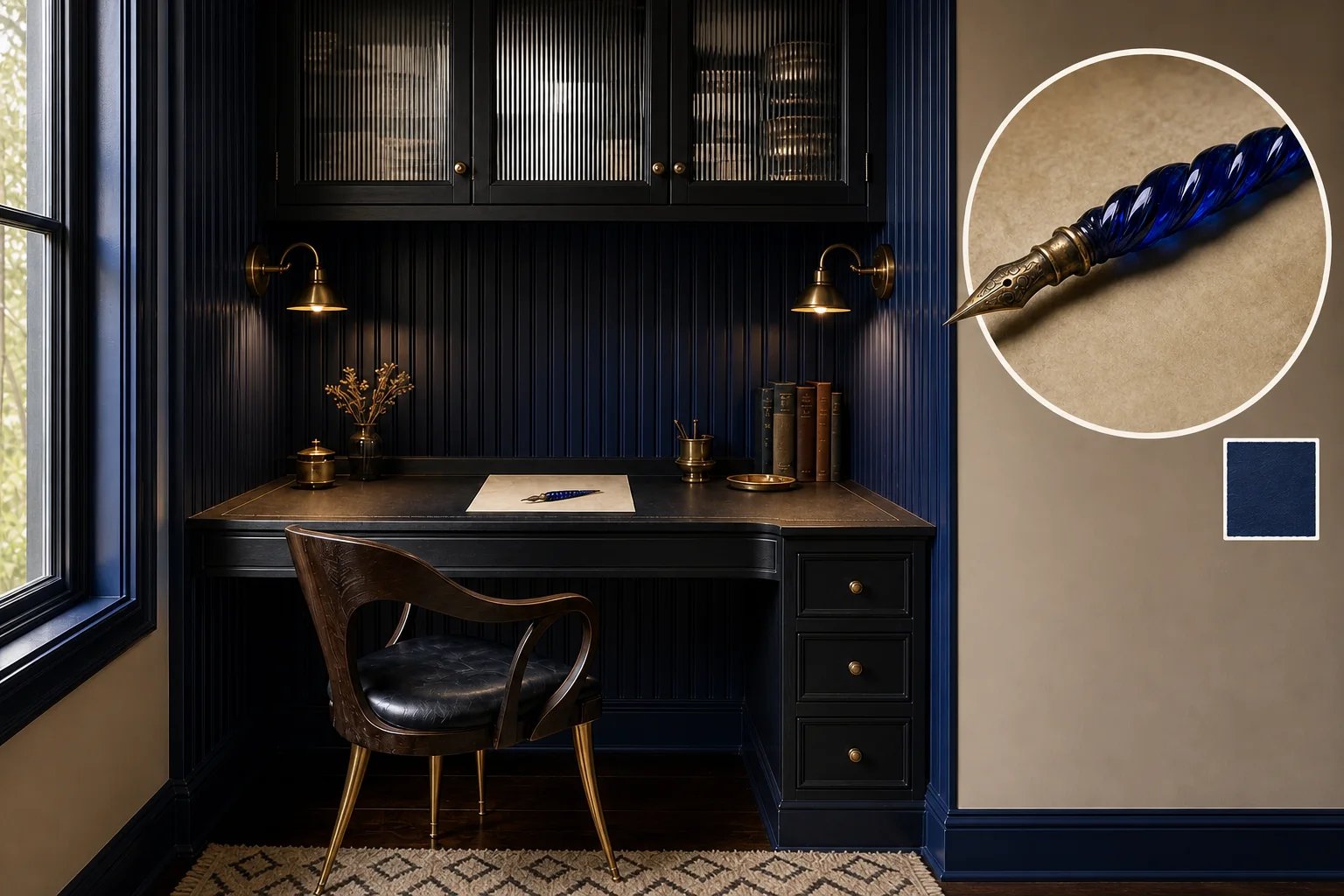
Transforming a historic art-nouveau dip pen into a functional writing nook requires balancing gothic drama with architectural restraint. We ground the moody, dramatic undertones of dark absorbing surfaces and sharp, light-catching details with clean, structured vertical lines to prevent the space from feeling like a period set.
Structuring the Spiral
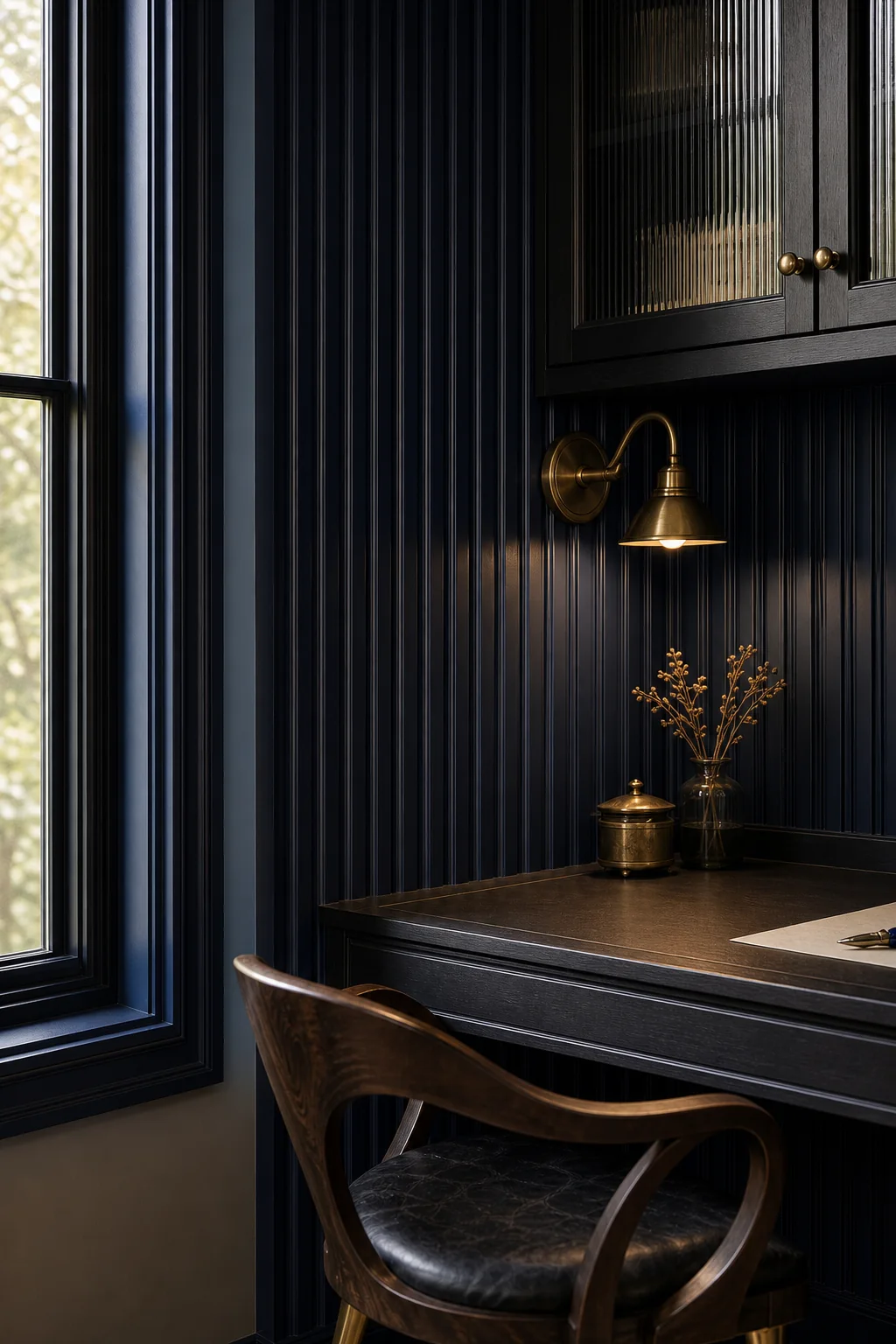
Translating the pen’s tight spiral into vertical fluted paneling establishes a structured rhythm that grounds the room’s gothic drama. You can achieve this foundational aesthetic by choosing deep fluted profiles to maximize shadow play and running the paneling continuously from the desk surface straight to the ceiling. This architectural move prevents the deep colors from feeling flat or overwhelming. By mimicking the tightly twisted cobalt glass stem, the walls gain a dynamic, tactile quality. Follow these precise construction steps to build this structured vertical rhythm and ensure the alcove feels both intimate and meticulously planned.
- Measure the alcove width carefully for vertical paneling placement to ensure symmetrical fluted panels line the back wall without any awkward or uneven cuts at the corners.
- Install deep fluted wood panels continuously from the desk surface to the ceiling, establishing the room’s core architectural texture and emphasizing the tall, narrow proportions.
- Build in a floating desk surface at an ergonomic height so the dedicated writing surface feels completely integrated into the surrounding dark wood paneling.
- Mount the upper cabinetry flush with the fluted wall panels so that the concealed storage for supplies blends seamlessly into the vertical architectural lines.
Balancing Ink and Brass
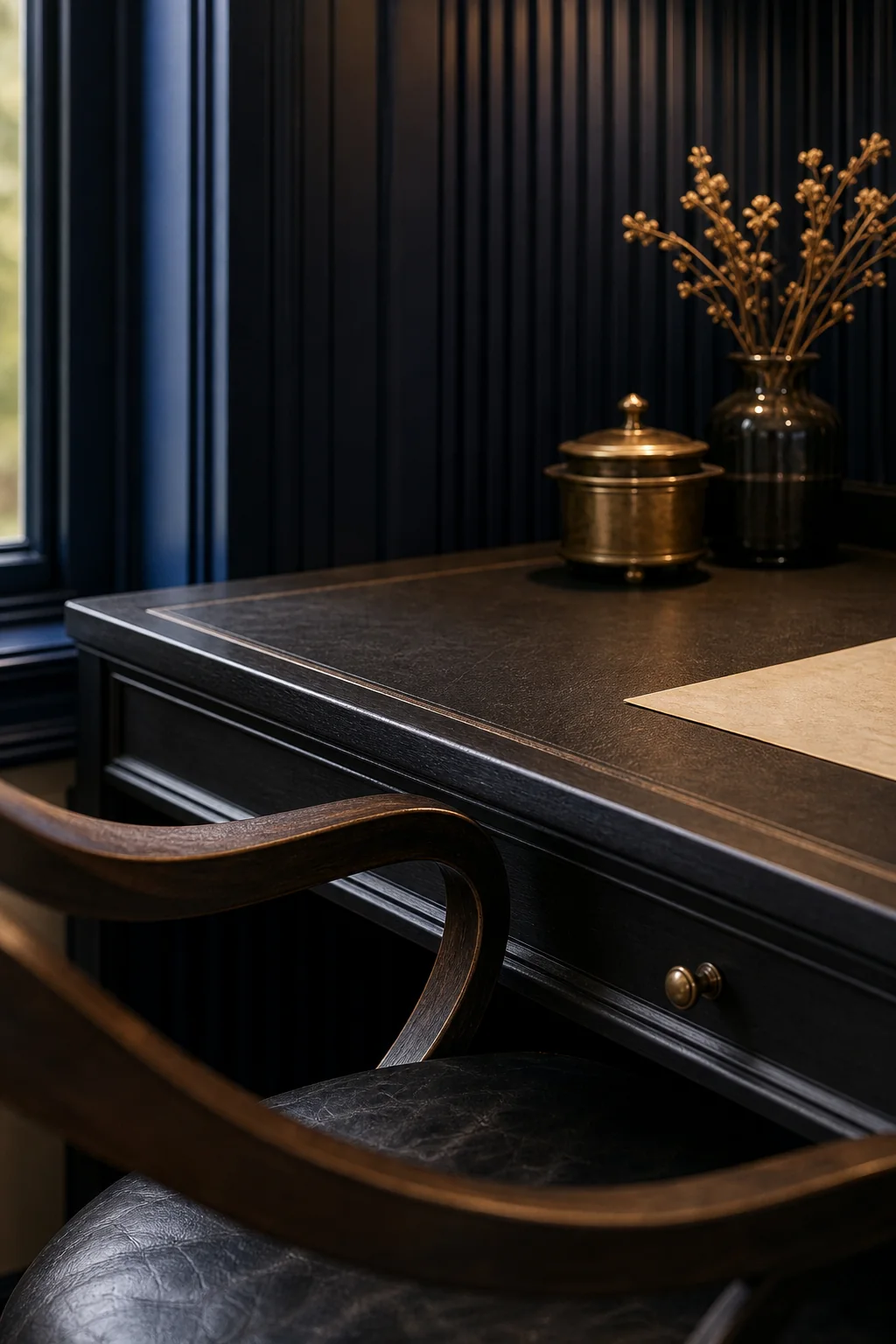
Pairing deep cobalt and matte charcoal with flashes of aged brass perfectly captures the high-contrast aesthetic of ink on metal. Use matte finishes for the dark colors to absorb light, creating a void-like backdrop that allows the metallic elements to truly shine. Introduce the brass sparingly to maintain its impact as a singular focal point, much like the tarnished brass nib of the antique pen. This careful distribution of light and shadow prevents the gothic atmosphere from becoming too heavy. The mapping table below details exactly how to translate these gothic art-nouveau undertones into specific room moves.
| Source trait | Visible evidence | Room move |
|---|---|---|
| Spiral texture | The tightly twisted cobalt glass stem showcasing dimensional depth | Deep cobalt-painted fluted wood paneling lining the alcove walls to create a structured vertical rhythm |
| Ink and metal | The dark ink residue contrasting with the tarnished brass nib | A matte charcoal leather desk surface paired with aged brass wall sconces for warm task lighting |
| Translucent refraction | The light-catching, dimensional quality of the blue glass stem | Ribbed glass fronts on the upper storage cabinets that distort and catch the directional side window light |
| Tapering precision | The sharp, precise point of the metallic calligraphy nib | A desk chair featuring sweeping art-nouveau curves and dramatically tapering brass legs that end in fine points |
Illuminating the Shadows
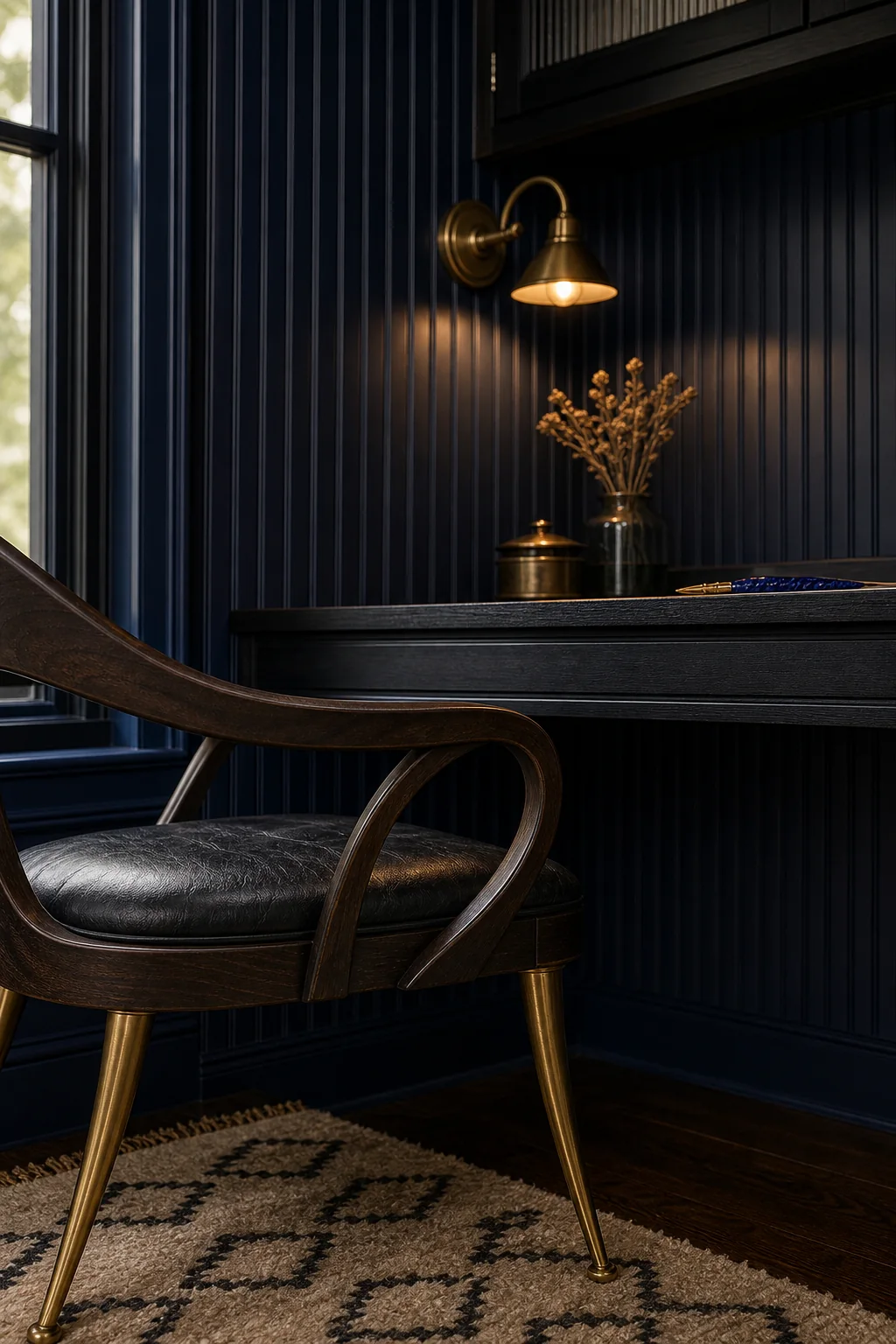
Aged brass sconces capture the tarnished nib’s metallic warmth, providing essential task lighting while enhancing the intimate, historic atmosphere of the alcove. These fixtures act as sharp, singular metallic endpoints against the dark, absorbing walls, drawing the eye without overwhelming the compact space. Seek out living finishes that show natural tarnish and patina to fully embrace the antique character of the original writing instrument. Positioning these sconces strategically above the desk ensures the warm light washes down the fluted paneling, highlighting the deep ridges and creating a moody, directional glow that inspires focused writing sessions.
Capturing Translucent Light
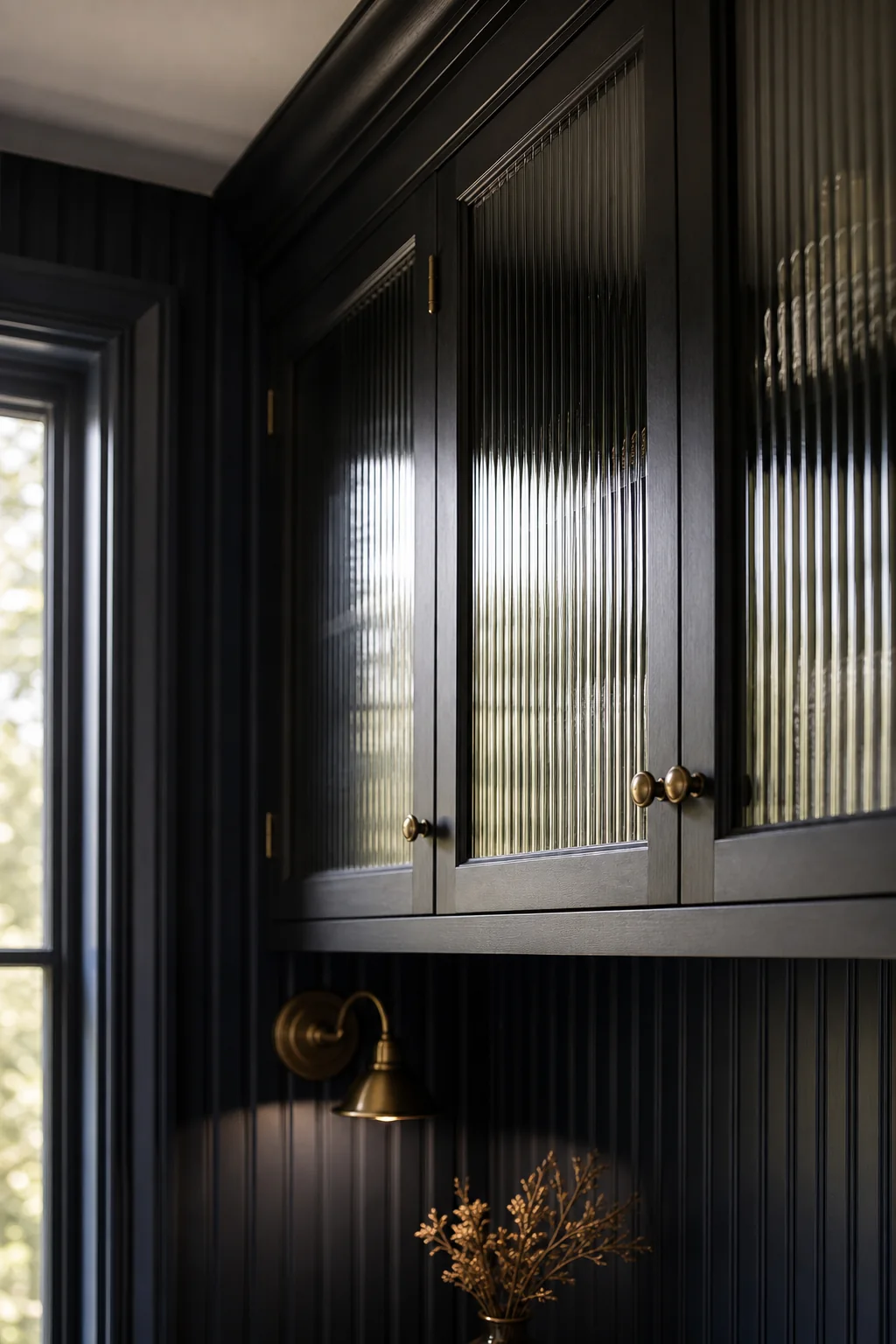
Introducing ribbed glass to the upper cabinetry mimics the stem’s dimensional refraction, breaking up the heavy, dark materials with luminous, shifting texture. Install these glass fronts near the tall narrow window to maximize natural light refraction, allowing the glass to catch and distort the directional side light throughout the day. Keeping the cabinet interiors dark is crucial to maintain the moody atmosphere while concealing your modern writing supplies. This interplay of light and shadow breathes life into the alcove. Gather these essential materials to build this atmospheric workspace and replicate the pen’s intricate material palette.
Absorbing the Light
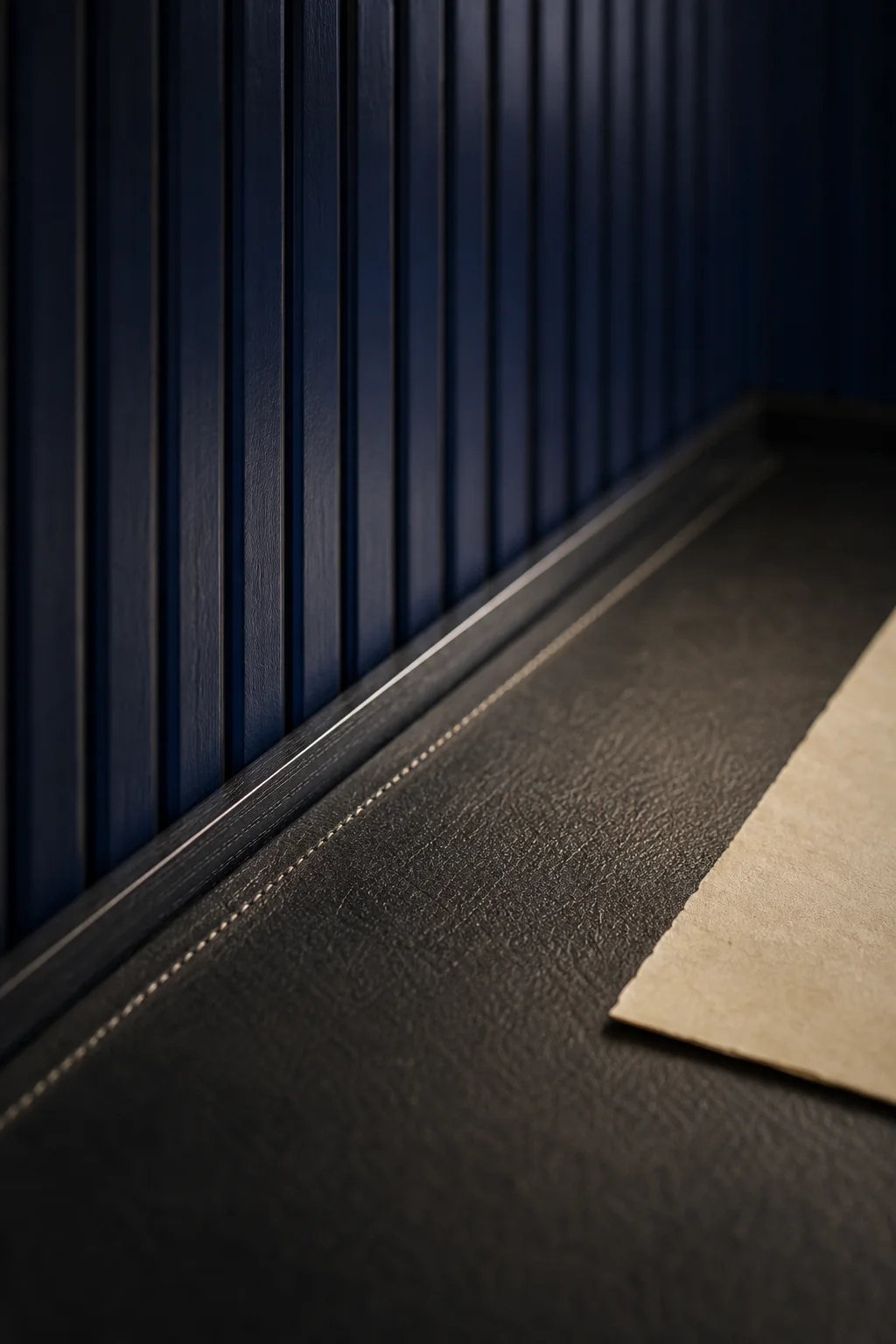
Matte charcoal leather absorbs light against the fluted wood, providing a smooth, non-reflective surface perfect for focused writing and creative work. This dark, grounding element perfectly balances the room’s high-gloss finishes and light-catching dimensional quality, anchoring the visual weight of the desk. Ensure you select a non-reflective, highly smooth finish for the leather to contrast beautifully with the aged metallic accents and the ribbed glass overhead. By mirroring the dark ink residue found on the antique nib, this tactile surface transforms the simple act of sitting at the desk into a deeply immersive, sensory experience.
Anchoring with Sharp Points
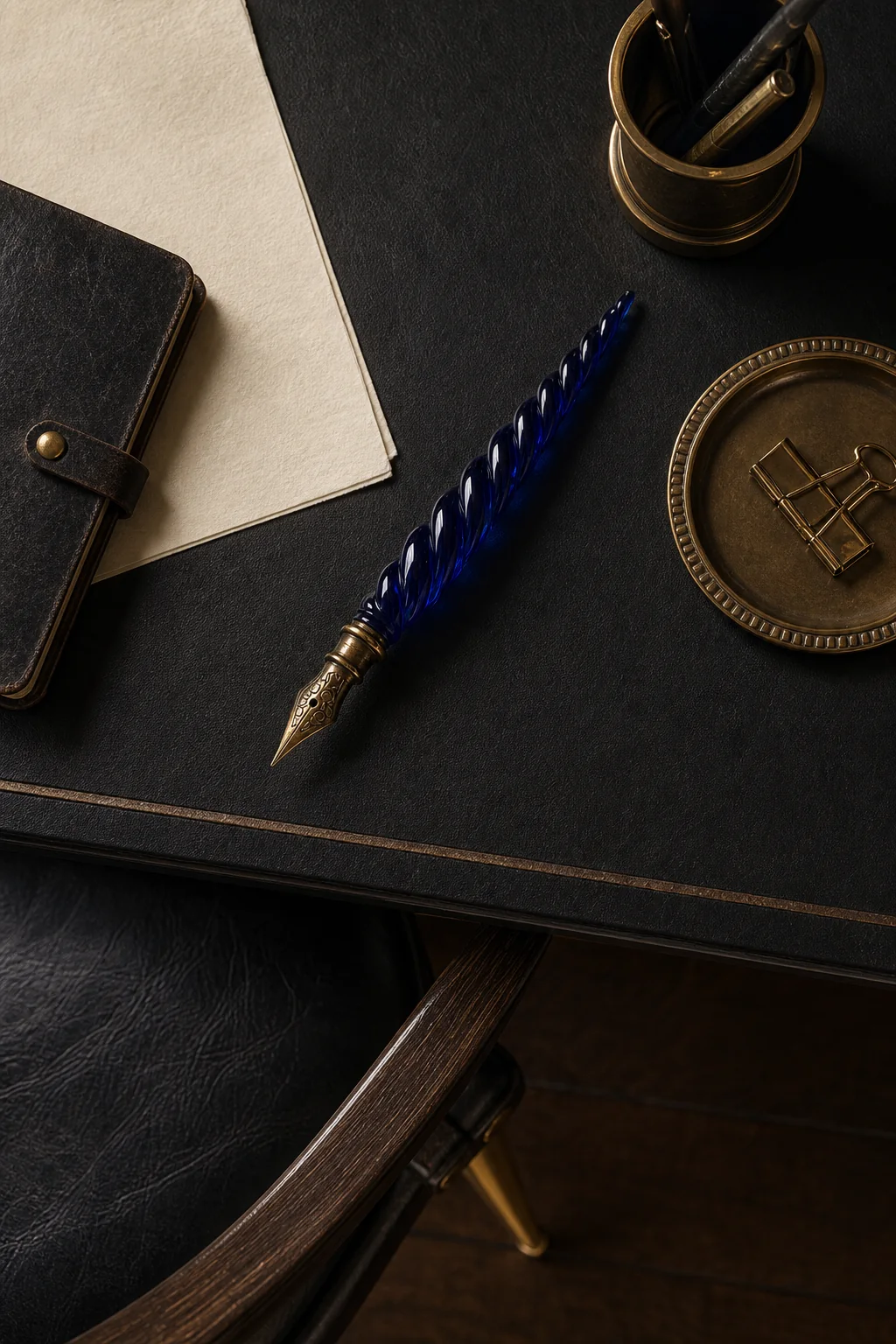
Sweeping art-nouveau curves that resolve into sharply tapering metallic points give the furniture the same precise, elegant tension as the pen. To scale this look, a subtle approach limits cobalt to the desk surface while keeping the walls a warm parchment tone. A balanced execution wraps the alcove in deep cobalt paneling but keeps the surrounding room light. For a bold statement, extend the dark, absorbing surface of the cobalt paneling across the ceiling to create a dramatic canopy, and incorporate sweeping, exaggerated art-nouveau curves into the cabinetry design to fully embrace the gothic drama.
Look for dark wood chairs with brass sabots on the feet. These metal caps instantly replicate the sharp, purposeful look of a calligraphy nib, grounding the sweeping curves with a definitive, metallic endpoint.