
This Floral Teapot Became a Breakfast Room
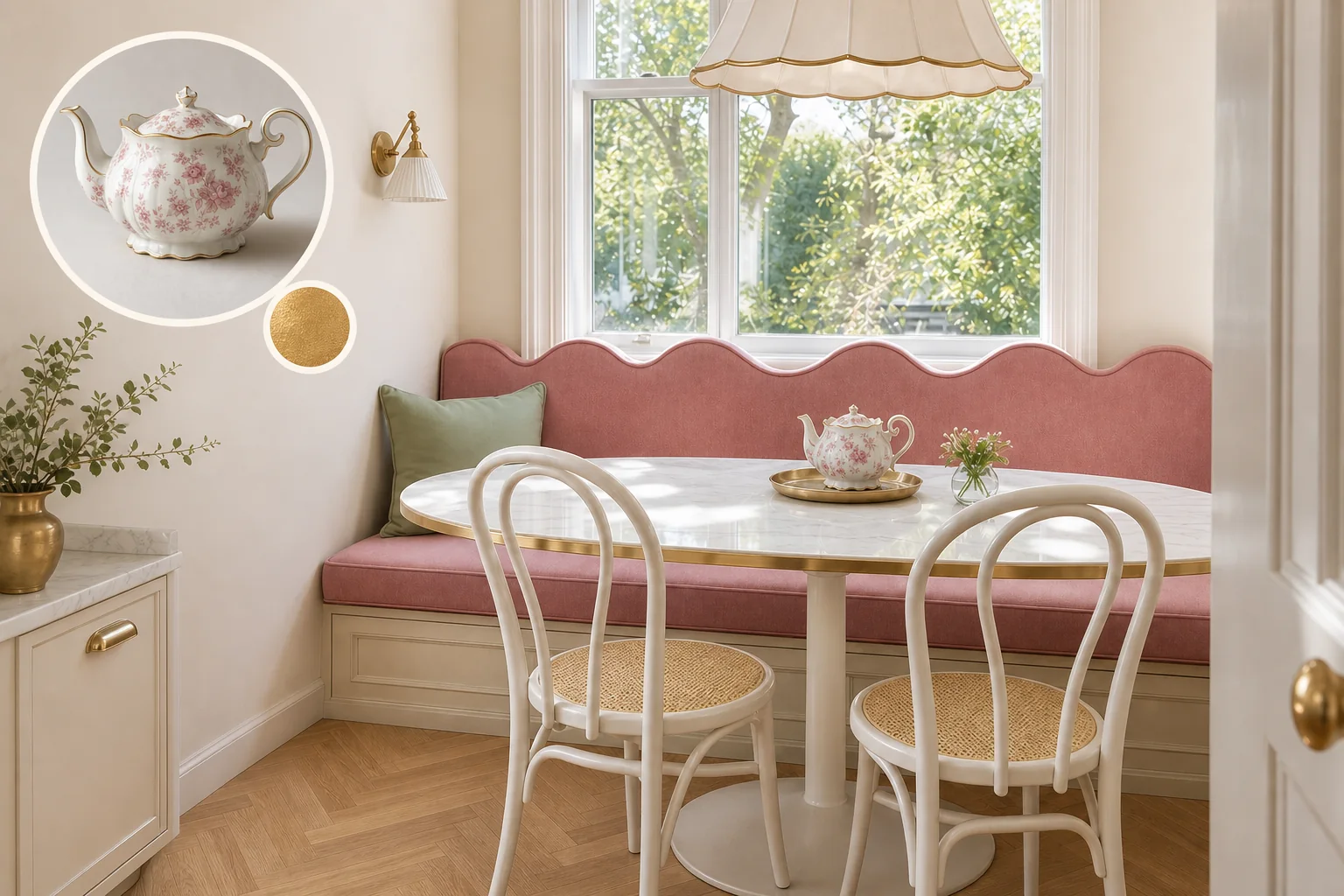
Transforming a highly decorative Victorian porcelain teapot into a fresh, sunlit breakfast room requires careful editing. By extracting the vessel’s elegant curves and warm, inviting tones while translating literal floral patterns into solid color blocks, we can craft a modern morning space that feels both elegant and uncluttered.
Sculpting the scalloped silhouette
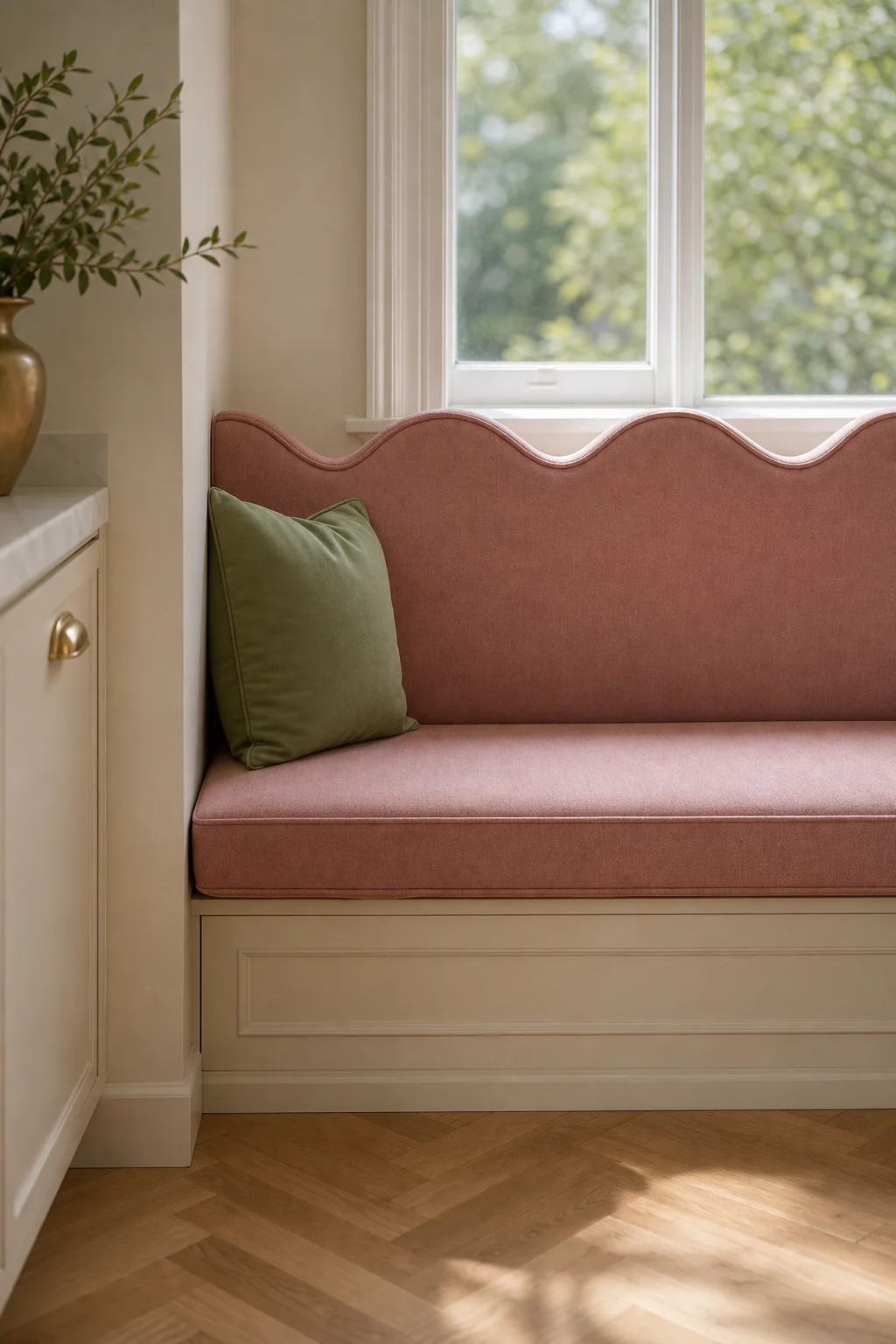
By scaling up the undulating scalloped shape of the teapot’s body and lid into a structural backrest, the room gains architectural softness without feeling overly fussy. This foundational move anchors the breakfast nook, transforming a delicate ceramic detail into an inviting place to lounge with your morning coffee. To ensure the proportions remain elegant rather than cartoonish, the curve radius must be wide and gentle, with upholstery pulled tightly to maintain crisp, readable lines against the window wall. You can recreate this custom built-in seating by following these essential construction steps.
- Measure the window alcove for a custom built-in banquette.
- Draft a wide, gentle scalloped template for the backrest.
- Construct the wooden banquette frame with integrated storage.
- Upholster the scalloped backrest with high-density foam.
- Install the finished backrest flush against the window wall.
Distilling the botanical pinks
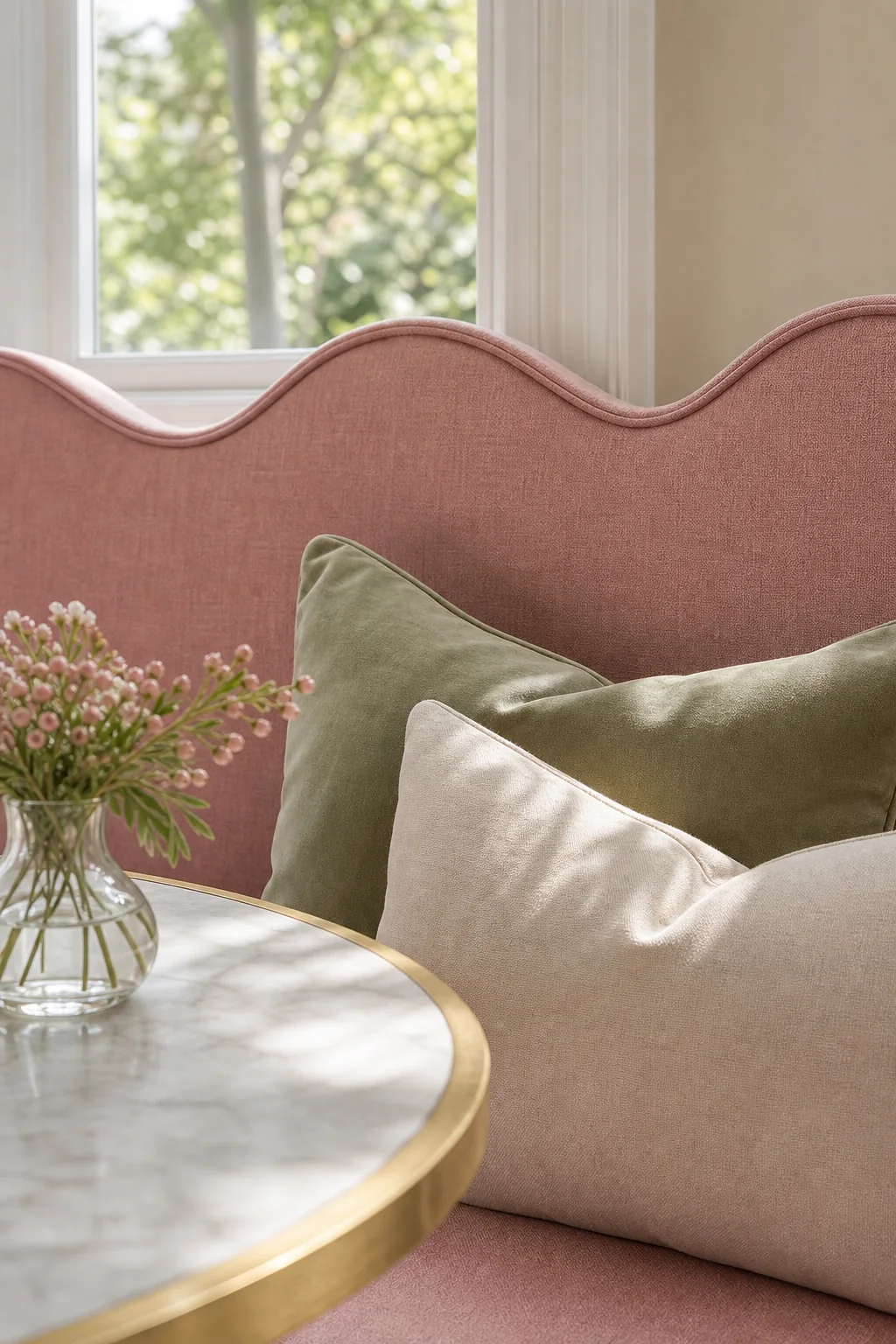
Abstracting the painted pink floral motifs into a single, solid block of dusty rose upholstery modernizes the Victorian palette while retaining its inherent warmth. Leaving behind the literal chintz fabrics and floral wallpapers allows the room to breathe, replacing busy patterns with a bold, calming color block that feels incredibly fresh. This strategic editing process ensures the breakfast room remains a serene environment tailored for early mornings, directly mapping the antique vessel’s most defining characteristics into functional interior architecture, as detailed in our translation table below.
| Source trait | Visible evidence | Room move |
|---|---|---|
| Scalloped Silhouette | The undulating scalloped shape of the teapot’s body and lid. | A custom built-in banquette featuring a gently scalloped, upholstered backrest against the window wall. |
| Botanical Pink | The painted pink floral motifs scattered across the porcelain. | Solid dusty rose upholstery on the banquette, replacing literal floral prints with a bold, calming color block. |
| Gilded Edge | The thin gold rim painted along the teapot’s spout and opening. | A polished marble breakfast table finished with a continuous, tactile brushed brass edge band. |
| Looping Handle | The delicate, looping C-curve of the teapot’s handle. | Classic bentwood dining chairs with looping, open backrests that echo the handle’s negative space. |
Wrapping the room in porcelain cream
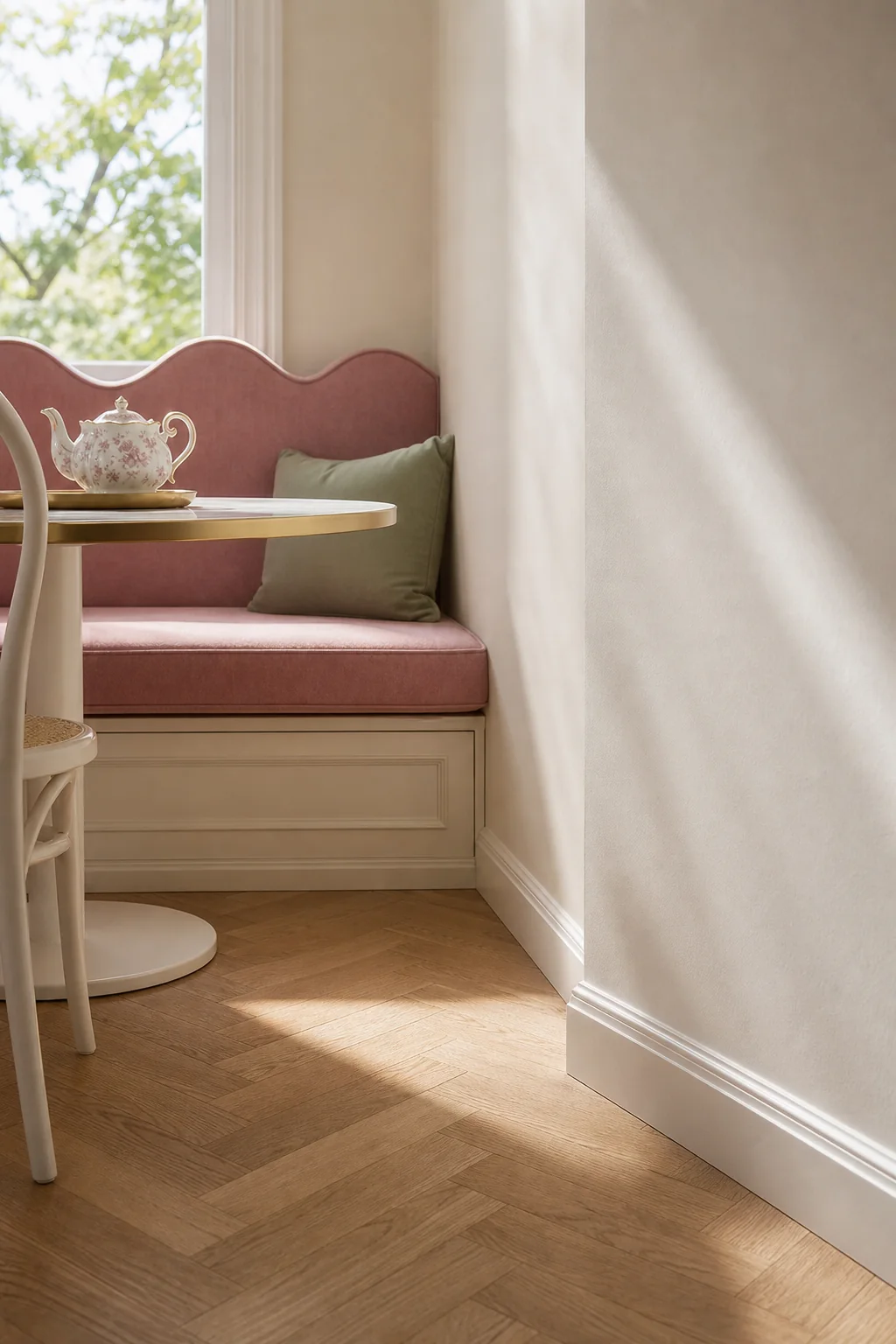
Satin-finish cream walls mimic the teapot’s smooth porcelain body, providing a quiet, luminous foundation that allows the solid color blocks of the banquette to stand out beautifully. Matching the surrounding wall color to the ceramic’s creamy base creates a seamless envelope that catches the natural morning light streaming through the large sash window. This subtle sheen perfectly contrasts with the matte velvet or linen of the seating, establishing a sophisticated interplay of textures that elevates the entire alcove without requiring any additional ornamentation.
Choose a satin or eggshell paint finish for the walls. This subtle sheen perfectly mimics the soft, reflective quality of glazed porcelain in morning light.
Introducing the gilded edge
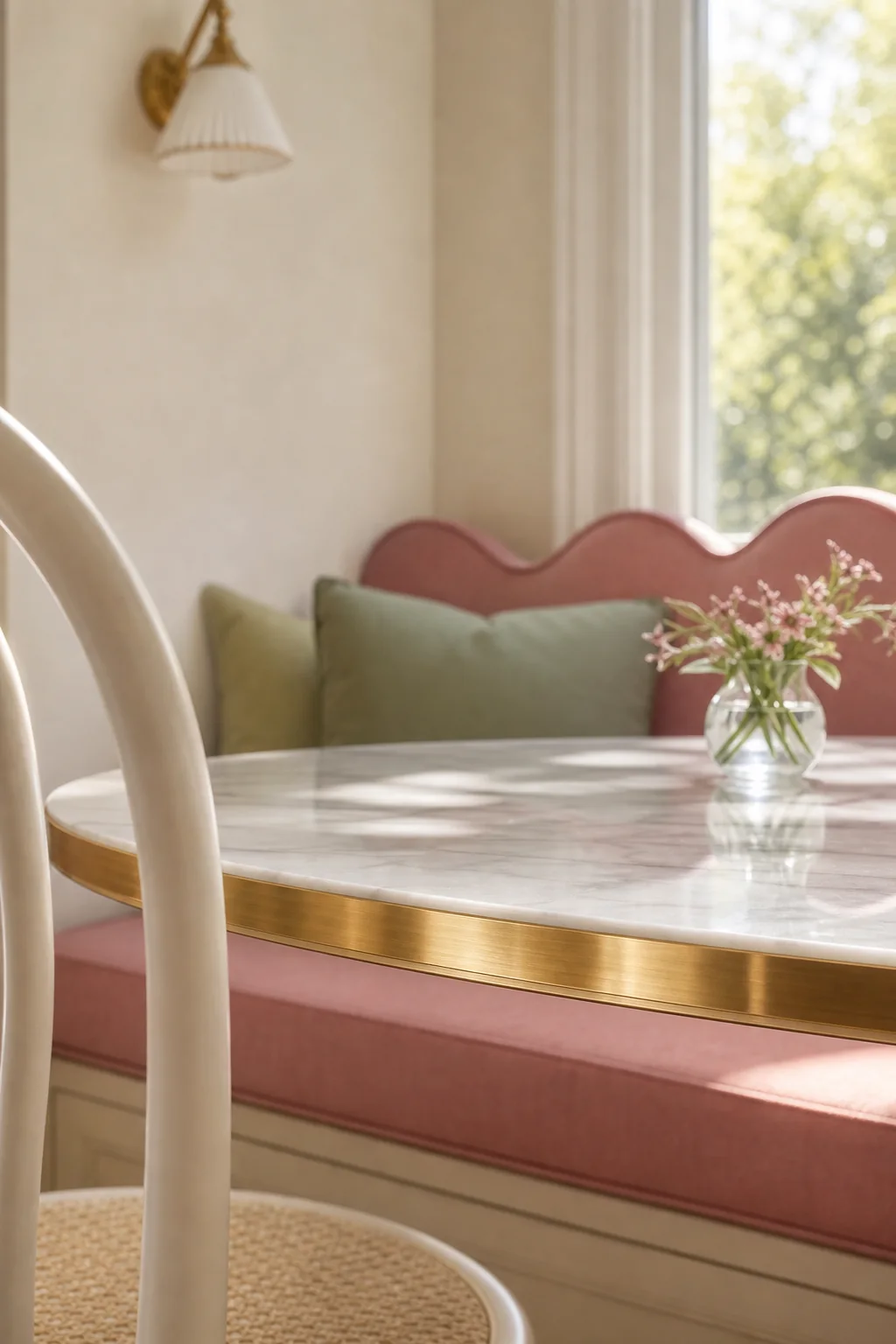
Translating the delicate gold paint into a physical brass edge adds a tactile, luxurious boundary to the morning dining surface. This continuous metallic outline frames the table much like a gilded rim finishes a fine cup, providing a sharp, warm contrast to the surrounding soft elements. Pairing this detail with cool, polished stone balances the temperature of the room, ensuring the space feels grounded and highly intentional. You can easily source the foundational textures required to build this refined morning nook by referencing our curated room material edit.
Balancing cool marble and warm brass
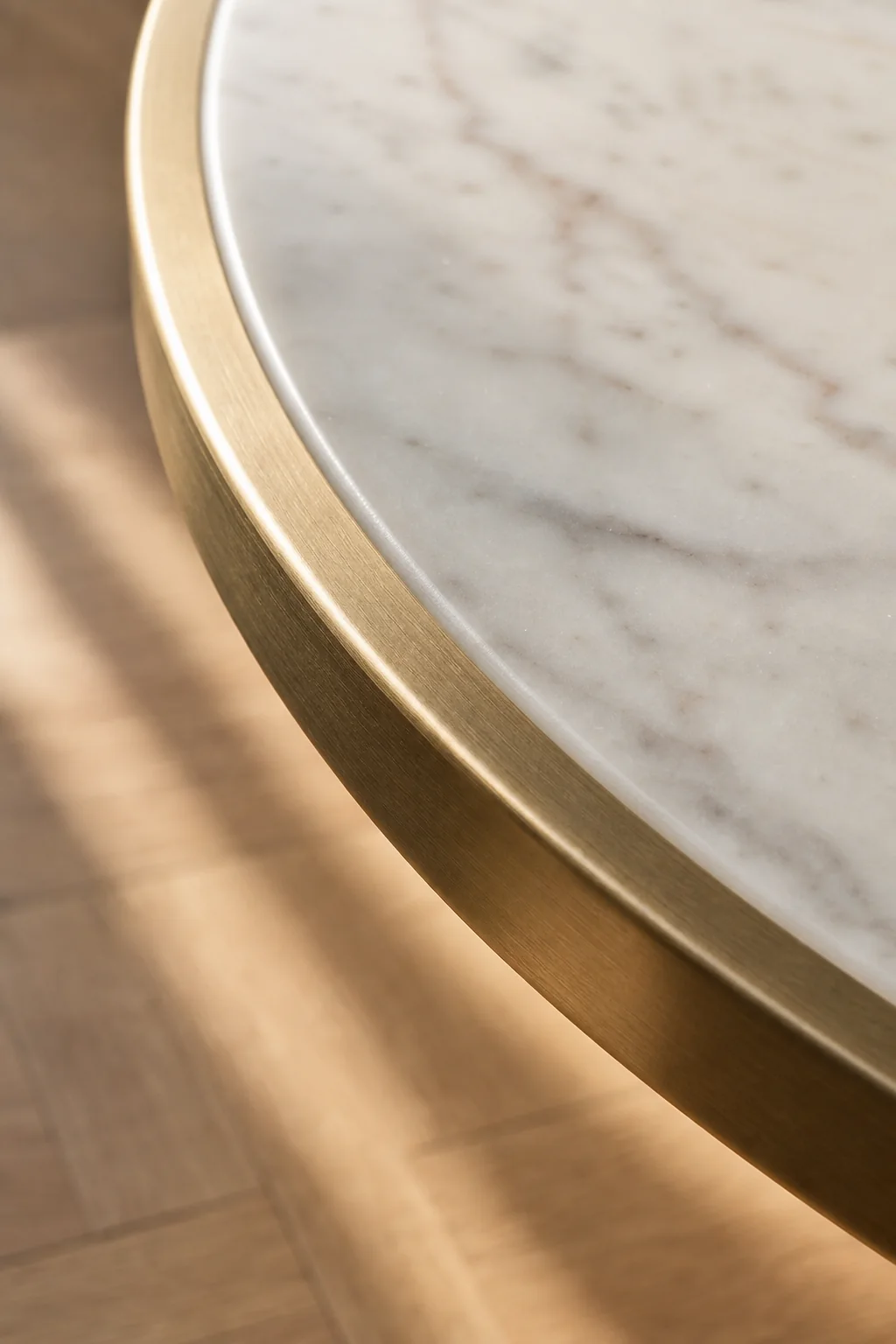
Polished marble provides the cool, smooth feel of glazed porcelain, and you can easily dial this translation’s intensity to suit your home. A subtle approach might keep the seating straight-backed while introducing the pink solely through table linens, whereas a balanced scalloped banquette paired with quiet cream walls perfectly captures the concept. For a truly bold interpretation, you could paint the window trim and ceiling in the dusty rose hue while selecting a heavily veined, dramatic stone for the cafe table to amplify the visual drama.
Leave the brass edge unlacquered if you prefer a living finish that patinas over time, or seal it to maintain that pristine, freshly-gilded Victorian look.
Echoing the looping handle
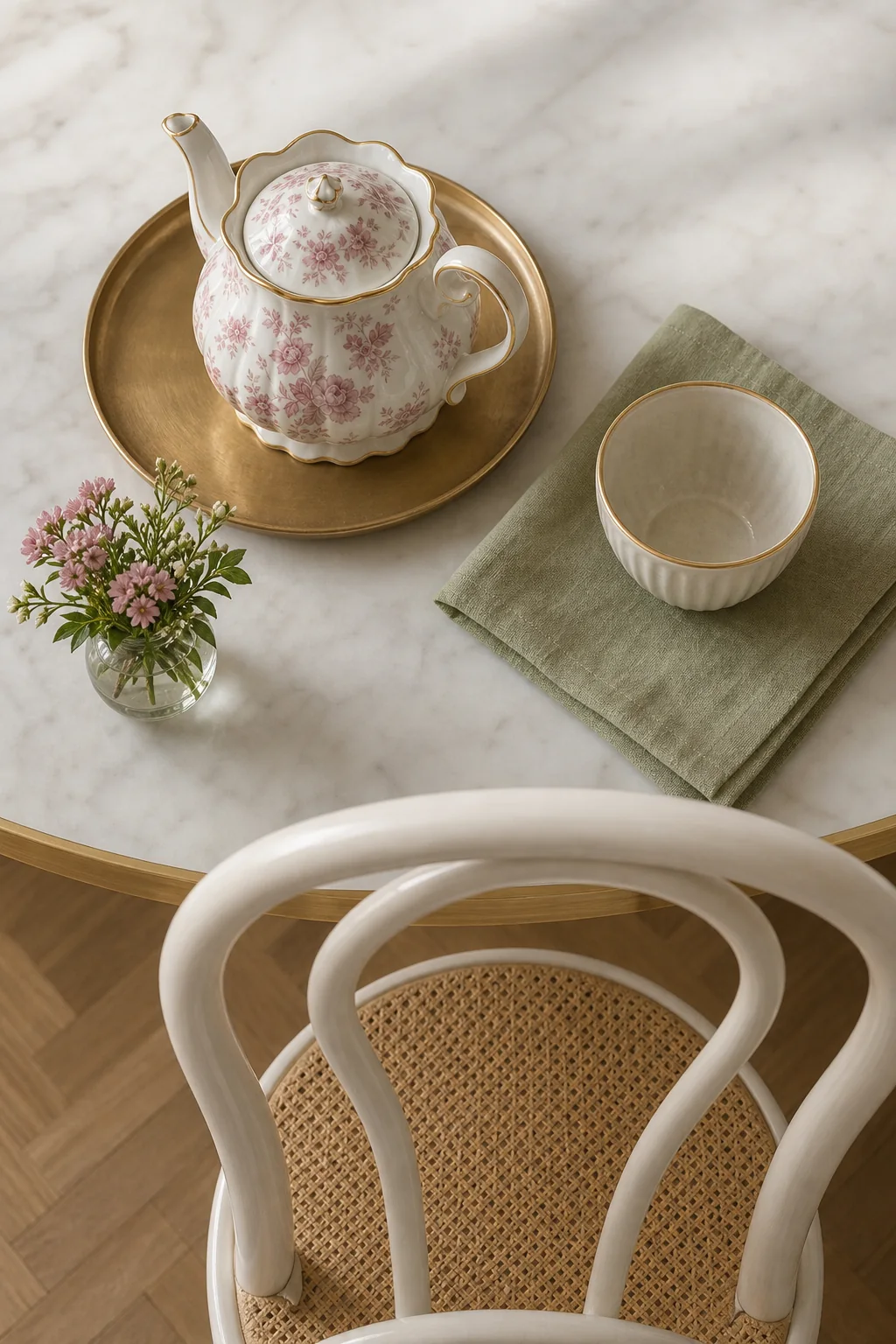
The open, sweeping curves of the classic bentwood dining chairs introduce a gentle rhythm that complements the scalloped banquette without adding unnecessary visual weight. By echoing the delicate negative space of the teapot’s looping handle, these chairs allow natural morning light to pass freely through their frames, keeping the small alcove feeling airy and spacious. Choosing a white or cream finish for the chairs ensures they blend seamlessly with the surrounding walls, allowing their graceful, curving silhouettes to serve as the final sculptural touch in the space.
When mixing curves, vary their size. The wide, sweeping loops of the chairs contrast beautifully with the tighter, repeating scallops of the banquette backrest.