
This Magnolia Cone Became a Sunroom
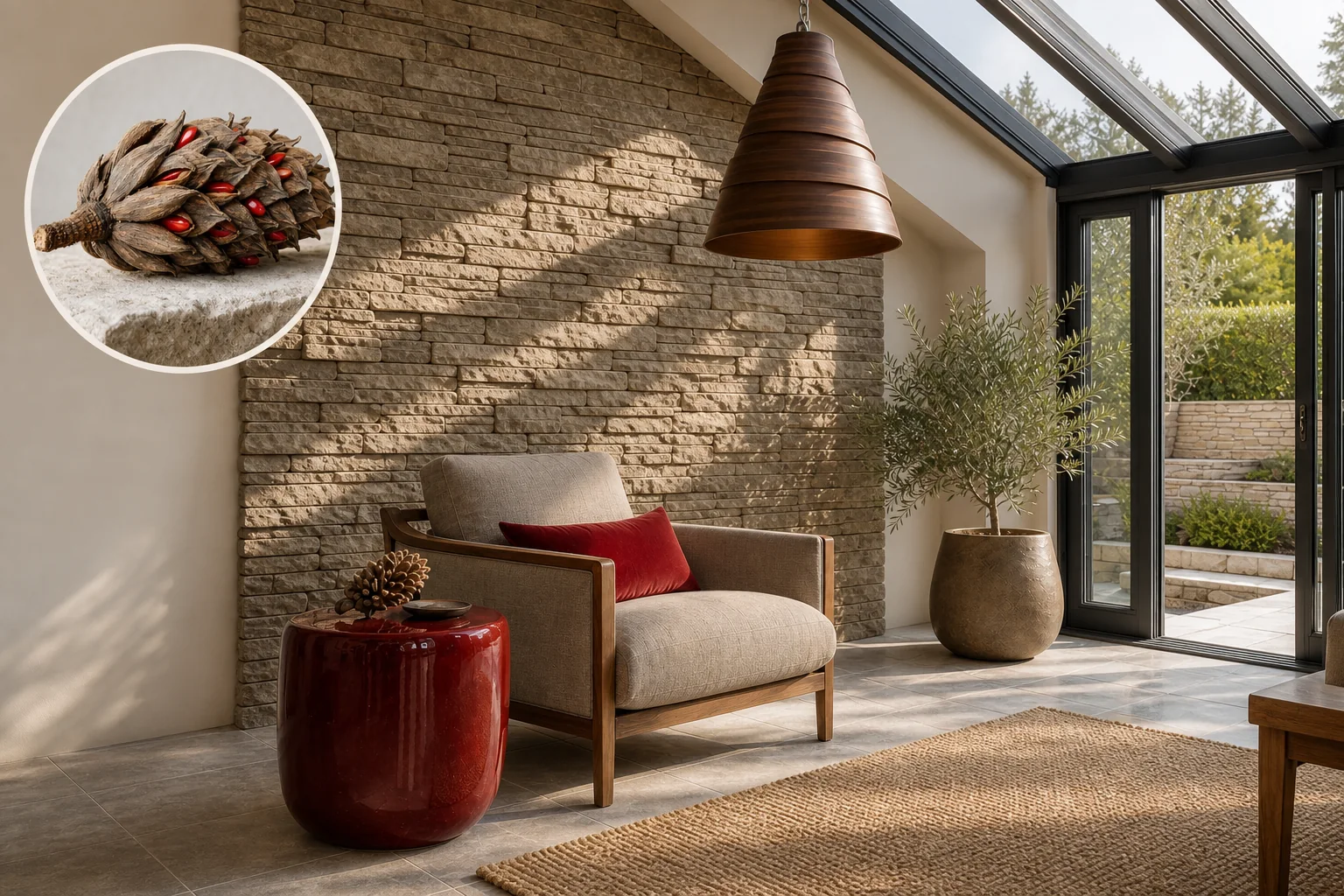
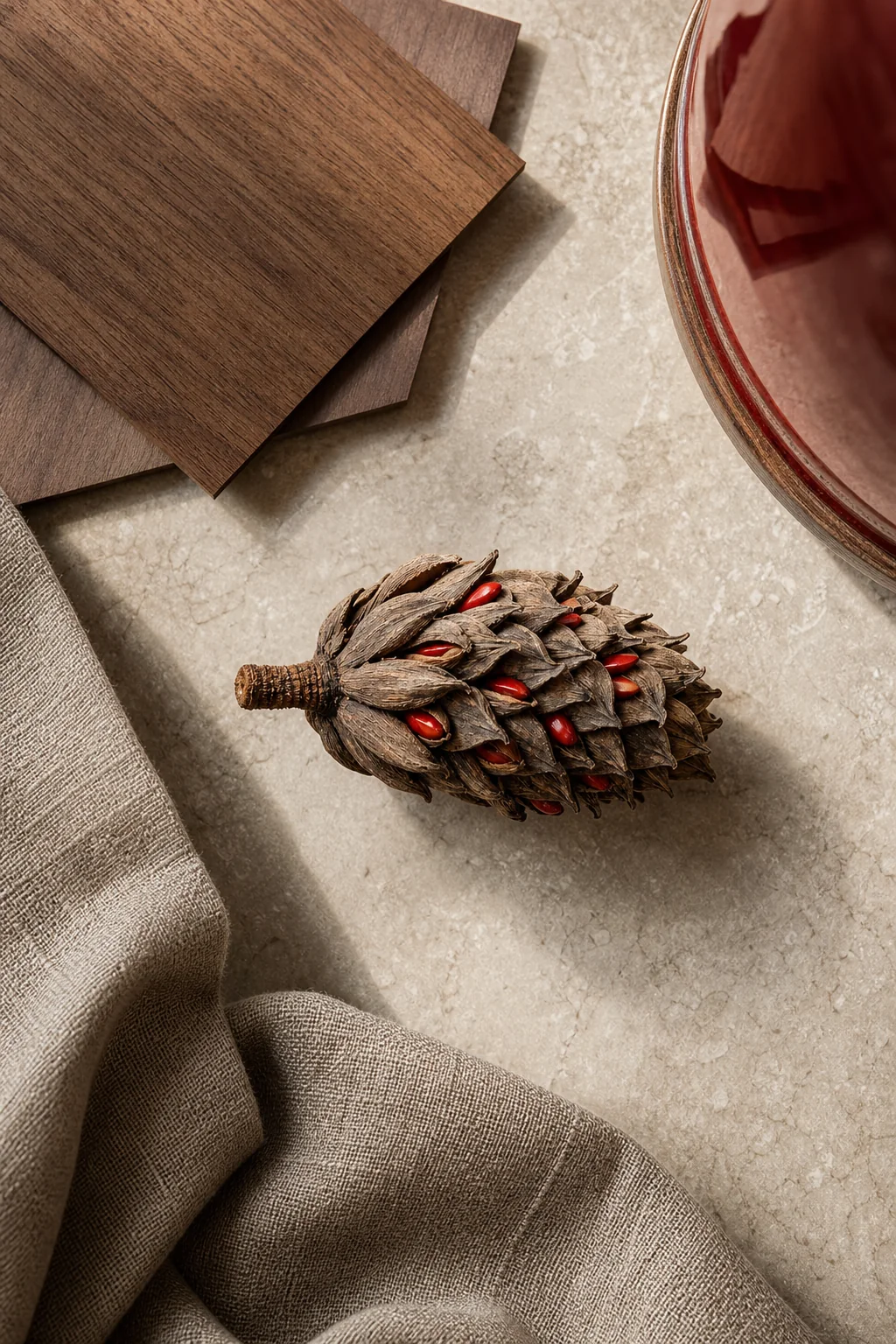
A dried magnolia cone offers a masterclass in protective layering and hidden vibrancy, translating perfectly into a sunroom that balances rugged architecture with moments of intense color. By keeping the architectural shell entirely neutral and matte, high-gloss scarlet accents command attention without overwhelming the space.
Building the protective shell
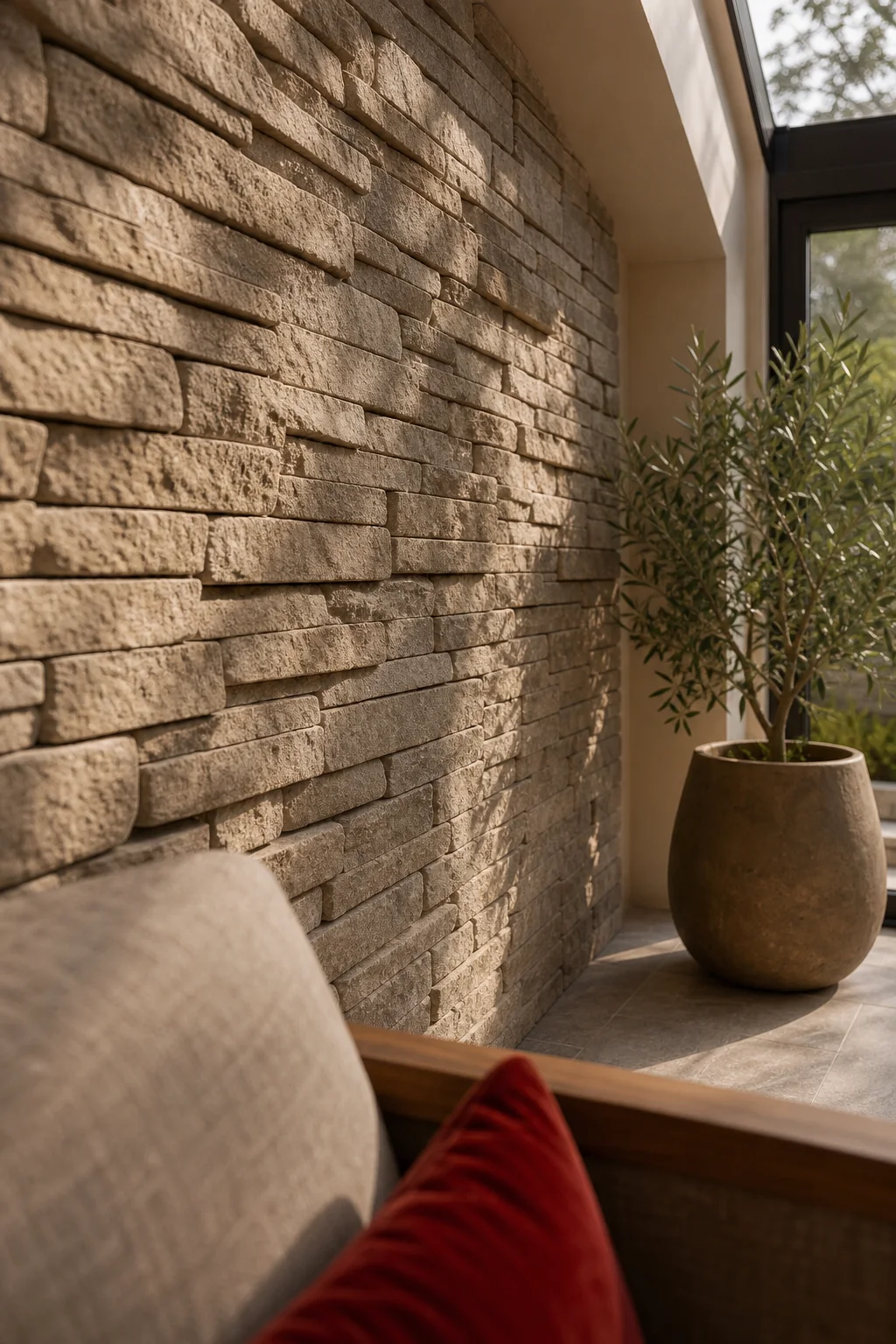
Establishing a rugged, layered architectural base grounds the airy sunroom with natural weight, mimicking the woody, staggered plates that form the cone’s protective exterior. To achieve this grounding effect, use dry-stacked split-face stone to create deep shadow lines on a prominent interior feature wall, while keeping the secondary walls a smooth, warm plaster to let the masonry stand out. This foundational layer sets the stage for a serene and tactile interior, seamlessly transitioning into the outdoor garden environment. Follow these implementation steps to build the room’s structural and functional core from the ground up.
- Install the dry-stacked split-face stone feature wall, ensuring deep shadow lines and staggered depths.
- Apply warm plaster to the remaining secondary walls to provide a smooth, matte contrast.
- Position the lounge seating facing the garden view to encourage relaxation and outdoor connection.
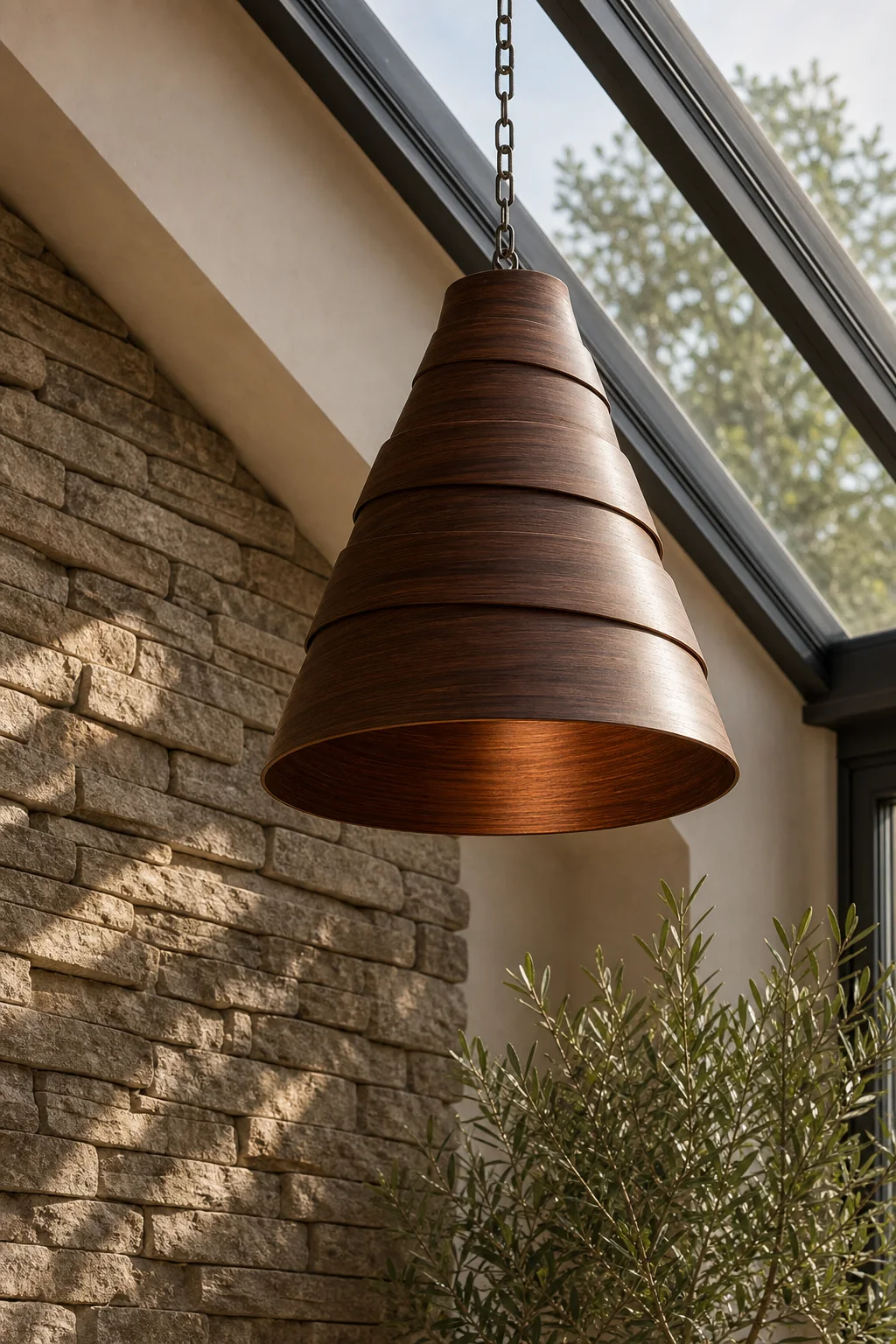
- Hang the spiraled walnut pendant light centered over the seating area for ambient overhead lighting.
Revealing hidden vibrancy
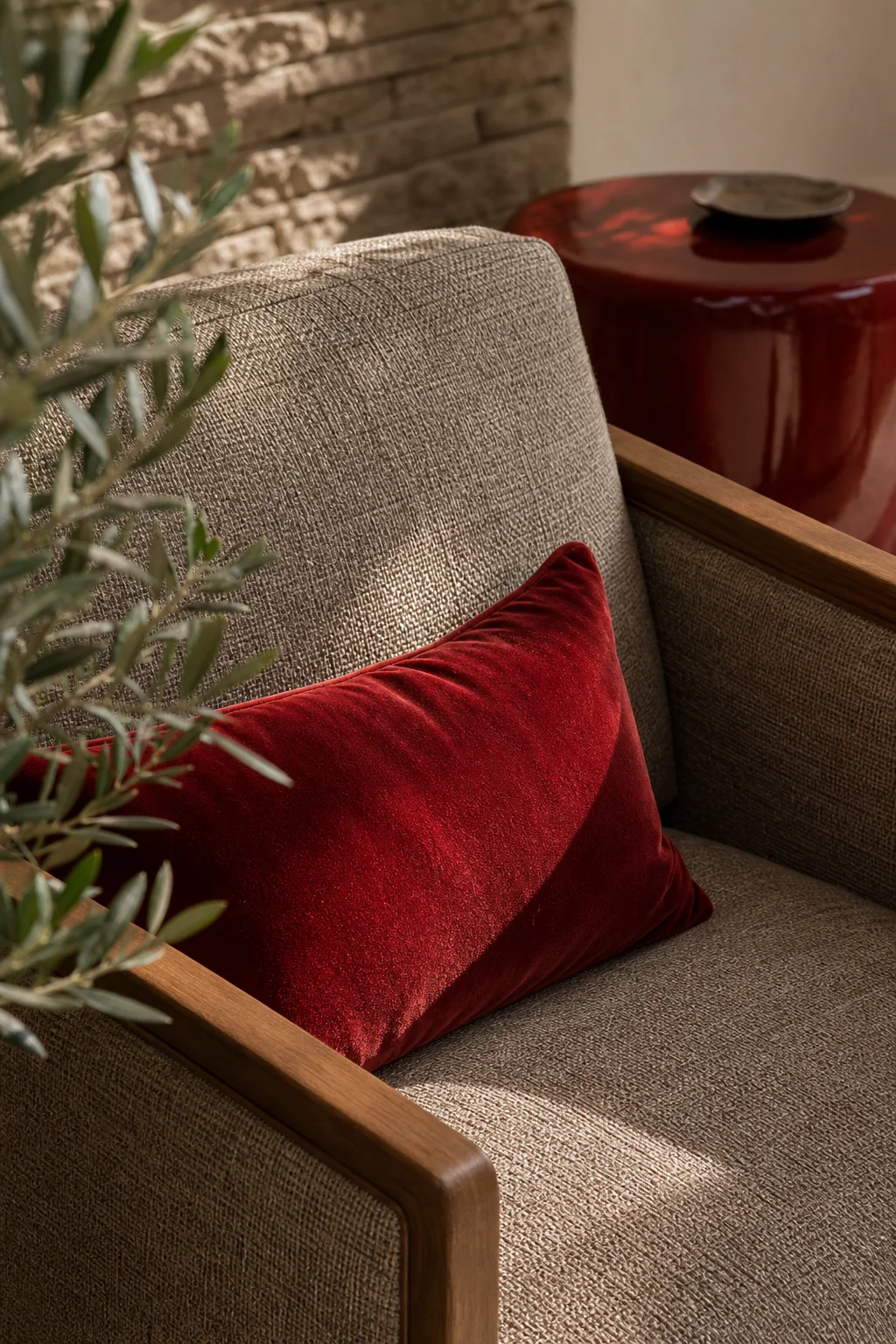
Introducing highly saturated, glossy accents against the muted stone mimics the striking surprise of the pod’s interior seeds tucked inside muted brown crevices. This visual-DNA mapping table details exactly how to translate the rugged, highly textured botanical structure into a bright, airy lounge space. By limiting the glossy scarlet to small, high-impact moments like a side table or a single pillow, you ensure the surrounding palette remains strictly neutral with warm plaster and woody taupe. This disciplined approach allows the bold color to pop brilliantly against the earthy architectural shell without overwhelming the senses.
| Source trait | Visible evidence | Room move |
|---|---|---|
| Overlapping scales | The woody, staggered plates that form the cone’s protective exterior | A prominent interior feature wall built from dry-stacked, staggered stone slabs of varying depths, creating a rhythmic, shadowed surface |
| Hidden vibrancy | The bright scarlet seeds tucked inside the muted brown crevices | Deep scarlet accents introduced through a high-gloss ceramic side table and a velvet lumbar pillow, popping against the neutral stone and plaster |
| Rough vs. smooth | The contrast between the dry, matte woody cone and the slick, fleshy seeds | Pairing heavy, rough-woven taupe linen upholstery on the lounge chairs with the slick, glass-like glaze of the scarlet ceramics |
| Spiraling taper | The conical, tapering shape of the pod and its spiraling phyllotaxis | A large overhead pendant light constructed from overlapping, spiraling bands of matte walnut veneer, tapering gently toward the top |
High-gloss scarlet accents
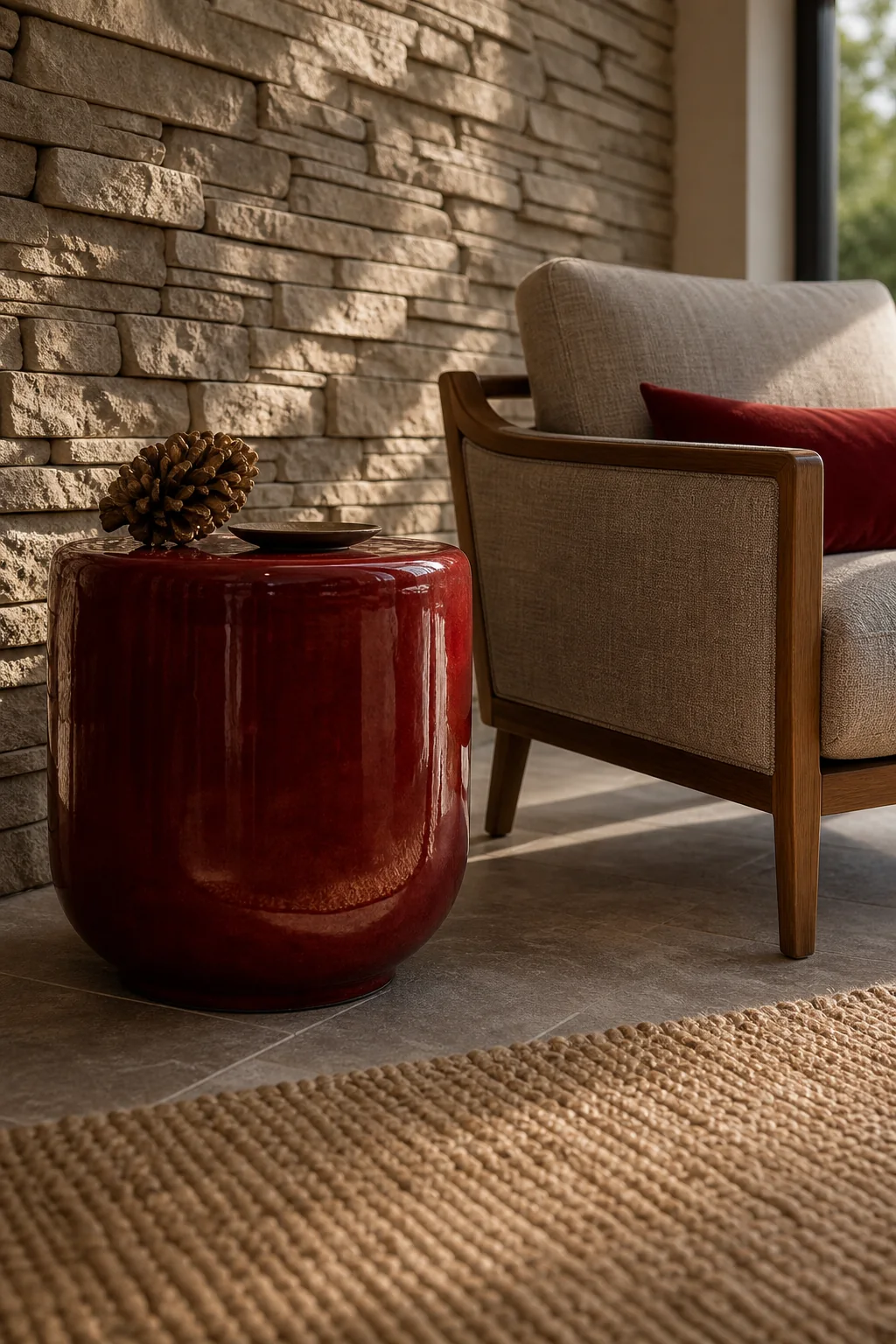
A glossy table captures the fleshy sheen of magnolia seeds, proving that you can scale this design’s intensity to match your personal comfort level. For a subtle approach, focus entirely on the textural interplay of warm plaster, taupe linen, and dry-stacked stone, omitting the scarlet accents to rely on organic rhythm. A balanced execution maintains the neutral shell while introducing deep scarlet exclusively through small, easily swappable elements. To go bold, expand the high-gloss footprint by painting the window mullions or adding larger glossy red furniture, ensuring the stone wall itself remains unpainted.
Contrasting rough and smooth
Pairing heavy, matte textiles with slick, reflective surfaces brings the tactile duality of the seed pod indoors, contrasting the dry woody cone with its fleshy seeds. Choose rough-woven taupe linen for the primary lounge seating to provide a durable surface for reading and relaxing. This interplay requires a carefully curated material palette to ensure the room feels grounded, tactile, and deeply connected to nature without relying on literal botanical wallpaper or oversized wooden seed sculptures. Use this material checklist to source the essential finishes and textures for your transformed sunroom space.
Tactile textile pairings
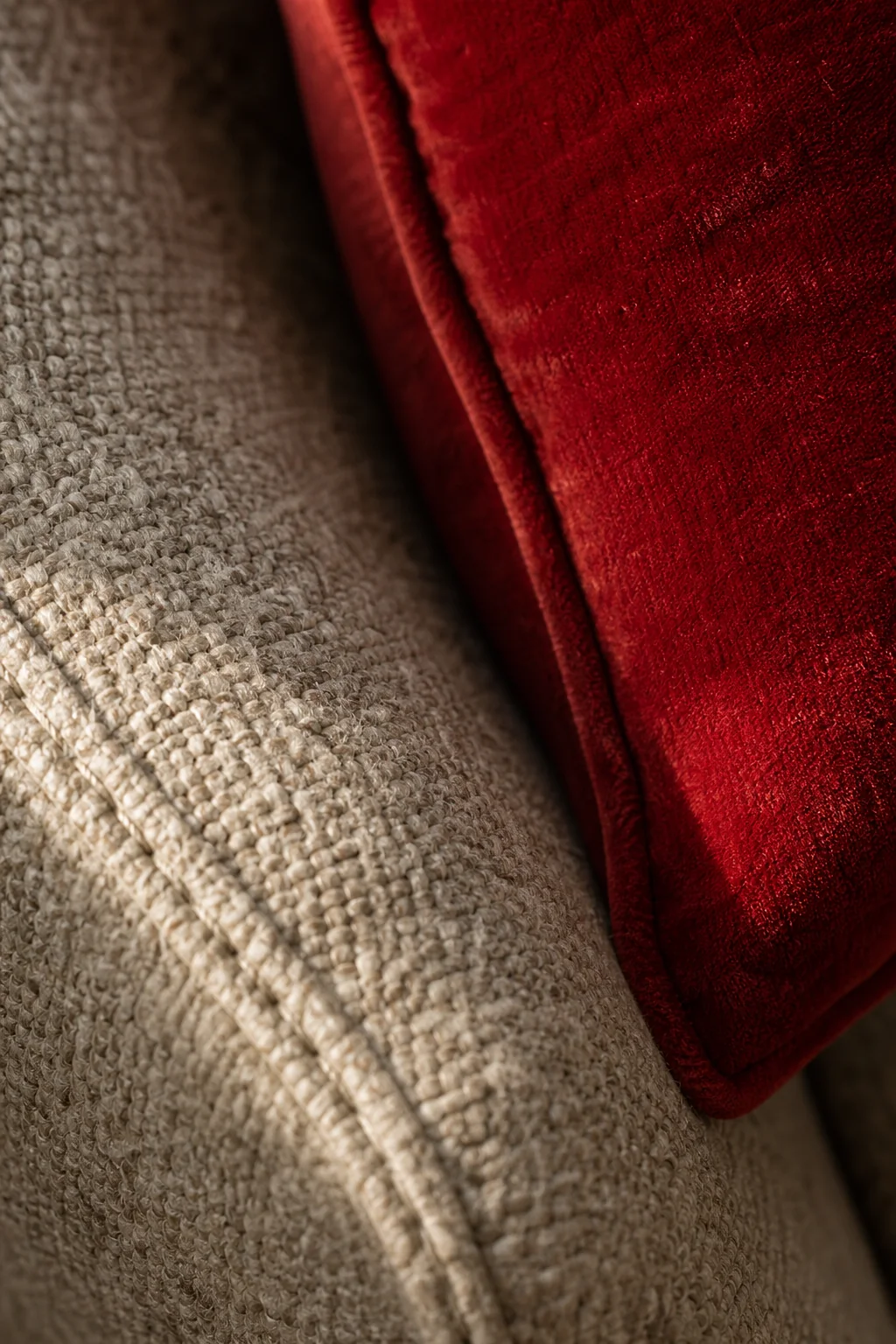
Velvet pillows soften the transition from rough linen to ceramics, bridging the gap between the matte, protective outer shells and the smooth, vibrant interior surprises. This careful layering prevents the extreme textural contrast from feeling jarring in a serene sunroom environment. By keeping the foundation strictly neutral, these tactile textile pairings can shine under the soft, angled morning sunlight that pours through the sloping glass ceiling. The result is a cozy, visually rich seating arrangement that invites you to linger comfortably with a book long after the sun goes down.
Spiraling overhead tapers
Hanging a conical, spiraling light fixture introduces the pod’s organic geometry without resorting to literal pinecone-shaped furniture or obvious floral prints. Select a pendant light made of natural wood veneer to maintain the earthy material palette, ensuring the fixture tapers gently to mimic the natural phyllotaxis of the cone. This tight, staggered, shingle-like layering gradually expands in scale, drawing the eye upward toward the vaulted glass ceiling. It provides essential ambient overhead lighting for evening use, perfectly completing the room’s transformation from a simple seed pod inspiration into a fully realized interior.
Choose an oversized pendant to anchor the vaulted glass ceiling. A larger fixture creates a lowered canopy effect over the lounge seating area.