
This Pocket Compass Became a Display Nook
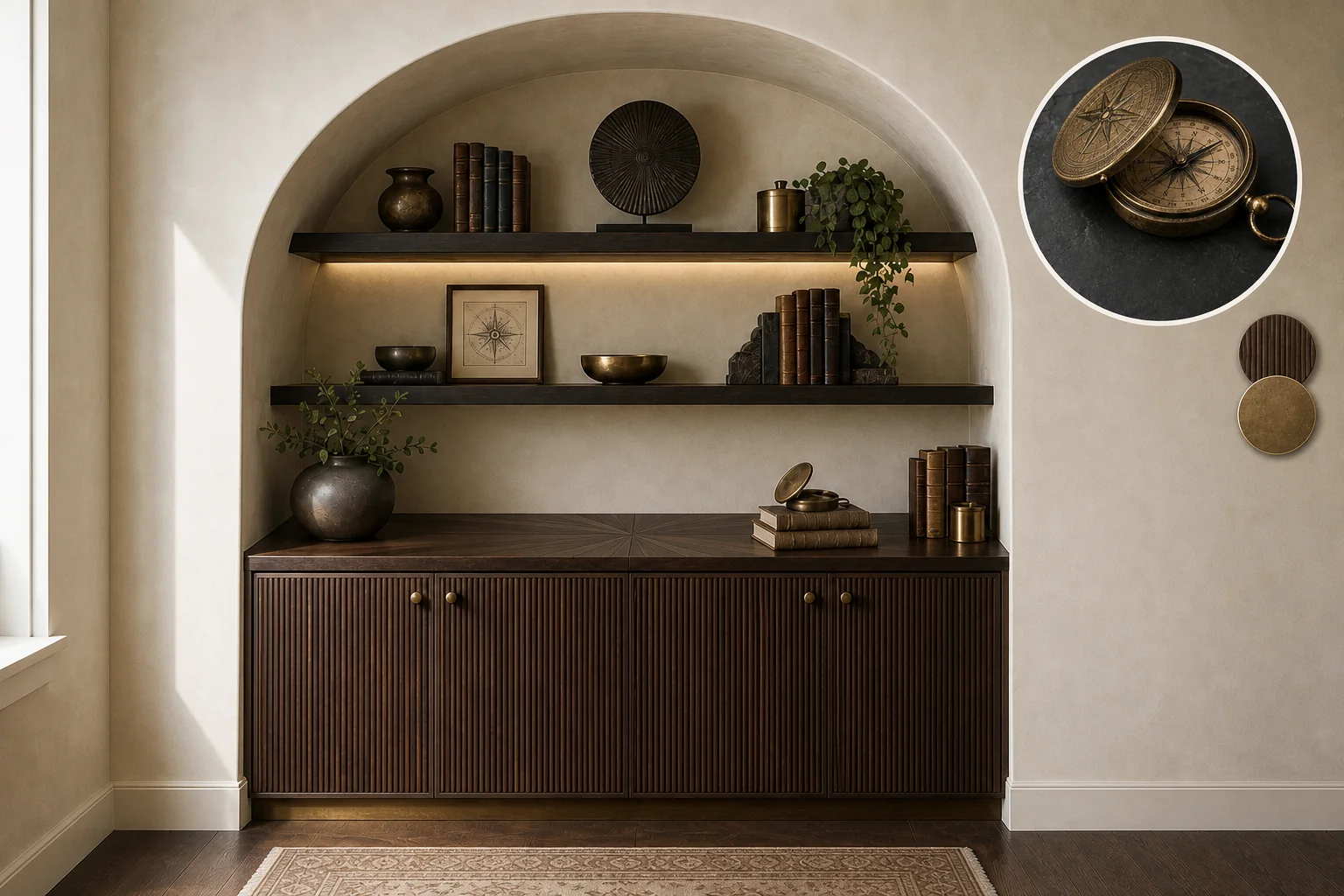
An antique pocket compass is a masterclass in purposeful containment, making it the perfect blueprint for an intimate architectural vignette. By translating the concept of a protective enclosure that draws the eye inward, you can balance heavy metallic elements with expansive, warm parchment tones to prevent a small space from feeling cavernous.
Shaping the protective alcove
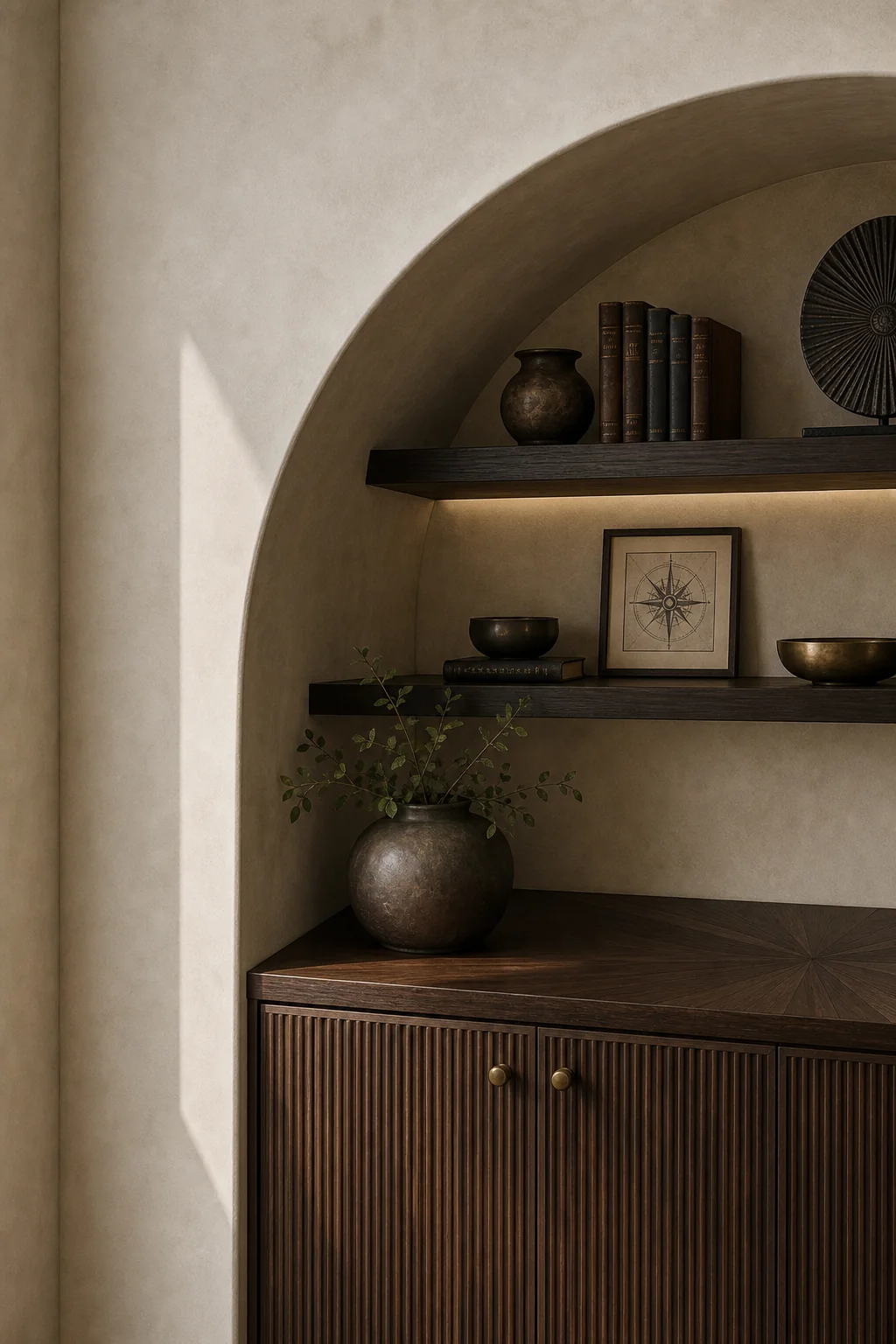
Just as the brass casing shields the delicate dial, a curved architectural alcove creates a distinct, protective boundary for the display area. To achieve this sense of quiet intimacy, you must construct a shallow barrel vault that establishes the nook’s boundaries while ensuring the depth accommodates shelving without casting heavy shadows. This foundational architecture mimics the shallow, protective circular brass casing that houses a delicate navigational instrument, setting the stage for a highly curated display. Following a precise construction sequence ensures the structural integrity and seamless finish of the alcove.
- Frame the shallow barrel-vaulted alcove into the existing wall, ensuring a smooth, continuous curve at the top with straight sides.
- Install solid wood blocking secured to the studs behind the drywall to support the heavy floating shelves and lower cabinetry.
- Run electrical wiring for concealed accent lighting, positioning wires at the top of the vault and under shelf locations.
- Apply the parchment-toned plaster finish to the alcove walls, achieving a matte, subtly mottled texture without harsh lines.
- Mount the custom reeded walnut cabinetry and reading ledge so the lower built-in fits flush against the plastered alcove walls.
Balancing parchment and patina
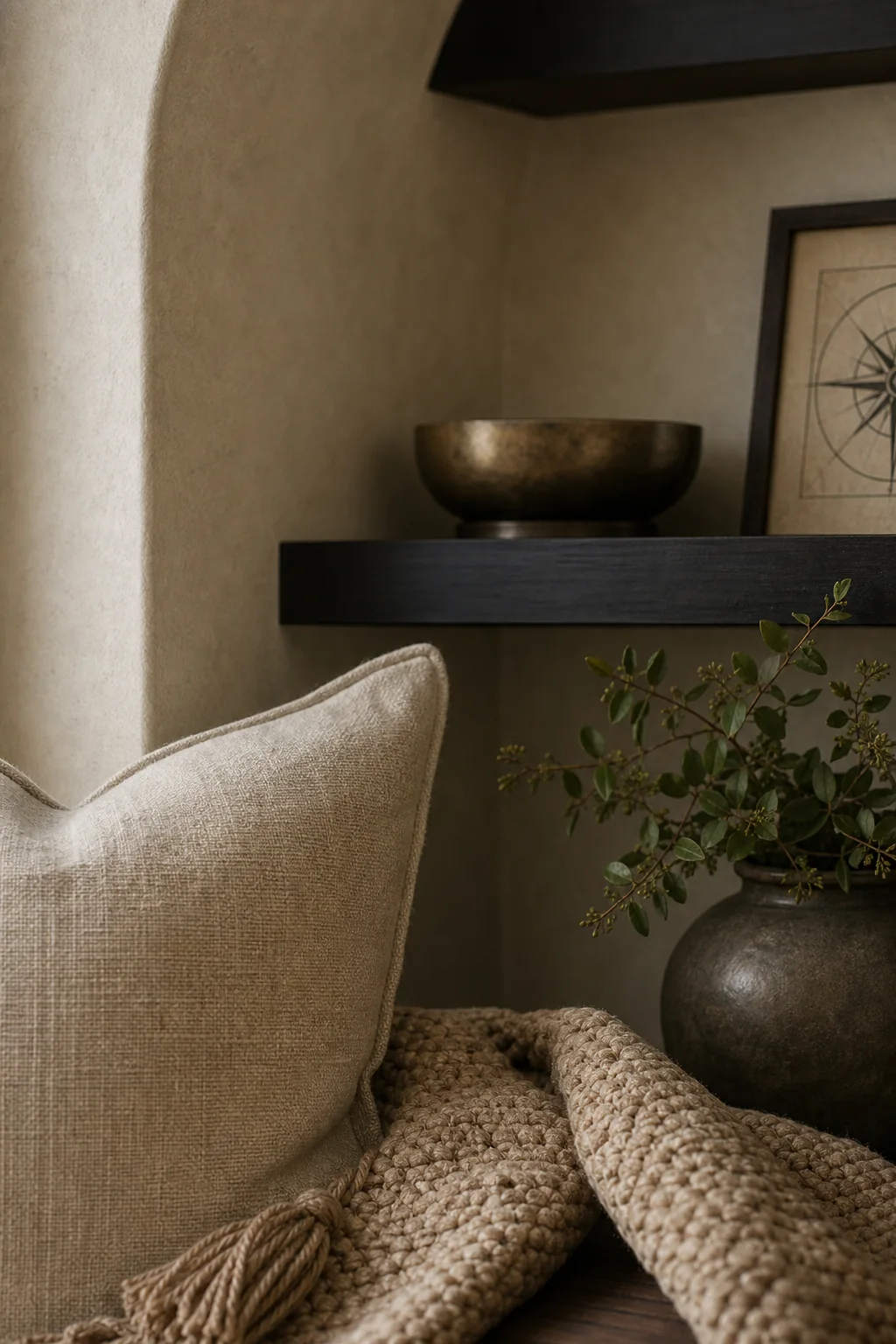
The high-contrast relationship between the aged dial and its oxidized housing translates directly into the nook’s light-and-dark palette, anchoring the airy background with deep, oil-rubbed bronze floating shelves. Applying a warm, off-white plaster to the walls and ceiling mimics the pale parchment-colored dial, while the dark shelving provides the necessary visual weight to ground the composition. This precise color blocking prevents the alcove from feeling flat, instead emphasizing the depth and protective nature of the barrel vault. This visual translation relies on specific mappings between the antique instrument and the architectural space.
| Source trait | Visible evidence | Room move |
|---|---|---|
| Enclosed Geometry | The shallow, protective circular brass casing that houses the delicate dial. | A curved, barrel-vaulted architectural alcove that creates a shallow, protective boundary for the entire display area. |
| Aged Contrast | The pale parchment-colored dial set against the dark, oxidized crevices of the tarnished brass body. | Warm parchment plaster walls contrasted with deep, oil-rubbed bronze floating shelves and dark walnut cabinetry. |
| Engraved Relief | The tactile, finely engraved compass rose etched into the solid brass lid. | Reeded walnut cabinet fronts below the counter that provide a fine, rhythmic tactile surface echoing the etched metal. |
| Radial Precision | The radiating directional lines pointing outward from the center of the compass face. | A subtle starburst wood veneer pattern on the central reading ledge, drawing the eye outward from the nook’s midline. |
Highlighting the oxidized crevices
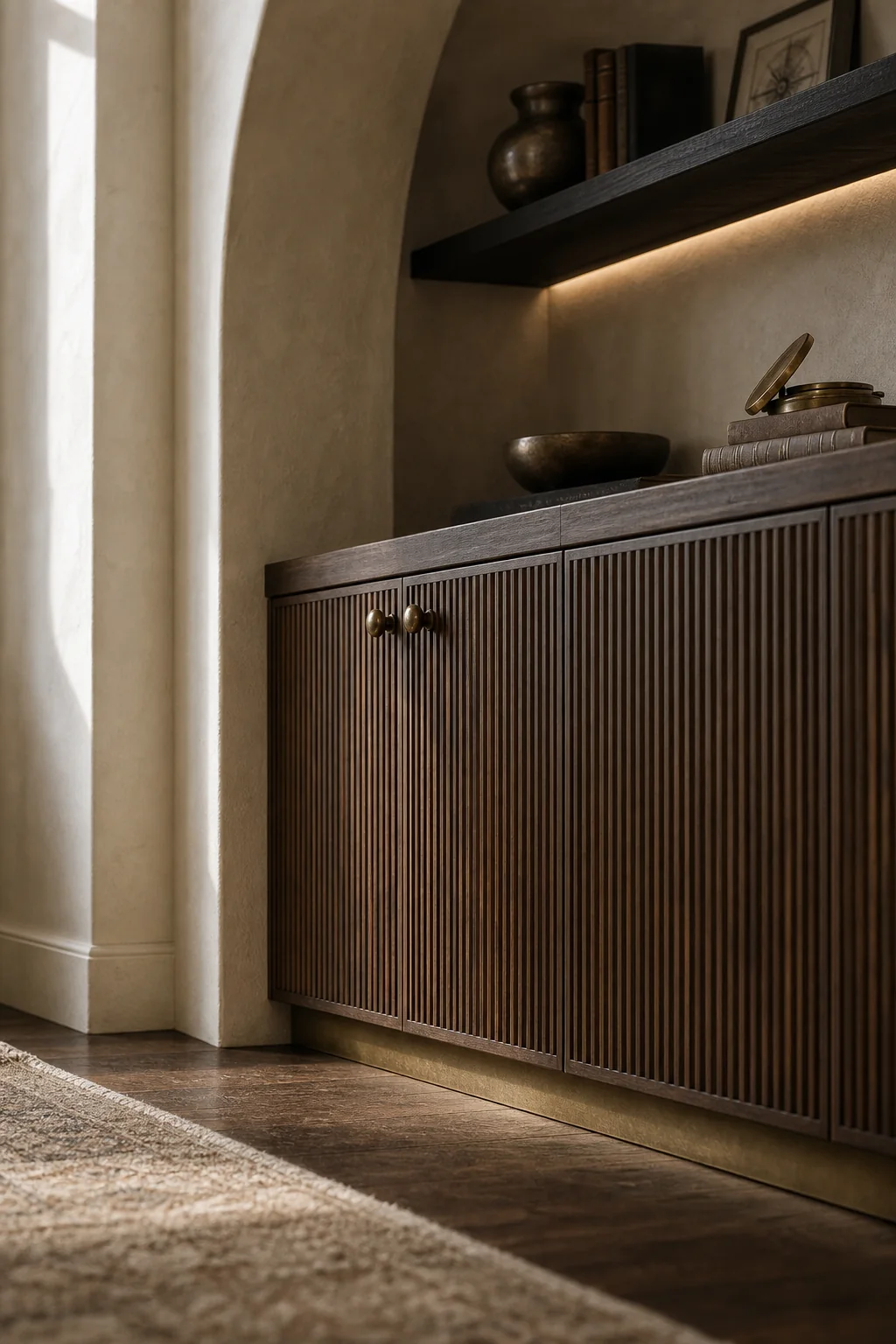
Bronze shelves mimic the dark oxidized crevices of the compass, providing a striking contrast against the warm, off-white plaster walls and ceiling. You can scale this effect based on your desired atmosphere: a subtle approach focuses entirely on the parchment and walnut palette with standard flat cabinet doors, omitting the starburst veneer entirely. A balanced intensity combines the reeded walnut texture with the barrel-vaulted architecture and dark bronze shelving for a tactile, architectural vignette. For a bold statement, deepen the plaster to a darker oxidized bronze tone and use highly polished brass shelves to create a moody jewel box.
Translating etched metal to reeded wood
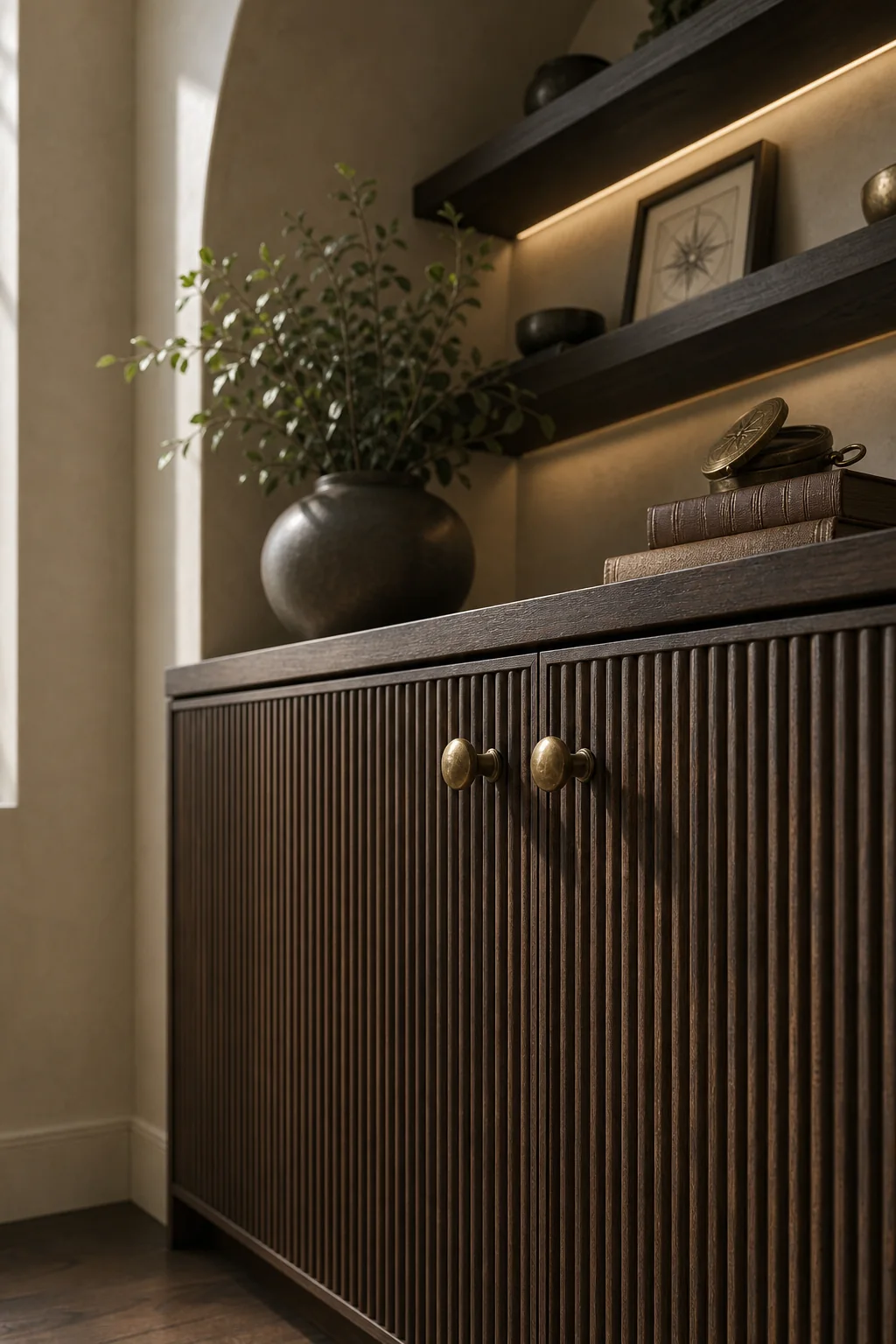
The tactile experience of running a thumb over an engraved brass lid is recreated through the rhythmic texture of milled cabinetry, specifically by installing reeded walnut fronts on the lower concealed storage. This fine, rhythmic tactile surface echoes the etched metal of the finely engraved compass rose, adding a layer of sophisticated craftsmanship to the alcove. Selecting the right foundational finishes ensures the alcove feels both historic and intentionally modern, grounding the display nook in rich, authentic textures that invite closer inspection.
Selecting living finishes
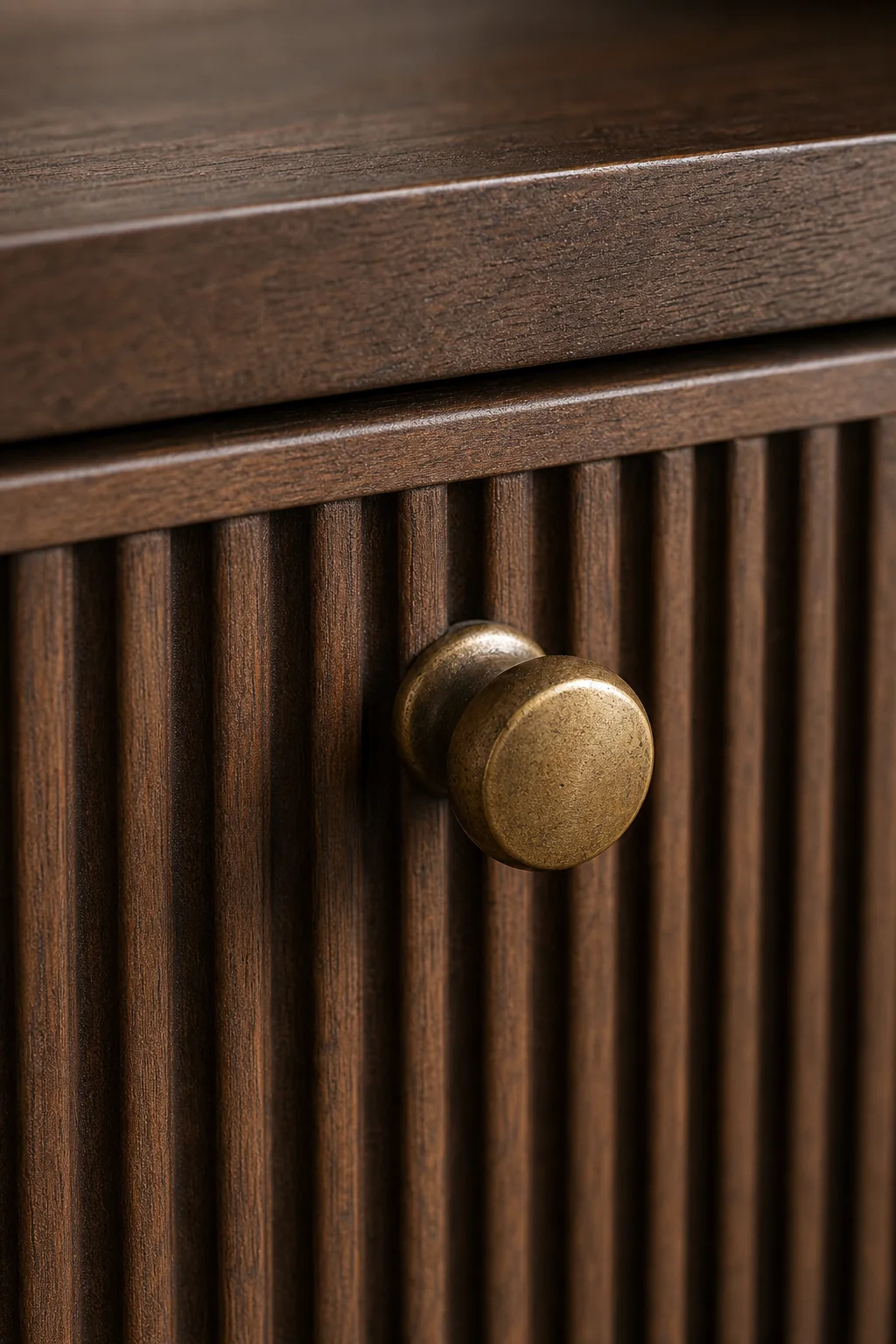
Unlacquered brass hardware recalls the warm metallic compass casing, ensuring the space will develop a natural patina over time just like a vintage instrument. By choosing living metal finishes that tarnish and age naturally, the hardware bridges the gap between the matte plaster walls and the deep, rhythmic grooves of the dark walnut doors. This careful attention to material aging guarantees that the display nook will evolve, with the brass elements slowly oxidizing where they are touched least, perfectly capturing the spirit of a time-worn navigational tool.
Radiating lines and focal points
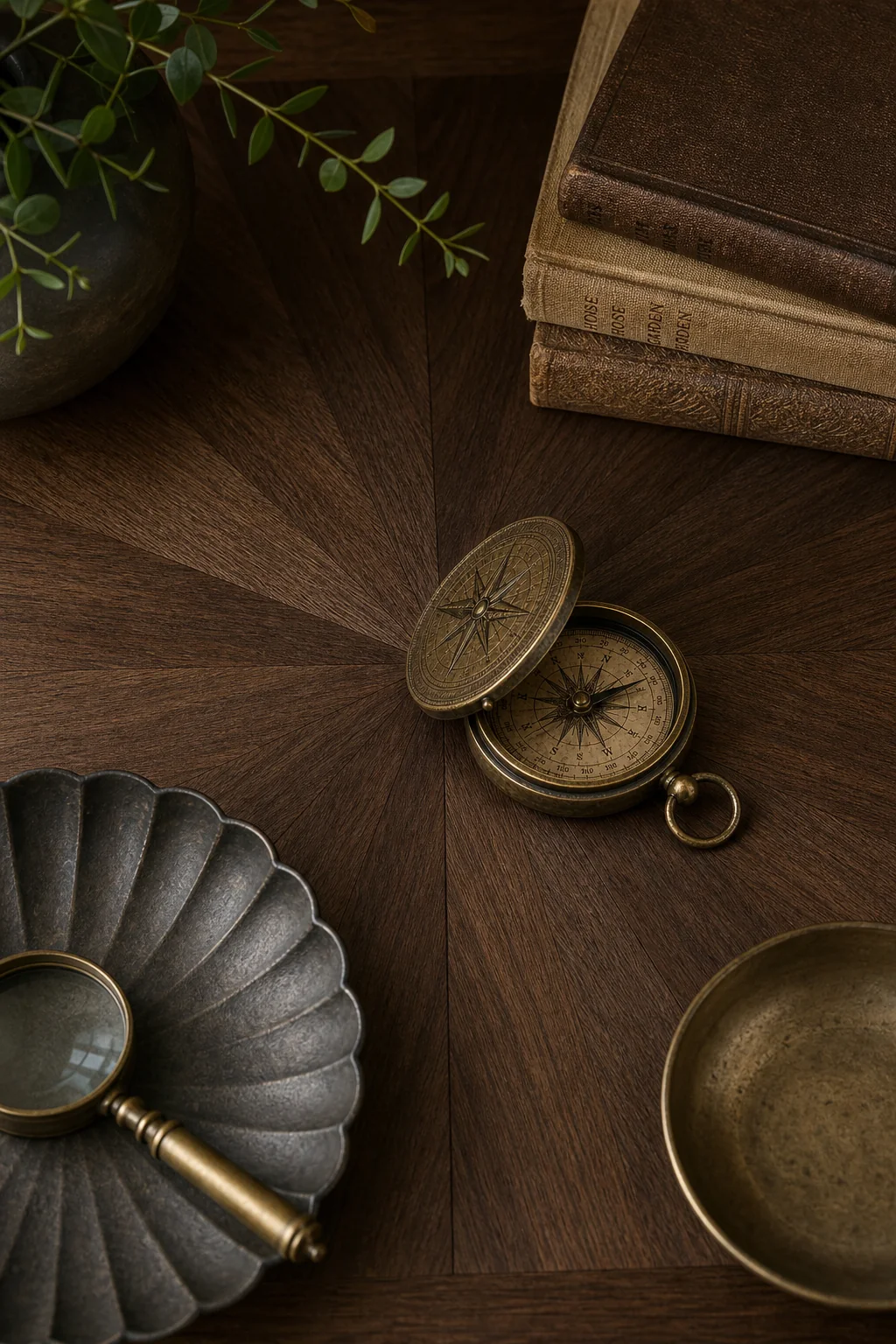
The precise geometry that guides a traveler’s eye translates into a subtle veneer pattern that anchors the center of the nook, mimicking the radiating directional lines pointing outward from the center of the compass face. Aligning the floating shelves reinforces the strict horizontal geometry against this radial center, creating a quiet, intimate architectural alcove built for curated display and quiet reflection. By centering a starburst wood veneer on the main reading ledge, you draw the eye outward from the nook’s midline, establishing a strong focal point that organizes the entire visual composition.
Keep the starburst pattern low-contrast by using a single wood species, relying on the grain direction to catch the light rather than introducing competing colors.