
17+ Stunning Pooja Room Design Ideas for Your Home
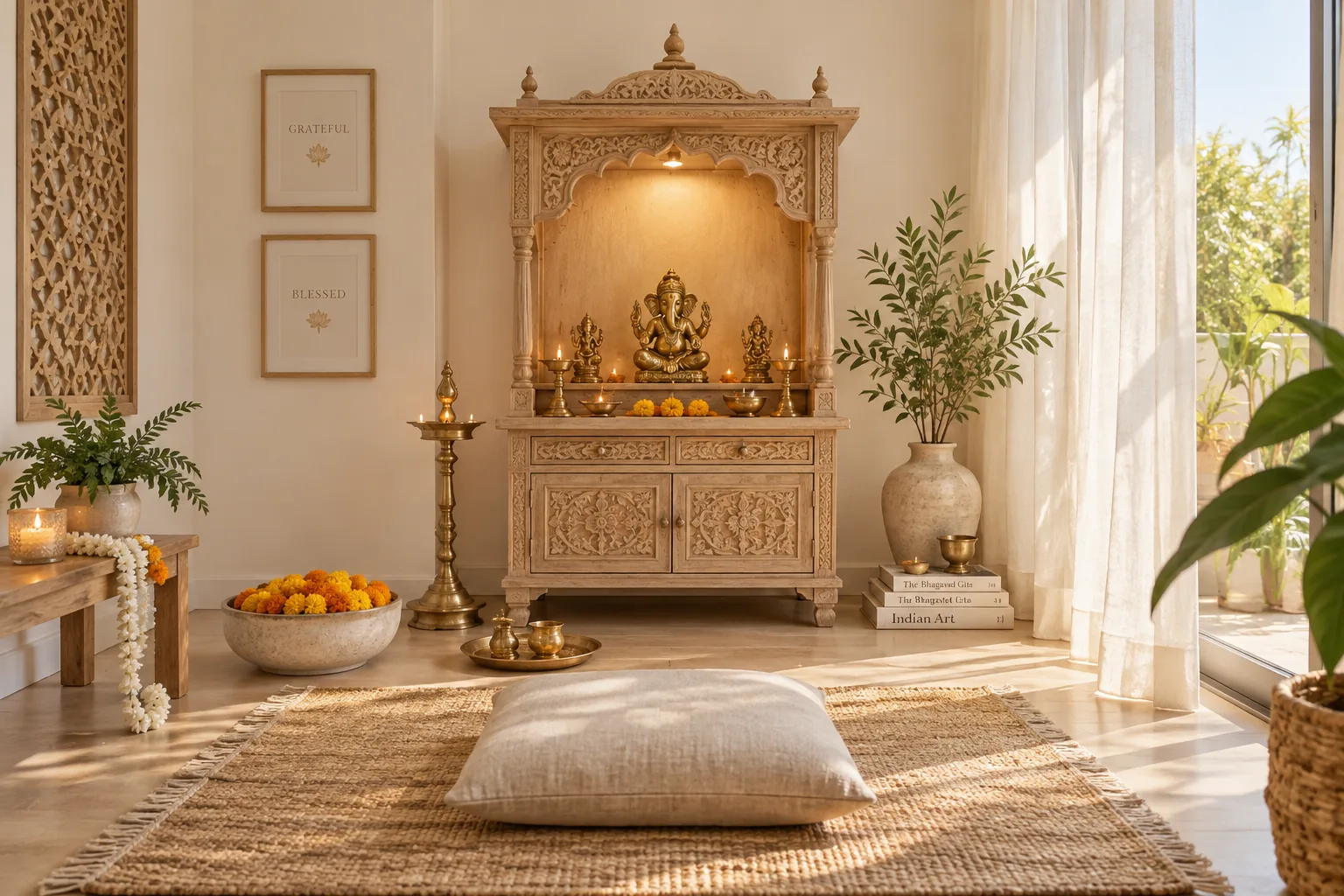
Designing a pooja room is all about balancing spiritual serenity with the practical flow of your home. These ideas will help you carve out a beautiful, dedicated space for prayer no matter your square footage.
1. Backlit Onyx Backdrop
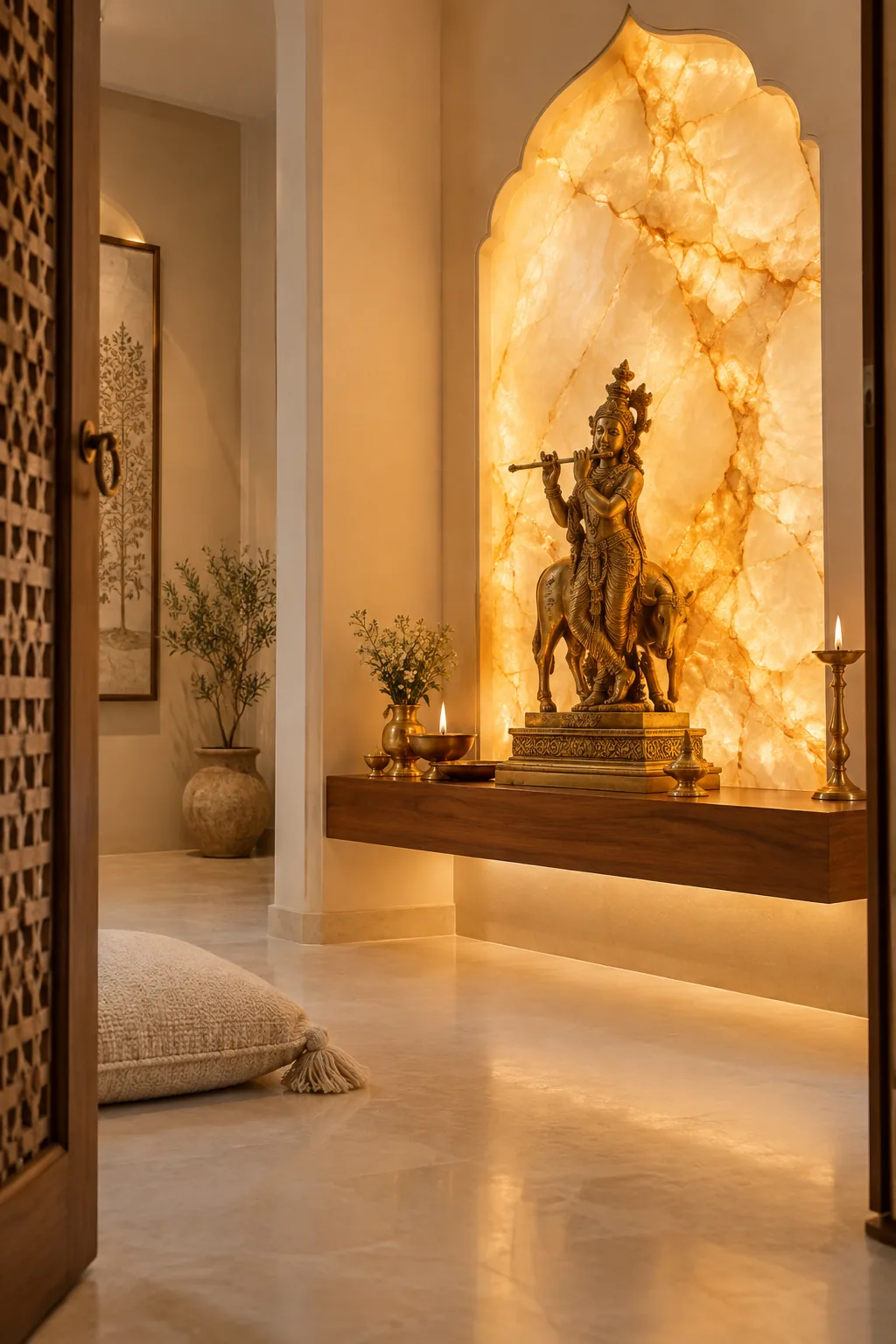
A warm, glowing sanctuary immediately sets a calming tone for daily prayers. You can achieve this by installing backlit onyx panels directly behind the main idol. The soft diffusion of light eliminates the need for harsh overhead bulbs while highlighting the intricate details of your brass pieces. I always recommend adding a simple floating teak shelf below to keep the floor clear. This keeps the visual focus entirely on that beautiful, luminous background.
2. Hidden Hallway Closet Conversion
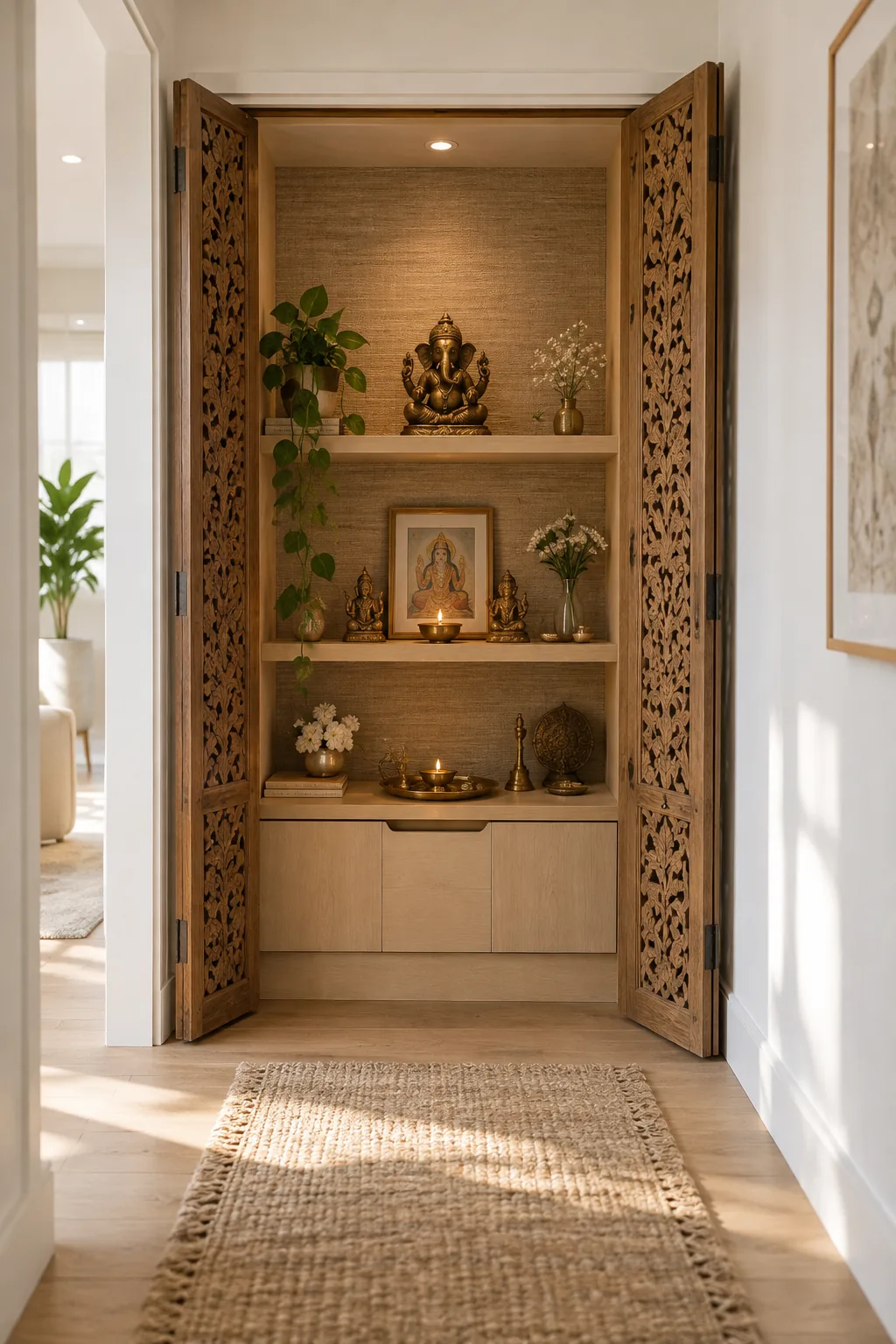
Most modern apartments lack the square footage for a dedicated prayer room. Converting a shallow hallway closet into a hidden pooja space solves this problem beautifully. You just remove the standard doors and install intricately carved wooden bi-fold doors instead. Inside, line the back wall with a textured grasscloth wallpaper to give the nook depth. Add a few tiered shelves for your idols, and you instantly have a private sanctuary that tucks away when guests visit.
3. Brass Bell Partitions
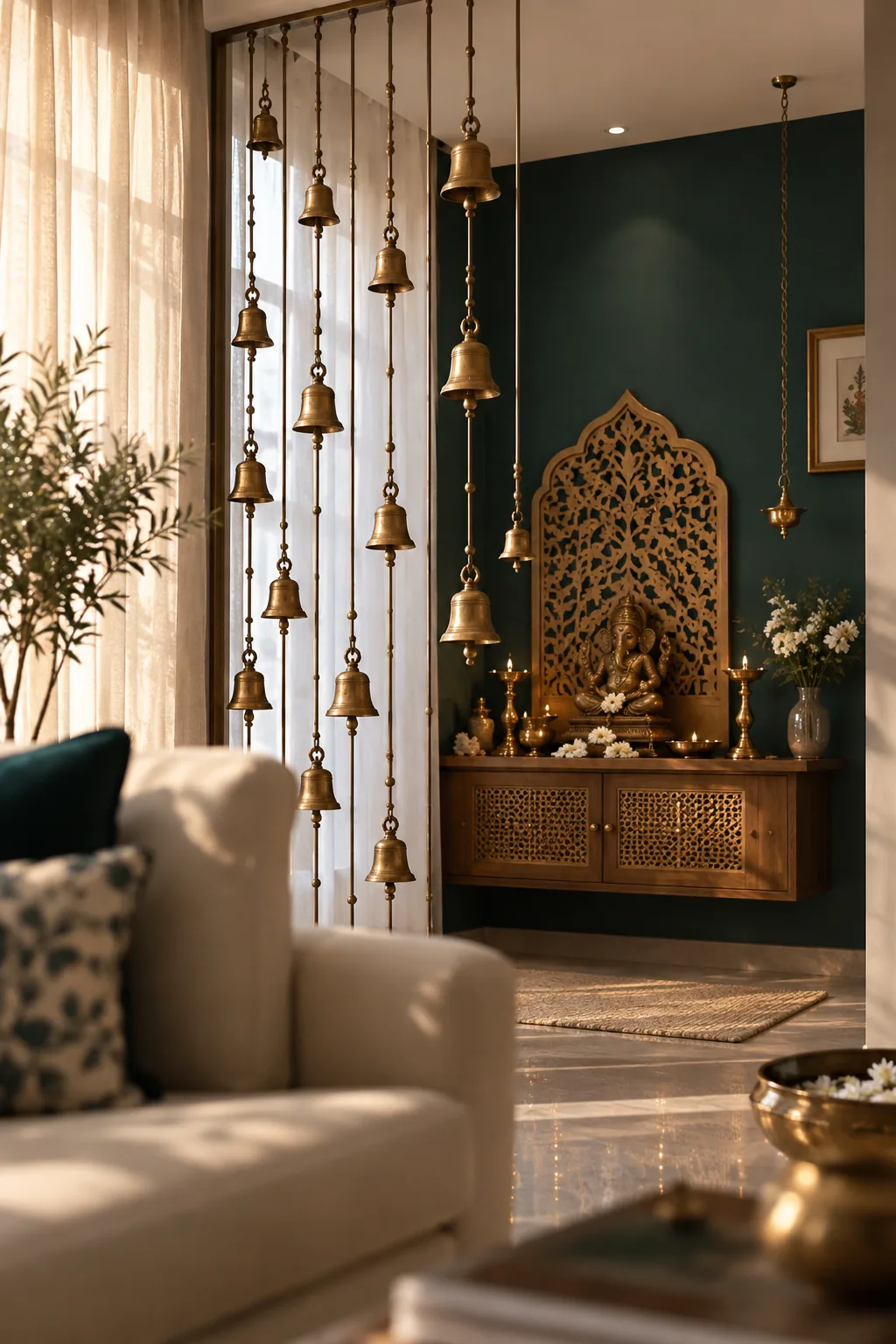
Use brass bell partitions to separate your pooja area from the living room without blocking natural light. It creates a stunning visual boundary that chimes softly in the breeze.
Hang them in staggered lengths from a ceiling track. This adds a custom, architectural feel to an otherwise plain corner.
Keep the rest of the decor minimal. Let the metallic finish of the bells serve as the main focal point.
4. Monochromatic Marble Minimalism
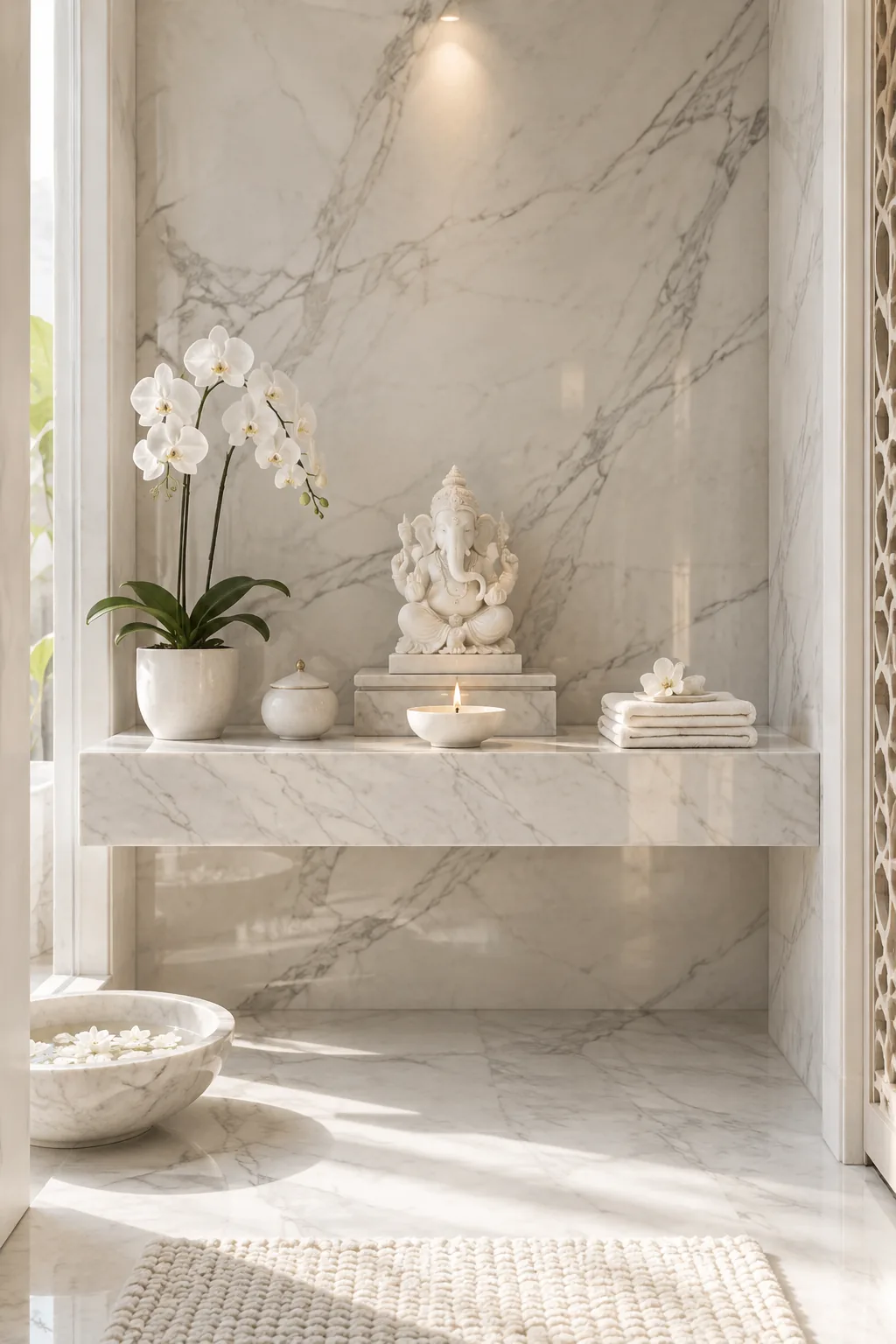
A clean, minimalist aesthetic keeps the focus on spirituality rather than clutter. You achieve this by sticking to a strict monochromatic color palette.
White marble is the perfect foundation for this style. It bounces light beautifully and always looks pristine.
To pull off this seamless look, gather a few essential elements.
- White marble countertop
- Concealed storage drawers
- Simple silver diyas
5. Elevated Wooden Platform
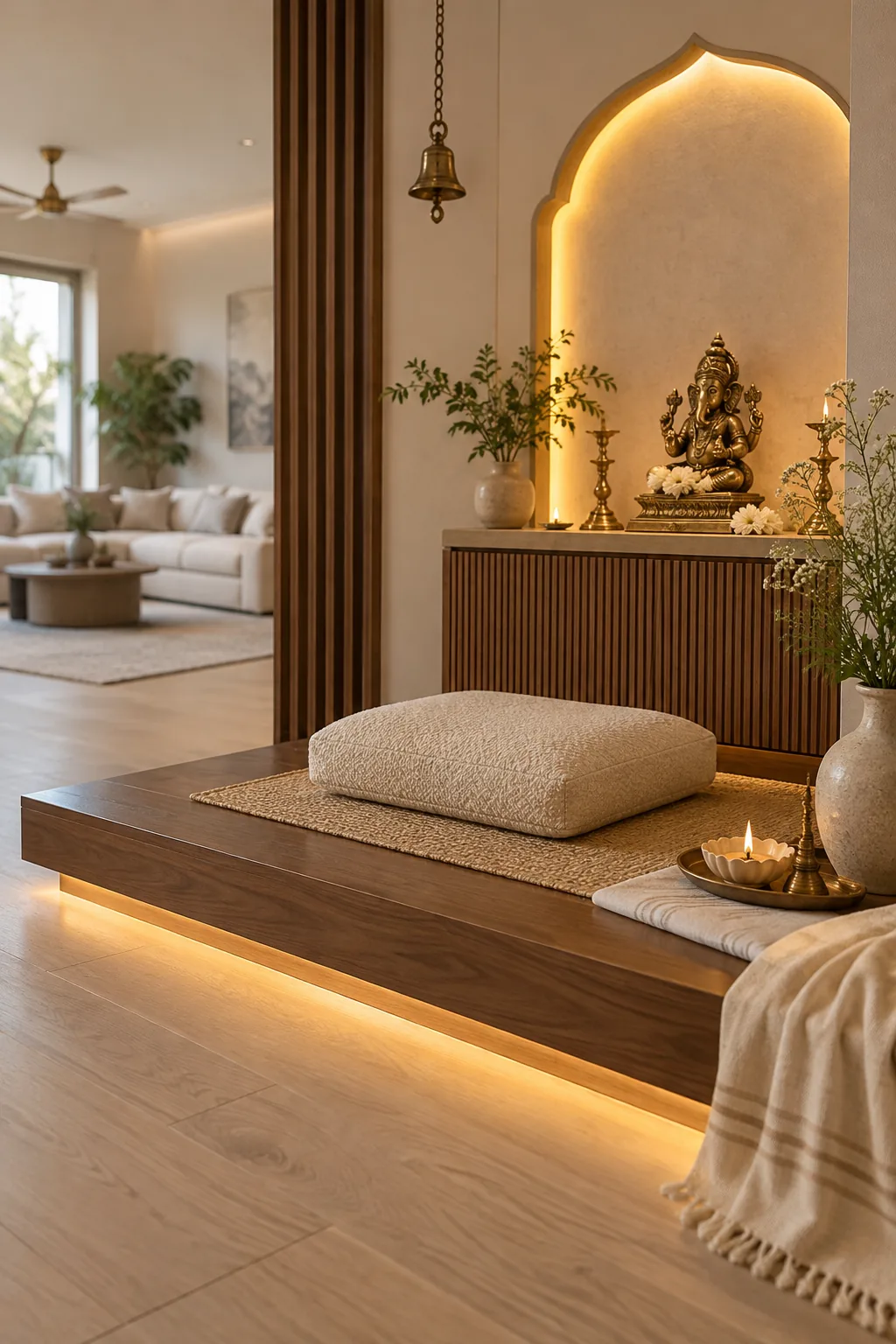
Using a raised wooden platform works because it physically elevates the sacred space above the rest of the floor plan. This subtle change in height naturally commands respect and draws the eye inward. You can wrap the base in warm walnut veneer and add hidden LED strip lighting underneath for a floating effect. Top it with a plush, neutral-toned floor cushion for comfortable seating during long prayer sessions. It defines the zone perfectly in an open-concept home without needing actual walls.
Why it works: The slight elevation instantly signals a transition from everyday living to a dedicated spiritual zone.
6. Standing Height Quartz Counter
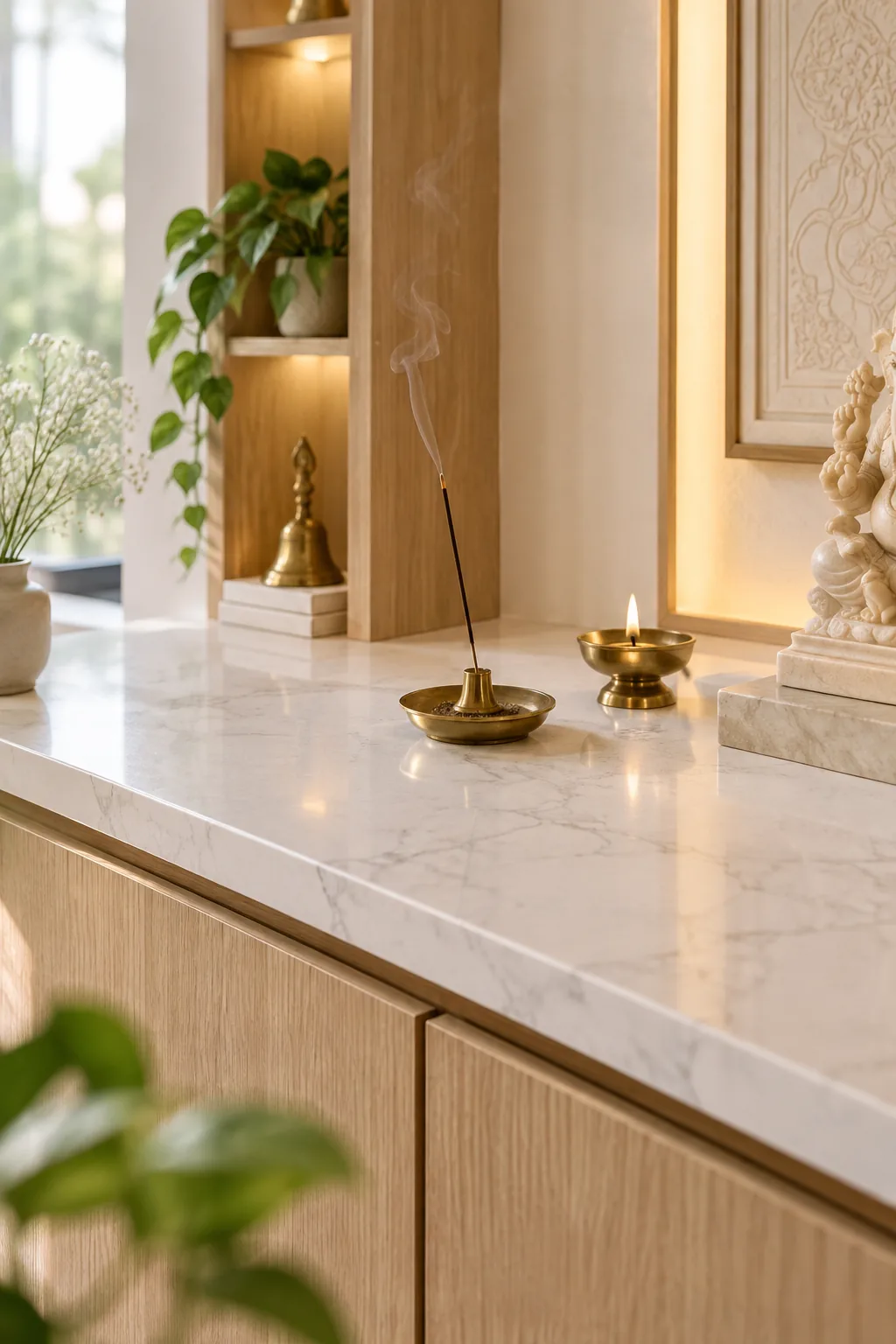
Standard base cabinets are typically 36 inches high, which is the perfect height for a standing prayer station. You can top these cabinets with a quartz counter to handle oil spills and incense ash without staining. The closed storage underneath hides all your daily puja items, keeping the surface completely clear of clutter. I love flanking the counter with tall, narrow display towers to frame the central idol. This setup requires just a few key materials to build.
- Standard base cabinets
- Stain-resistant quartz
- Tall display towers
7. Perfectly Symmetrical Layout
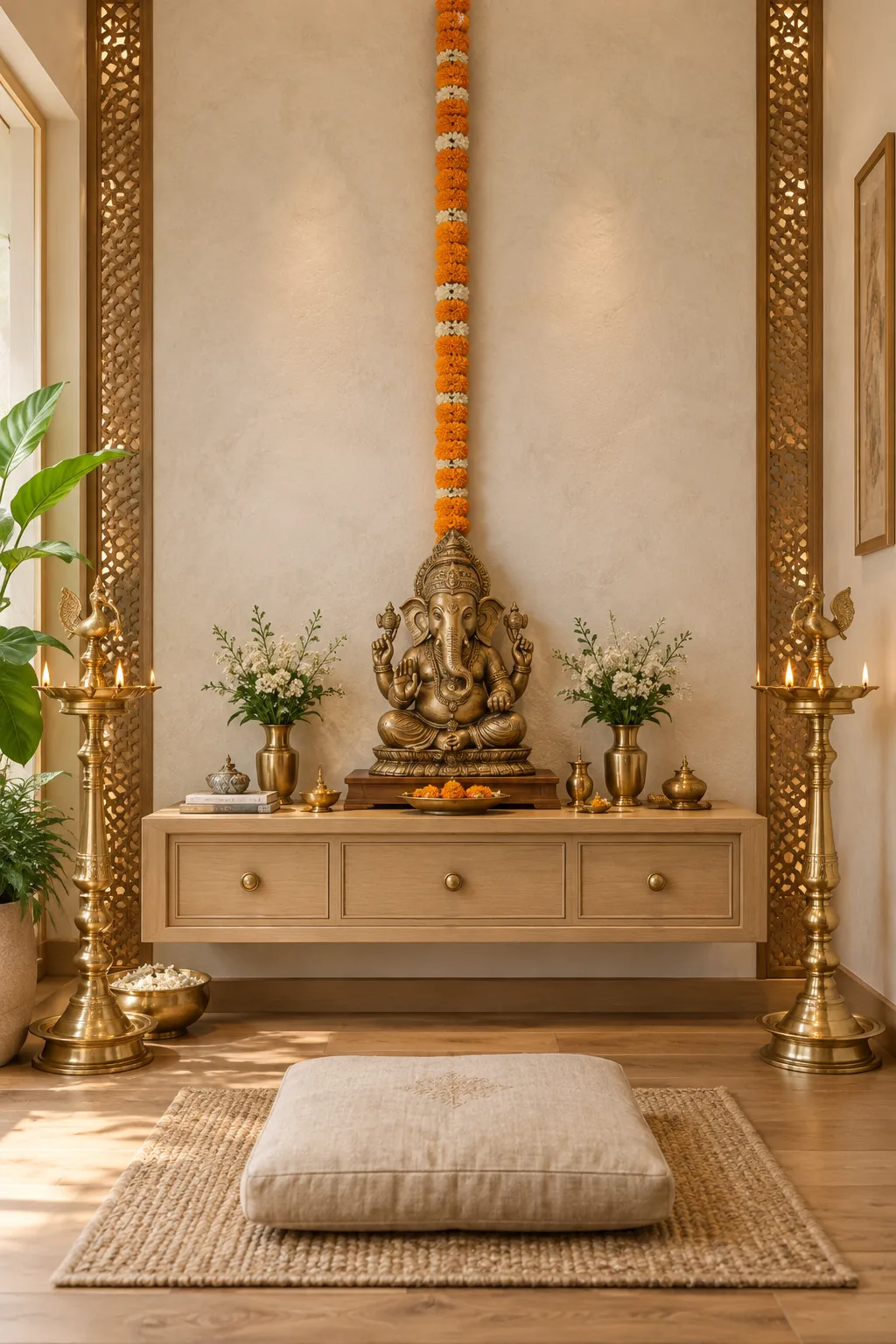
Symmetrical design works incredibly well in a pooja room because it creates an immediate sense of order and calm.
Place two identical brass floor lamps on either side of the main altar to anchor the space. Center your primary idol on the back wall, and align your flower garlands perfectly down the middle. This balanced layout is incredibly soothing to the eye.
8. Traditional South Indian Temple Style
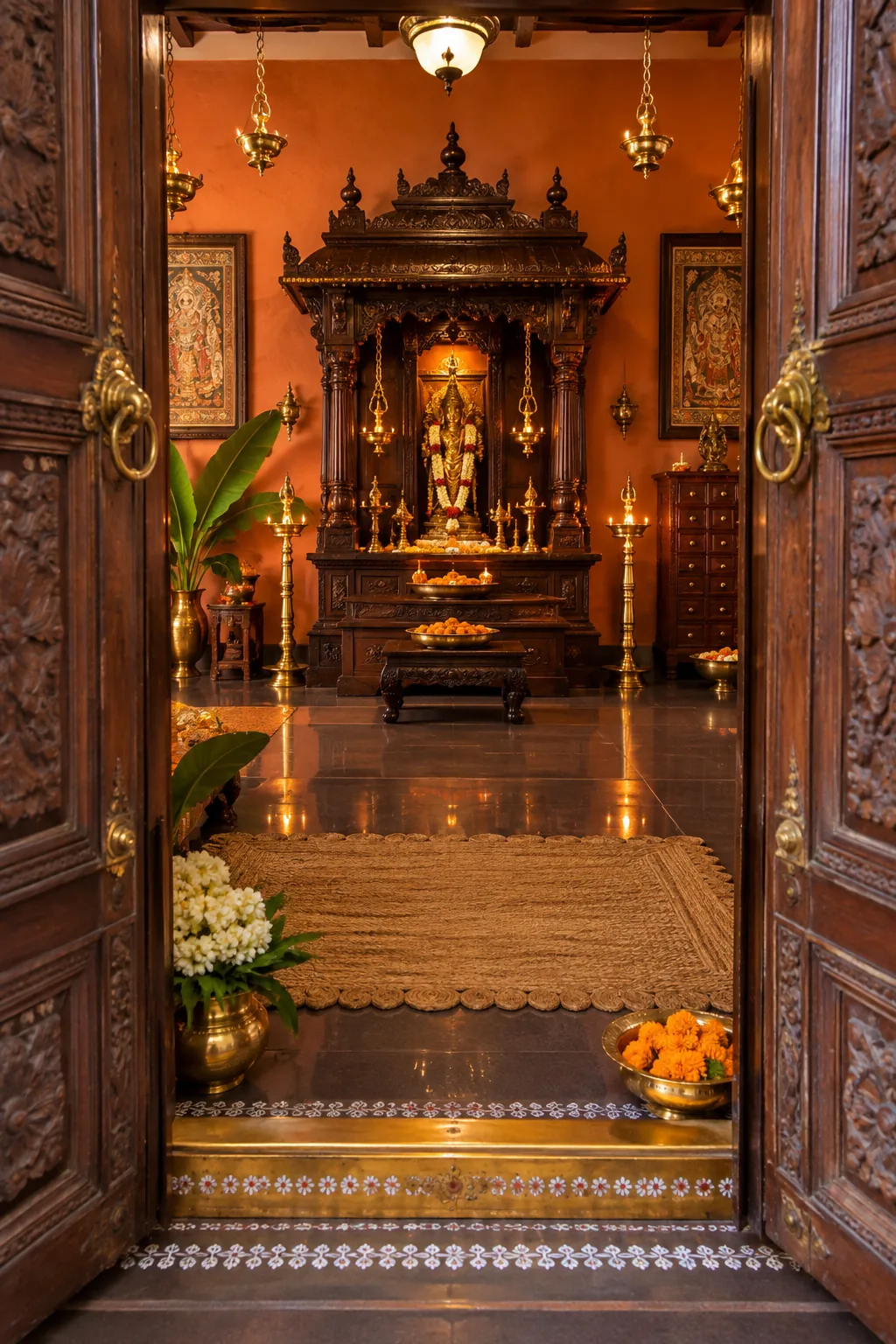
A traditional South Indian temple look brings immense character to a blank room. You can recreate this by installing a heavy, carved teakwood door with a brass handle and a traditional threshold. Paint the interior walls a deep, earthy terracotta to make the rich wood tones pop. Finish the space with a classic Chettinad-style wooden mandapam centered on the back wall.
9. Indoor Basalt Water Feature
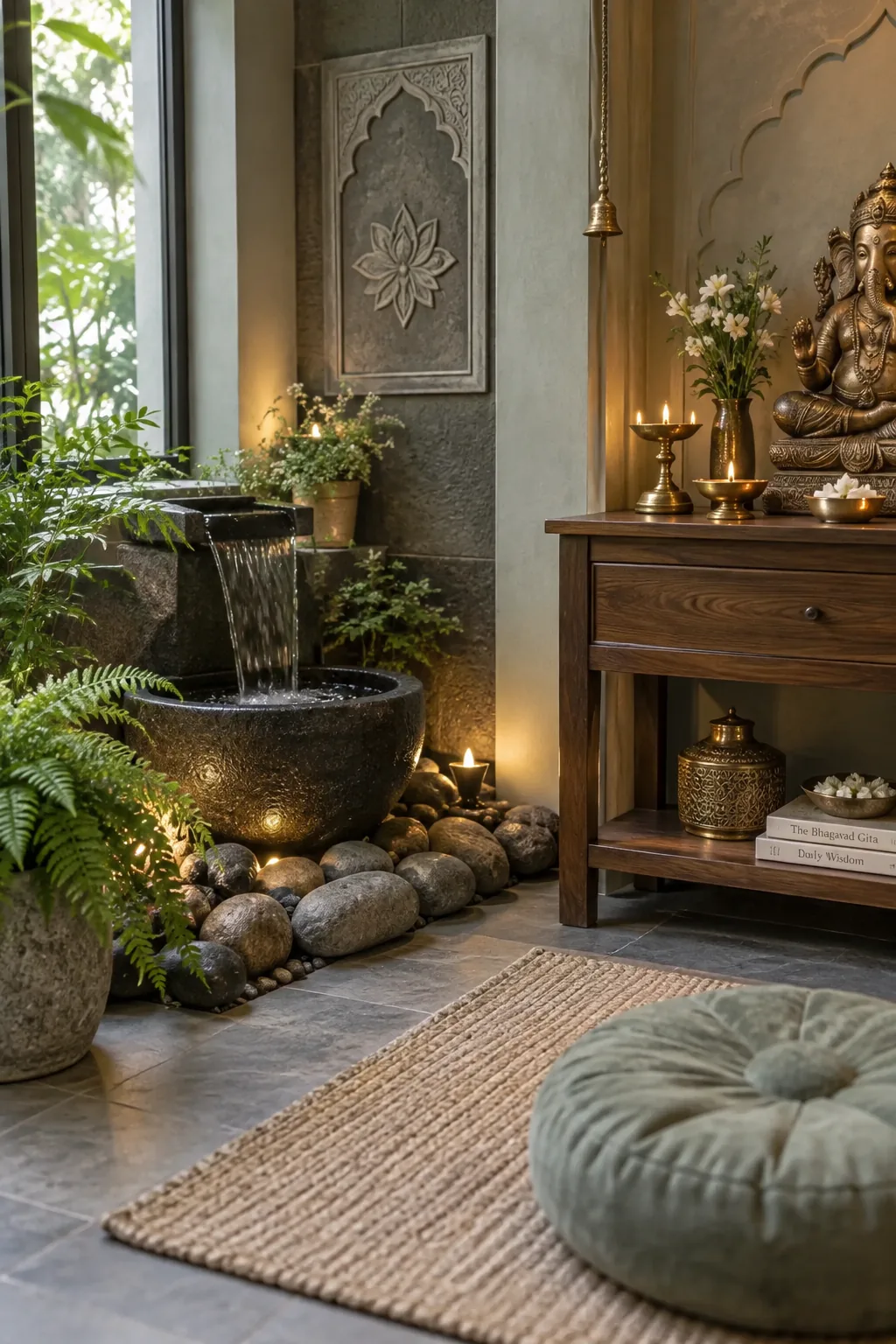
I always look for ways to bring natural elements into my interior projects.
Adding an indoor stone water feature near your pooja space introduces a calming, rhythmic sound to your daily prayers. Choose a small, self-contained basalt fountain and place it in the corner surrounded by smooth river rocks. The gentle sound of trickling water completely masks outside street noise.
10. Fluted Glass French Doors
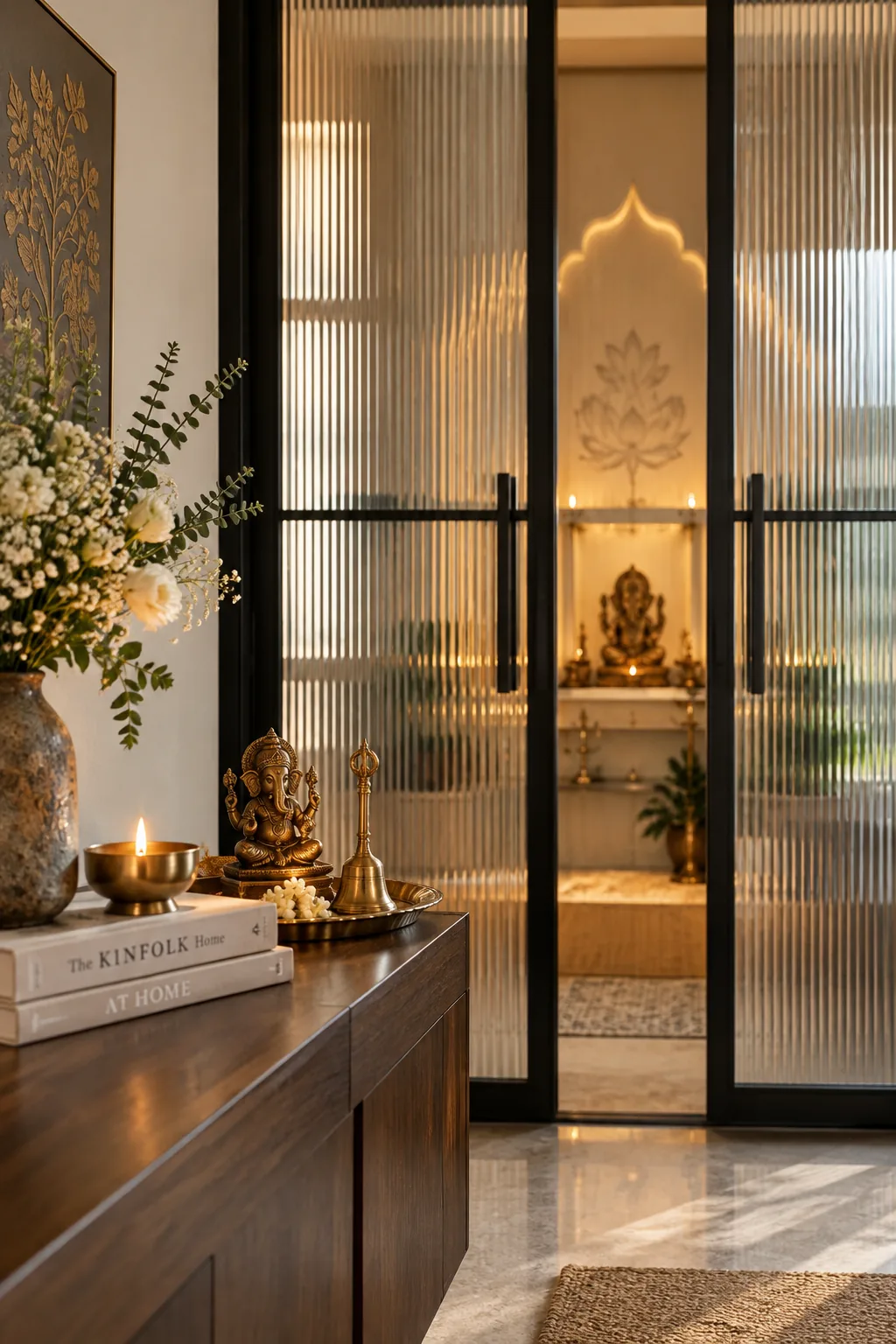
Custom glass doors cost about 30% more than wooden ones but completely transform a dark hallway. They let natural light flood into a windowless prayer space.
Choose frosted or fluted glass rather than completely clear panes. This gives you the light transmission you need while maintaining privacy for the room.
Frame the glass in sleek matte black metal for a modern edge. It contrasts beautifully with traditional brass items inside.
Why it works: Fluted glass obscures the details of the room while letting sunlight stream in, keeping the space bright but private.
11. Under-Stair Architectural Nook
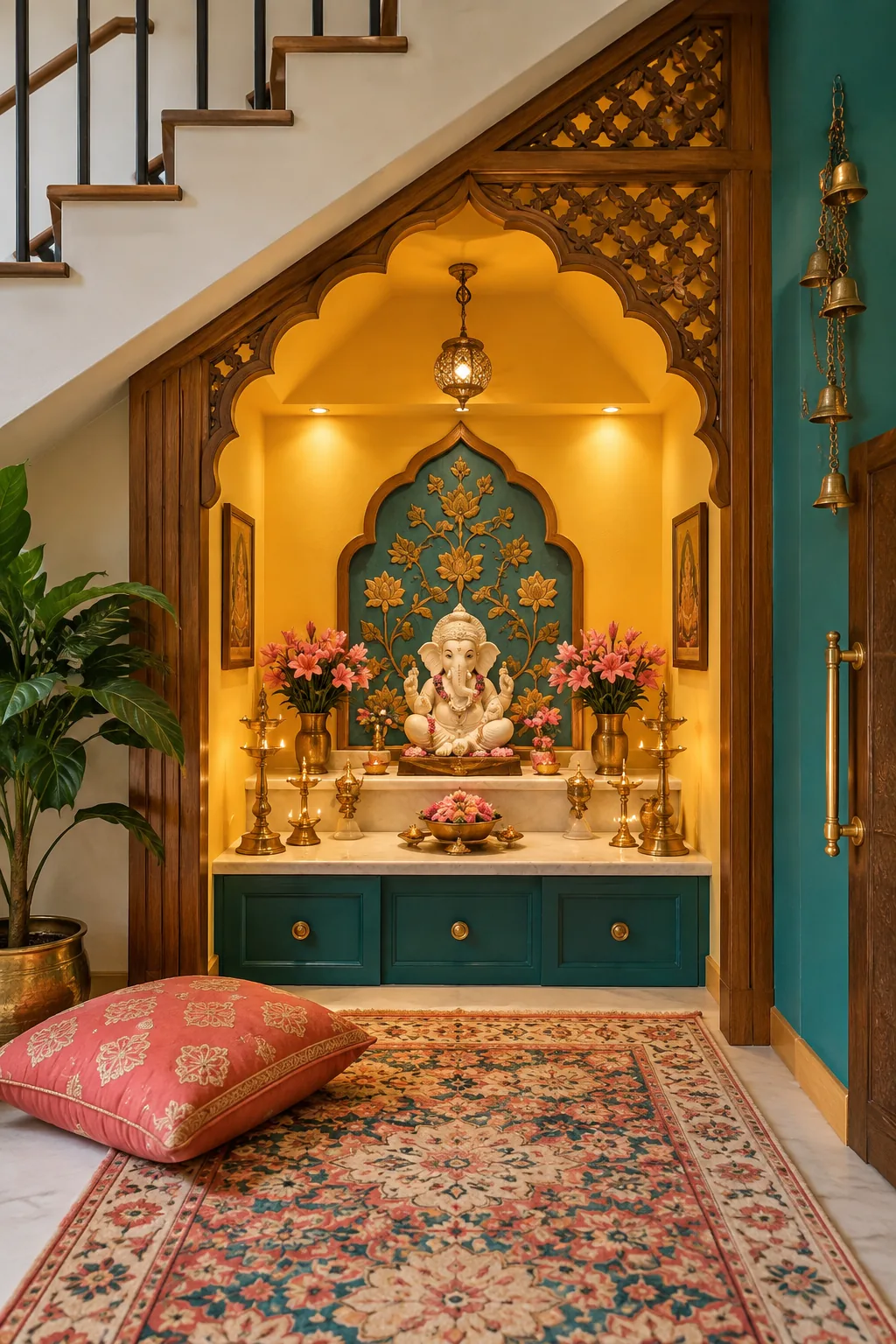
Many builder-grade homes have awkward alcoves under the stairs that just collect dust. This is prime real estate for a cozy, built-in pooja space.
Install a custom wooden arch right at the opening to frame the nook. Paint the interior a soft, pale yellow to combat the shadows.
Add a low marble-topped bench for seating and storage. It turns dead space into a beautiful architectural feature.
12. Tanjore Painting Focal Point
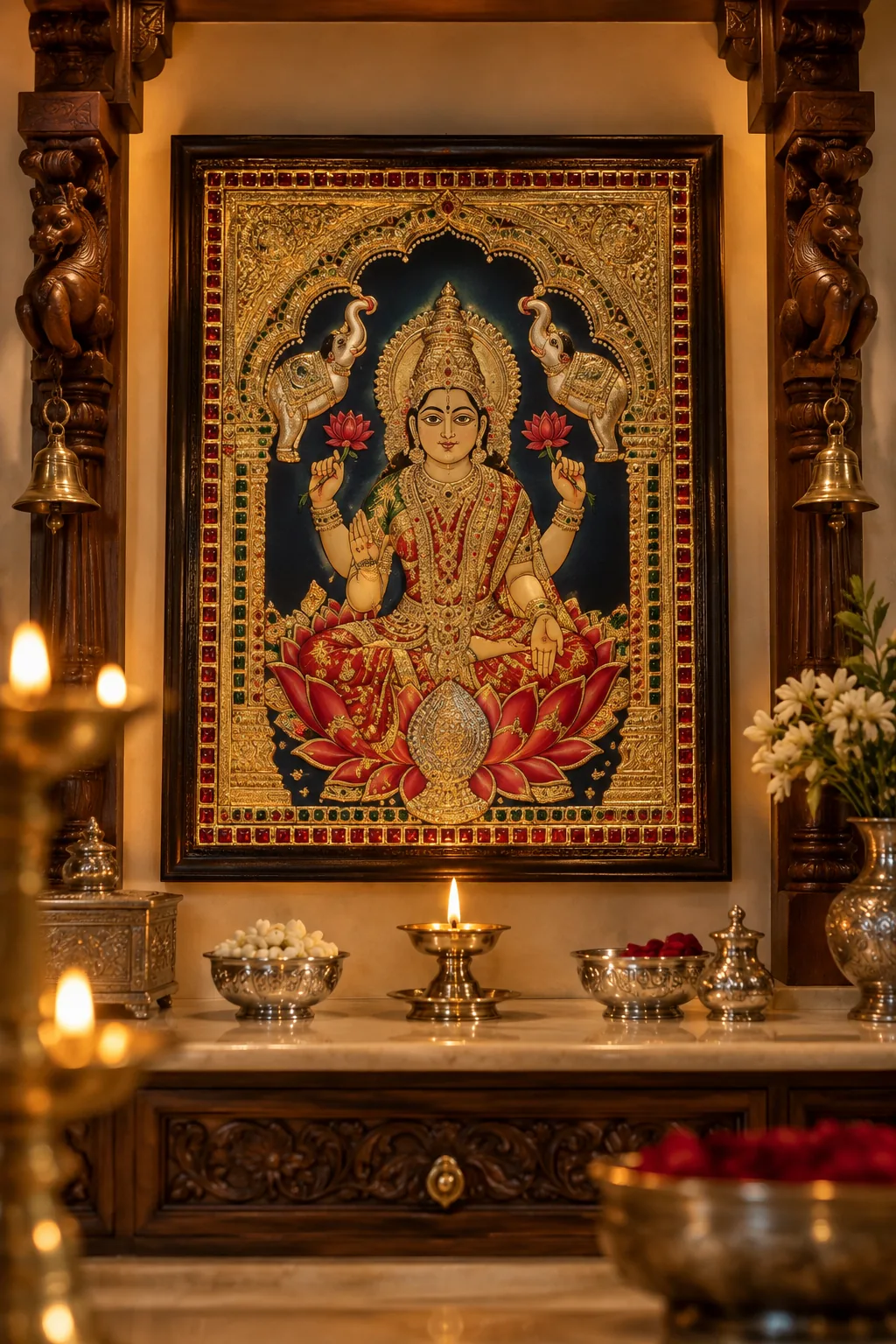
Hanging a traditional Tanjore painting works as a stunning focal point because the real gold foil catches the light beautifully. Instead of a standard idol, you can center your entire room around one large, beautifully framed piece of art. Flank the painting with classic wooden pillar brackets mounted directly to the drywall to give it a temple-like context. Keep the altar below very simple with just a few silver bowls for offerings. This approach feels incredibly elegant and requires very little daily maintenance.
13. Retractable Aarti Tray
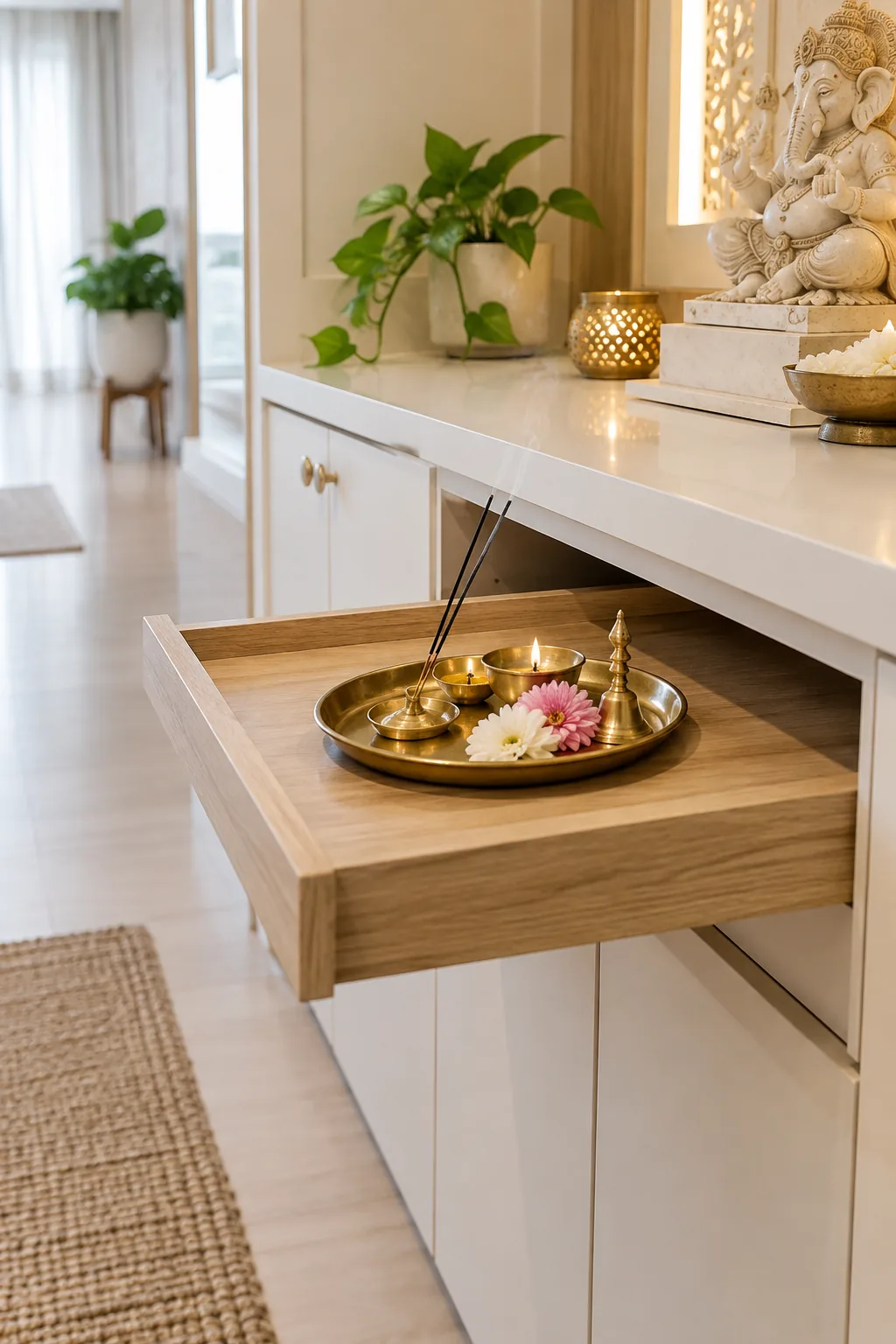
Install a retractable wooden tray just below your main counter surface.
This pull-out shelf gives you extra space for your aarti thali and incense during festivals when the main counter gets crowded. When you are done, you simply slide it back in so the room stays neat. It is a tiny structural detail that makes a massive difference in how the space functions.
14. Ceiling-Mounted Jaali Panels
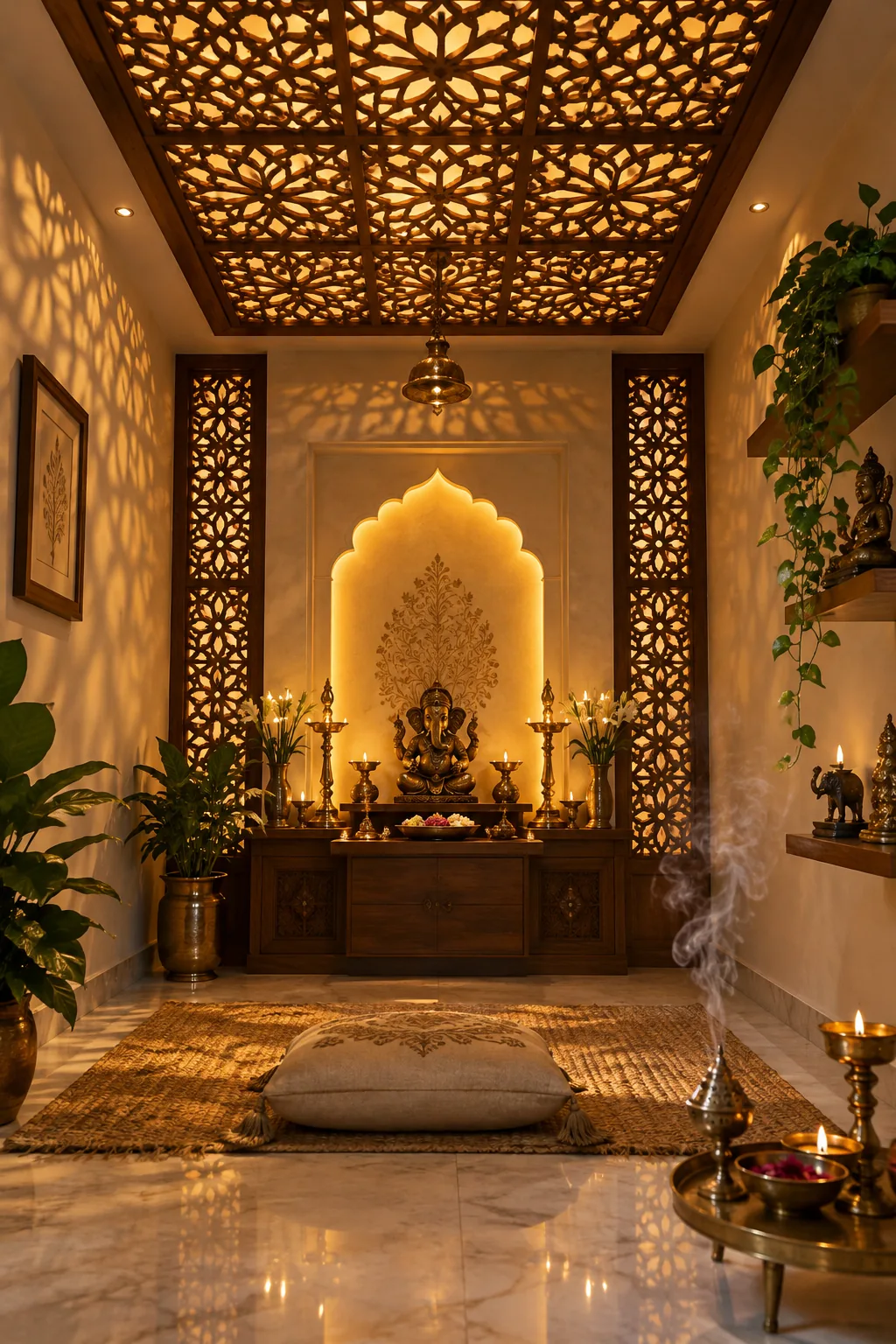
Using CNC-cut jaali panels works brilliantly for ventilation if you regularly light incense or oil lamps in a small space. Mount these intricately cut wooden screens on the ceiling with warm lights behind them to cast beautiful geometric shadows across the room.
15. Layered Ambient Lighting
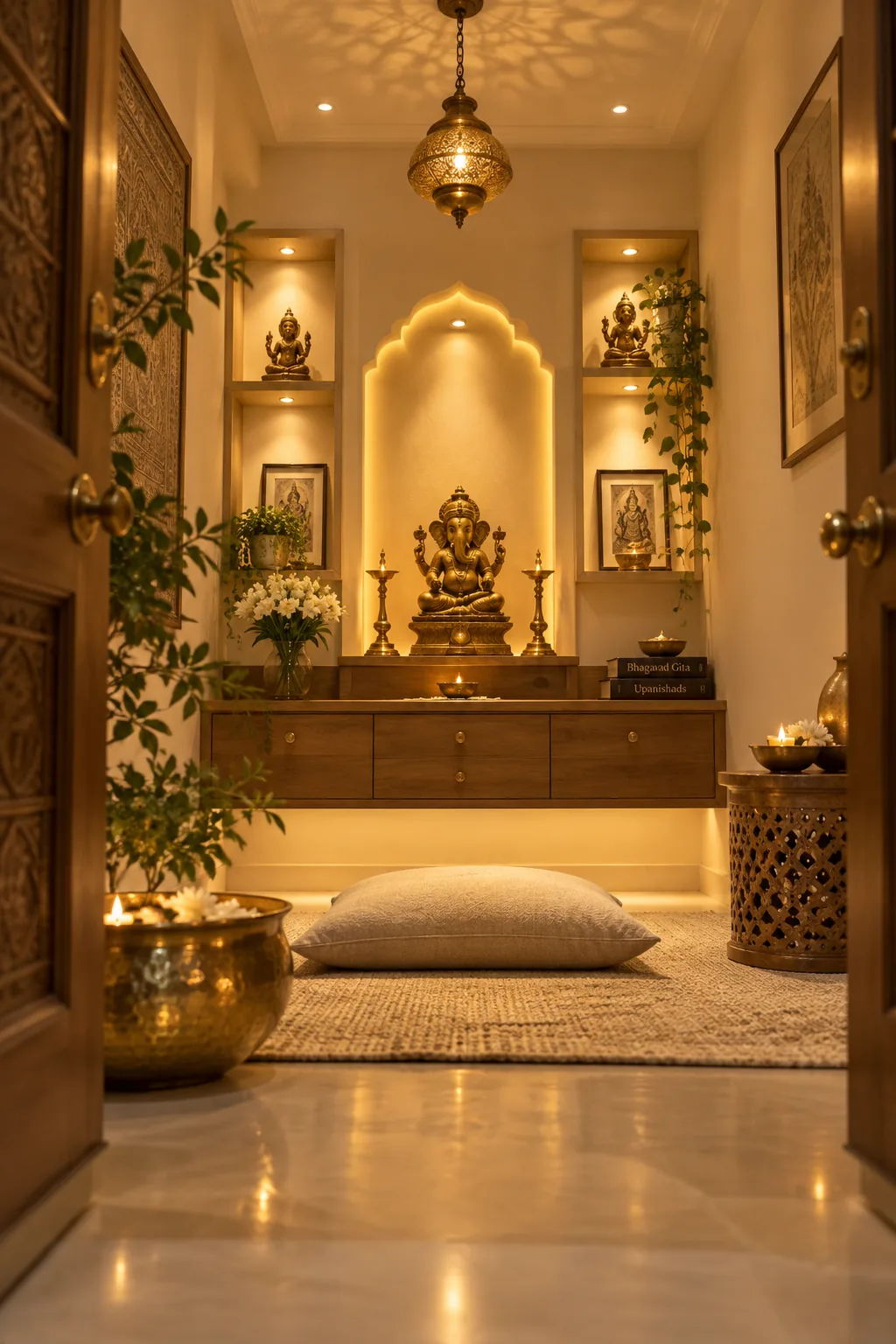
Most prayer rooms suffer from harsh, unflattering overhead lighting that ruins the peaceful mood. Switching to layered ambient lighting completely changes the atmosphere of the space. Install small recessed spotlights to highlight specific idols and add a brass pendant light in the center of the room. Put everything on dimmer switches so you can adjust the glow depending on the time of day. This creates a soft, enveloping warmth that feels incredibly serene.
Why it works: Layering different light sources on dimmers allows you to create a soft, customizable glow rather than a harsh glare.
16. Deep Reclaimed Wood Shelf
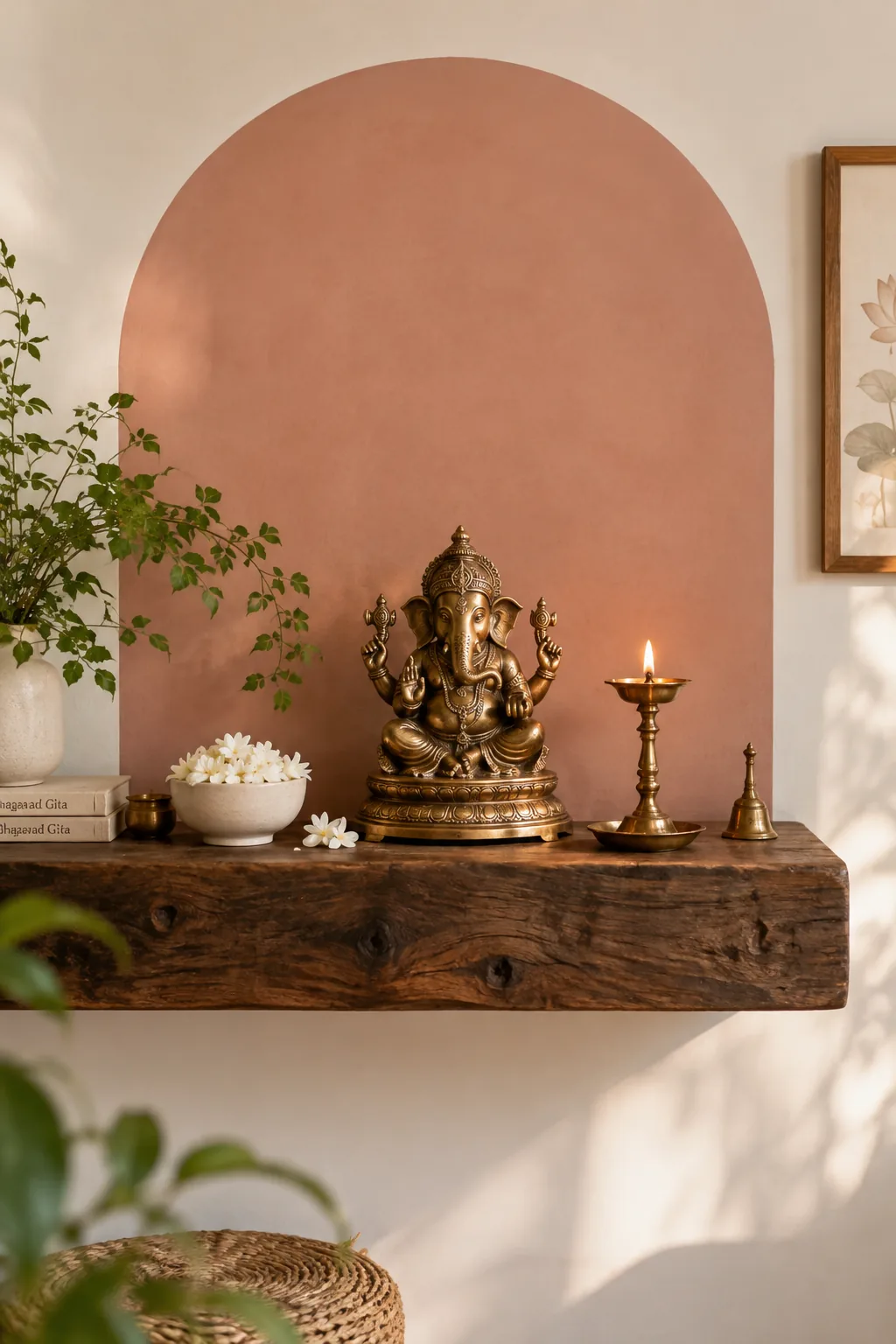
A standard floating shelf needs to be at least 12 inches deep to safely hold a medium-sized idol and a diya. Anything shallower becomes a fire hazard.
Use chunky reclaimed wood for the shelf to add instant warmth and texture to a plain white wall. Secure it with heavy-duty hidden brackets so it looks completely seamless.
Paint a soft arched color block directly on the wall behind the shelf. This visually anchors the floating piece and frames your setup.
17. Hand-Knotted Wool Area Rug
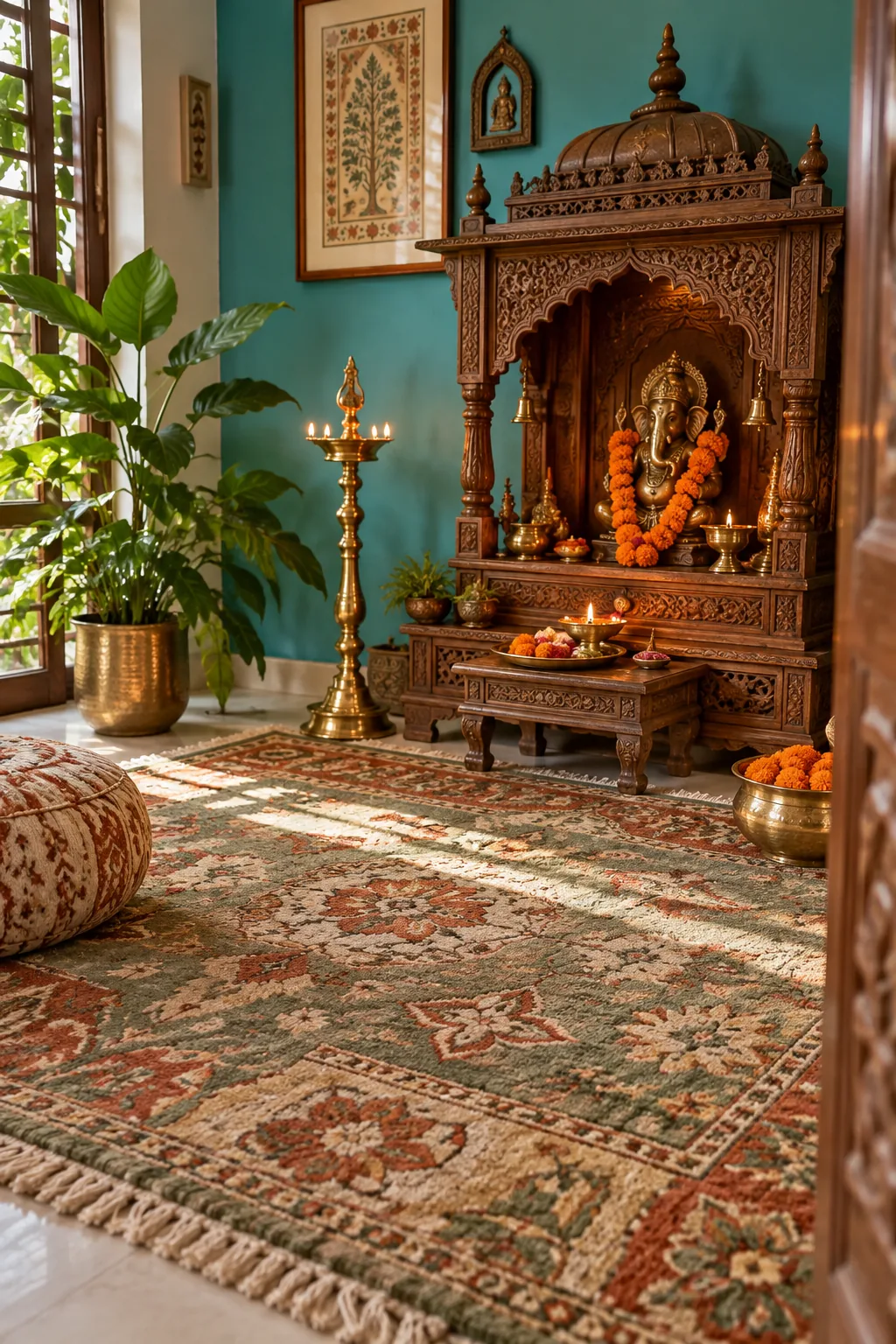
Bare tile floors can feel incredibly cold and unwelcoming during early morning prayers. Layering a thick, hand-knotted wool rug over the tile provides essential comfort for sitting or kneeling. Choose a rug with subtle, traditional motifs in muted tones like sage or rust to complement your wooden mandir. This simple addition instantly makes the room feel finished and deliberate.
18. Built-In Corner Shelving
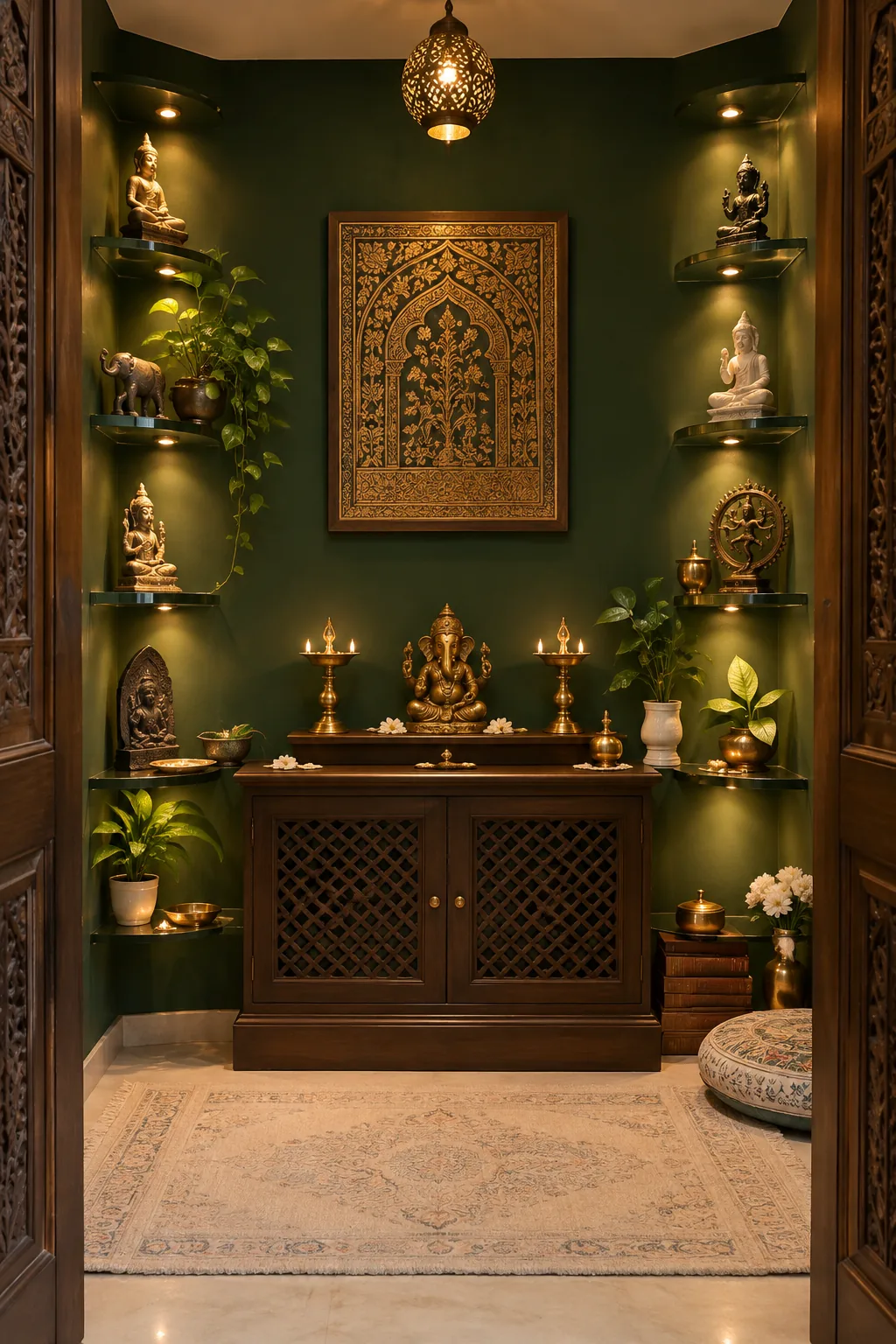
Incorporating built-in corner shelving works perfectly for maximizing display space in tight, boxy rooms. You can use staggered glass quarter-circle shelves with tiny puck lights above each one to display smaller idols without eating into the floor plan.