
This Stereoscope Became a Parlor
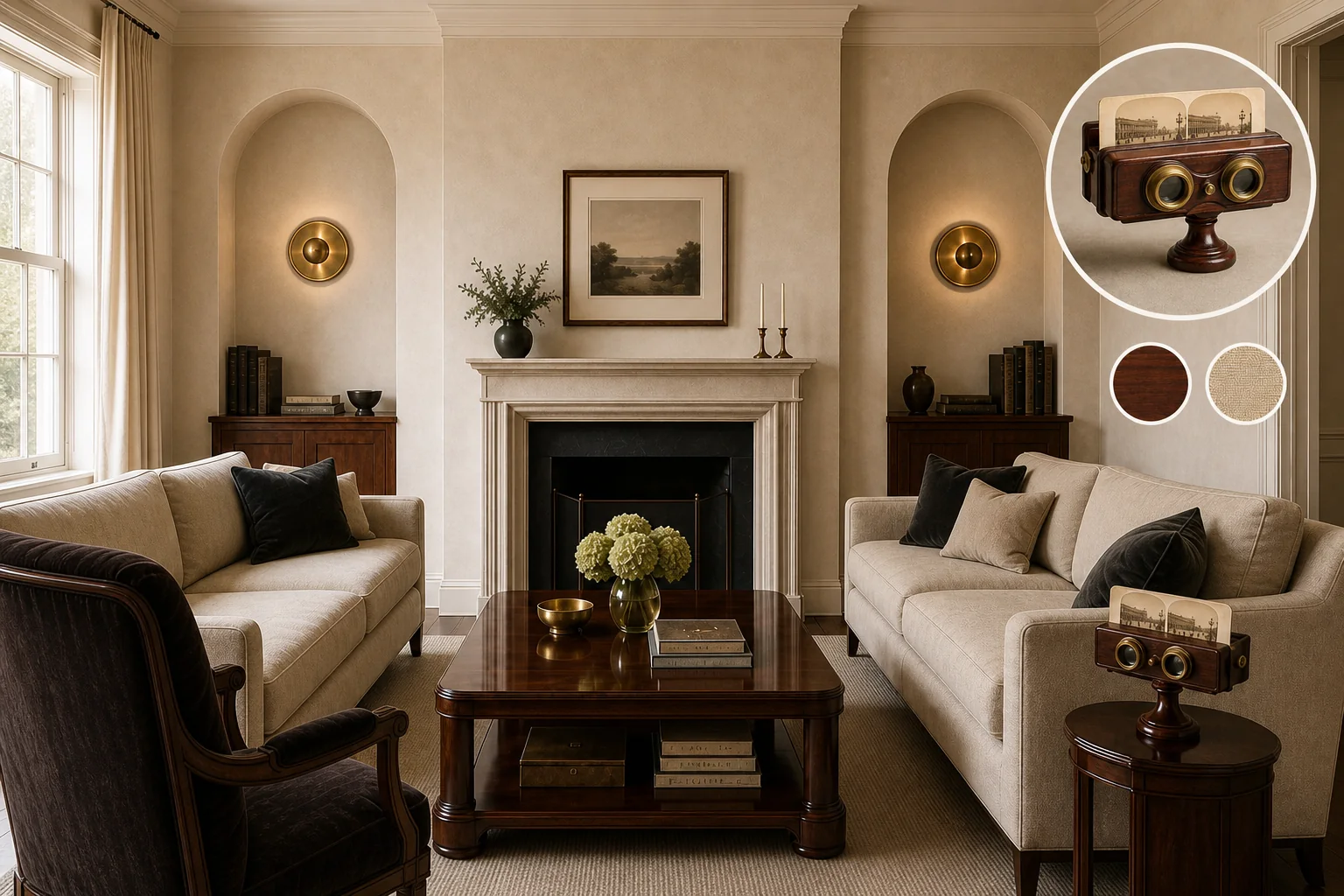
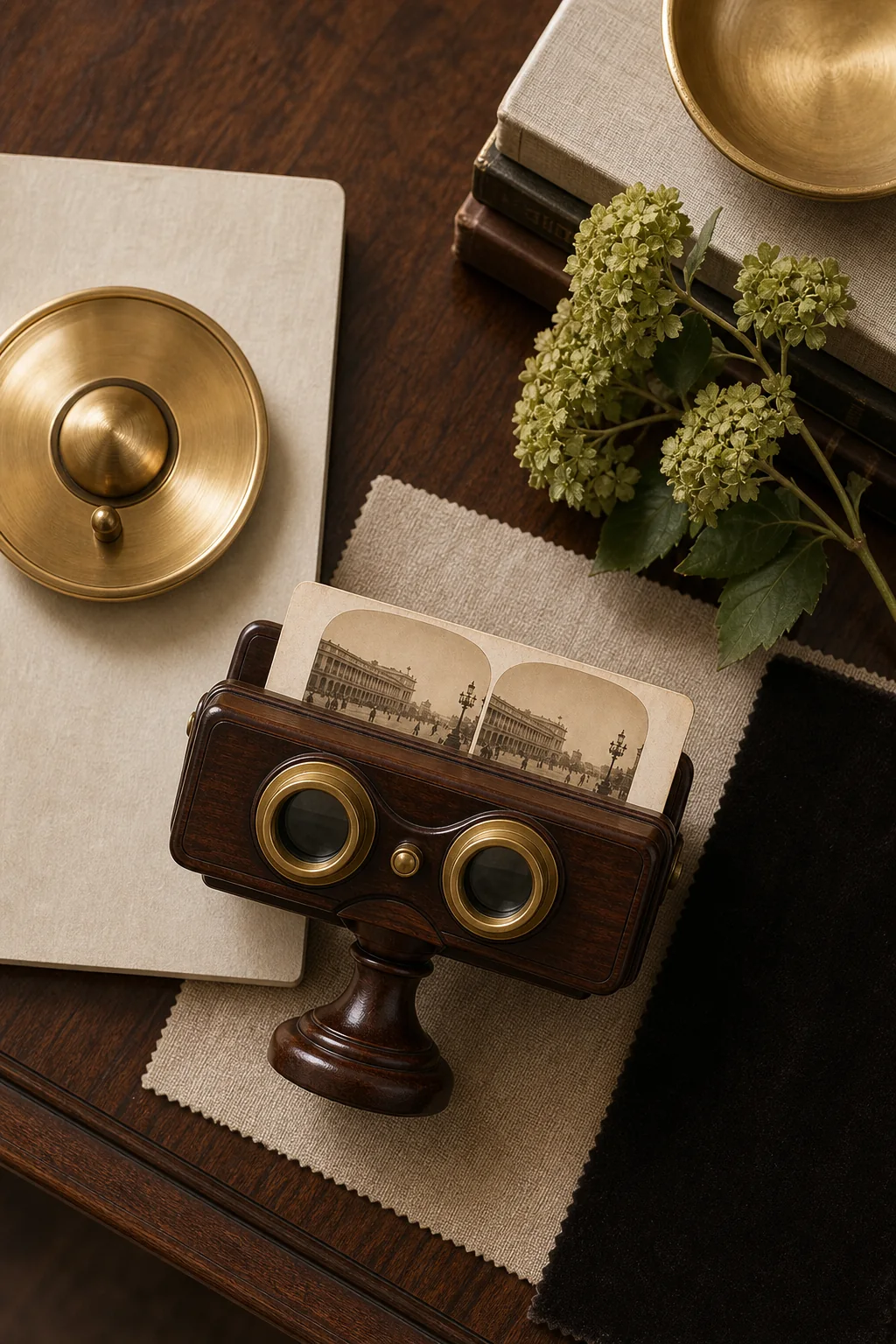
The antique stereoscope relied on dual lenses and strict framing to create a single, focused image. This parlor applies that optical discipline to interior architecture, using bilateral symmetry and matte, expansive surfaces to balance polished mahogany accents within an elegant, focused retreat.
Architectural Framing and Bilateral Symmetry
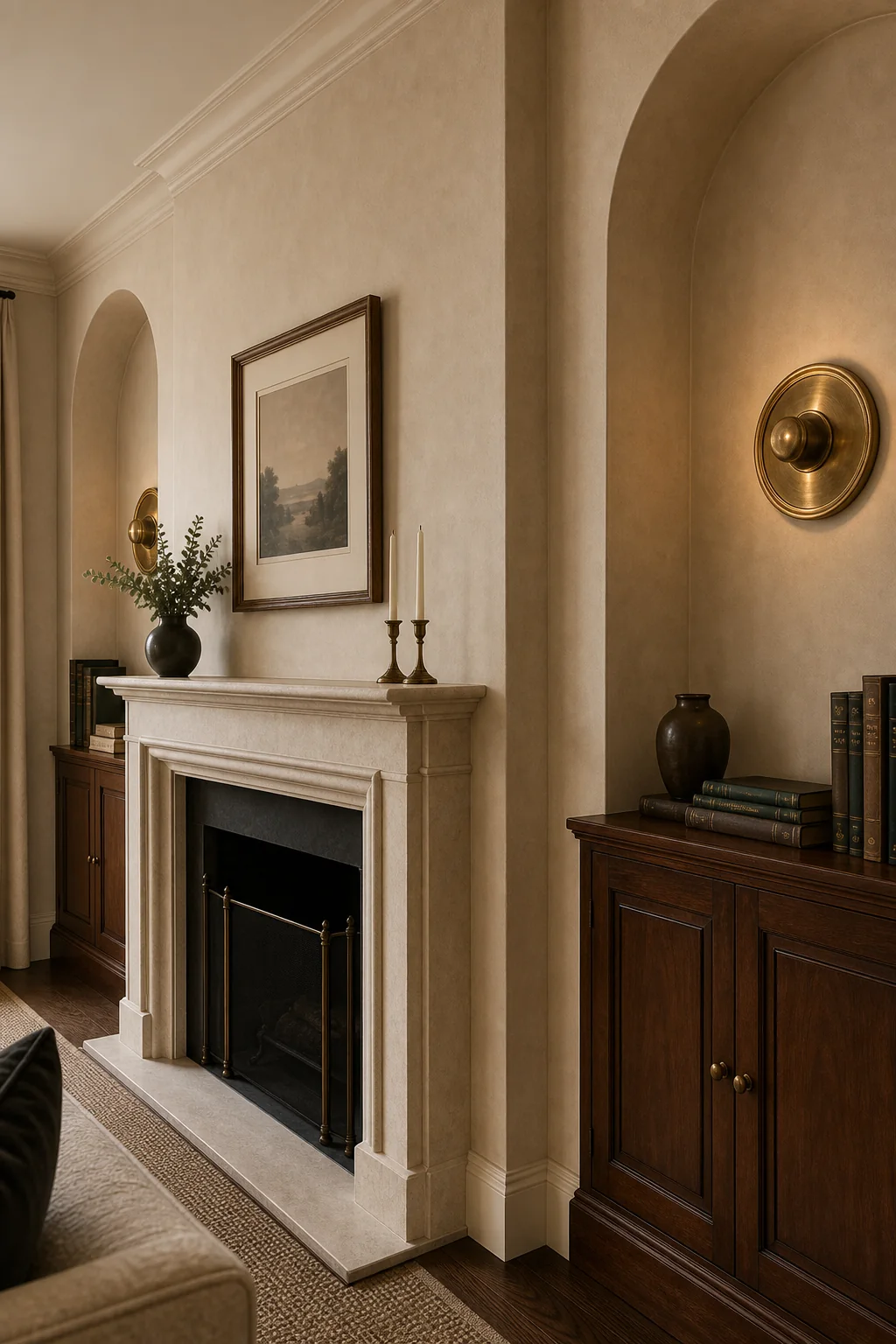
Just as the instrument uses twin hoods to guide the viewer’s eye, the room’s architecture relies on paired alcoves to establish immediate focus. By stripping away heavy crown molding and centering the chimney breast to anchor the room’s symmetry, you ensure both alcoves share identical dimensions for optical balance. These structural moves create a dual-perspective framework for the room, drawing attention inward to a central focal point that encourages focused conversation. Strict bilateral symmetry forms the absolute foundation of this design, transforming a blank wall into a highly intentional display space for books and small objects.
- Construct twin arched alcoves flanking the central chimney breast.
- Apply matte sepia plaster to all walls and alcove interiors.
- Position two matching linen sofas facing each other.
- Place a highly polished mahogany coffee table between the sofas.
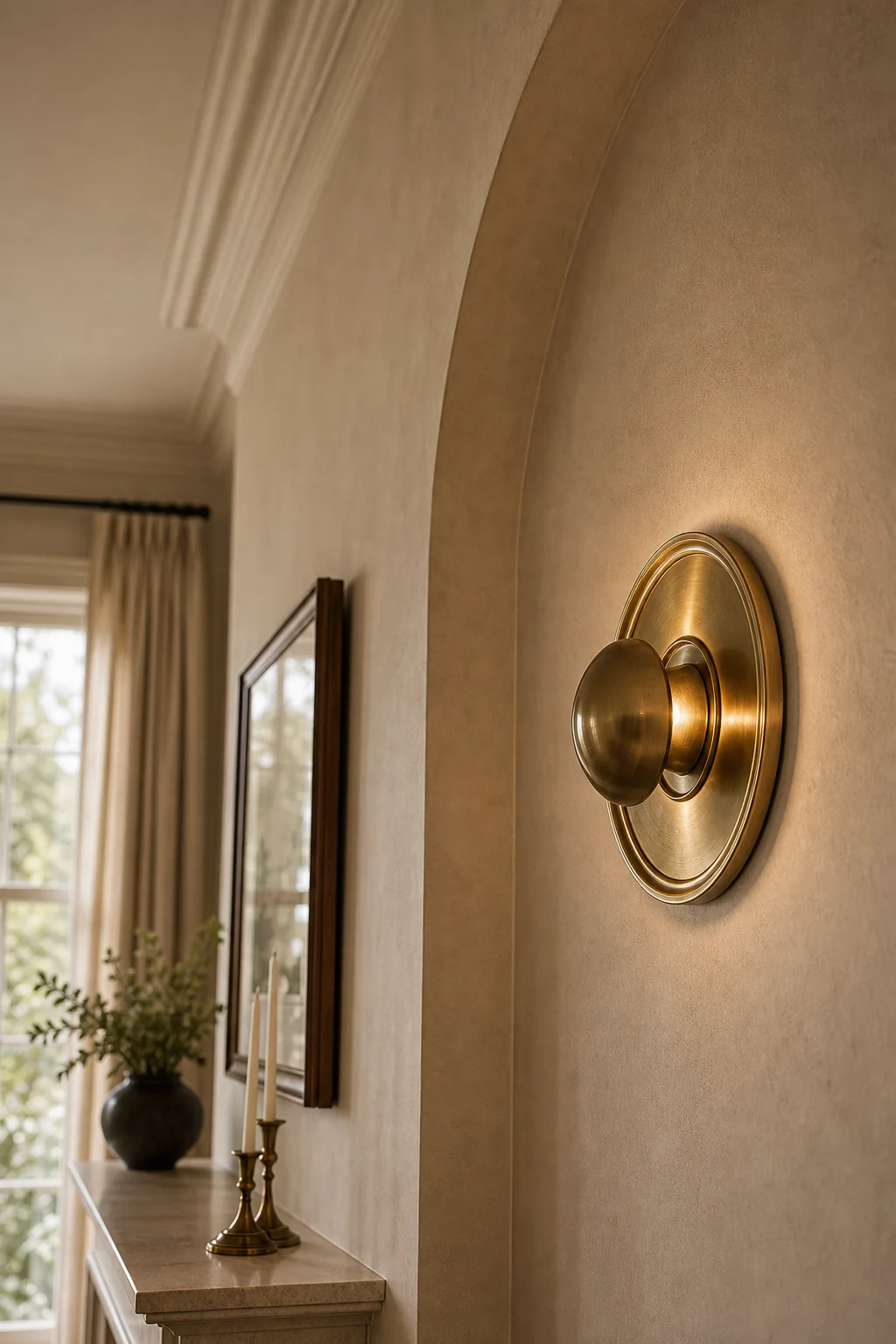
- Mount circular brass sconces in the exact center of each alcove.
Washing the Room in Sepia and Shadow
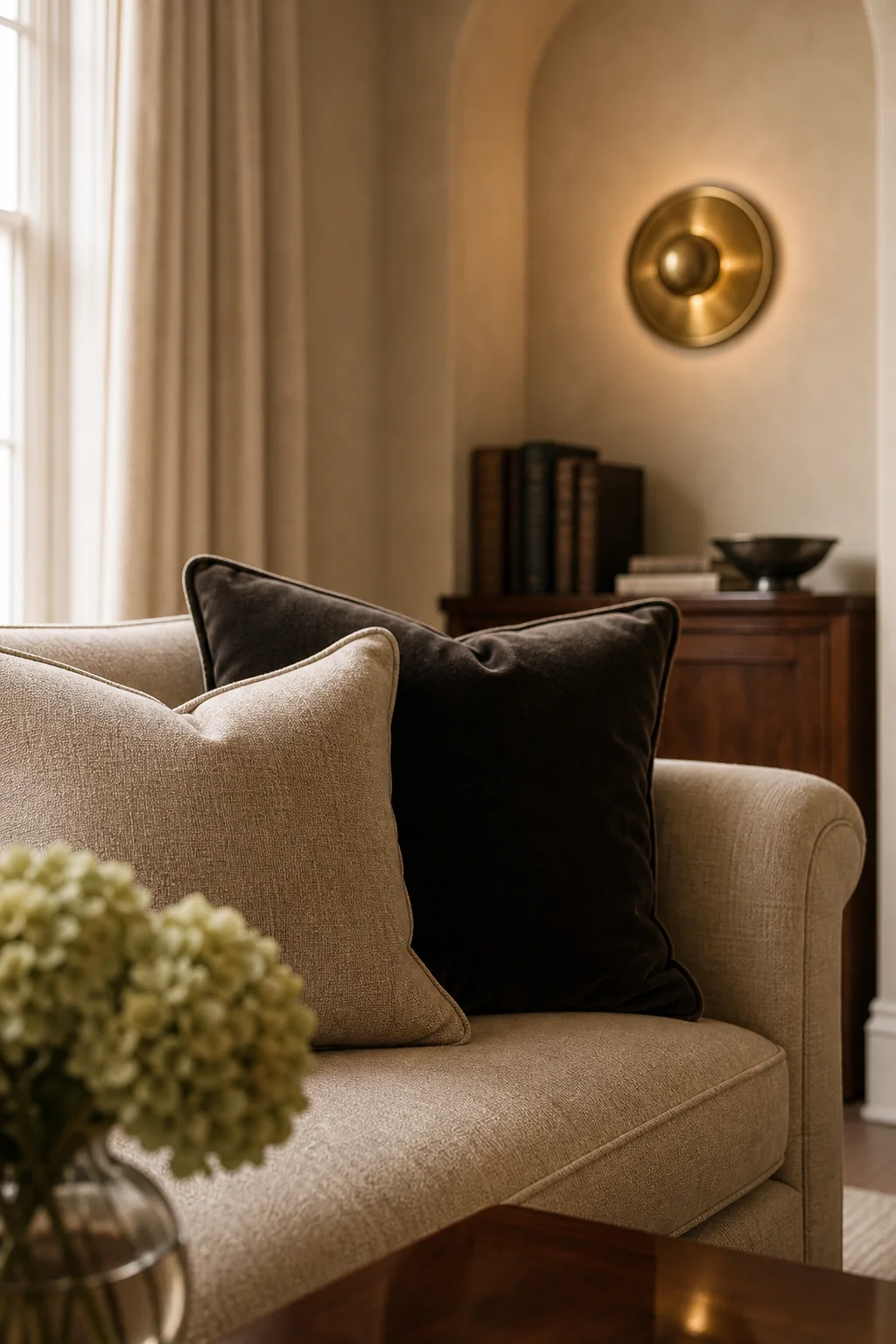
Translating the vintage viewing card into an environmental color wraps the room in warmth while allowing darker furniture to pop. Matte sepia-toned plaster walls provide a quiet, expansive backdrop that mimics aged paper, ensuring the highly polished wood and brass accents never feel overwhelming or museum-like. Reserving deep mahogany tones strictly for movable furniture and introducing velvet shadow accents grounds the lighter walls. This careful distribution of light and dark creates a precise visual-DNA mapping table between the antique object and the interior, ensuring the room feels cohesive and deliberately planned.
| Source trait | Visible evidence | Room move |
|---|---|---|
| Binocular Framing | The twin arched hoods and paired rectangular images on the stereoview card. | Twin arched architectural alcoves built symmetrically into the focal wall. |
| Sepia and Mahogany | The faded warm beige of the vintage photo card against the deep reddish-brown wood. | Matte sepia-toned plaster walls providing a backdrop for mahogany antique side chairs. |
| Polished vs. Porous | The high-gloss polished mahogany handle contrasting with the matte, porous cardboard. | A highly polished mahogany coffee table set against matte, tactile sepia linen sofas. |
| Twin Lenses | The dual circular brass viewing lenses that focus the user’s vision. | A pair of circular brass wall sconces mounted precisely in the center of each arched alcove. |
Grounding the Palette with Dark Wood
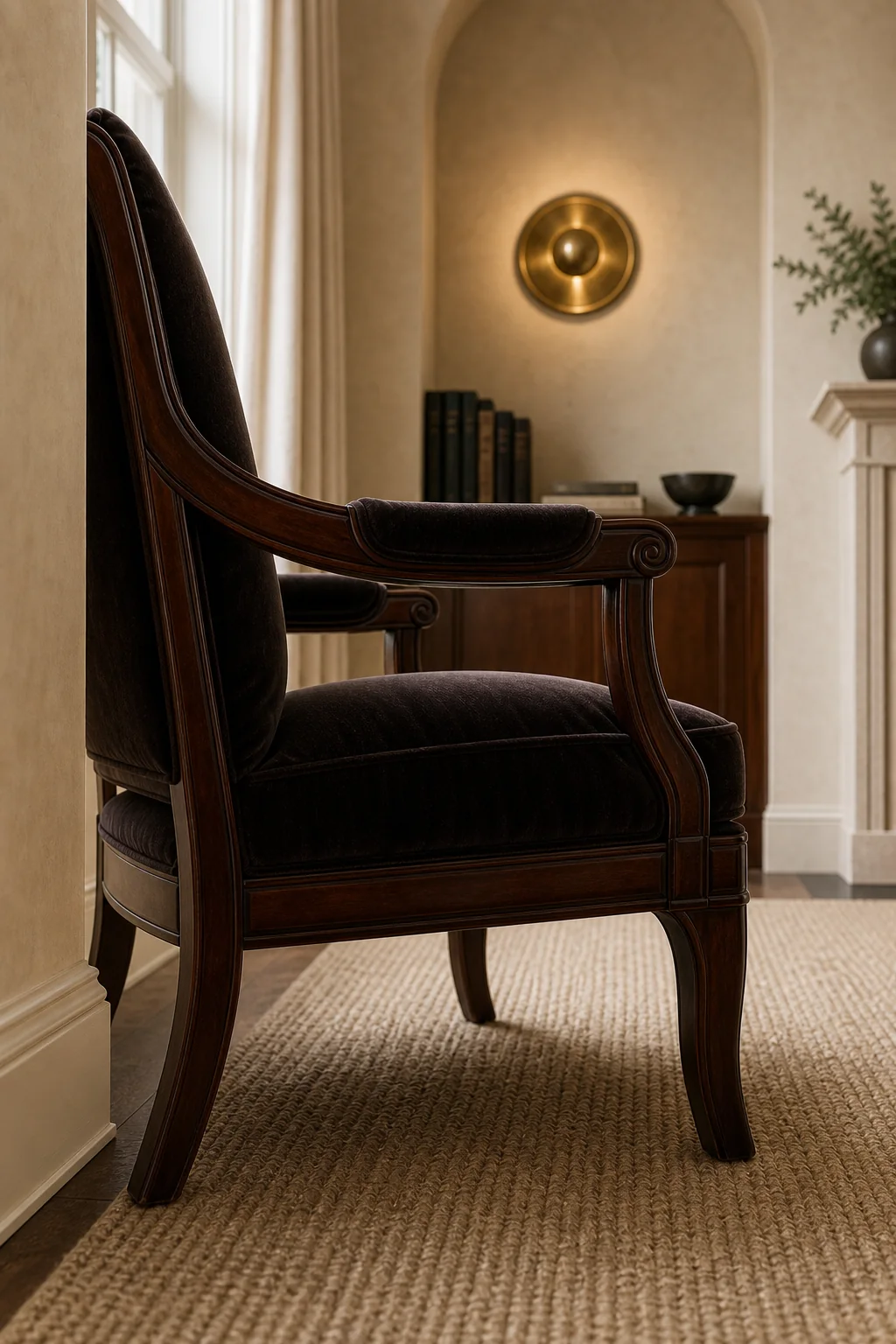
Dark mahogany chairs echoed the instrument’s polished wood, anchoring the lighter plaster with necessary visual weight. You can scale this intensity to suit your space: a subtle approach might simply paint standard rectangular alcoves in a soft parchment tone and introduce a single mahogany side table. A balanced execution builds twin arched alcoves, applies matte sepia plaster, and centers circular brass sconces. For a bold statement, you could wrap the entire room in dark mahogany paneling and use oversized brass dome lights. Regardless of the chosen intensity, the deep wood tones remain essential for grounding the airy sepia foundation.
Balancing Polished Wood with Porous Linen
The tactile contrast between the instrument’s slick wooden handle and its matte cardboard insert dictates the room’s upholstery choices. A highly polished mahogany coffee table set against matte, tactile sepia linen sofas and a low-pile wool rug absorbs sound and light while reflecting ambient glow off the wood. Avoiding shiny fabrics entirely and relying on linen and cotton velvet ensures that matte, expansive surfaces dominate the living space. This interplay of textures prevents the room from feeling flat, offering a rich sensory experience that perfectly mirrors the physical duality of the original antique viewing device.
Layering Matte Textiles for Comfort
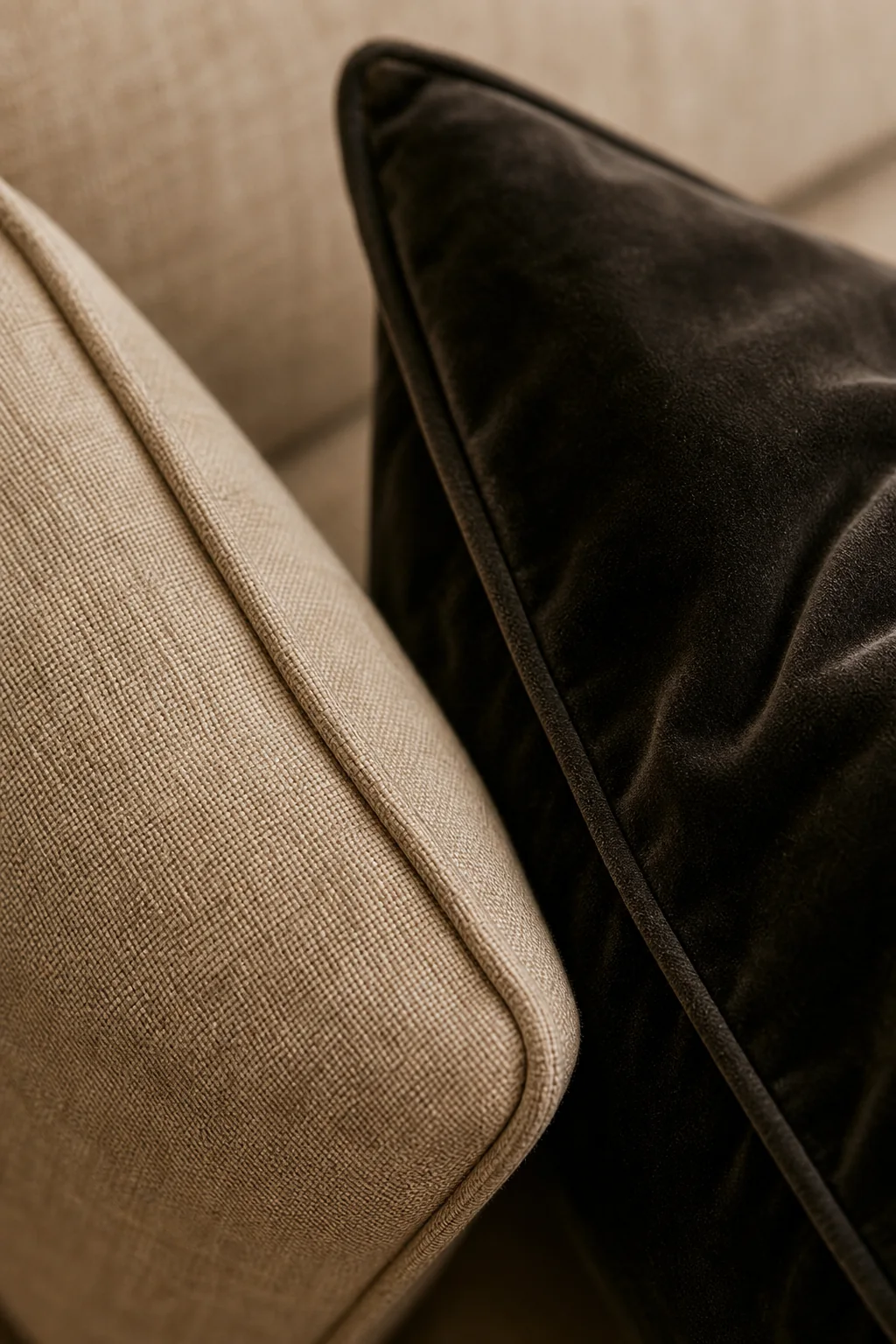
Dark velvet pillows recalled the viewing hood’s shadow, adding crucial depth to the seating arrangement. By layering these dense, light-absorbing textiles over the crisp linen sofas, the room achieves a comfortable conversational seating area for four that feels intimate rather than stark. This deliberate layering prevents the strict bilateral symmetry from feeling rigid, softening the edges of the room while maintaining the disciplined, focused aesthetic of the original optical instrument. The velvet shadow depth provides a necessary visual resting place, ensuring the eye is not overwhelmed by the lighter sepia parchment tones dominating the walls.
Focusing the Eye with Brass Lenses
The stereoscope’s brass lenses are reimagined as twin light sources, providing the final rhythmic punctuation within the arched alcoves. Mounting brushed or aged brass sconces at exact eye level when seated avoids a harsh glare while keeping the backplates perfectly circular to echo the lenses. These glowing focal points act as the ultimate anchor for the room, drawing the eye inward and completing the transformation from a handheld parlor curiosity into a fully realized architectural space. The warm metallic finish introduces just enough reflection to break up the matte plaster, serving as both ambient and reading lighting.
Use frosted bulbs in your circular brass sconces to perfectly mimic the soft, diffused light passing through a vintage stereoview card.