
This Wooden Violin Became a Music Room
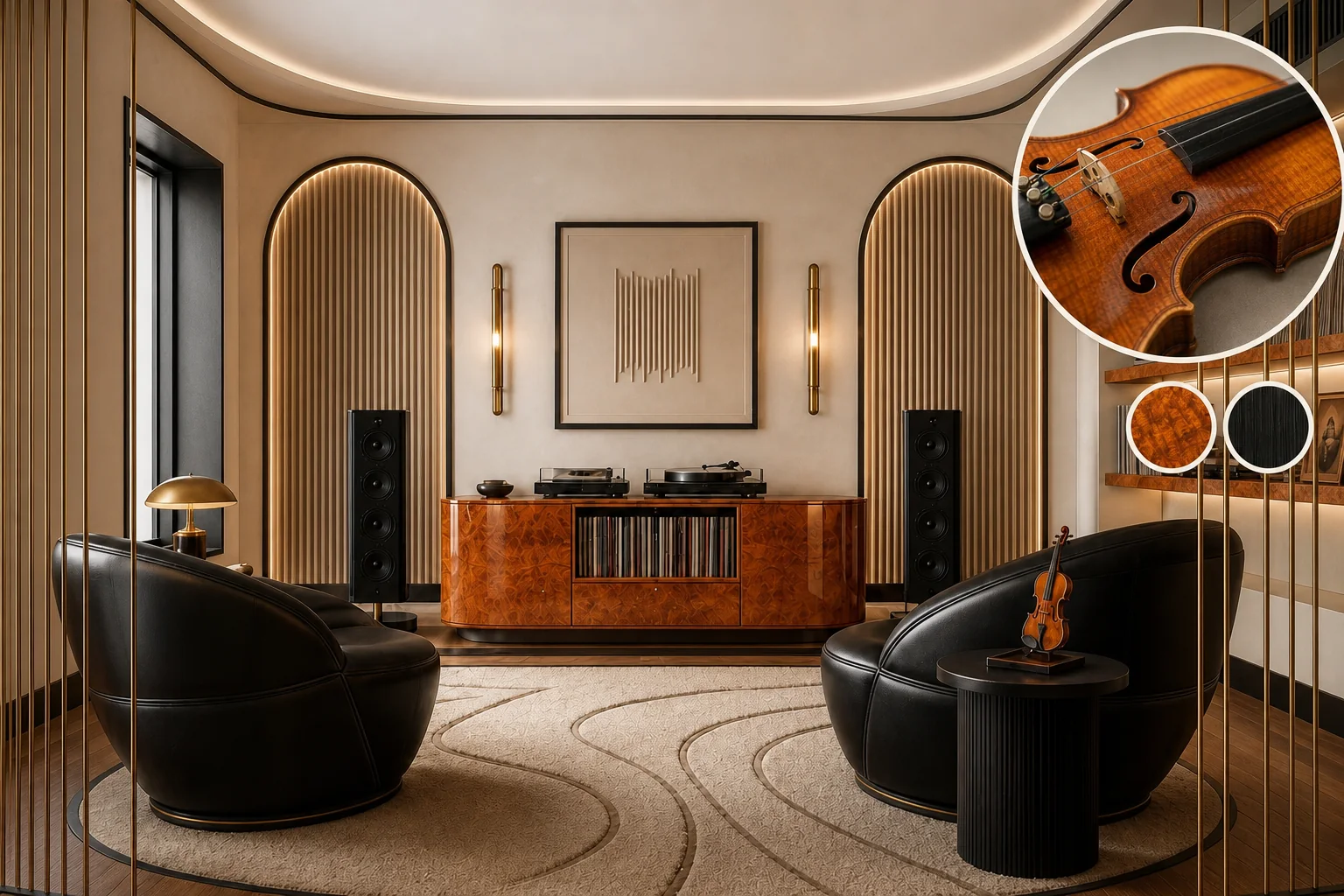
A miniature wooden violin provides the perfect blueprint for an audiophile music room. By translating taut strings and glowing amber varnish into architectural details, you can balance rigid structural tension against warm, resonant curves to create a serene, acoustically optimized listening space.
Framing the acoustic envelope
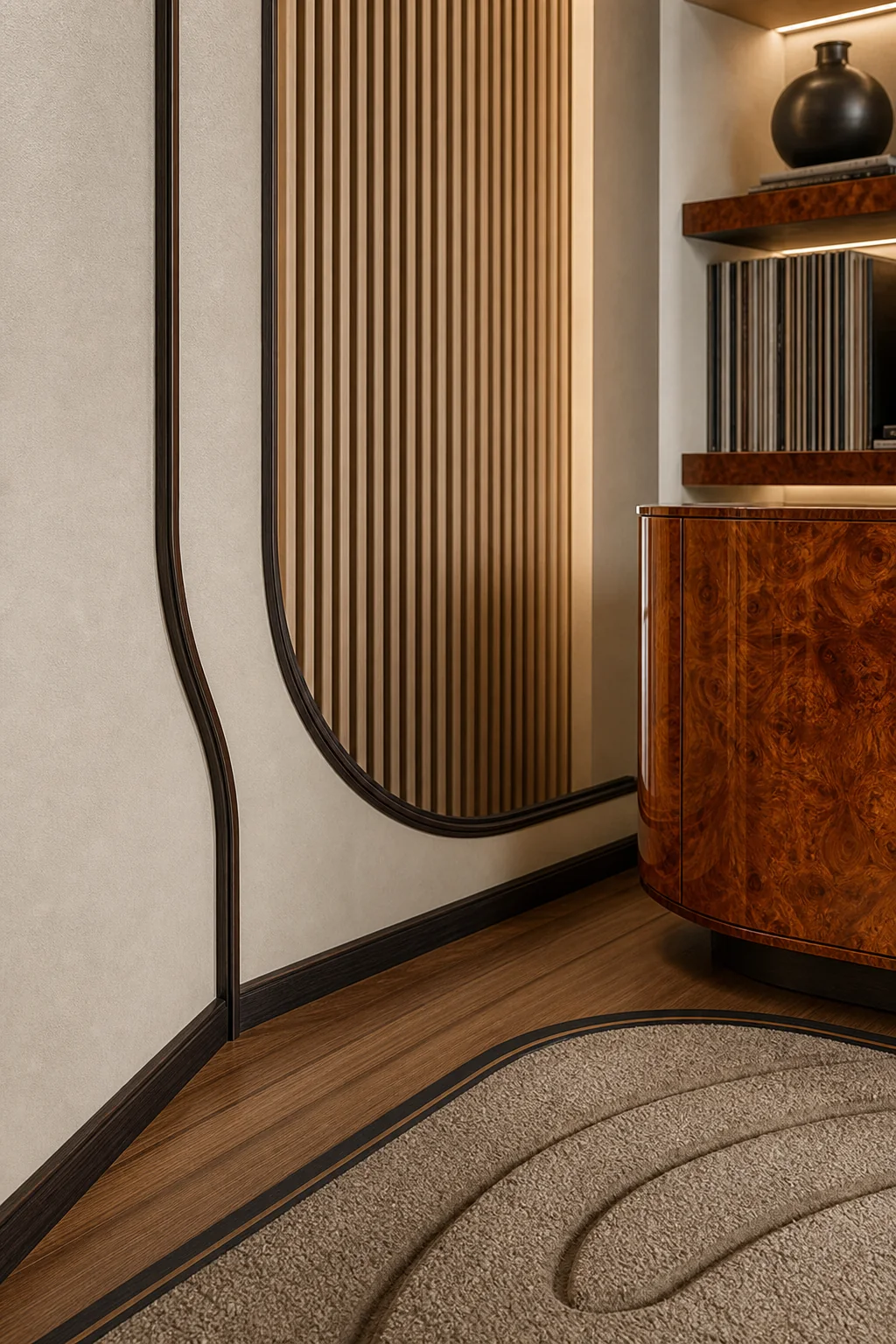
Just as delicate double black lines trace the violin’s curved perimeter to provide structural integrity, thin architectural borders define this room’s acoustic boundaries. Wenge wood inlays trace the edges of warm oak flooring and frame the arched acoustic wall panels, establishing a precise acoustic envelope. This dark purfling effect grounds the sweeping concave curves of the architecture, ensuring the visual weight remains perfectly distributed. To execute this foundational layer and prepare the room for high-fidelity audio playback, follow a strict sequence of implementation steps to optimize the structural geometry.
- Map the listening triangle meticulously so the primary seating and the high-end speakers form an optimal acoustic geometry for sound staging.
- Install acoustic wall treatments using seamless matte plaster panels to significantly reduce unwanted sound reflections and echo.
- Inlay the perimeter borders with dark wenge wood strips to sharply define the transitions between the floor and the wall panels.
- Position the record console directly on the primary listening wall so the heavy unit anchors the room’s central focal point.
- Arrange the seating with two deeply curved chairs facing inward to encourage focused listening and intimate conversation.
Tuning the amber glow
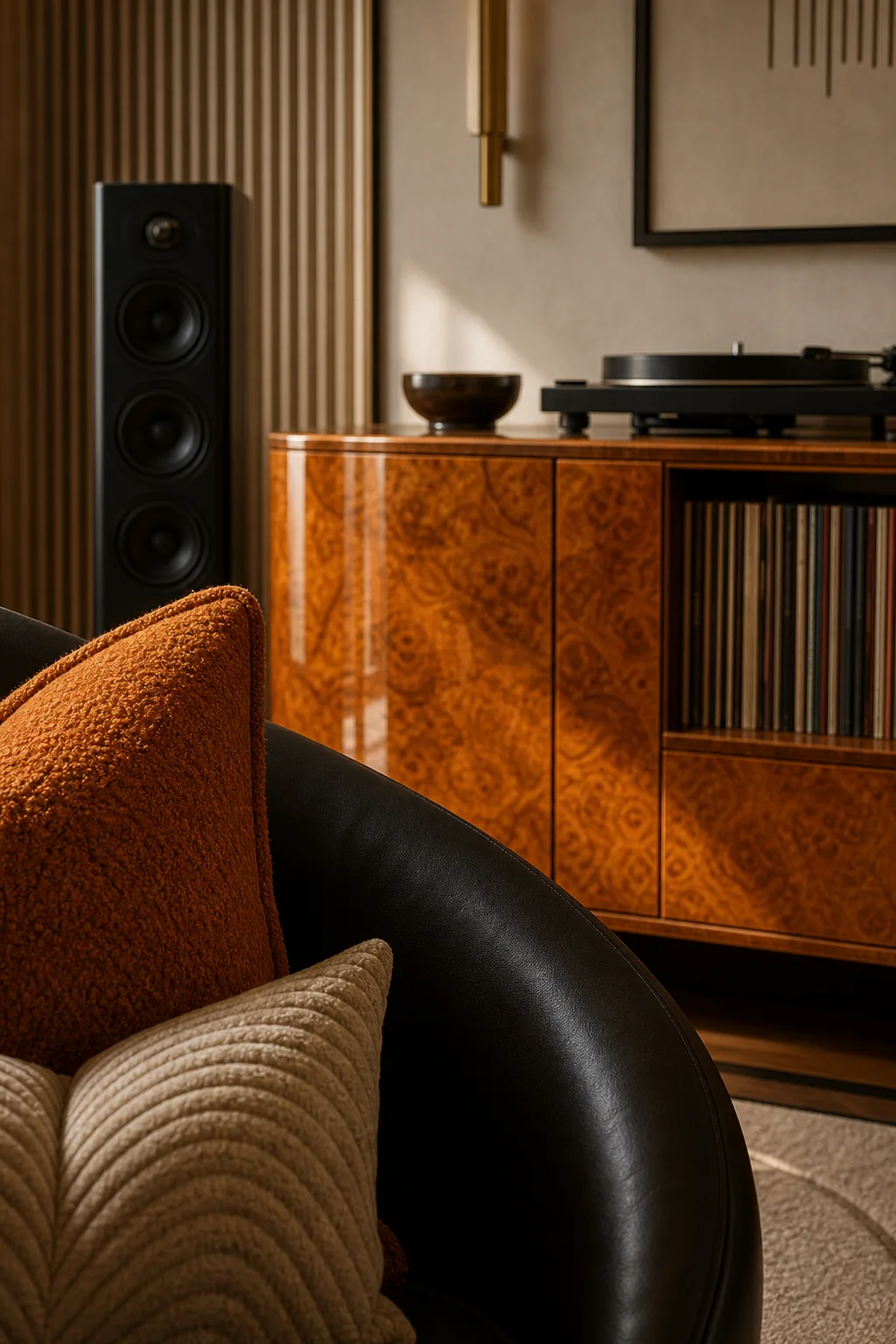
The glowing, translucent golden-orange finish of the carved spruce body translates into a high-gloss, amber-toned burled wood record console that radiates warmth against matte warm-white walls. This rich focal point mimics the instrument’s resonant chamber, drawing the eye without overwhelming the senses. By keeping the surrounding walls a soft rosin white, the amber tones are allowed to sing visually, creating a space that feels deeply comfortable and acoustically serene. This visual-DNA mapping table details exactly how the instrument’s core traits inform the room’s overarching design logic and material selections.
| Source trait | Visible evidence | Room move |
|---|---|---|
| Purfling and edge tension | The delicate double black lines tracing the violin’s curved perimeter | Thin, dark wenge wood inlays tracing the edges of the warm oak flooring and framing the arched acoustic wall panels |
| Honey-amber glow | The glowing, translucent golden-orange finish of the carved spruce body | A high-gloss, amber-toned burled wood record console and matching floating shelves, radiating warmth against matte warm-white walls |
| Ebony and taut strings | The smooth, dense black fingerboard and the fine, metallic tension of the strings | Matte black leather upholstery on the seating, contrasted by vertical brass tension-wire room dividers that catch the light |
| Waisted bouts and sweeping curves | The concave center curves of the violin body and the elongated sound holes | Symmetrical, deeply curved lounge chairs facing each other, flanking a central rug with sweeping, organic, elongated cutouts in its pile pattern |
Highlighting the burled wood grain
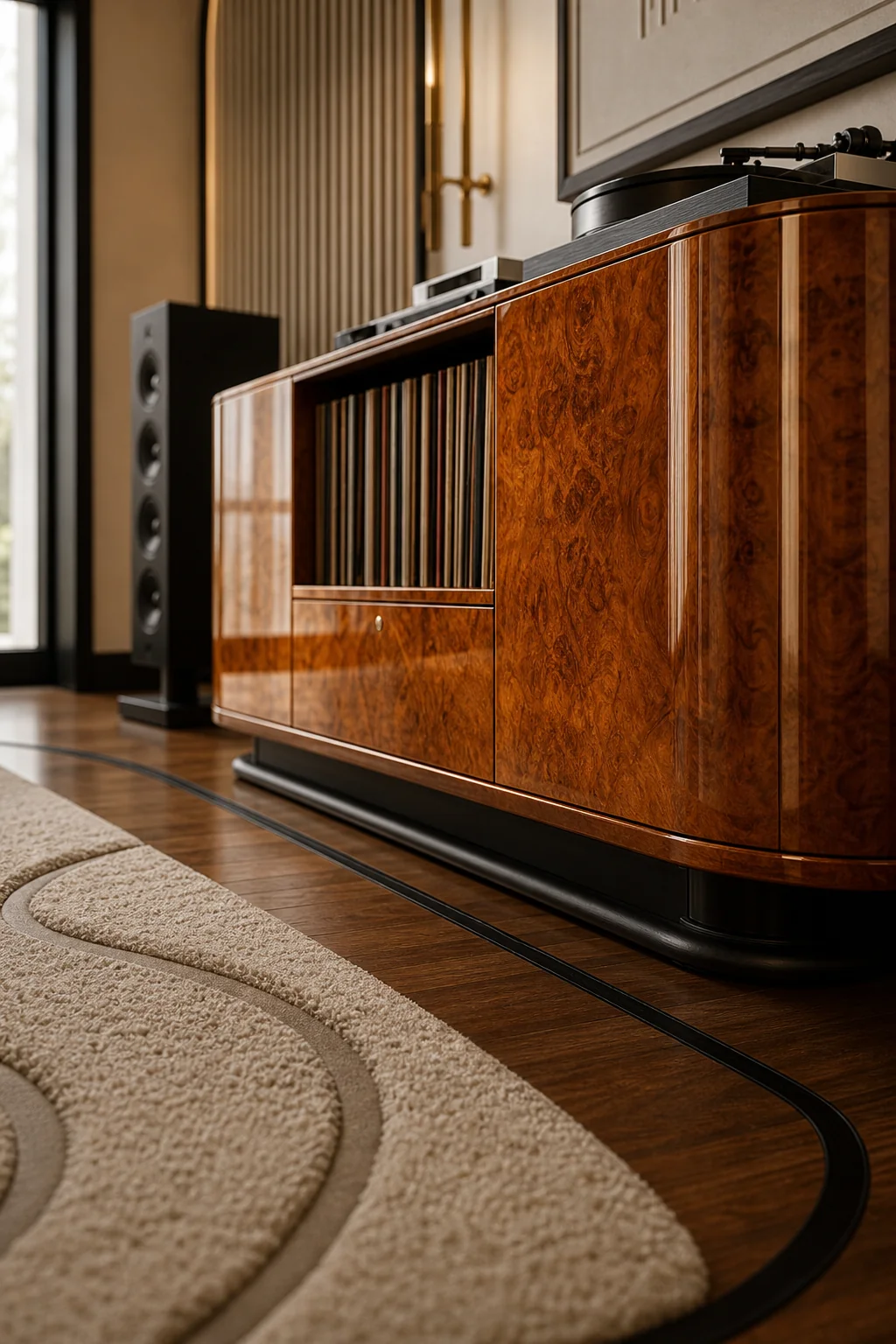
Directional lighting highlights the console’s tiger-striped wood grain, mimicking the multidimensional depth of the violin’s varnish. This brilliant illumination adheres strictly to the essential balancing rule: high-gloss focal points must always be grounded by expansive, matte, sound-absorbing surfaces to prevent visual and acoustic glare. The interplay between the gleaming amber wood and the flat acoustic plaster creates a dynamic visual rhythm, ensuring the room feels alive yet completely relaxed. Proper illumination is critical to achieving this effect without compromising the listener’s comfort.
Angle soft directional spotlights away from the listener’s eyes to illuminate the burled wood console without creating harsh, distracting reflections on the high-gloss surface. This indirect approach enhances the tiger-striped grain while maintaining a moody, cinematic atmosphere.
Balancing ebony and brass
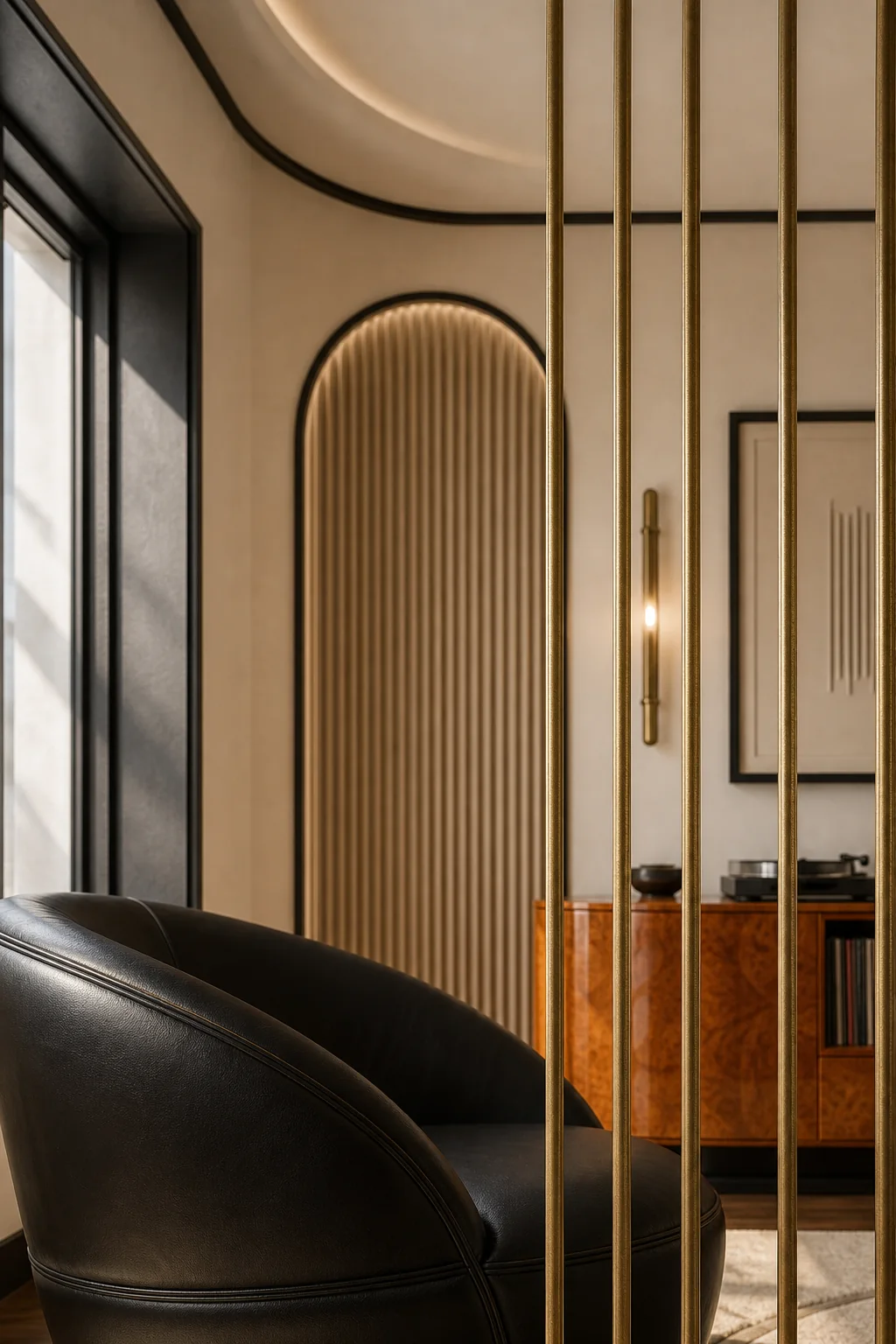
The smooth, dense black fingerboard and the fine, metallic tension of the strings introduce a necessary sharpness that cuts through the room’s warm tones. Matte black leather seating contrasts with taut brass tension wires, grounding the space without reflecting light. This interplay of dark, light-absorbing leather and shimmering metal prevents the amber wood from feeling overly traditional, injecting a modern, tailored edge into the listening environment. To achieve this precise material balance and ensure every surface contributes to the acoustic harmony, consult the comprehensive room recipe checklist.
Dividing space with tension
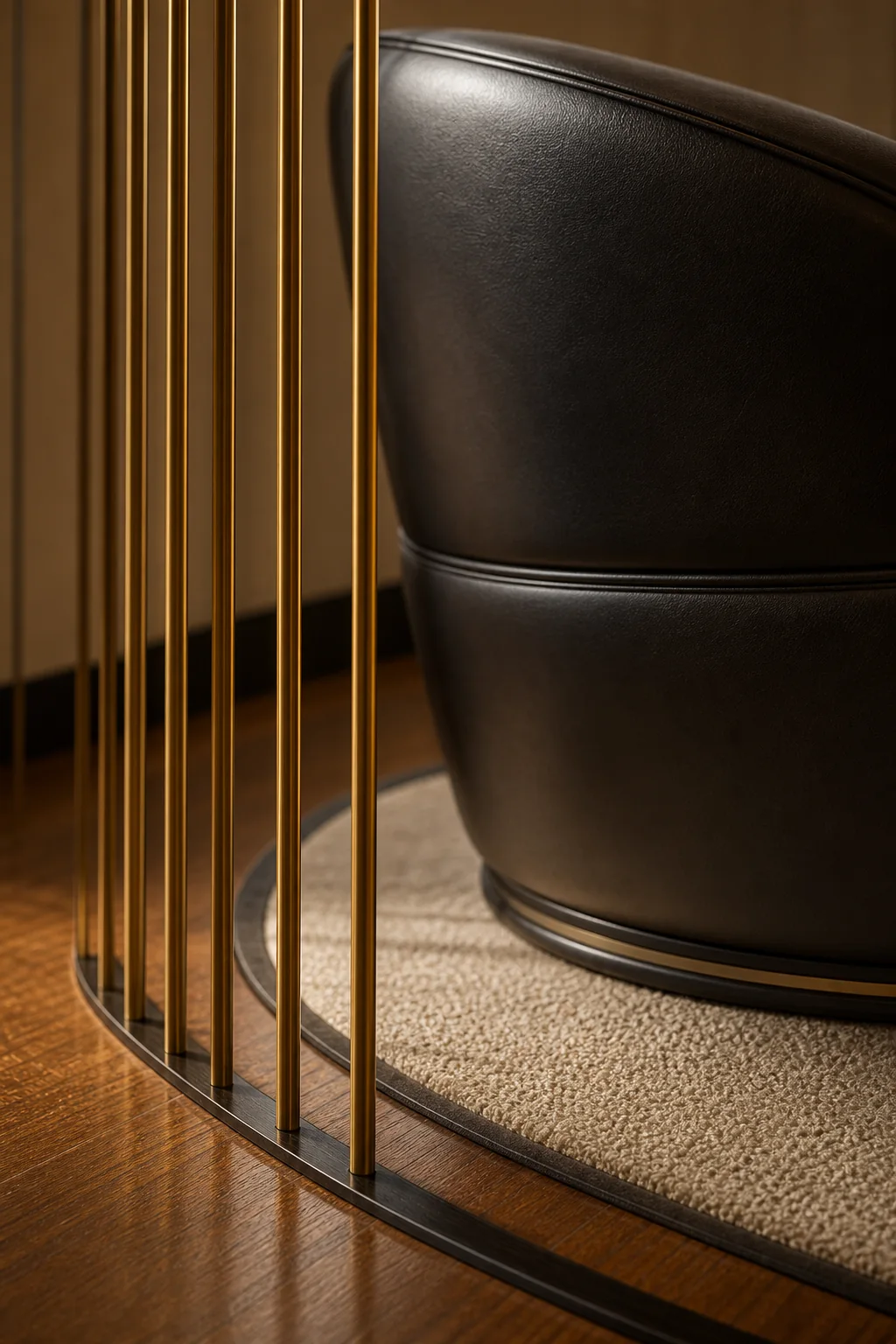
Vertical brass wires mimic the tautness of violin strings, acting as subtle room dividers that catch the eye without blocking sound. You can scale this concept across different intensities to suit your space. A subtle approach introduces a single amber wood accent piece against warm white walls with thin black picture frames hinting at the purfling tension. A balanced execution anchors the space with an amber console, matte black seating, and acoustic plaster walls. A bold design wraps the entire ceiling in high-gloss wood and installs dense brass tension wires as prominent architectural partitions.
Echoing the sweeping curves
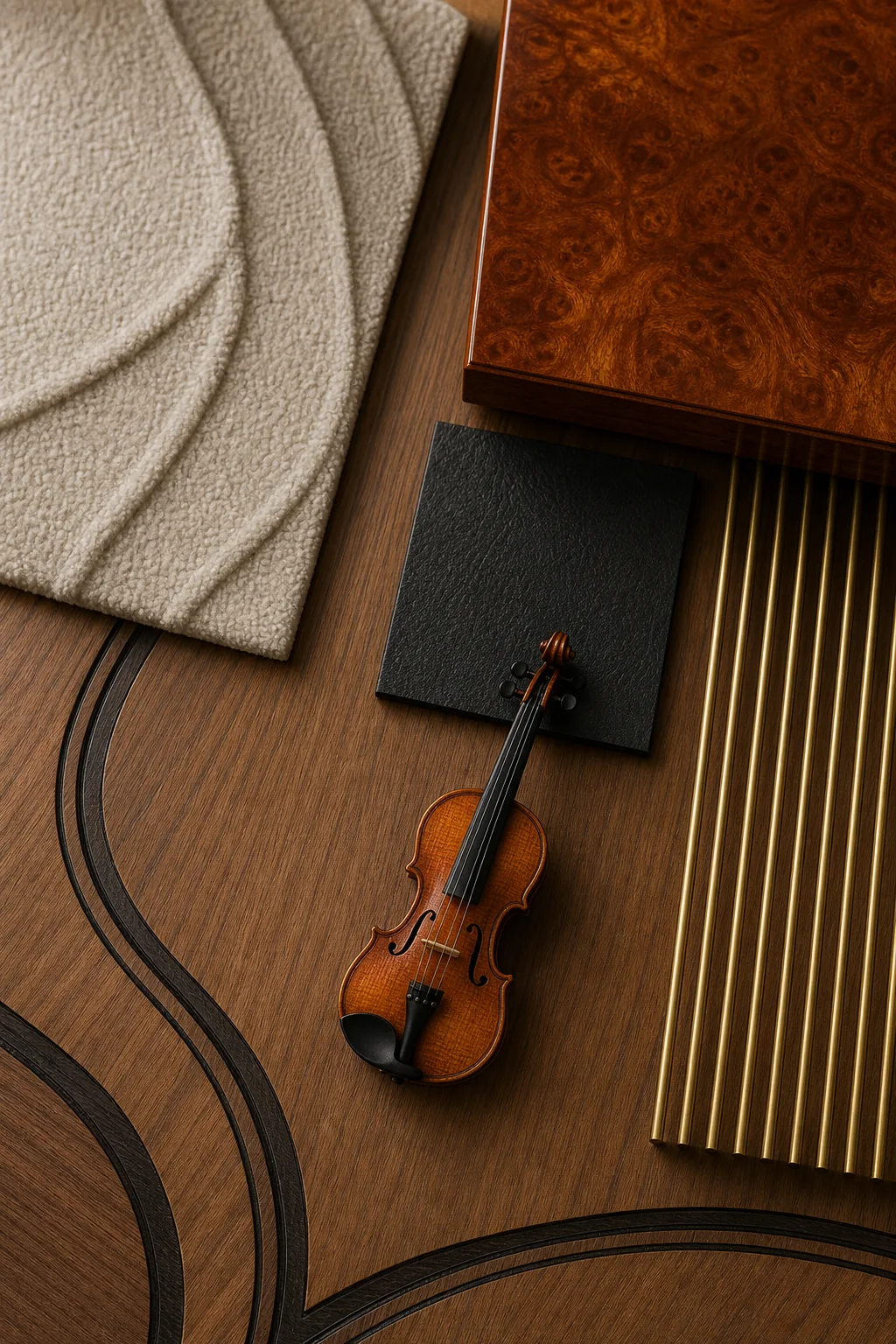
The concave center curves of the instrument dictate the organic, symmetrical flow of the room’s furnishings, softening the rigid architectural lines. Symmetrical curved chairs echo the violin’s waisted center bouts, flanking a central rug with sweeping, elongated cutouts in its pile pattern to create a cohesive, resonant rhythm. This deliberate mirroring of the instrument’s anatomy ensures the space feels intentionally sculpted rather than merely decorated. By embracing these deep, enveloping forms, the room physically embraces the listener, transforming a simple music room into an immersive sensory experience.
Align your curved lounge chairs perfectly opposite one another to create a sense of deliberate, formal balance that mirrors the classic anatomy of a stringed instrument. This arrangement not only looks elegant but also optimizes the stereo imaging for audiophile listening sessions.