
This Horn Gramophone Became a Study
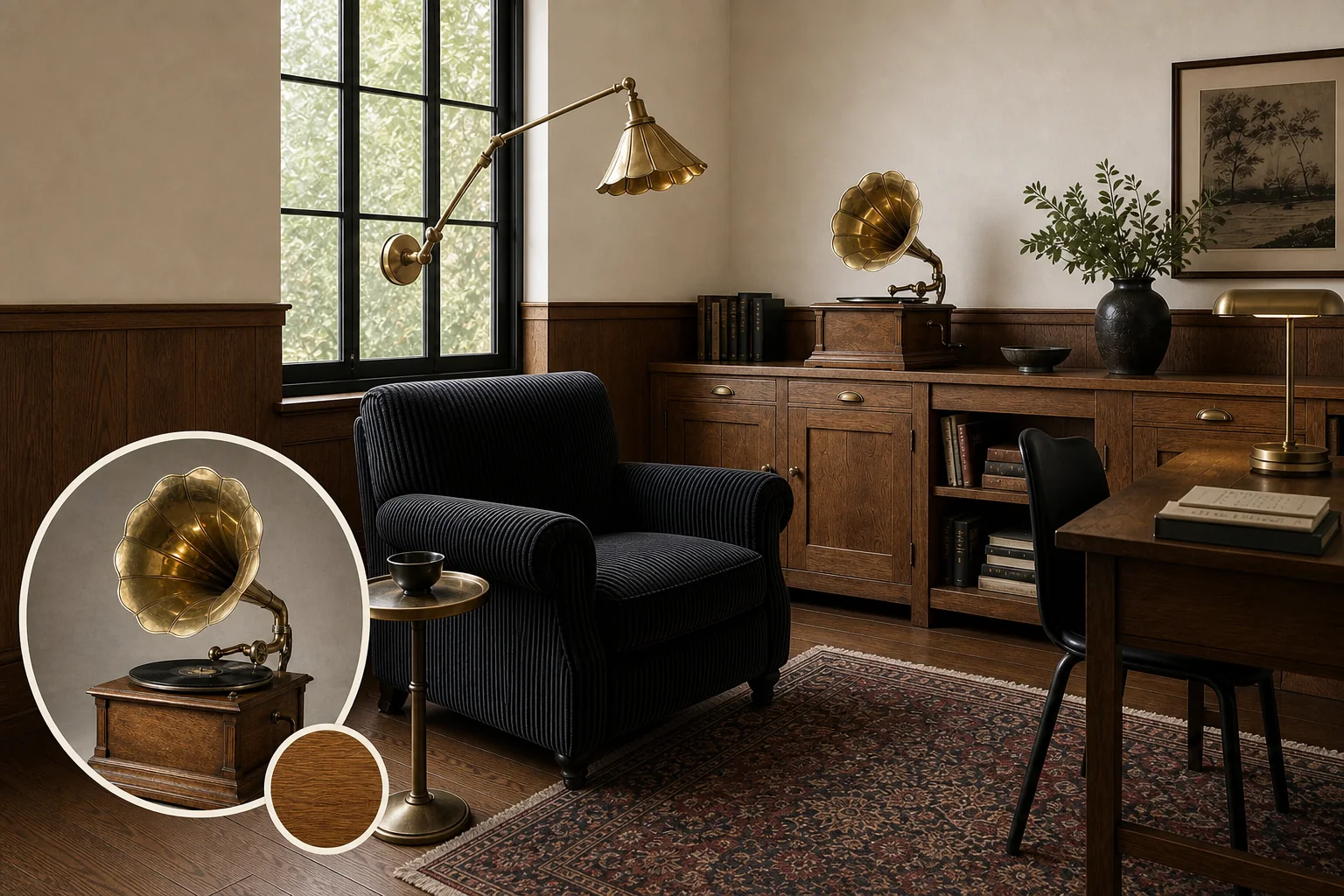
Transforming the mechanical elegance of an Edwardian record player into a cohesive interior requires balancing heavy traditional woodwork with sweeping, articulated metals. This design bridges the antique object and the room by grounding the space with a solid foundation below eye level, allowing the lighter brass and plaster to breathe above.
Anchoring the room with quartersawn oak
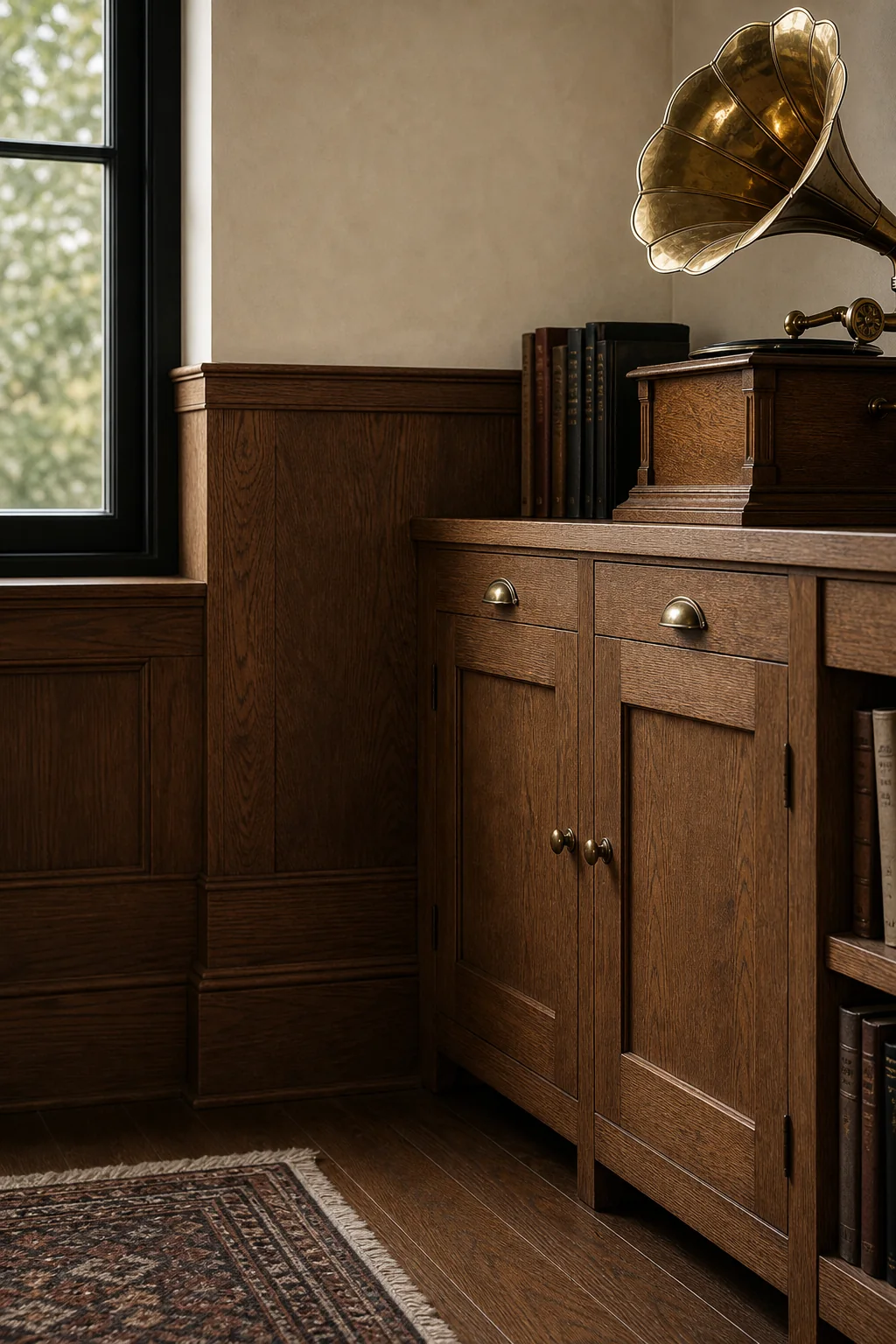
Establishing a heavy wooden base grounds the study, creating a traditional platform that supports the lighter elements above. To achieve this, focus on a continuous lower datum of warm oak wainscoting to highlight the distinctive medullary rays in the wood grain. This approach mirrors the solid, molded box that anchors the gramophone, translating its physical weight into architectural permanence. Executing this transformation requires a few foundational implementation steps to ensure the room feels deliberately layered rather than visually bottom-heavy, setting the stage for the reflective metals, matte black accents, and soft textiles to follow.
- Install quartersawn oak wainscoting around the lower perimeter to create a heavy, grounded wooden foundation below eye level.
- Apply warm lime plaster to the upper walls and ceiling to provide a soft, light-absorbing backdrop that contrasts the heavy wood below.
- Fit matte black steel mullions to the primary window so that high-contrast architectural lines frame the natural daylight.
- Mount unlacquered brass hardware on the built-in cabinetry to introduce subtle, warm metallic reflections against the traditional oak.
Classic edge profiles in the cabinetry
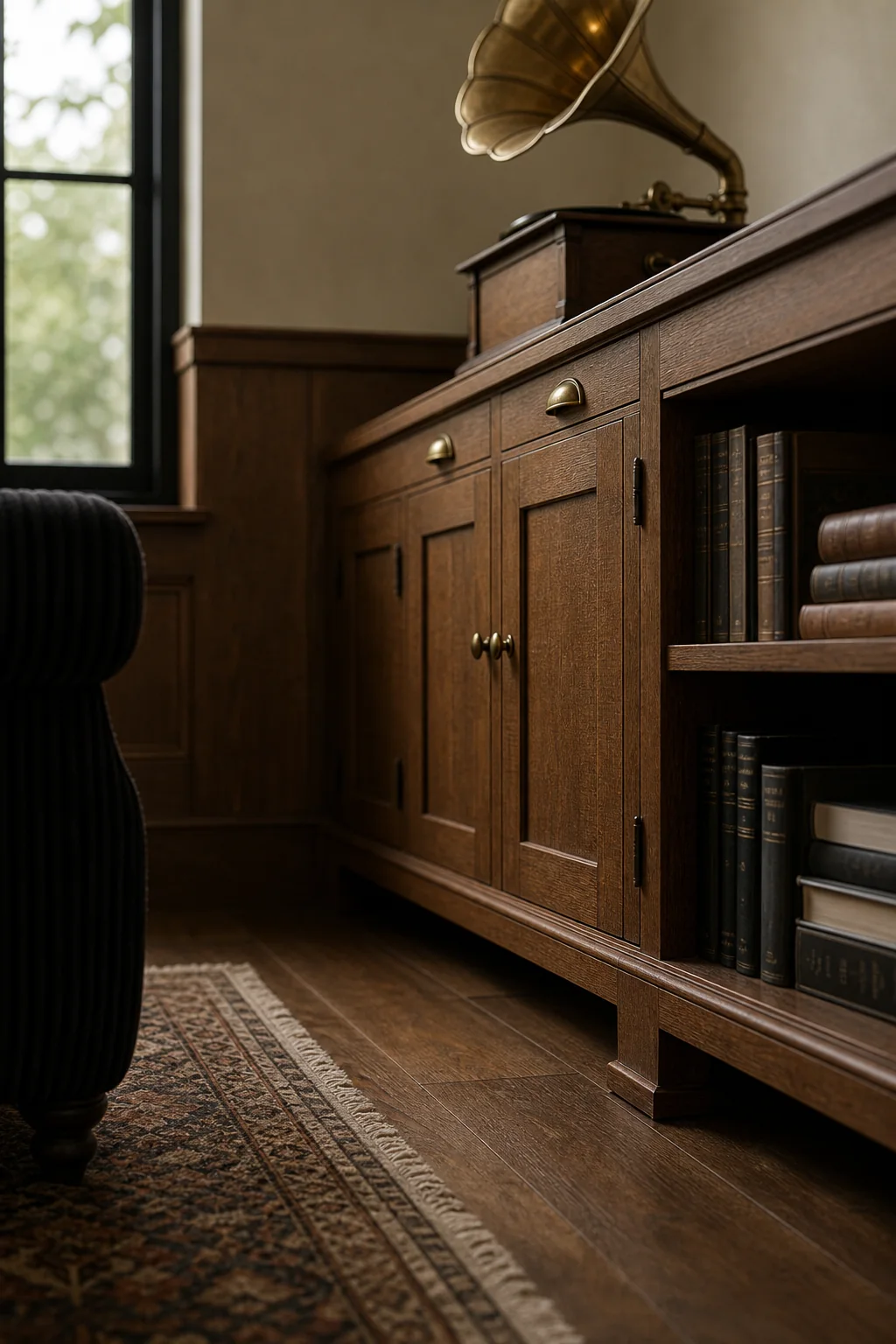
The cabinet molding echoes the gramophone’s carved wooden base, reinforcing the room’s historical provenance without resorting to literal musical motifs or themed decor. By maintaining a consistent wainscoting height, you unify the room’s perimeter and establish a strong horizontal line throughout the study. This strict architectural boundary allows the heavy wooden elements to remain strictly below eye level, preventing the rich quartersawn oak from overwhelming the intimate reading corner. The resulting lower datum provides a robust, grounding presence that perfectly balances the delicate, articulated fixtures and smooth plaster surfaces suspended in the upper half of the space.
Balancing matte black and gleaming brass
Introducing high-contrast accents prevents the heavy oak foundation from feeling monotonous while referencing the stark contrast between a matte black shellac record and a gleaming brass horn. Pairing matte black architectural details with warm, unlacquered brass hardware allows the metals to develop a natural patina over time, ensuring an authentic vintage feel that honors the source object. This careful balance of light-absorbing and reflective surfaces forms the core of our visual-DNA mapping table, which breaks down exactly how the antique gramophone’s distinct material properties and geometric shapes are translated into functional, sophisticated room moves for the study.
| Source trait | Visible evidence | Room move |
|---|---|---|
| Grounded Oak Base | The solid, molded quartersawn oak box that anchors the gramophone. | A continuous lower datum of warm oak wainscoting and built-in cabinetry with classic edge profiles, grounding the room below quiet plaster walls. |
| High-Contrast Accents | The stark contrast between the matte black shellac record and the gleaming brass horn. | Matte black window mullions and a black desk chair paired with warm, unlacquered brass cabinet hardware. |
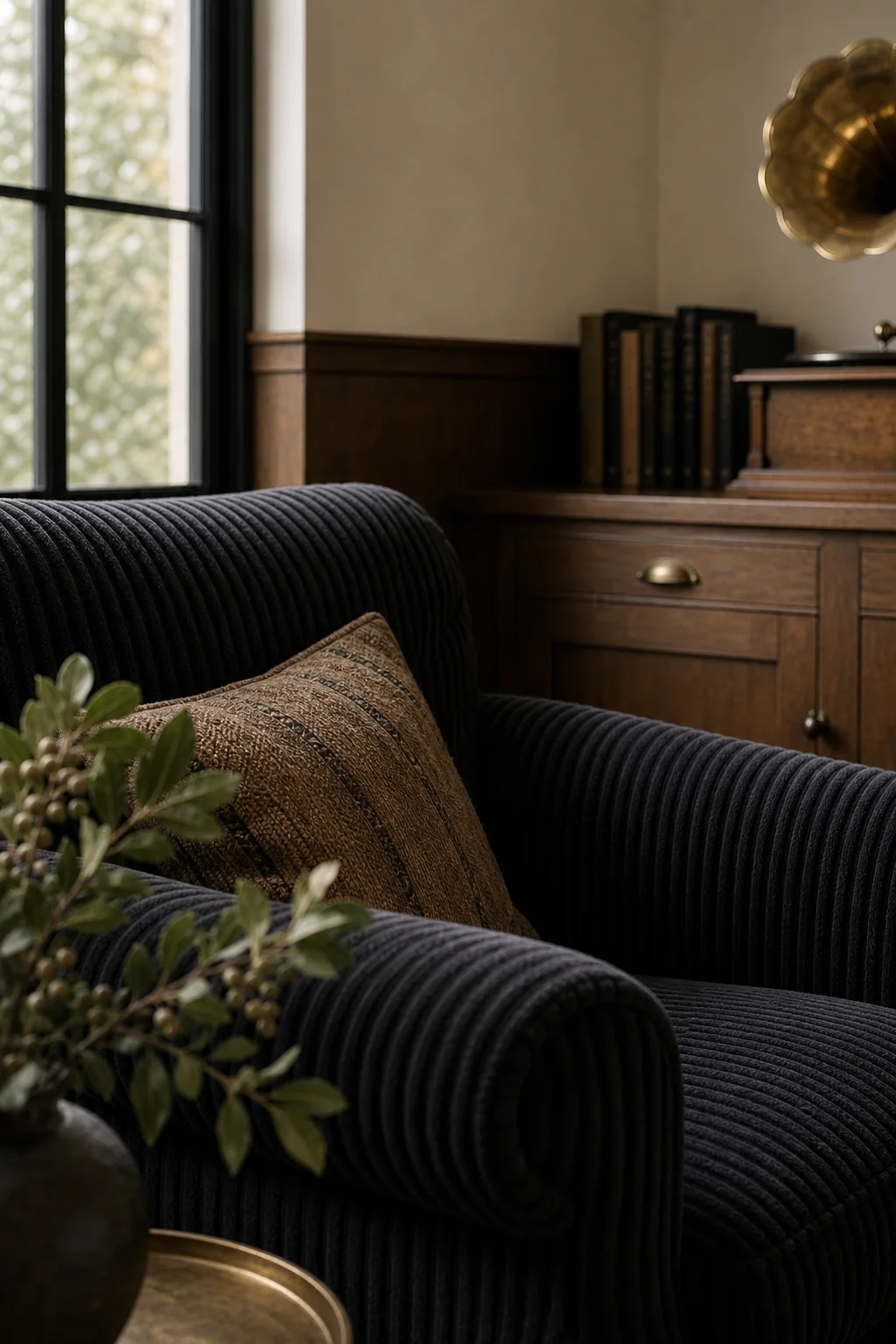
| Concentric Grooves | The fine, tactile micro-grooves etched into the black vintage record. | A reading armchair upholstered in a dense, ribbed black corduroy that invites touch and catches the light. |
| Flared Cantilever | The scalloped brass horn suspended and projecting outward from the articulated tonearm. | An articulated brass wall sconce with a fluted, flared metal shade, extending over the reading nook. |
Quiet plaster walls above the datum
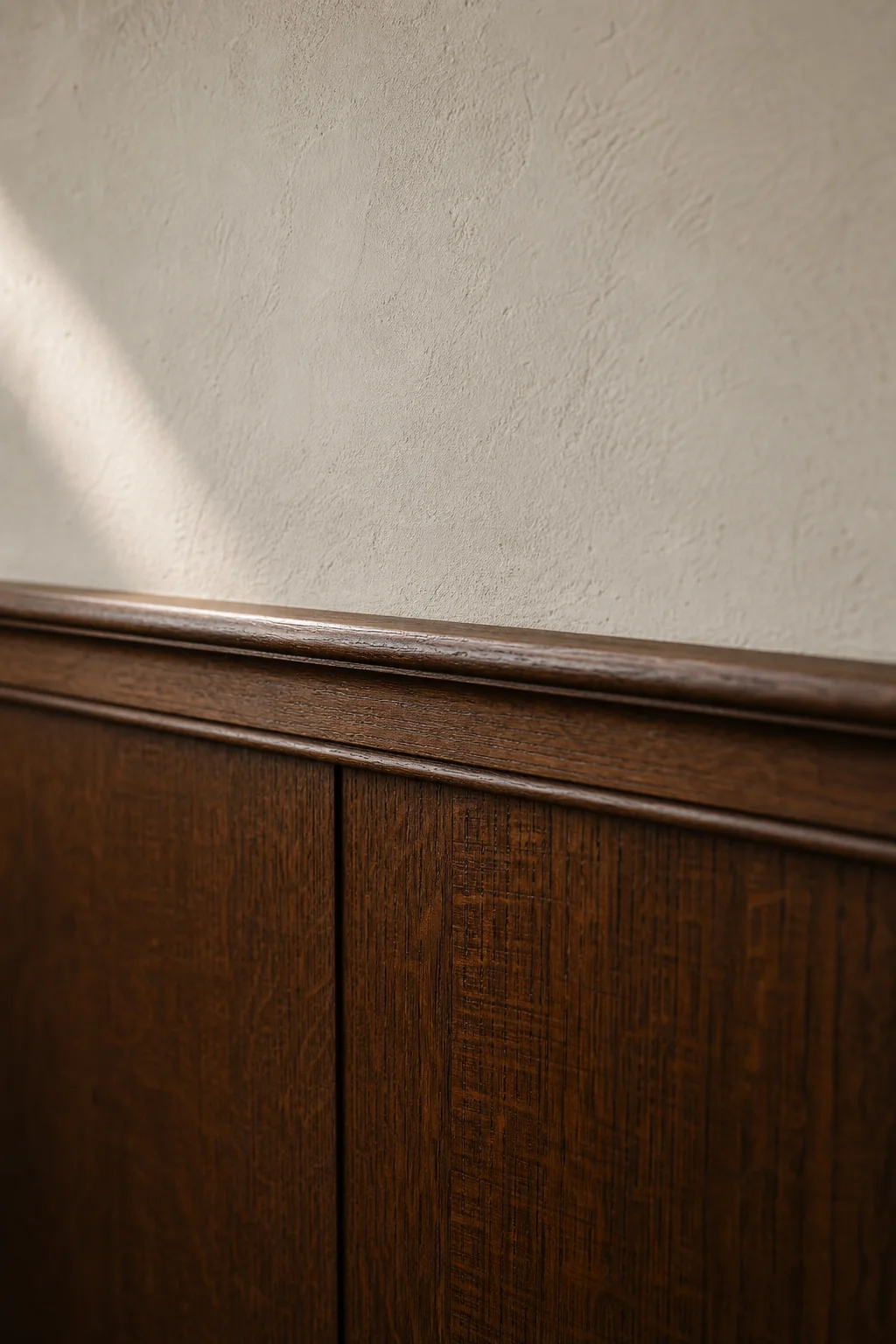
Warm lime plaster provides a neutral backdrop for the brass, allowing the room’s intensity to be easily adjusted based on your comfort level. A subtle approach restricts brass to small cabinet knobs while keeping the oak finish light and understated to maximize brightness. A balanced execution pairs dark oak wainscoting with a prominent brass reading sconce and a black corduroy chair for grounded contrast. For a truly bold statement, you can extend the ribbed black corduroy to a full sofa, darken the walls, and install an oversized, highly polished brass chandelier that dominates the upper sightlines and demands attention.
Translating shellac grooves into tactile textiles
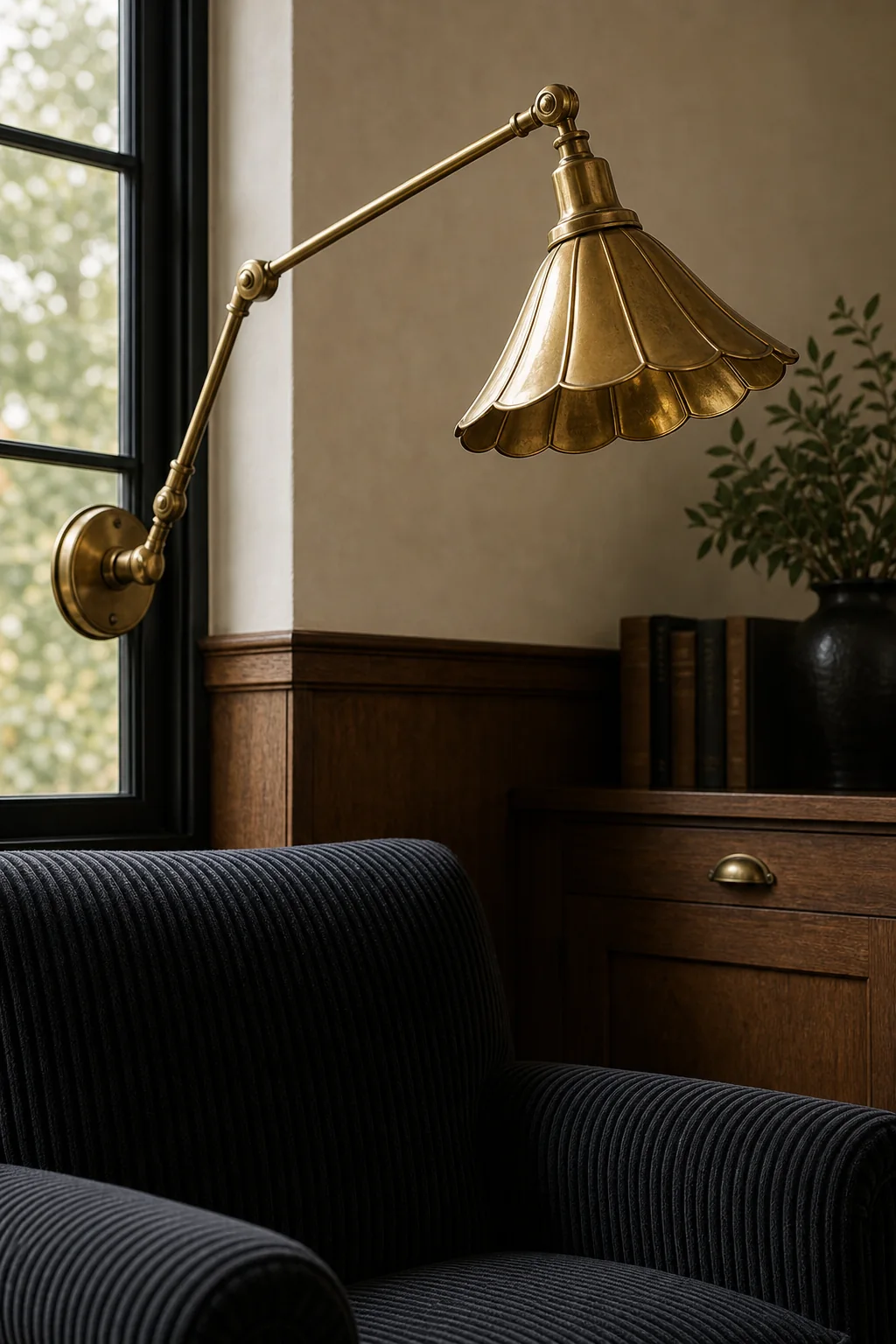
Bringing the concentric grooves of a record into the upholstery adds a necessary layer of softness and tactile interest to the study. Selecting a dense, ribbed corduroy that catches the light invites touch, mimicking the fine micro-grooves etched into a vintage shellac disc without feeling like a novelty. Keeping the surrounding textiles minimal lets the ribbed texture stand out against the smooth plaster, ensuring the chair becomes a subtle focal point. Gather these essential elements using our curated material checklist to finalize the room’s sensory palette and seamlessly blend the antique mechanical inspiration with modern, everyday comfort.
Suspending flared brass above the reading nook
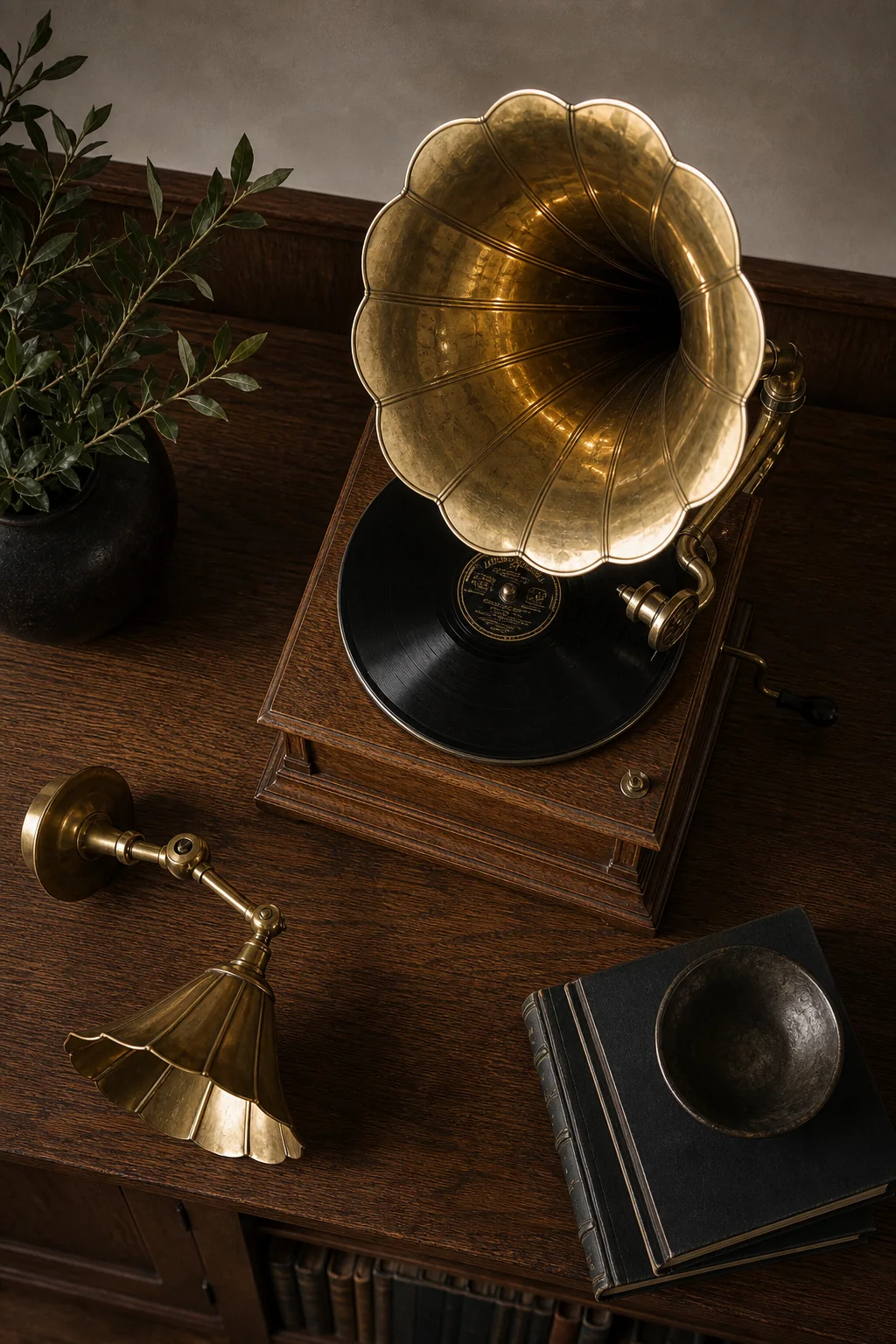
A sweeping, cantilevered light fixture breaks the static wooden foundation with dynamic, radiating curves that mimic the mechanical movement of a tonearm. Opting for fluted or scalloped shades directly references the acoustic horn’s geometry, transforming a simple reading corner into a sophisticated focal point. This articulated brass sconce must be placed with precision to ensure it serves both a functional and sculptural purpose, drawing the eye upward and illuminating the dark textiles below. Proper placement ensures the metallic elements feel intentionally suspended rather than haphazardly attached to the wall, completing the room’s careful balance of weight and lightness.
Position the articulated brass sconce so it sweeps directly over the reading chair, providing focused task lighting while serving as the room’s primary sculptural element.