
This Ammonite Fossil Became a Study Nook
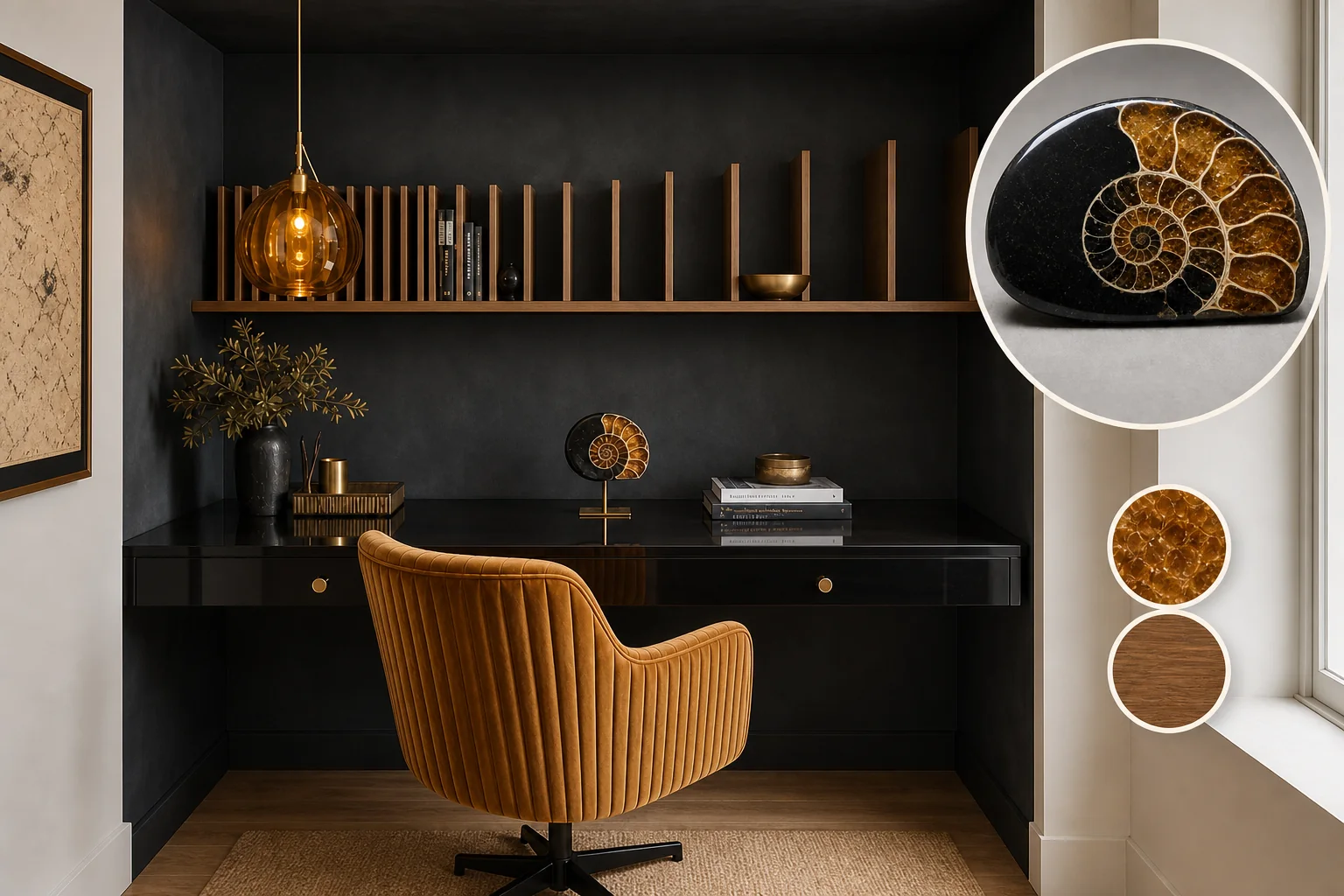
Transforming a compact alcove into a focused workspace requires a delicate balance of light and shadow, inspired here by the striking cross-section of an ammonite fossil. A dark, matte architectural shell frames warm, rhythmic inner details, creating a moody study nook that feels enclosed, quiet, and intimately lit.
Carving out the dark matrix
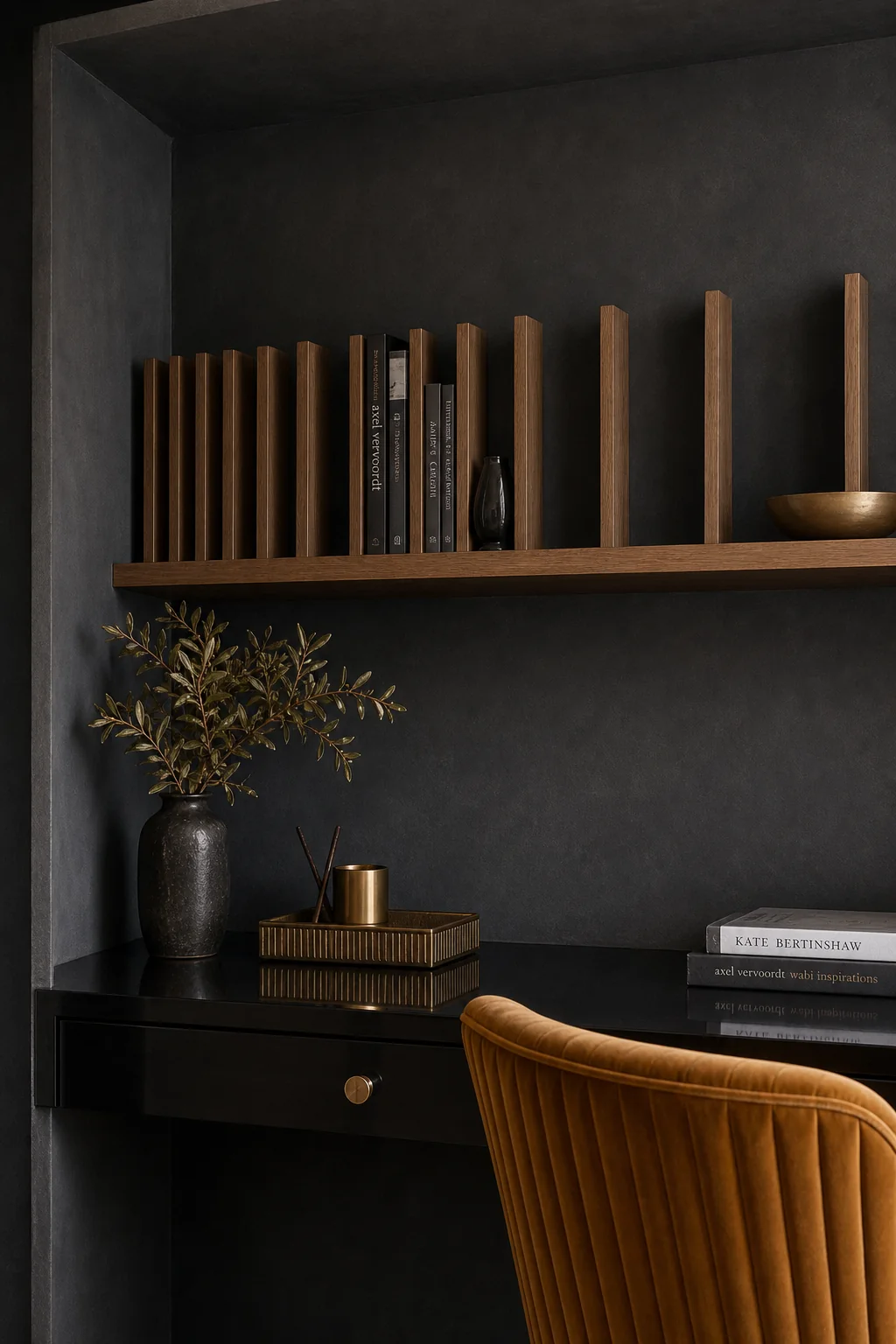
By washing the alcove walls and ceiling in a deep charcoal, the space mimics the opaque, protective stone matrix of the fossil, establishing a quiet, distraction-free void. This foundational move requires a dead-flat finish to absorb light and visually recede, allowing the built-in elements to anchor the room. To successfully execute this enveloping foundation, follow these precise implementation steps to prep and transform the recessed architectural alcove into a seamless, unified workspace.
- Prep the alcove walls and ceiling for a textured finish, ensuring all surfaces are clean, smooth, and primed for limewash application.
- Apply the deep charcoal limewash in a cross-hatch pattern so the walls and ceiling feature a matte, cloudy texture resembling ancient stone.
- Install the high-gloss ebonized wood desk surface, guaranteeing a durable, reflective writing plane spans the entire width of the alcove.
- Mount the floating warm oak shelf above the desk, checking that the shelf is securely anchored and perfectly level against the dark limewash.
- Attach the vertical wooden dividers with expanding spacing, ensuring the dividers are tightly spaced on the left and widen toward the right.
- Hang the amber blown-glass pendant light asymmetrically so the light casts a warm, focused glow directly over the primary workspace.
Capturing the crystalline glow
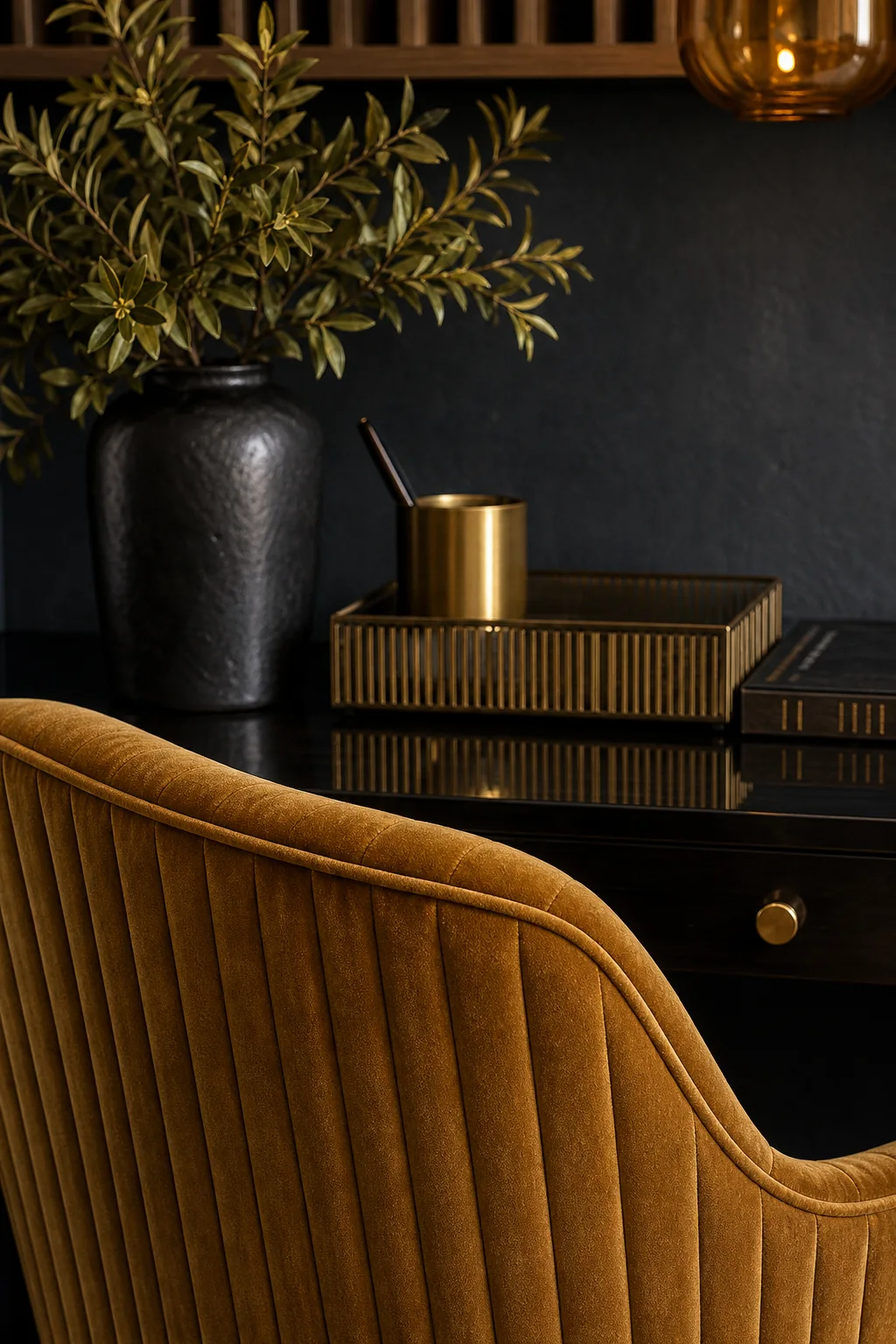
Against the dark foundation, honey-gold and warm brass accents introduce the glowing warmth of the fossil’s translucent calcite chambers. The deep charcoal enclosure must remain entirely matte to allow these amber glass and high-gloss wood elements to catch the light without overwhelming the small space. By carefully mapping the source traits of the ancient shell to specific room moves, the design translates millions of years of geological pressure into a highly functional, visually striking environment.
| Source trait | Visible evidence | Room move |
|---|---|---|
| Enclosing matrix | The opaque, dark charcoal stone that surrounds and protects the fossilized shell | Deep charcoal limewash applied to the three walls and ceiling of the alcove, creating a solid, quiet void that anchors the space |
| Crystalline glow | The translucent, honey-gold calcite crystals filling the ancient chambers | An asymmetrical amber blown-glass pendant light and warm brass cabinet hardware that catch the light against the dark walls |
| Polished vs. segmented | The smooth, high-gloss exterior polish contrasting with the distinct, ribbed chamber walls | A high-gloss ebonized wood desk surface paired with a matte, honey-toned ribbed velvet armchair |
| Expanding chambers | The logarithmic spiral where chambers start tiny at the center and grow progressively larger | A floating oak wall shelf featuring vertical wooden dividers that gradually increase their spacing from left to right |
Casting a golden glow
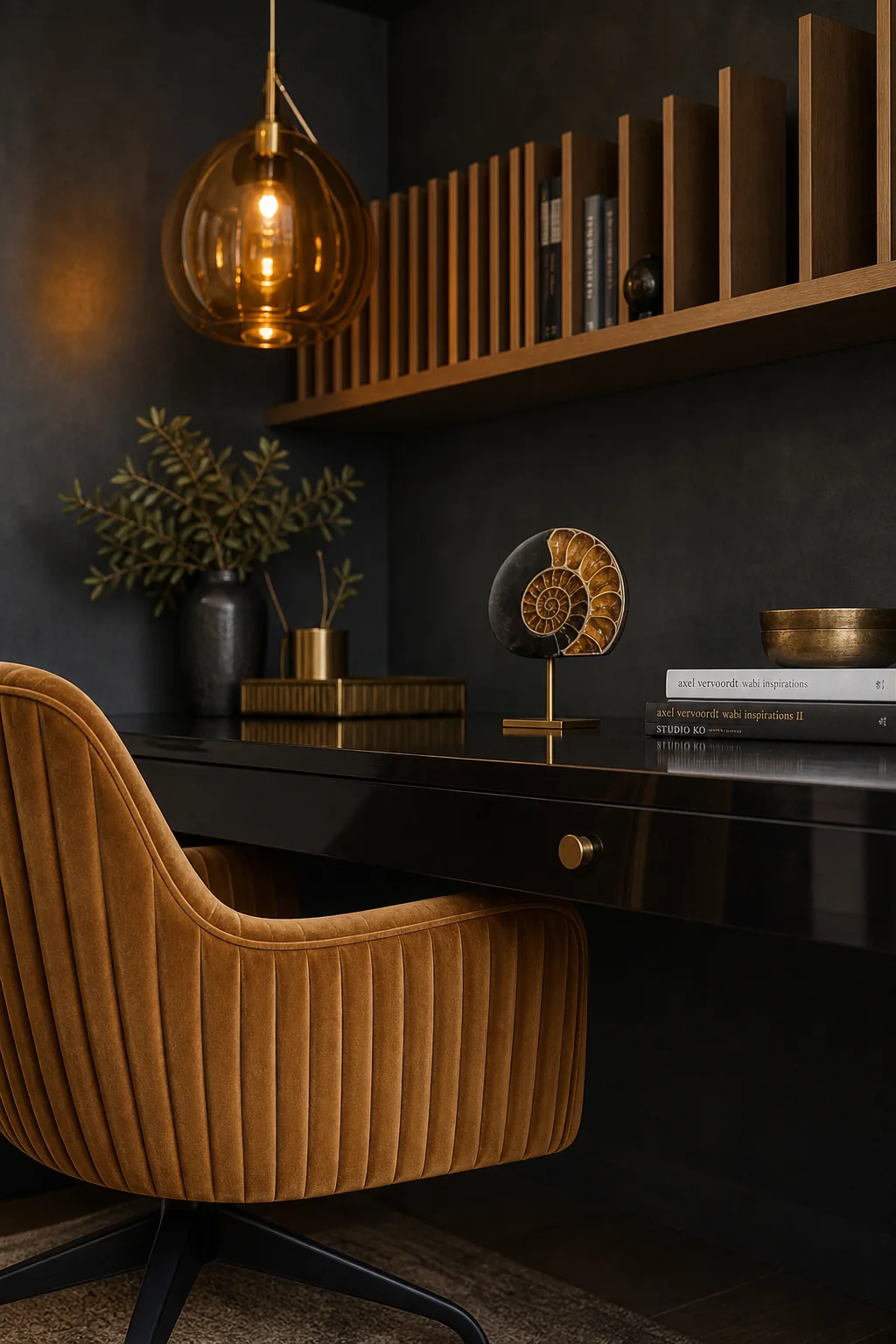
An asymmetrical amber pendant light echoes the glowing calcite chambers, casting a warm, localized pool of illumination over the work surface. By utilizing translucent amber blown glass, the fixture mimics the honey-gold crystals that fill the ancient fossil, providing essential task lighting while enhancing the moody atmosphere. Selecting unlacquered brass hardware for the desk drawers and cable grommets further amplifies this effect, catching ambient reflections against the dark cabinetry and adding subtle, warm metallic highlights that will beautifully patina over time.
Contrasting polished and ribbed surfaces
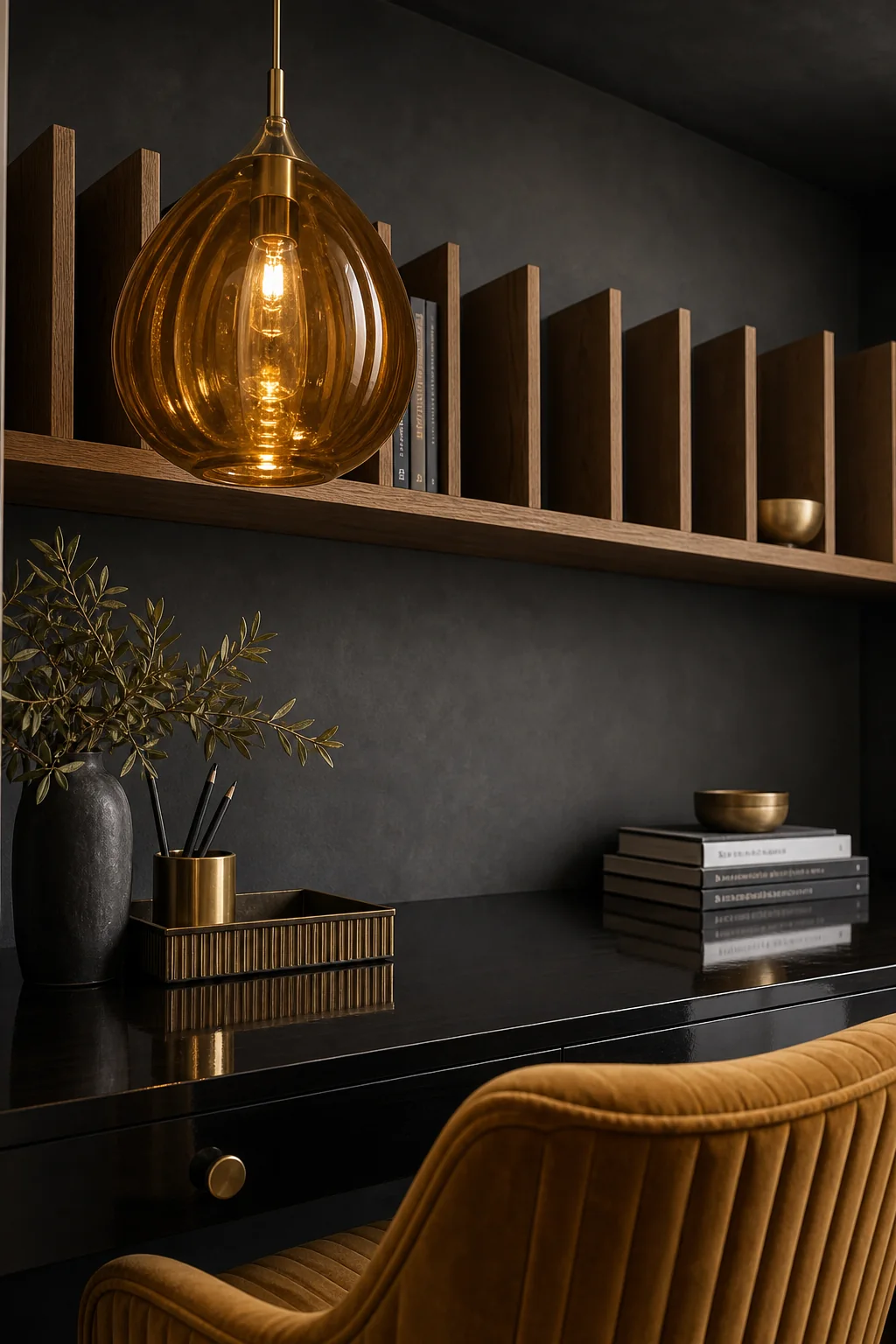
The tactile contrast of the fossil translates directly into the workspace through a mix of slick, reflective planes and soft, segmented upholstery. A high-gloss ebonized wood desk provides a hard, durable writing surface that mirrors the smooth exterior polish of the shell, while a matte, honey-toned chair softens the acoustics of the rigid alcove. To achieve this precise balance of light-absorbing and light-reflecting finishes, source the following key elements for your room-ready material palette.
Softening the rigid matrix
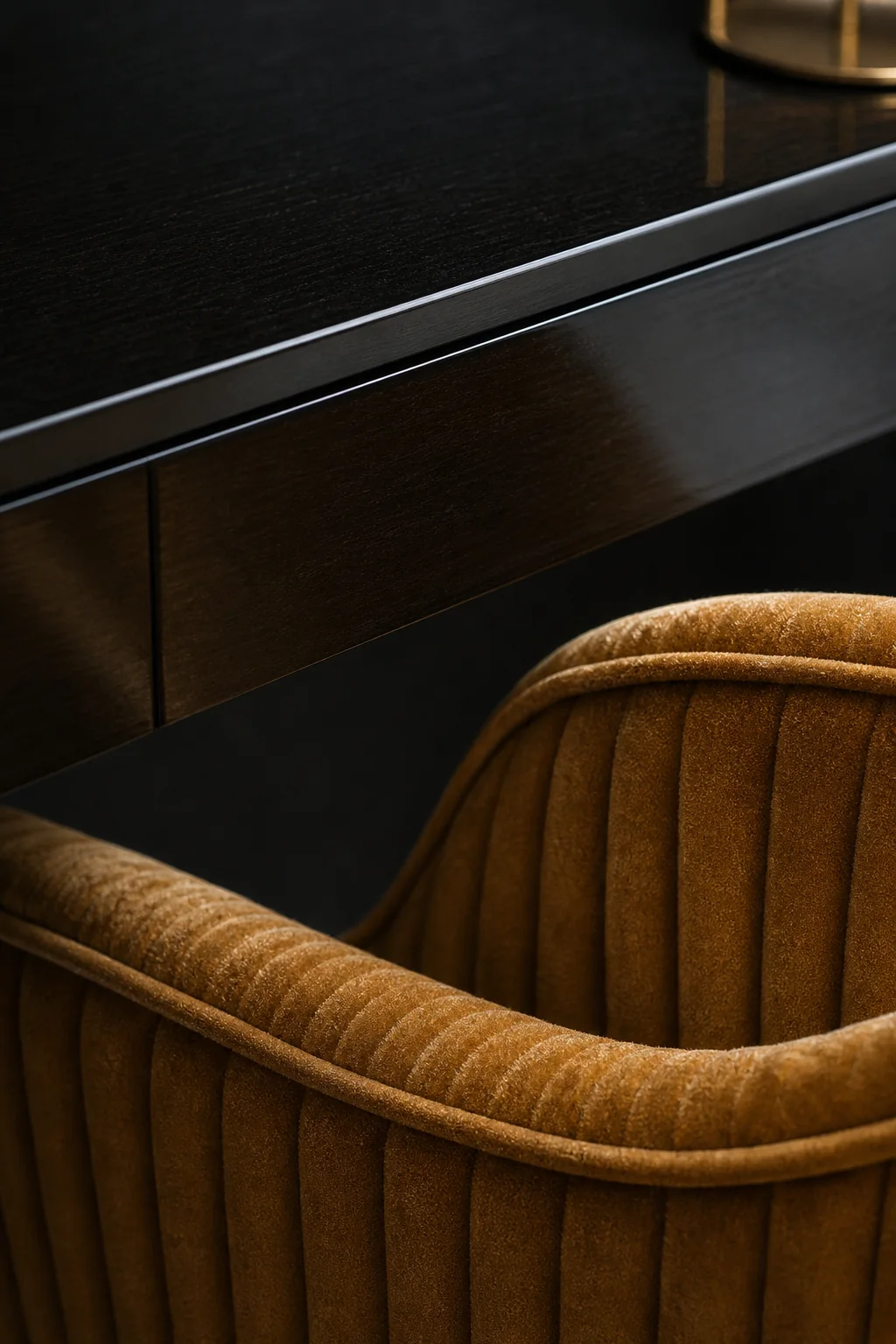
Ribbed velvet upholstery mimics the segmented fossil chamber walls, introducing a necessary layer of physical comfort and acoustic dampening to the rigid architectural alcove. Tucked neatly under the high-gloss desk, the honey-gold armchair serves as a vibrant focal point that breaks up the expansive charcoal void. This deliberate juxtaposition of a hard, reflective work plane against a plush, matte seating surface ensures the nook remains highly functional for long reading sessions while staying true to the contrasting textures of the original mineral inspiration.
Echoing the expanding chambers
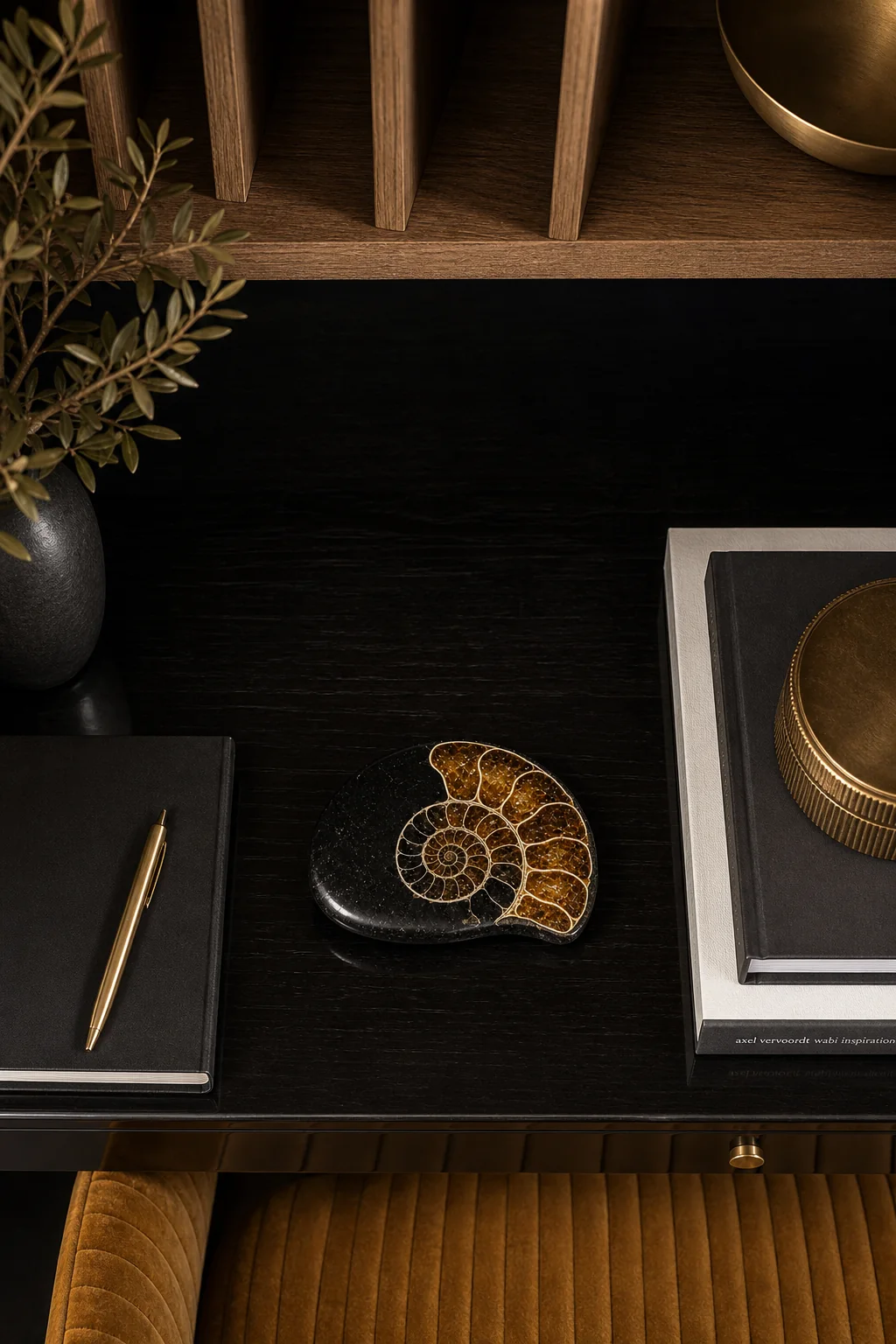
The ancient logarithmic expansion of the shell inspires the shelving design, introducing a subtle, organic rhythm to the rigid alcove. You can scale this concept’s intensity: a subtle approach limits the dark wash to the back wall with standard oak desks, a balanced execution wraps the entire alcove in charcoal alongside high-gloss ebonized wood and rhythmic shelving, while a bold translation extends the limewash onto the adjacent ceiling and clusters multiple amber pendants. Regardless of intensity, spacing the vertical wooden dividers tightly on one end and gradually widening the gaps toward the other captures the fossil’s sweeping curves.
Calculate your divider spacing before installation. A gradual increase of just one inch per section creates a natural rhythm without looking uneven.