
This Red Binocular Became a Treehouse Deck
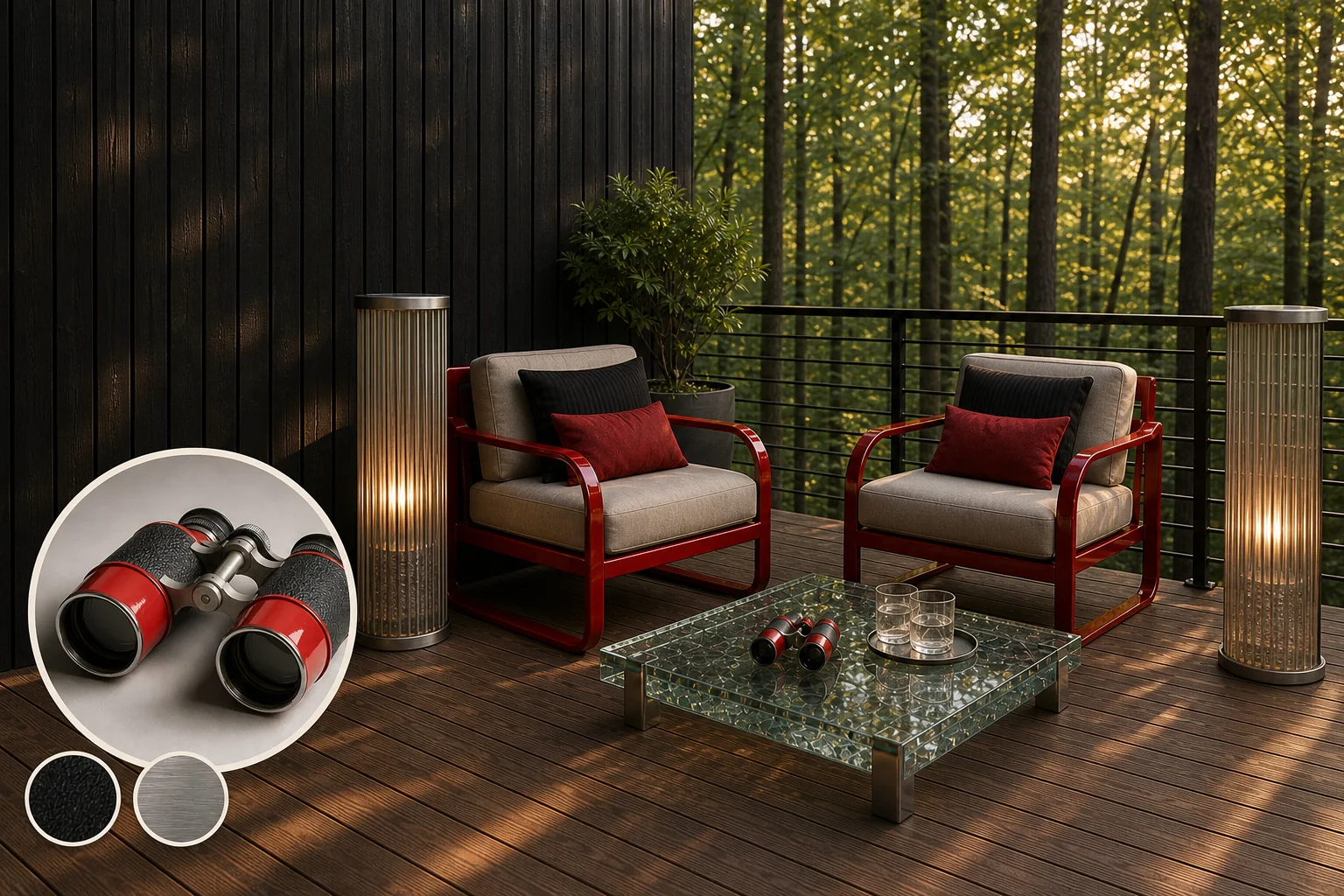
Translating a vintage optical instrument into an outdoor living space requires balancing industrial precision with organic surroundings. The interplay of light-absorbing matte textures against high-gloss, engineered focal points allows the forest canopy to soften rigid geometry, ensuring the industrial elements feel deliberately anchored rather than starkly out of place.
Anchoring with matte textures
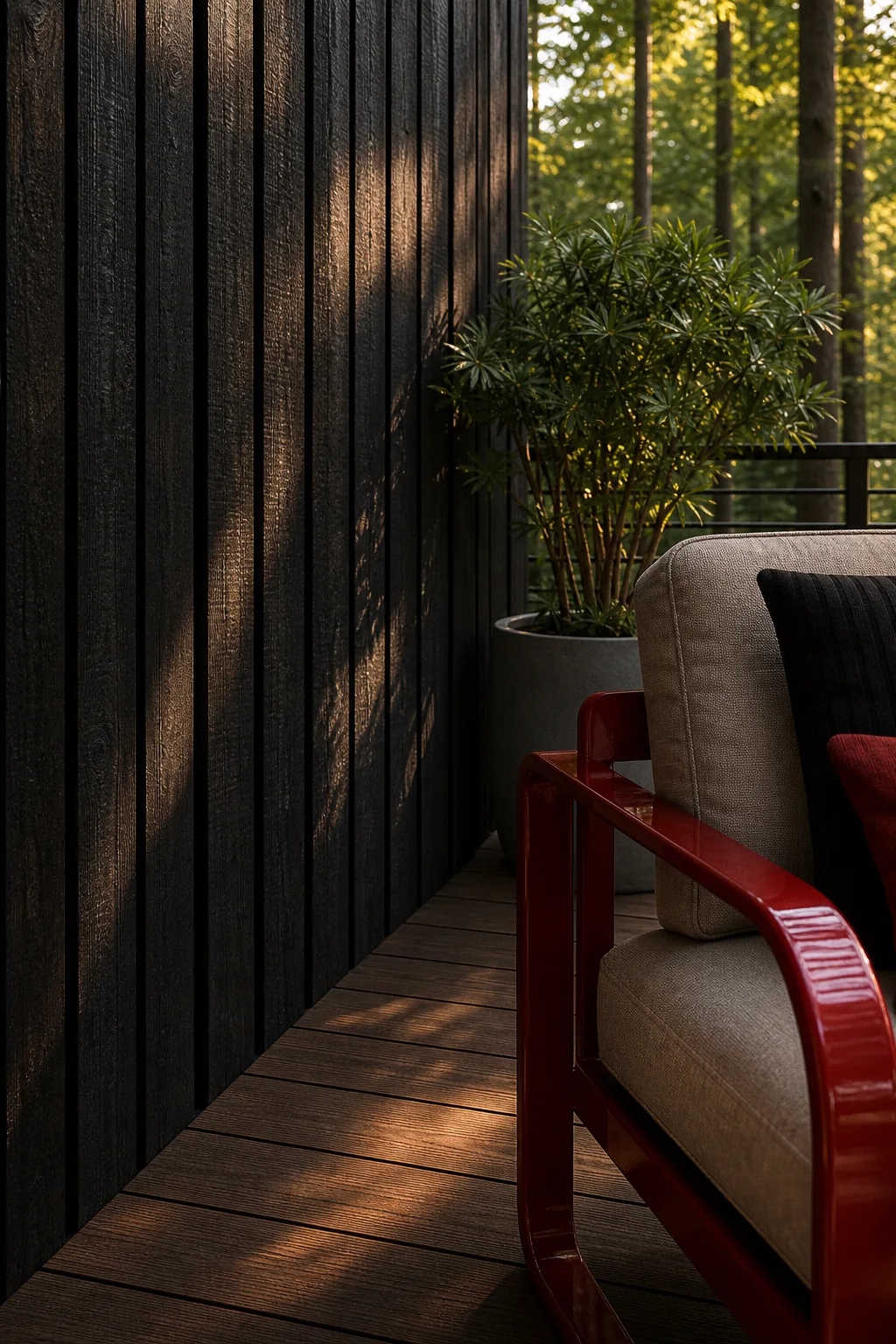
Establishing a dark, textured backdrop grounds the space and allows brighter accents to step forward without overwhelming the natural setting. A charred cedar wall mimics the matte black leatherette grip of the original instrument, running slats vertically to echo the elongated barrel while providing essential privacy for the elevated deck. This foundational layer absorbs harsh sunlight and creates a moody, sophisticated envelope that contrasts beautifully with the lush green forest canopy. Using Shou Sugi Ban or heavily stained cedar ensures deep matte absorption, transforming a simple architectural boundary into a highly tactile, defining feature of the outdoor lounge.
Choose charred wood instead of flat black paint. The natural grain provides the same tactile depth as vintage vulcanite leatherette, preventing the wall from feeling flat.
Tactile privacy walls
Deep wood grain echoes the binocular’s textured vulcanite wrap, providing a tactile boundary that absorbs harsh sunlight while defining the perimeter of the elevated platform. This dark vertical plane anchors the deck’s architecture, seamlessly blending the structured outdoor lounge with the surrounding mature trees while setting the stage for vibrant pops of color. By prioritizing heavy texture over smooth finishes, the privacy wall feels organic yet highly intentional, bridging the gap between the untamed forest background and the highly engineered furniture pieces that will eventually populate the center of the wooden deck.
Injecting high-gloss enamel
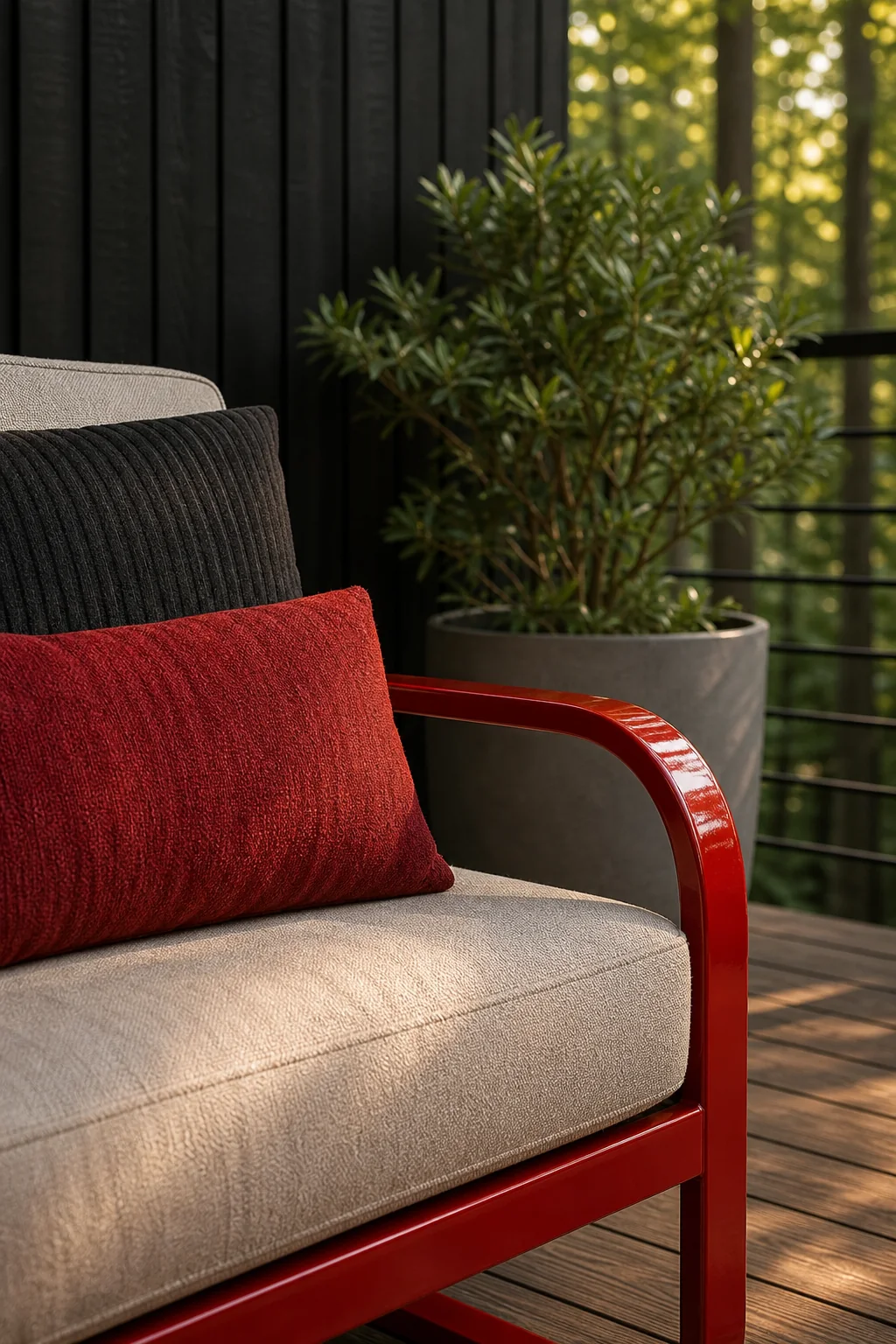
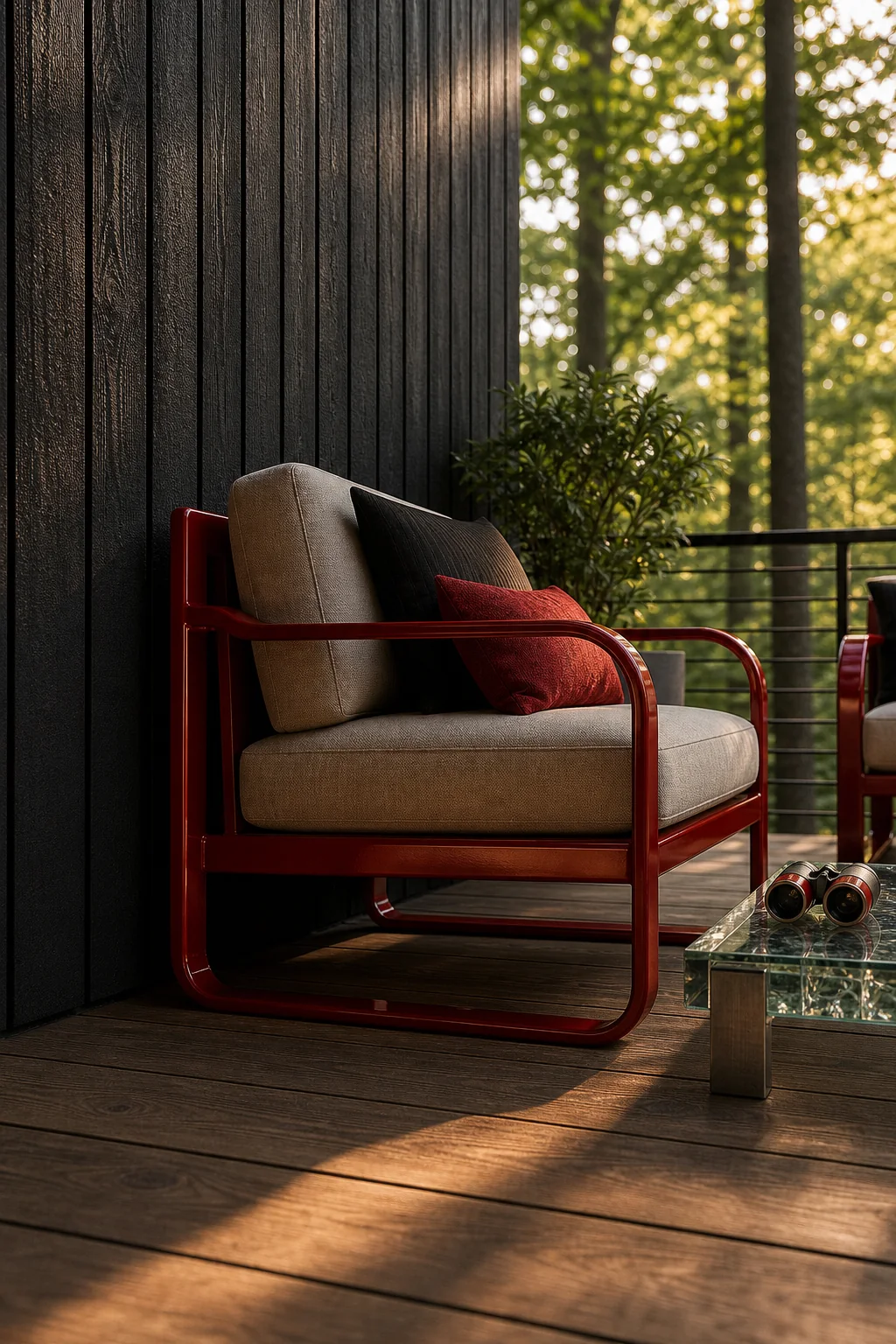
Concentrating the boldest color on sleek, engineered frames creates a striking focal point against the dark, organic backdrop. Glossy red steel chairs reflect the bright enamel barrel paint of the vintage optical instrument, introducing a deliberate, manufactured contrast that energizes the serene environment. Specifying powder-coated steel guarantees long-lasting durability and a mirror-like gloss that catches the dappled late afternoon sunlight, while keeping the seating cushions neutral allows the vibrant cherry-red frames to truly stand out. This precise application of intense color prevents the space from feeling rustic, as detailed in this visual-DNA mapping table.
| Source trait | Visible evidence | Room move |
|---|---|---|
| Textured Grip | matte black vulcanite leatherette wrapping the optical barrels | A charred cedar wall mimics the matte black leatherette grip. |
| Glossy Enamel | cherry-red high-gloss painted metal on the binocular body | Glossy red steel chairs reflect the bright enamel barrel paint. |
| Precision Optics | clear glass lenses and brushed steel focus dials | A cast glass table translates the clear optical lens elements. |
| Twin Cylinders | the parallel dual-barrel geometry of the binoculars | Twin ribbed-glass lanterns reproduce the parallel dual-barrel geometry. |
Translating precision optics
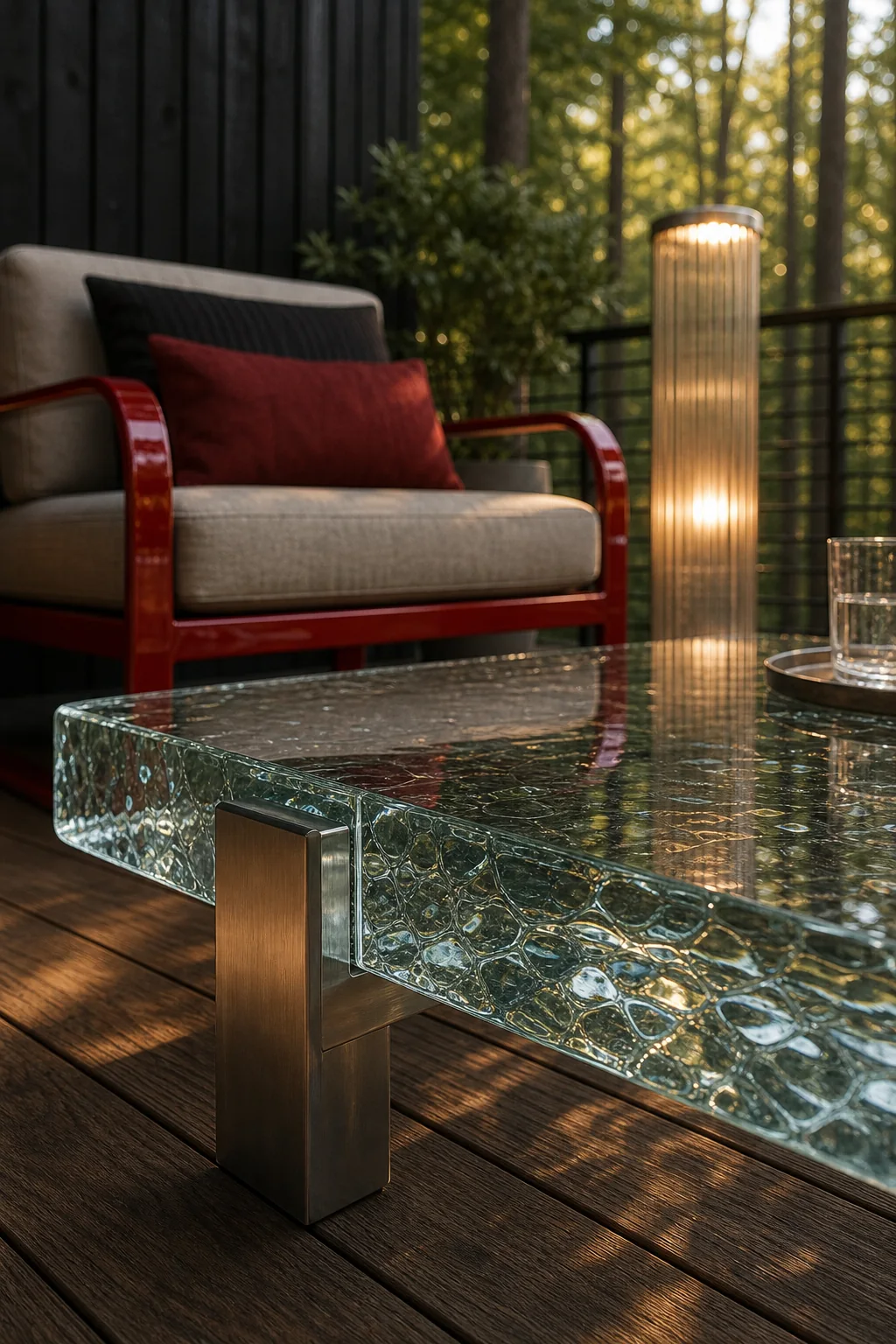
Introducing thick, transparent surfaces and brushed metals brings the refined, engineered quality of optical lenses into the outdoor lounge. A cast glass table translates the clear optical lens elements, providing a low surface for drinks that feels substantial yet visually weightless. Selecting thick cast glass ensures safety and adds significant tactile weight, while utilizing brushed steel hardware to connect the glass elements perfectly echoes the machined focus dials of the vintage instrument. The following material edit ensures the space remains weather-resistant, visually cohesive, and securely fastened, avoiding polished chrome to maintain the intended matte-and-gloss contrast.
Symmetrical cylindrical forms
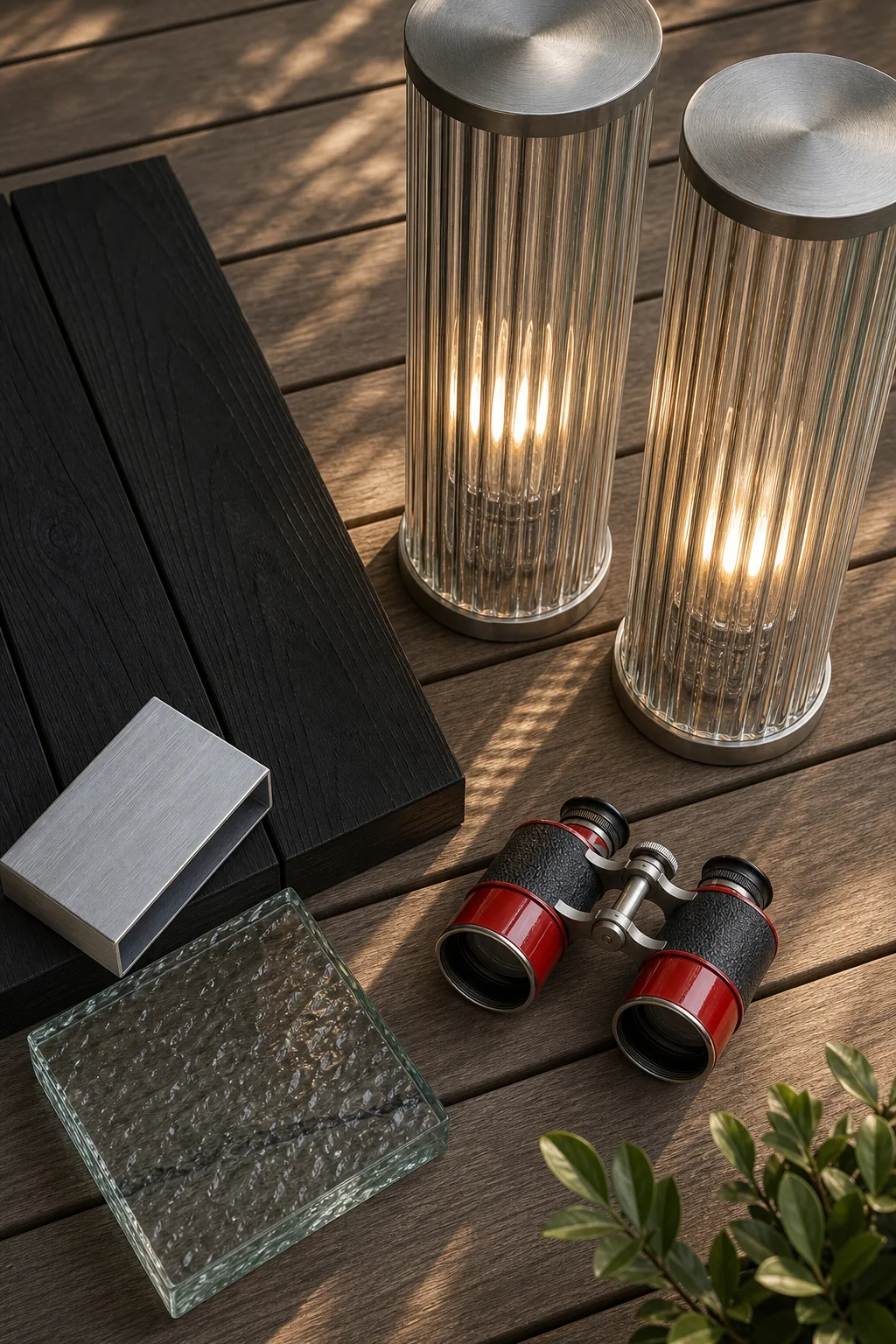
Deploying identical cylindrical shapes in pairs introduces a subtle, rhythmic symmetry that organizes the casual outdoor setting. Twin ribbed-glass lanterns reproduce the parallel dual-barrel geometry, framing the central seating area to establish a clear, balanced layout. Placing these lanterns symmetrically on either side of the glossy red chairs provides vertical texture and diffuses ambient evening lighting across the deck. This deliberate pairing mimics the hinged central pivot points and twin parallel cylinders of the original optical tool, organizing the entire space as outlined in this implementation sequence to ensure a structured, serene environment.
- Install the charred cedar vertical slat wall so the deck has a dark, textured backdrop that absorbs light.
- Position the glossy red steel lounge chairs centrally to create a bold, symmetrical focal point against the wood.
- Place the cast glass coffee table between the chairs so a transparent, engineered surface bridges the seating area.
- Set identical cylindrical lanterns on both sides of the chairs to establish a clear, balanced twin-barrel symmetry.
Balanced evening illumination
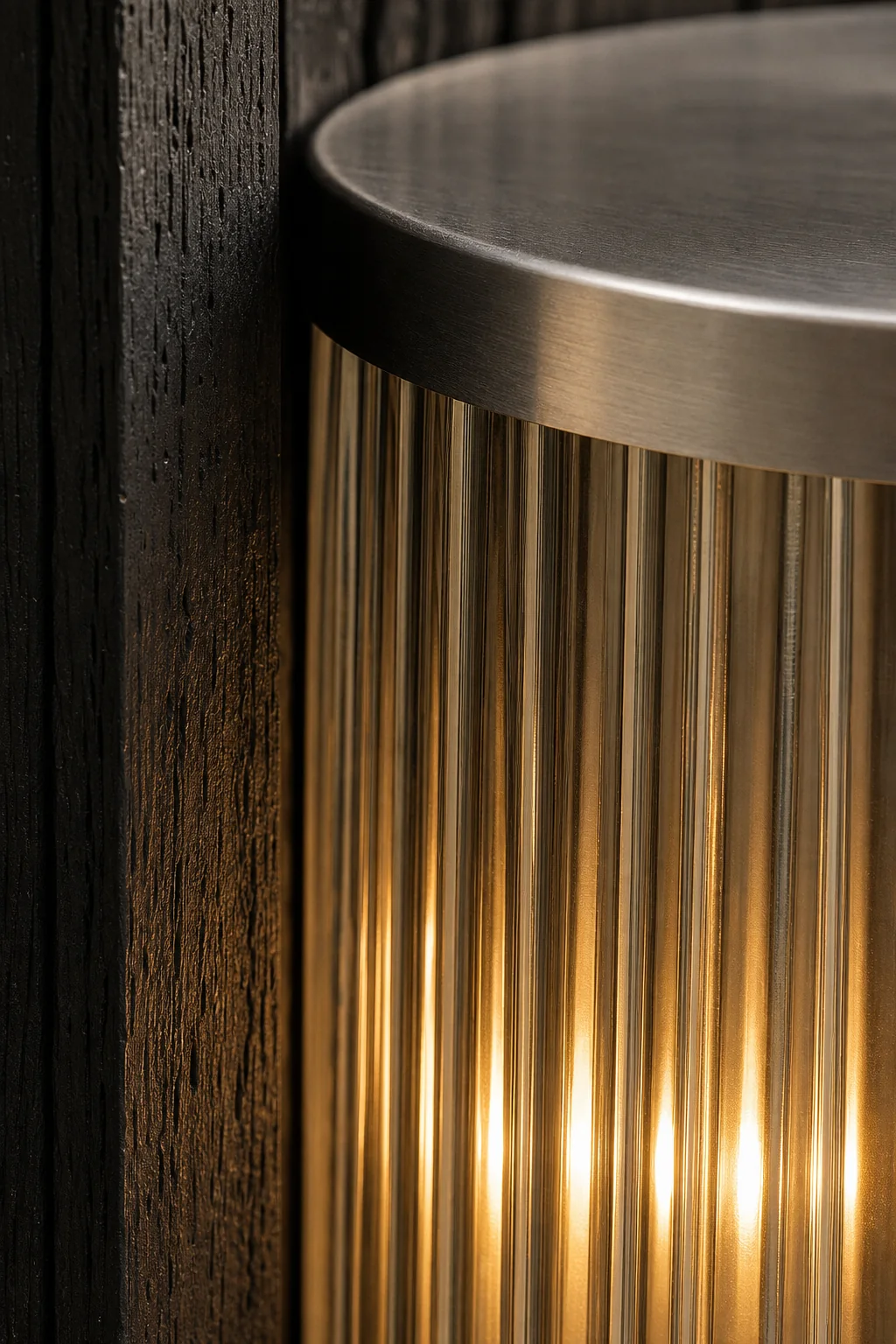
Symmetrical floor lanterns mimic the instrument’s balanced twin optical barrels, casting a warm glow that defines the lounge boundary at dusk. To adjust the style intensity, a balanced approach pairs bold red lounge chairs with a dark charred wood backdrop and transparent glass accents. A subtle execution might limit the red enamel to small brushed steel side tables, keeping the seating entirely neutral to blend further into the forest canopy. Conversely, a bold iteration could paint the entire deck flooring in high-gloss cherry red, contrasting heavily with the matte black walls for maximum visual impact.