
This Hotel Key Became a Home Bar Nook
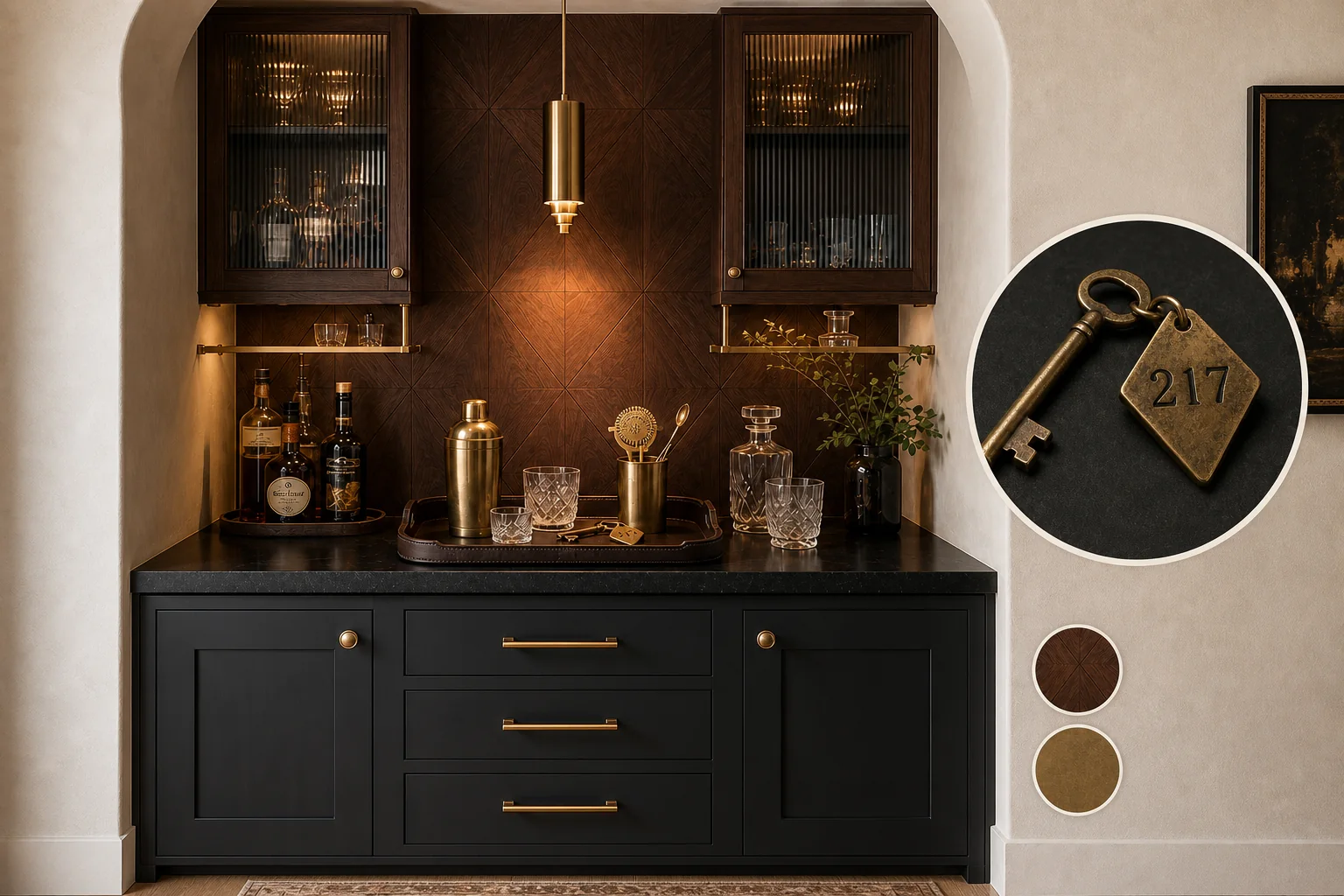
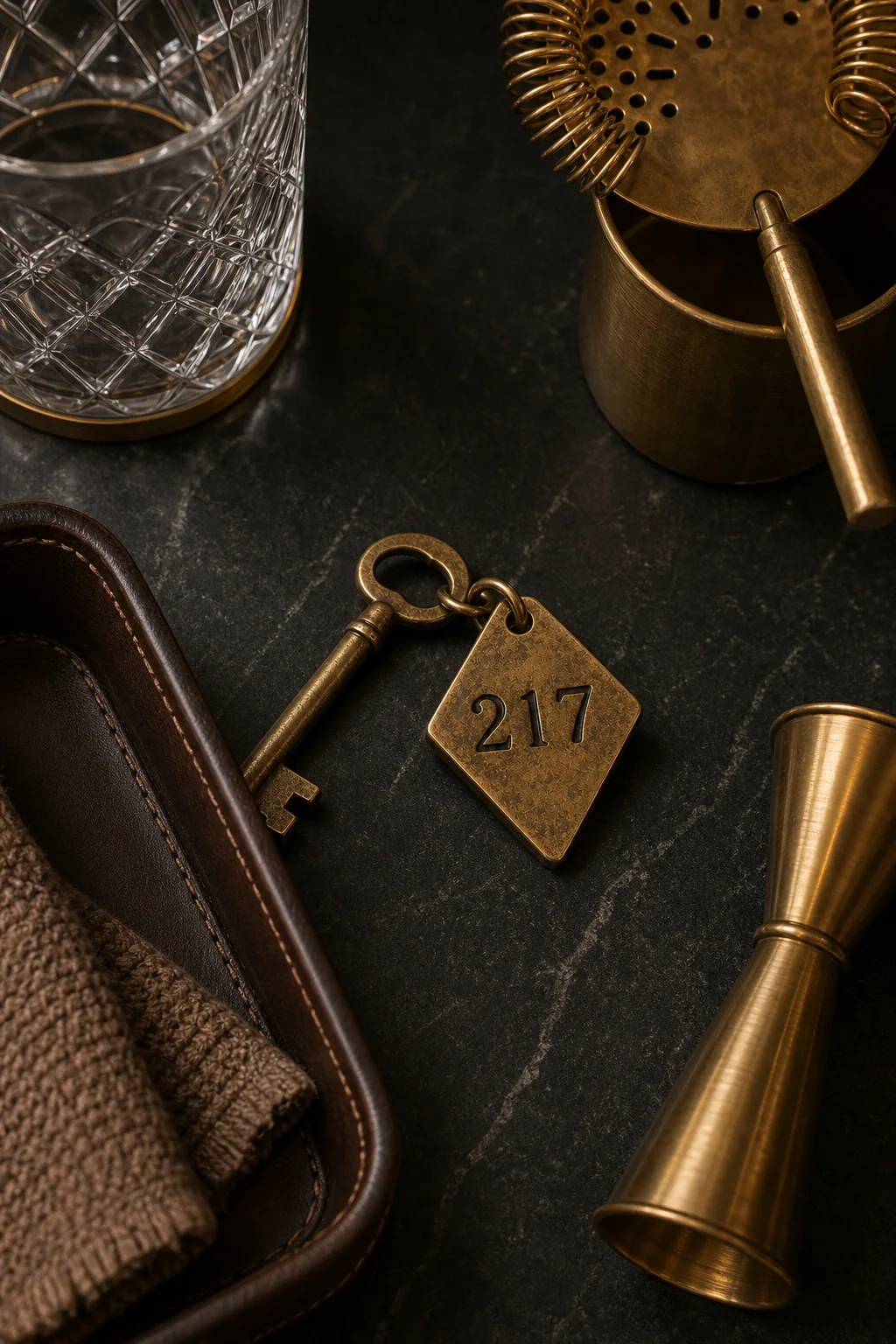
Translating a vintage brass hotel key with a heavy diamond fob into a home bar nook requires looking beyond its literal purpose. By focusing on the interplay of heavy, dark solids with warm, gleaming metallic accents, we can craft an intimate, moody entertaining zone grounded by quiet warm plaster.
Setting the geometric stage
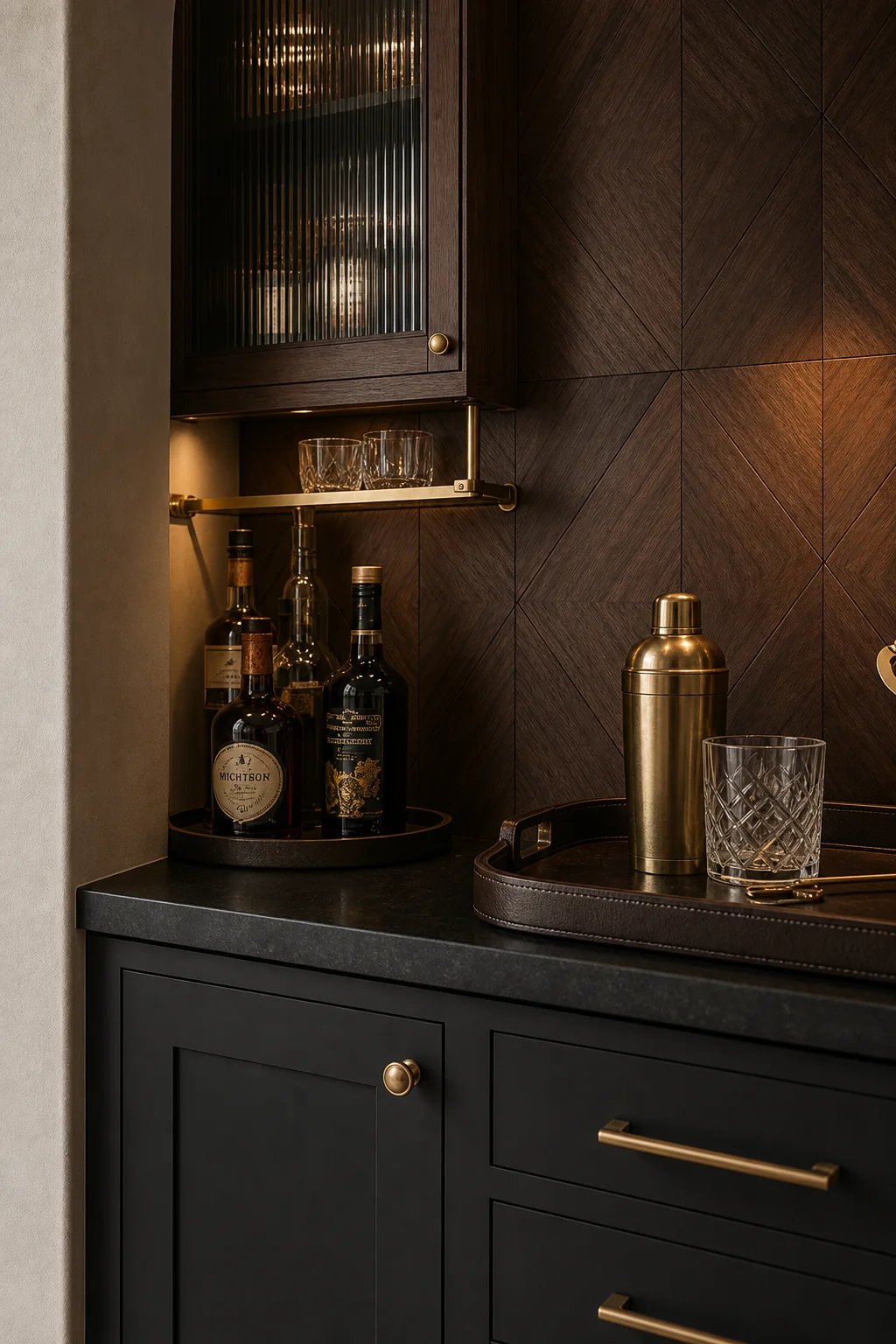
The distinct diamond profile of the key fob establishes a strong, heavy anchor for the entire space, inspiring the use of diamond-matched dark walnut veneer along the back wall. This rich, dark wood mimics the substantial weight of the brass object, providing a moody backdrop for mixing drinks and displaying glassware. To ensure the architectural shell remains quiet and allows these heavy materials to breathe without overwhelming the small footprint, follow these foundational construction steps to properly frame out the entertaining alcove.
- Frame the shallow recessed alcove to ensure the depth accommodates standard bar counters and upper shelving.
- Install the diamond-matched walnut veneer so the wood grain aligns perfectly to form the central rhombus pattern.
- Apply warm plaster to the surrounding walls, ensuring the plaster texture provides a quiet matte border around the wood.
- Build in the lower cabinet boxes so the base cabinets sit completely flush within the recessed architectural nook.
Translating patina and ink
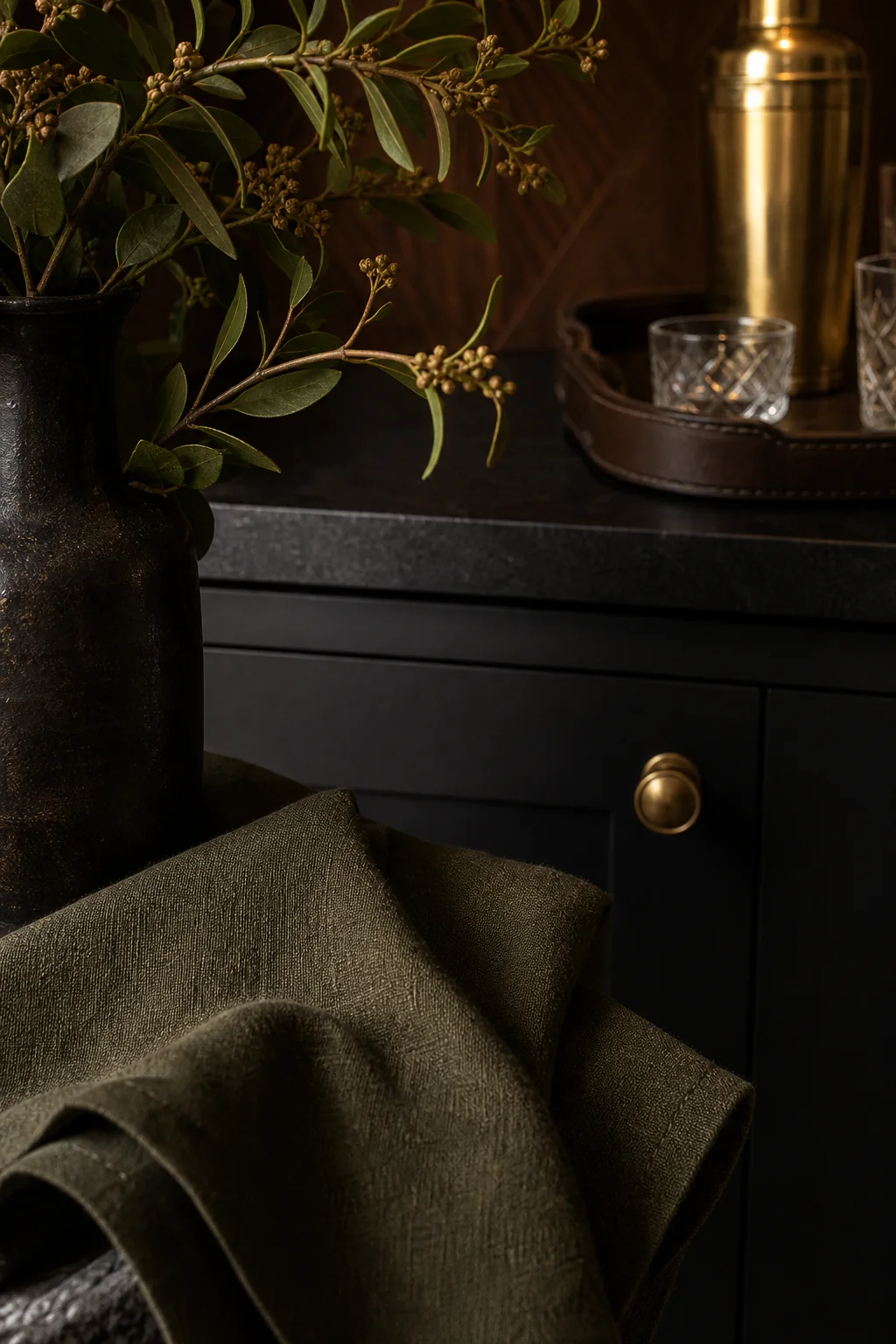
High-contrast tones bring the aged character of the object into the room’s permanent fixtures, mapping the blackened ink of the engraved numbers directly to matte charcoal lower cabinetry. By pairing these dark, light-absorbing surfaces with warm metallic accents, the space captures the exact tarnished golden hue of the original key. This visual-DNA mapping table details exactly how the key’s defining geometric characteristics and rich patinas inform the broader material palette and layout of the sophisticated bar nook.
| Source trait | Visible evidence | Room move |
|---|---|---|
| Diamond Geometry | The heavy, solid rhombus shape of the brass fob. | A subtle diamond-matched dark walnut veneer paneling lining the back wall of the bar alcove. |
| Patina & Ink | The tarnished golden brass and the blackened, ink-filled engraved numbers. | Aged unlacquered brass hardware and shelving brackets set against matte charcoal-painted lower cabinetry. |
| Incised Grooves | The deep, tactile engravings of the room number and the cut teeth of the key. | Heavy fluted glass doors on the upper cabinet, offering a ribbed, tactile surface that elegantly obscures the glassware inside. |
| Notched Cylinder | The long cylindrical shaft of the key ending in stepped, asymmetrical teeth. | A slender, cylindrical brass pendant light with a stepped, asymmetrical shade hanging directly above the mixing counter. |
Aged brass against dark matte surfaces
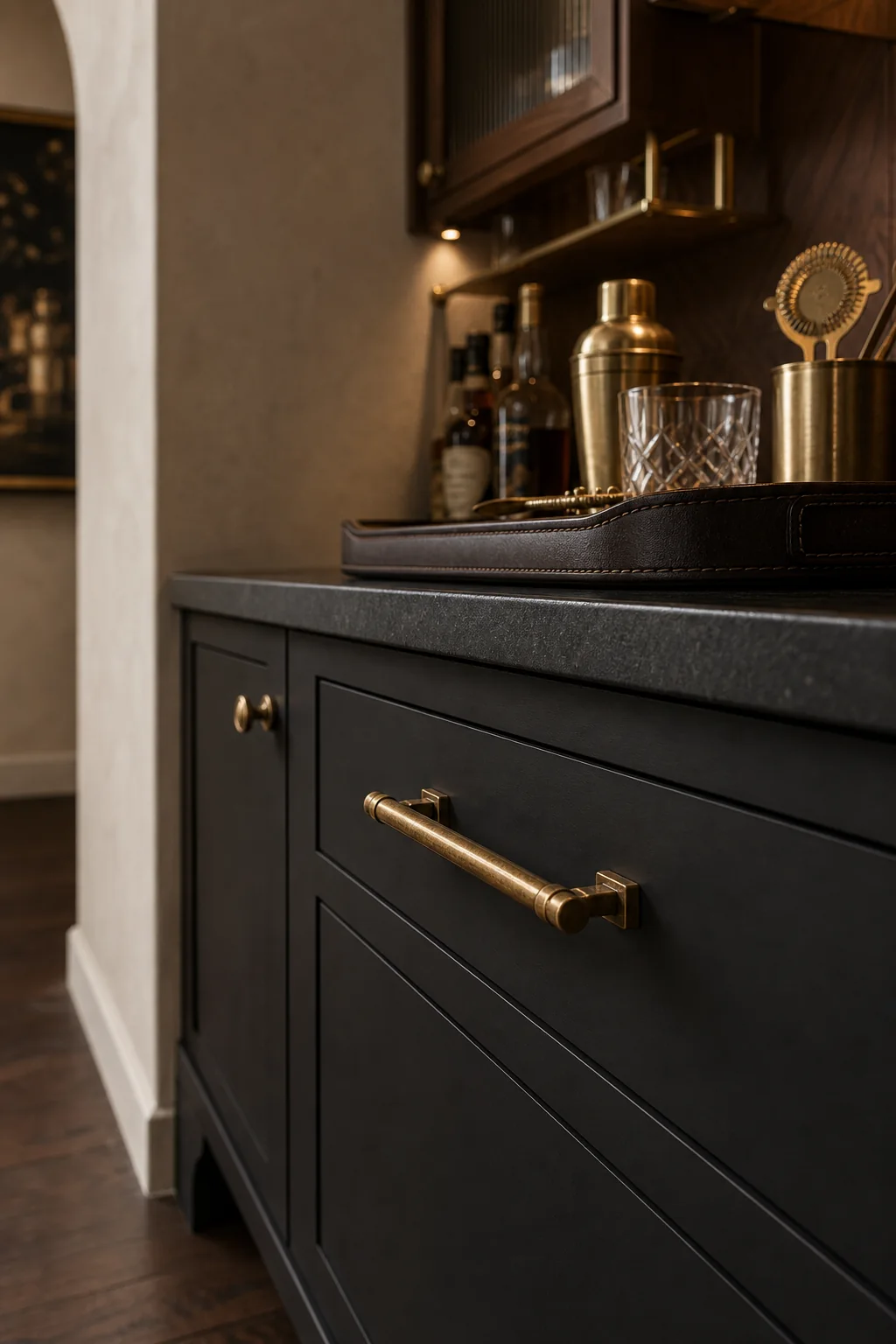
Allowing unlacquered brass hardware to age naturally against the dark charcoal paint captures the authentic, uneven aging of a frequently handled object. This deliberate pairing of a living metal finish with a light-absorbing matte surface ensures the hardware stands out beautifully without feeling overly polished, sterile, or new. By avoiding clear protective coats on the metal, the hardware will continue to develop a unique character that perfectly bridges the gap between the vintage inspiration and the modern cabinetry.
Choose unlacquered brass for your hardware. It naturally oxidizes over time, developing the same authentic, uneven patina found on vintage hotel keys.
Channeling incised grooves
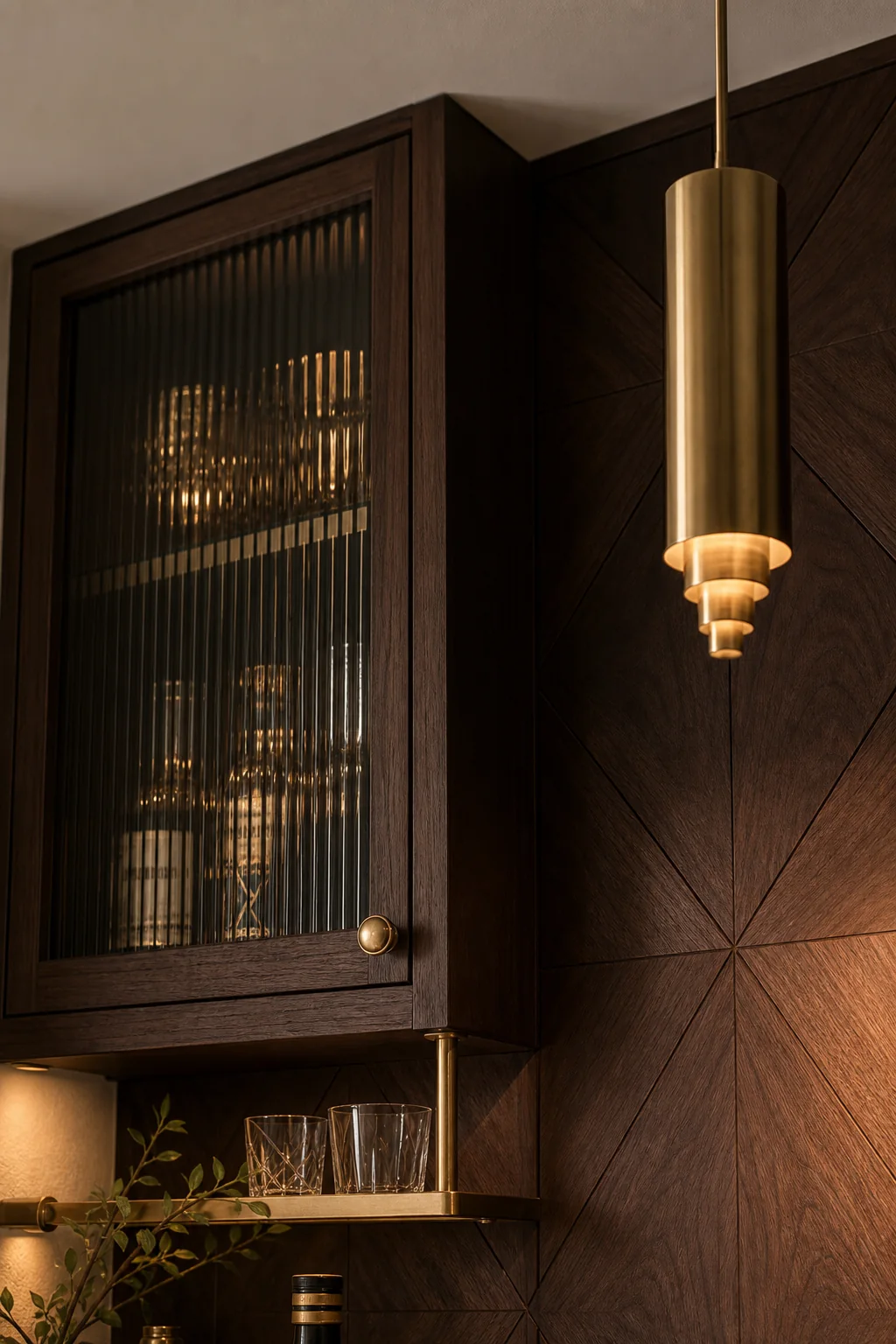
Tactile, grooved surfaces introduce the industrial, mechanical feel of the key’s cut teeth into the cabinetry, elegantly obscuring glassware silhouettes while catching the ambient light. Lining the upper cabinet interiors with dark walnut to match the backer creates a cohesive, moody backdrop that highlights the crystal barware. To recreate this sophisticated interplay of smooth solids and ribbed textures in your own space, gather these specific finishes and fixtures for your complete home bar material palette.
Ribbed glass and crystal reflections
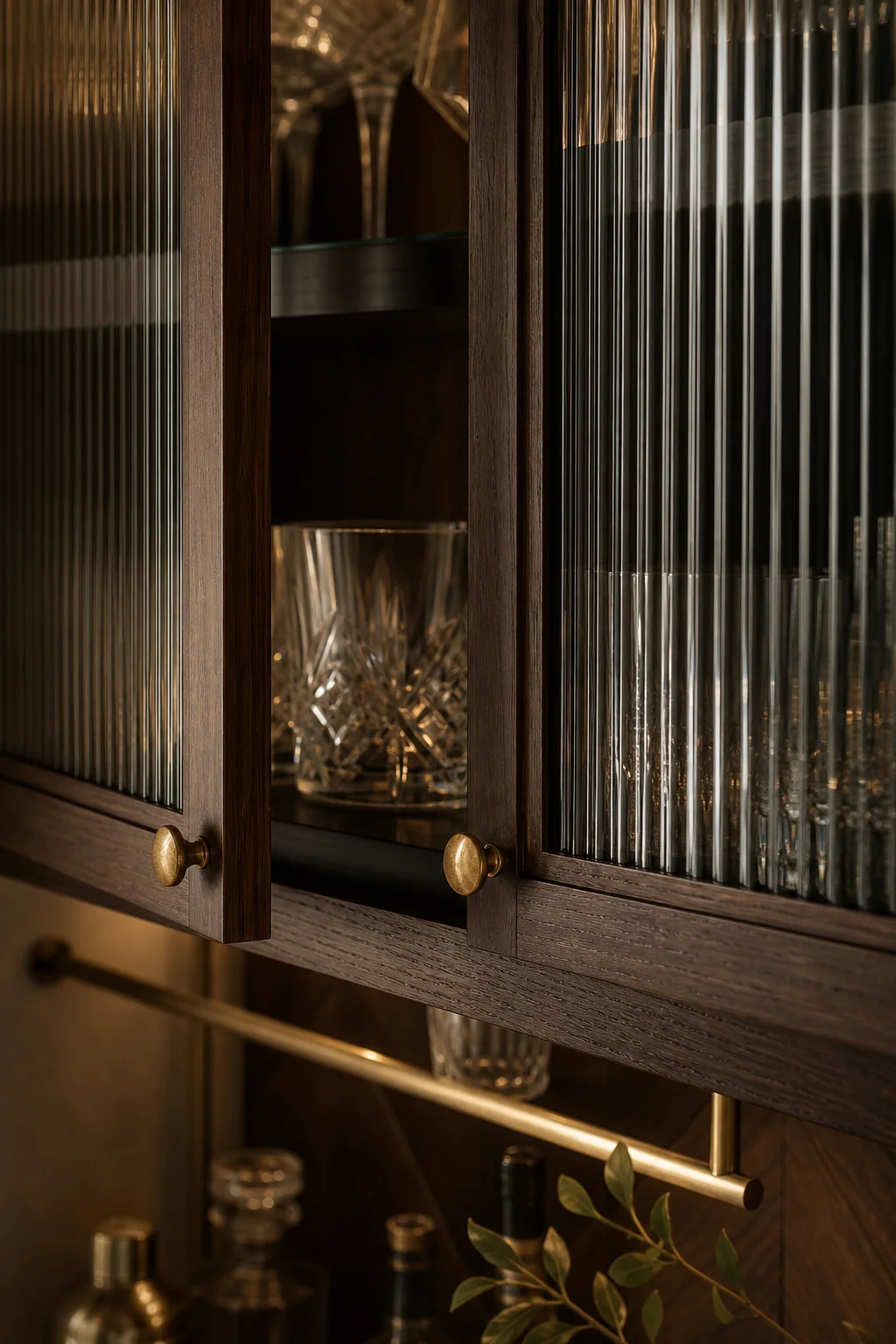
The heavy fluted glass doors act as a crucial tactile architectural texture, translating the deep engravings of the room numbers into a highly functional design element. When illuminated from within, the ribbed surface distorts the shapes of the bottles and crystal, adding a layer of visual mystery and depth to the shallow alcove. This careful attention to surface logic ensures the upper cabinetry feels just as substantial and intentional as the heavy walnut and charcoal base below.
Select heavy, thick-ribbed fluted glass rather than delicate reeded glass to capture the substantial, industrial weight of a solid brass key.
Suspending the notched cylinder
A slender, asymmetrical vertical element breaks up the heavy solids, providing necessary task lighting while mimicking the key’s notched shaft. Suspending a stepped brass pendant directly above the mixing counter introduces a precise, mechanical rhythm that contrasts beautifully with the quiet plaster walls. To scale this look, a subtle approach focuses primarily on the warm plaster and walnut, a balanced room adds the charcoal cabinets and striking pendant, while a bold design paints the entire alcove in charcoal ink.
Look for lighting fixtures with stepped or uneven shade profiles. This subtle irregularity breaks up rigid lines and mirrors the key’s unique cut.