
This Toy Theatre Became a Kids Playroom
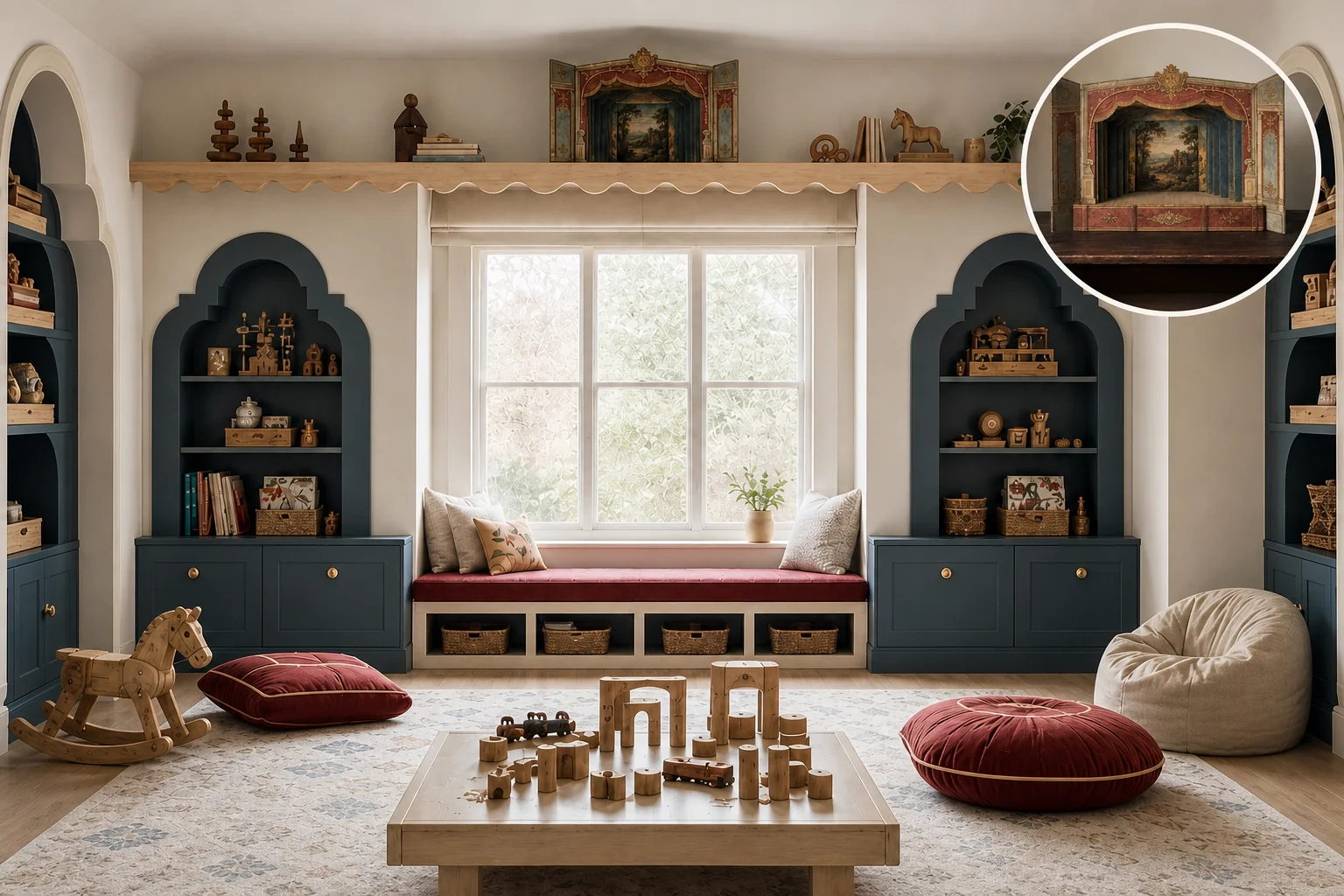
Translating an ornate Victorian paper toy theatre into a kids playroom requires balancing theatrical wonder with practical daily function. By using architectural depth and muted watercolor tones rather than literal stage props, the magic of layered framing draws the eye inward to create a calm, accessible space for open-ended play.
Architectural depth through stepped alcoves
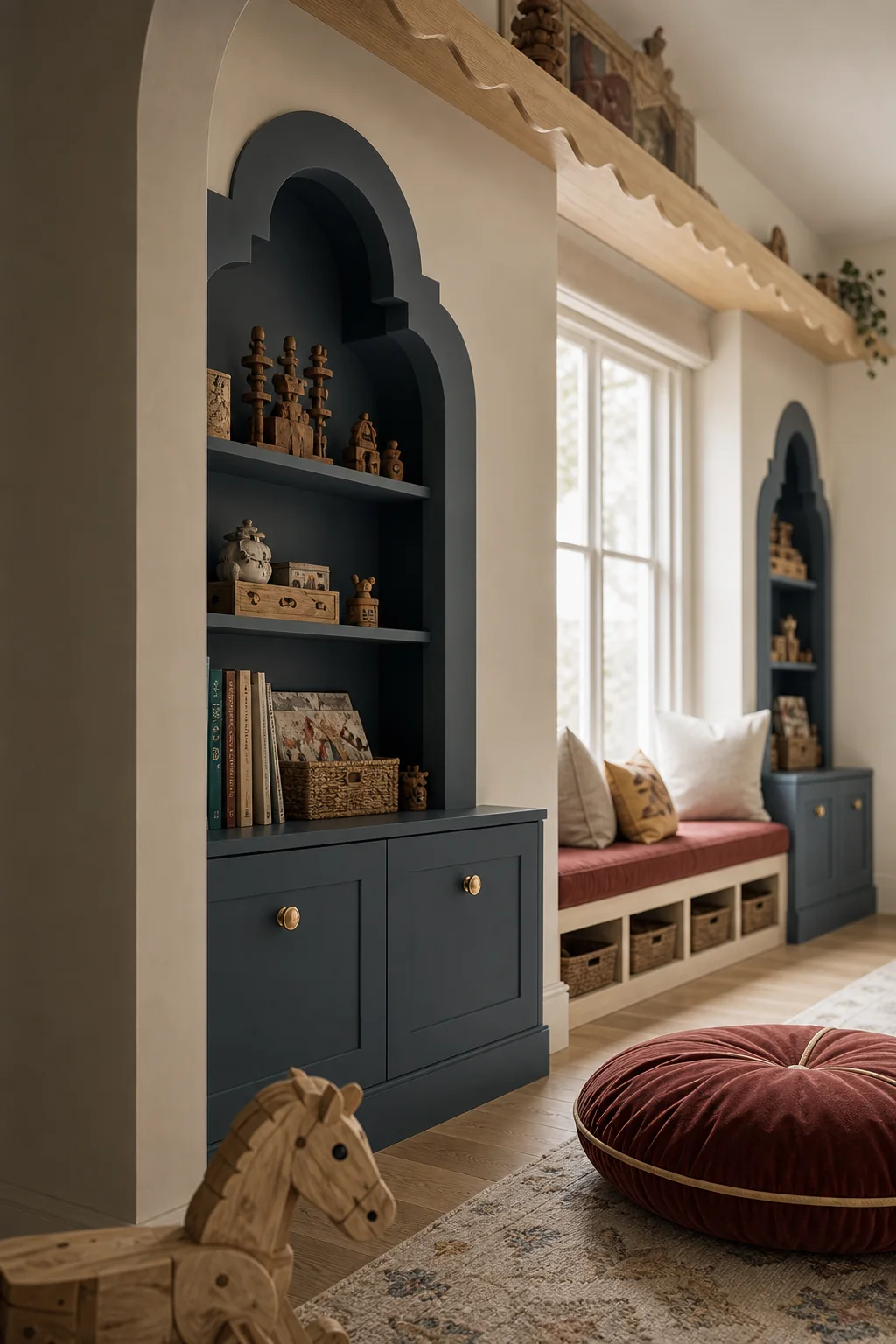
By building shallow alcoves along the perimeter, the room gains the forced perspective of a stage set while keeping the center entirely free for play. These stepped, shallow arched alcoves directly mimic the layered paper side-wings that create depth on a miniature stage, providing highly accessible low toy storage without enclosing the footprint. Framing these shallow bump-outs softens the vertical lines and establishes a functional foundation that draws the eye inward. This architectural rhythm ensures the playroom feels magical and structured, offering dedicated zones for organization while preserving a wide-open central floor for sprawling building projects.
- Frame shallow side-wall alcoves to create architectural depth without losing central floor space.
- Install arched headers on alcoves to mimic the proscenium shape at a room scale.
- Fit low accessible shelving so toys remain reachable for young children.
- Leave the central floor open to provide a clear stage for building and active play.
Watercolor washes in crimson and blue
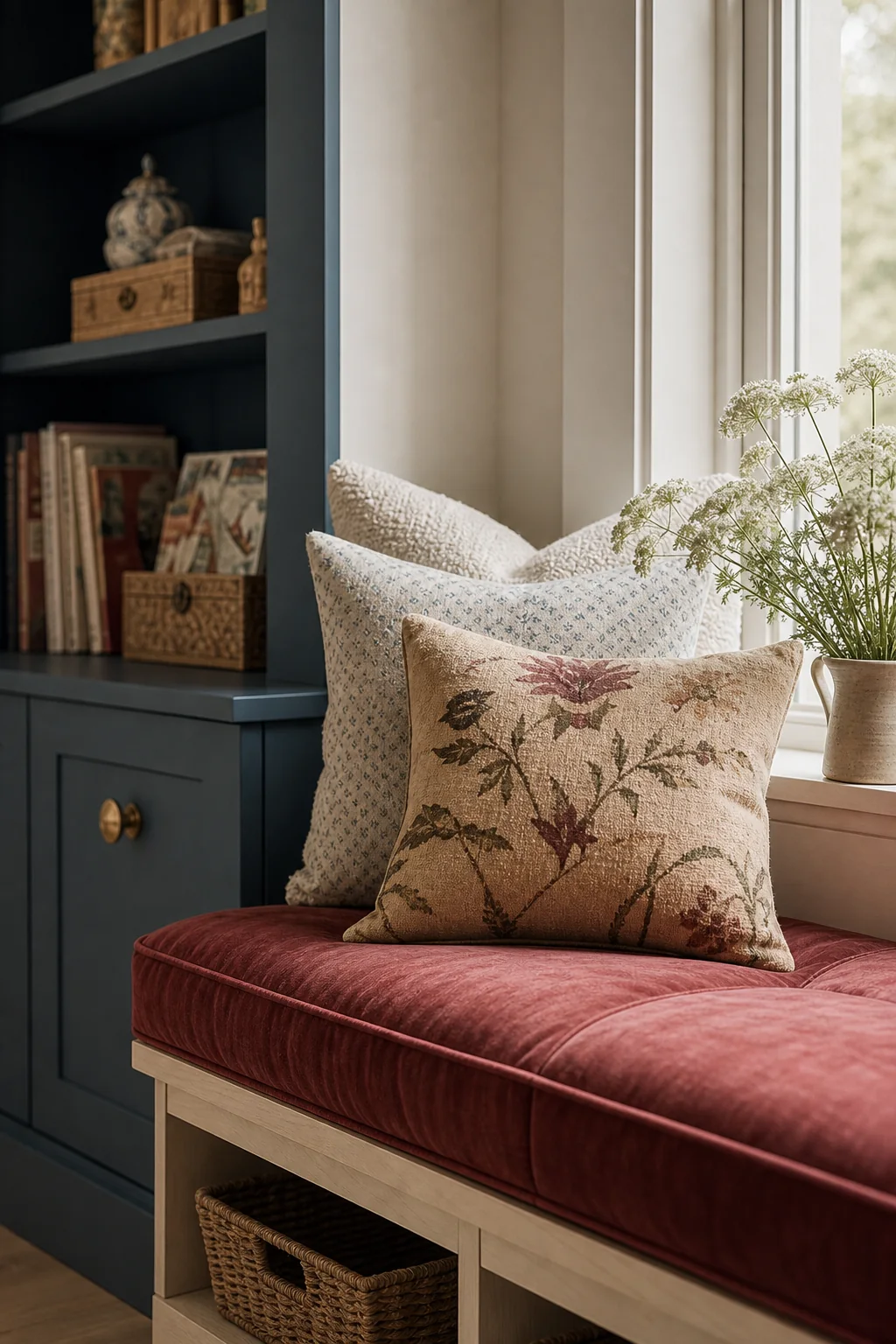
Applying historical watercolor tones in distinct blocks prevents the playroom from feeling overly saturated or visually chaotic. A balanced application of faded crimson and Prussian blue lower cabinets beautifully grounds the quiet parchment-colored walls, directly translating the hand-painted proscenium arch into a life-sized palette. This color-blocked depth ensures the room remains bright and uplifting while honoring the faded, hand-painted charm of the original miniature paper world. By anchoring the darkest shades near the floor, the upper walls reflect abundant natural light, creating a serene, balanced atmosphere that encourages focused, imaginative play without overwhelming the senses.
| Source trait | Visible evidence | Room move |
|---|---|---|
| Receding wings | The layered paper side-wings that create forced perspective | Stepped, shallow arched alcoves built along the side walls |
| Hand-painted proscenium | The faded crimson and Prussian blue watercolor washes | Prussian blue cabinets grounding parchment walls and crimson upholstery |
| Theatrical softness | The illusion of heavy velvet curtains painted onto flat paper | Matte velvet cushions provide softness without heavy drapery |
| Valance scalloping | The decorative scalloped edge of the top painted curtain | A scalloped birch shelf echoes the top painted curtain |
Grounding the room with Prussian blue
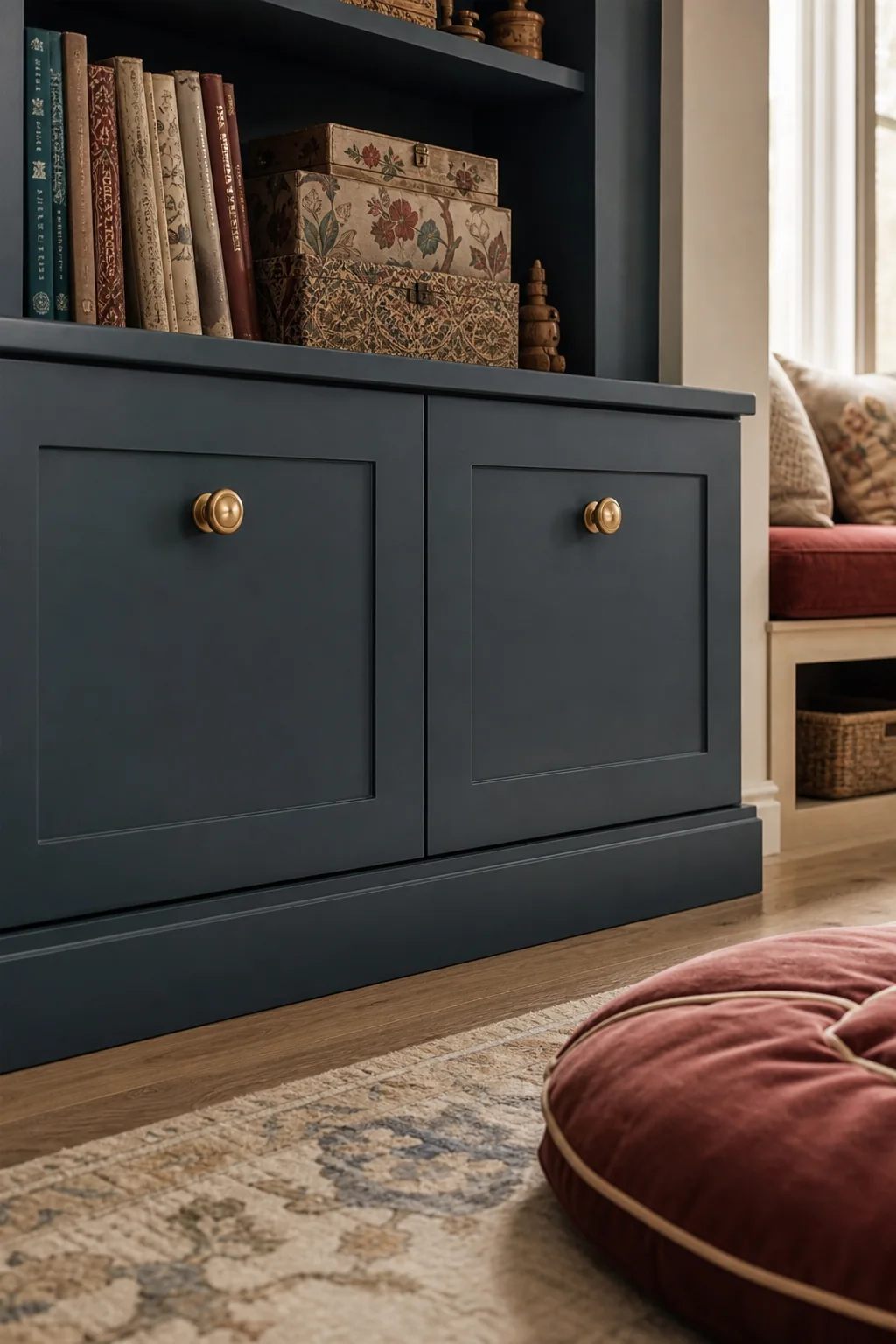
Grounding the lower perimeter with dark, receding tones anchors the playful energy of the room while hiding everyday scuffs. Tarnished gold hardware accents the Prussian blue painted cabinets, introducing the metallic details of the proscenium arch without requiring fragile gilded antiques. Keeping the upper walls a warm parchment tone reflects soft natural daylight, emphasizing the color-blocked depth and maintaining a serene environment for focused activities. This strategic division of color allows the built-in storage to recede visually, making the room feel significantly larger while providing a sophisticated backdrop that will easily mature alongside the children.
Keep painted finishes matte or eggshell to replicate the soft, light-absorbing quality of antique watercolor paper, avoiding harsh modern gloss.
Tactile softness without visual weight
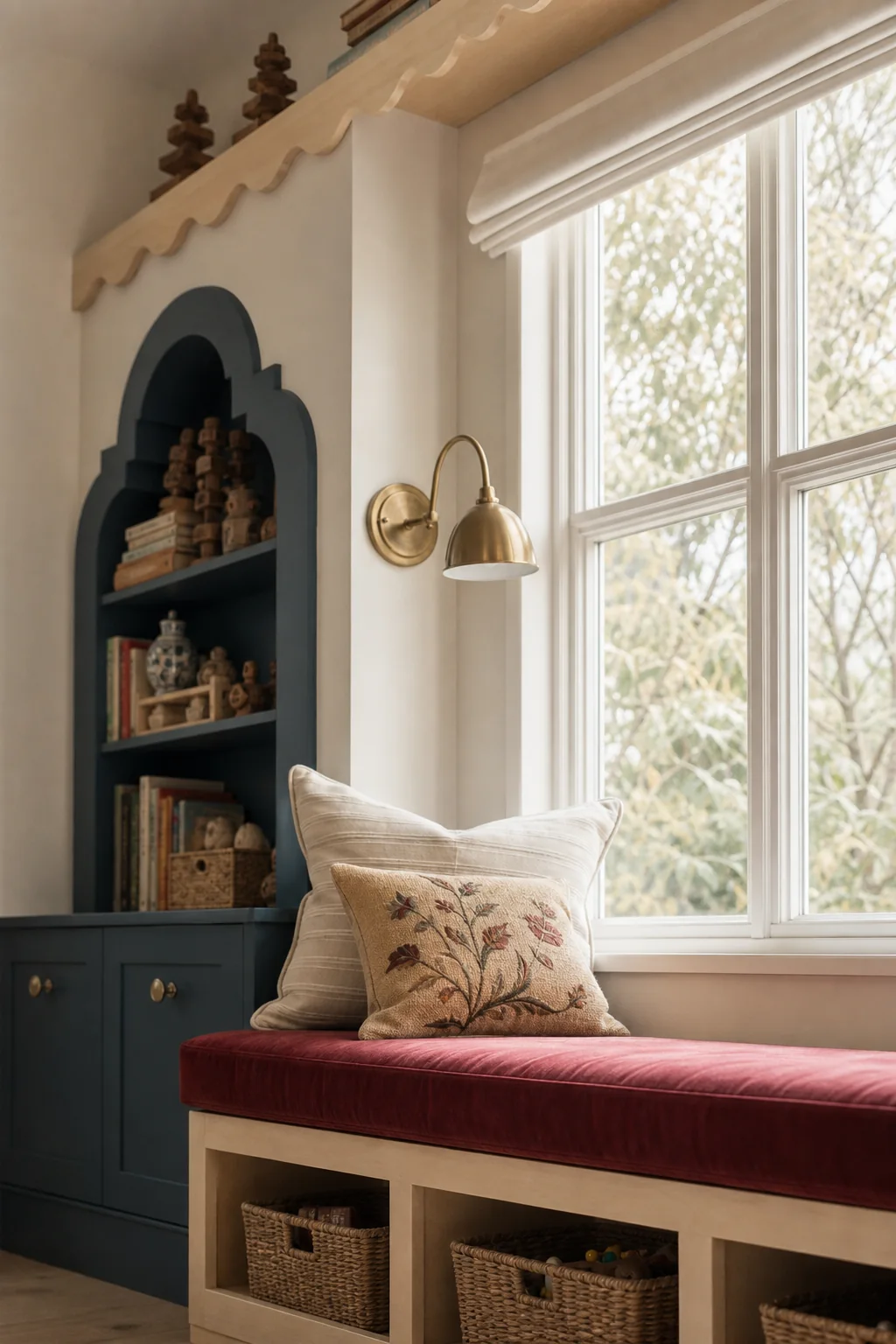
Introducing real velvet on the floor rather than the windows honors the theatrical inspiration while keeping the room bright and accessible. Actual matte cotton velvet used for oversized floor cushions provides tactile softness without the visual weight of heavy drapery, replacing the illusion of painted curtains with functional, child-friendly comfort. Layering this plush textile against warm birch plywood and unlacquered brass creates a rich, inviting material world that begs to be touched. These thoughtful textural contrasts elevate the playroom, ensuring the space feels curated and elegant while remaining entirely durable enough for daily, rigorous use.
Layering matte velvet and warm birch
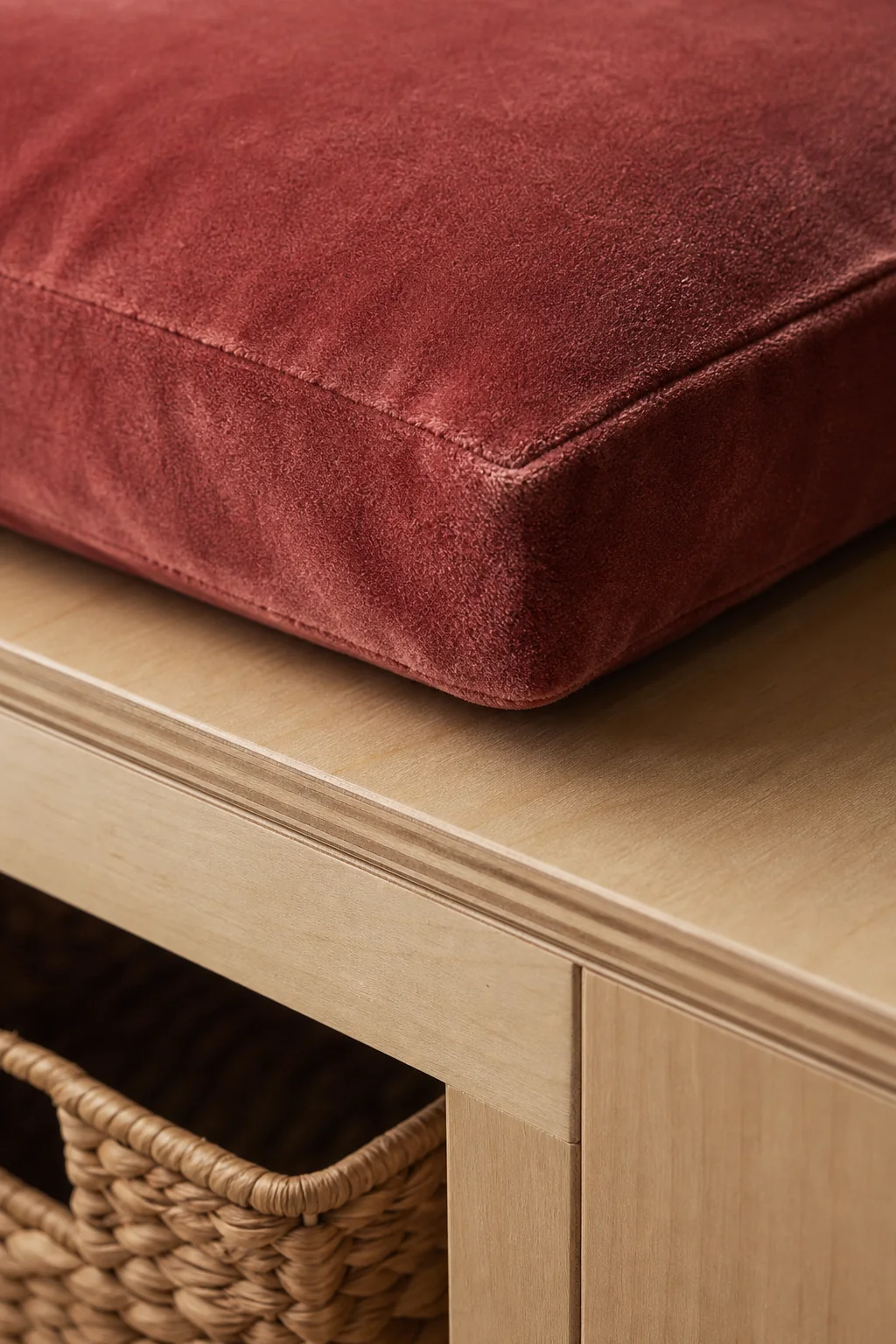
A cozy reading nook featuring faded crimson velvet cushions resting on warm birch plywood built-ins perfectly captures the room’s balanced style. The natural grain of the wood softens the dramatic impact of the red upholstery, ensuring the space feels like a calm playroom rather than a literal stage set. This combination of warm birch plywood and rich block-printed textiles invites children to comfortably lounge and read for hours. By prioritizing tactile, high-quality fabrics over synthetic alternatives, the seating area becomes a luxurious yet resilient focal point that beautifully echoes the theatrical softness of the original toy.
Choose cotton velvet over synthetic blends for floor cushions; it wears beautifully over time and feels less formal in a playroom setting.
Symmetrical framing and scalloped details
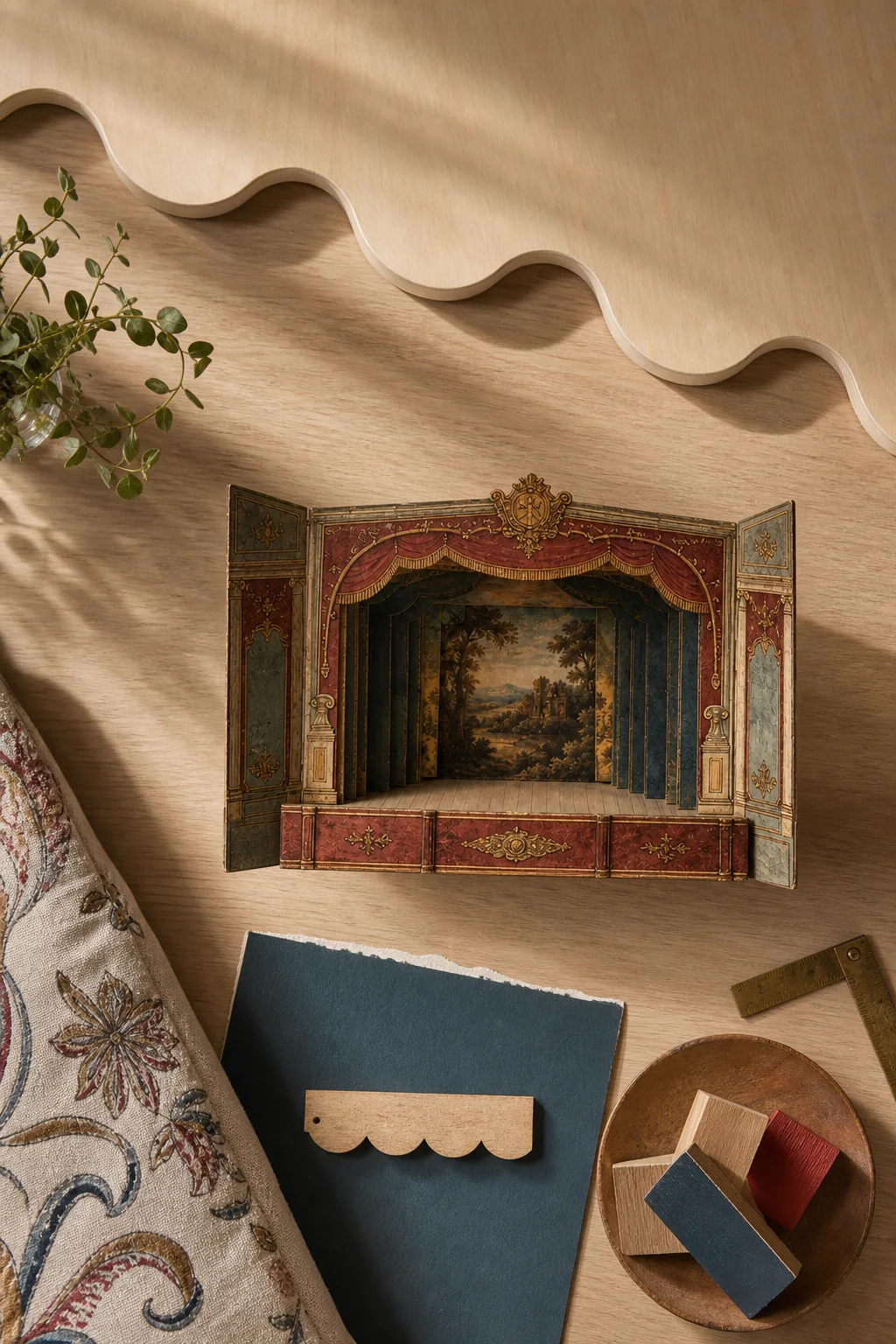
A single scalloped border high on the wall provides a playful nod to the proscenium arch without dominating the room’s geometry. A custom birch plywood floating shelf with a subtle scalloped fascia holds fragile items safely out of reach while echoing the theatre’s top painted curtain. To control the thematic intensity, a subtle approach limits these colors to small accents. A balanced execution color-blocks the storage and seating, while a bold design might paint the entire arched alcove in deep Prussian blue. Strict symmetrical framing draws focus inward, completing the translation from miniature stage to magical playroom.
Use scalloping sparingly on a single high shelf or valance to keep the room feeling playful but not overly themed or chaotic.