
This Tabletop Radio Became a Listening Nook
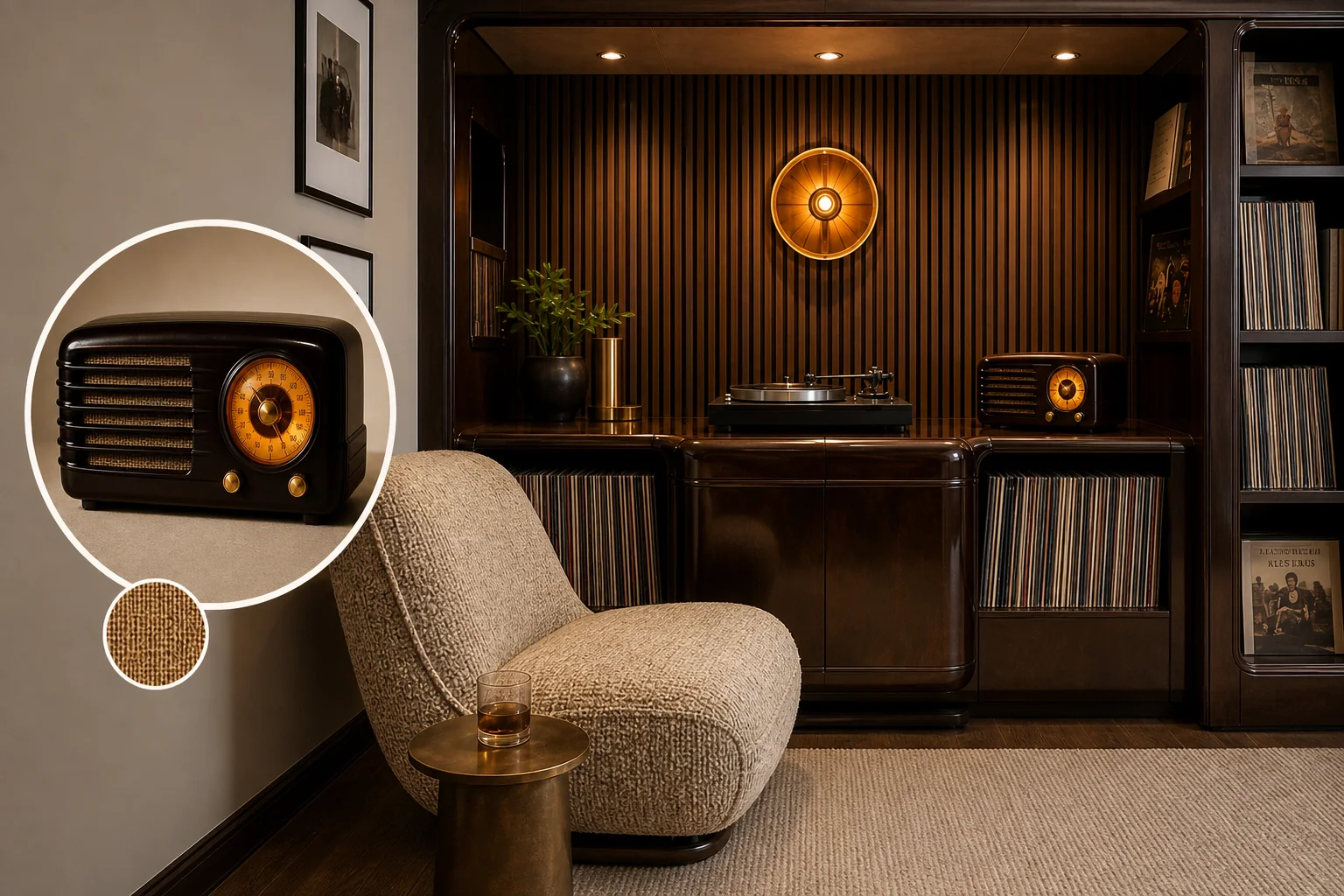
Vintage audio equipment offers a masterclass in combining heavy, resonant enclosures with delicate, glowing interfaces. This translation turns the warm, tactile nostalgia of a mid-century bakelite radio into an acoustically optimized vinyl listening nook by keeping heavy espresso surfaces restricted to the perimeter so tactile, lighter materials can breathe inside.
Shaping the heavy acoustic shell
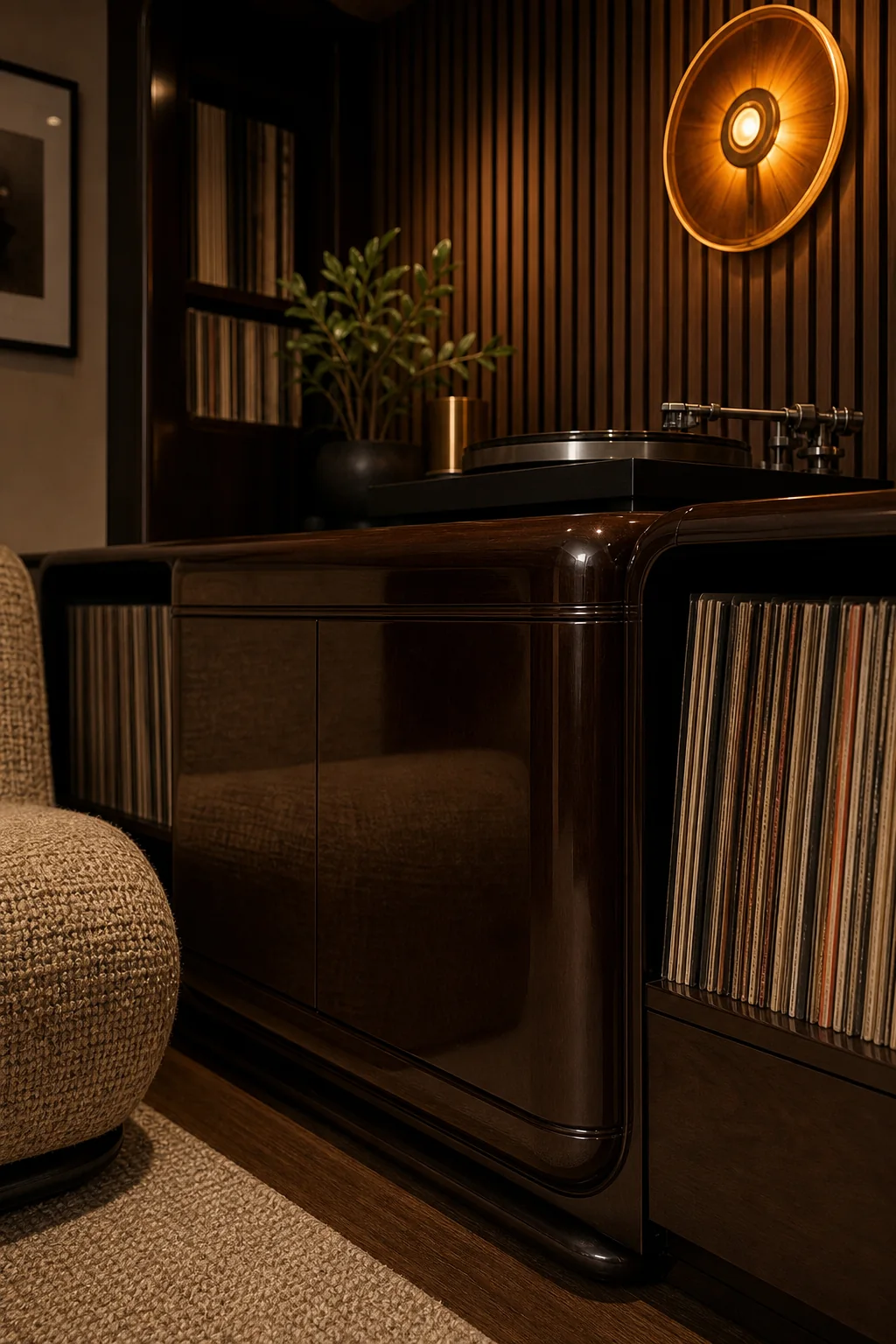
Translating the radio’s dense outer shell into architectural cabinetry anchors the room while providing essential mass for acoustic isolation. Specify high-density MDF for the underlying structure to significantly reduce turntable vibration, ensuring pristine audio playback. Use a high-gloss lacquer finish to replicate the reflective depth of polished bakelite, wrapping the perimeter in a luxurious, moody darkness. To build this robust foundation, follow a precise construction sequence that ensures the heavy acoustic shell is structurally sound and visually seamless before you begin introducing delicate audio equipment or soft furnishings.
- Construct the recessed alcove framework so the nook features a lowered ceiling and defined architectural boundaries.
- Build the heavy turntable console, securing a sturdy, vibration-resistant surface to the wall studs.
- Rout the seamless waterfall edges so all exposed cabinetry corners feature a smooth, continuous curve.
- Apply the high-gloss espresso lacquer to achieve a deep, reflective finish free of brush strokes.
- Install the dedicated audio wiring, hiding isolated power and speaker cables within the cabinetry.
Dialing in the amber glow
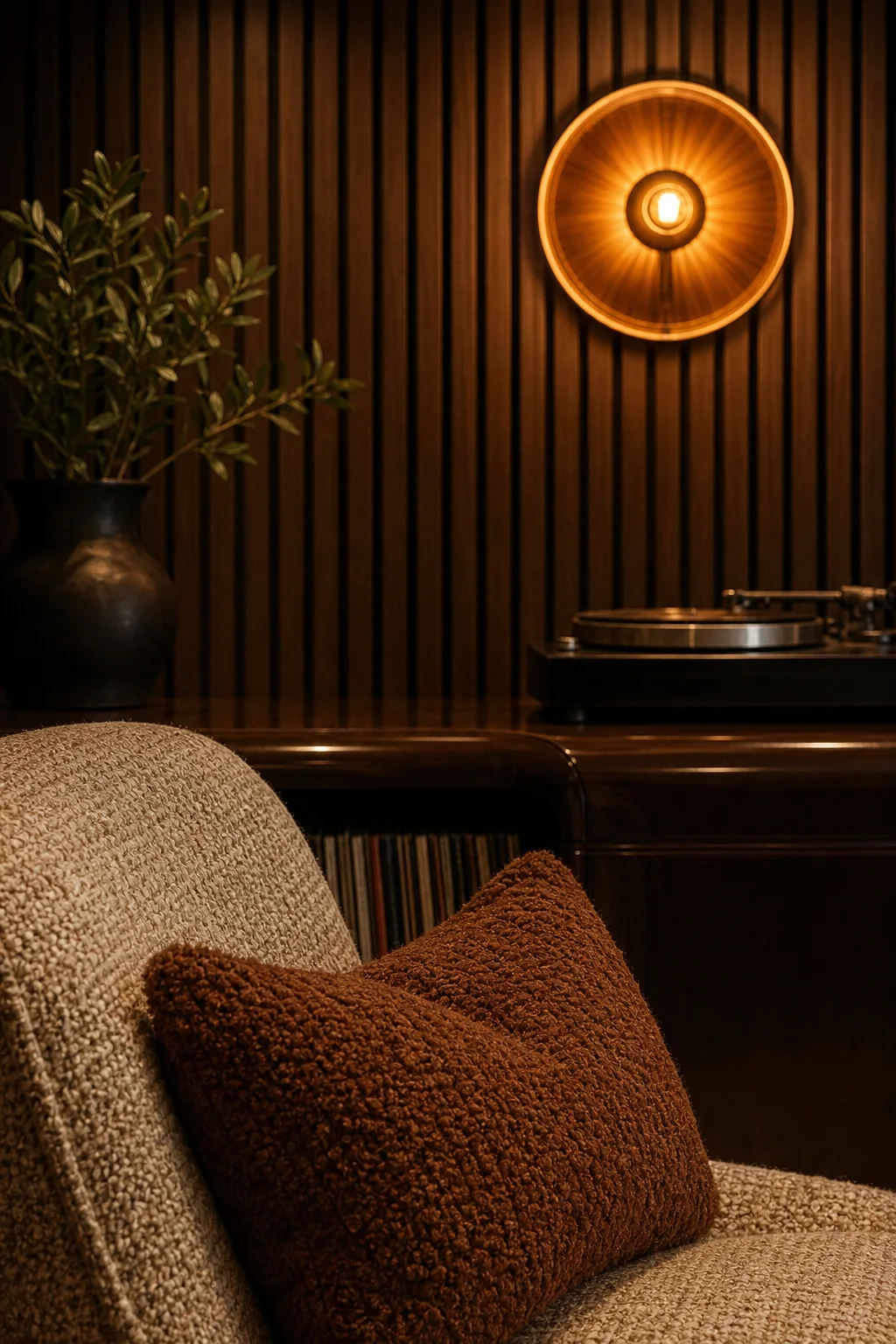
Introducing a singular, warm light source against the dark cabinetry captures the intimate, late-night magic of tuning a vintage radio dial. Install dimmers on all ambient fixtures to meticulously control the mood, allowing the space to transition from daytime reading to evening listening. Select amber-tinted glass shades rather than colored bulbs for a richer, more authentic glow that mimics the original hardware. This deliberate contrast between the heavy, sound-absorbing mass and the warm, inviting luminescence forms the core visual logic of the space, mapping object traits directly to architectural moves.
| Source trait | Visible evidence | Room move |
|---|---|---|
| Dense waterfall casing | The continuous, rounded corners of the dark, heavy bakelite housing | Custom built-in record cabinetry featuring seamless, rounded waterfall edges finished in a deep, high-gloss espresso lacquer |
| Amber luminescence | The warm, backlit orange glow of the glass tuning dial | A circular, amber-tinted glass wall sconce mounted above the turntable, casting a warm, low-level glow across the room |
| Woven acoustic mesh | The tactile, multi-tonal fabric protecting the radio speaker | A low-slung, ergonomic listening chair upholstered in a heavy, cream-and-tan textured tweed |
| Parallel louvers | The repetitive, curved horizontal slats across the radio’s speaker grille | Vertical acoustic wood slat paneling installed on the back wall to absorb sound and echo the radio’s rhythmic lines |
Polished brass touchpoints
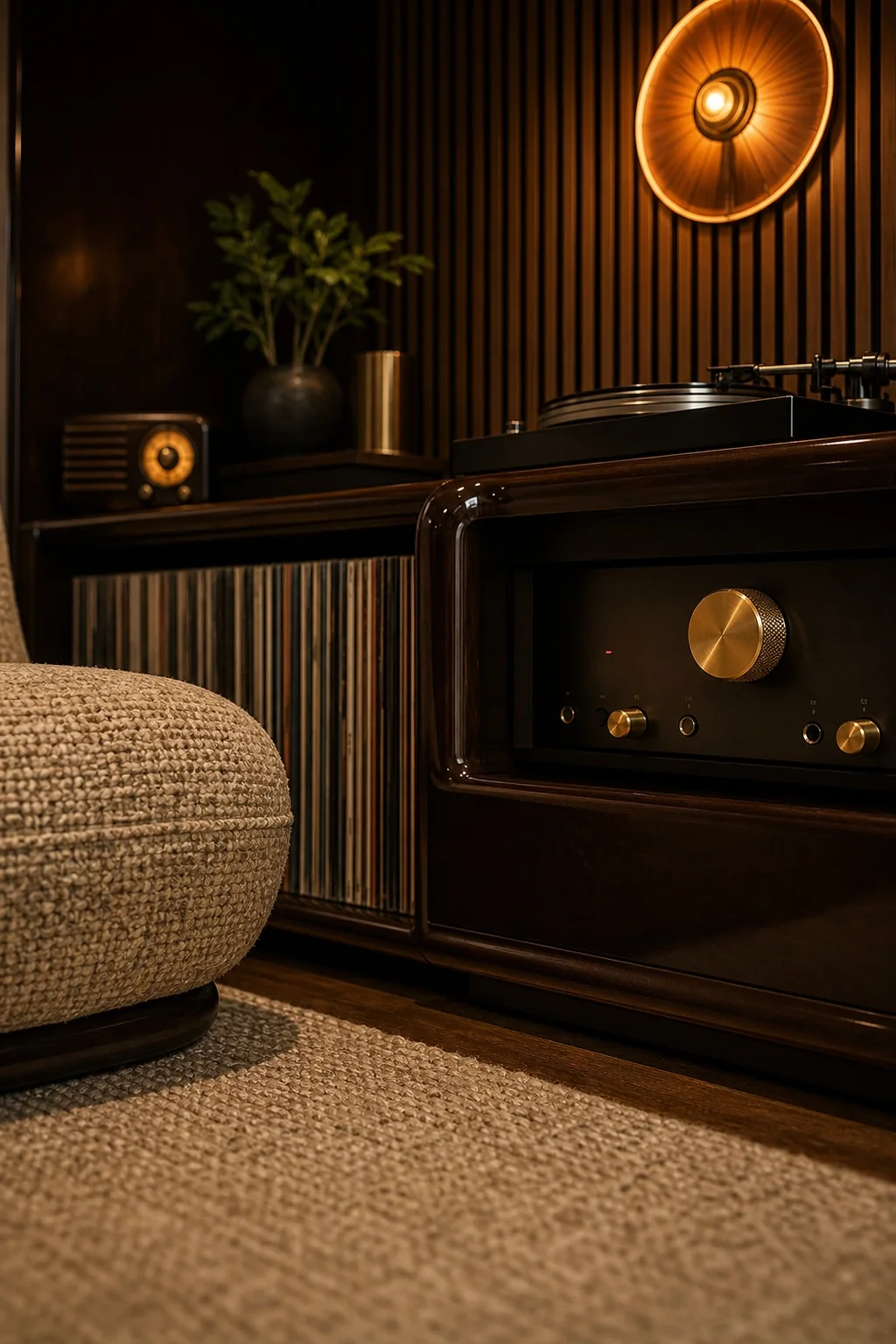
While the glowing dial provides the primary ambient light, the tactile experience of operating the equipment requires its own careful translation. Knurled brass amplifier knobs recall the radio’s tactile controls, catching the amber light and adding a subtle metallic warmth to the dark espresso perimeter. These small, polished details act as jewelry within the dense architectural shell, ensuring the intimate scale of the nook feels highly considered and luxurious. By avoiding oversized novelty hardware, the design honors the source material’s sophisticated mid-century roots while maintaining a thoroughly modern, grown-up atmosphere.
Weaving tactile sound barriers
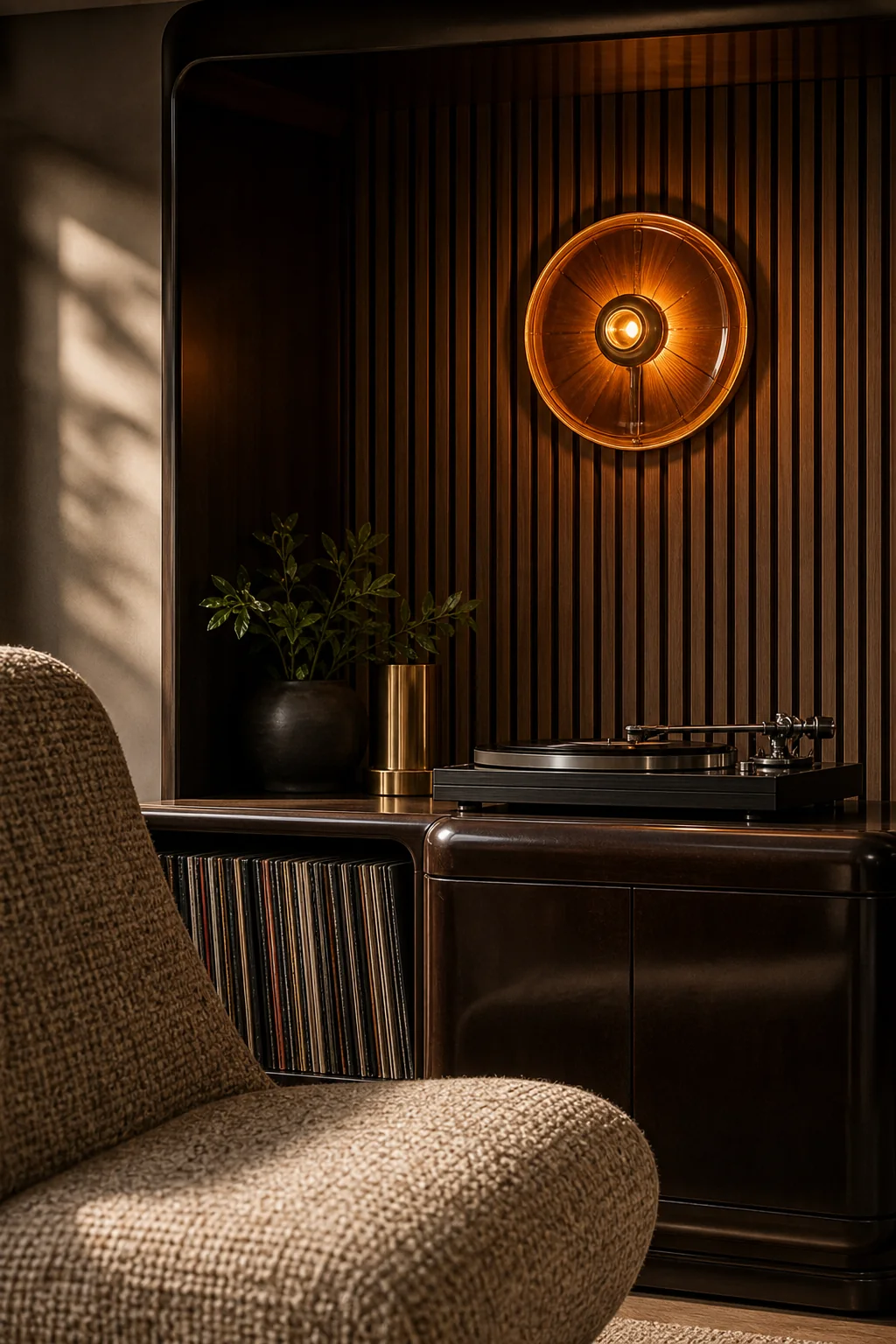
Soft, heavily textured fabrics contrast with the hard, glossy perimeter, softening the acoustics and inviting extended listening sessions. Choose heavy, commercial-grade tweed for durability and maximum sound absorption, keeping the upholstery tones light to balance the dark espresso cabinetry. These material choices directly translate the multi-tonal fabric protecting the vintage speaker, ensuring the room remains acoustically optimized while maintaining a sophisticated aesthetic. Gathering these specific textiles and finishes is the next critical phase, bringing the necessary warmth and softness into the rigid, highly reflective architectural shell.
Integrated record storage
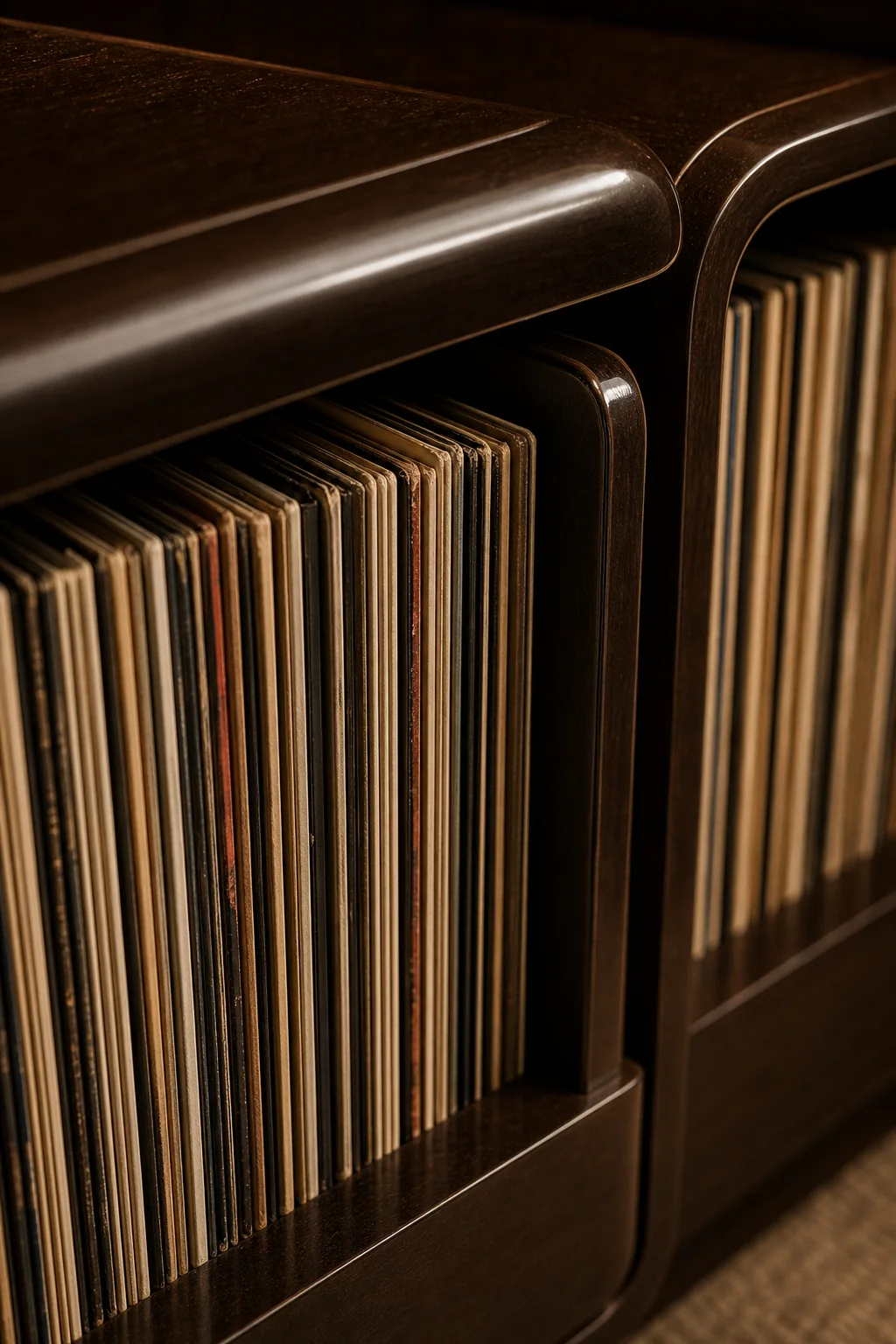
Accessible, sturdy storage for a vinyl record collection is seamlessly integrated into the dense foundation, utilizing curved shelf dividers that adapt the radio’s sweeping corner geometry. By mirroring the sweeping waterfall curves of the outer casing, the custom shelving maintains the room’s cohesive mid-century language while providing highly functional, heavy-duty organization. This tailored approach prevents the extensive record collection from feeling visually cluttered, keeping the primary focus squarely on the glowing turntable station and the central listening chair, where the tactile and auditory experiences ultimately converge.
Structuring the acoustic rhythm
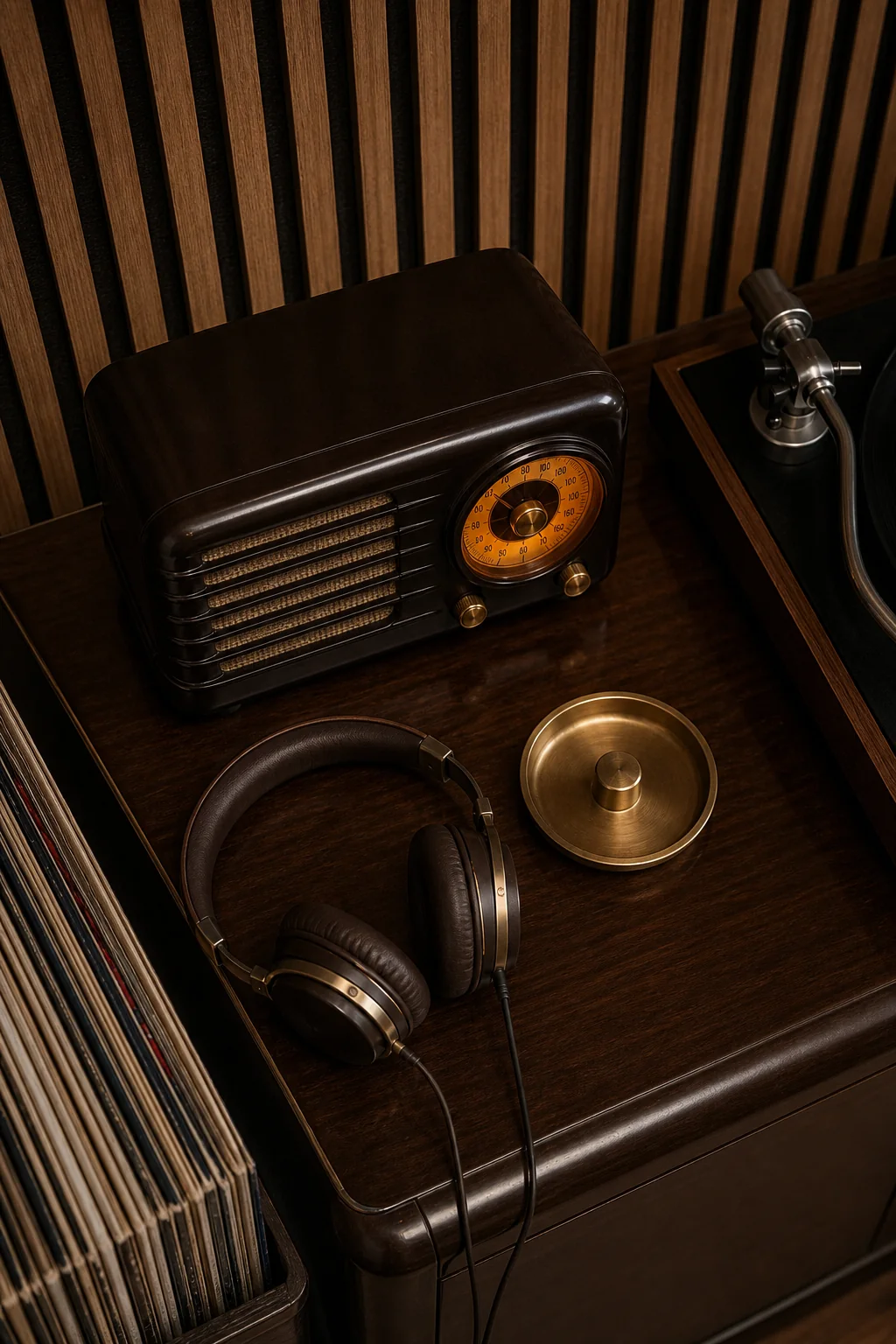
Applying repetitive linear elements to the walls breaks up sound waves while honoring the iconic louvered face of mid-century audio gear. Mount wood slats over an acoustic felt backing to maximize echo reduction, spacing them evenly to create a calming, rhythmic visual backdrop. You can tailor this aesthetic: a subtle approach introduces just an amber lamp and tweed pillow, a balanced translation commits to dark built-ins and slatted walls alongside cream ceilings, while a bold execution wraps the entire alcove in high-gloss espresso lacquer, relying entirely on the amber sconce.
Spacing your acoustic slats exactly one inch apart creates the ideal balance of visual rhythm and sound diffusion for small, enclosed listening nooks.