
This Keepsake Diary Became a Home Library
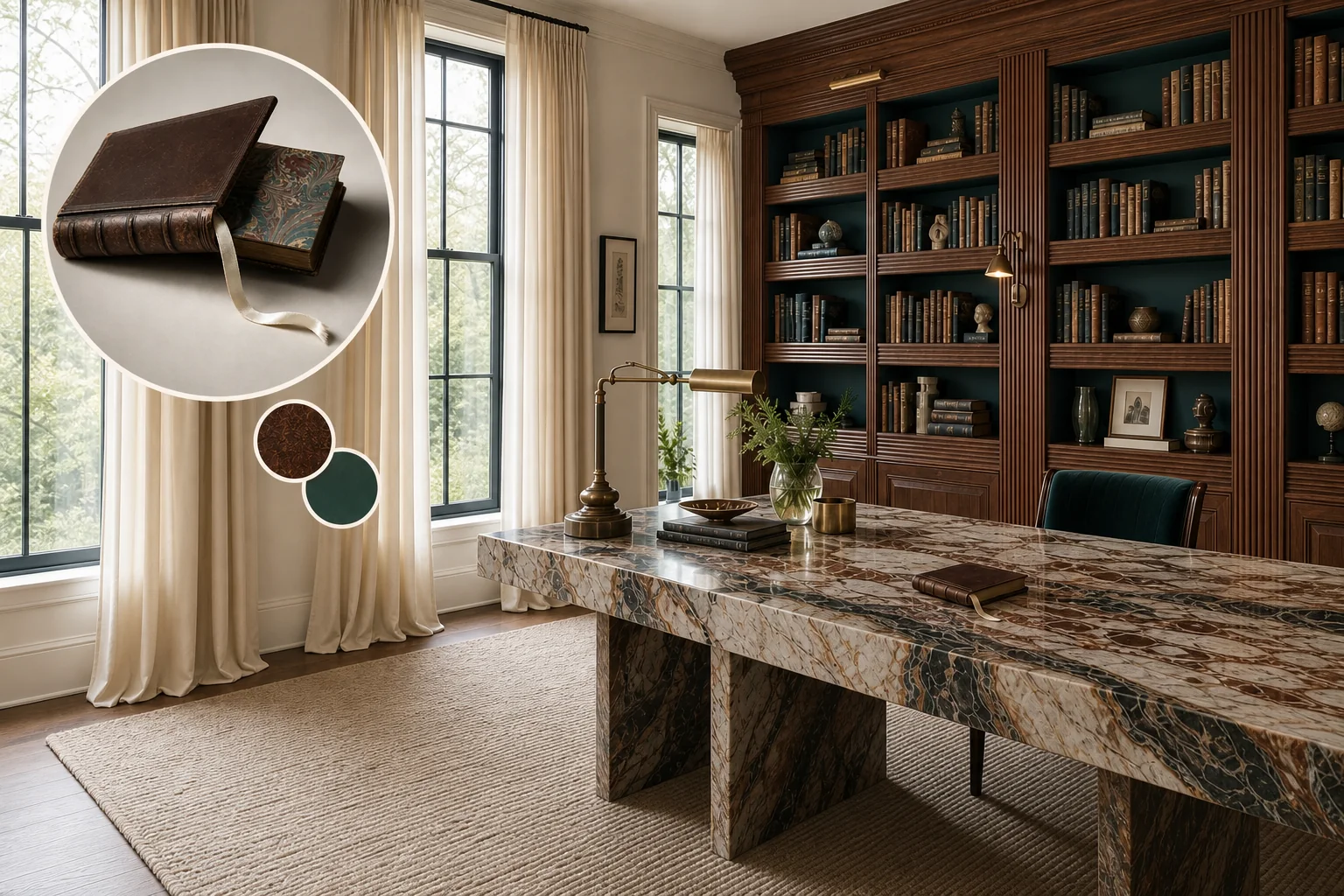
The Edwardian diary is a masterclass in concealed richness, hiding vibrant marbled paper behind a sober, patinated leather cover. We translated this intimate, tactile object into a sophisticated home library by balancing strict architectural grids with sudden moments of organic fluidity.
Establishing the Ribbed Structure
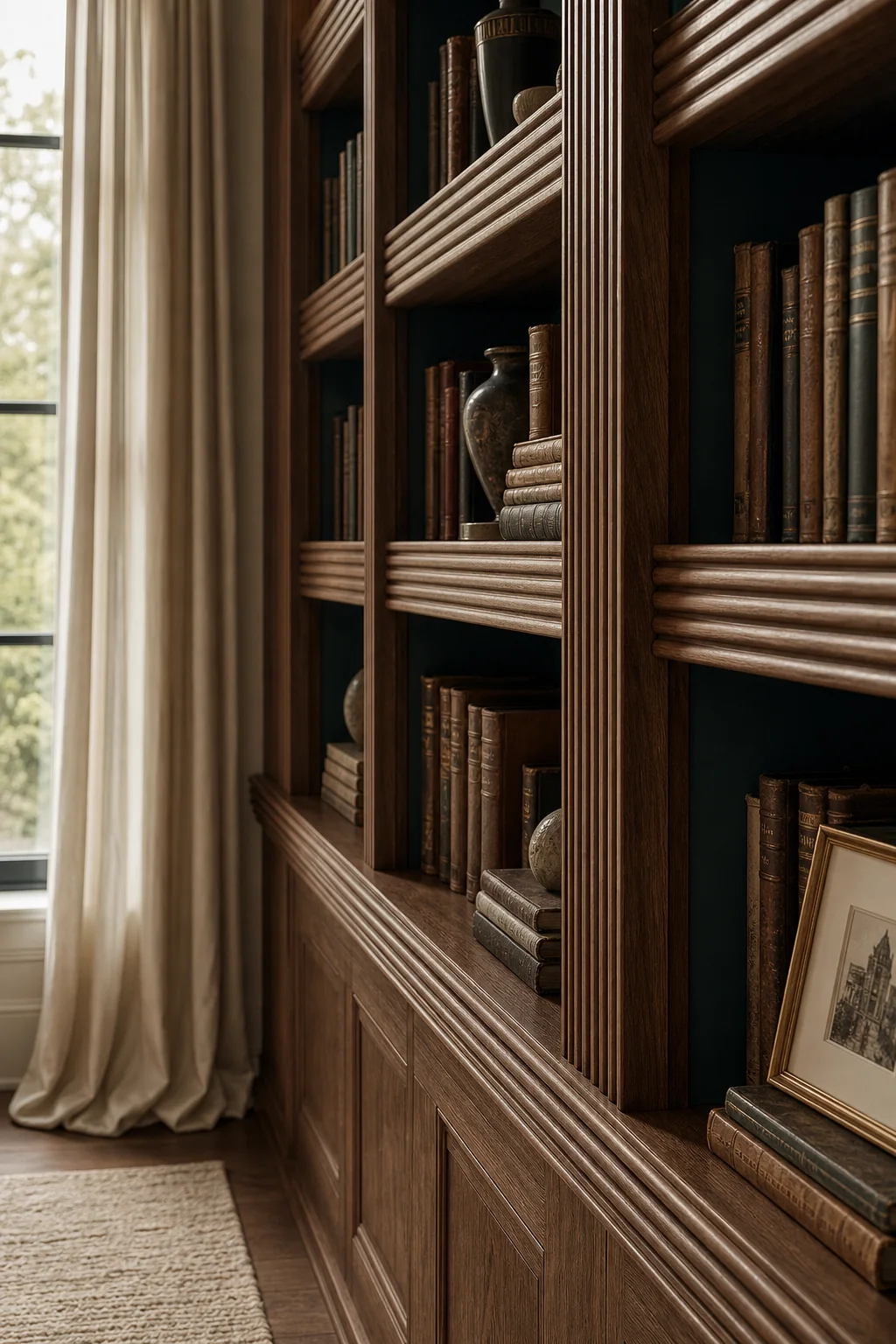
Translating the book’s tactile spine into architectural millwork establishes a disciplined, linear shell for the room. By specifying dark oiled walnut, the built-in shelves mimic the matte, patinated finish of aged leather, grounding the space in historic warmth. Aligning the horizontal reeding across all bookcase bays creates a continuous visual grid that wraps the room in rigorous geometry. This foundational woodwork acts as the library’s binding, holding the vast collection of volumes in a highly structured embrace. The meticulous attention to the ribbed detailing ensures the cabinetry feels like a bespoke, handcrafted object rather than standard architectural molding. Follow these structural steps:
- Install floor-to-ceiling wooden bookcase frames across the main wall.
- Apply horizontal reeded molding to the front faces of all shelves.
- Sand and finish the walnut wood with a dark, matte penetrating oil.
- Construct deep architectural alcoves around the tall sash windows.
Revealing Concealed Contrast
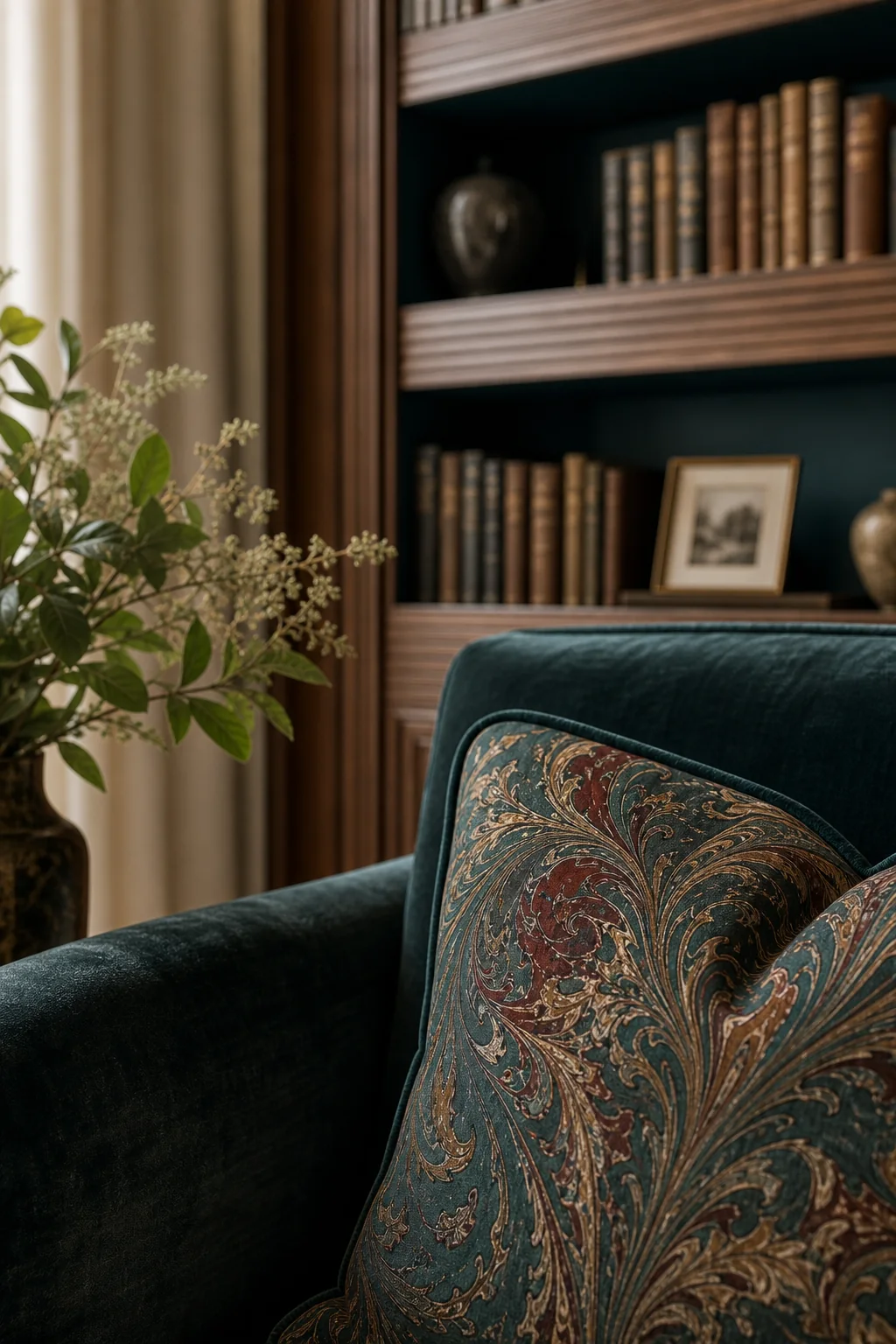
Just as the diary hides its marbled endpapers, the room reserves its boldest color for the recessed interiors of the shelving. Keeping the surrounding walls and ceiling a parchment cream frames the dark niches, allowing the matte deep teal to absorb light and create profound visual depth. This tension between strict external boundaries and fluid, colorful interiors defines the space. By ensuring the architectural shell remains muted and linear, the vibrant organic patterns and deep colors act as powerful surprises. The resulting atmosphere feels incredibly intimate, rewarding close observation much like opening a treasured, leather-bound volume in a quiet, sunlit corner.
| Source trait | Visible evidence | Room move |
|---|---|---|
| Ribbed Structure | The raised horizontal banding on the Edwardian leather spine | Reeded walnut shelves repeat the diary’s raised leather spine bands. |
| Concealed Contrast | The vibrant hand-marbled endpapers hidden behind a dark, sober leather cover | Teal bookshelf interiors mimic the diary’s hidden marbled endpapers. |
| Silken Drape | The smooth, slightly glossy cream silk bookmark ribbon | Silk-wool drapery pools like the diary’s cream silk bookmark ribbon. |
| Fluid Marbling | The organic, combed swirls of the traditional marbled paper | A Breccia marble table translates the combed endpaper marbling. |
The Hidden Depths
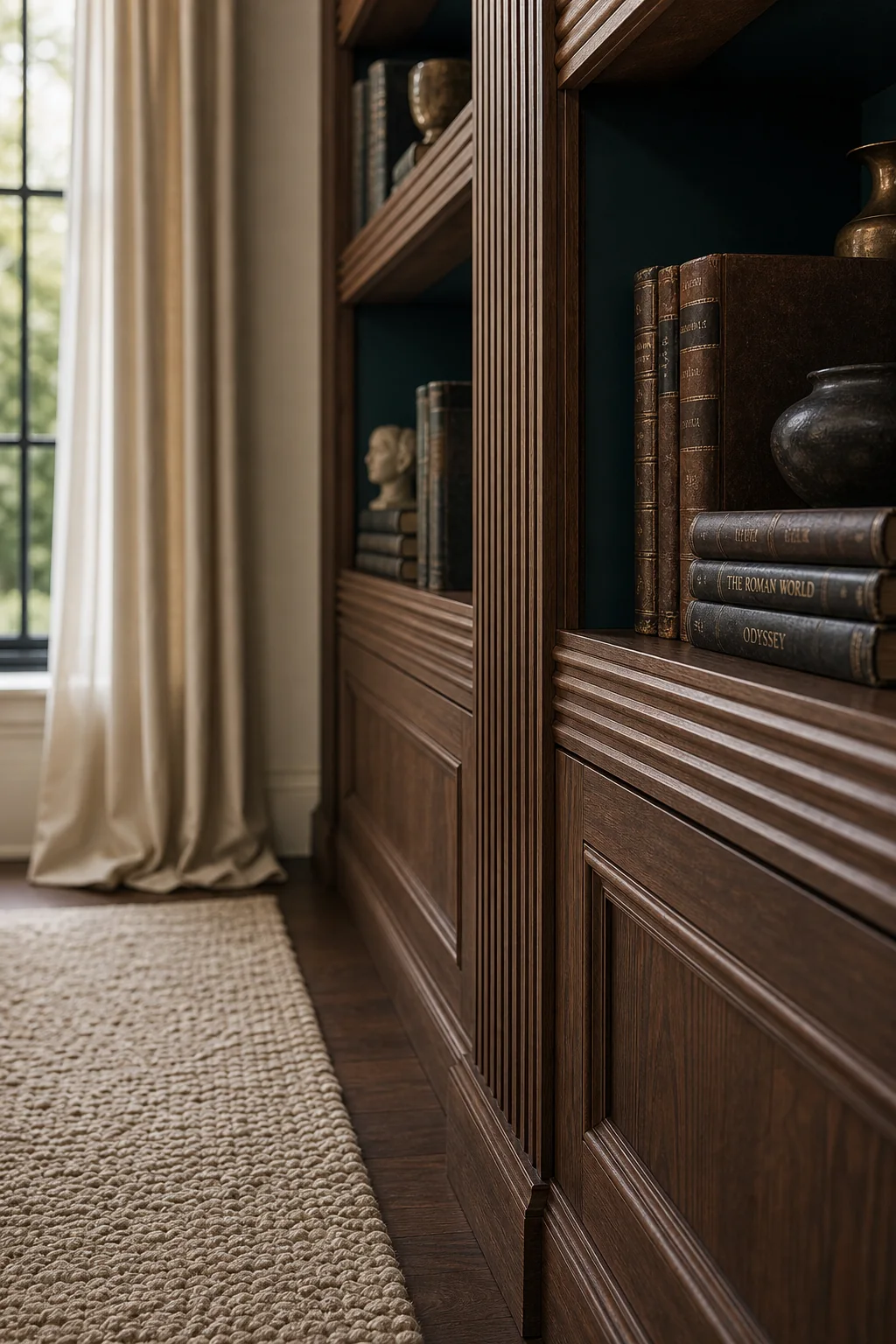
The interplay between the disciplined exterior and the vibrant interior relies on strict boundaries to maintain its sophisticated edge. Matte teal niches contrast the dark leather-like walnut frames, ensuring the concealed richness acts as a powerful surprise rather than overwhelming the quiet study space. Placing a few carefully curated books within these colorful alcoves highlights the dramatic shift in tone and texture. This deliberate containment of color prevents the bold hues from dominating the room, preserving the overarching sense of calm required for a dedicated reading environment while honoring the diary’s hidden artistry and historic charm.
Softening with Silken Drape
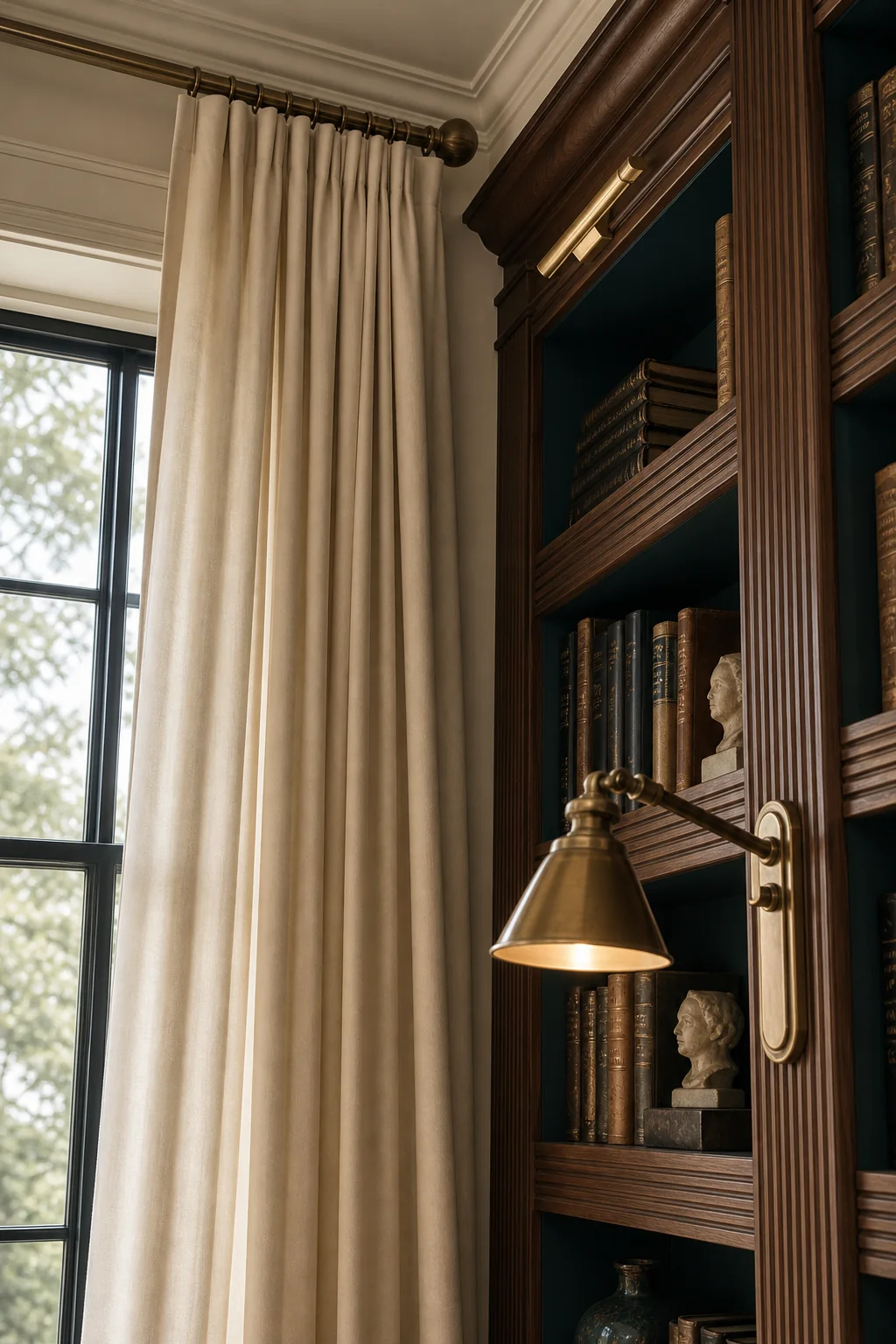
Introducing a heavy, pooling textile breaks the rigid wooden geometry, much like a soft ribbon escaping a stiff leather binding. Mounting the drapery hardware close to the ceiling emphasizes the room’s classic proportions, while the cream silk-wool blend provides subtle sheen and essential acoustic dampening. This tactile addition softens the hard edges of the extensive shelving, bringing a necessary layer of residential comfort to the space. The fabric’s gentle drape introduces a vertical fluidity that contrasts beautifully with the horizontal reeding of the shelves, ensuring the library feels enveloping, quiet, and perfectly suited for hours of uninterrupted study. Source these key materials:
The Soft Escape
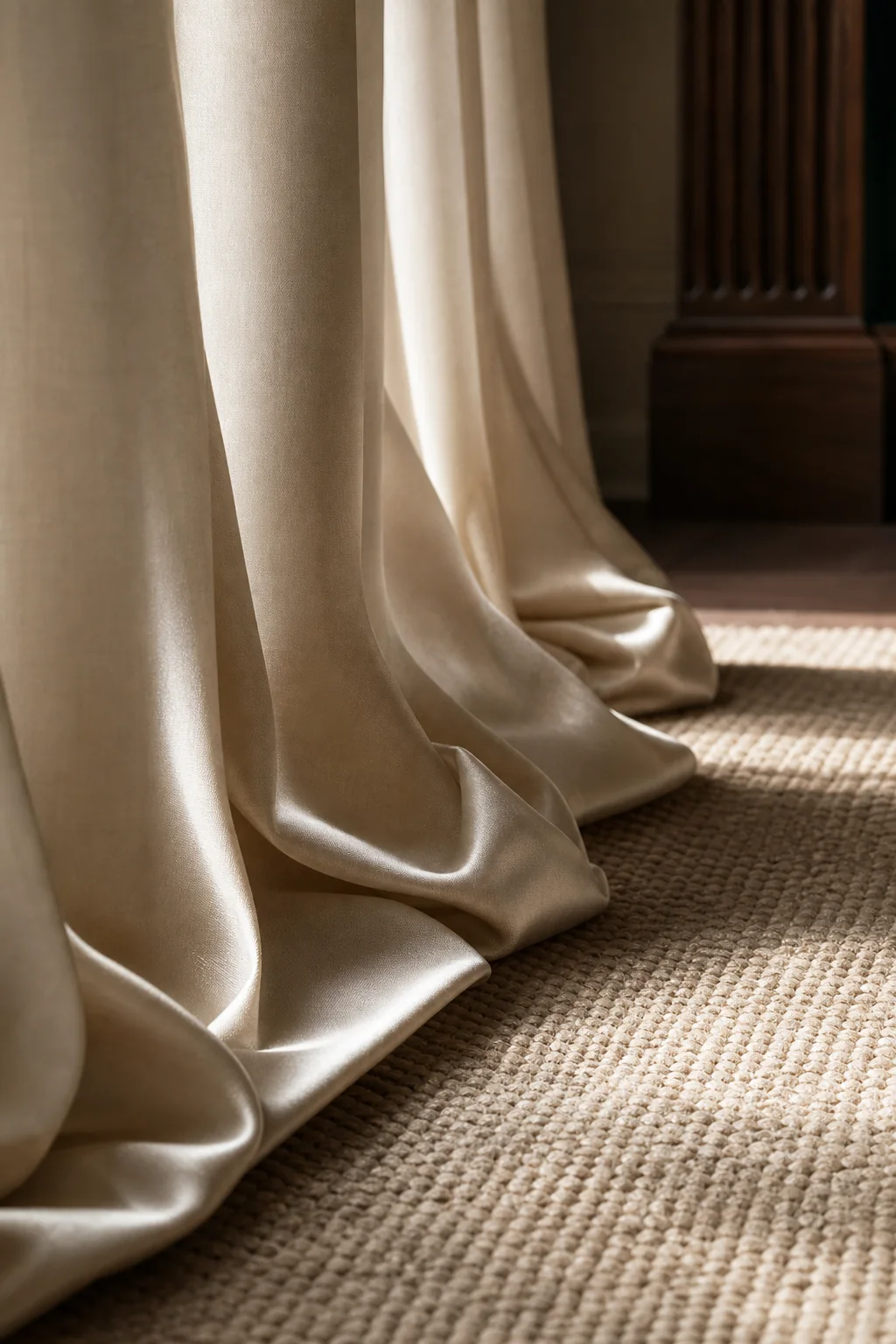
The pooling drapery echoes a soft ribbon escaping stiff binding, introducing a necessary vertical fluidity that catches the soft directional lighting. This gentle interruption ensures the linear architectural shell feels inviting and residential rather than overly imposing or strictly institutional. Resting against a textured parchment-colored rug, the fabric highlights the interplay between matte surfaces and subtle gloss. By allowing the textiles to break the strict grid of the room, the design achieves a delicate equilibrium, marrying the masculine weight of the oiled walnut with the feminine grace of the silk, completing the room’s tactile narrative with effortless elegance.
Introducing Fluid Marbling
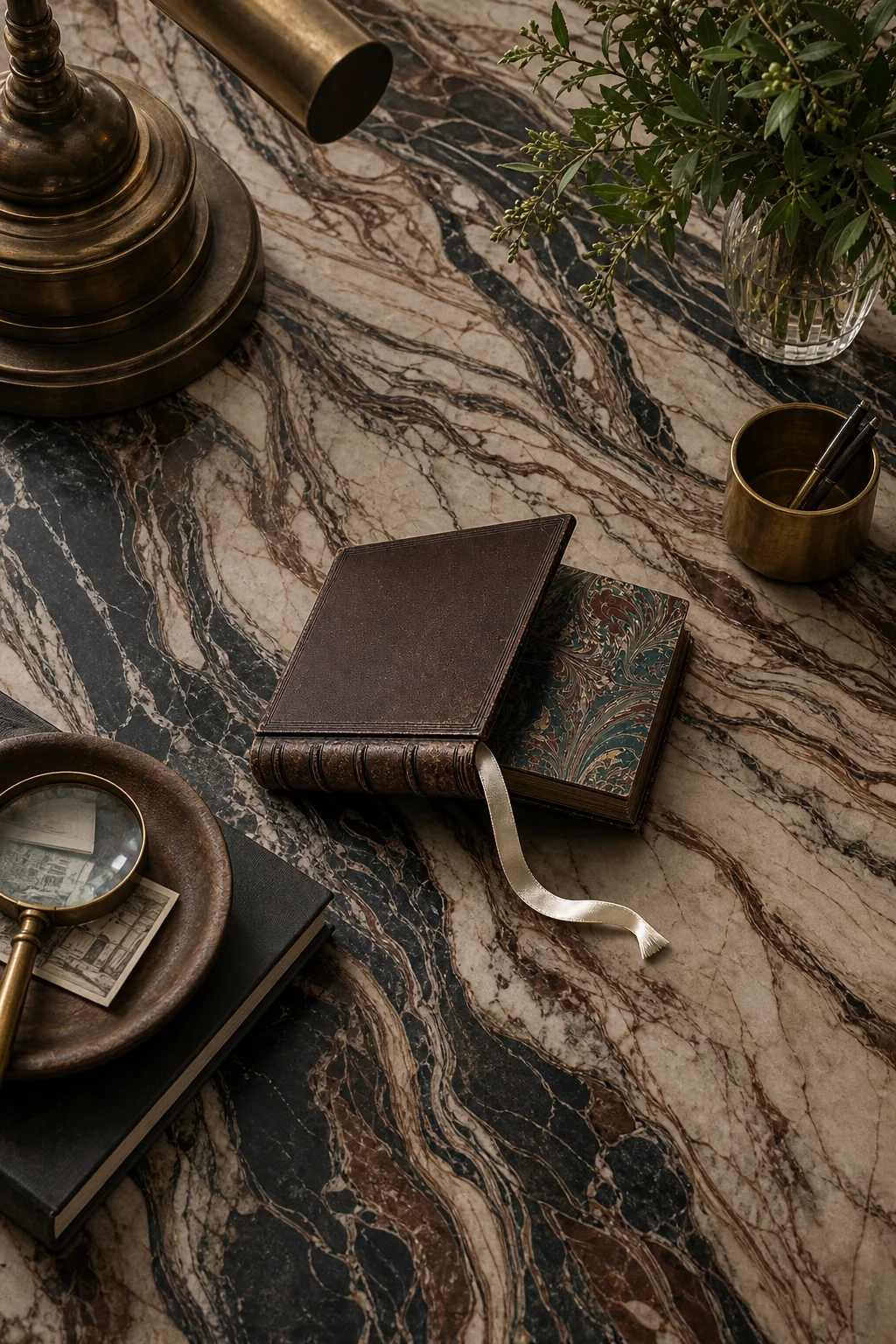
A single, massive organic focal point interrupts the strict vertical and horizontal grids of the surrounding cabinetry. A balanced approach centers the space with a boldly veined marble table while softening the rigid wooden grids with heavy cream drapery. For a subtle variation, limit the teal color to a single focal alcove, keeping the rest of the room wrapped entirely in parchment cream and warm walnut. Conversely, a bold execution paints the entire ceiling and upper walls in the deep endpaper teal, allowing the dark walnut bookcases to blend into a moody, enveloping study space that fully embraces the diary’s vibrant interior.
When translating small-scale book marbling to a room, rely on natural stone veining rather than printed wallpapers to maintain sophistication.