
This Amethyst Geode Became a Primary Bathroom
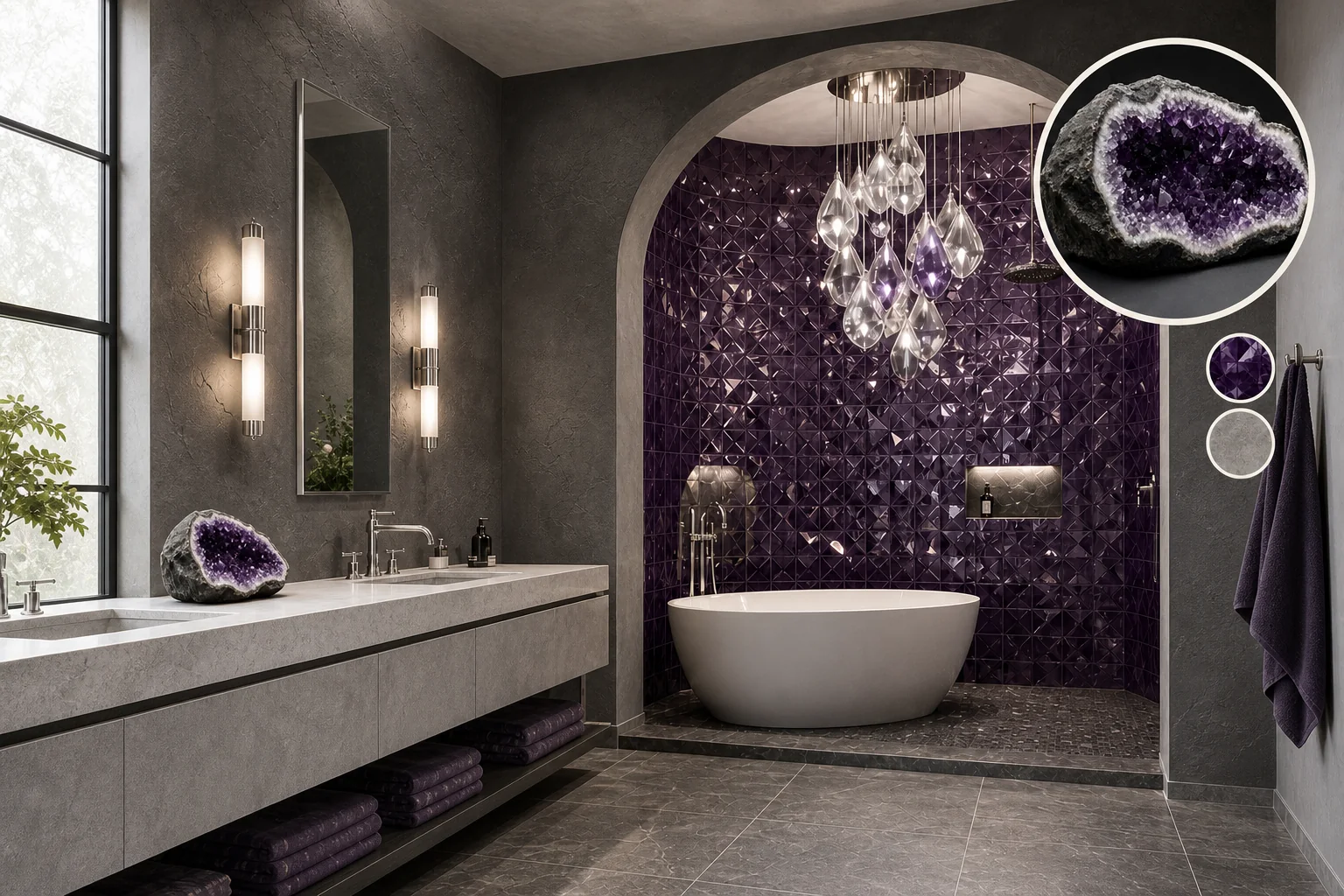
Transforming a raw mineral into a functional interior requires mastering the art of surprise and contrast. By translating a raw amethyst geode into a primary bathroom, we balance a serene, grounded bathing space with hidden brilliance, ensuring matte, expansive surfaces always surround and contain the highly reflective, saturated focal points.
Carving Out the Protective Shell
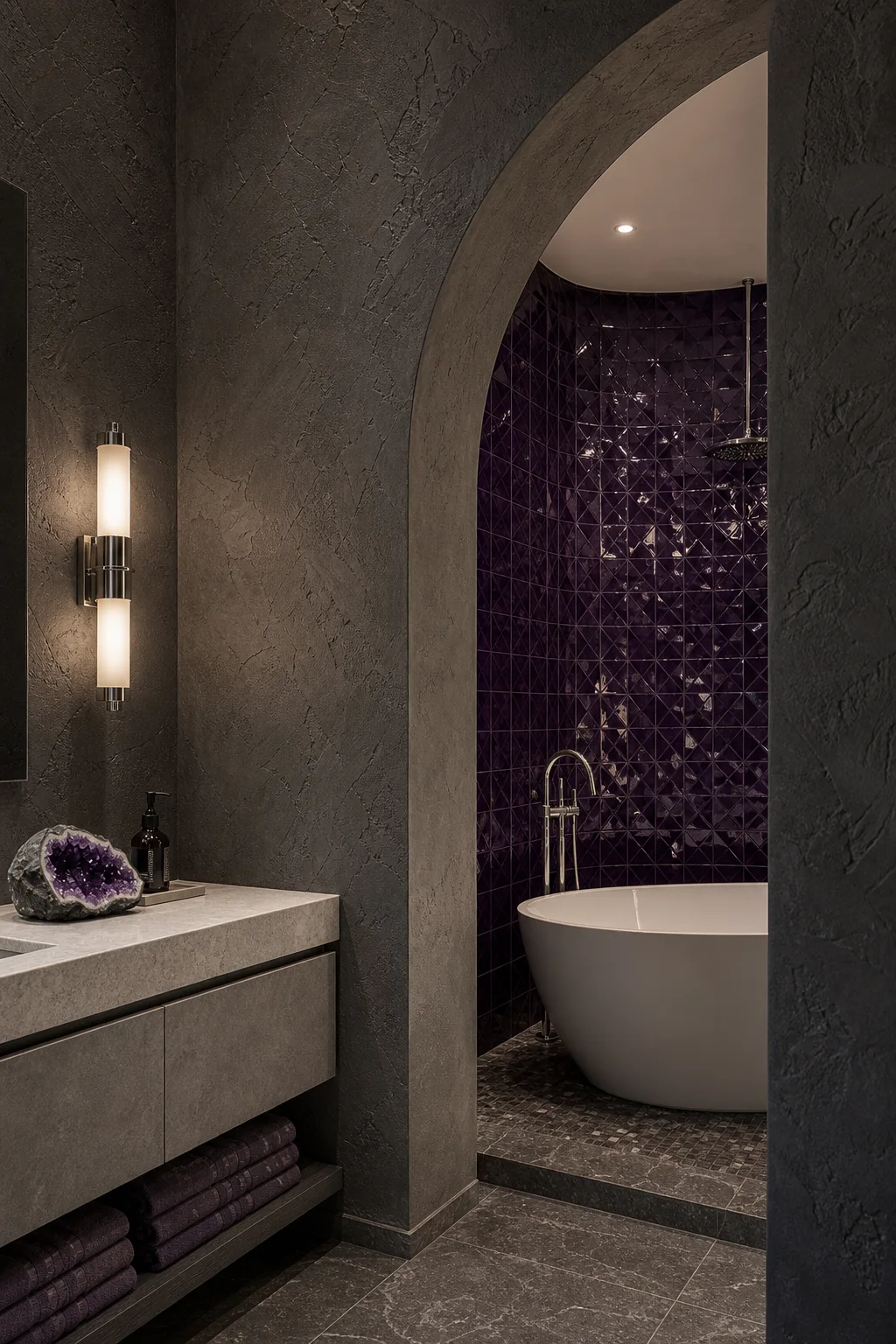
By physically separating the room into an expansive outer zone and a recessed inner sanctum, the architecture mimics the hollow nature of a geode where crystals grow protected inside a rough shell. Focus on creating a distinct wet-room alcove for the tub and shower, keeping the main room’s ceiling high while slightly dropping the alcove ceiling to emphasize the feeling of an enclosed cavity. This foundational move establishes the necessary architectural boundaries for your high-contrast finishes, ensuring the vibrant interior remains a discovered surprise rather than an overwhelming presence. Follow these implementation steps to build the core structure:
- Frame a recessed alcove for the wet zone so the freestanding tub and shower sit within a distinct, enclosed architectural pocket.
- Apply dark plaster to the main room walls to ensure the outer bathroom zone feels expansive but grounded and completely matte.
- Install waterproof backing inside the alcove so the inner cavity is fully prepped for heavy glass tile application.
- Tile the entire alcove interior with glass to ensure the recessed zone is completely wrapped in reflective, jewel-toned surfaces.
- Position the freestanding tub centrally within the alcove to anchor the glowing inner cavity.
Following the Concentric Gradient
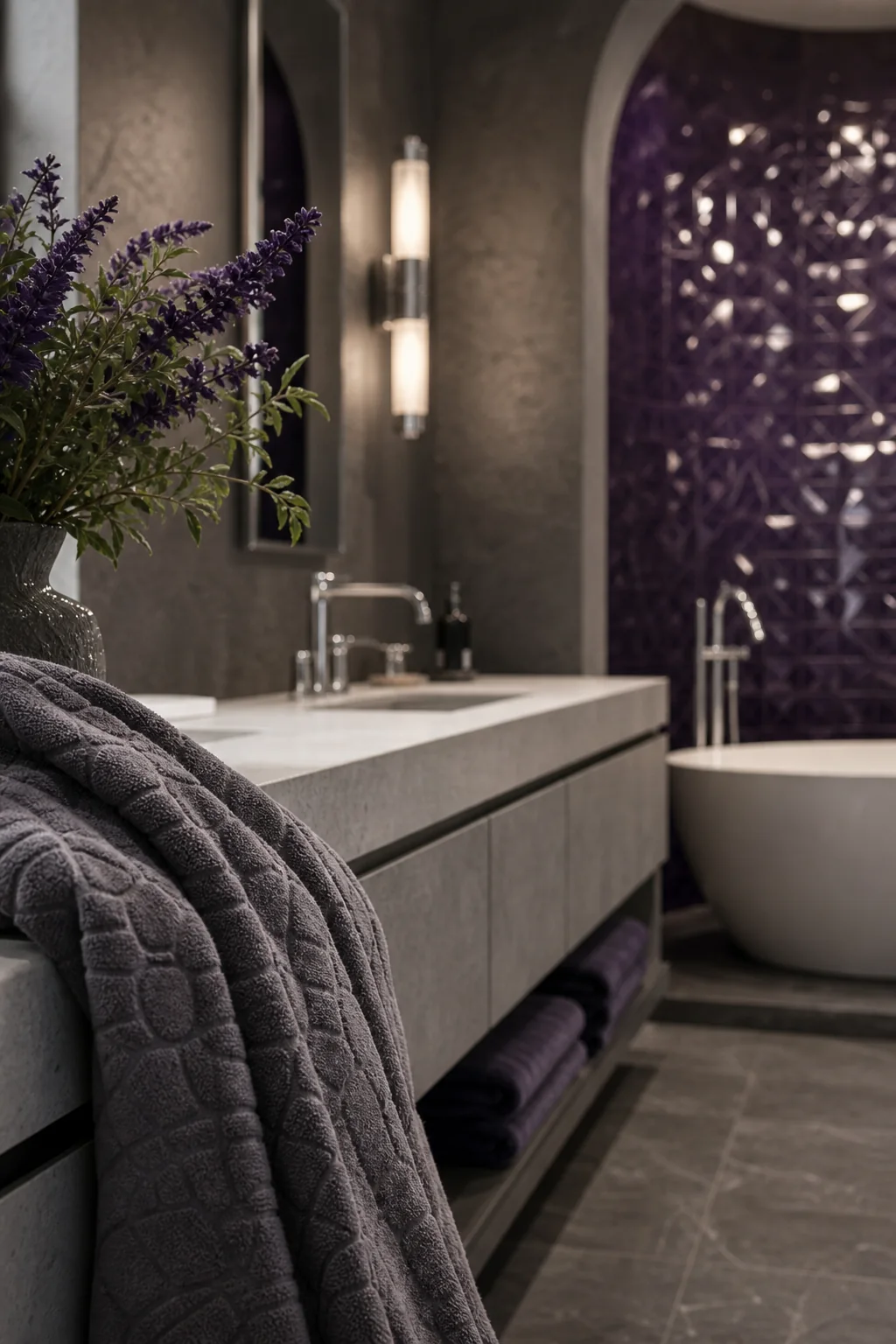
The palette moves inward from dark, desaturated borders to a bright, highly saturated core, pulling the eye directly into the bathing zone. Use basalt grey for the primary walls and flooring to establish the outer shell, introduce quartz white through the vanity and tub, and save the amethyst violet exclusively for the wet-room interior. This concentric transition from dark grey outer stone to pale quartz to a deep violet center creates a natural, magnetic draw toward the water, guiding the visual experience from rugged calm to sparkling intensity.
| Source trait | Visible evidence | Room move |
|---|---|---|
| Enclosed Cavity | The geode’s hollow structure where crystals grow protected inside a rough shell | A recessed shower and tub alcove lined entirely in reflective materials, contrasting with the matte main room |
| Concentric Gradient | The transition from dark grey outer stone to pale quartz to deep violet center | Dark grey plaster walls transitioning to a pale grey vanity, culminating in deep violet tiles inside the wet zone |
| Crystalline vs. Matte | The stark contrast between the jagged, sparkling amethyst points and the dull, rough basalt exterior | Glossy, dimensional glass tiles in the shower set against rough-hewn basalt floor tiles and matte plaster walls |
| Faceted Clustering | The irregular, densely packed geometric points of the amethyst crystals catching light | A clustered chandelier of angular, irregular cast-glass pendants suspended over the bathtub |
The Quartz Transition Zone
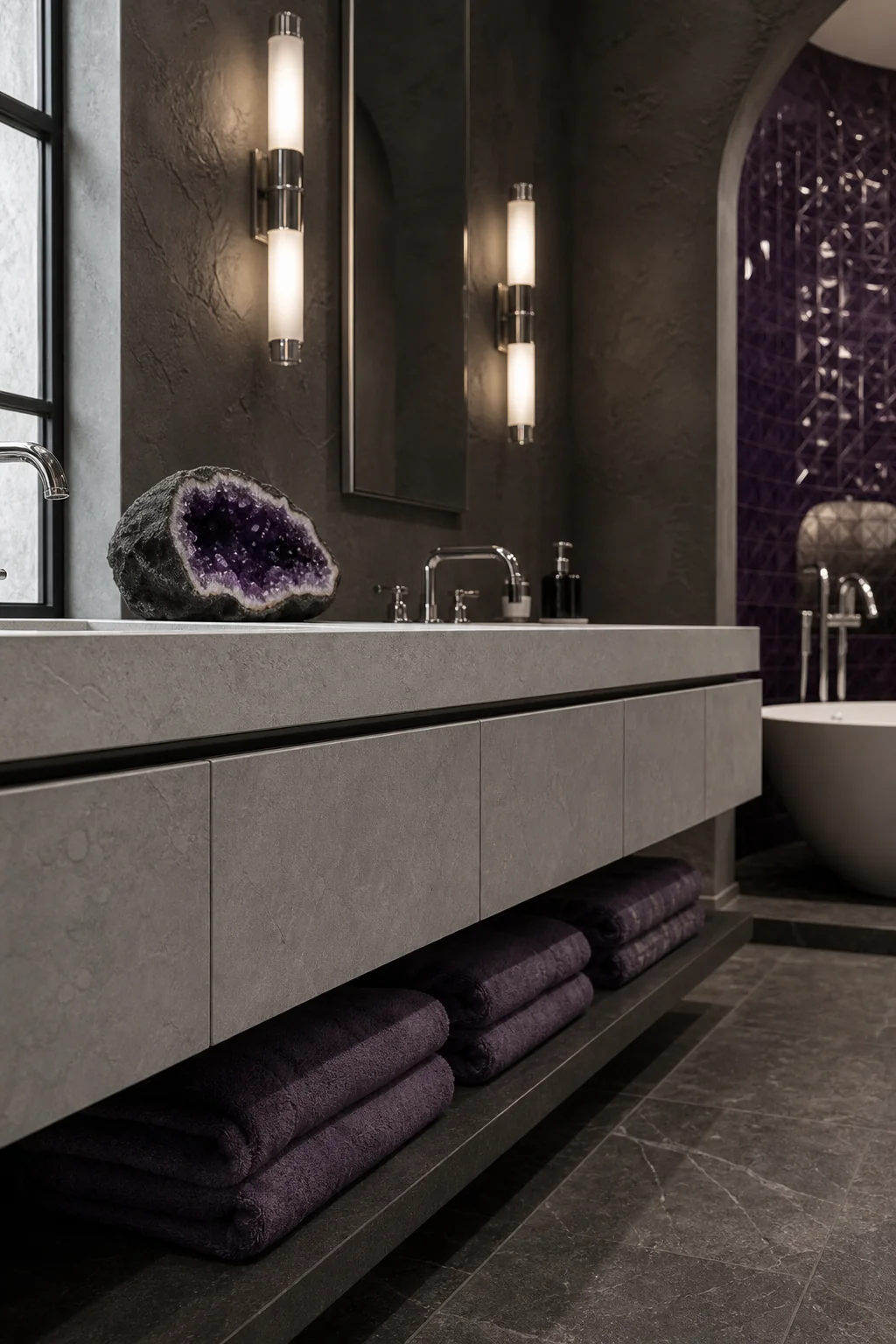
A pale stone vanity mimics the geode’s white quartz band, acting as a vital visual bridge between the heavy, dark exterior and the vibrant, jewel-toned core. By introducing a pale grey stone double vanity against the dark rough-troweled plaster wall, you create a subtle shift in tone before reaching the wet room. This deliberate pause in the color gradient ensures the sudden burst of deep crystal violet feels intentional and architecturally grounded, providing a necessary moment of visual rest between the contrasting extremes of the room’s palette.
Keep the transition zone neutral. A pale grey or white vanity acts as a visual palate cleanser between the dark plaster and the vibrant violet tiles.
Contrasting Crystalline and Matte Surfaces
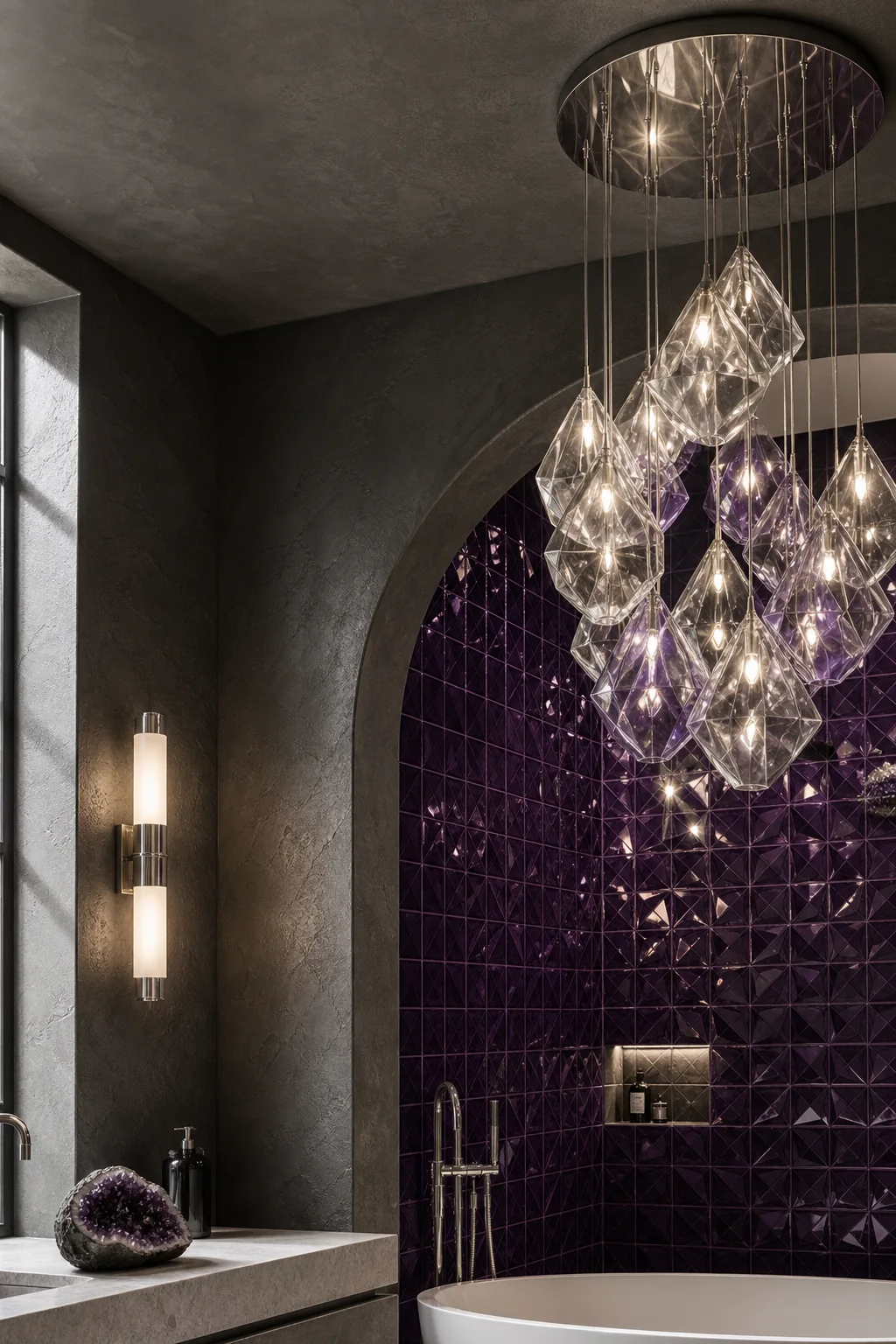
The tactile experience relies on extreme contrast, pairing light-absorbing outer finishes with a light-bouncing, jewel-like interior. Select highly dimensional, glossy glass tiles for the alcove to mimic crystal facets, but ensure the outer plaster and stone floors remain completely matte to prevent the reflective surfaces from overwhelming the space. This interplay between the jagged, sparkling amethyst points and the dull, rough basalt exterior translates into a sophisticated balance of rough and polished materials, allowing the bathing alcove to shine brilliantly without competing with the surrounding foundational architecture. Use this material checklist to source your finishes:
Capturing the Crystal Core
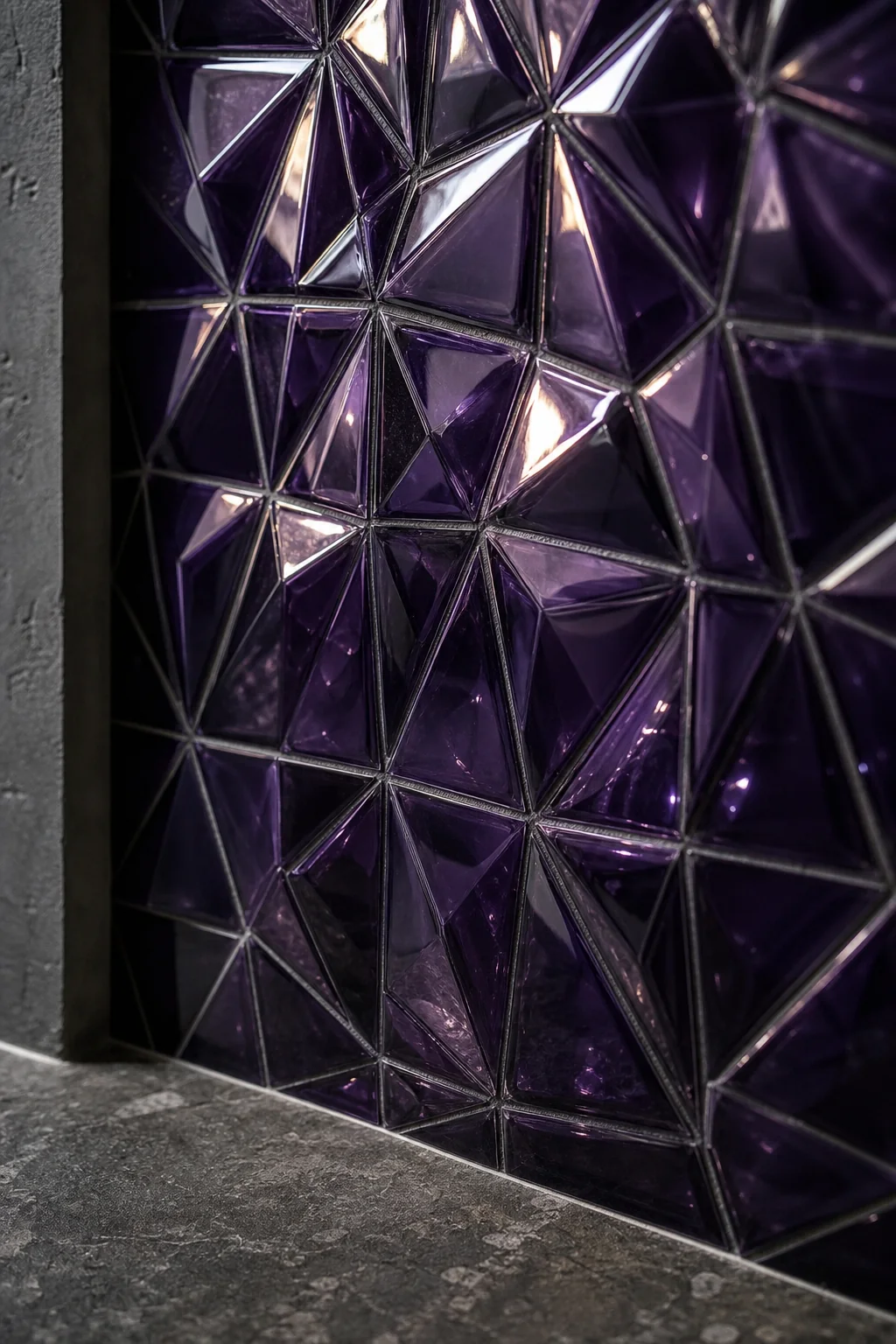
Faceted violet tiles recreate the sparkling depth of amethyst crystals, transforming the functional wet room into a dazzling focal point. A split raw amethyst geode reveals a deep cavity filled with sparkling violet crystals, which translates directly to glossy, dimensional glass tiles in the shower. When illuminated correctly, these irregular surfaces bounce light dynamically, creating a dense, clustered reflection that contrasts beautifully with the expansive, quiet matte surfaces of the main bathroom. This concentrated brilliance delivers the ultimate payoff of the geode concept, turning a daily ritual into an immersive experience.
Use focused accent lighting inside the alcove. Angled spotlights will bounce off the faceted glass tiles, creating a sparkling effect without illuminating the matte walls.
Suspending Faceted Clusters
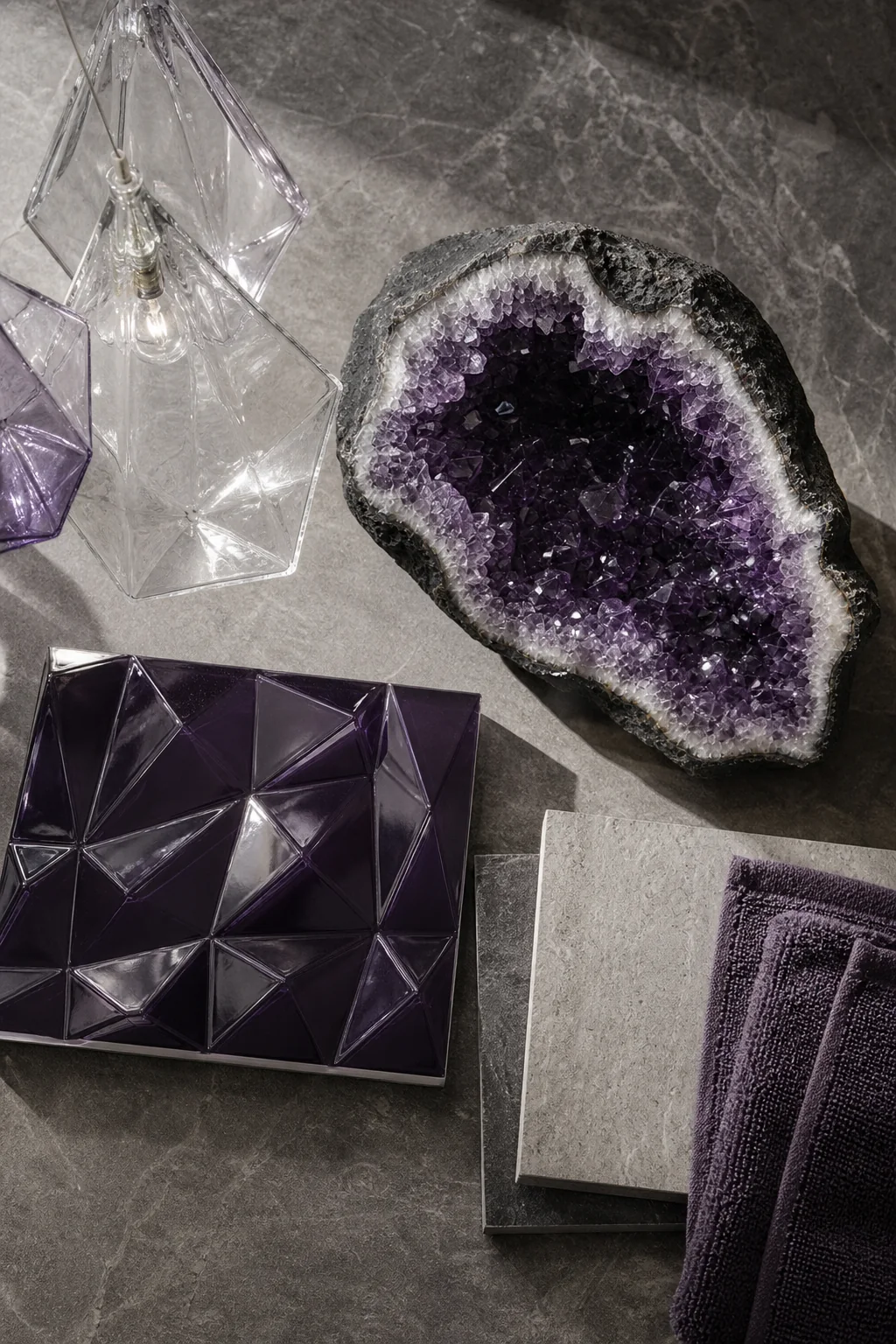
To capture the organic, jagged growth of crystals, lighting fixtures introduce clustered, irregular geometry into the otherwise clean architectural lines. An angular glass chandelier clusters densely above the freestanding tub, catching light like faceted points. You can scale this design’s intensity: a subtle approach limits violet to a single shower accent wall, a balanced room wraps the entire recessed wet alcove in deep violet glass, and a bold execution extends these tiles onto the ceiling alongside dramatically veined purple marble. This final layer of lighting and form completes the translation.
Choose modern cast-glass pendants with irregular geometric forms to evoke the feeling of a geode without looking like a theme.