
This Postcard Box Became a Study
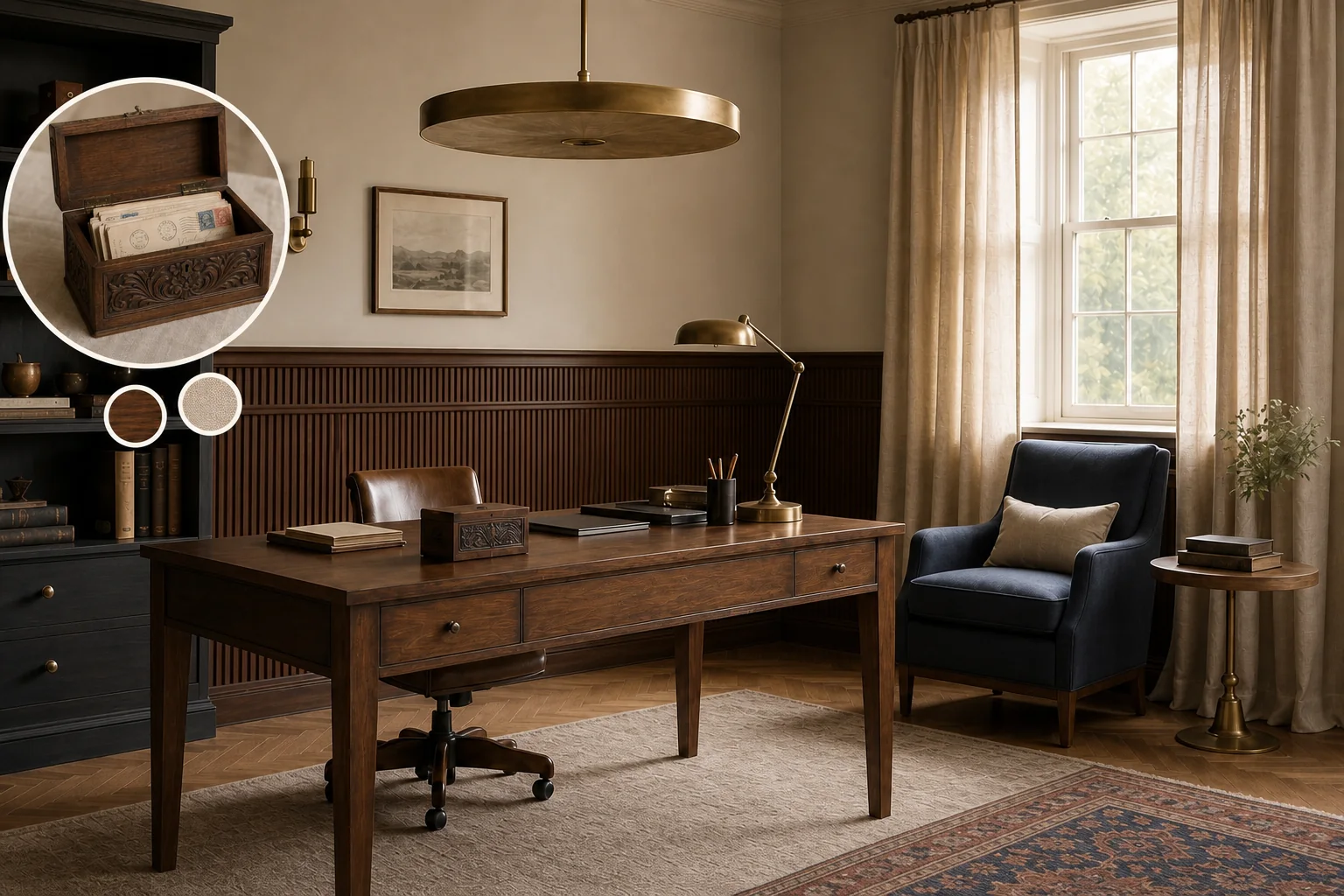
Translating a nostalgic Edwardian carved wood postcard box into a functional study requires balancing heavy textures with breathable space. To prevent the intricate wood from feeling oppressive, this design anchors tactile warmth below while keeping the upper half of the room light and matte.
Grounding the room in carved walnut
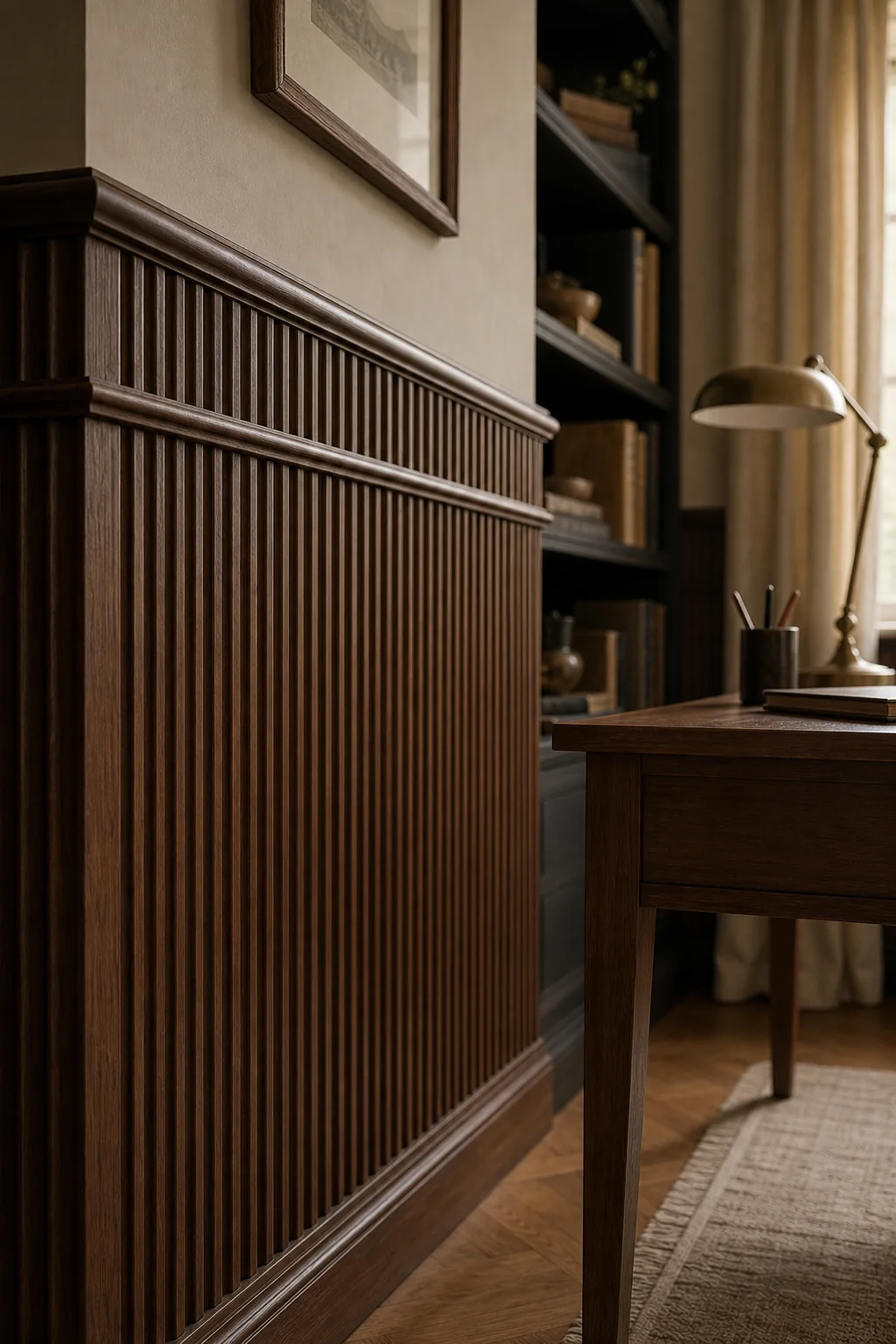
The deep, tactile relief of the antique box establishes a heavy, grounded base for the workspace through rich walnut ribbed wainscoting wrapping the lower walls. This architectural foundation mimics the intricate carved wood exterior, providing essential tactile warmth without overwhelming the room’s proportions. By anchoring the space with dark, heavily textured materials at eye level when seated, the design creates a feeling of historic permanence and quiet focus. Achieving this seamless integration of Edwardian-inspired woodwork requires careful measurement and a precise sequence to successfully install ribbed paneling across the lower half of your study.
- Measure and mark the wainscoting height across the room, ensuring a perfectly level line sits at exactly thirty-six inches above the finished floor to establish the foundation.
- Install the ribbed walnut panels along the lower walls, making certain the wood is securely fastened with absolutely no visible gaps between the tight fluted joints.
- Cap the paneling with a clean horizontal wood dado rail to create a sharp, elegant transition separating the ribbed lower wall from the upper drywall.
- Stain and seal the wood surfaces carefully so the walnut reads as a rich, matte brown without any high-gloss modern reflections that would break the illusion.
- Paint the upper walls and ceiling a flat parchment tone to finalize the contrast between the heavy lower wainscoting and the breathable upper atmosphere.
Faded inks and aged parchment
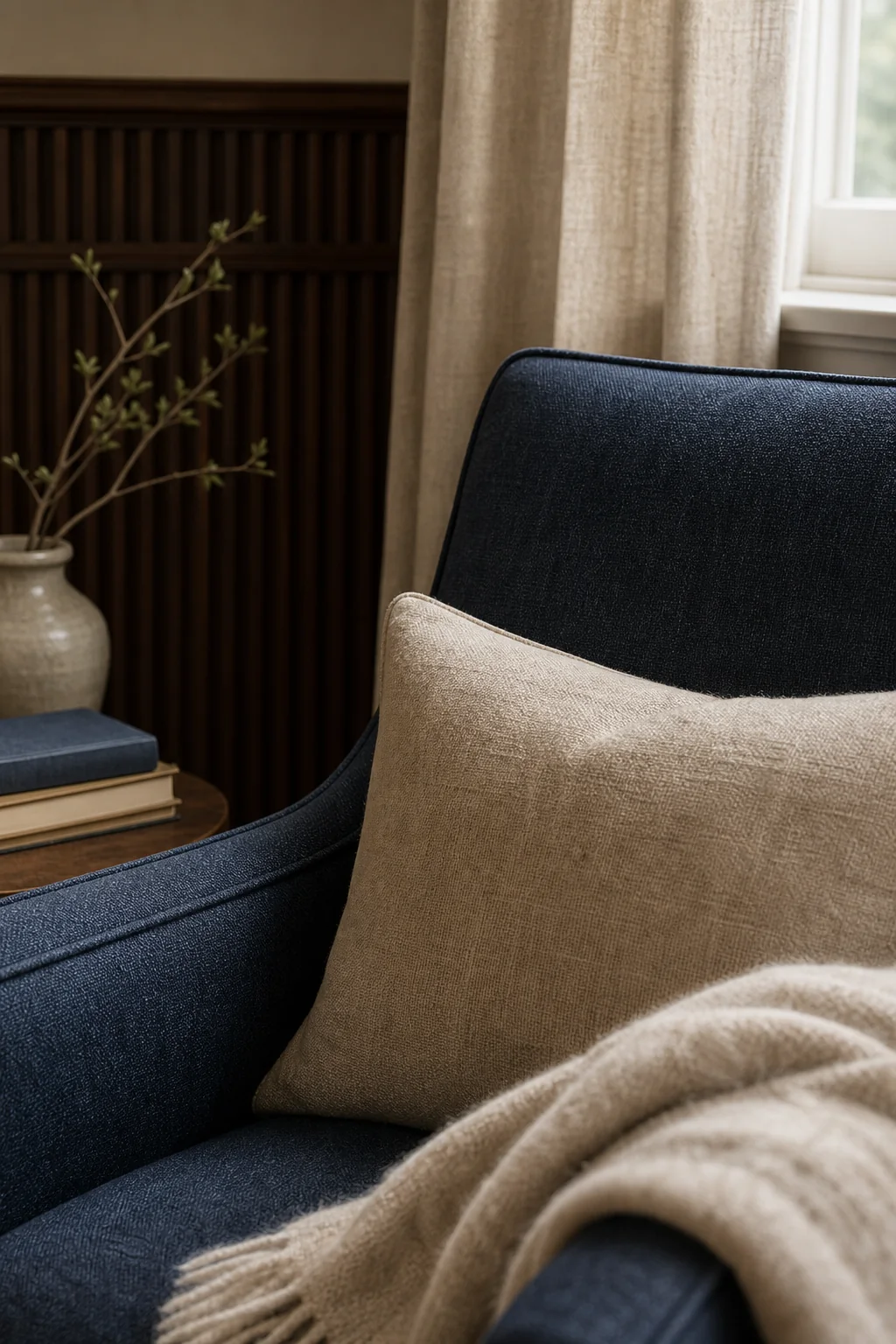
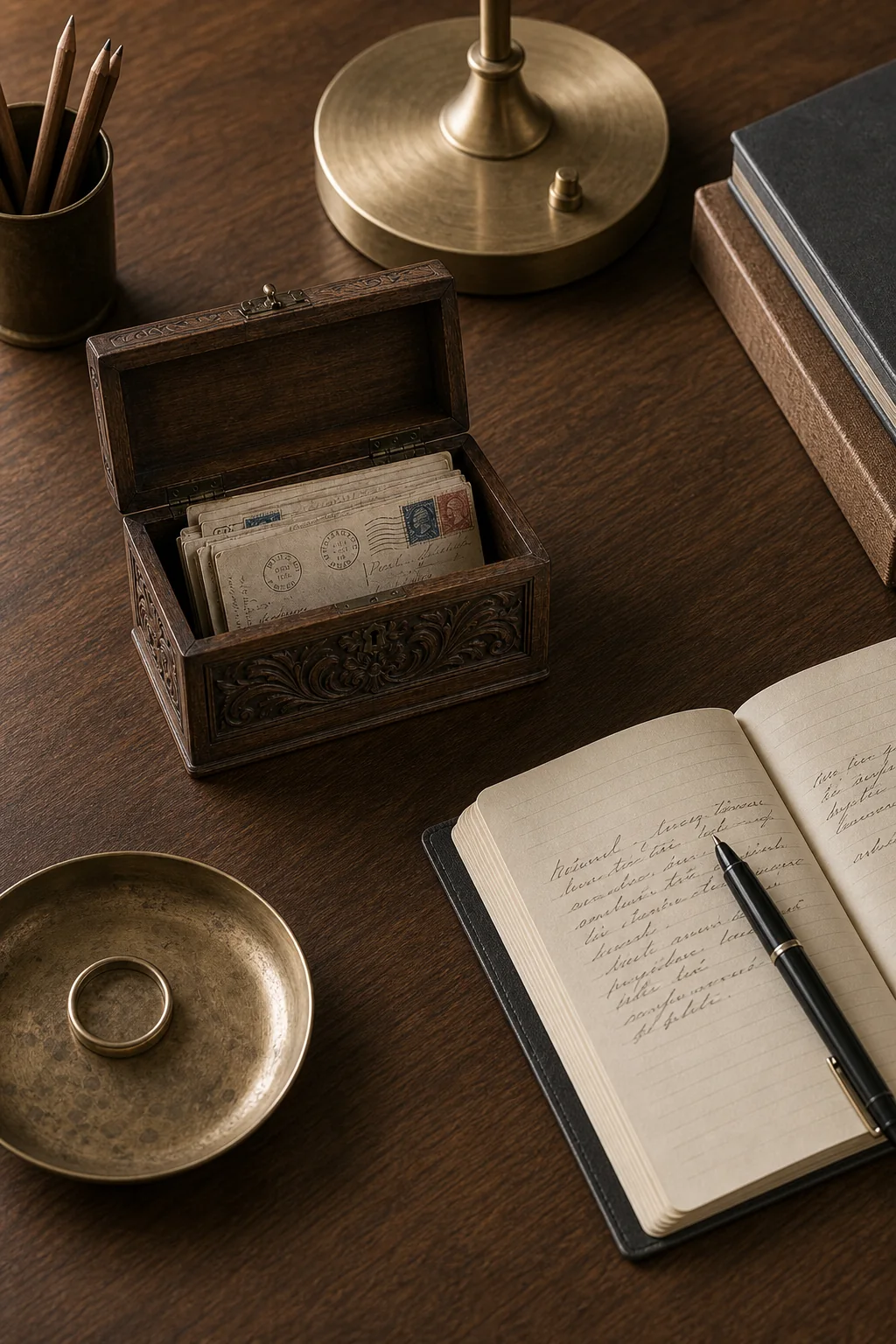
By lifting the faded hues of vintage postal stamps and aged paper, the room achieves a quiet, nostalgic color palette that relies on parchment-colored matte upper walls to absorb ambient light. This strategic separation of dark walnut and light, chalky tones ensures the workspace remains sophisticated and visually expansive. Drawing directly from the sepia-toned cardstock and faded brick red postal marks, the color strategy prevents the heavy antique inspiration from turning the study into a dark cavern. The precise relationship between these historical ephemera traits and the resulting interior architecture is detailed in the visual-DNA mapping table below.
| Source trait | Visible evidence | Room move |
|---|---|---|
| Carved relief | The intricate, tactile carved wood exterior of the Edwardian box | Rich walnut ribbed wainscoting wrapping the lower half of the room to provide grounded, tactile warmth |
| Postal ephemera | The faded indigo stamps and sepia-toned paper of the vintage postcards | Parchment-colored matte upper walls paired with a faded indigo wool upholstered reading chair |
| Porous paper | The matte, slightly fibrous texture of the aged postcard cardstock | Heavy, unbleached linen drapery framing the window, diffusing light like old paper |
| Postmark circles | The repeating stamped circular ink postmarks on the rectangular cards | A large, flat circular aged brass pendant light suspended over the rectangular desk |
A quiet corner for reading
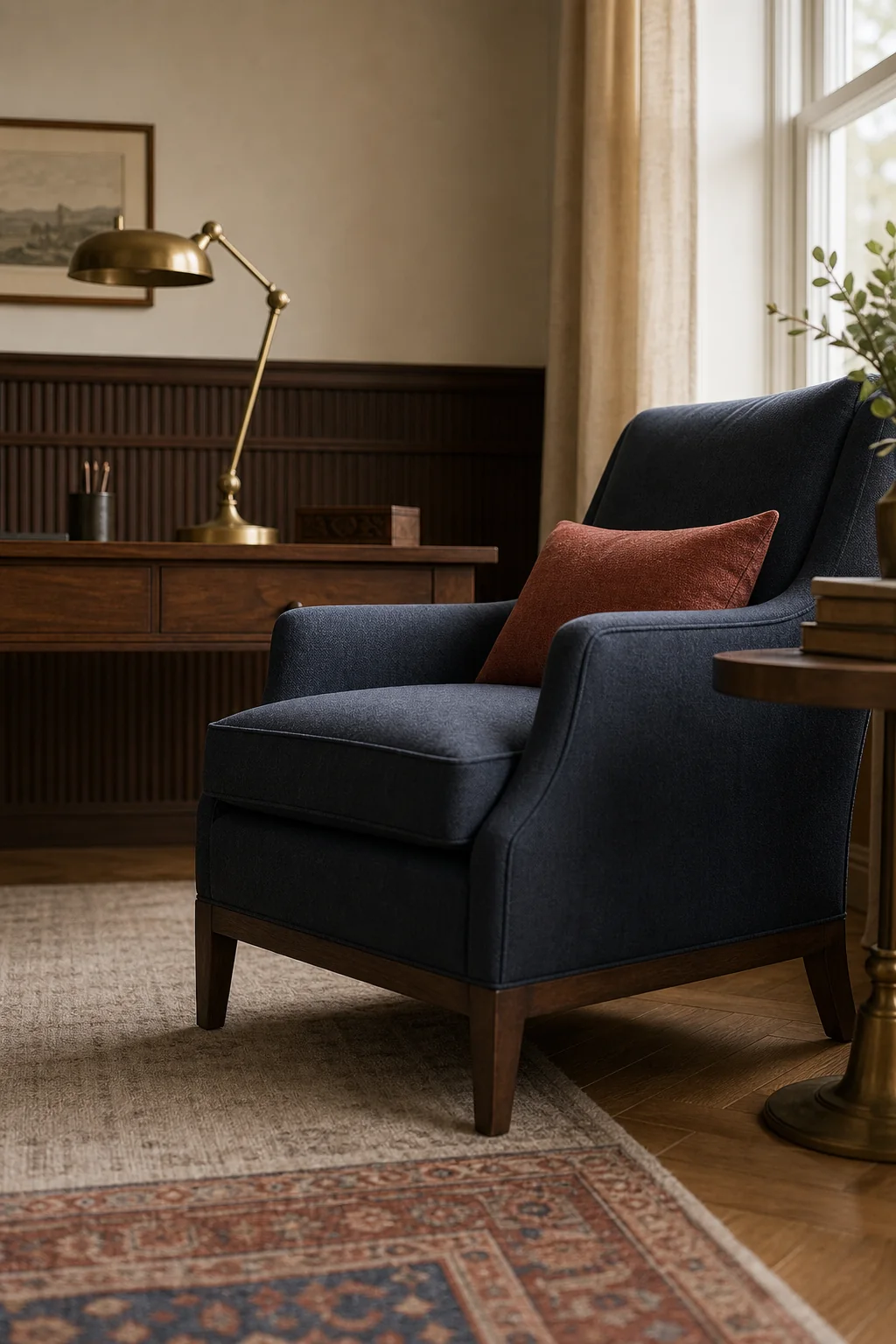
A dedicated reading zone introduces soft upholstery to contrast the rigid wooden architecture, utilizing a faded indigo wool armchair that directly echoes the muted tones of vintage postal ink. Keeping this accent color strictly within the textiles allows the parchment walls to dominate the upper visual field, maintaining the delicate balance between historical ephemera and a modern, breathable environment. The addition of a small brick-red lumbar pillow further references the faded postal stamps, creating a cohesive vignette that feels deeply connected to the original postcard box while providing a highly functional, comfortable retreat within the structured workspace.
The tactile nature of porous paper
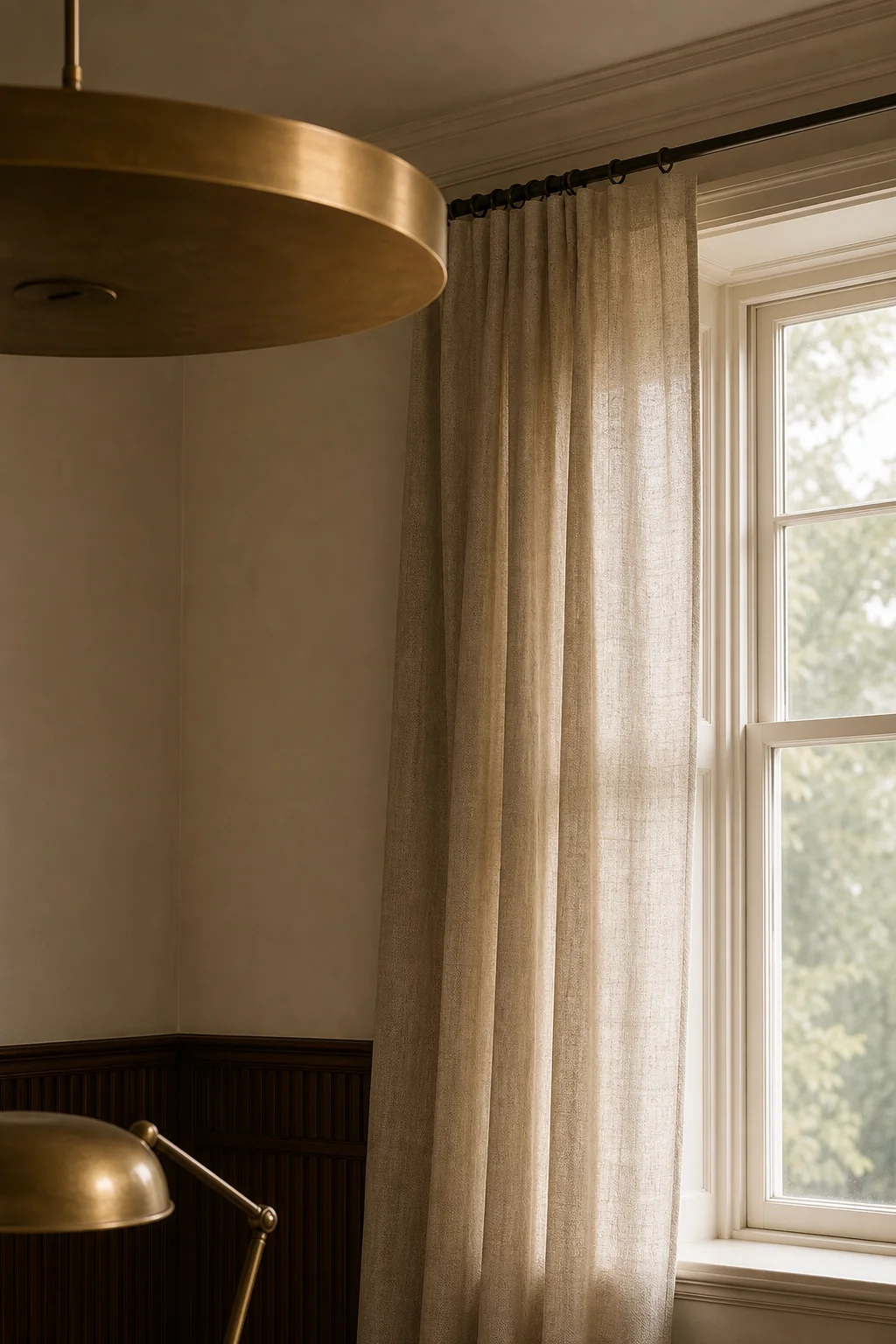
The fibrous, light-absorbing quality of old cardstock translates directly into the textiles, softening the hard edges of the wooden architecture with unbleached heavyweight linen drapery framing the tall window. This material choice effectively diffuses incoming natural daylight, casting gentle shadows that mimic the matte surface of porous postcard paper. Avoiding shiny silks or synthetic blends is crucial to maintaining the illusion of aged ephemera, as high-gloss finishes would instantly disrupt the room’s grounded, historic atmosphere. Selecting the right tactile finishes requires a specific curation of matte and natural materials to complete the room’s sophisticated sensory experience.
Stamping circles onto a linear grid
Just as round postmarks break up the rectangular geometry of stacked postcards, a large, flat circular aged brass pendant punctuates the rigid lines of the paneled walls. This metallic punctuation point mimics the stamped ink postmarks, providing essential task lighting while introducing a contrasting shape to the predominantly linear room. By keeping the clean-lined walnut desk and surrounding furniture profiles relatively square, the circular lighting fixture commands attention and reinforces the rhythm of horizontal stacking interrupted by singular focal points. This interplay between rigid grids and perfect circles brings a dynamic, deliberate energy to the study.
Suspend the circular pendant low enough over the desk to create an intimate pool of light, reinforcing the workspace as the primary focus while keeping other furniture profiles relatively square to emphasize the circular focal points.
Illuminating the workspace
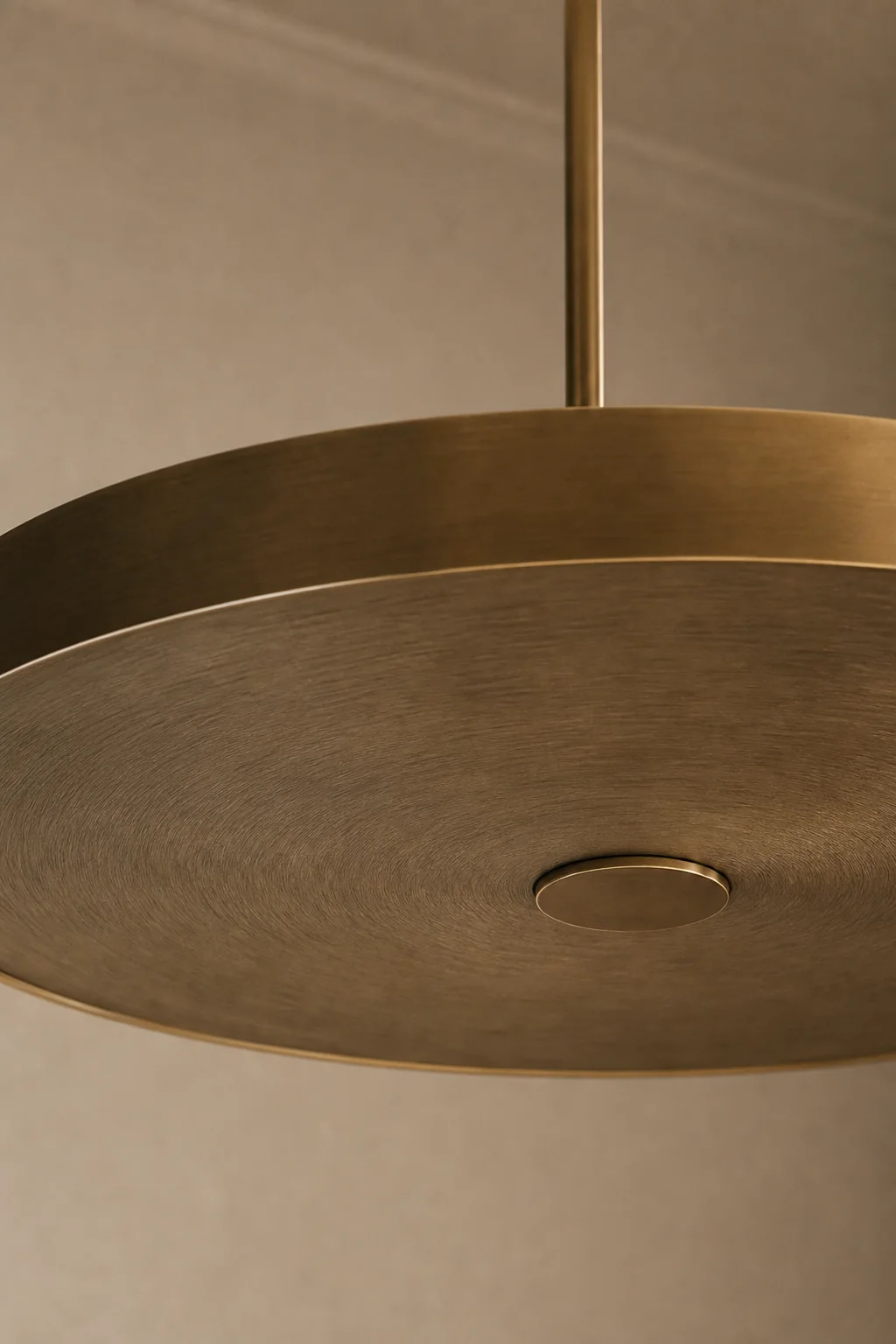
The aged brass lighting not only mimics circular ink postmarks but also dictates the room’s overall mood, which can be adjusted depending on your desired design intensity. For a subtle approach, limit the walnut to a simple baseboard and desk, letting the parchment walls dominate the room. A balanced execution wraps the lower half of the room in ribbed walnut wainscoting while keeping the upper walls light and matte. Finally, a bold interpretation extends the ribbed walnut paneling entirely across the ceiling and introduces a large faded indigo area rug to maximize the historic, tactile immersion.