
This Bellows Camera Became an Artist Studio Room
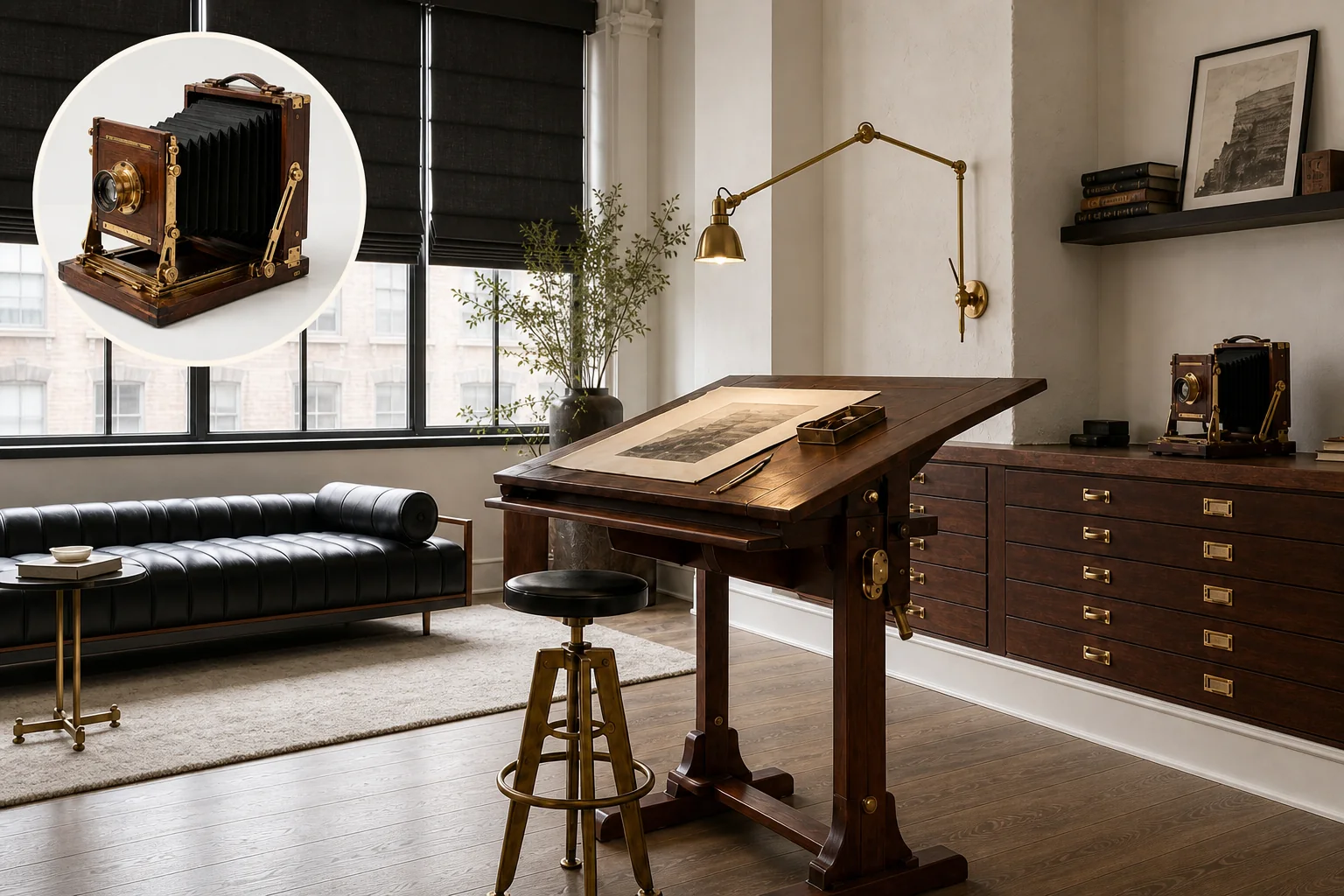
A vintage bellows camera is a masterclass in functional elegance, where precise mechanical articulation and rich, tactile materials serve a distinct purpose. By translating these traits into a focused, highly functional artist studio, we create a grounded workspace, keeping the architectural shell quiet to prevent dark woods from feeling oppressive.
Controlling Light with Precision
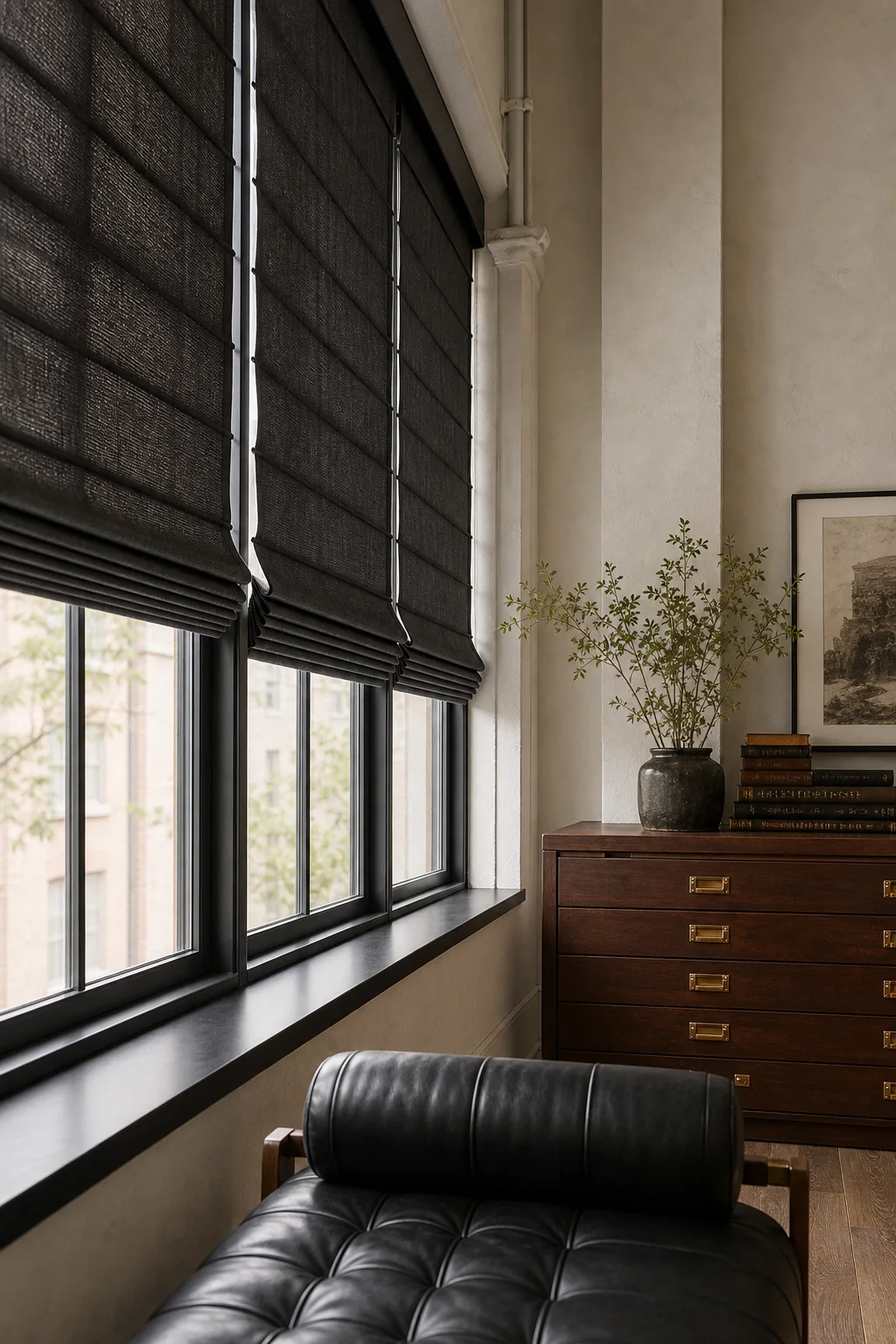
Just as the camera’s bellows expand and contract to shape incoming light, the artist studio relies on crisp, structured window treatments to strictly modulate daylight for painting and drafting. To achieve this level of environmental control, install floor-to-ceiling Roman shades in a light-absorbing charcoal linen, utilizing rigid horizontal battens to maintain sharp, accordion-like folds that mimic the camera body. This purposeful textile choice effectively reduces harsh glare on the drafting surface while adding a strong vertical rhythm to the otherwise quiet, smooth plaster walls of the studio.
Ensure your window frames have enough depth for the pleated shades to stack completely when fully open, maximizing the natural daylight needed for your detailed artistic work.
Balancing Warm Wood and Bright Metal
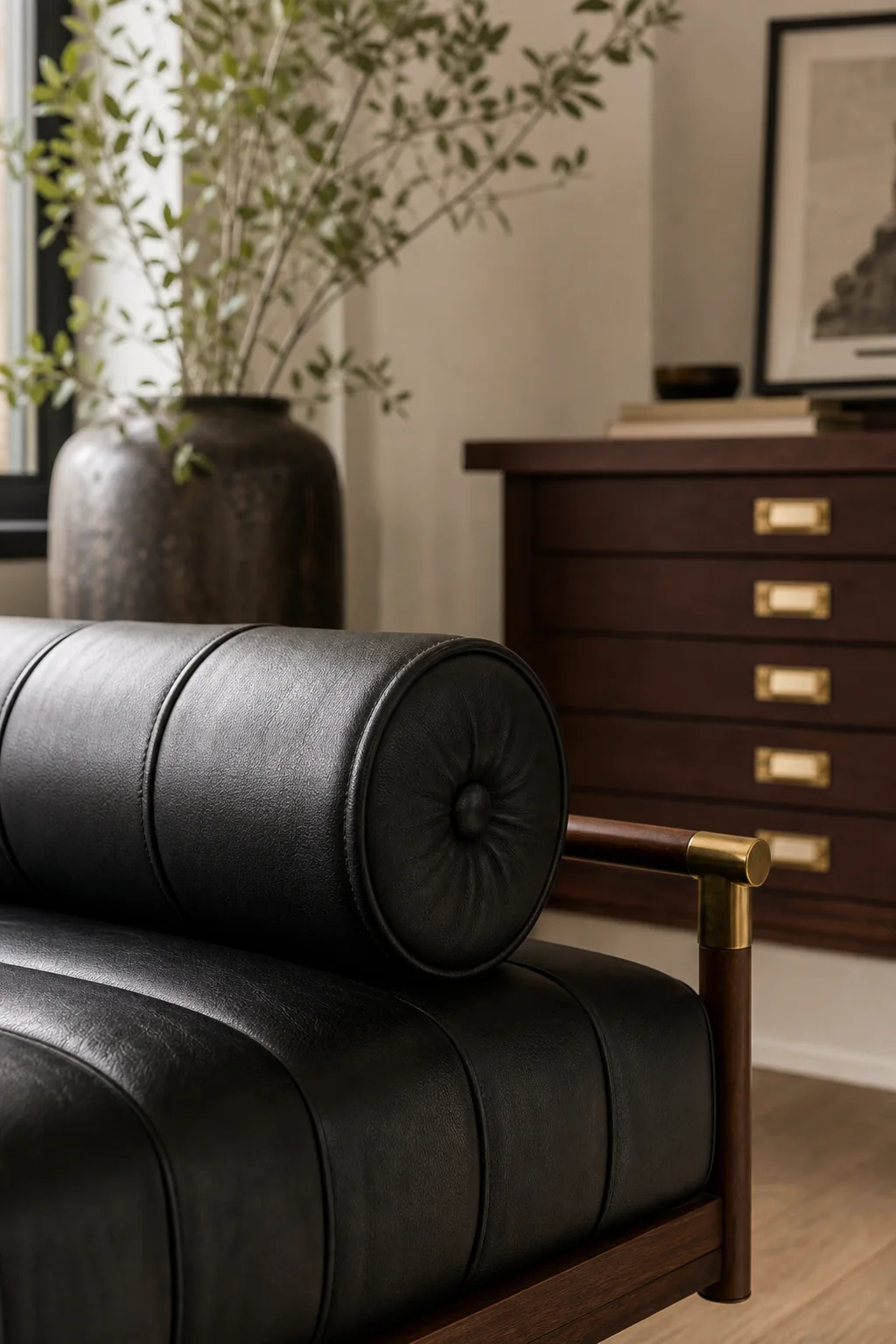
The rich, warm tones of the camera body are directly translated into the room’s primary workstation, anchoring the center of the room with a solid mahogany drafting table that establishes a dedicated zone for creative focus. To prevent these heavy, dark woods from dominating the space, the surrounding architectural shell must remain intentionally quiet. Applying a warm, off-white plaster finish to the walls bounces ambient light around the room, creating a neutral, light-reflecting backdrop that allows the deep reddish-brown wood and unlacquered brass details to stand out beautifully.
| Source trait | Visible evidence | Room move |
|---|---|---|
| light control | the accordion-folded black bellows that expand to control light focus | floor-to-ceiling pleated charcoal linen Roman shades that stack sharply to modulate studio daylight |
| warm contrast | the deep reddish-brown mahogany body set against bright brass fittings | a solid mahogany drafting table paired with unlacquered brass cabinetry pulls, set against quiet plaster walls |
| ribbed leather | the stiff, folded leather of the camera’s flexible body | a tactile, channel-tufted black leather studio daybed used for reading and resting |
| articulating joints | the mechanical brass hinges and sliding tracks that adjust the lens board | an articulating brass wall lamp with exposed mechanical joints extending over the workspace |
Polished Brass Touchpoints
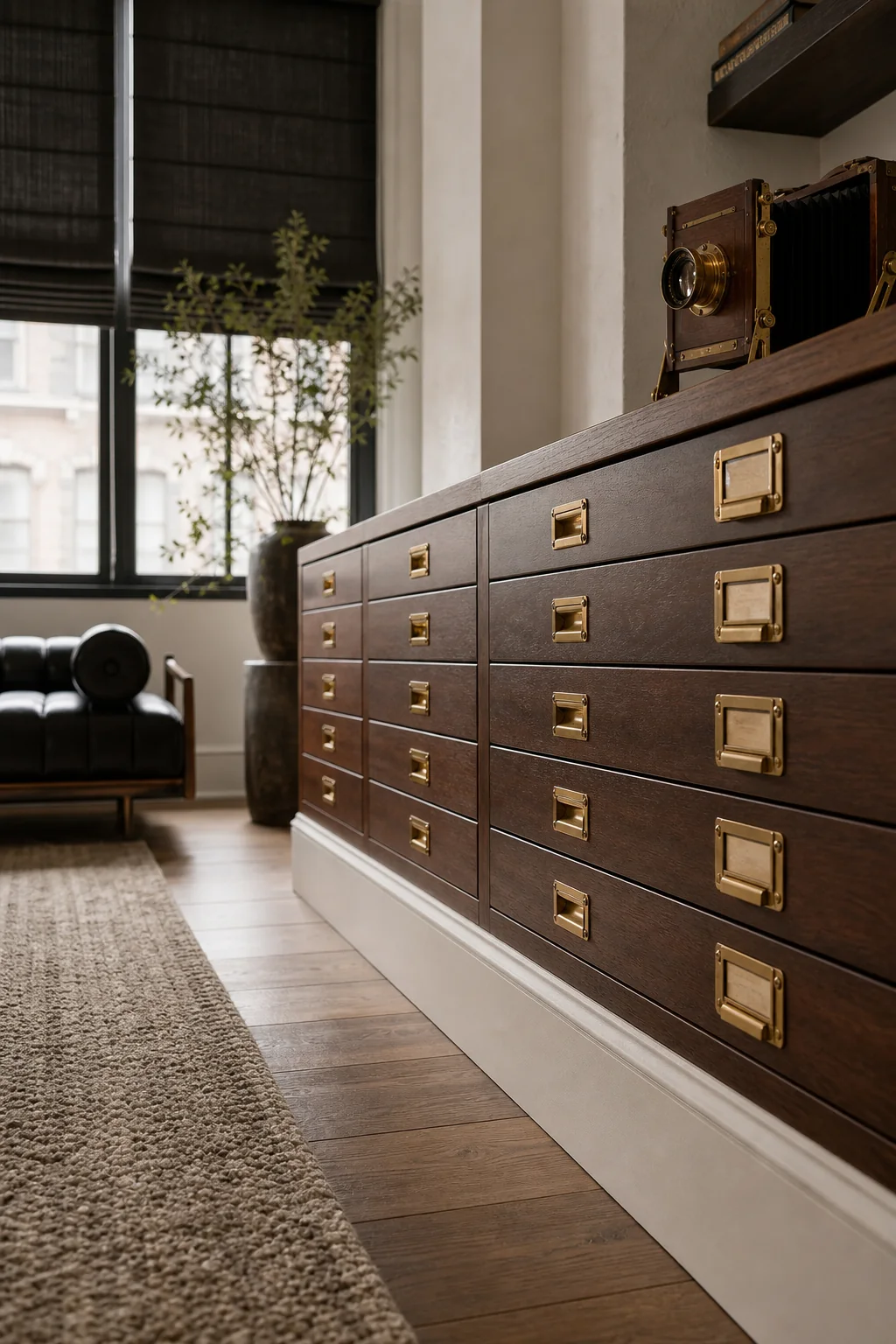
To capture the gleaming metallic touchpoints of the camera’s intricate mechanics, introduce unlacquered brass cabinet hardware on your built-in flat-file storage drawers. Selecting raw finishes that will patina naturally over time ensures the metal ages gracefully alongside the wood, echoing the authentic wear of a vintage field camera. Gathering these essential studio materials will help you establish the foundational textures and colors needed to recreate this mechanical elegance in your own workspace.
Translating Tactile Leather and Wood
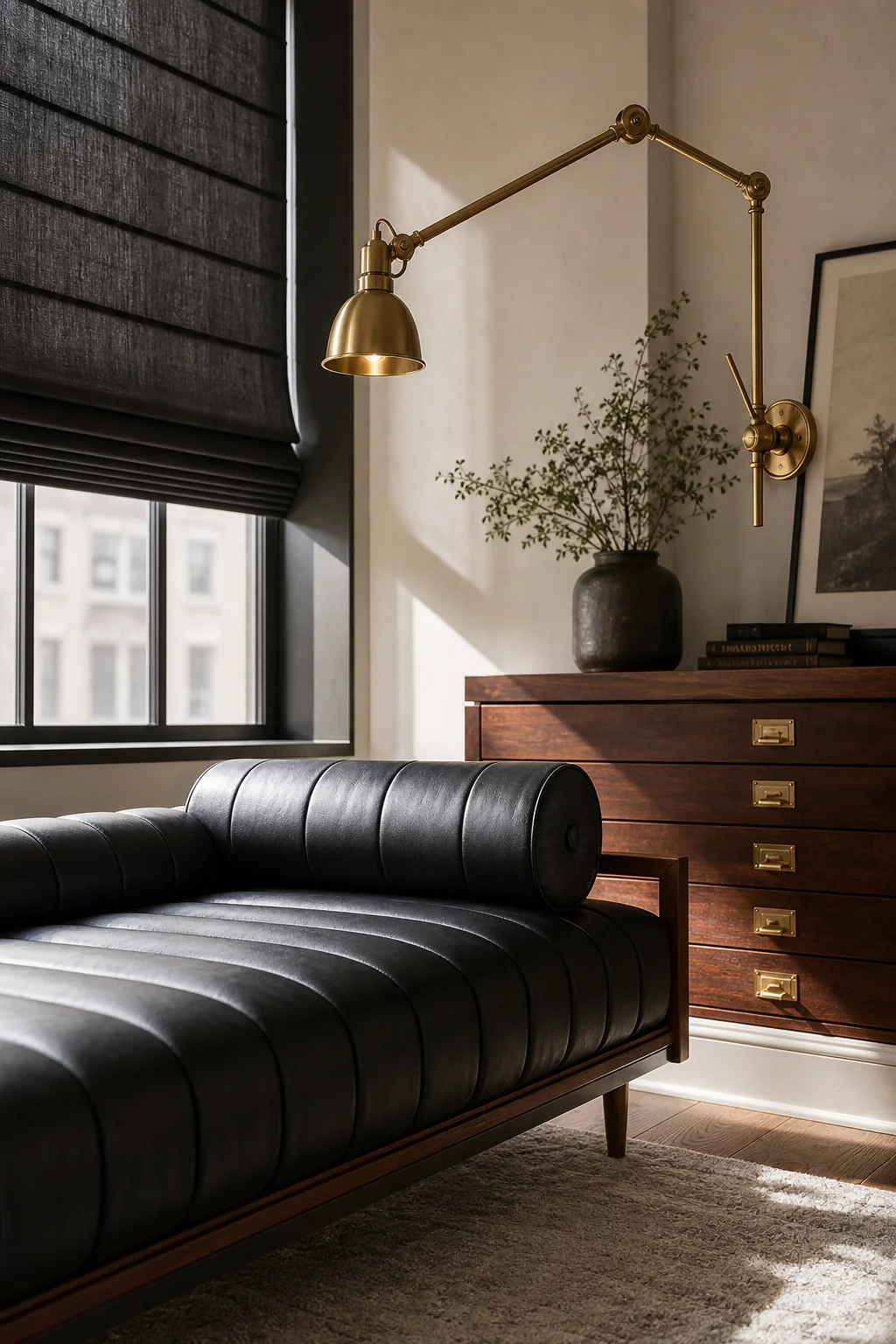
The camera’s ribbed texture is reimagined as a structured seating area, utilizing a daybed with deep channel tufting to echo the accordion folds. Pairing this matte black leather with polished wood recreates the distinct material contrast. When scaling this concept, a subtle approach introduces small brass hardware in a neutral space, while a bold execution wraps the studio in dark charcoal walls. Our balanced design pairs a prominent mahogany drafting table and tufted leather seating with quiet plaster walls, using articulating lighting to control the environment.
Engineering Articulating Work Zones
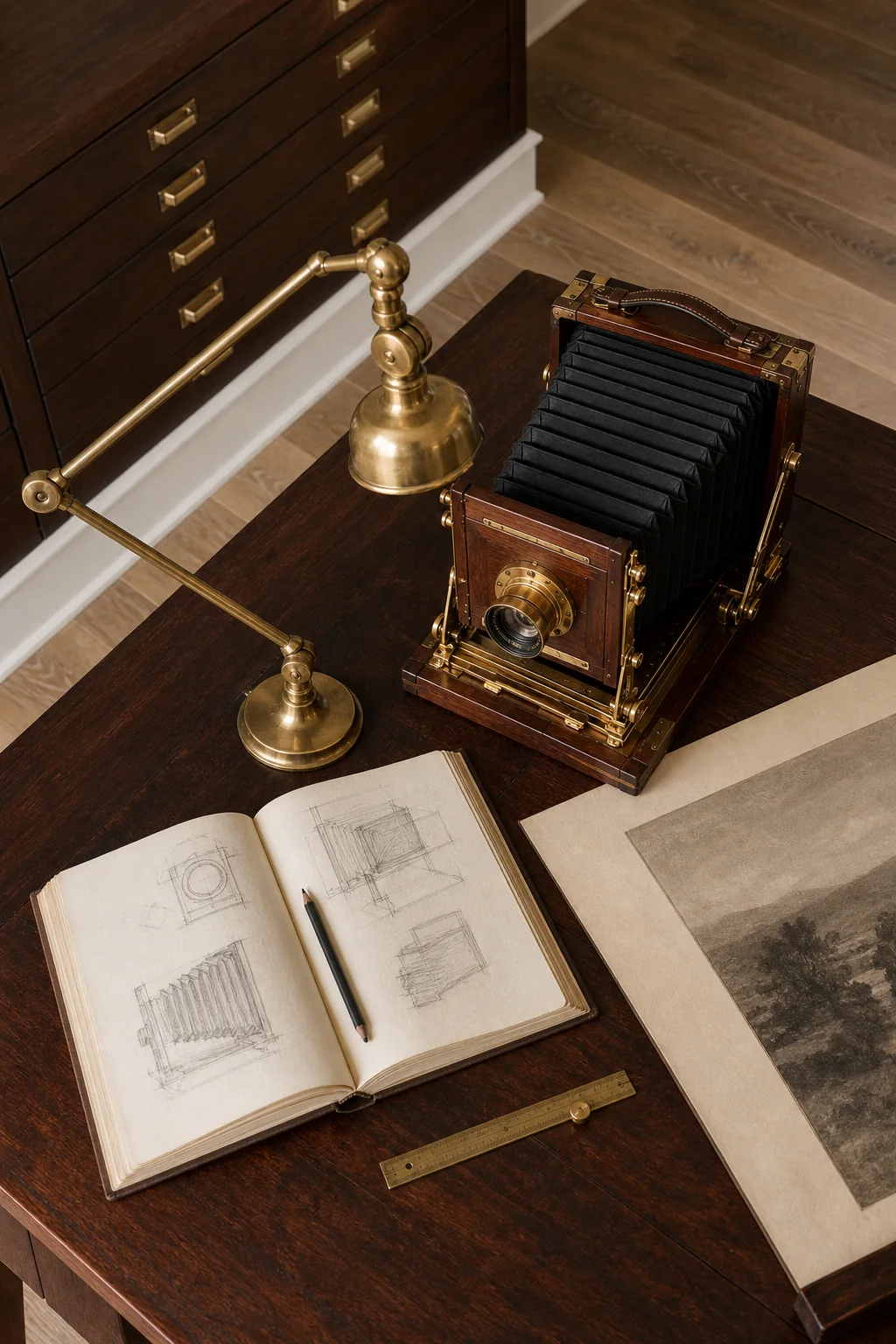
The precise, highly adjustable nature of the camera’s hardware inspires flexible articulating task lighting that adapts instantly to the artist’s immediate needs. Mounting solid brass lamps with exposed mechanical joints above the drafting table provides targeted illumination for detailed drawing and painting. This purposeful articulation ensures that every moving part in the room serves a creative function. Follow these sequential implementation steps to seamlessly integrate these mechanical details and complete your highly functional artist studio.
- Paint the studio walls with a warm white plaster finish to ensure the room feels bright and provides a neutral backdrop for darker furniture
- Install floor-to-ceiling pleated charcoal Roman shades so daylight can be strictly controlled without creating harsh window glare
- Position a solid mahogany drafting table in the center so the primary workspace anchors the room with a rich, warm wood tone
- Mount articulating brass task lamps above the work surface so lighting can be physically adjusted and directed exactly where needed
- Place a channel-tufted black leather daybed against the wall to create a comfortable resting area that echoes the ribbed texture of the bellows
Exposed Mechanical Joints
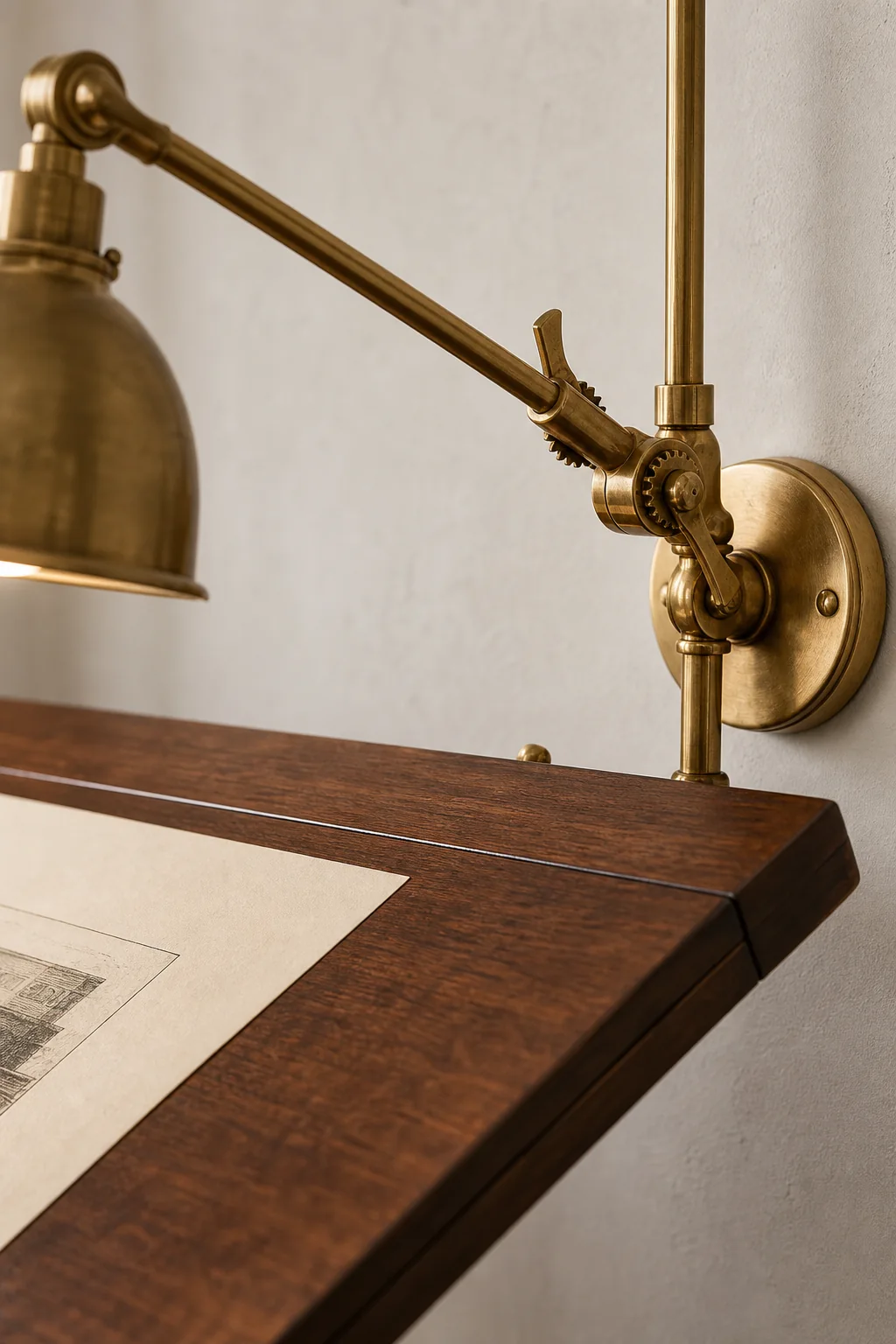
Exposed brass joints mirror the camera’s sliding tracks and hinges, introducing a subtle, repeating metallic rhythm that ties the entire workspace together. Whether adjusting a wingnut on a wall sconce or opening a flat-file drawer, these tactile interactions ensure every mechanical component in the studio serves a distinct, purposeful creative function. By balancing these heavy, engineered details against the soft, light-reflecting plaster walls, the resulting space maintains an atmosphere of focused serenity, perfectly suited for long hours of artistic production.