
This Photo Album Became a Writing Desk Alcove
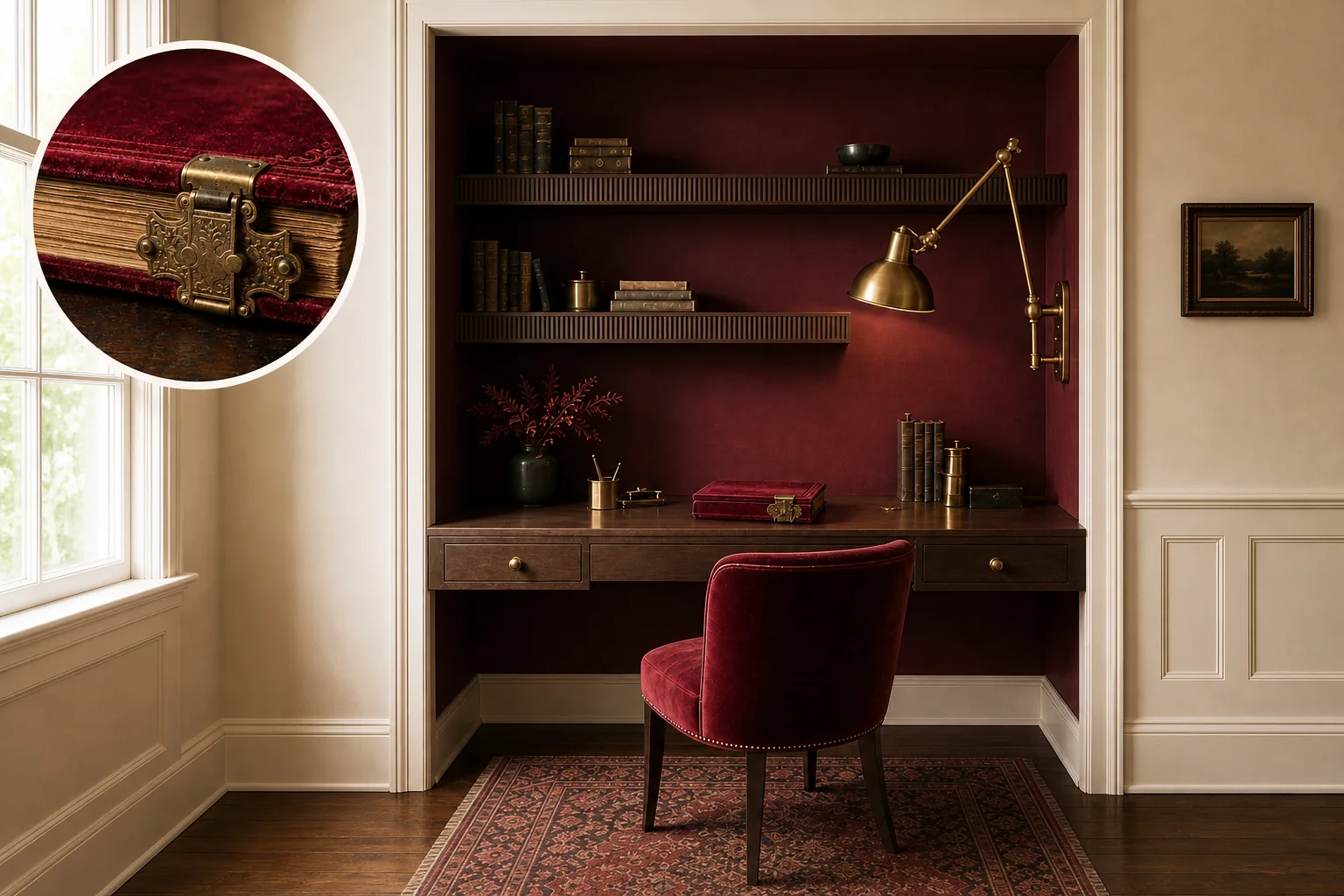
Discover how the heavy, tactile nature of a Victorian photo album translates into a deeply atmospheric and focused architectural workspace. The concept relies on a protective, enveloping enclosure that guards something valuable inside, requiring the intense crimson void to be contained within a defined niche so it doesn’t overwhelm the lighter room.
Carving out a protective crimson void
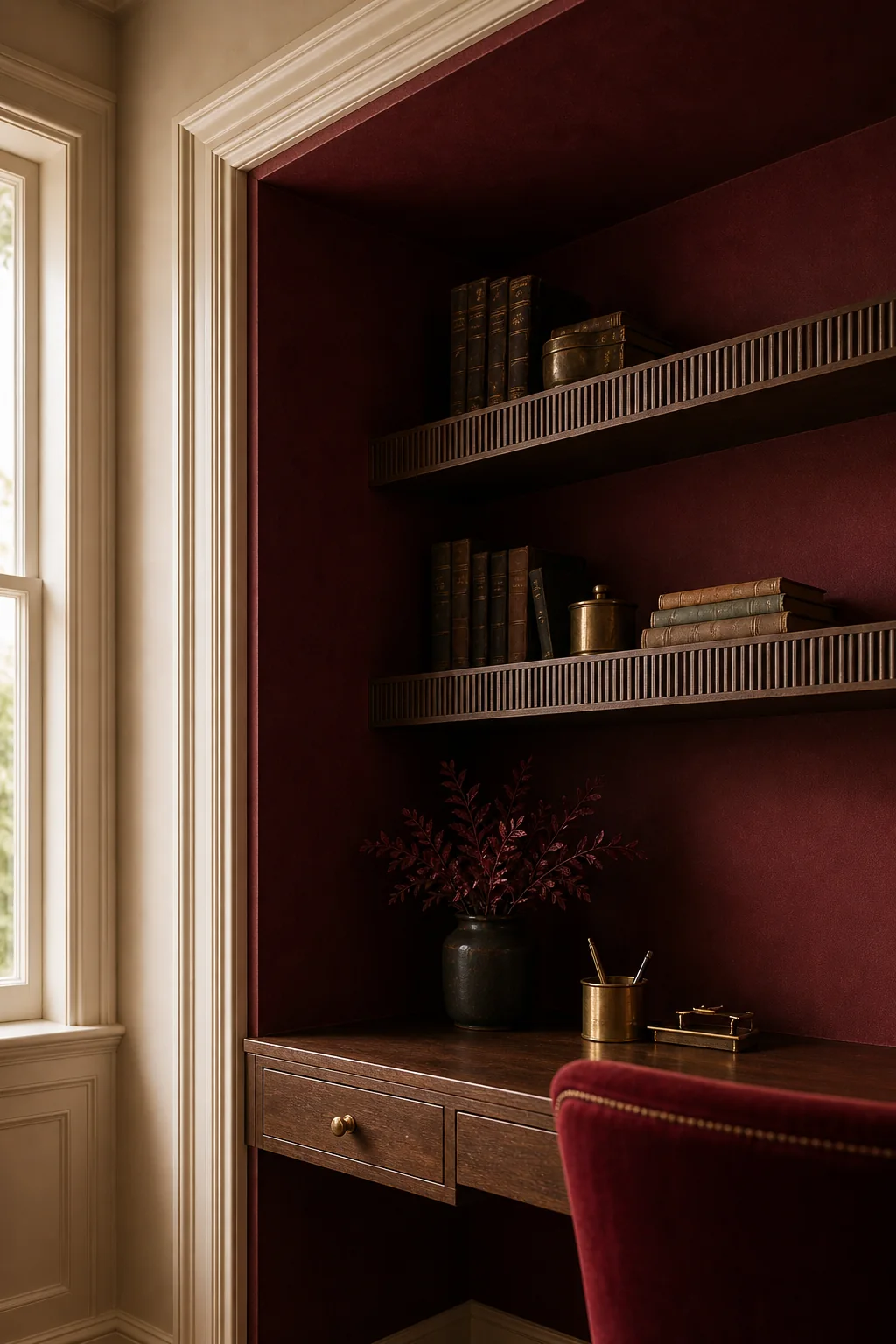
Just as the album’s thick covers shield its delicate sepia contents from the outside world, the alcove’s dark perimeter creates a distinct psychological boundary designed exclusively for focused, uninterrupted work. To achieve this enveloping atmosphere, you must define the alcove boundaries sharply against the main room’s lighter walls, ensuring the transition feels deliberate and architectural. Using a matte, light-absorbing finish is essential to recede the walls and ceiling visually, transforming a simple drywall niche into a profound, shadow-filled sanctuary. Execute the following architectural steps to build the foundation of this moody, concentrated workspace.
- Tape off the exact inner perimeter of the alcove, ensuring sharp, clean transition lines between the dark niche and the main room walls.
- Apply a dark, matte crimson limewash to the niche so the interior absorbs light and feels like a distinct, enveloping void.
- Install the floating walnut desk surface to anchor the dark vertical space with a heavy, stable horizontal plane for writing.
- Mount the floating walnut overhead shelves parallel to the desk, creating stacked horizontal lines that mimic the edges of bound paper.
The sharp sepia boundary
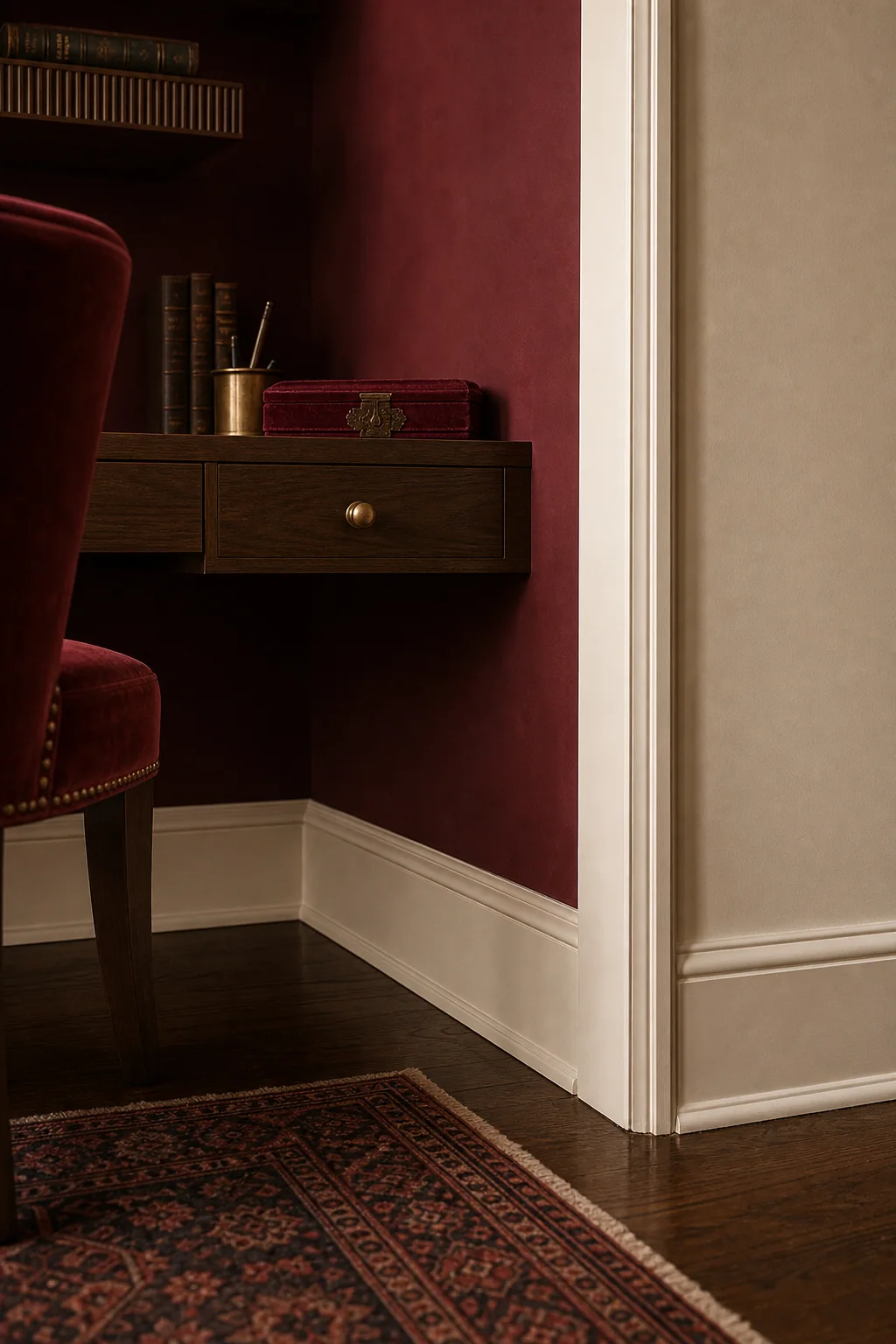
Crisp paint transitions mimic the album’s distinct, rigid edges, cleanly separating the matte crimson alcove interior from the warm sepia-white wall of the main room. This sharp contrast ensures the space feels highly intentional rather than accidental, acting as the structural binding that holds the intimate, focused workspace together without bleeding into the surrounding lighter architecture. By maintaining this strict visual border, the heavy, dark void remains perfectly contained, allowing the lighter sepia tones of the primary room to breathe while framing the alcove as a precious, jewel-box destination dedicated entirely to thought and study.
Balancing deep crimson and aged brass
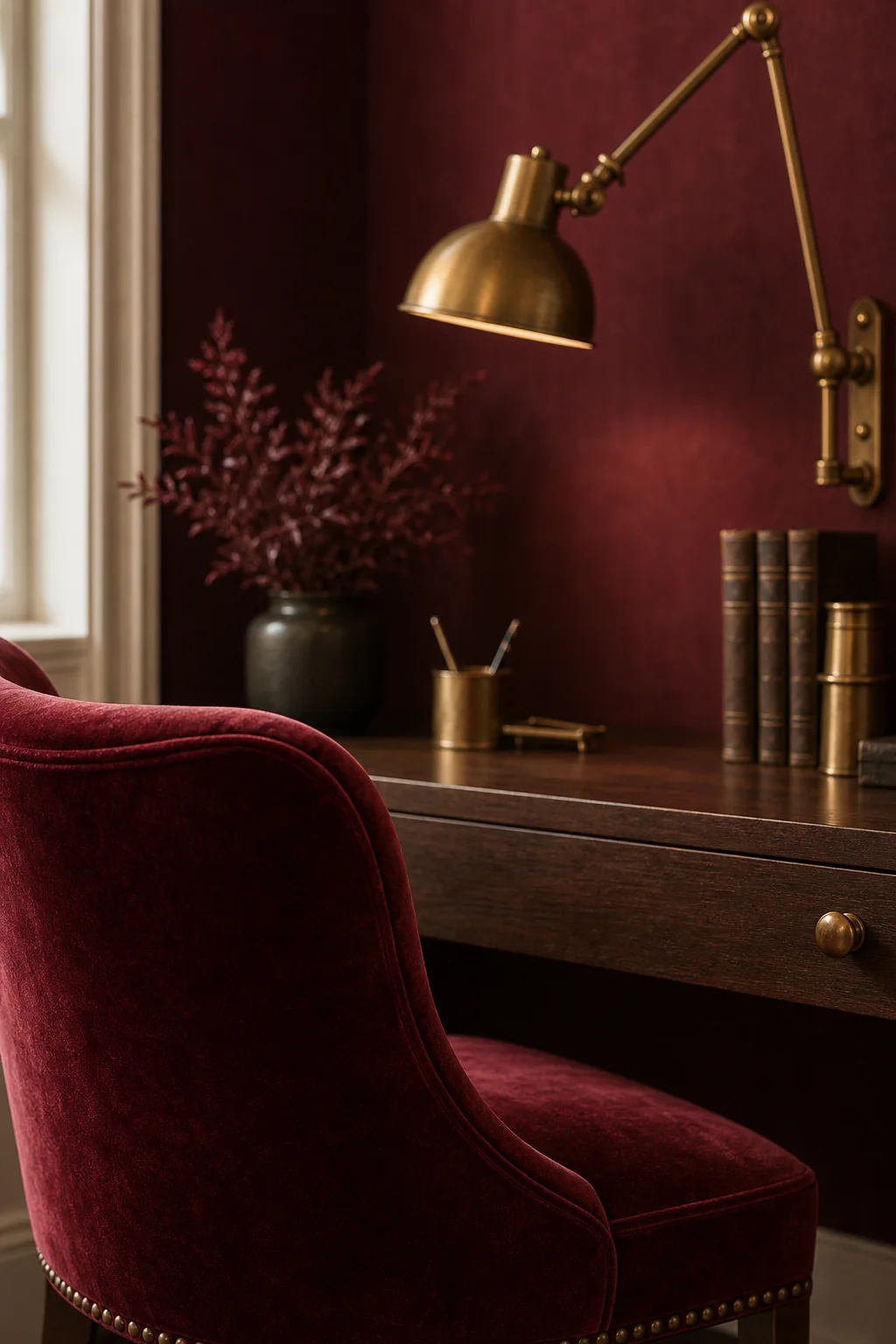
The intense color block of the alcove requires a sharp metallic contrast to provide essential visual relief and establish a clear focal point within the shadows. Keeping the crimson entirely matte ensures it absorbs ambient daylight rather than reflecting it, allowing unlacquered brass hardware that will gracefully patina over time to pop with intense, glowing warmth. This striking interplay of dark velvet tones and bright metal directly echoes the antique locking clasp of the original Victorian inspiration, mapping historical details to modern architectural functions as outlined in our comprehensive visual translation guide below.
| Source trait | Visible evidence | Room move |
|---|---|---|
| Protective Enclosure | The thick, heavy velvet cover that wraps and protects the delicate pages inside. | Matte crimson limewash mimics the protective velvet cover. |
| Crimson & Brass Contrast | The stark visual contrast between the deep red velvet and the bright, aged brass hardware. | Unlacquered brass hardware echoes the antique locking clasp. |
| Plush Tactility | The soft, light-catching pile of the Victorian velvet binding. | A desk chair features the album’s plush mohair velvet. |
| Hinged Clasp & Stacked Pages | The mechanical brass locking clasp and the dense horizontal lines of the paper edges. | An articulated brass sconce acts as the mechanical clasp. |
Introducing plush tactility
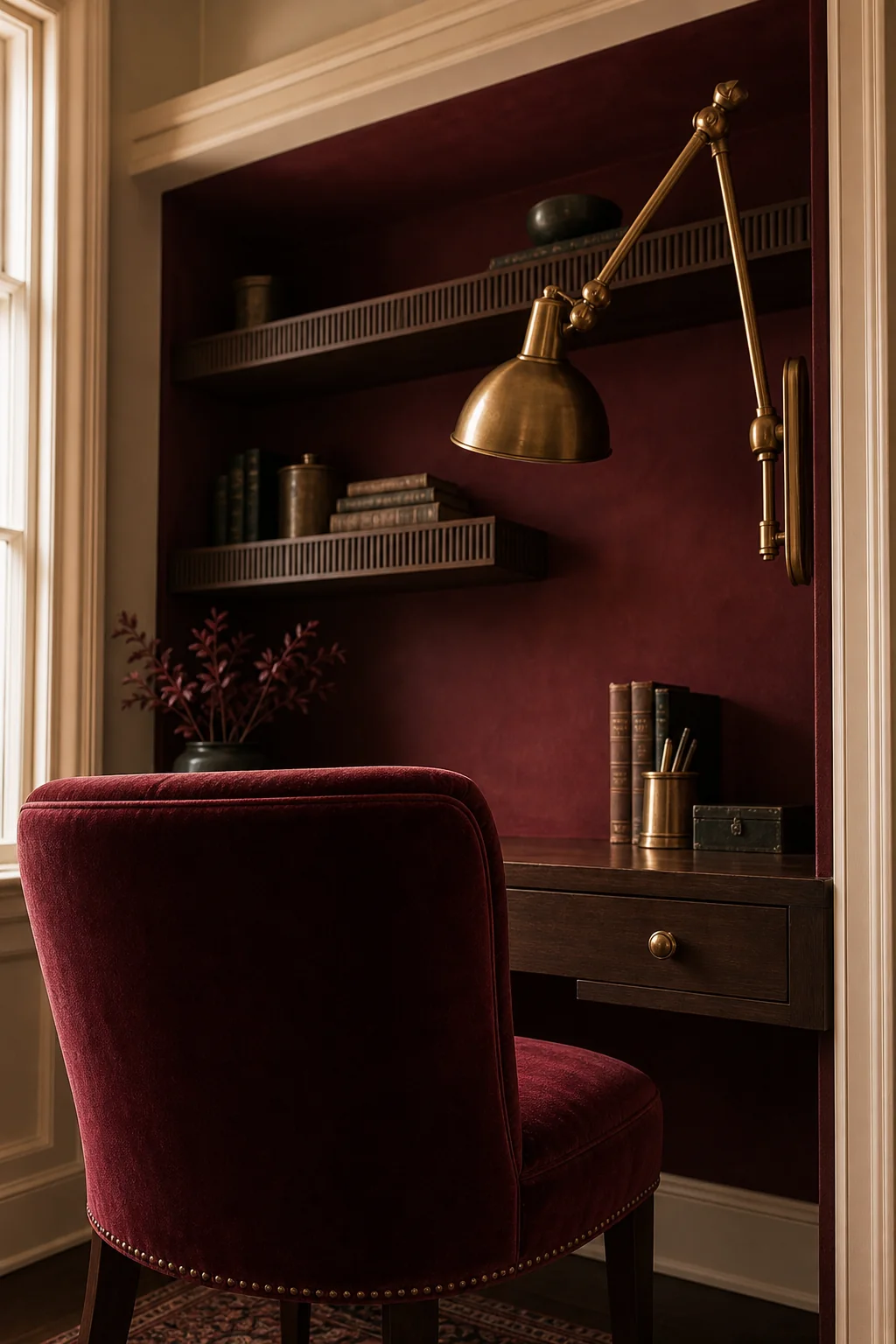
Physical comfort is introduced through dense, luxurious upholstery that echoes the antique album cover while blending seamlessly into the surrounding color block. By matching the upholstery color closely to the wall paint, you maintain the monolithic, uninterrupted feel of the void, ensuring the chair does not visually clutter the small footprint. Relying on this carefully curated material and texture edit allows the workspace to withstand daily friction while offering a tactile, light-catching echo of the original velvet binding, grounding the ethereal darkness of the limewash with a heavy, physical presence.
Light on mohair velvet
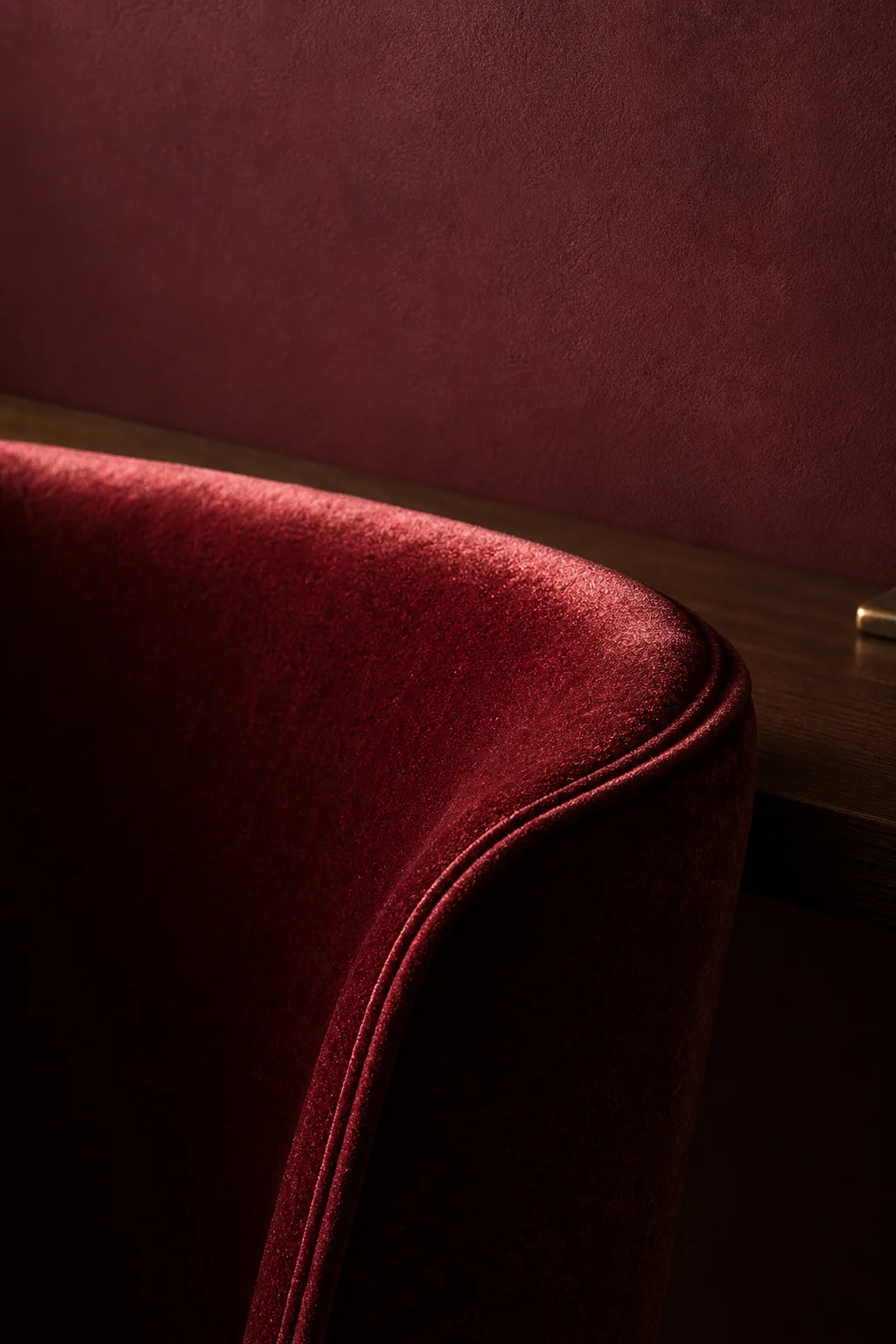
Directional daylight hitting the plush crimson mohair velvet highlights its subtle, shifting sheen against the flat, light-absorbing matte wall directly behind it. You can easily dial this atmospheric aesthetic up or down to suit your home’s unique architecture. A subtle approach limits the crimson strictly to the desk surface and chair upholstery while keeping the alcove walls a warm sepia to match the surrounding room. A balanced execution paints the entire alcove interior in matte crimson with a single brass sconce to break up the void. Finally, a bold theatrical border extends the crimson limewash slightly past the alcove onto the main wall.
Articulating the mechanical joints
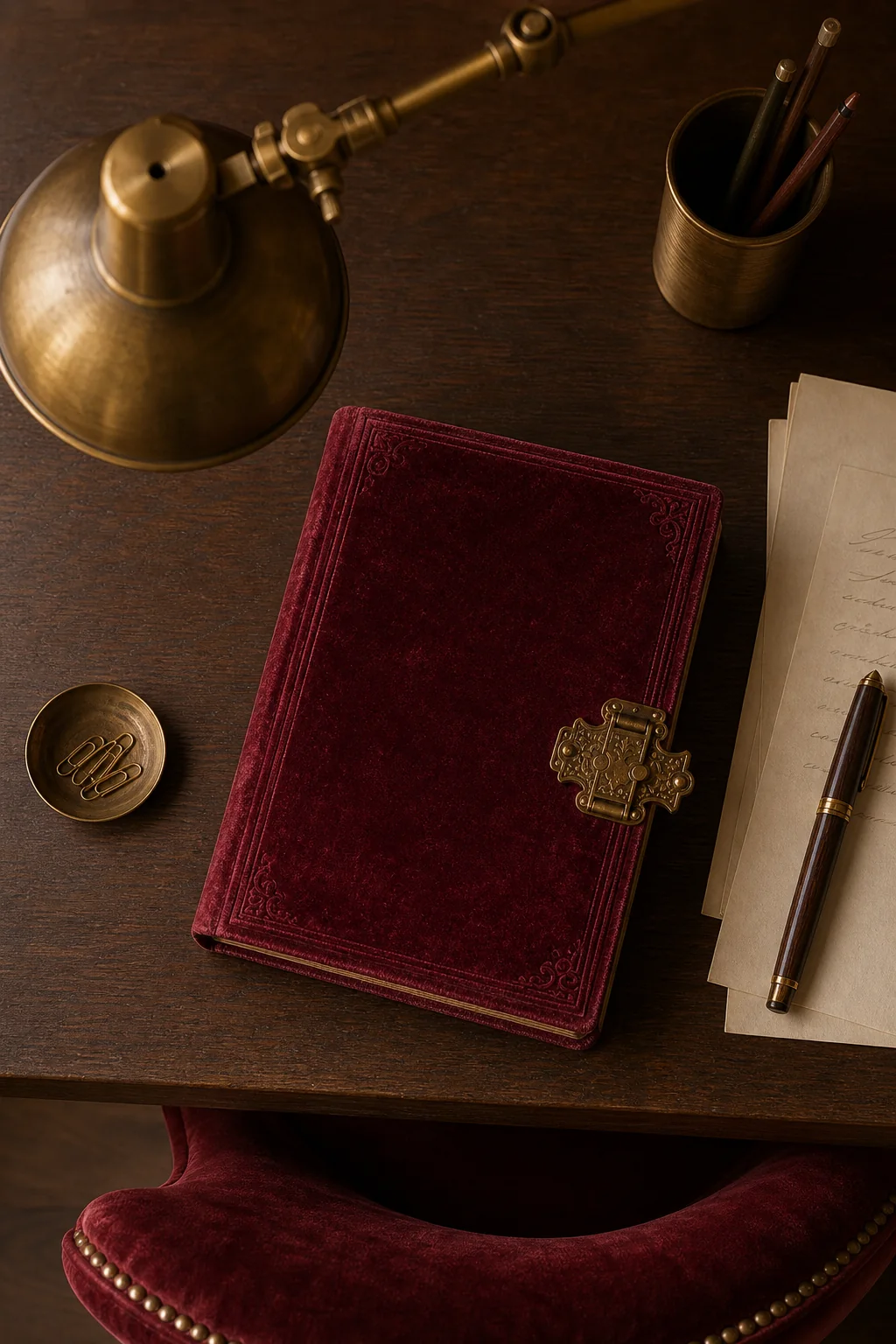
Heavy horizontal planes ground the space, while a single mechanical joint provides adjustable function and a striking visual anchor against the dark backdrop. Installing floating walnut shelves with subtly reeded front edges beautifully mimics the dense, rhythmic lines of stacked vintage pages. Meanwhile, positioning a prominent articulated wall sconce on the back wall serves as both the crucial task lighting and the visual centerpiece of the niche, acting as the functional clasp that secures the entire design concept together. Proper placement of this fixture is vital for creating an optimal reading and writing environment.
Mount the articulated wall sconce slightly off-center if you are right-handed, ensuring the light casts across your writing surface without creating harsh shadows.