
This Doll Teaware Became an Eat in Kitchen
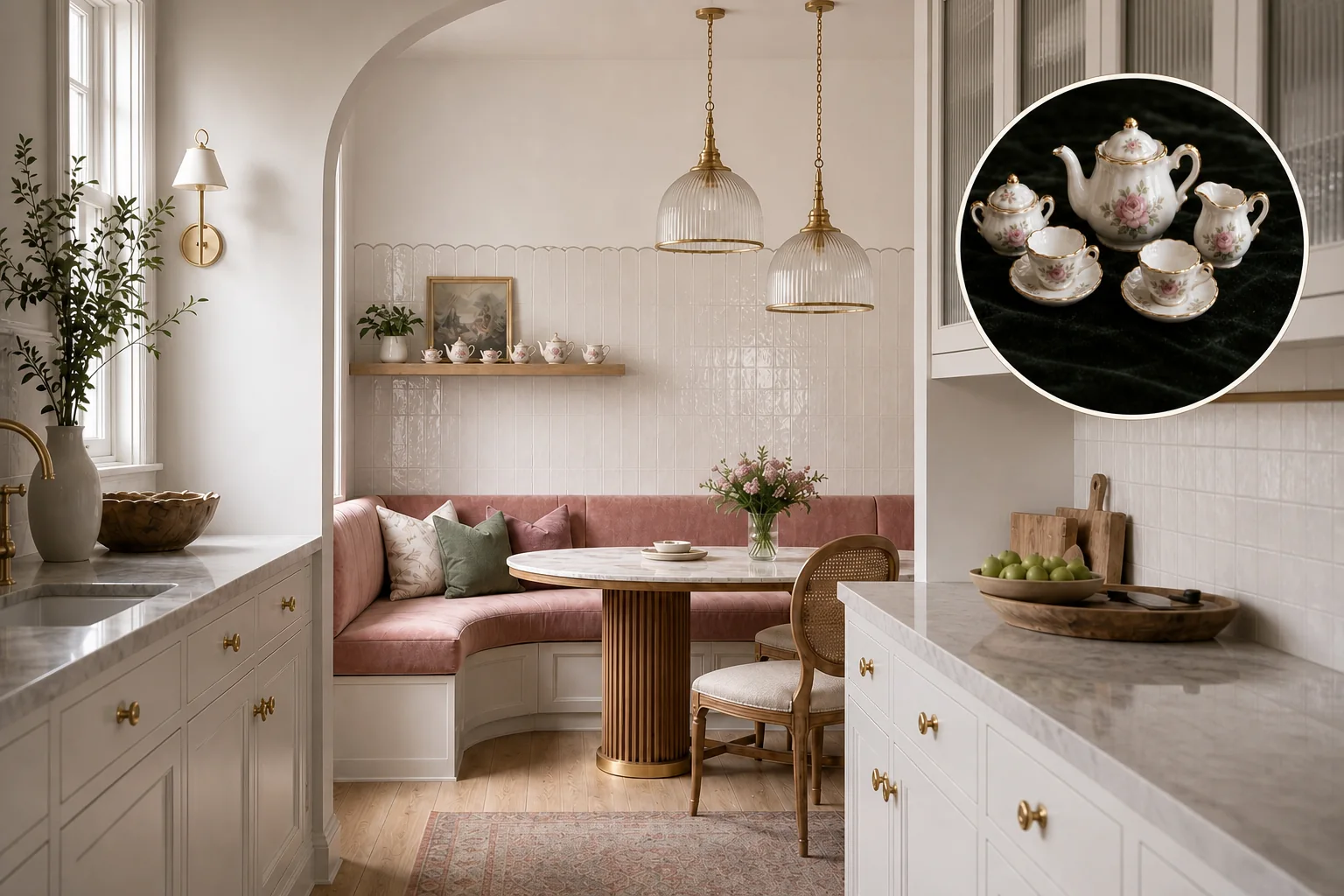
We explore how a miniature Victorian porcelain tea set informs a durable eat-in kitchen. A quiet, milky-white foundation punctuated by precise metallic details balances the fragile aesthetics of fine bone china with heavy, matte architectural materials like stone and washed linen for a sophisticated, hard-working culinary space.
Glazed surfaces and scalloped borders
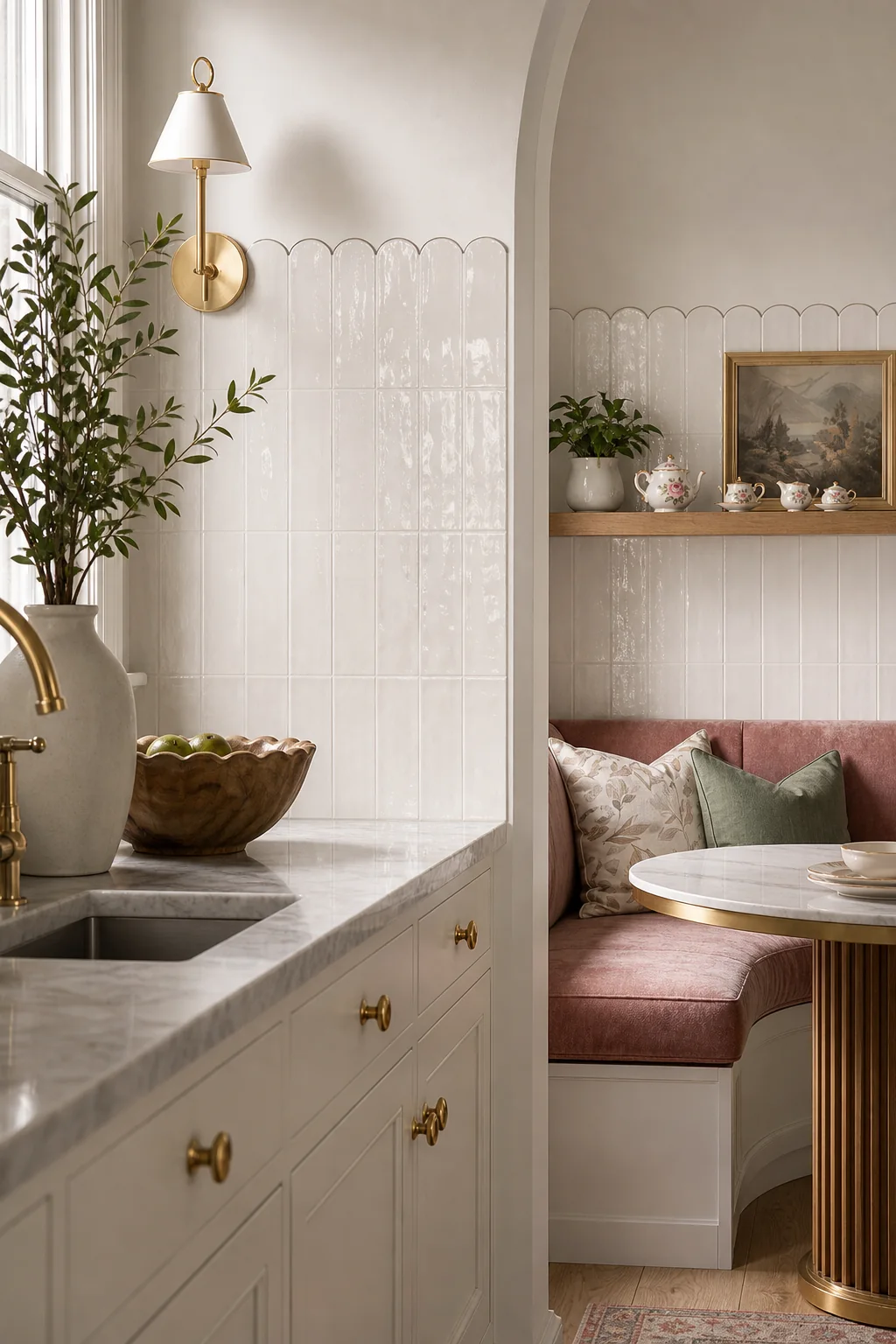
Establishing a high-gloss, undulating base layer captures the essence of fired china while providing a highly durable, wipeable surface for daily cooking. The glossy, slightly undulating surface of the miniature cups and their dainty scalloped rims directly inspire this room’s foundational elements. Use zellige or handmade ceramic tiles to mimic the slight imperfections of antique porcelain, keeping the grout color matched to the tile to emphasize the surface texture rather than the grid. A scalloped border finishes the irregular milky-white tile backsplash, effectively bringing the teaware’s delicate edge to a robust architectural scale.
- Install high-gloss ceramic tiles across the backsplash zone to reflect light similarly to a glazed porcelain cup.
- Cap the upper tile boundary with a scalloped ceramic trim to define the transition to the plaster wall.
- Apply color-matched grout to the entire tiled surface so the backsplash reads as a continuous glossy plane.
- Paint the surrounding walls in a soft, matte plaster finish to provide a quiet contrast to the reflective ceramic glaze.
Faded rose and unlacquered brass
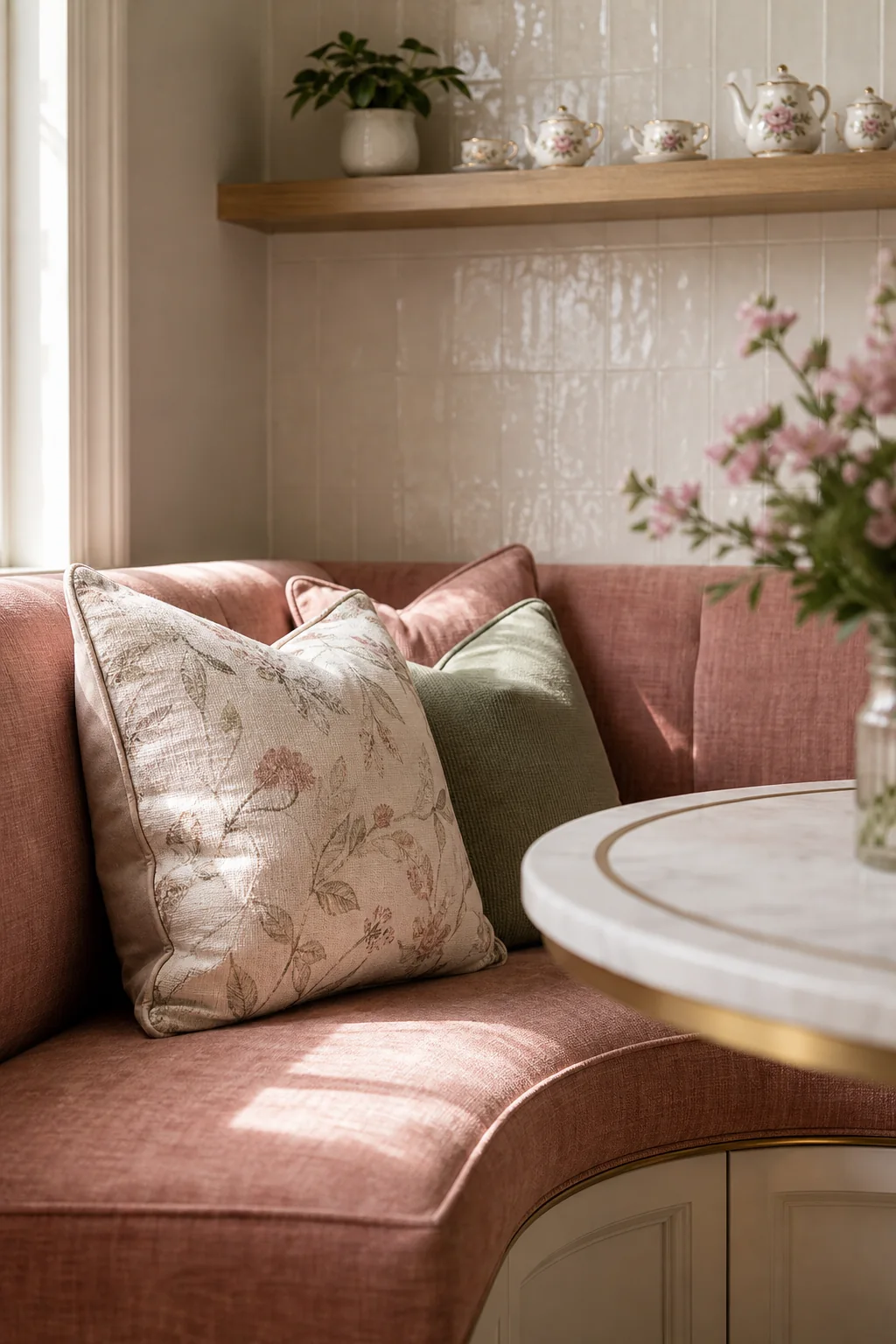
Translating the painted floral motifs into solid blocks of muted textile color prevents the space from feeling like a literal dollhouse. Hand-painted rose florals and thin gold-leaf rims on the white porcelain find new life as faded rose linen and brass hardware that ground the white cabinetry. Restrict the pink tones to the dining banquette upholstery to create a distinct, cozy zone, and use unlacquered brass hardware to introduce a living finish that warms the cool white foundation. This approach abstracts the original inspiration, ensuring the room feels sophisticated rather than overly thematic.
| Source trait | Visible evidence | Room move |
|---|---|---|
| Porcelain Glaze & Scallops | The glossy, slightly undulating surface of the miniature cups and their dainty scalloped rims. | A high-gloss, slightly irregular milky-white ceramic tile backsplash, finished at the top with a subtle scalloped border trim. |
| Floral & Gold Palette | Hand-painted rose florals and thin gold-leaf rims on the white porcelain. | Faded rose linen upholstery on the eat-in banquette, grounded by unlacquered brass cabinet hardware against the milky white cabinetry. |
| Translucency | The delicate, light-permeable nature of fine bone china. | Fluted frosted glass upper cabinet doors that obscure the contents while letting interior light filter through softly. |
| Banded Rims | The continuous, precise gold line tracing the lip of every saucer and cup. | A thin, continuous brass inlay running along the edge of the white marble dining table, echoed by brass rims on the pendant lights. |
Warming the white foundation
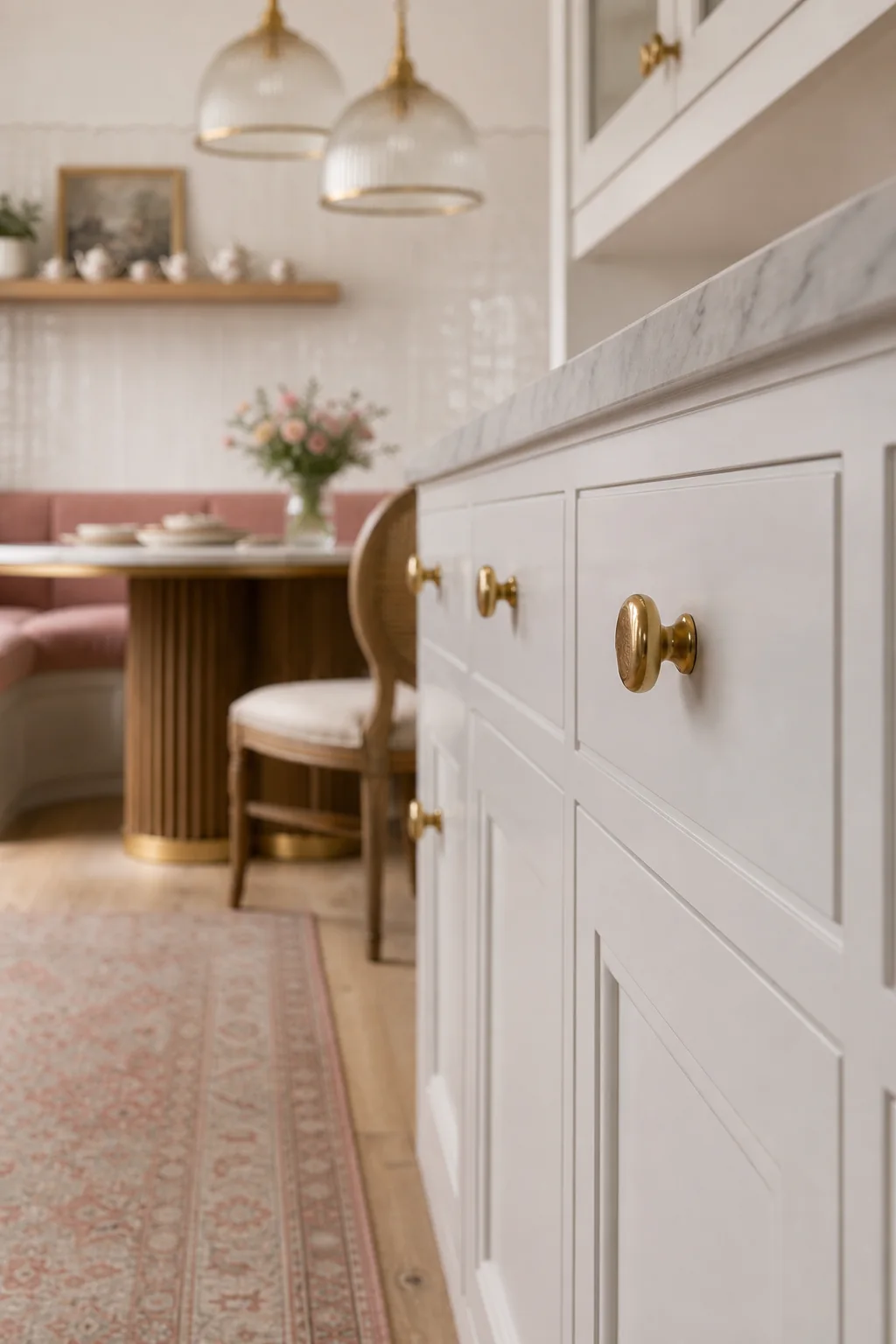
An extreme close-up of an unlacquered brass cabinet pull against milky white cabinetry reveals the subtle patina of the metal, showcasing how the teacup’s thin gold-leaf rims translate into functional touchpoints. This unlacquered brass hardware acts as jewelry-like metallic banding that grounds the airy space, warming the stark white foundation with a living finish that will gracefully age over time. By selecting unlacquered brass instead of clear-coated alternatives, the kitchen gains a tactile richness that perfectly mirrors the delicate yet enduring nature of antique Victorian porcelain accents.
Fluted glass and heavy linen
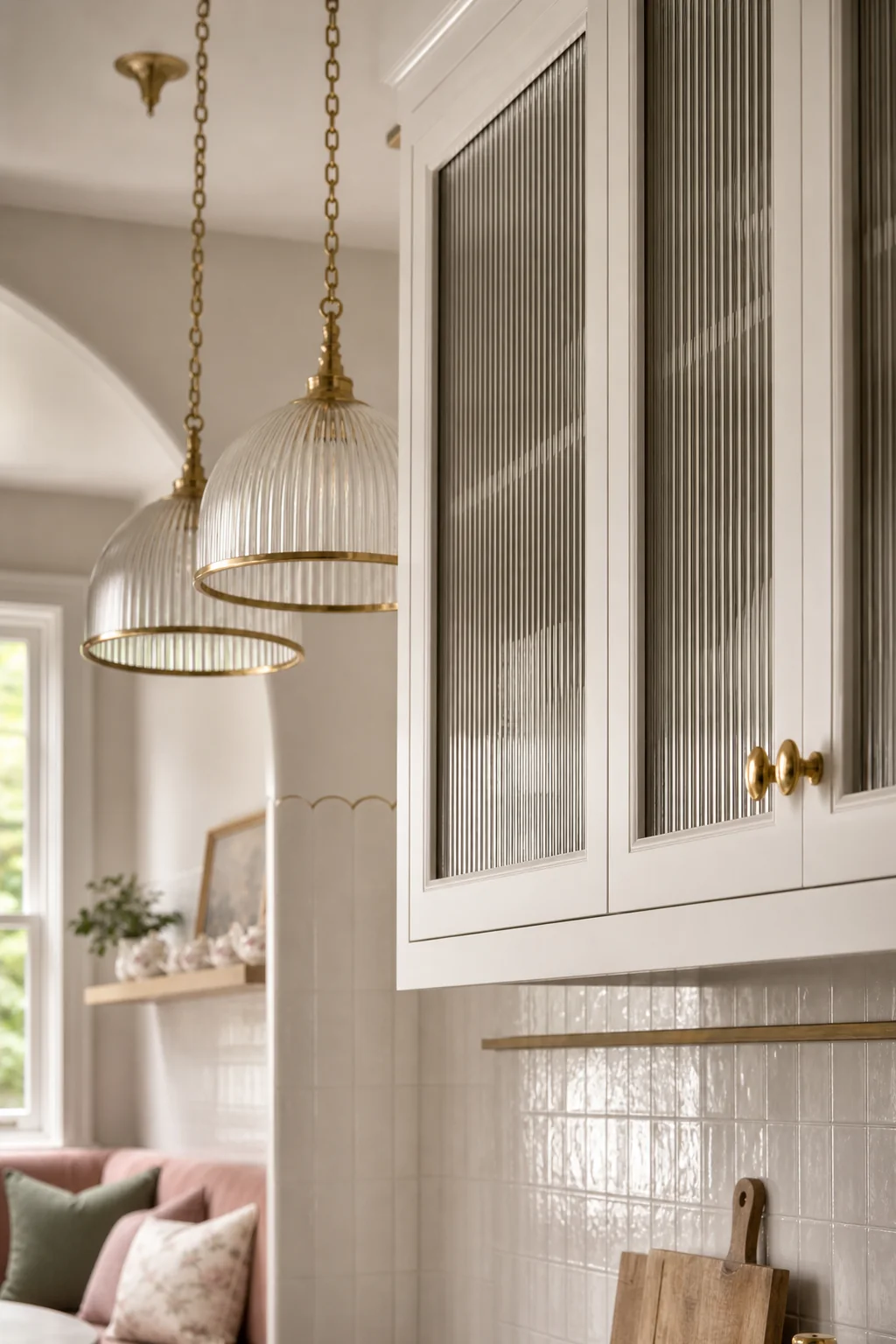
Introducing frosted, ribbed glass captures the light-filtering magic of thin porcelain while concealing the visual clutter of modern kitchen supplies. The delicate, light-permeable nature of fine bone china is reimagined through fluted frosted glass doors that mimic the translucency of the original teaware. Pair this visually lightweight glass with heavy, washed linen on the seating to anchor the room, ensuring interior cabinet lighting is soft and diffused to maximize the glowing effect. These deliberate material and texture choices transform everyday storage into a luminous display that elevates the entire kitchen.
Filtering the light
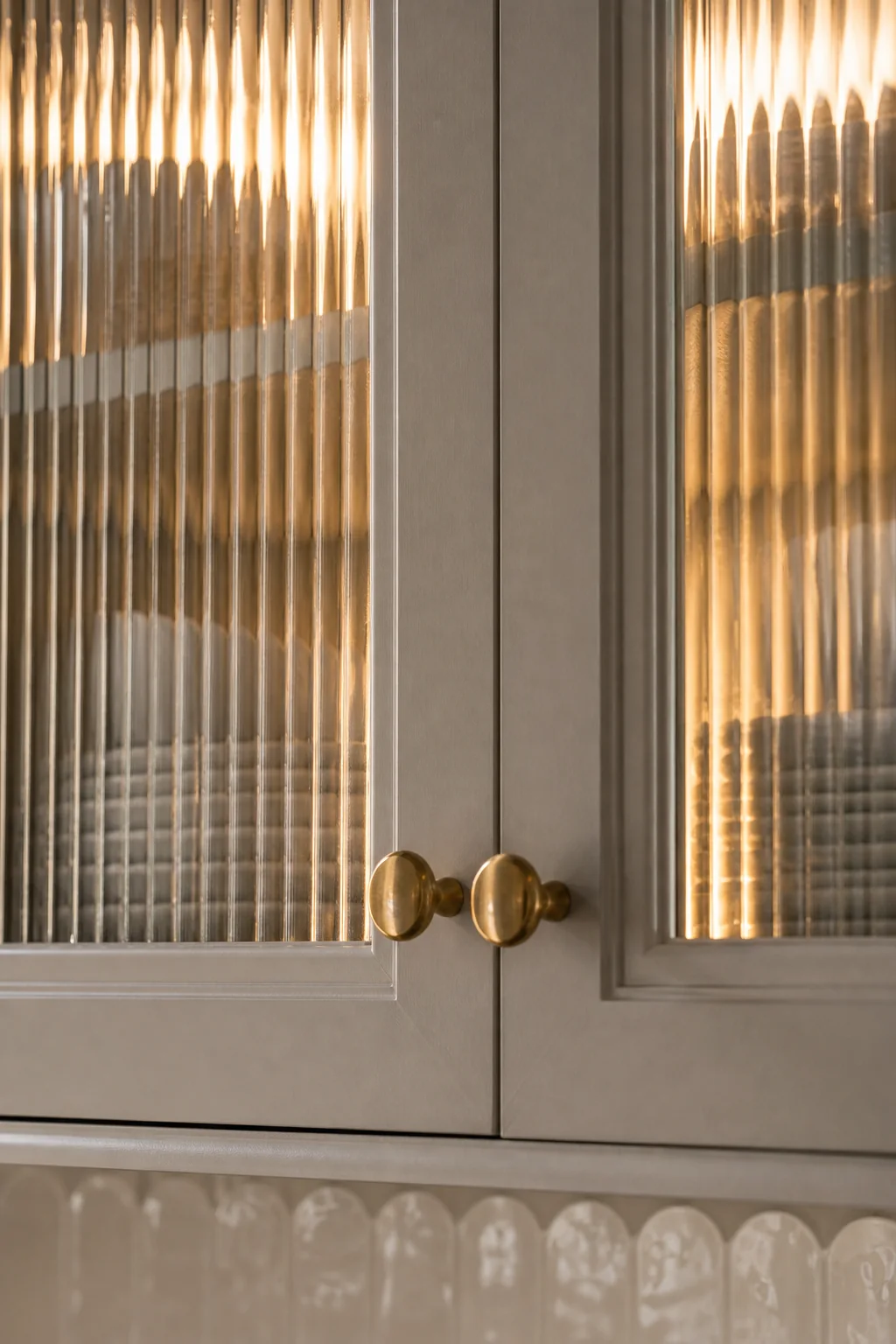
A softly lit upper cabinet at dusk shows the interior light glowing through the fluted frosted glass, beautifully obscuring the stacked dishes inside. The cabinet lighting glows softly through the fluted frosted glass doors, replicating the light-permeable qualities of fine bone china without compromising practical storage requirements. This clever diffusion of light softens the hard edges of standard kitchen cabinetry, enveloping the prep zone in a warm, ambient glow that feels both highly functional and deeply atmospheric during evening hours.
Continuous metallic banding
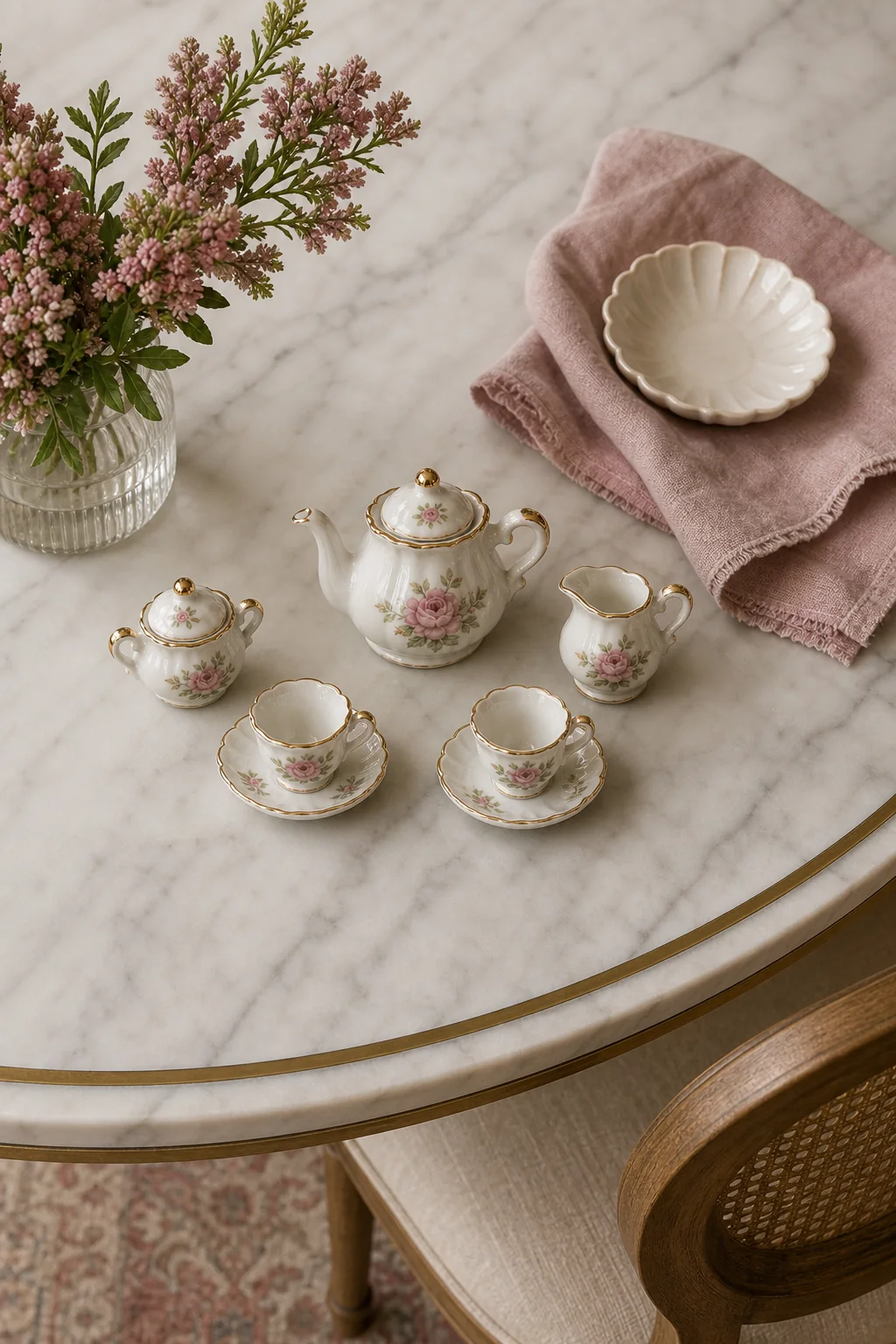
Applying a continuous metallic edge to key architectural elements provides a crisp, tailored rhythm that unites the disparate zones of the kitchen. A thin brass inlay traces the white marble dining table, echoing the continuous, precise gold line tracing the lip of every saucer and cup. Keep the brass banding extremely thin, and repeat this banding on the pendant lights to draw the eye upward. You can scale this look from subtle—focusing entirely on the milky white palette with tiny touches of brass—to a balanced aesthetic introducing faded rose linen, or go bold by extending the rose color to lower cabinetry alongside heavily veined marble.
Keep metallic inlays under a quarter-inch thick. This preserves the delicate, jewelry-like quality of the original teaware’s painted gold rims.