
This Hotel Key Became a Cocktail Corner Bar
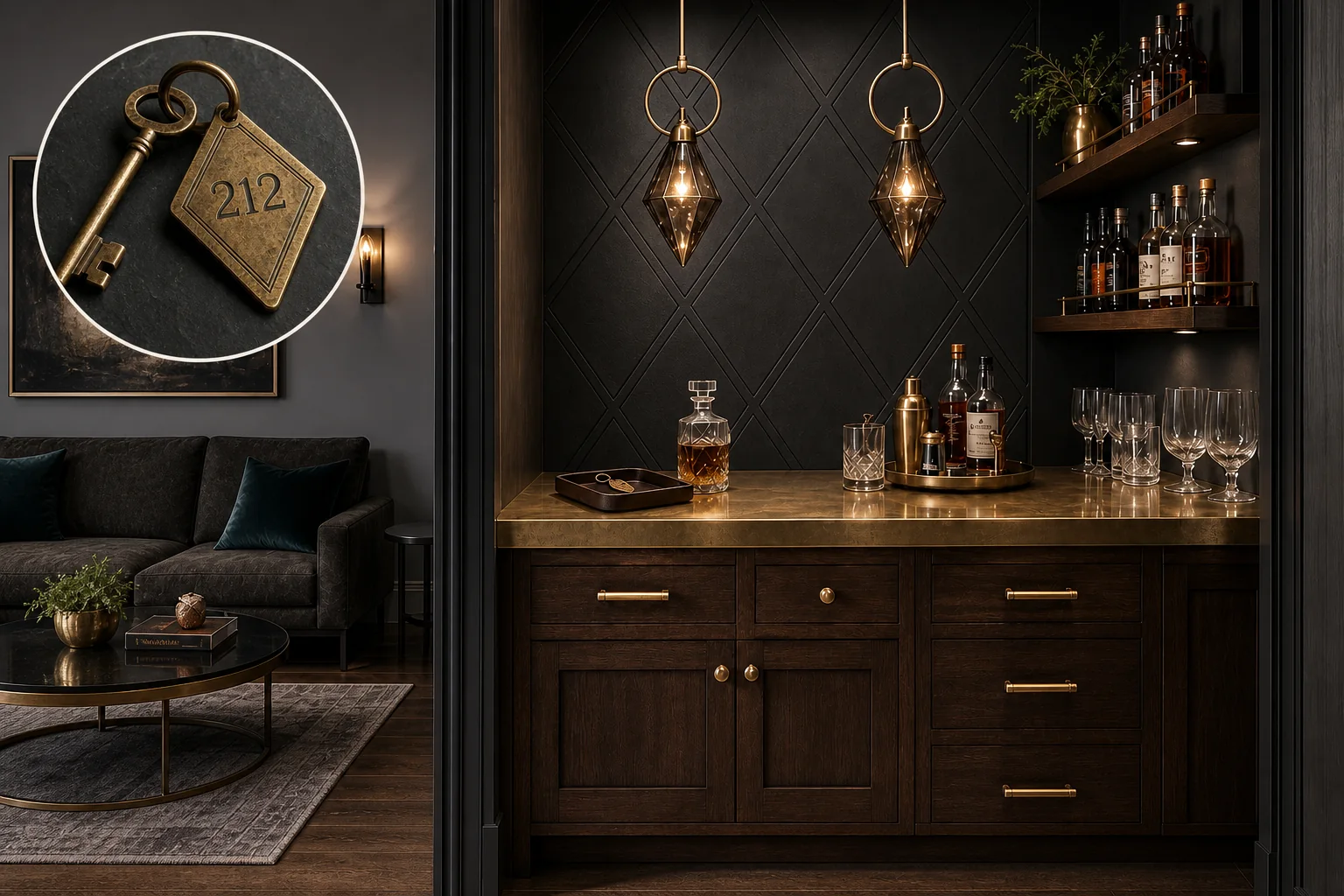
Transform a pocket-sized piece of hospitality history into a dedicated home entertaining space. This design translates the tactile weight of a vintage brass key into a moody, sophisticated alcove by balancing light-absorbing dark backgrounds against warm, reflective metallic accents.
Incised Geometry
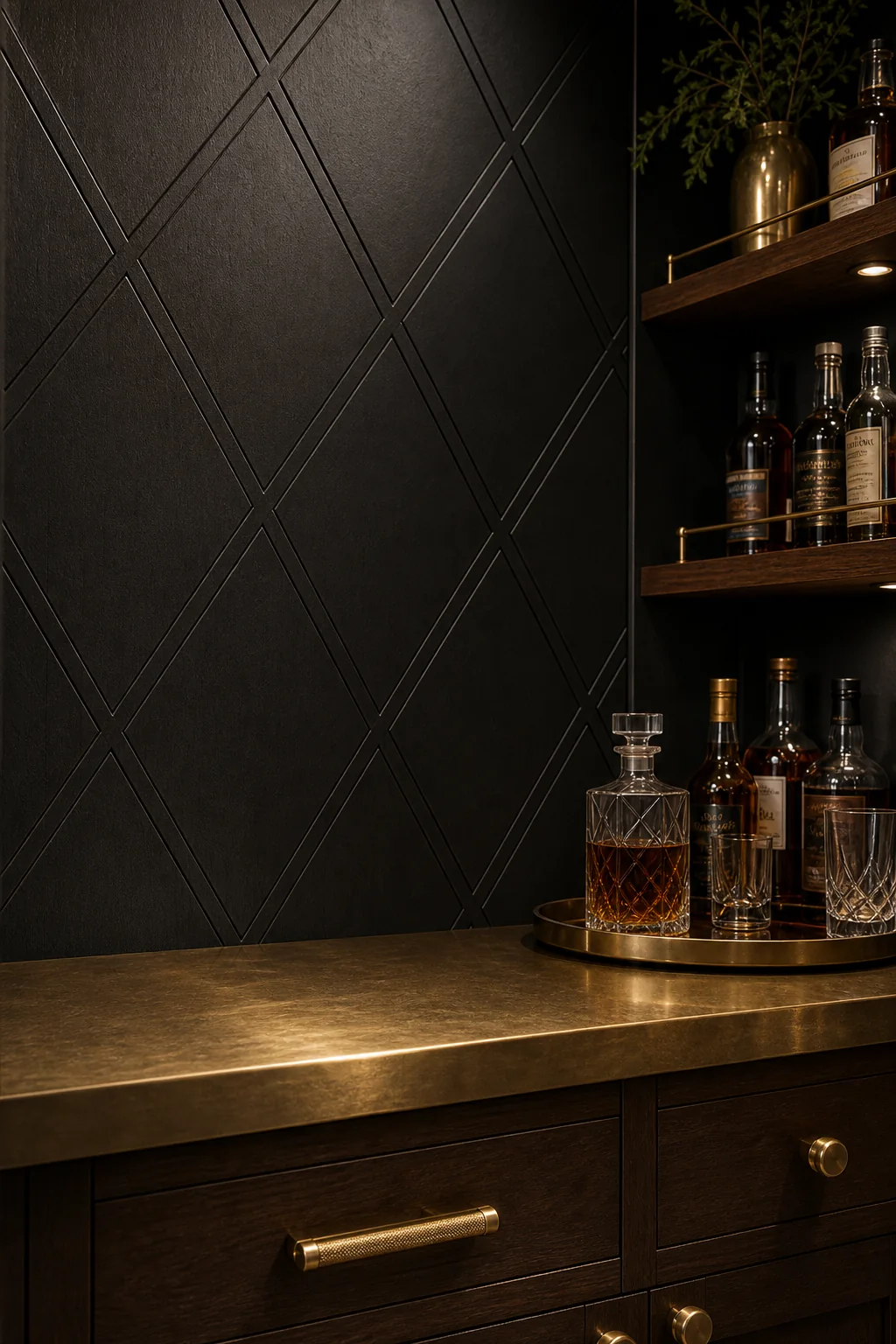
Translating the fob’s deep intaglio engraving into architectural paneling establishes a structured, tactile backdrop for the alcove, where matte charcoal wood paneling features a routed diamond grid. By focusing on light-absorbing vertical backgrounds, this geometric foundation mimics the incised linear grids of the original brass key fob without relying on literal interpretations like painting room numbers on the wall. To build this moody foundation properly and ensure the heavy metallic horizontal planes are fully supported, follow these precise construction phases for your home bar.
- Measure and frame the recessed alcove space, ensuring the depth comfortably accommodates standard lower cabinetry and a dedicated mixing surface.
- Install the dark stained walnut lower cabinets so they sit perfectly flush and level, providing a solid base for the heavy counter.
- Mount the CNC-routed charcoal wood back paneling carefully, verifying that the diamond grid pattern aligns perfectly across all vertical seams.
- Secure the solid brushed brass bar countertop firmly in place so the metal slab rests evenly with absolutely no flex during cocktail preparation.
- Hang the floating walnut shelves directly above the counter, ensuring they are securely anchored into studs to support the substantial weight of liquor bottles.
Patinated Warmth
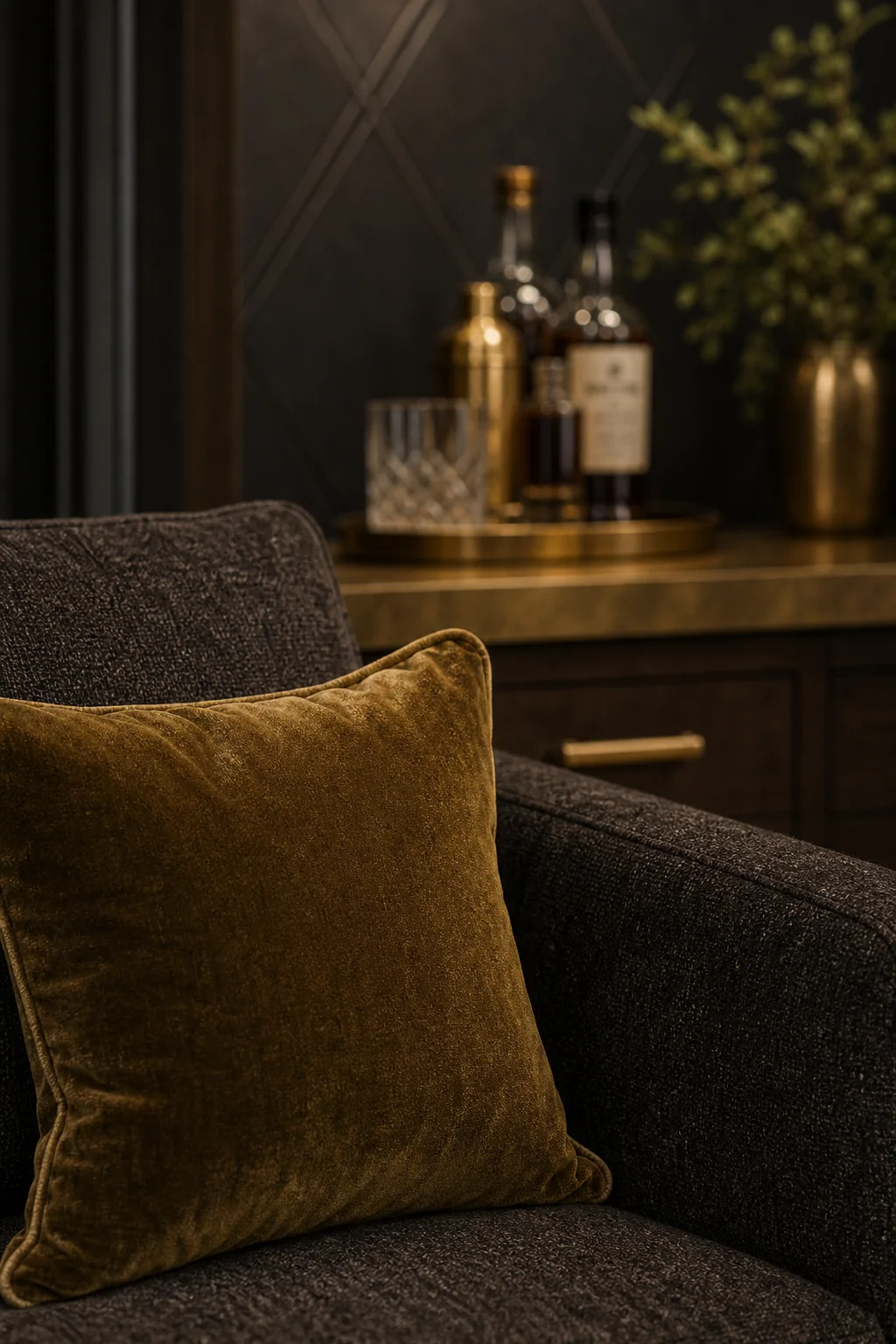
A moody base palette of deep charcoal and dark walnut allows the brushed brass elements and amber liquor bottles to glow warmly, mimicking the key’s aged patina and contrasting beautifully with the dark, oxidized recesses of the engraving. Balancing these deep tones with warm, low-kelvin task lighting ensures the alcove remains intimately scaled for evening entertaining. The following visual-DNA mapping table illustrates exactly how the vintage key’s distinct characteristics—from its heavy metal composition to its suspended angles—inform these specific, sophisticated room moves.
| Source trait | Visible evidence | Room move |
|---|---|---|
| Incised Geometry | The deep, engraved border lines and room numbers cut into the flat brass fob. | Matte charcoal wood paneling lining the back of the bar alcove features a subtle, CNC-routed diamond grid. |
| Patinated Warmth | The oxidized, aged brass of the key contrasting with the dark, oxidized recesses of the engraving. | A moody base palette of deep charcoal and dark walnut allows the brushed brass elements to glow warmly. |
| Heavy Metal | The dense, cold-but-visually-warm weight of the solid brass fob and key shaft. | A solid, brushed brass bar countertop pairs perfectly with heavy, knurled brass cabinet pulls. |
| Suspended Angles | The sharp diamond fob dangling from the perfect circle of the key ring. | Circular brass canopies suspend angular, diamond-cut smoked glass shades over the mixing surface. |
Illuminating the amber accents
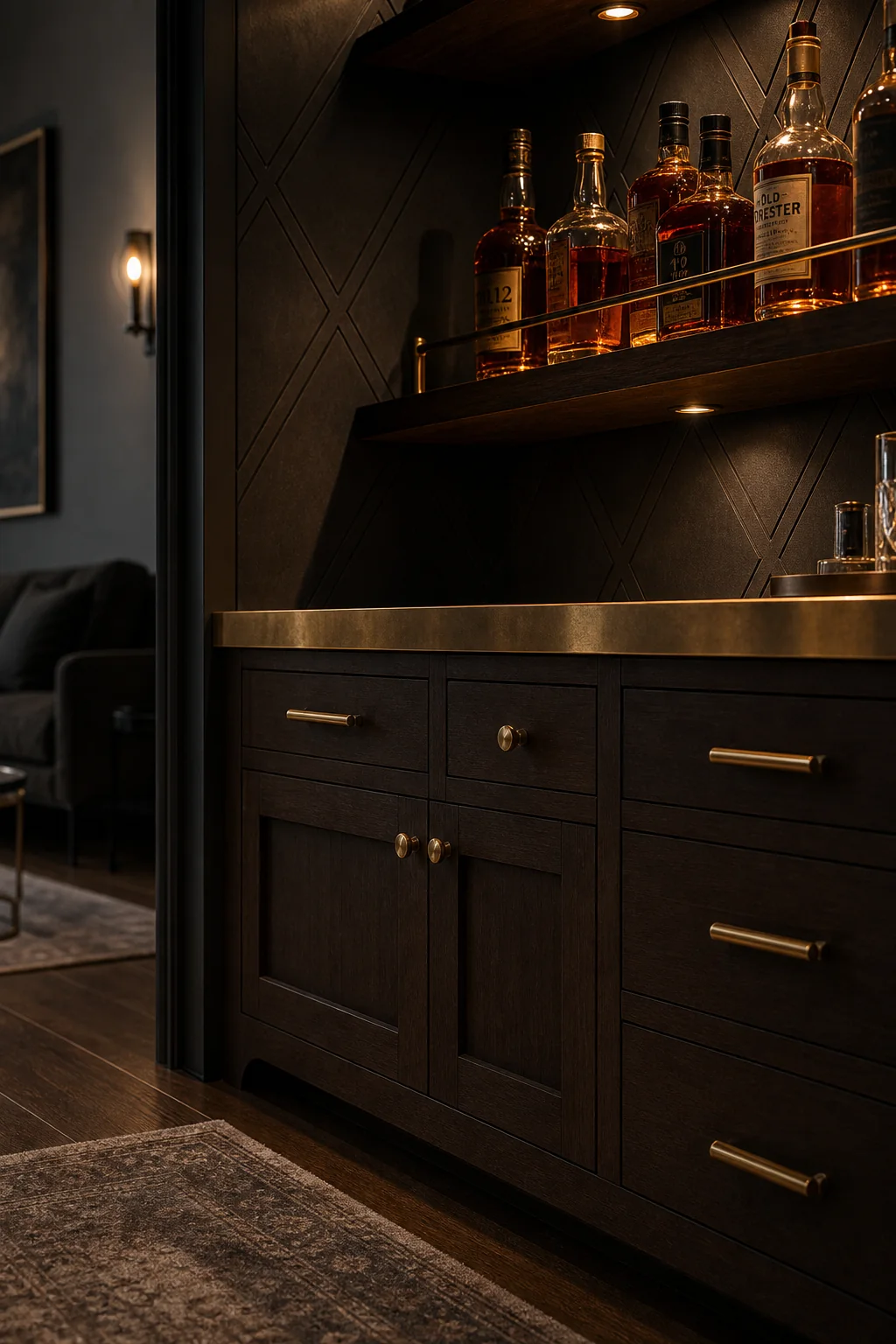
Backlit amber spirits echo the warmth of aged brass, providing a secondary accent color that naturally bridges the gap between the matte charcoal paint and the reflective metallic surfaces. By keeping the brass finishes brushed and patinated rather than highly polished, you avoid a flashy, commercial look while maintaining the intimate, sophisticated atmosphere required for evening entertaining. Let the natural amber of the spirits act as a glowing focal point against the dark walnut floating shelves, emphasizing the contrast between light-absorbing dark backgrounds and warm, reflective metallic accents.
Heavy Metal
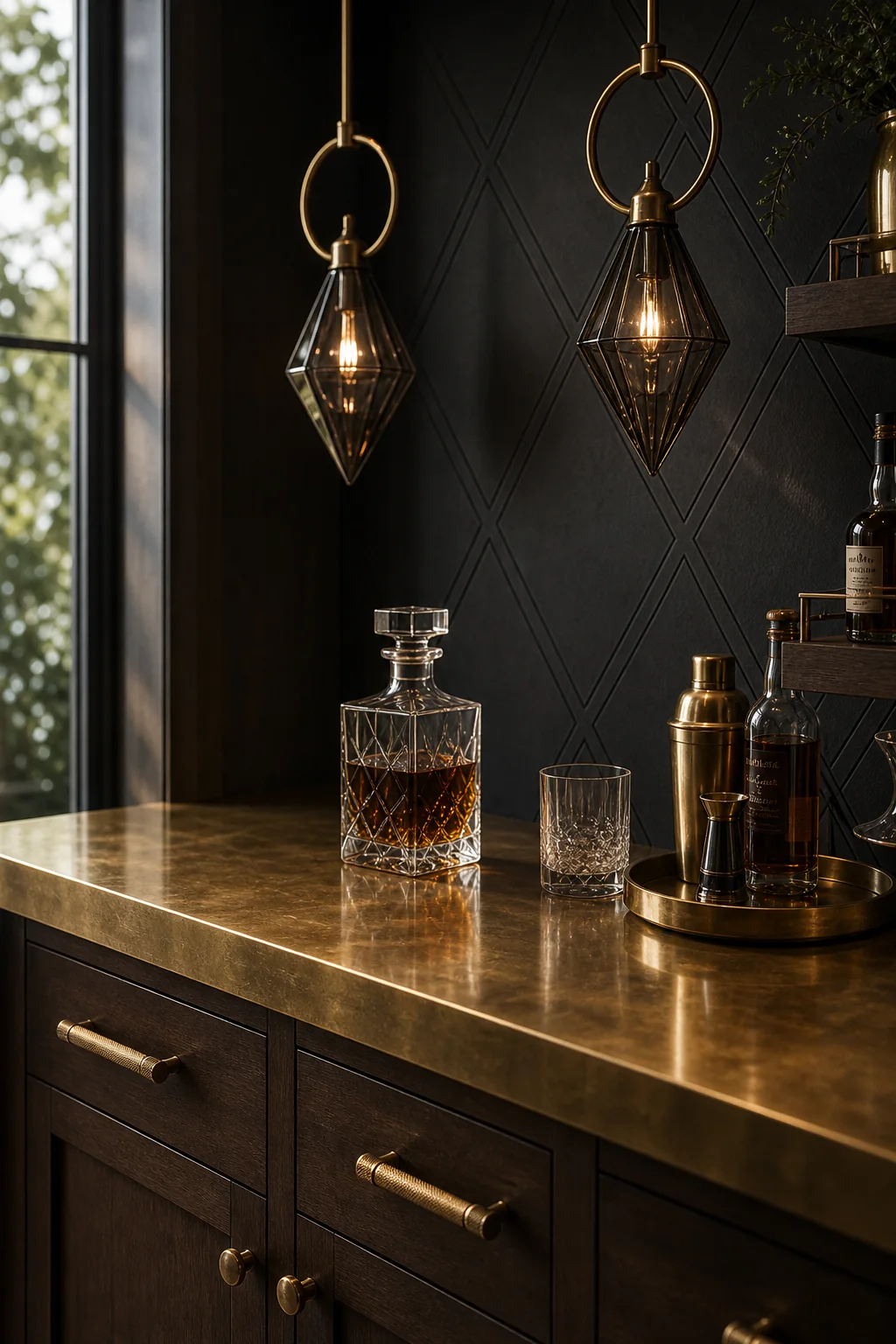
Grounding the bar with substantial, tactile materials captures the dense, satisfying weight of the solid brass fob and key shaft in the hand, translating that heavyweight tactile experience directly into the room’s primary touchpoints. Allowing the brass countertop to develop a living finish over time enhances the authentic, aged aesthetic of the space, avoiding literal missteps like using actual vintage keys as cabinet hardware. The essential materials required to execute this moody, sophisticated cocktail alcove are detailed in the comprehensive room recipe checklist below.
Tactile hardware selections
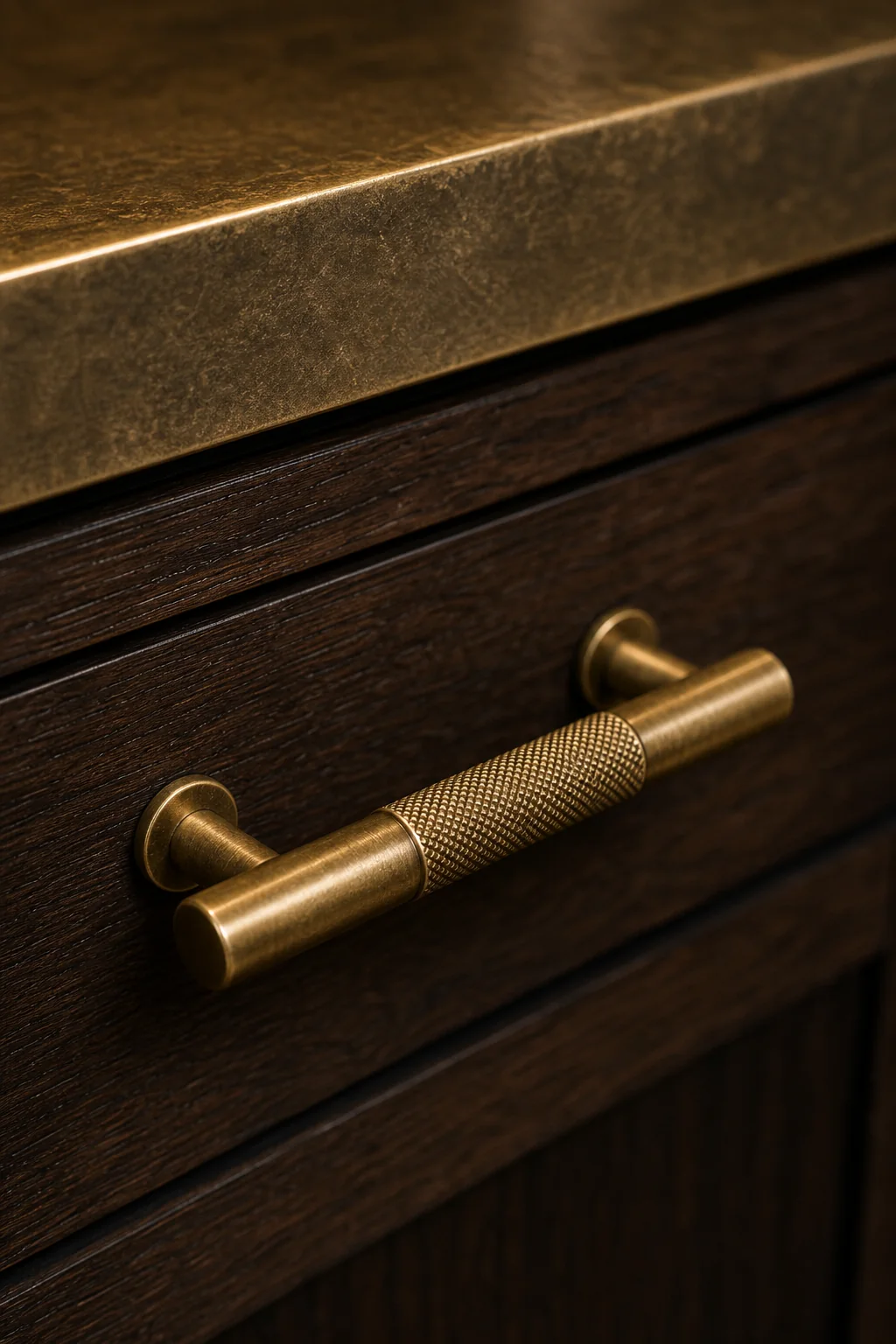
Knurled brass pulls replicate the key shaft’s heavy grip, offering a rough metal texture that contrasts beautifully against the smooth, prominent straight grain of the dark walnut cabinet doors. Selecting solid unlacquered living finishes ensures these touchpoints will naturally patinate with use, further embedding the mid-century hospitality history into your daily rituals. This careful attention to intaglio and engraved detailing on flat surfaces elevates the cabinetry, providing a cold-but-visually-warm weight that feels incredibly satisfying and substantial every time you reach for a glass or bottle.
Suspended Angles
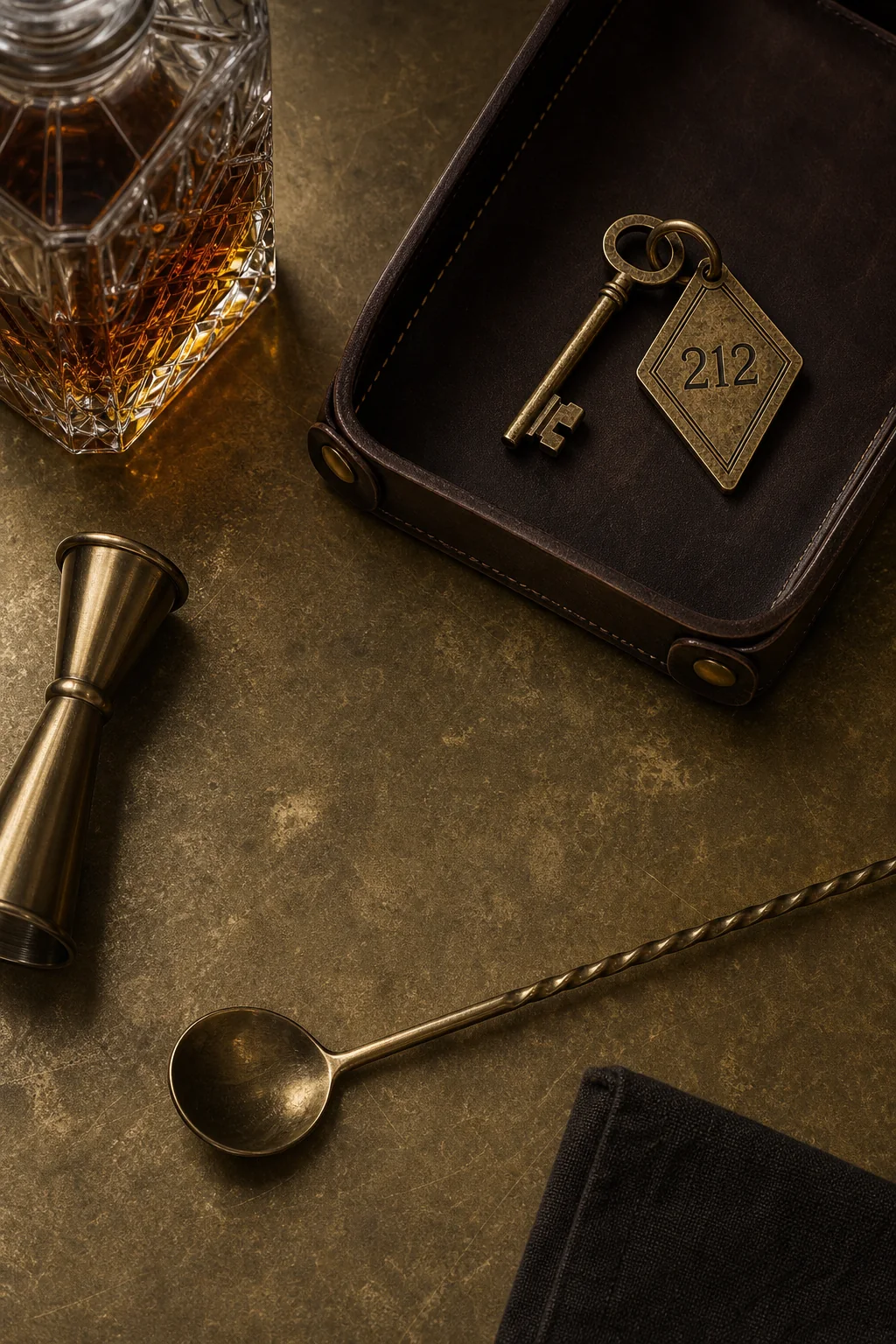
Translating the key ring and sharp diamond fob into lighting fixtures introduces suspended geometric tension above the mixing surface, where circular brass canopies suspend angular diamond-cut smoked glass shades. You can scale this concept’s intensity to suit your home: a subtle approach limits brass to hardware and lighting while using a dark stone countertop, a balanced execution combines a solid brass mixing surface with dark walnut cabinetry, and a bold design extends the CNC-routed diamond paneling to the ceiling with highly polished brass for maximum reflection.
Keep the circular elements minimal and let the angular diamond shapes dominate the lighting design to prevent the space from feeling too retro or space-age. Hang the pendants low enough to create intimacy but high enough to clear tall bottles.