
This Greyhound Statue Became a Home Office
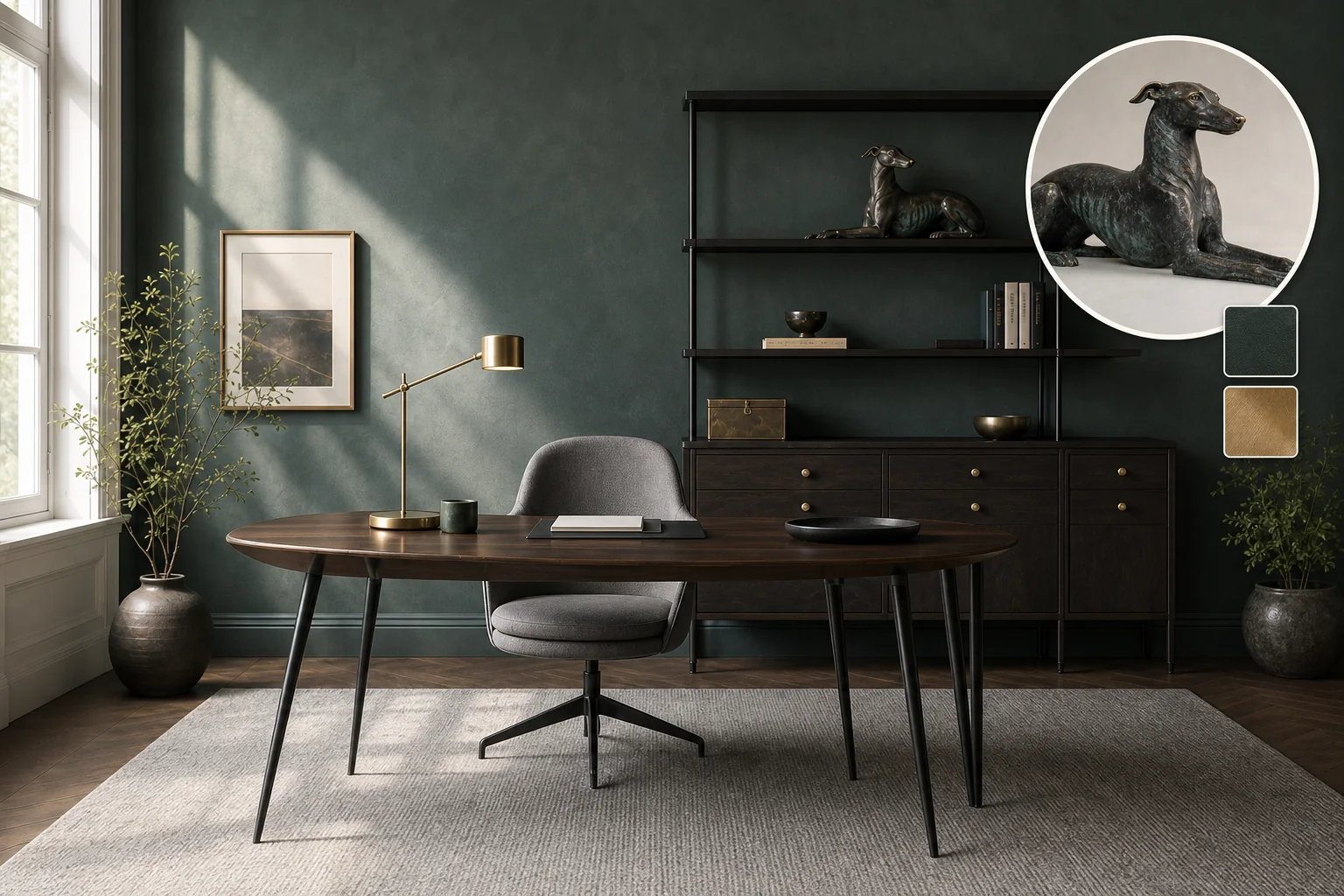
Translating a sculptural object into a living space requires looking past its literal shape to understand its underlying mood and geometry. Here is how the quiet strength of a patinated bronze hound becomes a focused, elegant workspace, offsetting a dark, moody architectural envelope with warm metallic highlights and tactile, inviting fabrics.
Setting a moody, oxidized envelope
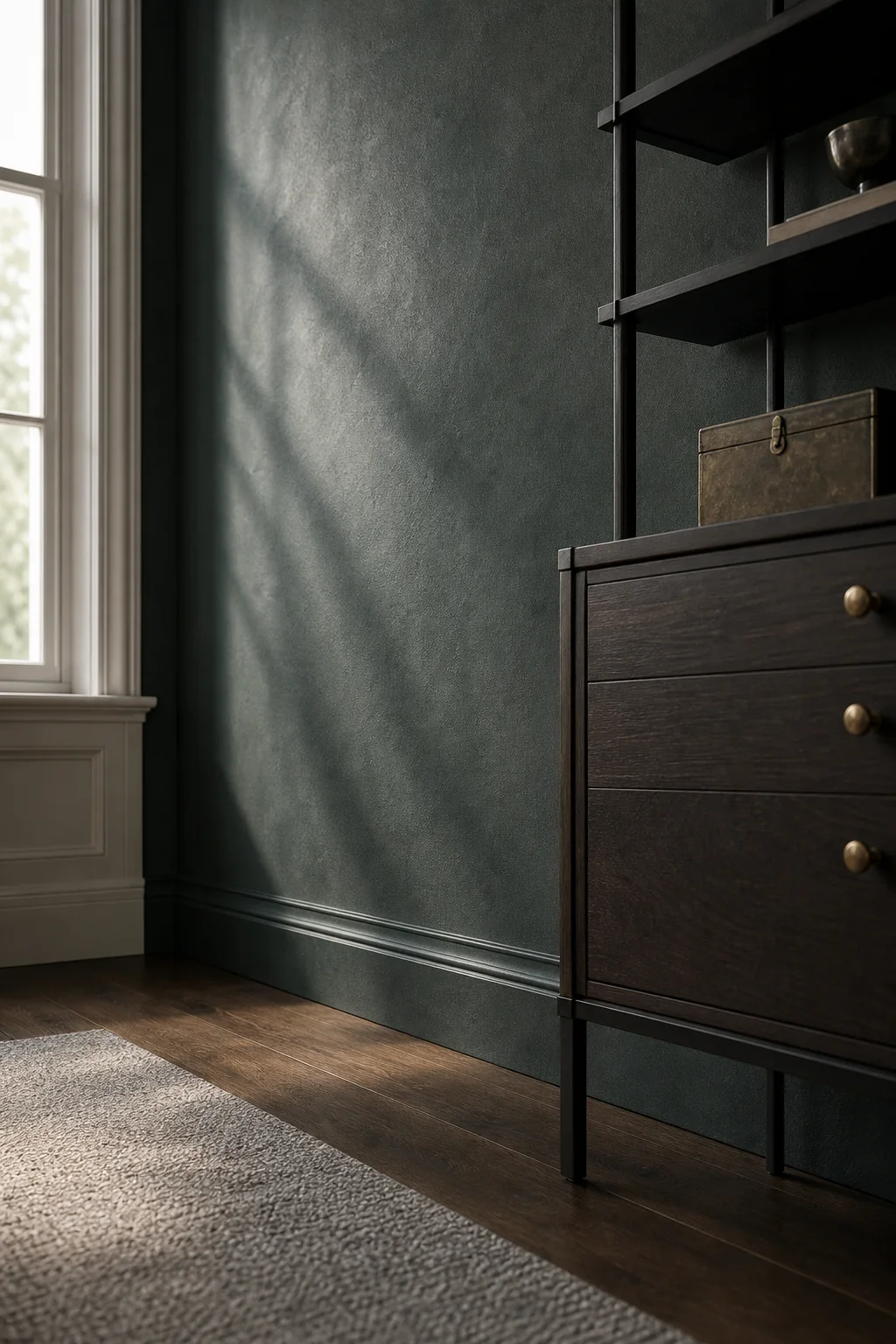
The deep, oxidized tones of the statue translate into a contemplative architectural shell that fosters deep focus. A chalky limewash finish absorbs light, preventing the dark color from feeling harsh or flat, while painting the deep baseboards to match creates a seamless, enveloping atmosphere. This foundational layer sets a quiet, serious tone, completely avoiding literal dog-shaped lamps or paw prints in favor of pure atmospheric translation. To achieve this moody, focused envelope, follow this precise sequence of implementation steps.
- Apply a matte verdigris limewash to the walls, ensuring the room gains a chalky, textured envelope that absorbs natural light.
- Paint baseboards and architectural trim in a matching dark teal so the room’s boundaries recede seamlessly into the background.
- Install concealed storage cabinets along one wall to guarantee that visual clutter is hidden behind flush, color-matched doors.
- Position the sweeping walnut desk to face the natural light source, allowing the workspace to benefit from soft, directional illumination.
Highlighting with rubbed brass
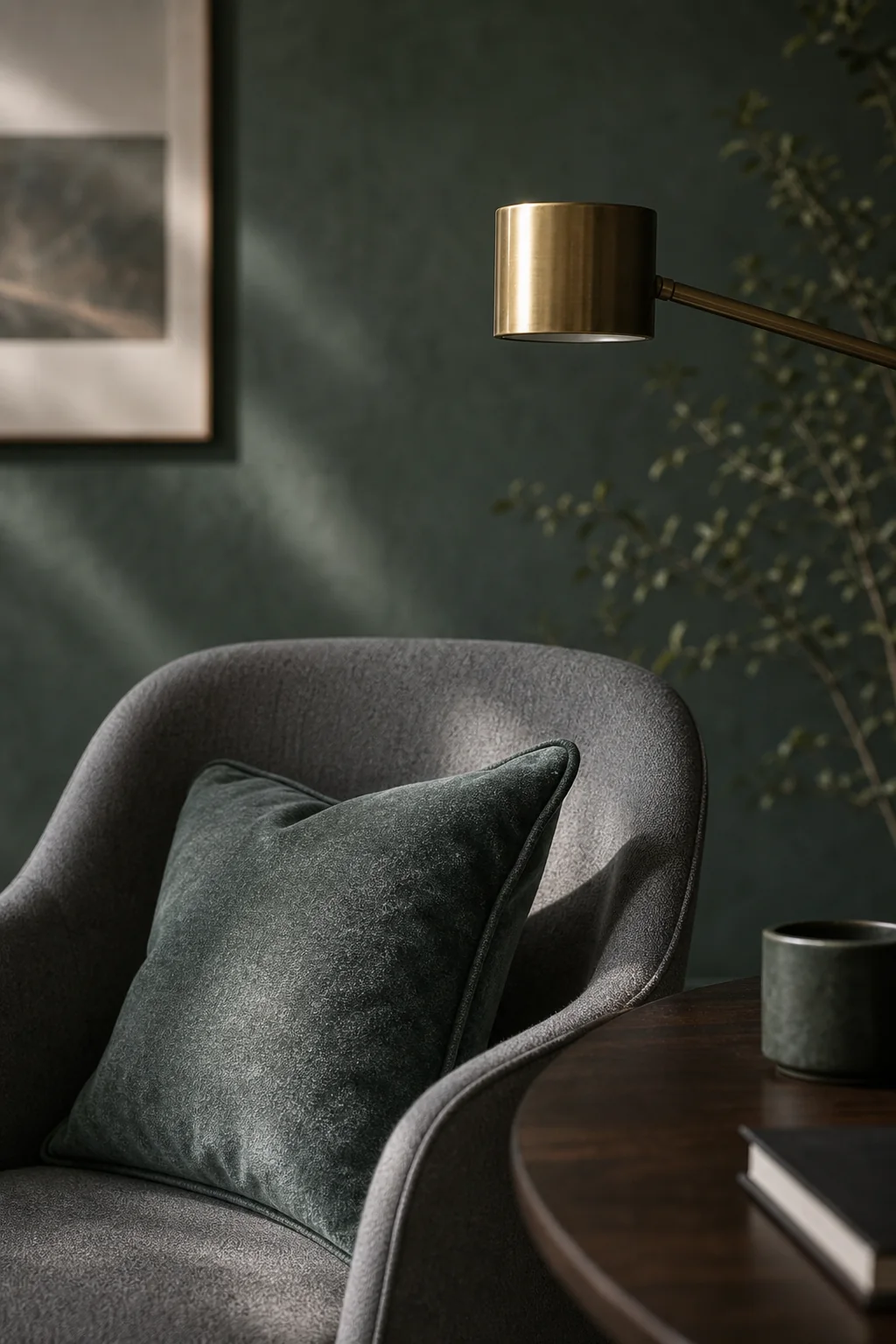
Just as handling reveals the warm brass beneath the statue’s dark patina, metallic accents bring warmth and life to the room’s shadowy base. Concentrate warm metals on touchpoints and task areas to mimic the natural wear of a bronze sculpture, keeping the majority of the metalwork in blackened steel to ensure the brass remains a striking accent rather than the dominant tone. This deliberate contrast creates a layered, historic atmosphere. Review this visual-DNA mapping table to understand the exact translations.
| Source trait | Visible evidence | Room move |
|---|---|---|
| Oxidized Patina | The powdery verdigris green settling into the crevices of the bronze | Walls coated in a chalky, matte teal-green limewash that provides a moody, focused envelope |
| Rubbed Highlights | Warm brassy tones emerging where the dark patina has been worn away by touch | Aged brass task lighting and drawer pulls that pop against the darker blackened steel and walnut desk |
| Taut Musculature | The smooth, firm surface of the cast metal | A desk chair upholstered in tightly tailored, smooth matte wool, offering tactile warmth without visual bulk |
| Slender Anatomy | The greyhound’s elongated, impossibly thin legs and arched spine | A minimalist desk featuring a sweeping, curved walnut top supported by ultra-thin, tapered blackened steel legs |
The warmth of worn metals
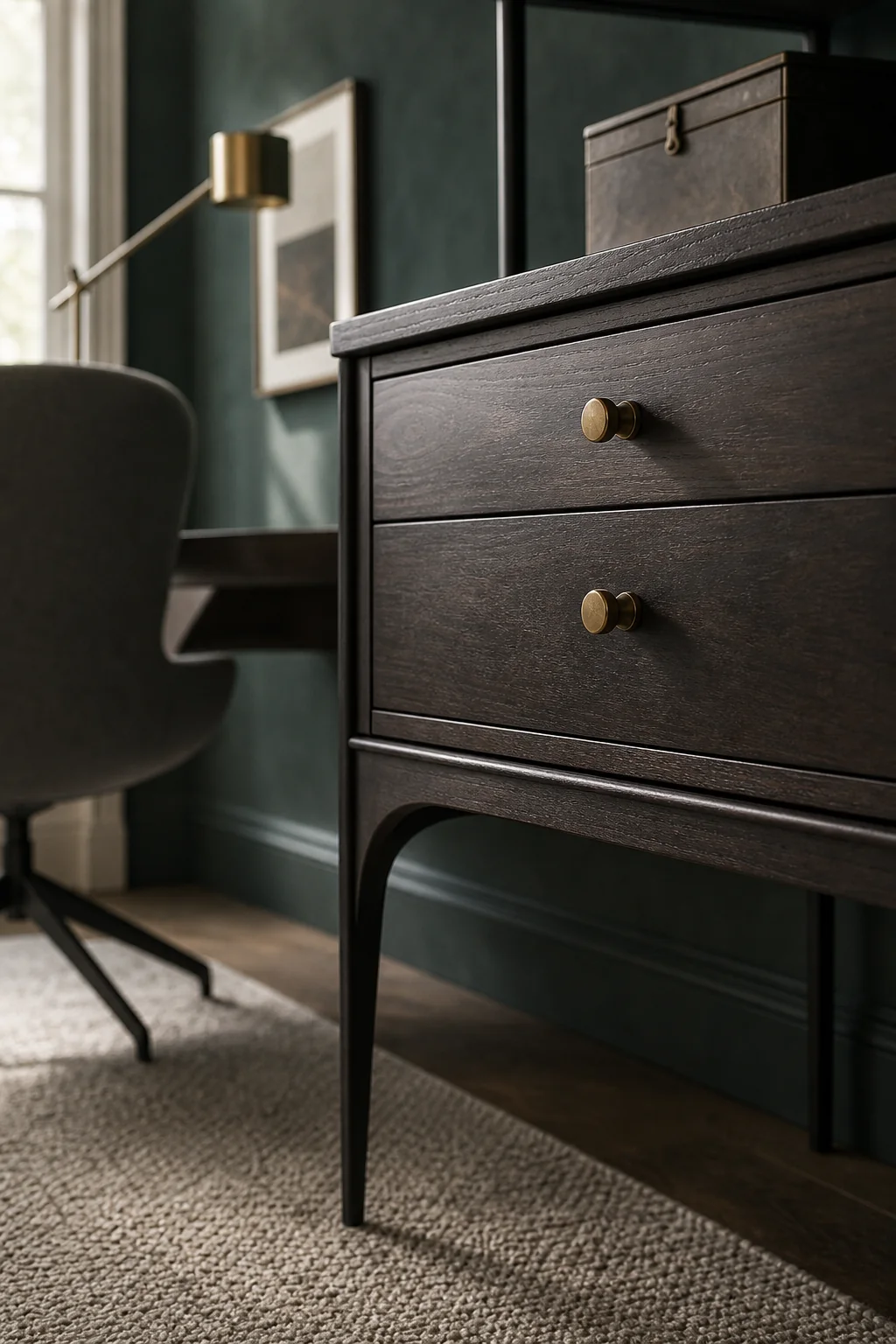
Brass drawer pulls repeat the bronze hound’s warm highlights, catching the natural light streaming from the tall side window. This strategic placement of unlacquered hardware ensures the room feels lived-in and authentic, echoing the way a beloved sculpture is polished by human hands over decades. By isolating these warm metallic flashes against the cooler, darker expanses of the room, you establish a sophisticated visual hierarchy. Gather these specific finishes to complete your room-ready material edit.
Tailoring taut, smooth surfaces
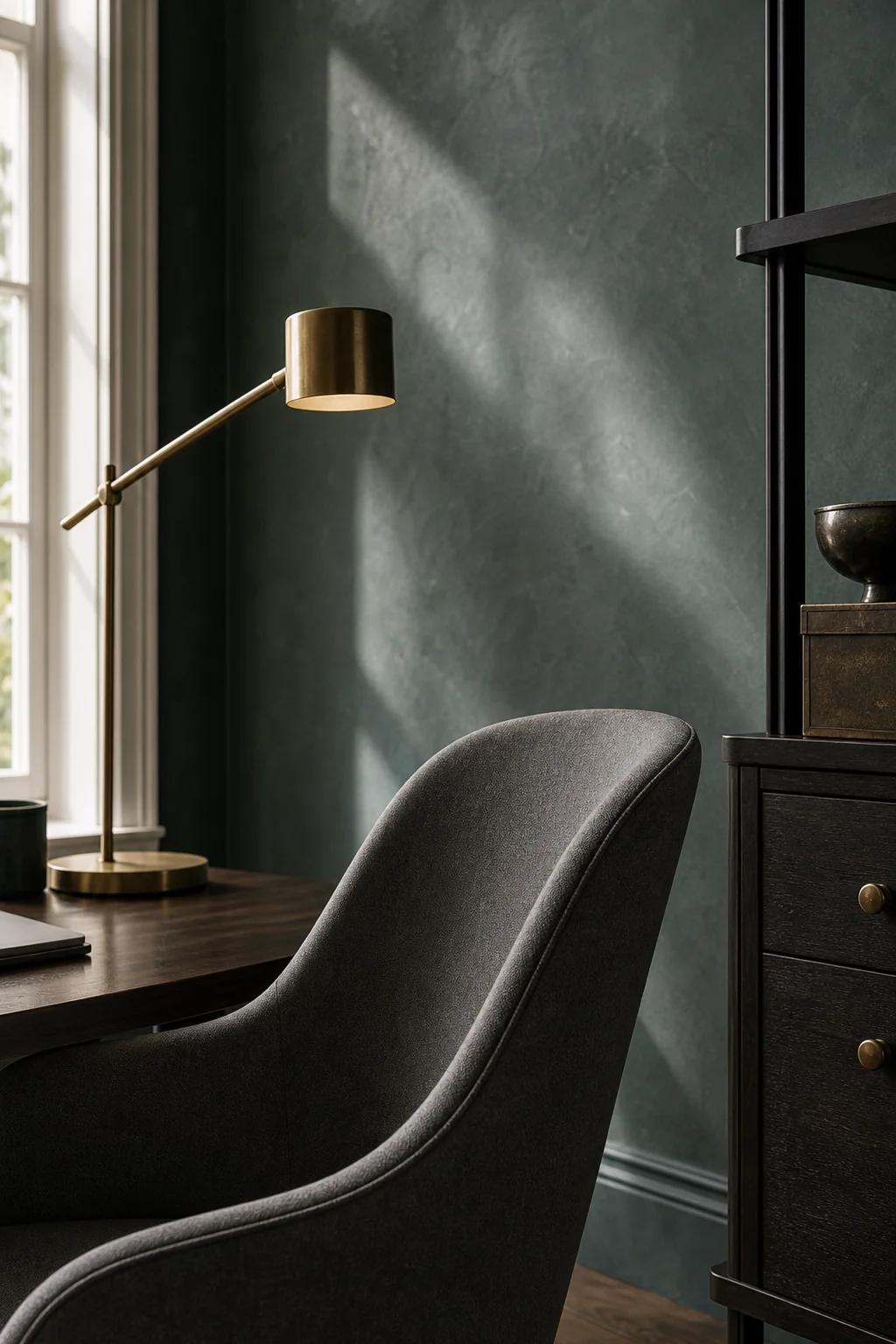
The muscular tension of the greyhound is captured through tightly tailored fabrics and sleek, unembellished hard materials. Avoid loose, slouchy upholstery or faux fur throws; seating should feature clean, firm lines that offer ergonomic support while maintaining a highly disciplined silhouette. Contrasting the matte wool fabrics with the subtle sheen of dark stained walnut builds profound material depth, ensuring the workspace feels both luxurious and rigorously functional without relying on unnecessary ornamentation.
Designing slender, aerodynamic lines
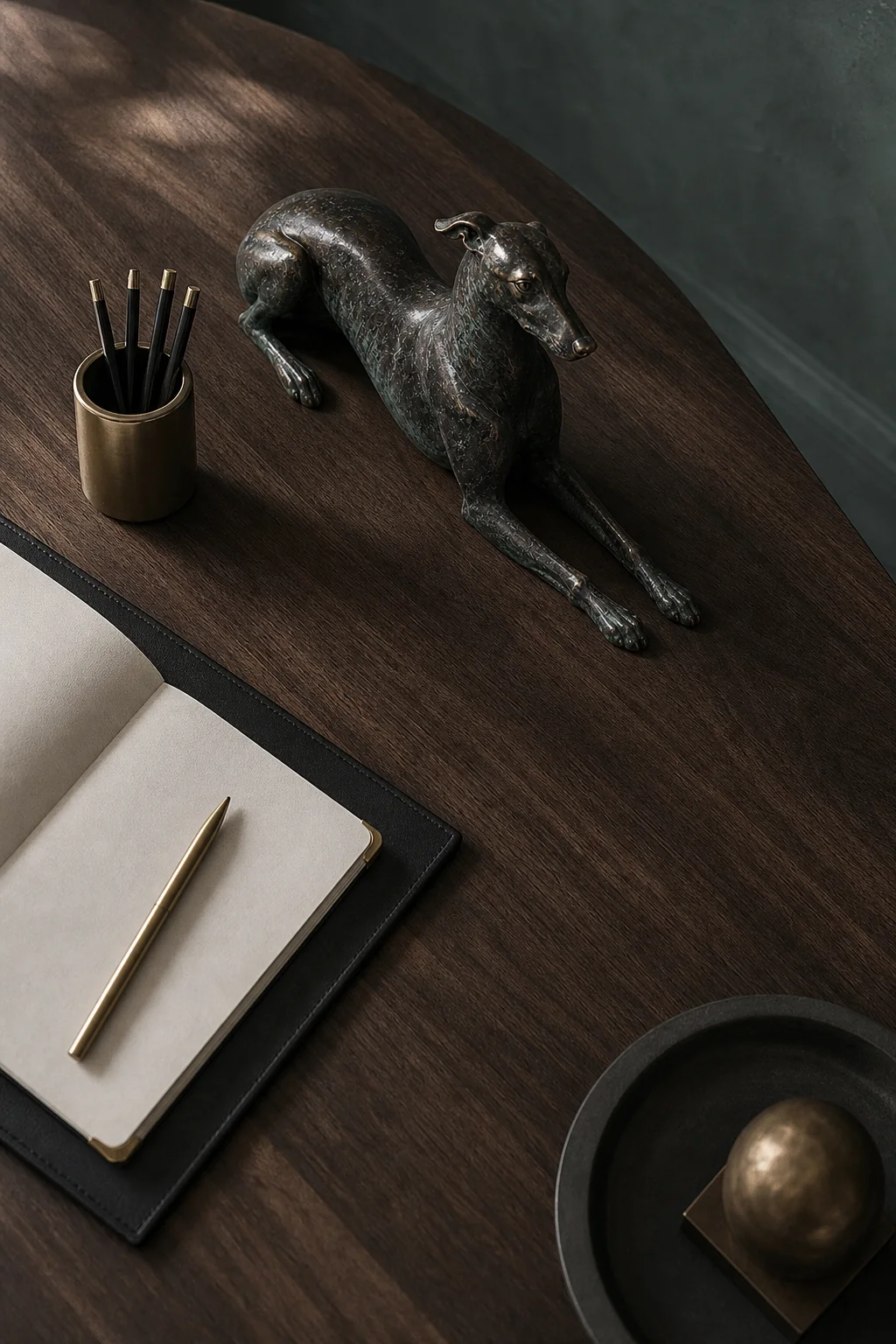
The aerodynamic silhouette of the hound dictates furniture with sweeping curves and delicate, tapered supports that maintain a sense of lightness. Select a desk with a curved or kidney-shaped top to break up the rigid geometry of a standard office, ensuring storage is entirely concealed so the room’s visual rhythm is defined by graceful, continuous lines rather than cluttered shelves. This sinuous continuity mimics the tension of a hound’s stance, channeling its quiet, alert energy into your daily workflow.
Allow the slender legs of the desk and chair to breathe by keeping the floor underneath entirely clear of rugs or storage boxes.
Tension in the supports
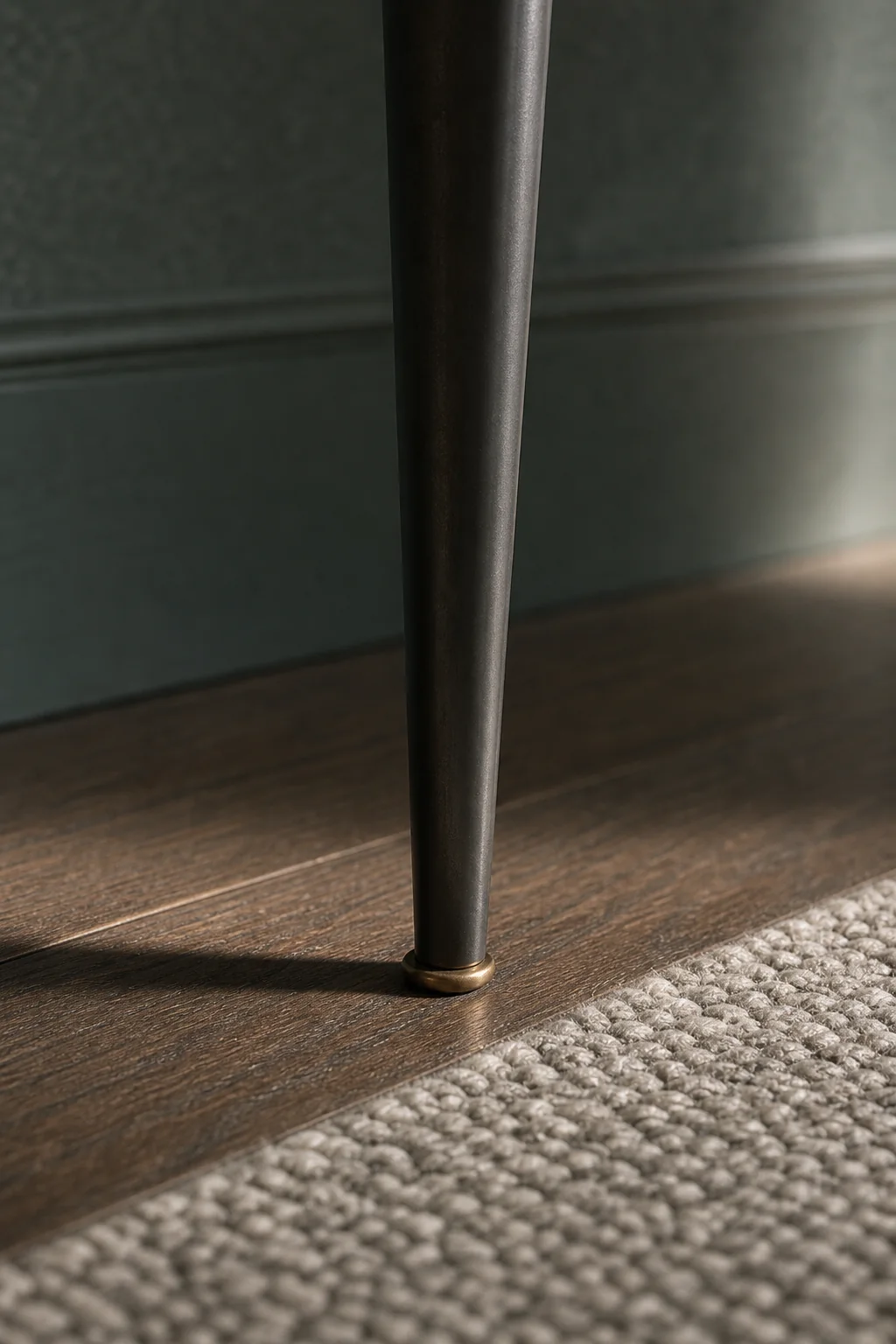
Tapered steel legs reflect the greyhound’s impossibly thin anatomy, anchoring the workspace with delicate precision while emphasizing the negative space beneath the desk. You can easily scale this concept’s intensity based on your comfort level. A subtle approach uses the verdigris color strictly as an accent on a single piece of furniture, keeping the walls a warm ash gray. A balanced execution coats the walls in chalky verdigris limewash, grounding the space with a dark walnut desk. Finally, a bold design paints the ceiling, walls, and trim in the same dark verdigris, introducing a large, sweeping blackened steel bookcase to dominate the room’s geometry.