
This Swan Tureen Became a Dining Terrace
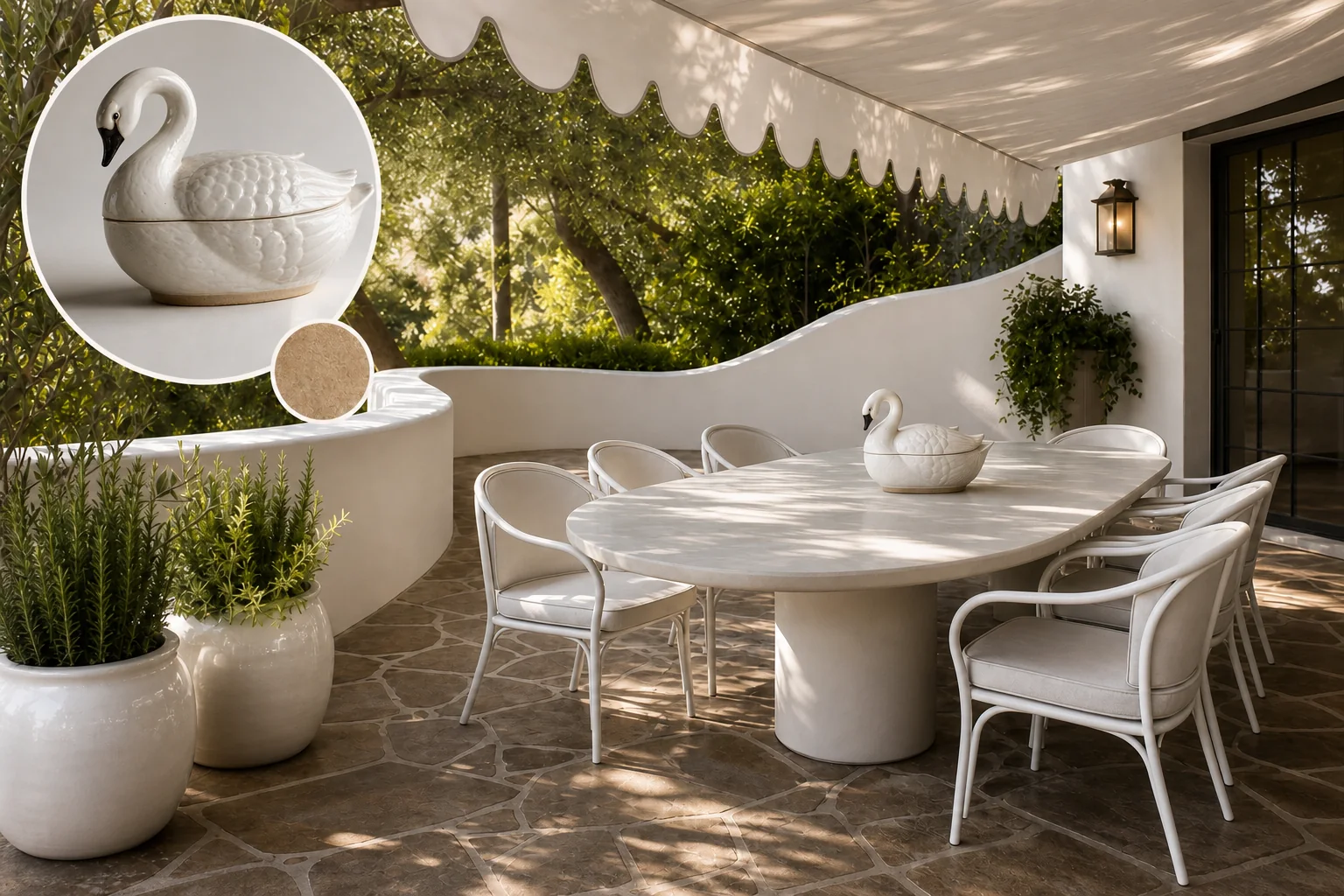
An antique earthenware swan tureen offers a masterclass in balancing sculptural elegance with raw materiality. By extracting its sweeping lines and contrasting finishes, we can shape a semi-shaded outdoor terrace that feels both refined and grounded, keeping the palette strictly neutral to highlight volumetric curves without feeling overly thematic.
Shaping the sweeping foundation
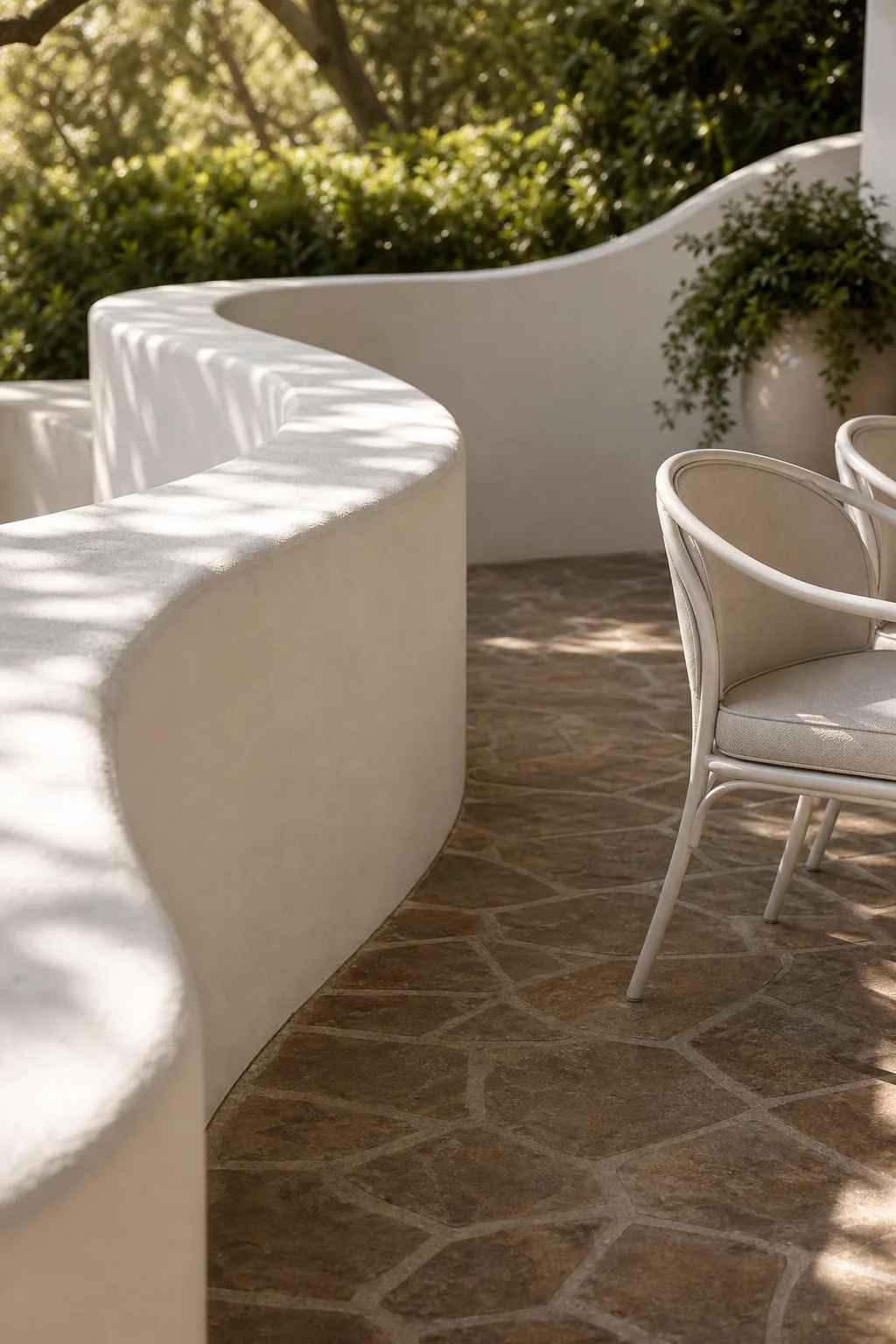
The terrace adopts the bird’s graceful posture through a continuous, low retaining wall that defines the dining footprint with a distinct, sweeping S-curve. By pouring flexible formwork, you can construct a boundary finished in a smooth, matte white exterior plaster that perfectly mimics unglazed bisque. This architectural gesture creates a sheltering embrace for the dining table, establishing the serene, grounded outdoor dining space that balances elegant comfort with natural weathering. Following a few core structural steps ensures this foundational curve anchors the entire environment while maintaining the required weather-resistant durability.
- Lay the irregular warm-toned flagstone paving to establish a raw, earthy ground plane that anchors the space.
- Construct the sweeping retaining wall using flexible forms to create a continuous S-curve boundary around the dining area.
- Apply matte white exterior plaster to the wall to mimic the smooth, non-reflective texture of bisque ceramic.
- Install the overhead shade structure with heavy canvas to provide filtered, dappled sunlight over the main table.
Glaze meets raw earth
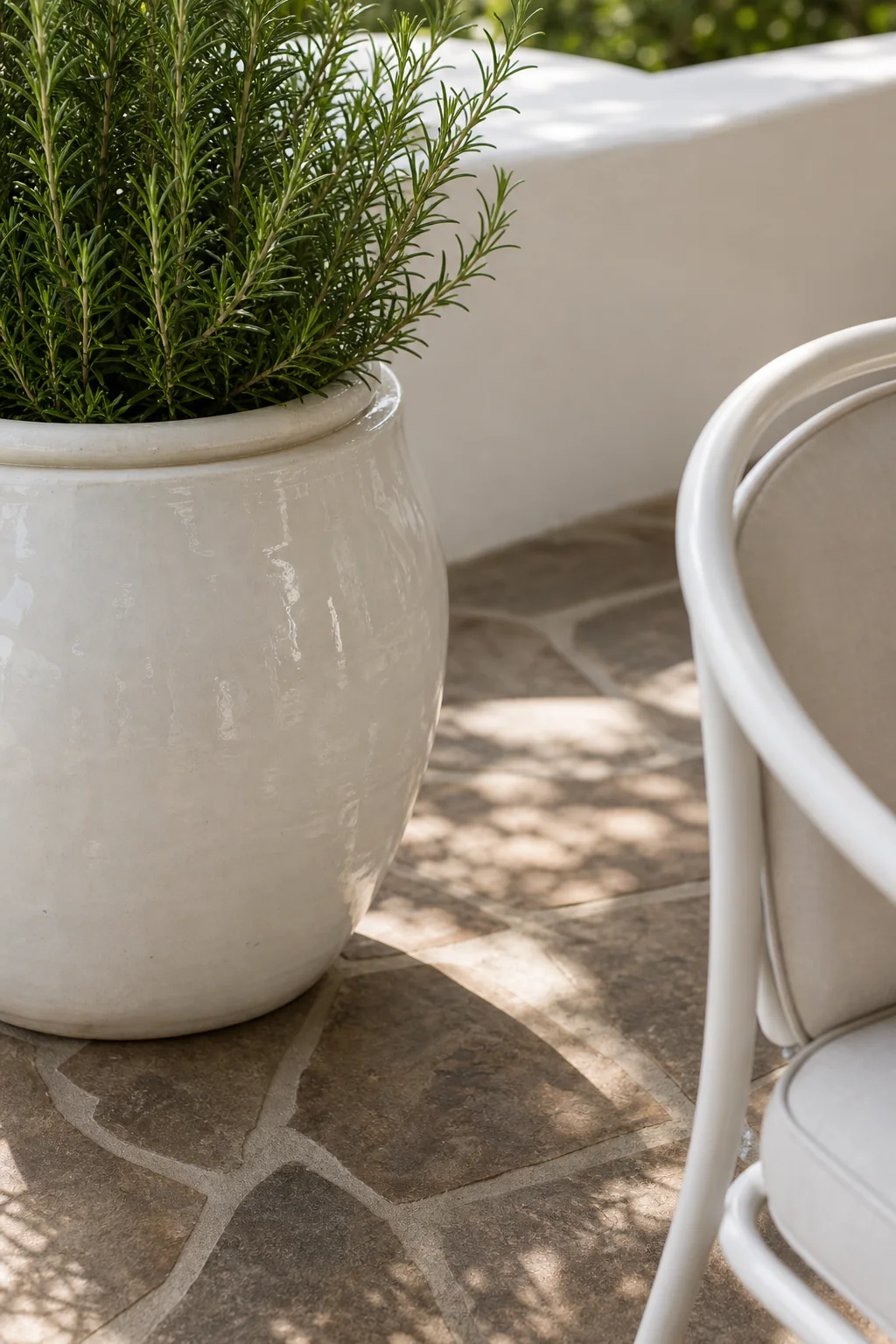
We translate the tureen’s material duality by placing high-gloss elements directly against rough, warm-toned natural stone. The stark contrast between the thick milky-white glaze and the exposed, unglazed earthenware foot provides a clear visual-DNA mapping for selecting the terrace’s primary surfaces. By avoiding literal interpretations, the design relies on the tension between refined gloss and earthy matte textures to generate visual interest. This careful translation of the antique object’s defining traits into architectural moves ensures the outdoor dining area feels sophisticated, capturing the essence of the glazed ceramic without resorting to novelty.
| Source trait | Visible evidence | Room move |
|---|---|---|
| Sweeping posture | The continuous, graceful S-curve of the swan’s elongated neck and breast | A low, white-plastered retaining wall that bounds the terrace with a distinct, sweeping S-curve |
| Glaze and clay | The stark contrast between the thick milky-white glaze and the exposed, unglazed earthenware foot | High-gloss white ceramic planters resting directly on the raw, earthy flagstone paving |
| Layered plumage | The molded, overlapping relief of the swan’s feathers in the ceramic body | A heavy white canvas shade awning featuring a rhythmic, overlapping scalloped edge |
| Swelling volume | The rounded, volumetric body of the tureen bowl | White powder-coated metal dining chairs with graceful, swelling curved armrests and rounded backs |
Grounding the gloss
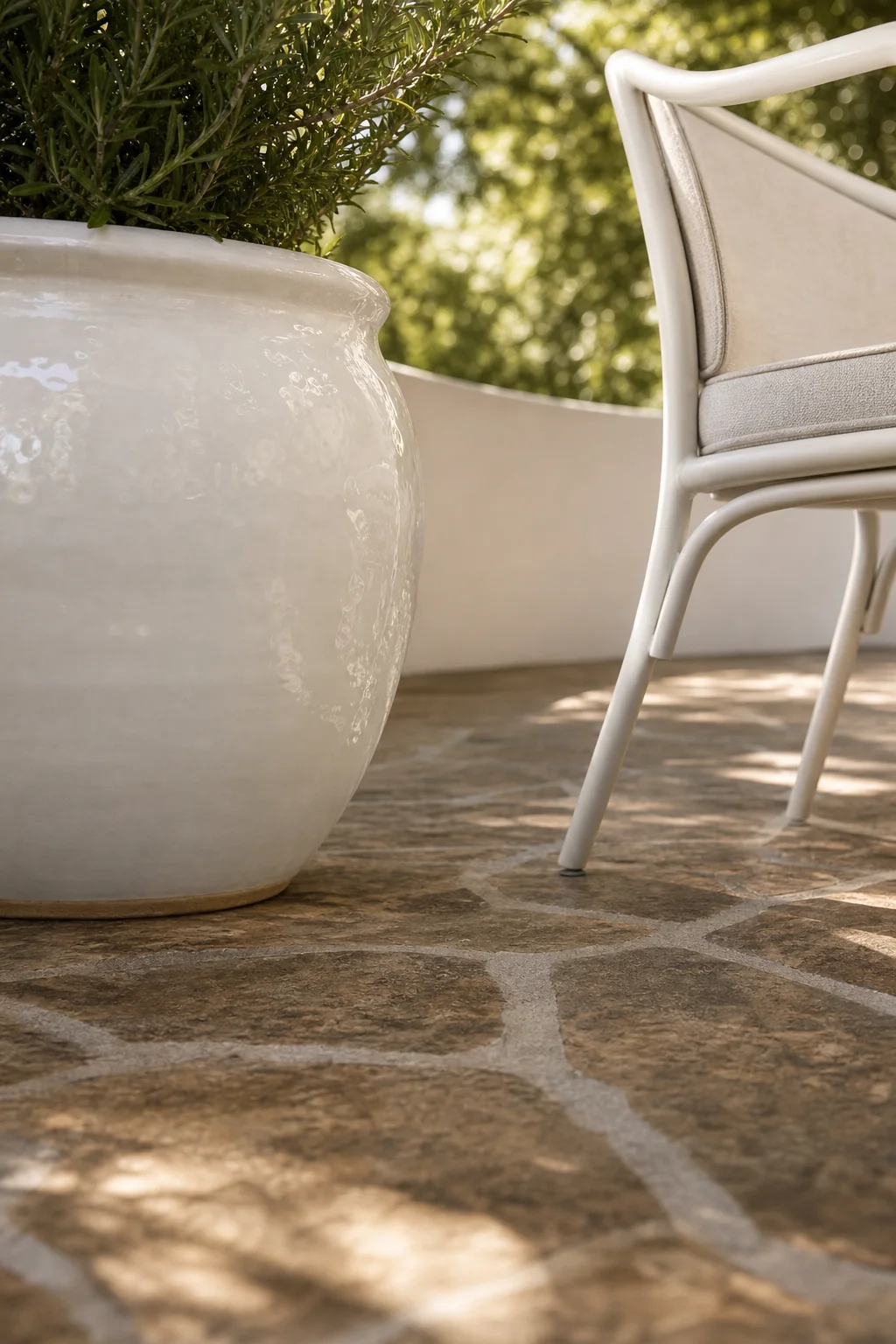
The unglazed earthenware foot inspired the raw flagstone paving, creating a necessary friction against highly reflective accents. By sourcing matte, unrefined stone for the floor and pairing it with pooled-glaze ceramics, you establish an earthy matte texture that prevents the pristine white elements from feeling sterile. High-gloss white ceramic planters resting directly on the irregular gray stone mimic the exact material transition seen at the base of the tureen. Gather these essential terrace surface materials to recreate the compelling tension between the glossy milk finish and the rugged flagstone foundation.
Translating layered plumage
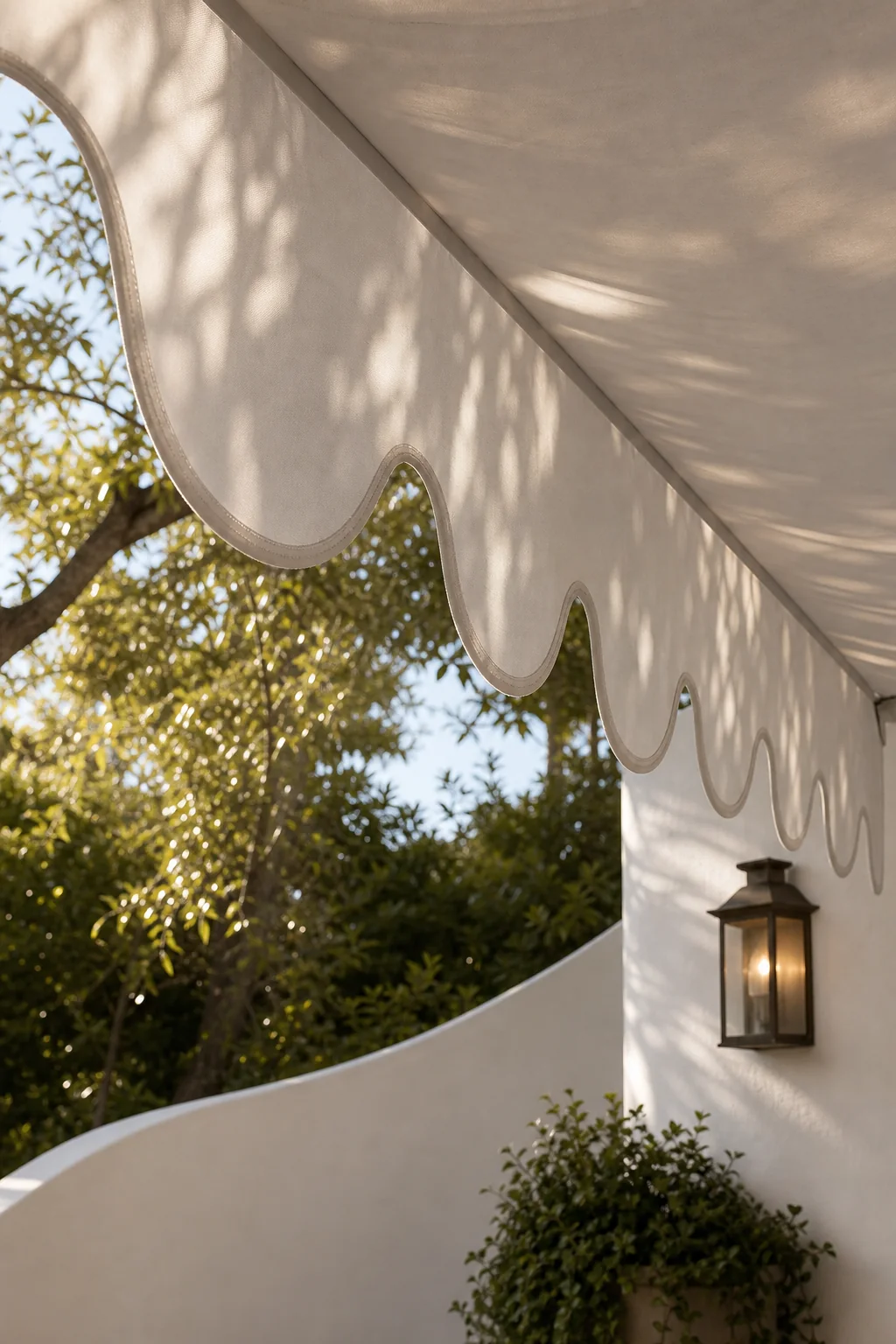
Instead of literal feather motifs, the rhythmic texture of plumage becomes a tailored, overlapping scallop on the overhead shade. Specifying a heavy, weather-resistant white canvas allows the awning to hold a crisp, structural shape, catching directional sunlight much like the subtle relief patterns molded into the ceramic bird’s wings. This approach honors the source object’s intricate details while fulfilling the functional requirement for overhead shade. The resulting canopy introduces a soft, tactile dimension to the terrace, contrasting beautifully against the hard flagstone paving and the smooth, sweeping plaster of the retaining wall.
Rhythmic shade structures
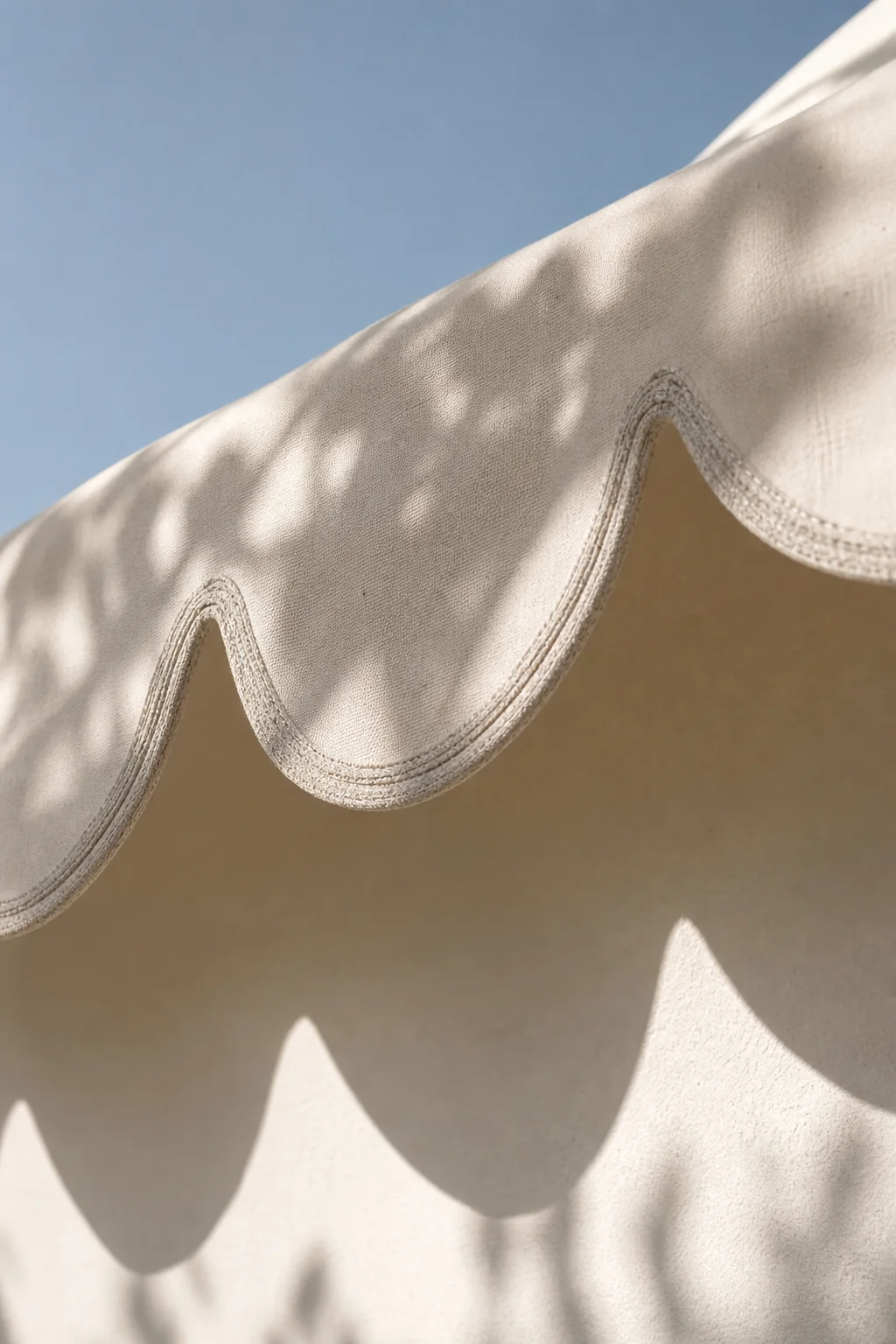
The heavy canvas awning mimics the swan’s layered plumage by casting sharp, repeating shadows across the minimalist dining table. Designing the valance with deep, overlapping edges ensures the canopy feels architectural rather than flimsy, providing essential ambient evening lighting opportunities while reinforcing the continuous sweeping lines of the surrounding space. As the sun moves, the dappled light filters through the scalloped borders, dynamically altering the mood of the terrace. This interplay of light and shadow perfectly captures the subtle molded feather details of the original earthenware piece in a purely architectural format.
Capturing swelling volume
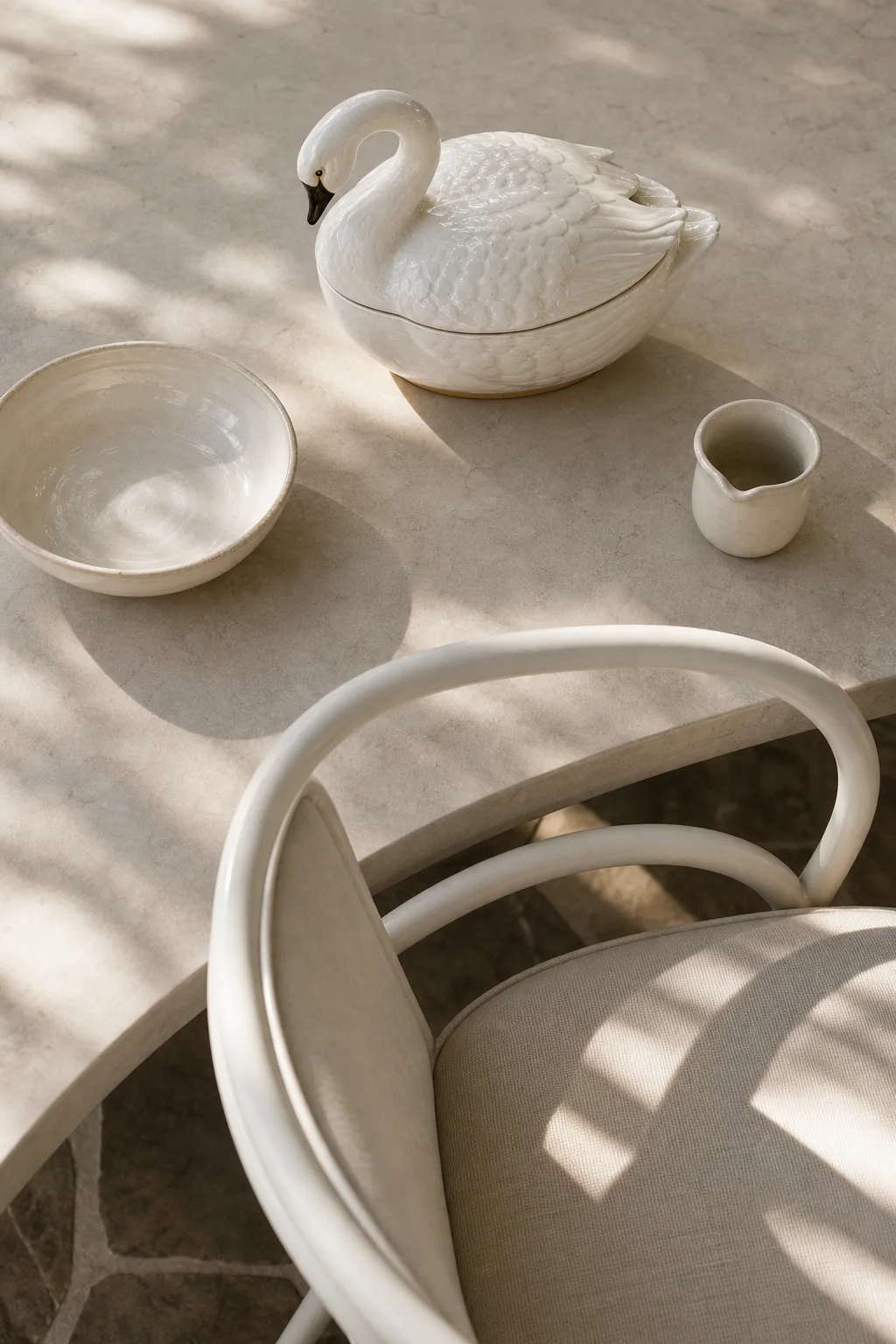
The generous, rounded body of the soup bowl informs the seating, bringing volumetric curves to the dining chairs. To scale this look, a subtle approach relies purely on a glossy milk and warm gray palette with standard outdoor furniture. A balanced execution introduces the sweeping S-curve retaining wall and scalloped awning, paired with simple glossy planters and rounded chairs. For a bold statement, exaggerate the swelling volumes with oversized, highly sculptural dining chairs and a deeply layered, multi-tiered scalloped canopy. Choosing white powder-coated metal chairs with graceful, swelling armrests ensures the dining set remains elegantly anchored.
Resist the urge to use actual bird or feather prints on your linens or upholstery. Rely entirely on volumetric curves, stark material contrasts, and overlapping scalloped edges to convey the swan’s elegance without crossing into a thematic novelty.