
This Coffeepot Became a Coffee Bar Station
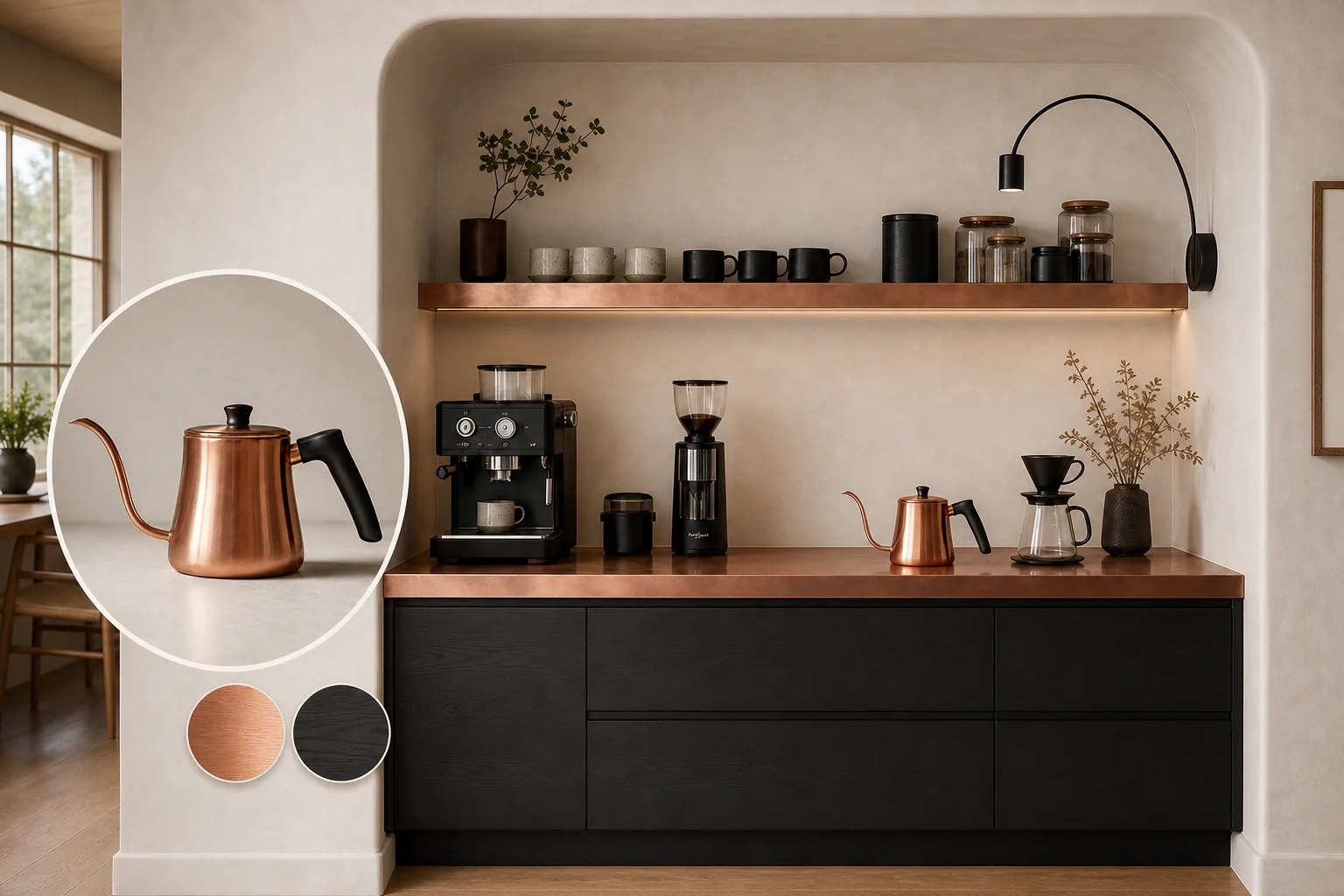
Transforming a daily ritual into an architectural feature requires looking closely at a precise, elegant instrument like a rose-copper gooseneck coffeepot. To brew up a calm, dedicated morning station, we echo the kettle’s continuous, softly rounded volumes while allowing warm copper tones to shine against visually quiet, handleless matte surfaces.
Carving a seamless brewing alcove
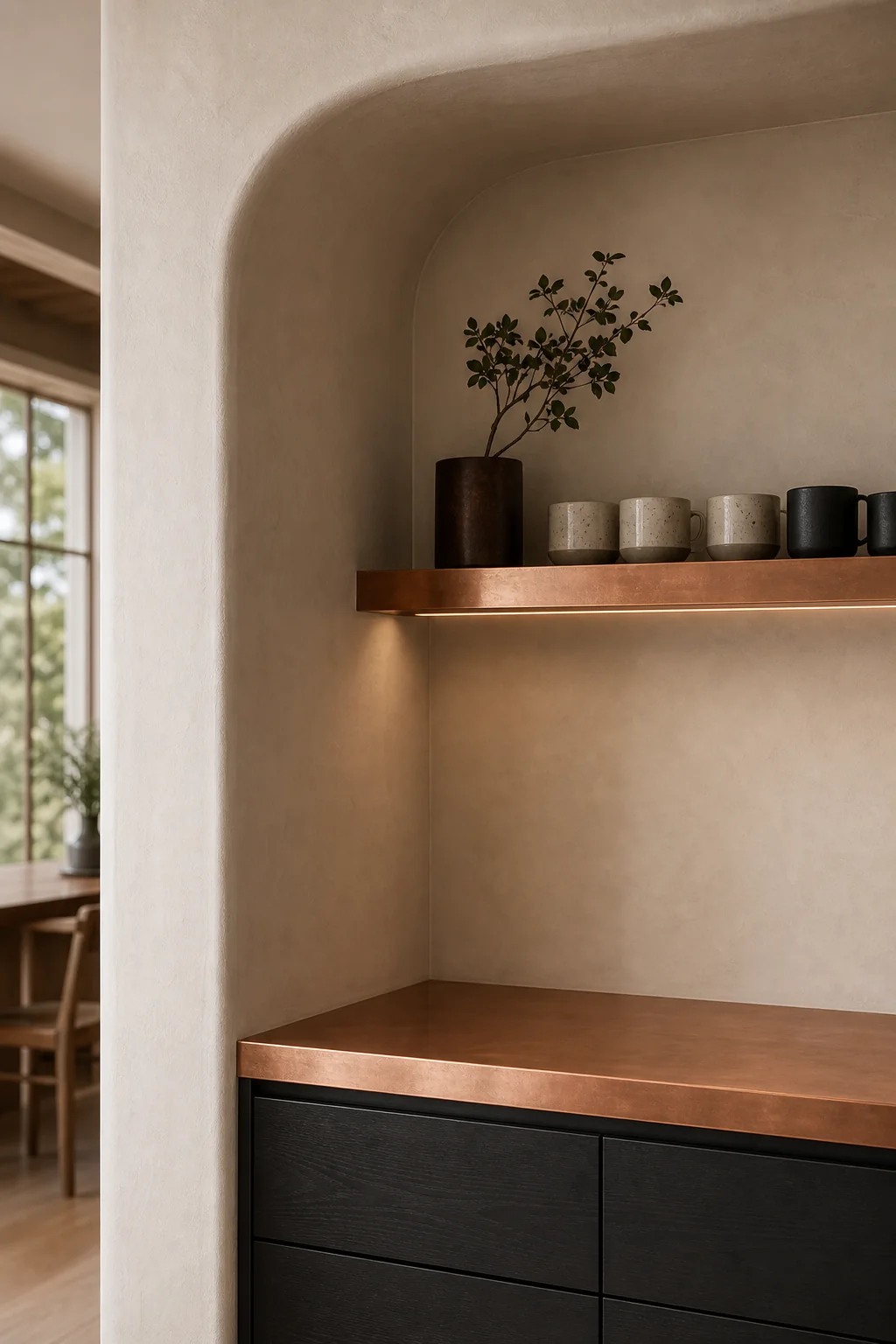
By eliminating sharp corners in the architecture, the entire space adopts the continuous, fluid volume of the kettle itself, creating a recessed brewing alcove with softly rounded interior corners. Applying a warm white tadelakt plaster finish ensures the walls and ceiling share a seamless, velvety texture that absorbs light beautifully without distracting joint lines. This foundational move establishes a visually quiet environment that perfectly frames the daily ritual of brewing, setting the stage for the following structural steps that bring this minimalist morning station to life.
- Frame the recessed alcove with flexible drywall corner bead so the interior transitions smoothly without sharp 90-degree angles.
- Apply a continuous tadelakt or Roman clay plaster finish to achieve a seamless, velvety texture that absorbs ambient light.
- Install the matte ebonized lower cabinetry bases so the dark foundation sits perfectly flush within the alcove.
- Template and fit the brushed copper countertop, ensuring the metal surface fits snugly against the curved plaster walls.
- Mount the arched matte black wall sconce so the fixture extends gracefully over the center of the brewing zone.
Pouring on the warm metallic glow

The kettle’s signature rose-copper hue expands into broad horizontal planes, bringing a luminous warmth to the recessed niche through a solid brushed copper countertop. We deliberately keep the copper finish brushed rather than polished to diffuse light softly and avoid harsh reflections, allowing the metal to patina naturally over time as it interacts with daily espresso spills and warm mugs. To understand how these specific physical traits from the original pouring vessel translate directly into the room’s broader architectural gestures, review the visual-DNA mapping table below.
| Source trait | Visible evidence | Room move |
|---|---|---|
| Continuous Volume | The seamless, rounded cylindrical body of the kettle | A recessed brewing alcove with softly curved interior corners and a seamless tadelakt plaster finish |
| Warm Metallic Glow | The distinct rose-copper finish of the metal | A solid brushed copper countertop and matching floating shelf that reflect warm light into the alcove |
| Tactile Contrast | The smooth matte black ergonomic pouring handle against the metal body | Matte ebonized wood lower cabinetry with smooth, handleless drawer fronts providing a dark, grounding texture |
| Sweeping Arc | The slender, elongated curve of the gooseneck spout | A delicate, arched matte black wall sconce extending gracefully over the brewing surface |
Elevating the metallic accent
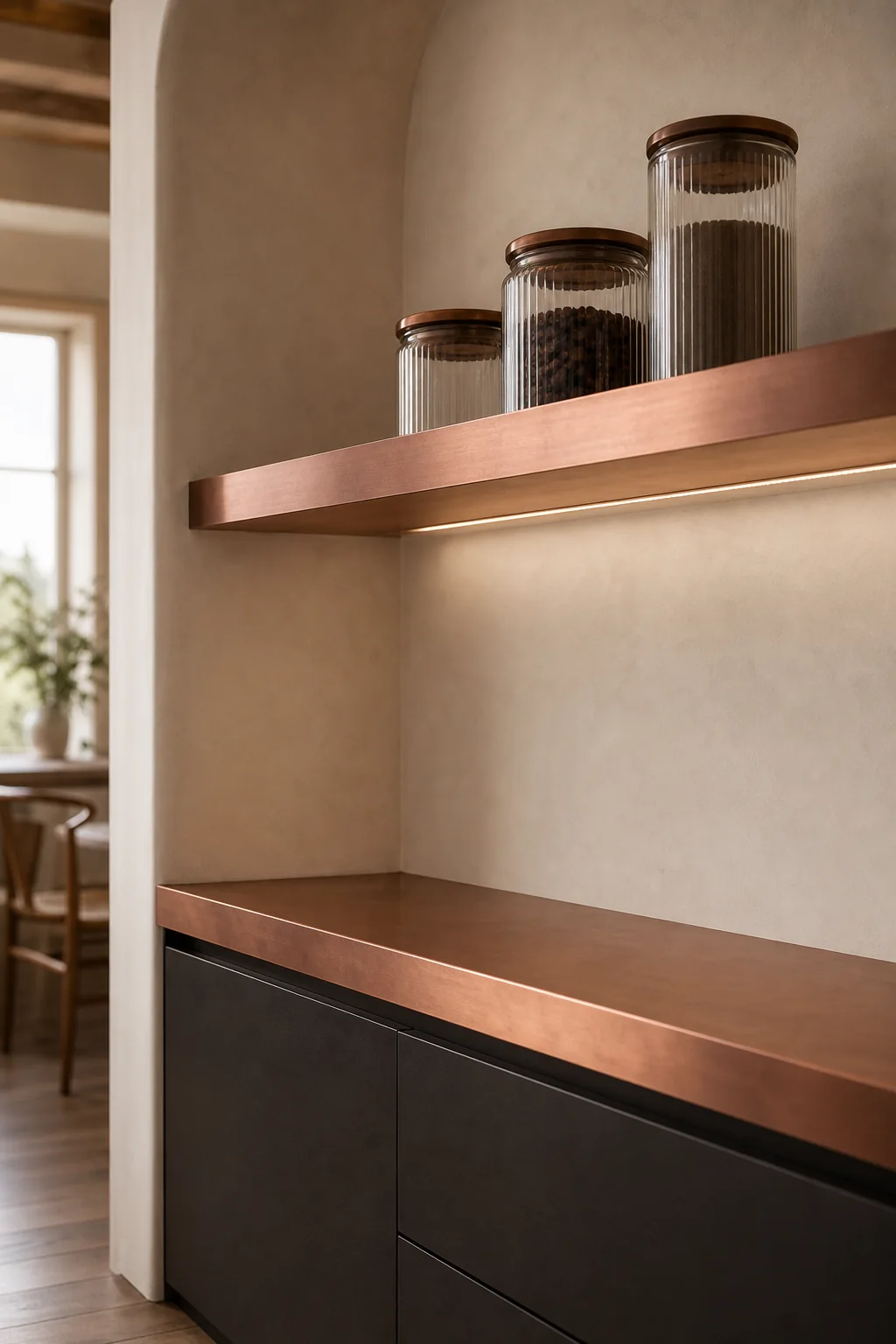
Extending the metallic warmth upward, a single floating shelf repeats the kettle’s distinct rose-copper sheen against the light-absorbing tadelakt plaster. This precise horizontal plane provides essential open storage for ribbed glass canisters and favorite ceramic mugs while maintaining the minimalist surface logic of the alcove. By limiting the upper storage to just one slender ledge, the design preserves the generous visual quiet of the morning station, ensuring the luminous metal remains a deliberate, elevated accent rather than an overwhelming presence in the softly lit space.
Grounding the glow with matte contrast
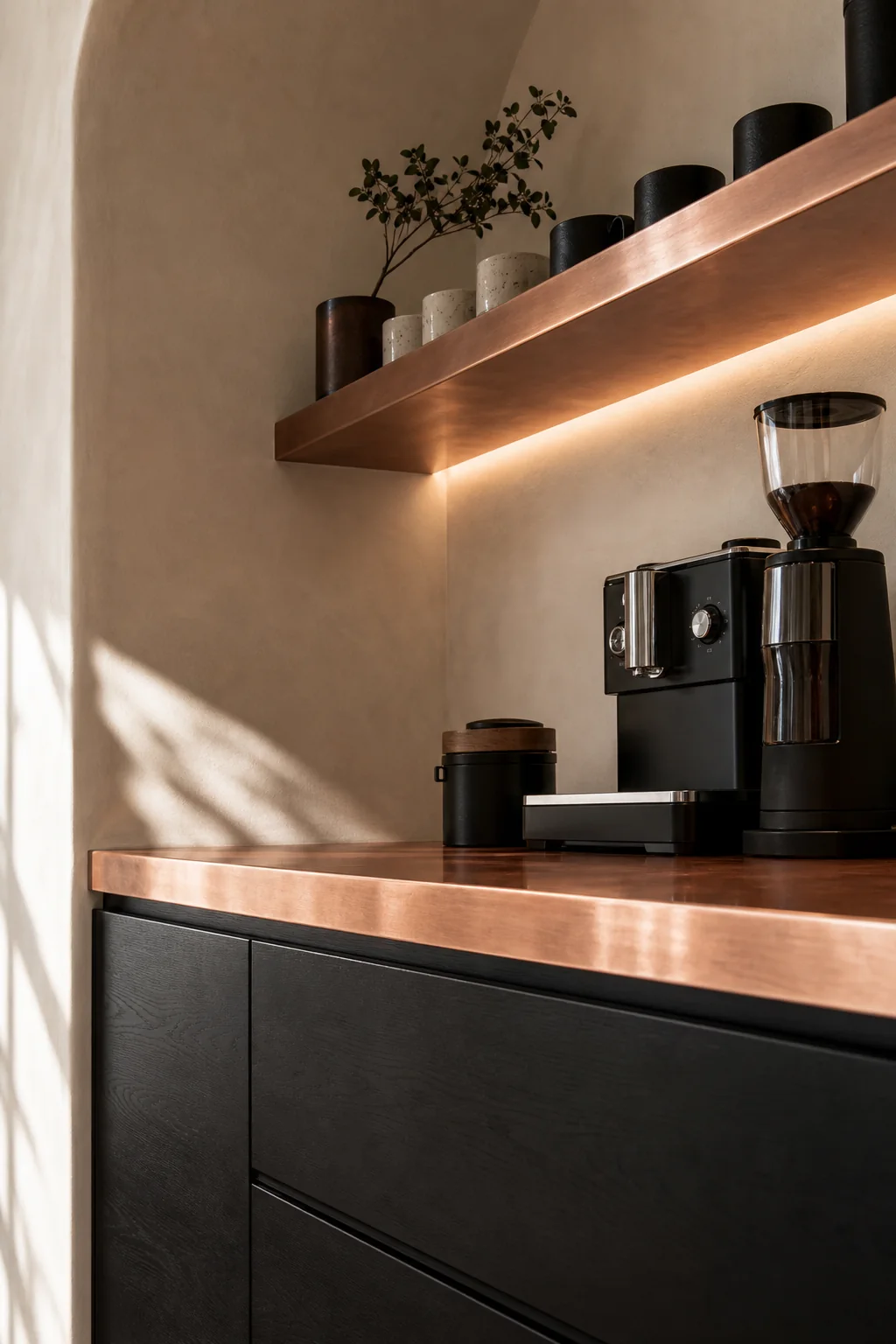
Just as the kettle’s matte handle provides a tactile break from the gleaming metal body, ebonized wood cabinetry anchors the bright brewing surface with essential visual weight. We select flat-panel, handleless doors to maintain the clean aesthetic, staining the wood with an ebonized finish that allows subtle organic grain to show through the deep charcoal tone. This grounded, heavy base conceals beans and equipment while setting up a striking interplay of brushed metallic sheen against light-absorbing matte finishes, utilizing the specific materials detailed in this foundational checklist.
Tracing the sweeping gooseneck arc

A single, graceful overhead line introduces delicate movement to the space, directly contrasting with the solid, heavy base of the dark cabinetry below. By mounting an arched black sconce that mimics the slender gooseneck spout, the design captures the precise functional geometry of a pour-over kettle in an architectural lighting fixture. Positioned to provide direct task lighting over the primary espresso zone, this tubular profile accurately reflects the spout’s elegant sweeping arc while ensuring your early morning brewing rituals are perfectly illuminated.
Ensure the sconce’s reach extends exactly over your pour-over scale. The curve should look deliberate and serve a direct functional purpose, just like the kettle’s spout.
Lighting with delicate precision
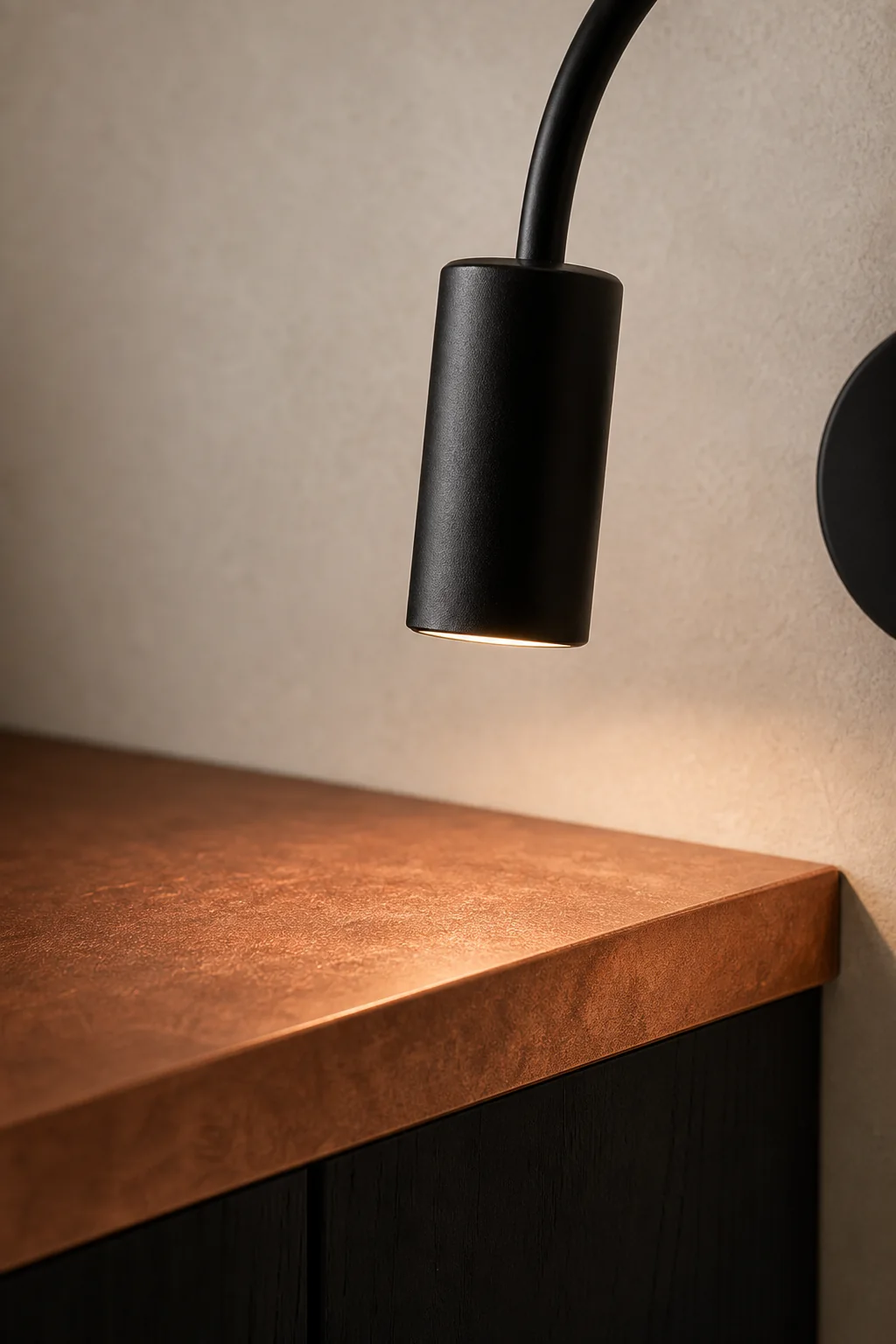
The tubular sconce captures the spout’s elegant sweeping arc, pooling warm light directly onto the copper countertop to highlight the interplay of continuous, softly rounded volumes. To adapt this aesthetic, a balanced approach pairs the solid copper counter with the ebonized wood base and continuous plaster walls, letting the arched black sconce act as the primary focal point. For a subtle variation, limit the copper to just the floating shelf and use a warm oak countertop to soften the contrast. Conversely, a bold execution wraps the entire interior of the alcove—walls, counter, and ceiling—in brushed copper, turning the station into a glowing, jewel-box focal point against the dark cabinetry.