
This Silver Honey Pot Became a Coffee Bar Corner
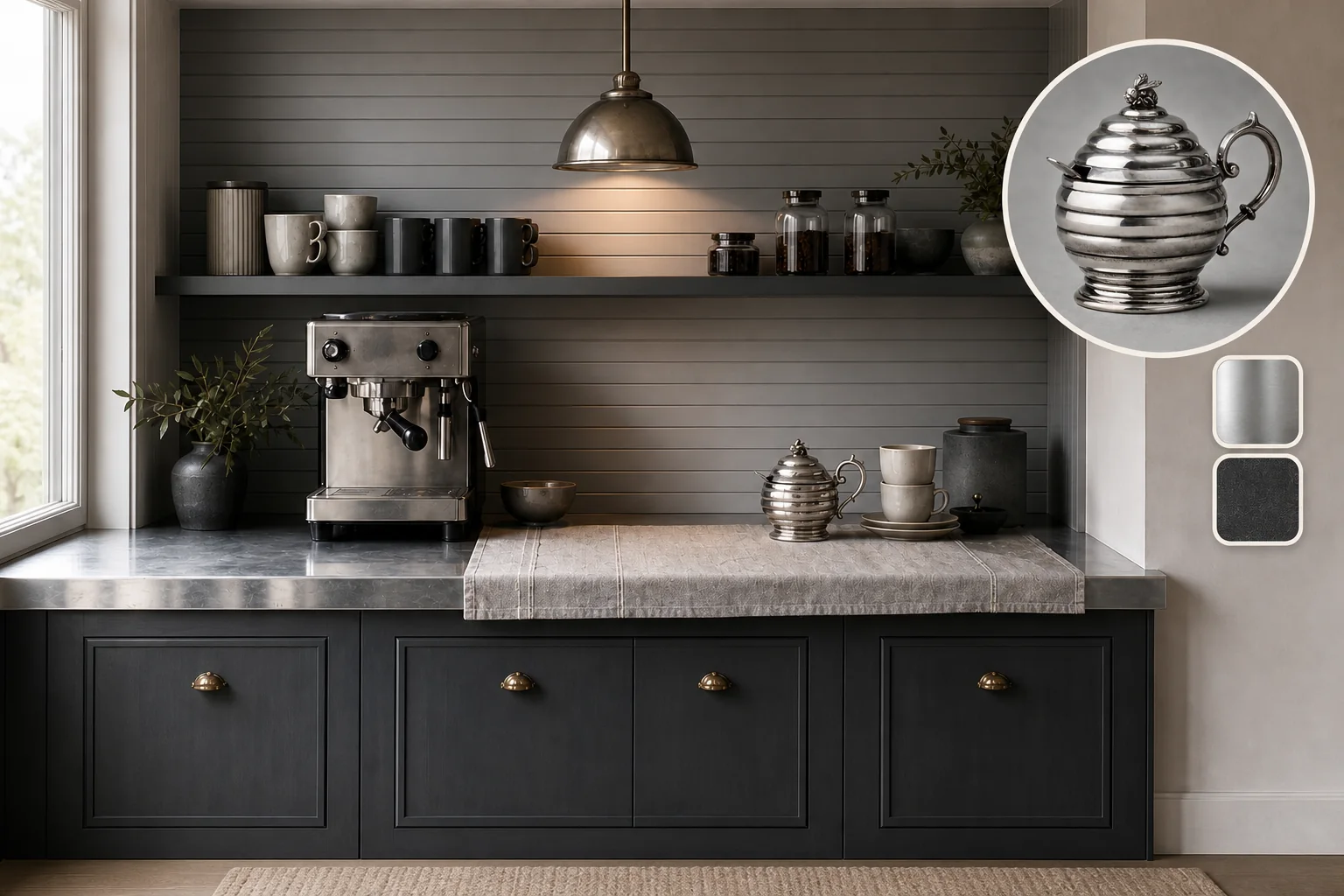
Translating an antique Edwardian silver honey pot into a highly functional coffee bar corner relies on contrasting metallic finishes and stacked horizontal geometry. By mapping the object’s rhythmic ridges and delicate sculptural points through texture and patina, we create a calm morning brewing station without relying on literal bee motifs.
Setting the architectural rhythm
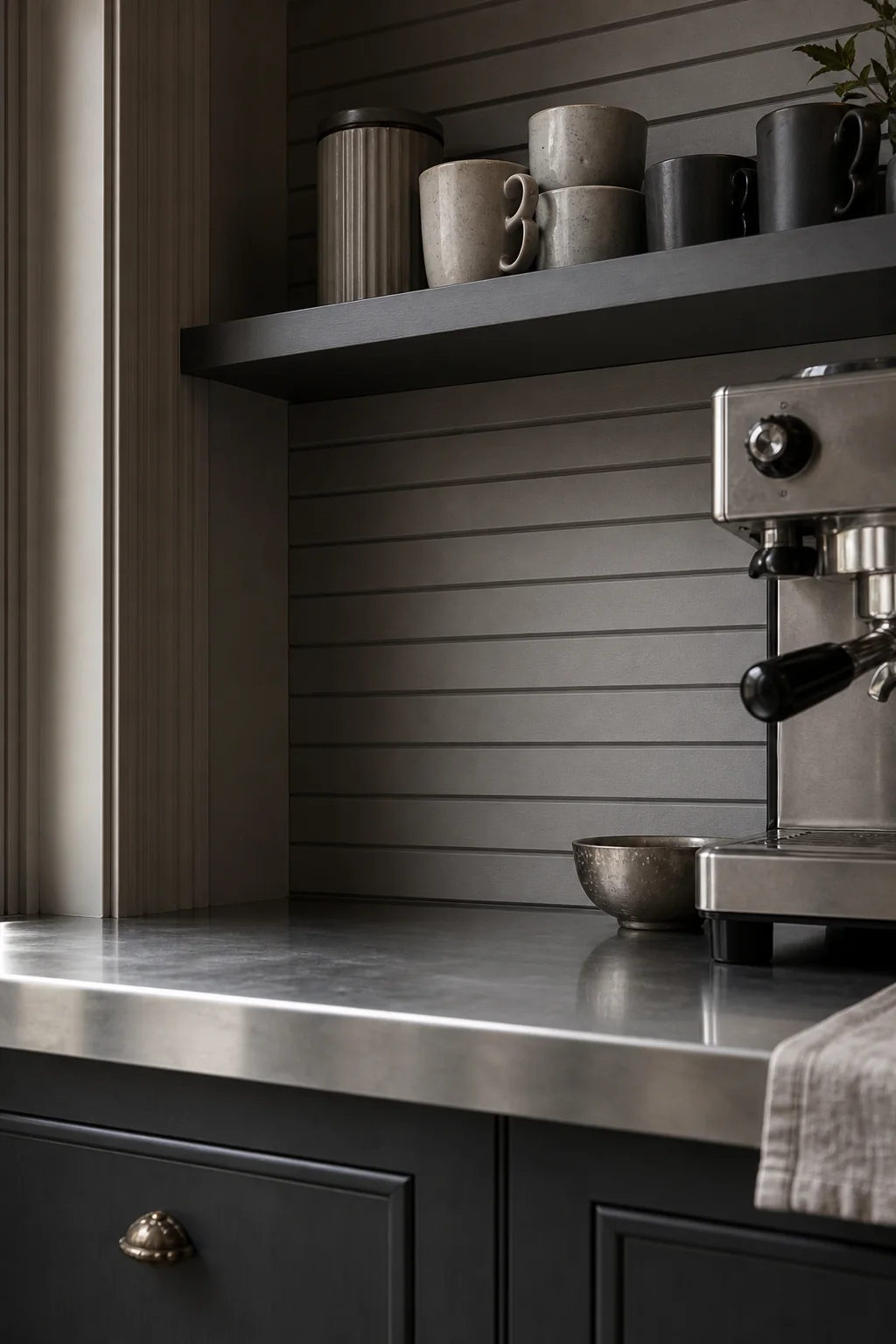
The concentric rings of the antique pot translate into a structured architectural backdrop that grounds the brewing alcove, requiring precise horizontal reeded paneling painted in a soft pewter tone to establish a metallic base without using actual metal on the walls. This foundational layer widens the visual space of the recessed alcove, setting a rhythmic stage for the morning ritual. To execute this structural foundation properly, follow these alcove installation steps to measure the recessed dimensions, install the continuous paneling, mount the upper open shelving securely, and fit the concealed lower cabinetry.
- Measure the recessed alcove dimensions meticulously to confirm the exact square footage required for the reeded wood paneling.
- Install the horizontal reeded wood paneling seamlessly so the backsplash features continuous, stacked horizontal lines.
- Paint the installed paneling in a matte, metallic-inspired soft pewter tone to establish the foundational color.
- Mount the upper open shelving securely into the studs, ensuring accessible cup storage is integrated without hiding the reeded texture.
- Install the concealed lower cabinetry to guarantee a perfectly stable base for the heavy espresso machine and hidden accessory storage.
Balancing polish and dark oxidation
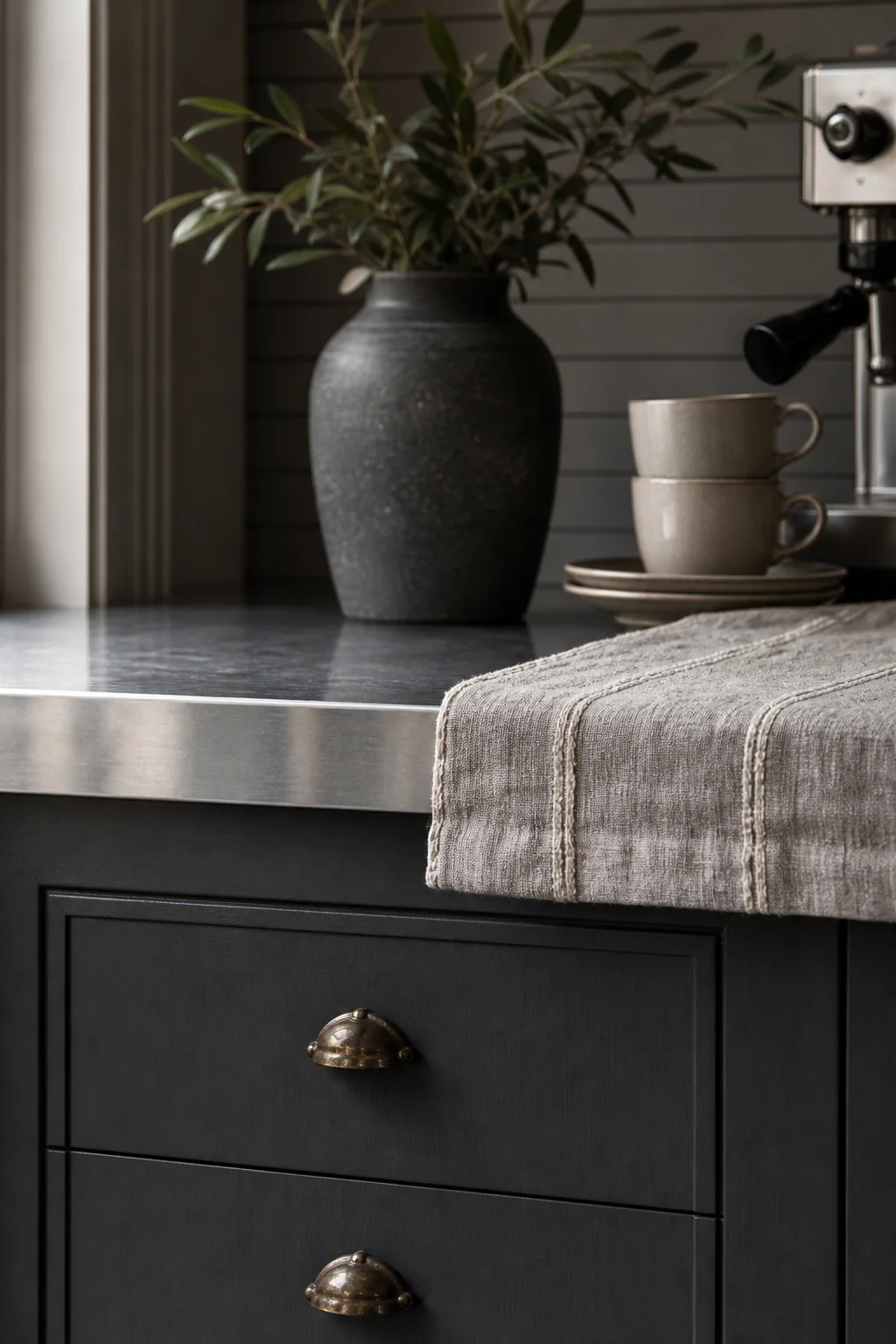
The natural patina of aged silver dictates a high-contrast palette where deep, shadowed tones anchor reflective work surfaces, a visual-DNA mapping process that directly informs our primary room moves. Applying matte oxidized charcoal paint to the lower cabinets perfectly represents the tarnished crevices of the antique silver, while the bright zinc captures the high-shine highlights contrasting with darkened recesses. This careful balance ensures the brewing station avoids feeling like a giant silver dome, instead offering a nuanced interpretation of the source object’s most compelling material qualities.
| Source trait | Visible evidence | Room move |
|---|---|---|
| Horizontal Banding | The stepped, concentric beehive ridges wrapping the silver pot | A backsplash of horizontal reeded wood paneling painted in a soft pewter tone |
| Tarnished Silver | The contrast between the polished silver highlights and the dark oxidation in the deep crevices | Matte oxidized charcoal cabinetry below paired with a bright, reflective brushed zinc countertop |
| Soft Luster | The smooth, reflective but slightly worn surface of the antique Edwardian silver | A heavy, silver-threaded linen runner placed over the zinc counter |
| Domed Finial | The curved lid topped with a delicate, cast sculptural bee | A domed spun-metal pendant light paired with small, organically shaped cast-bronze cabinet knobs |
Capturing the bright silver highlights
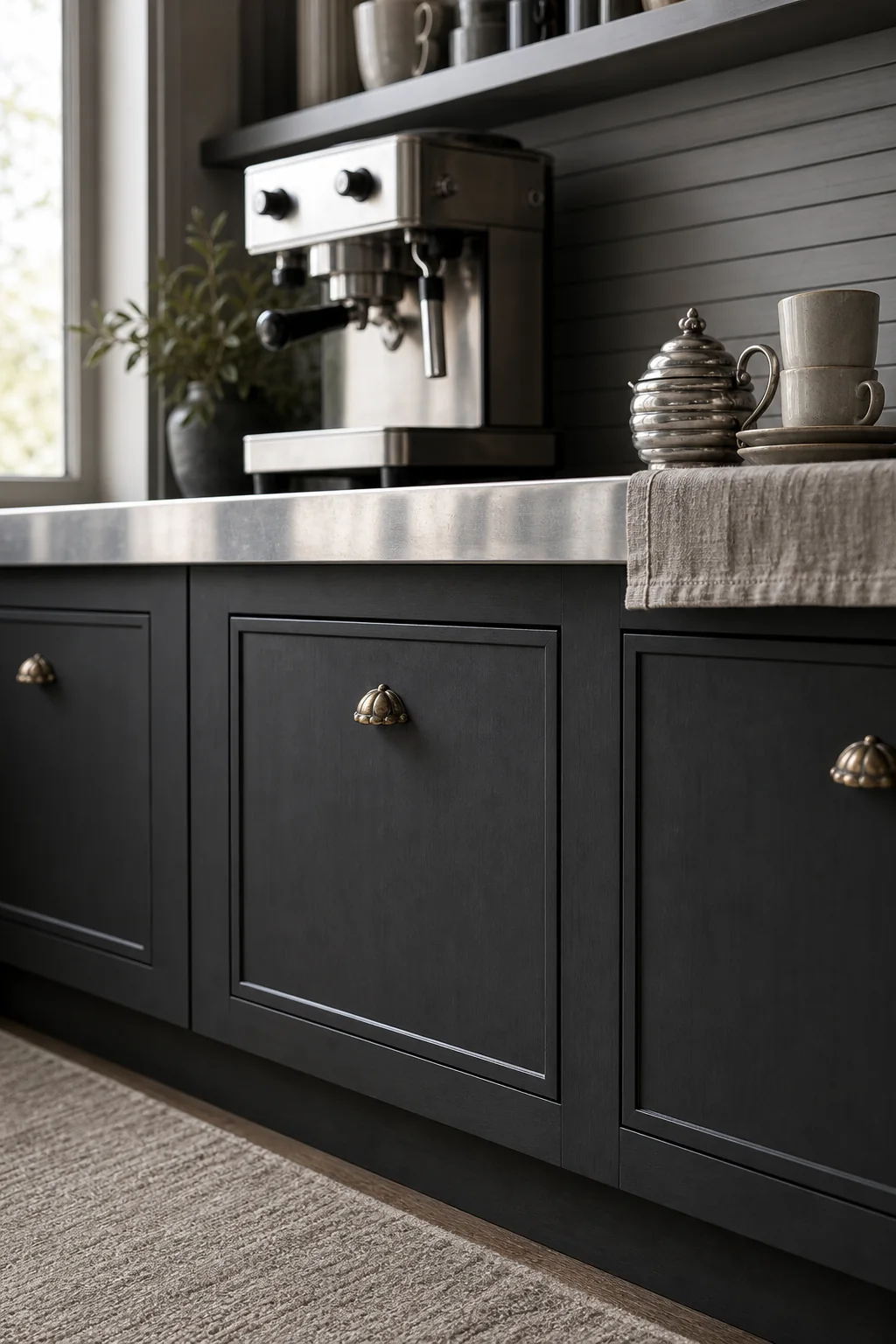
Scaling this metallic concept allows for distinct intensity levels across the space, ranging from a subtle approach using standard grey cabinetry and a small reeded tray under the espresso machine, to a balanced installation featuring a full reeded pewter backsplash and brushed zinc counters grounded by dark charcoal lowers. For a truly bold translation, you could wrap the entire alcove, including the ceiling, in reeded wood and use highly reflective polished steel instead of brushed zinc, amplifying the high-shine highlights of the original Edwardian silver to create an immersive, jewel-box coffee experience.
Introducing tactile fabric softness
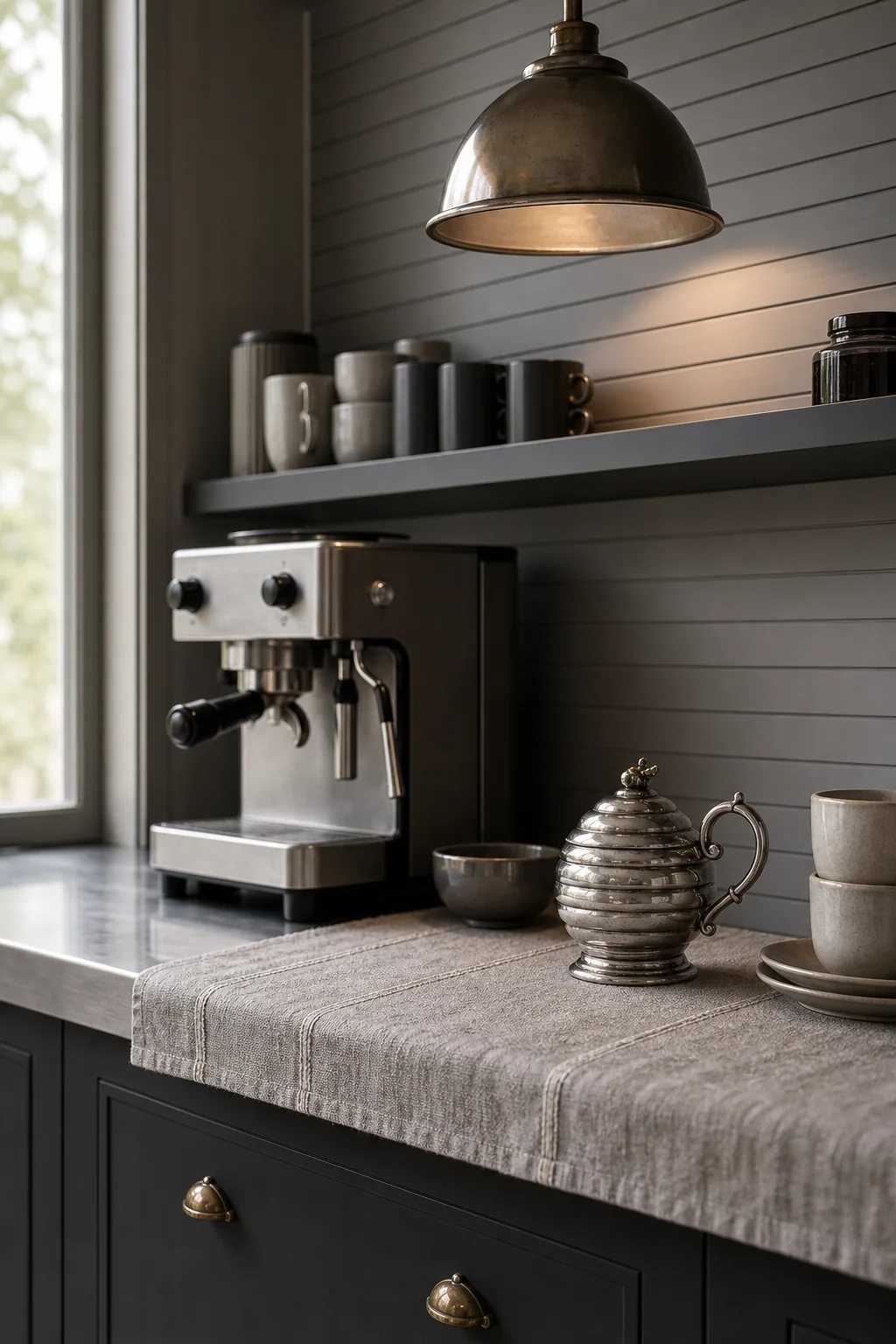
To prevent the metallic palette from feeling cold or sterile, heavy textiles introduce a subtle, worn luster that mimics aged silver. Draping a heavy linen runner over the zinc countertop absorbs sound and softens the hard edges of the modern espresso machine, ensuring the fabric features subtle silver threading to catch the early morning task lighting. This layer of fabric softness bridges the gap between the smooth metallic curves of the antique pot and the practical demands of a daily coffee preparation zone, guiding our tactile material edit.
Softening the brewing station
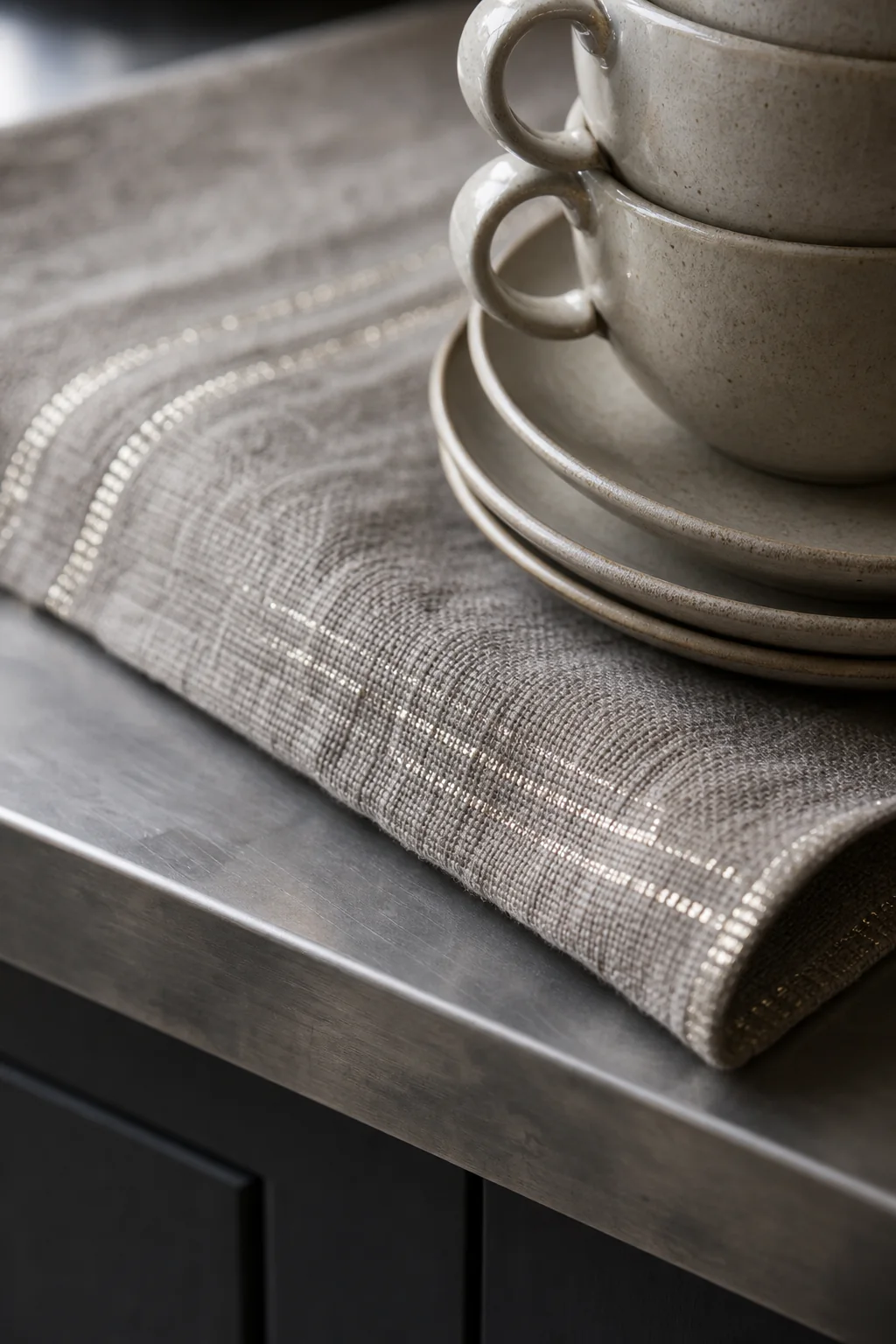
The interplay of raw zinc and woven linen perfectly captures the smooth metallic curves and tarnished dark accents of the original honey pot without relying on literal honeycomb or hexagon tiles. By keeping the materials grounded in heavy linen, brushed zinc, and painted reeded wood, the coffee bar corner maintains a sophisticated, architectural digest style that feels both highly functional and deeply connected to its antique inspiration. The resulting atmosphere provides a calm, tactile experience for early morning brewing, proving that historical objects can inspire entirely modern functional spaces.
Crowning the space with delicate forms
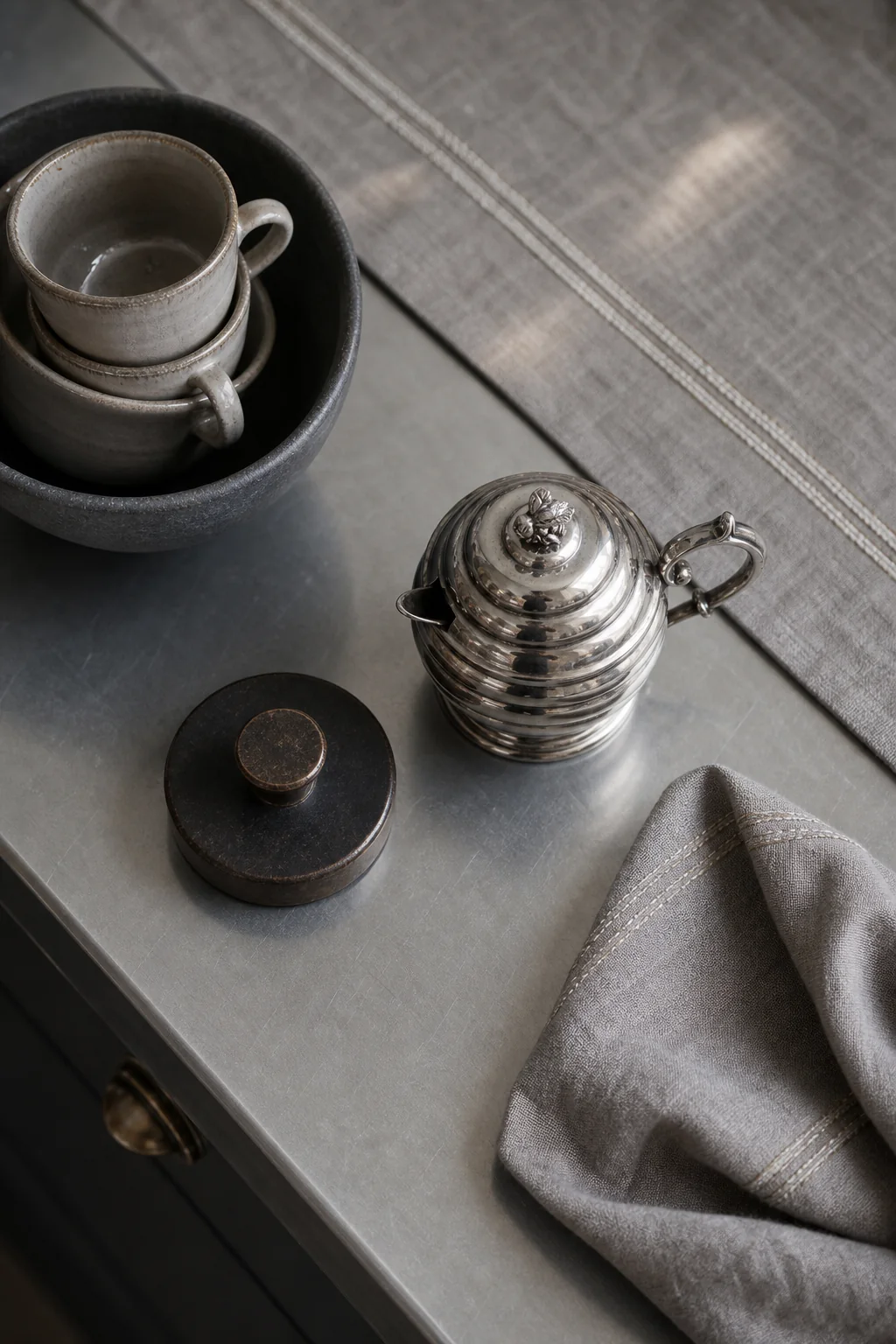
The singular, delicate focal point of the pot’s lid translates into carefully chosen lighting and hardware that crown the geometric base, replacing literal bee-shaped hardware or yellow and black color schemes with abstract sculptural points. Hanging a single domed spun-metal pendant above the station provides essential illumination, while pairing it with small, organically shaped cast-bronze cabinet knobs directly references the delicate scale of the original cast bee finial. This final layer of detail ensures the stacked horizontal lines are interrupted by a single, delicate sculptural focal point, completing the room’s visual rhythm.
Select cabinet knobs that feel slightly undersized for the doors. This intentional scaling mimics the delicate, jewel-like presence of the original cast bee finial.