
This Vanity Compact Became a Powder Room
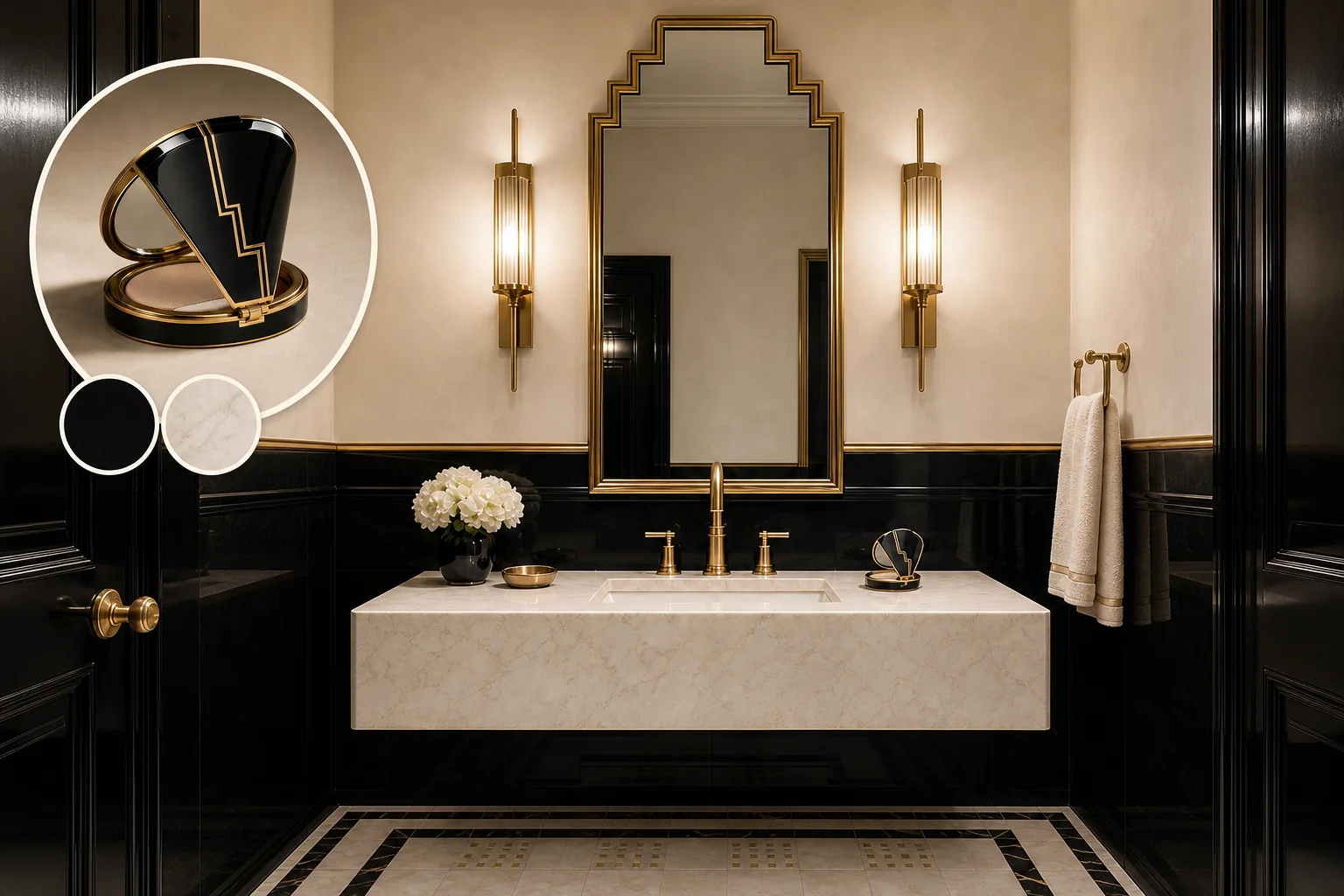
A small, windowless space requires a bold approach to feel intentional, and by borrowing the high-contrast glamour of a 1920s vanity compact, this powder room embraces its jewel-box proportions. The design relies on the deliberate contrast between deep, glossy boundaries and warm, precise metallic accents to create an intimate atmosphere.
Anchoring with a Glossy Boundary
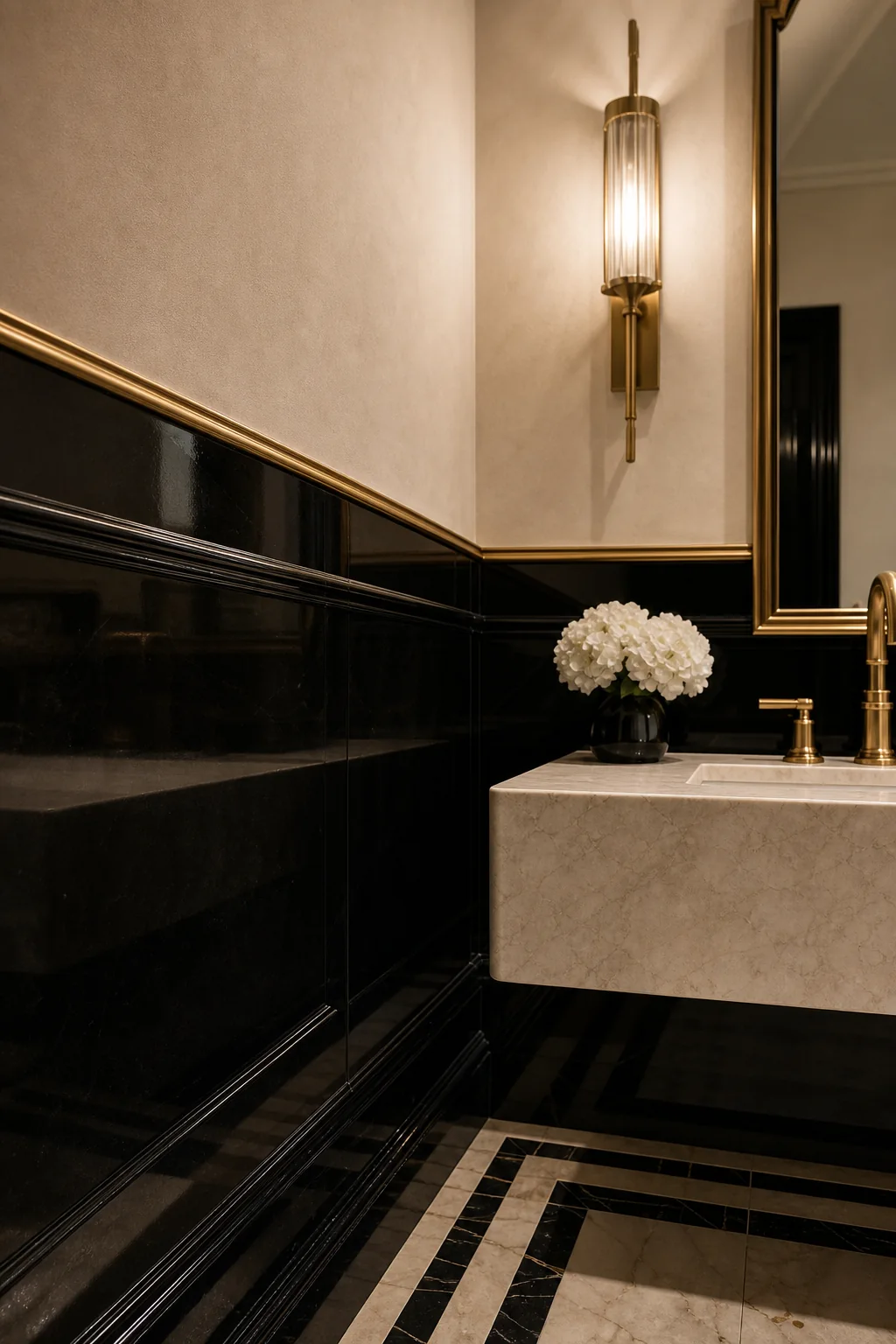
Wrapping the lower walls in a highly reflective dark finish establishes the room’s intimate proportions while bouncing available light, directly mirroring the compact’s reflective black lacquer shell. To achieve this dramatic foundation without overwhelming the small footprint, you must execute a series of precise architectural steps that divide the space horizontally. Keeping the upper walls a lighter, matte shade prevents the dark base from feeling oppressive, allowing the high-gloss lower surfaces to anchor the room. Follow this sequence to establish the room’s structural and visual boundaries.
- Install the lower wall wainscoting to create a distinct architectural line that divides the room horizontally.
- Paint the wainscoting in high-gloss black so the lower walls reflect light and anchor the small space.
- Paint the upper walls in a matte cream finish to ensure the top half of the room feels visually quiet.
- Mount the stepped-arch mirror centrally above the vanity to establish a strong geometric focal point.
- Install symmetrical brass sconces on either side of the mirror to provide precise task lighting for the face.
Cutting the Dark with Inlay Accents
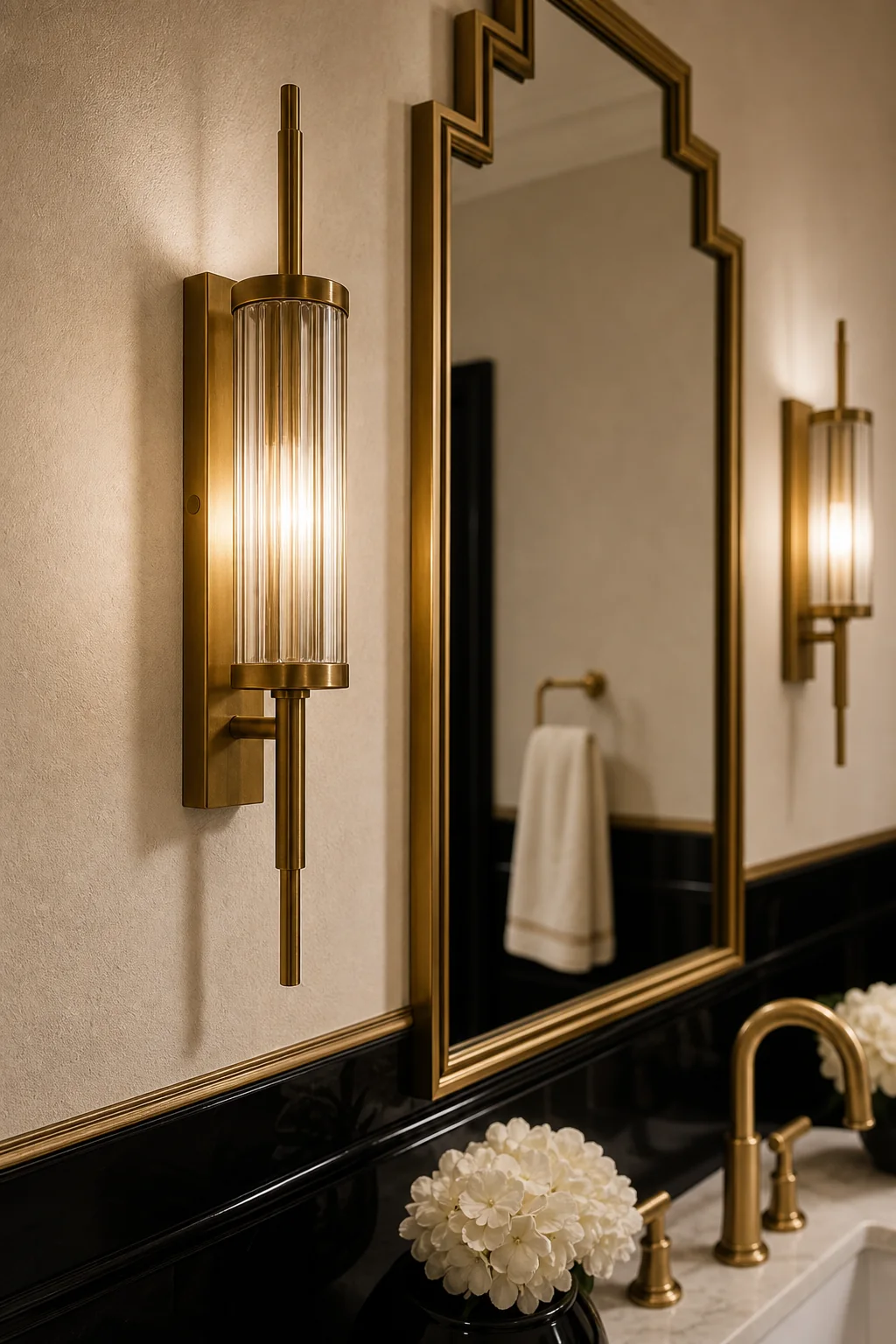
Introducing warm, precise metallic accents against the dark foundation provides necessary visual relief and reinforces the geometric theme found in the compact’s fine gold inlay. Slender brass sconces replicate these delicate lines, acting as sharp geometric borders that cut through the heavy black base. Ensure these metallic elements maintain a slender, linear profile to mimic the delicate inlay work of the original Art Deco object. The visual mapping table below demonstrates exactly how the vanity compact’s signature traits translate into functional room moves.
| Source trait | Visible evidence | Room move |
|---|---|---|
| Glossy boundary | Reflective black lacquer shell | High-gloss black wainscoting wrapping the lower walls to anchor the space |
| Inlay accents | Fine geometric gold lines cutting through the black enamel | Slender unlacquered brass wall sconces providing warm metallic contrast |
| Powdered softness | Pressed face powder and fabric puff inside the case | Honed cream marble vanity counter and a plush matte velvet hand towel |
| Stepped symmetry | Art Deco stepped geometric framing on the lid | Custom brass-framed wall mirror featuring a stepped-arch silhouette |
Warmth at the Washbasin
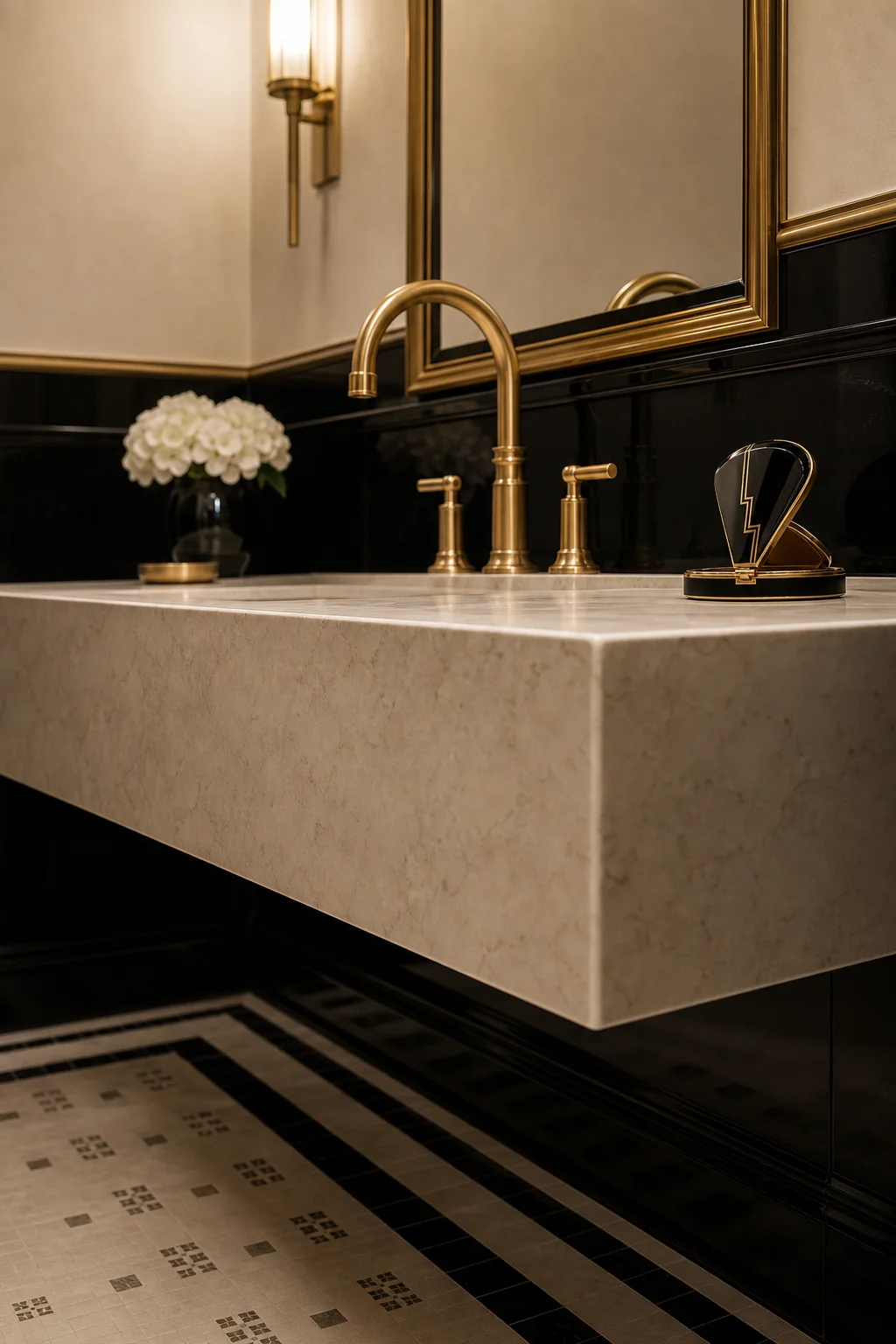
Selecting an unlacquered brass faucet adds immediate warmth and a living finish that will develop a beautiful patina over time. This plumbing fixture provides a striking, warm metallic contrast directly against the high-gloss black paint, ensuring the vanity area feels like a meticulously crafted piece of jewelry rather than standard bathroom hardware. By keeping the vanity profile simple, the faucet stands out as a delicate inlay accent, perfectly balancing the dark, reflective wainscoting with a touch of classic 1920s glamour and functional elegance.
Introducing Powdered Softness
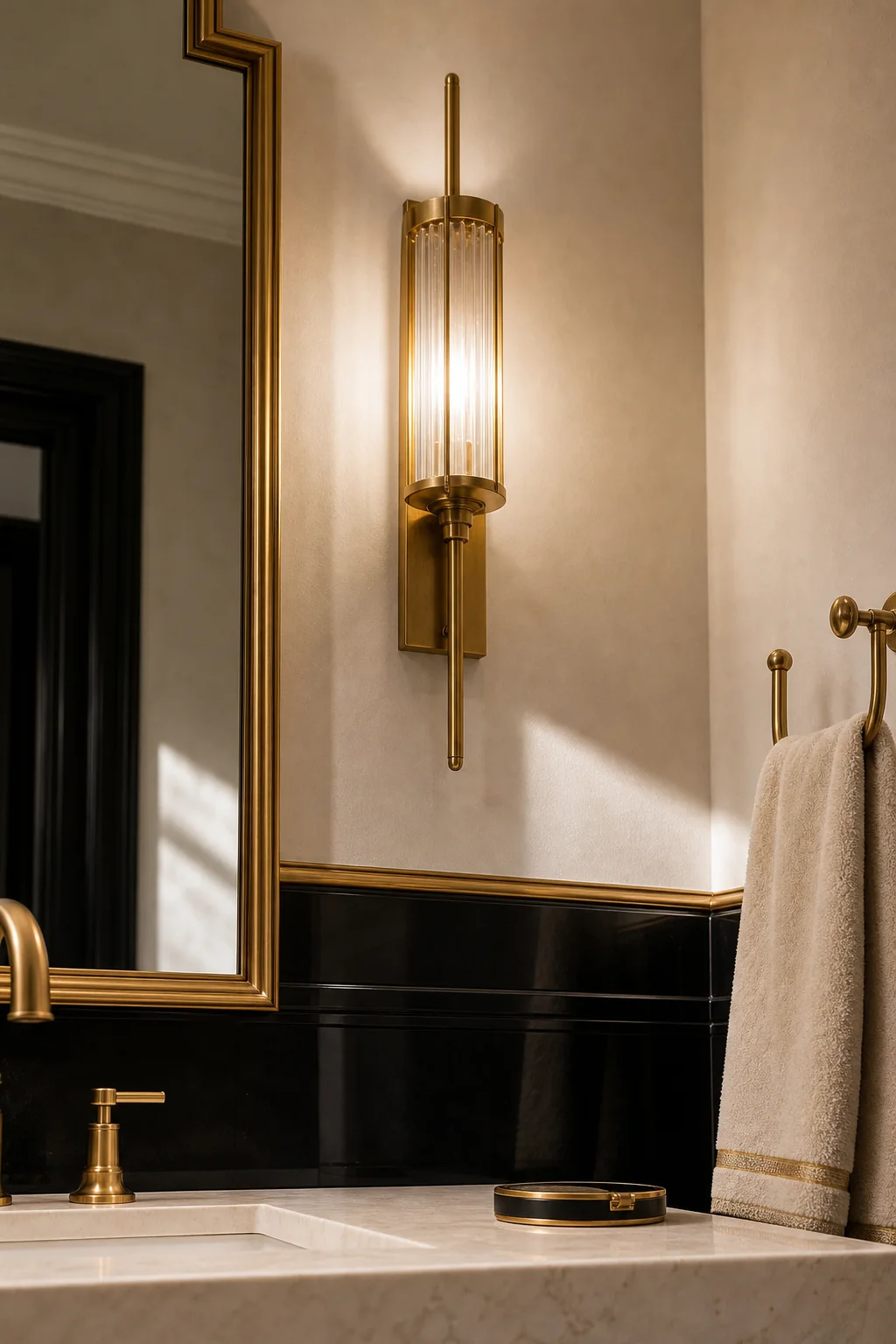
Countering the slick, hard surfaces with matte, tactile materials ensures the space feels inviting rather than stark, directly translating the pressed face powder and fabric puff inside the case. By incorporating a honed cream marble vanity counter and plush textiles, you establish a soft visual texture that perfectly balances the room’s hard lacquered edges. Opting for honed rather than polished marble provides a smooth, matte counter surface that absorbs light. Gather the following essential materials to recreate this delicate balance of high-contrast glamour and tactile comfort.
Tactile Relief
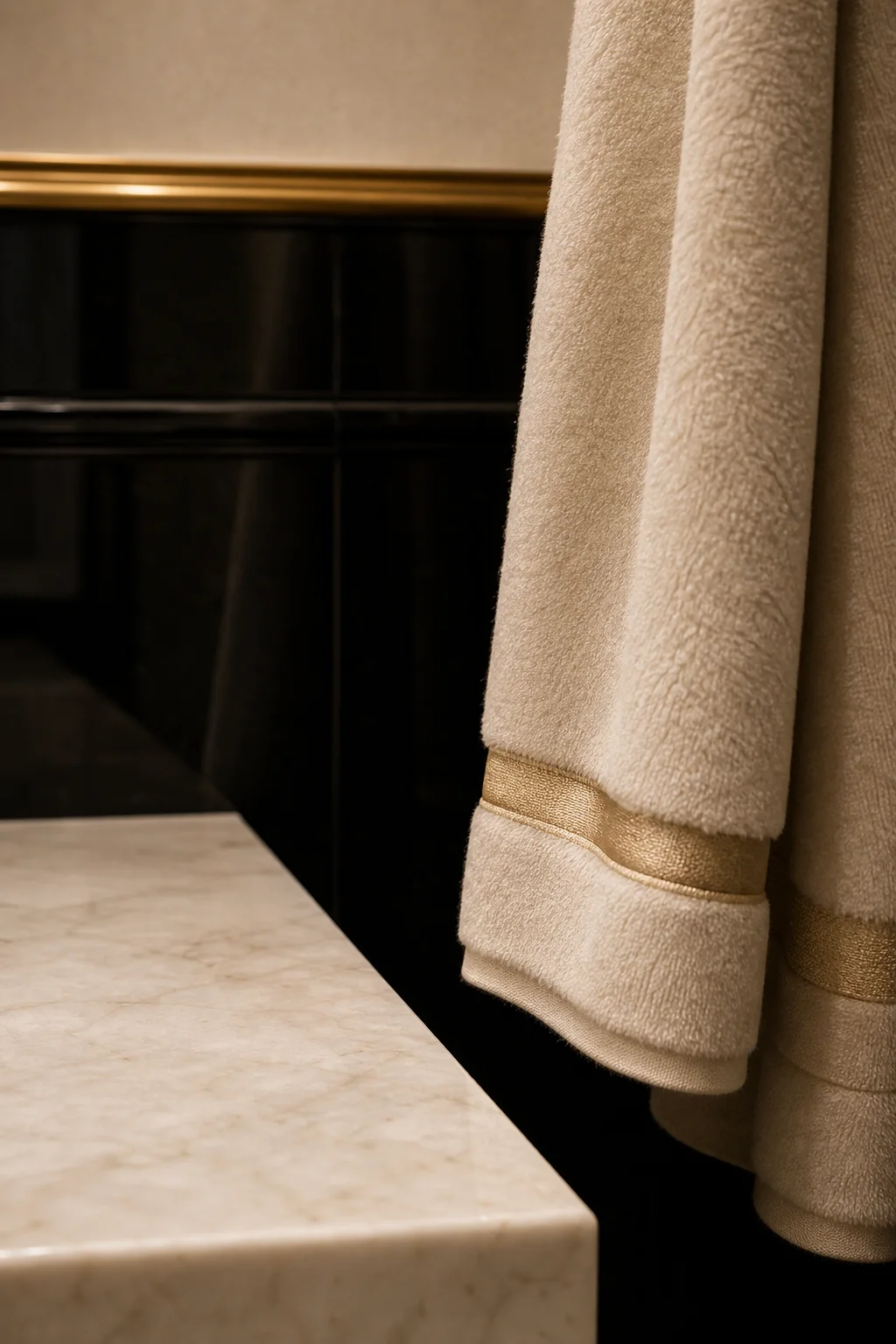
A plush cream velvet hand towel draped near the sink mimics the soft cosmetic puff, offering immediate tactile relief from the surrounding rigid geometry. Every hard, reflective surface must be countered by a soft, matte texture to prevent the small, high-contrast space from feeling cold or unapproachable. This simple textile addition softens the transition between the unlacquered brass fixtures and the honed marble counter, ensuring the powder room remains a welcoming, intimate environment that stays true to its glamorous Art Deco inspiration.
Framing with Stepped Symmetry
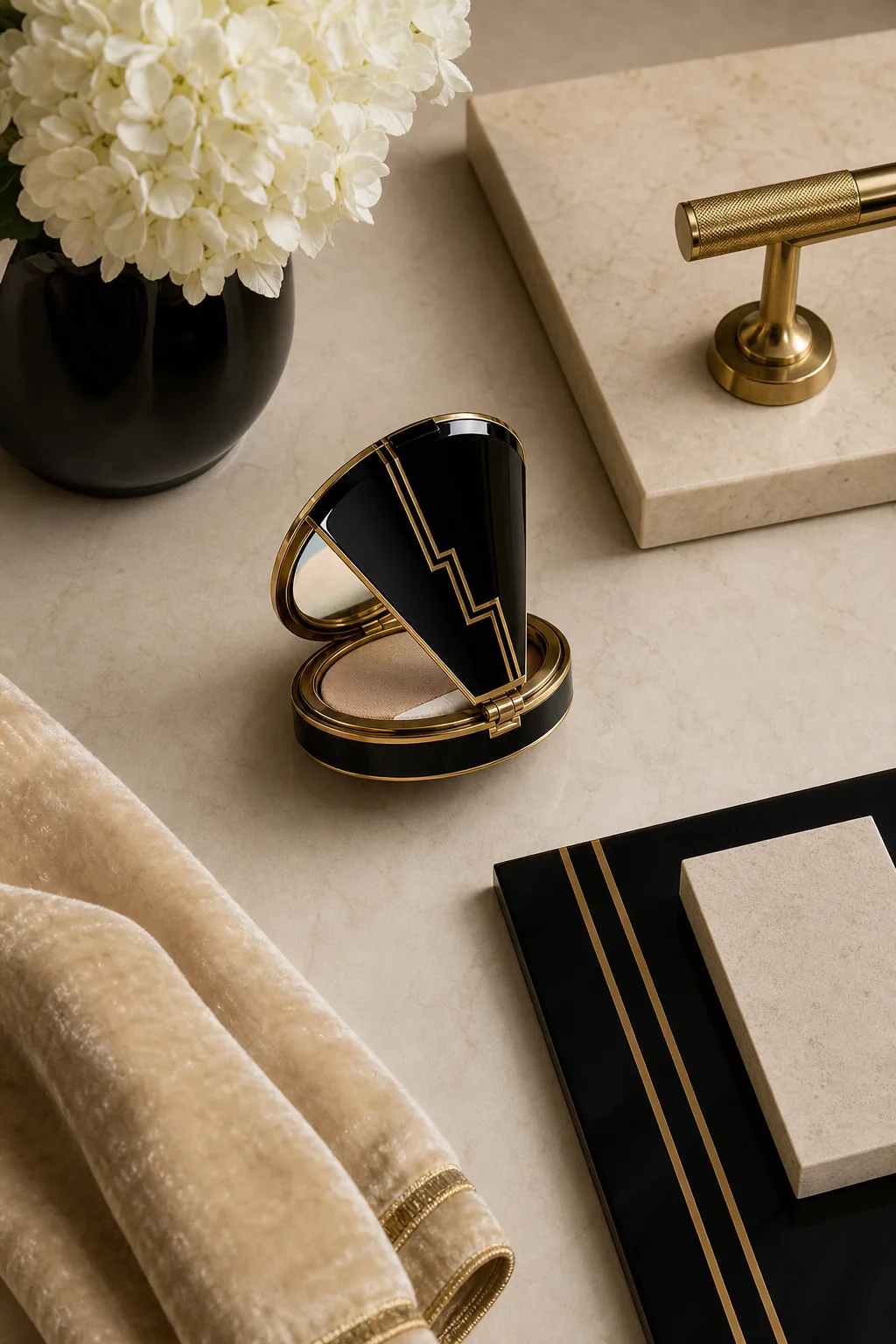
Centering the room around a distinct, stepped geometric silhouette creates a strong focal point that organizes the surrounding elements into a formal Art Deco rhythm. You can easily scale this design intensity to suit your home. A subtle approach limits gloss to baseboards and door trim, a balanced room recipe wraps the lower half in black wainscoting, while a bold execution drenches the entire room in high-gloss lacquer. Regardless of your chosen intensity, aligning the wall sconces symmetrically enhances the formal rhythm of the space.
Measure your sconce placement carefully. In a small powder room, perfect symmetry around the central mirror is crucial for achieving that tailored Art Deco rhythm and ensuring the lighting flatters the face.