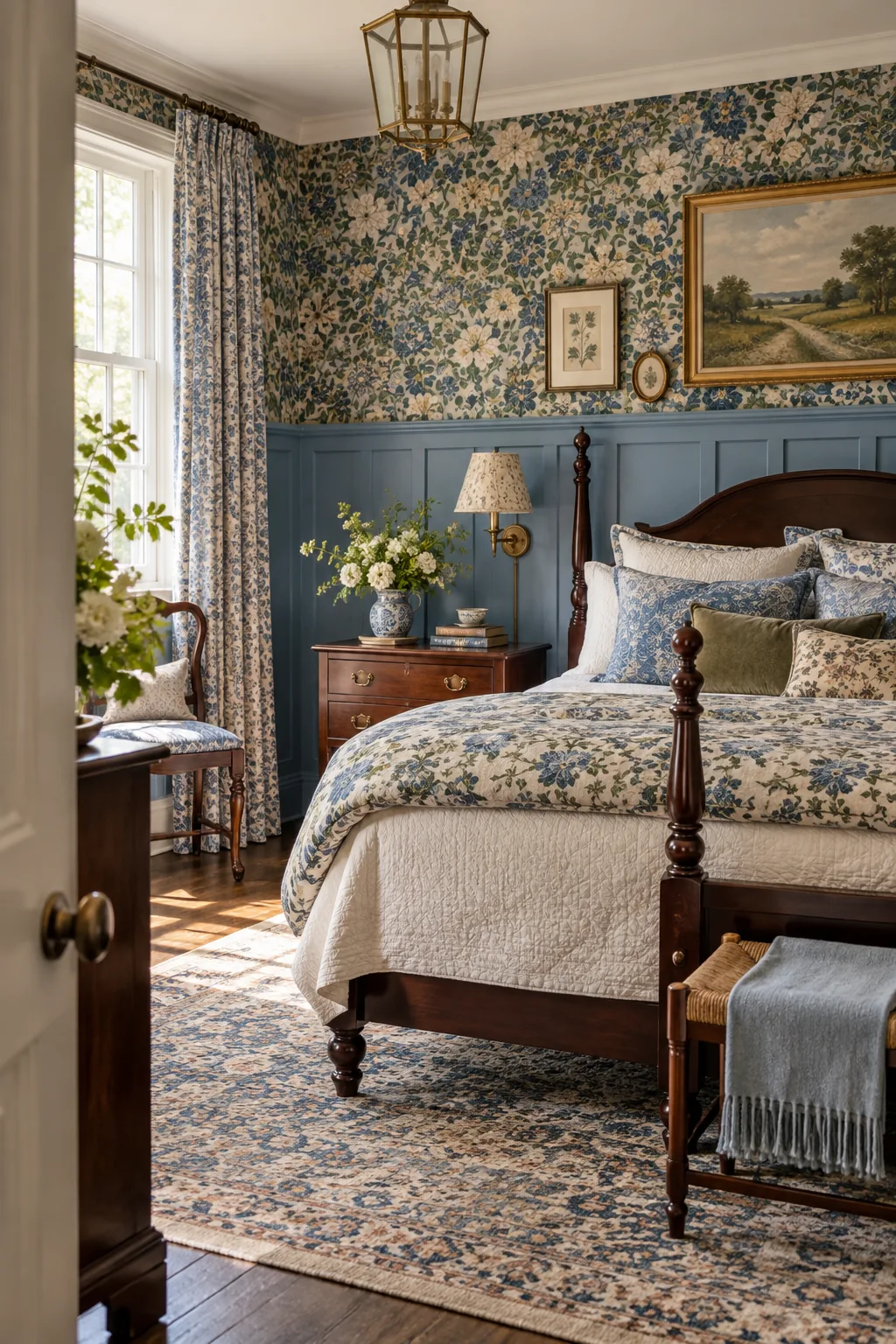
How to Style a Baby Blue Bedroom: Adult Paint & Texture Guide
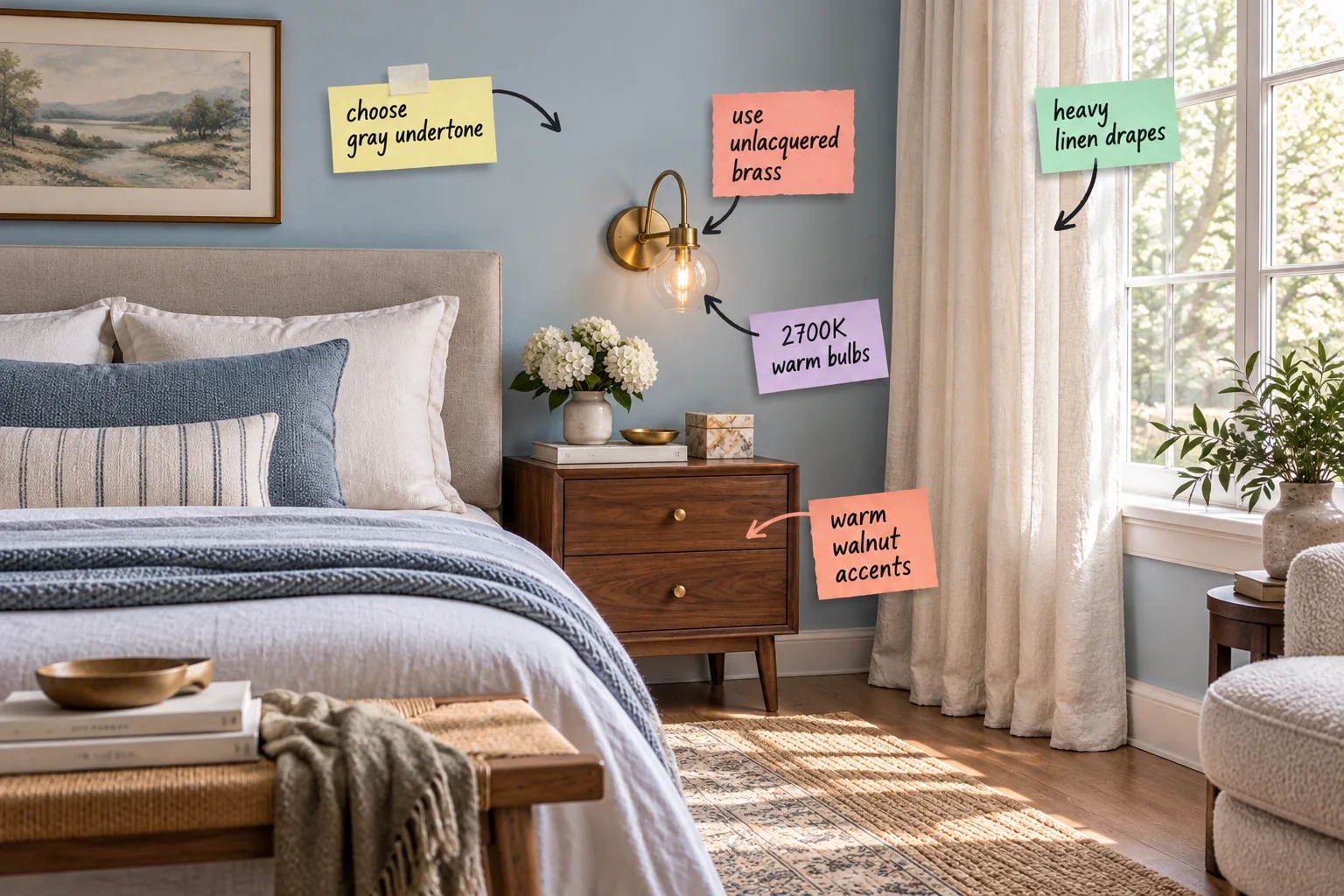
You can easily transform a nursery-like space into a sophisticated retreat using our Adult Blue Paint & Texture Guide. By mastering the exact paint undertones, wood finishes, and fabric weights, you will keep light blue walls looking elegant and grown-up.
Ground the Room With a Gray Undertone
Pure baby blue often reads as juvenile because it lacks visual depth. To create a mature foundation, look for a 10 to 20 percent gray mix in your paint’s Light Reflectance Value profile to muddy the color perfectly.
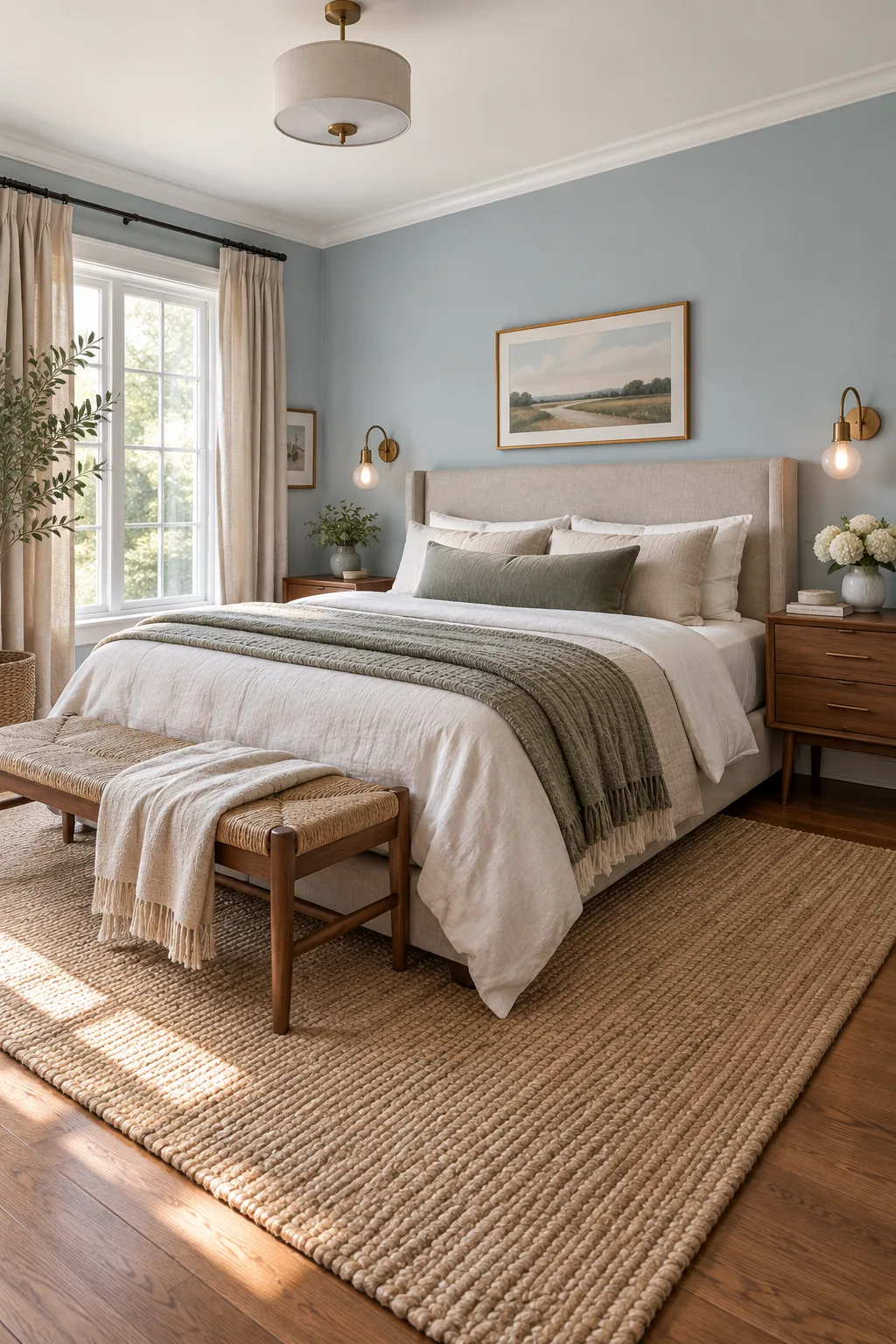
Use this quick reference guide to pair our favorite grown-up blue paints with the ideal contrasting textures that keep the room beautifully grounded.
Anchor the Walls With Heavy Linen Drapes
Sheer or lightweight curtains make pale blue walls feel flimsy and completely unanchored. You must introduce substantial architectural textiles to give the windows necessary visual gravity.
| Fabric Type | Weight per Yard | Drape Quality | Suitability |
|---|---|---|---|
| Cotton Voile | 2-4 oz | Billowy and sheer | Too light for blue walls |
| Standard Linen | 5-6 oz | Crisp but thin | Lacks visual gravity |
| Heavyweight Linen | 7-9 oz | Structured and heavy | Perfect adult anchor |
Specifying a minimum 7-9 ounce fabric weight ensures your drapes hang with a tailored, custom structure. This heavy linen creates a strong vertical boundary that frames the delicate wall color.
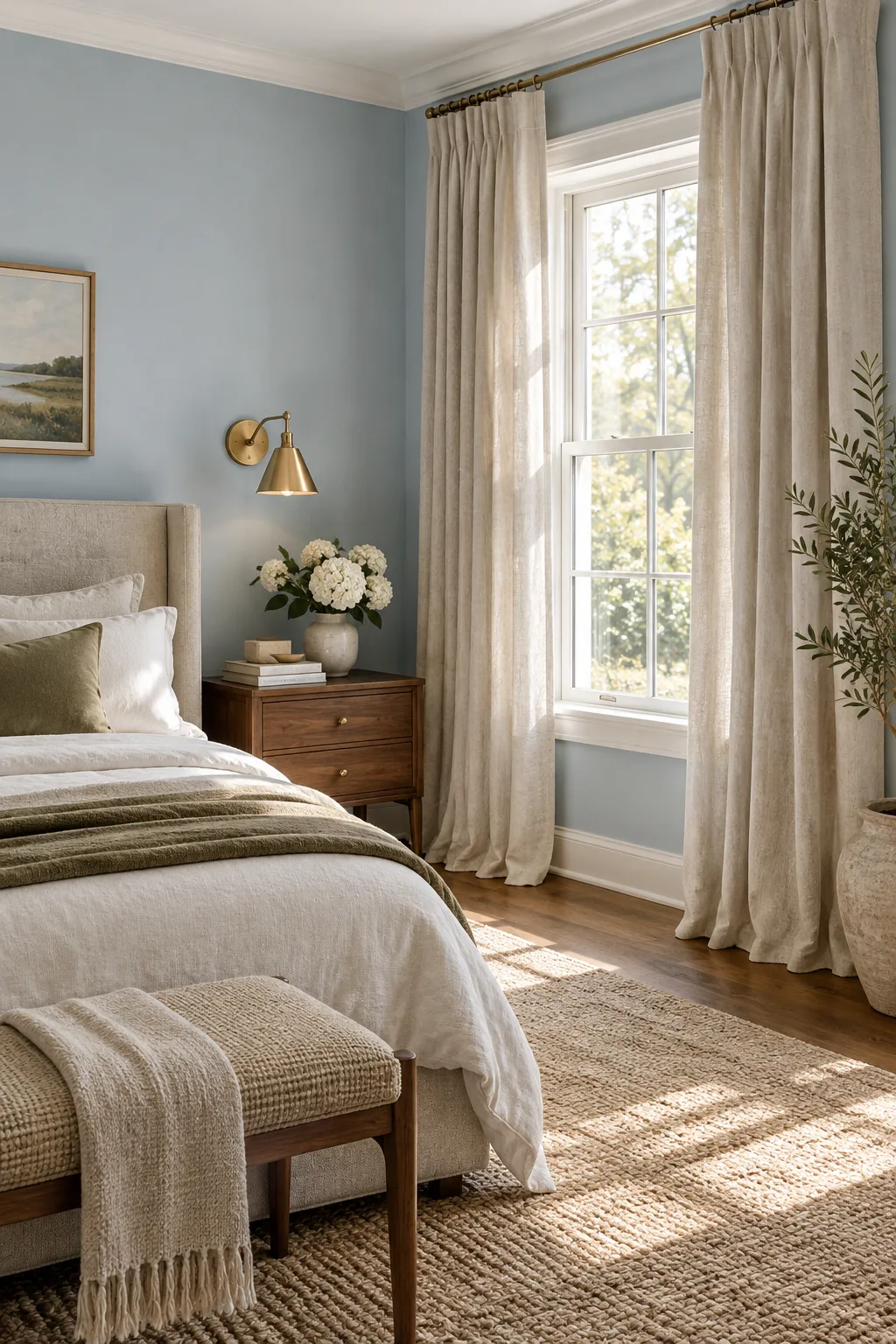
Contrast the Cool Paint With Warm Walnut
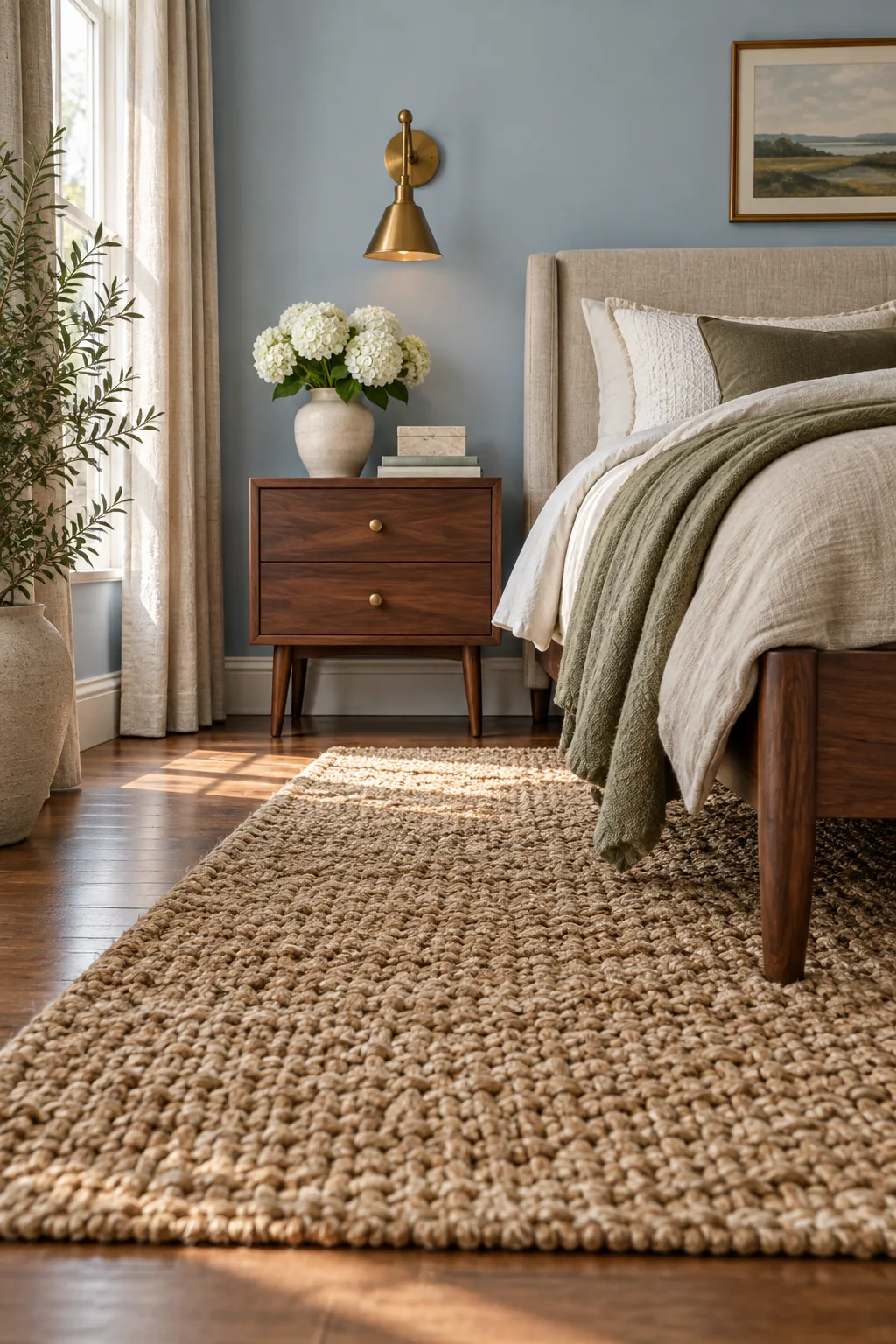
Cool-toned walls desperately require warm furniture to prevent the bedroom from feeling icy or sterile. Integrating rich, earthy wood tones provides a vital organic anchor next to the bed.
- Mid-century walnut: Offers clean lines that contrast beautifully with traditional blue walls.
- Antique burled wood: Introduces complex grain patterns that break up flat paint.
- Smoked oak: Provides a slightly cooler brown that bridges the gap between blue and warm tones.
Positioning a traditional walnut nightstand against the painted drywall instantly warms the visual temperature. The deep brown undertones successfully neutralize the inherent coolness of the blue foundation.
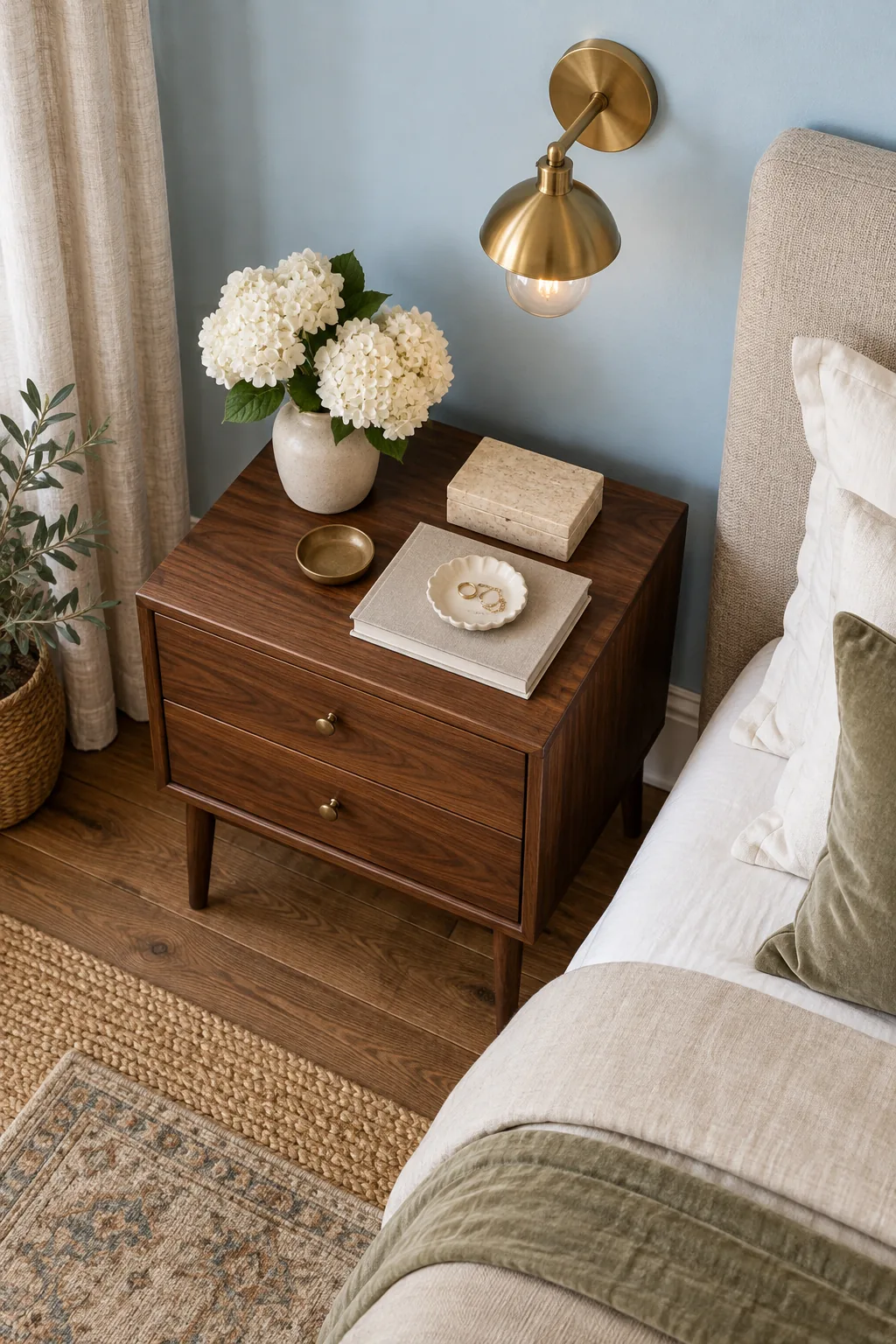
Elevate the Space Using Unlacquered Brass
In my own Denver home, I swapped polished nickel for unlacquered brass because silver metals completely washed out my pale blue walls. Highly polished modern brass often looks cheap, but a living finish patinas beautifully over time.
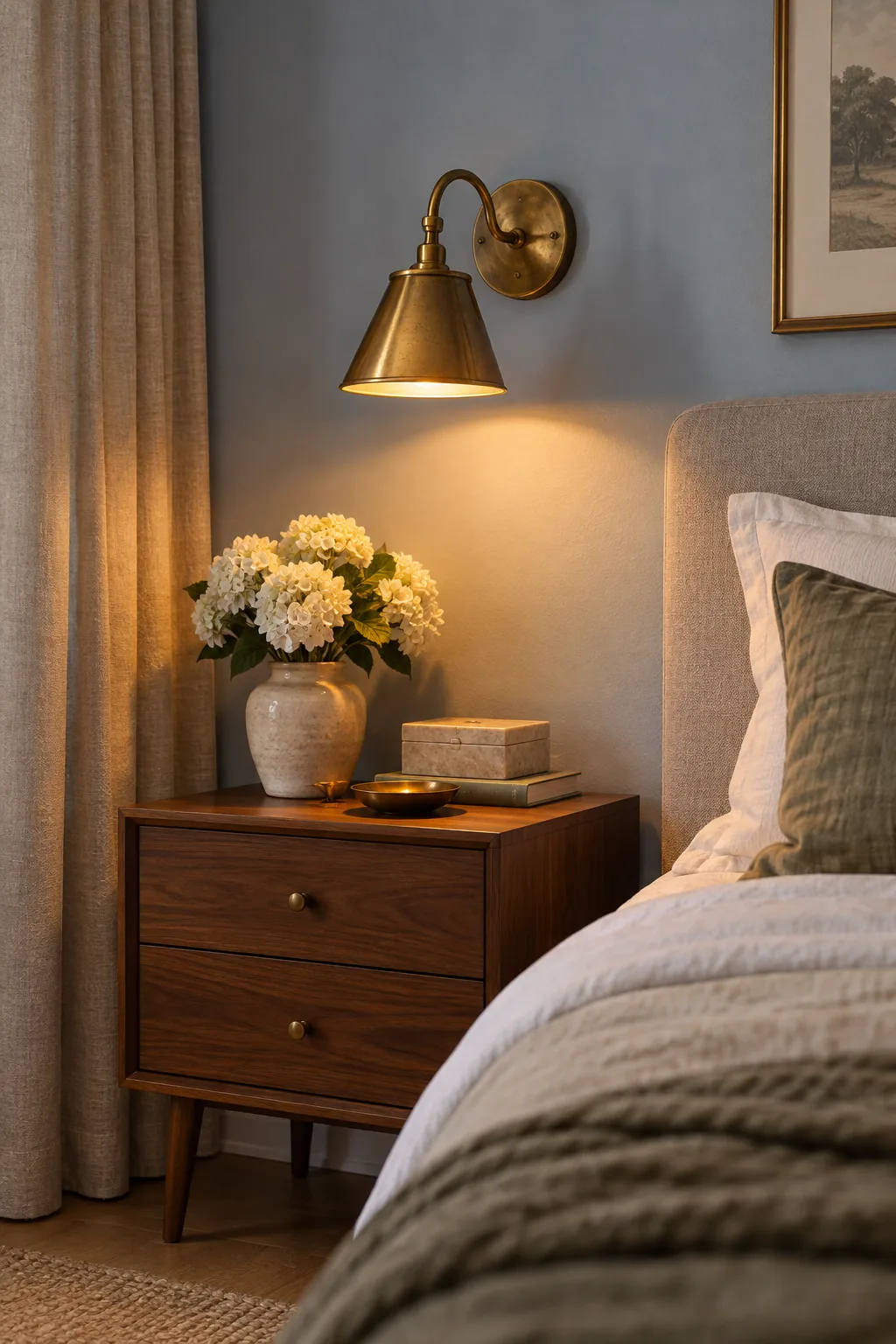
Set the Mood With 2700K Warm Bulbs
Lighting temperature drastically changes how blue reads when the sun goes down. You need exactly 2700K LED bulbs to cast a golden glow that keeps the cool-toned room feeling cozy rather than clinical.
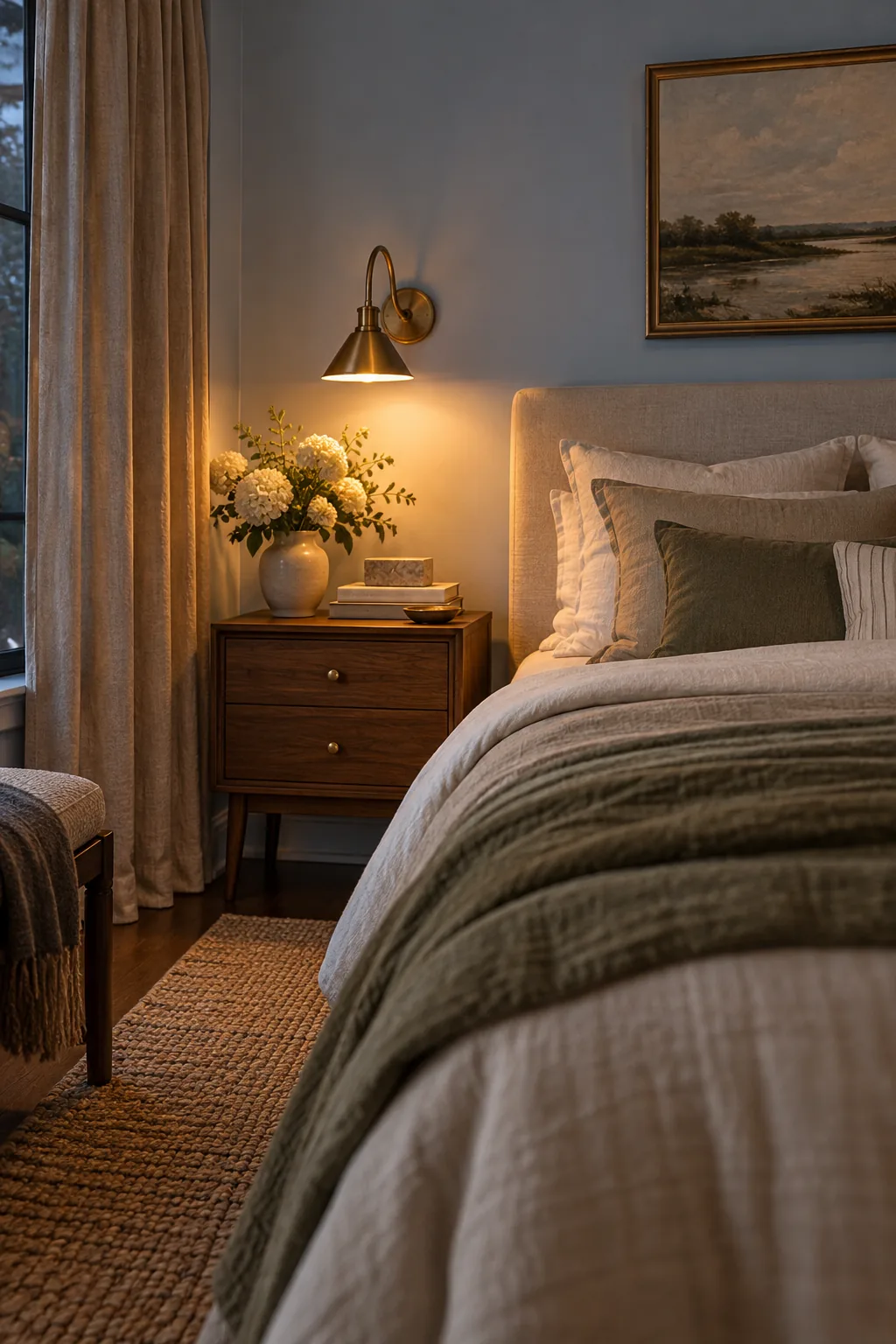
Choosing the wrong light bulb is the fastest way to turn a soothing blue bedroom into a sterile hospital room.
Mix Earthy Tones Into the Bedding
When designing my guest suite, I learned never to match the bedding directly to the wall color. Layering oatmeal, taupe, or olive linen introduces organic warmth and successfully breaks up a flat, monochromatic palette.
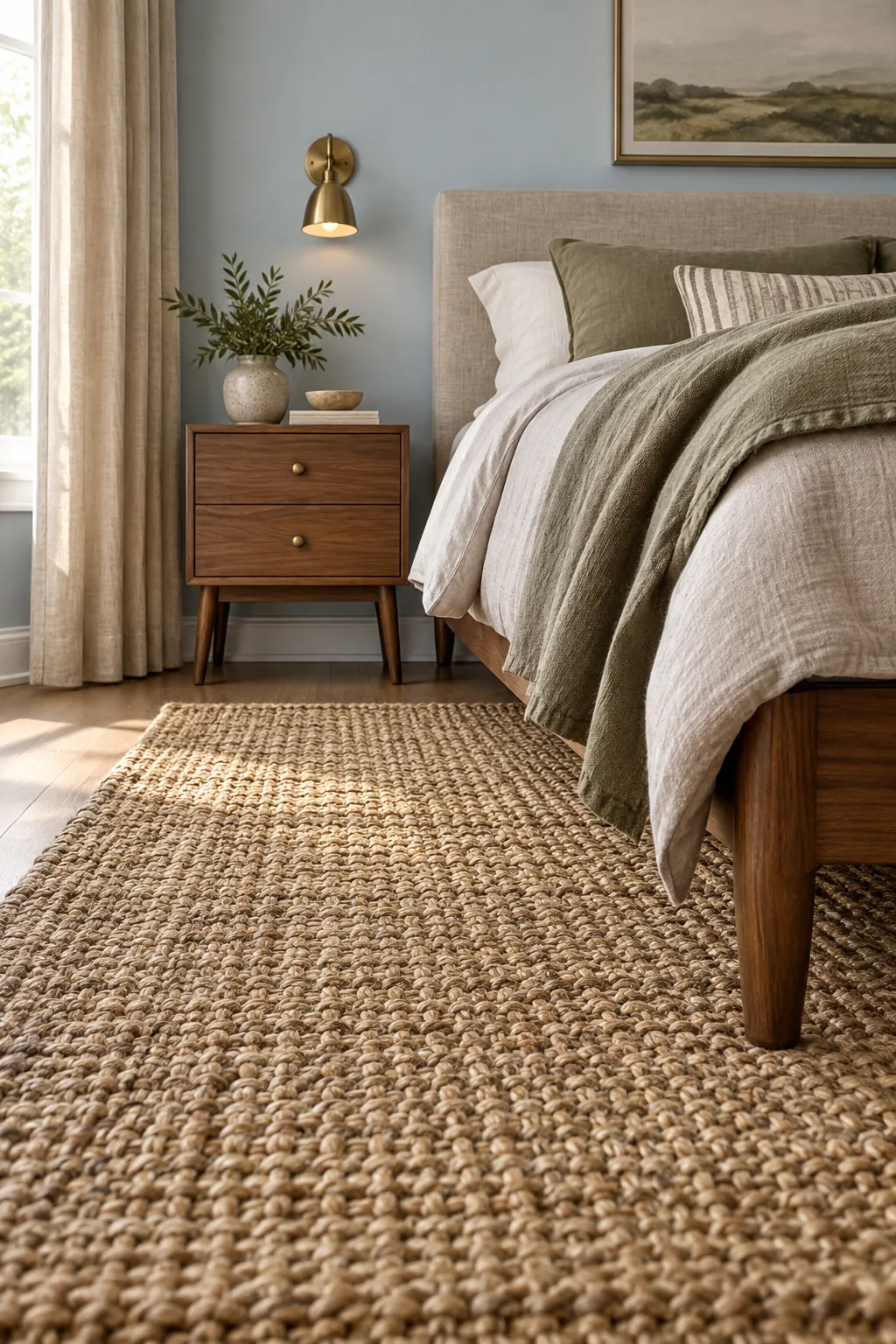
Add Visual Weight With a Textured Rug
A light-colored room requires a heavily textured base to feel properly grounded. I recommend placing a chunky jute or deep-toned vintage wool rug that extends at least 24 inches beyond the sides of the bed.
Keep Accessories Sculptural and Matte
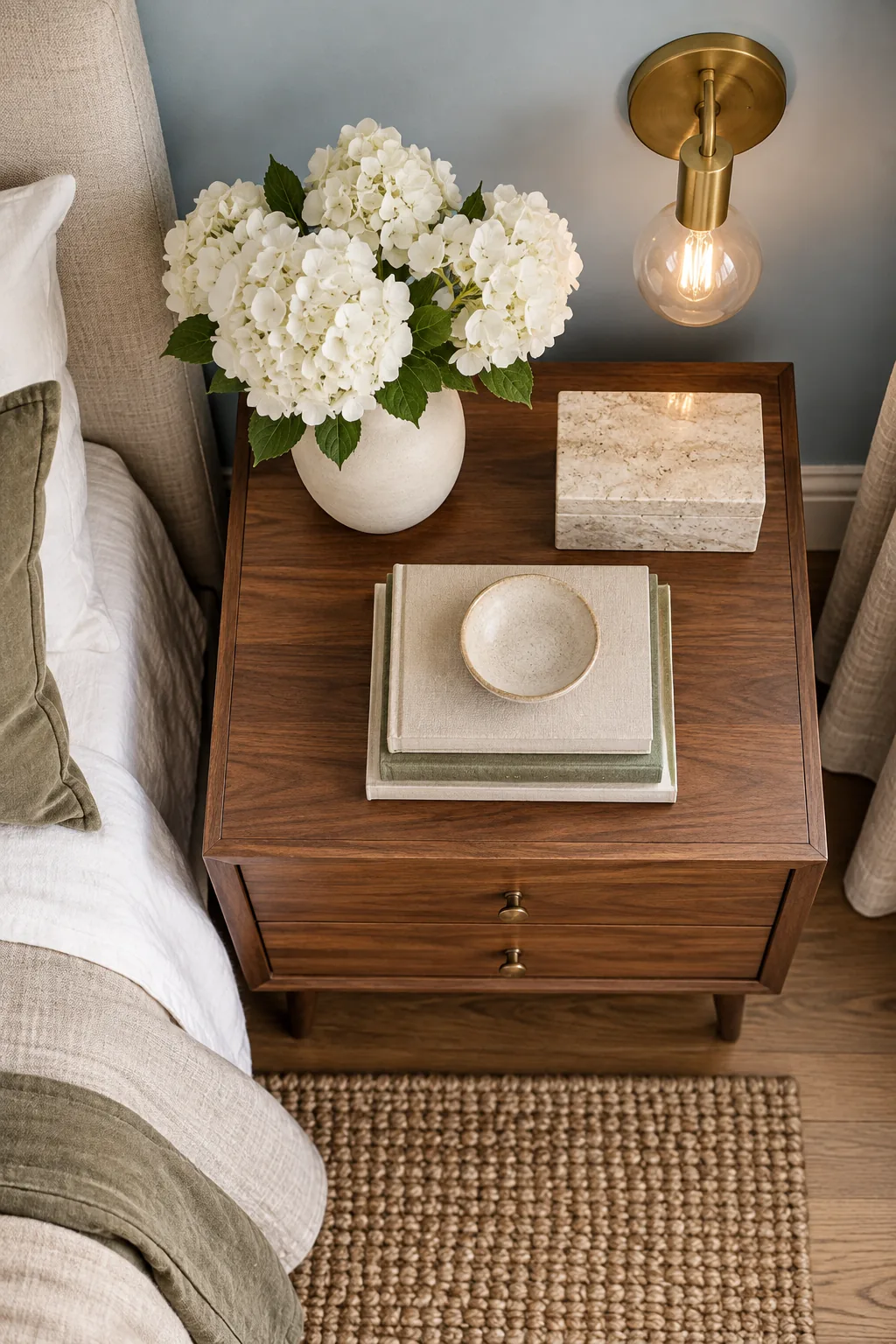
I always finish my blue bedroom projects with matte ceramics and travertine boxes rather than shiny glass or mirrors. These flat finishes and organic shapes absorb light, beautifully softening the overall aesthetic of the space.
4 Ways to Style a Baby Blue Bedroom
Explore these distinct variations to find the perfect mood for your own blue retreat.
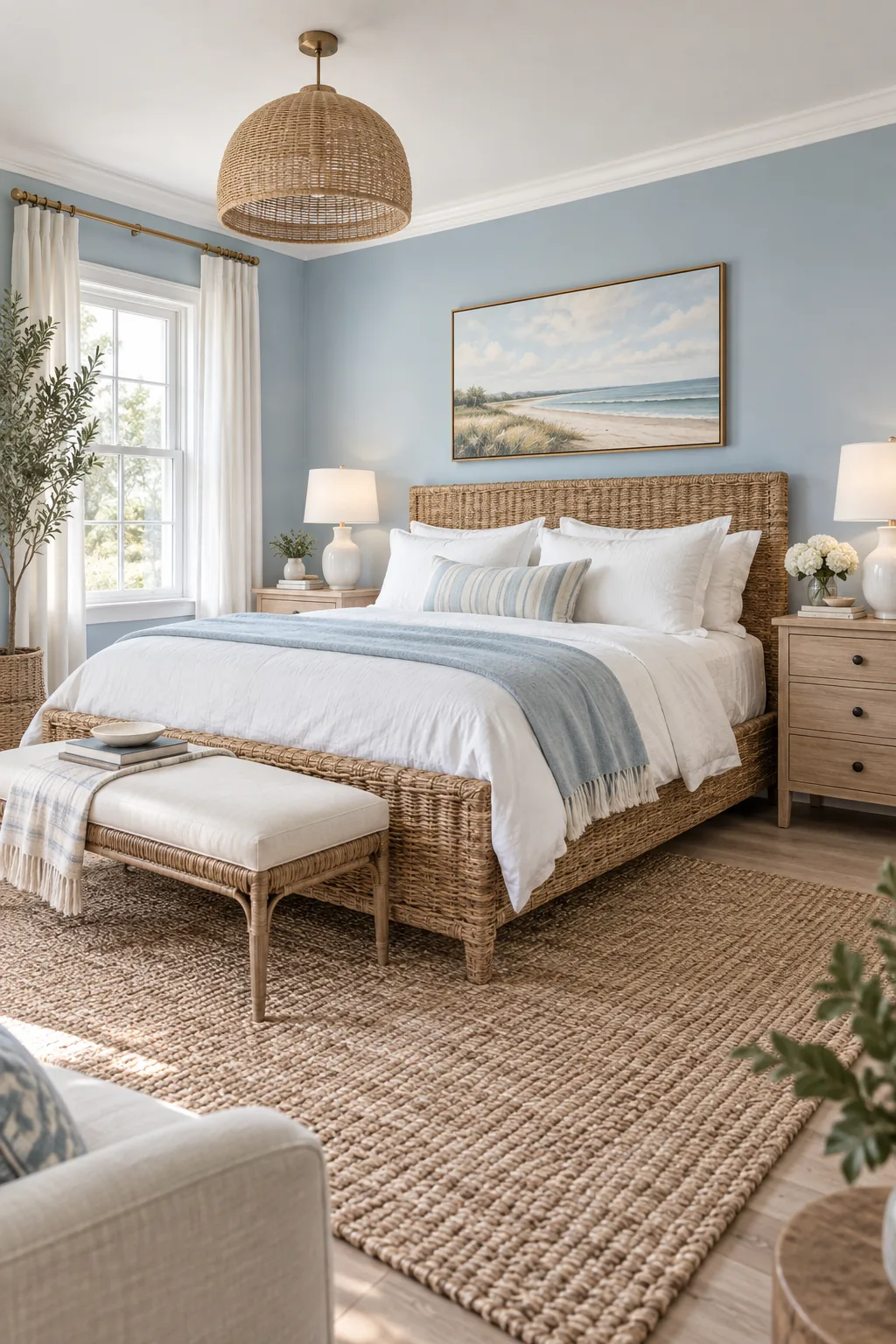
Coastal Transitional Light Blue: This breezy look relies on natural textures; copy the woven rattan headboard to instantly warm up the cool walls.
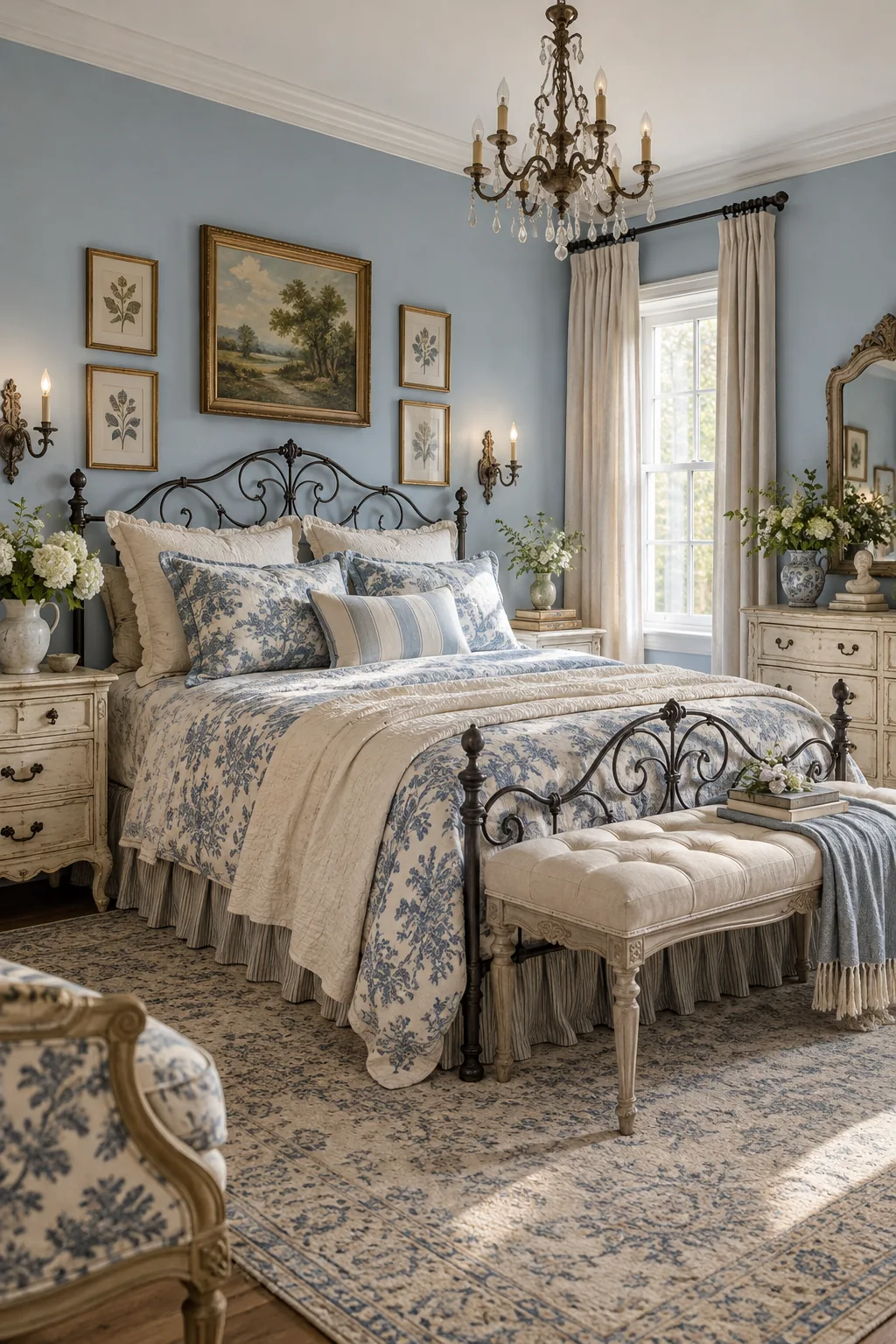
French Country Dusty Blue: A romantic European approach using muted tones; try incorporating a classic toile pattern to bridge the blue and cream elements.
Modern Minimalist Ice Blue: Clean lines keep the pastel color feeling sharp; use matte black hardware to add striking, high-contrast definition.
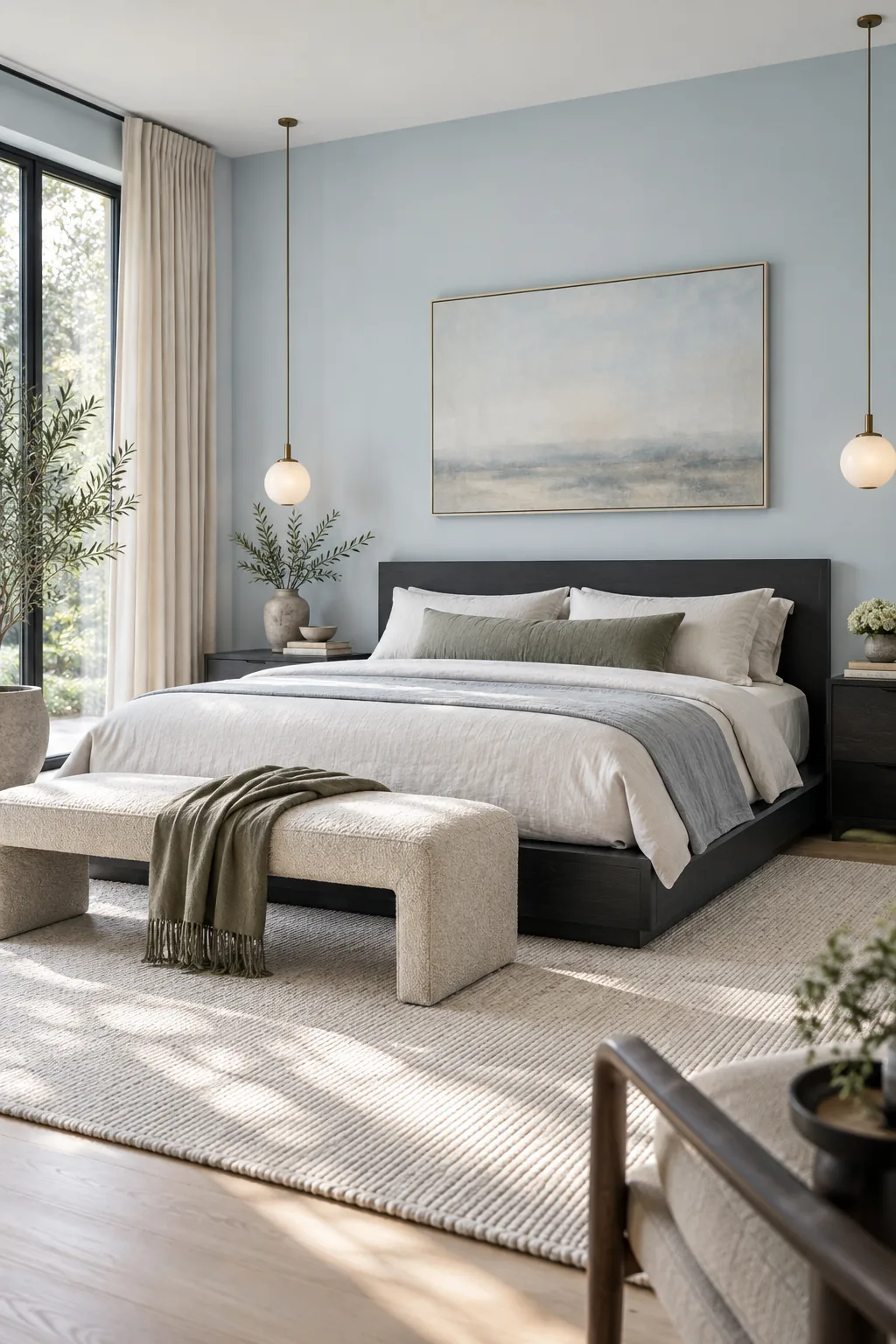
English Cottage Cornflower Blue: Embrace maximalism by pairing blue millwork with dense patterns; hunt for an antique mahogany dresser to anchor the busy walls.