
Metal Bar Stool DIY Makeover with a Tuscan Bronze Finish
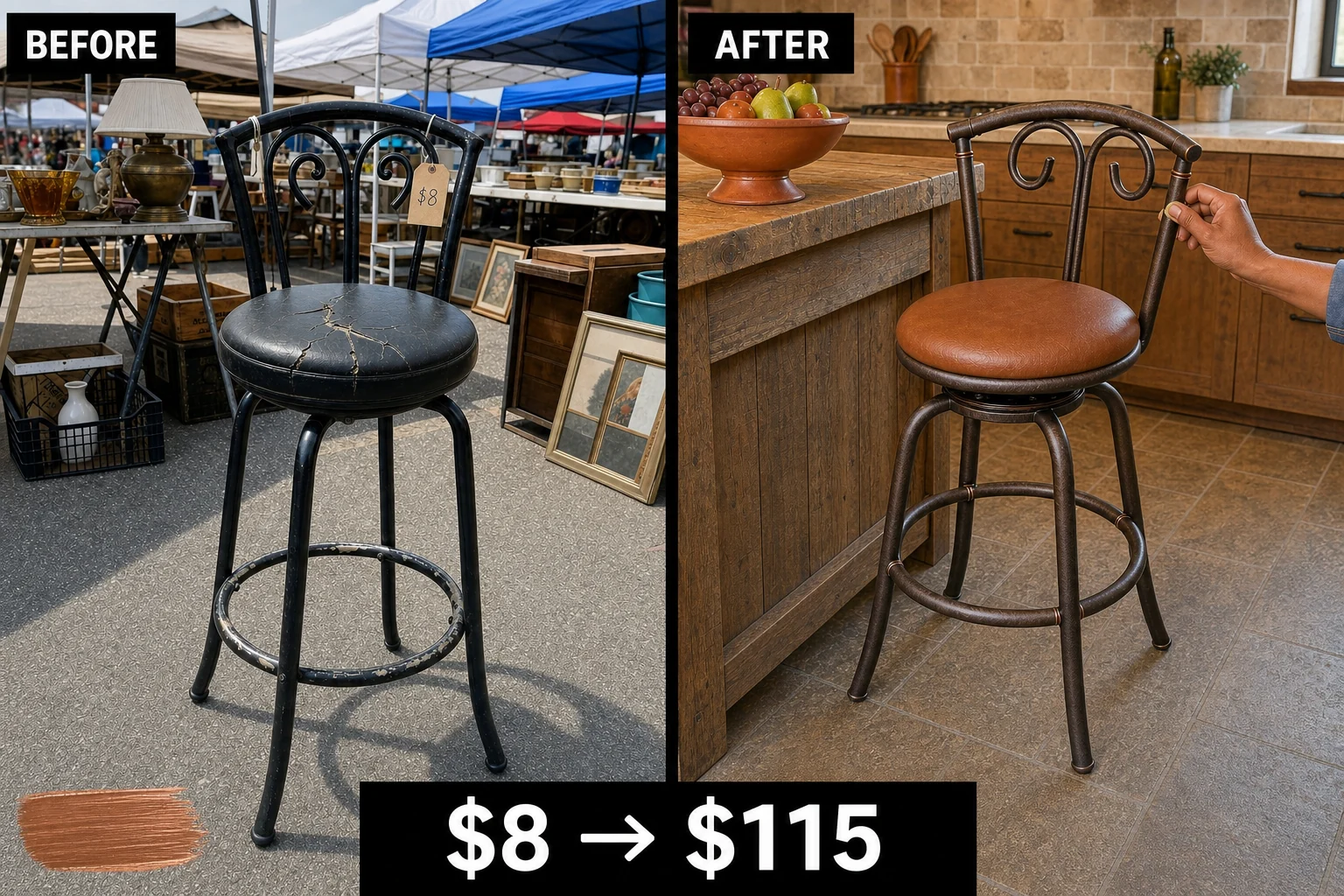
Spotted behind plastic crates at a flea market, this 90s swivel stool had a solid frame but cracked vinyl. Upcycling it into a rustic Tuscan piece requires textured bronze paint, copper wax, and supple cognac faux leather.
Step 1: Assess and Dismantle the Stool
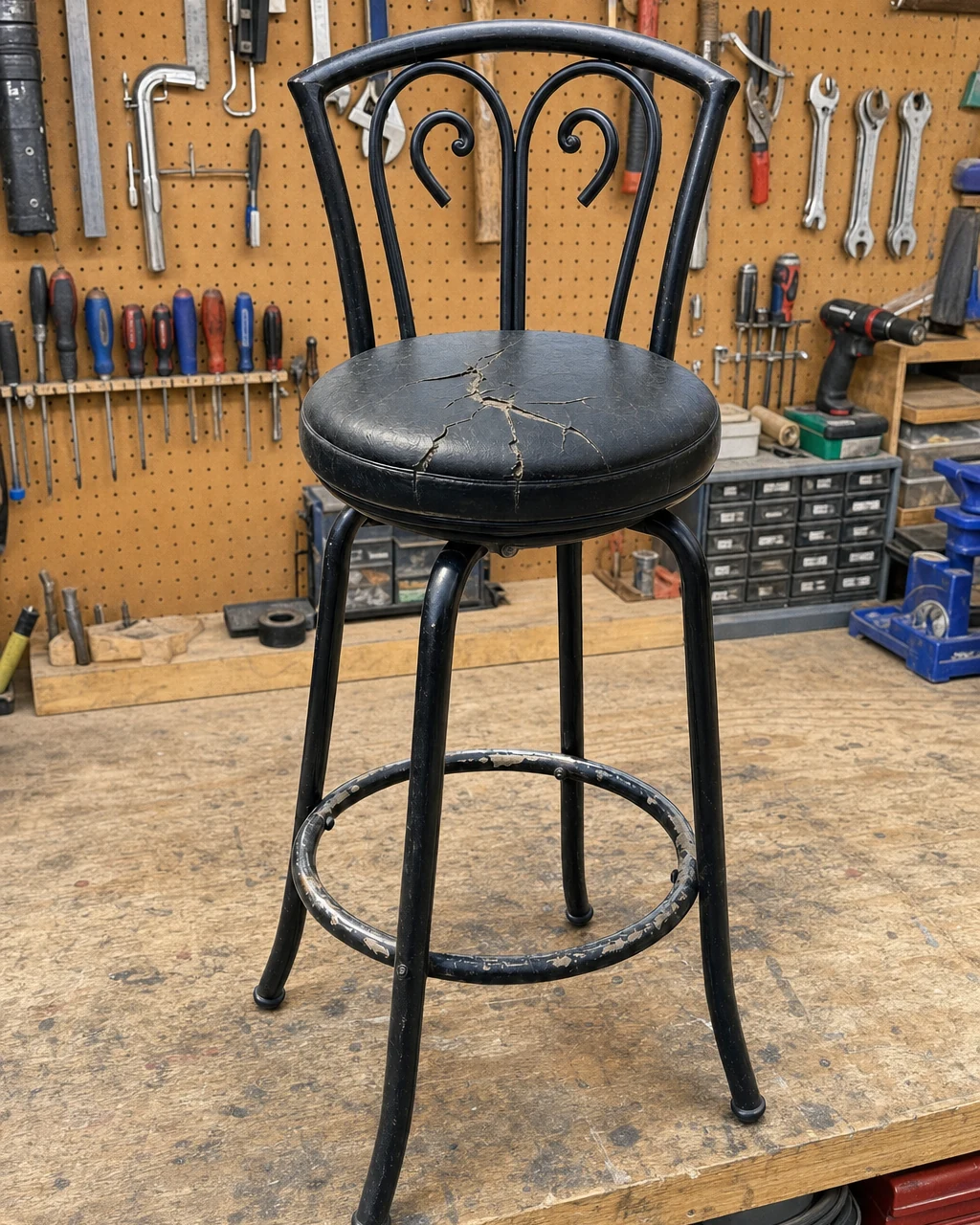
Evaluating this 1990s swivel bar stool revealed deep splits in the black faux leather upholstery. This damage exposed the white fabric backing, requiring complete removal and replacement of the seat cover. The glossy black paint on the circular footrest was flaking to bare steel, necessitating thorough sanding. Flip the stool upside down on your workbench to access the hardware.
- Remove the four machine screws connecting the wooden seat base to the metal swivel plate using a Phillips screwdriver.
- Separate the heavy metal frame from the cushion to prevent accidental overspray during the painting process.
- Keep fingers clear of the swivel mechanism to avoid pinching while pulling the two distinct components apart.
Step 2: Scuff and Degrease
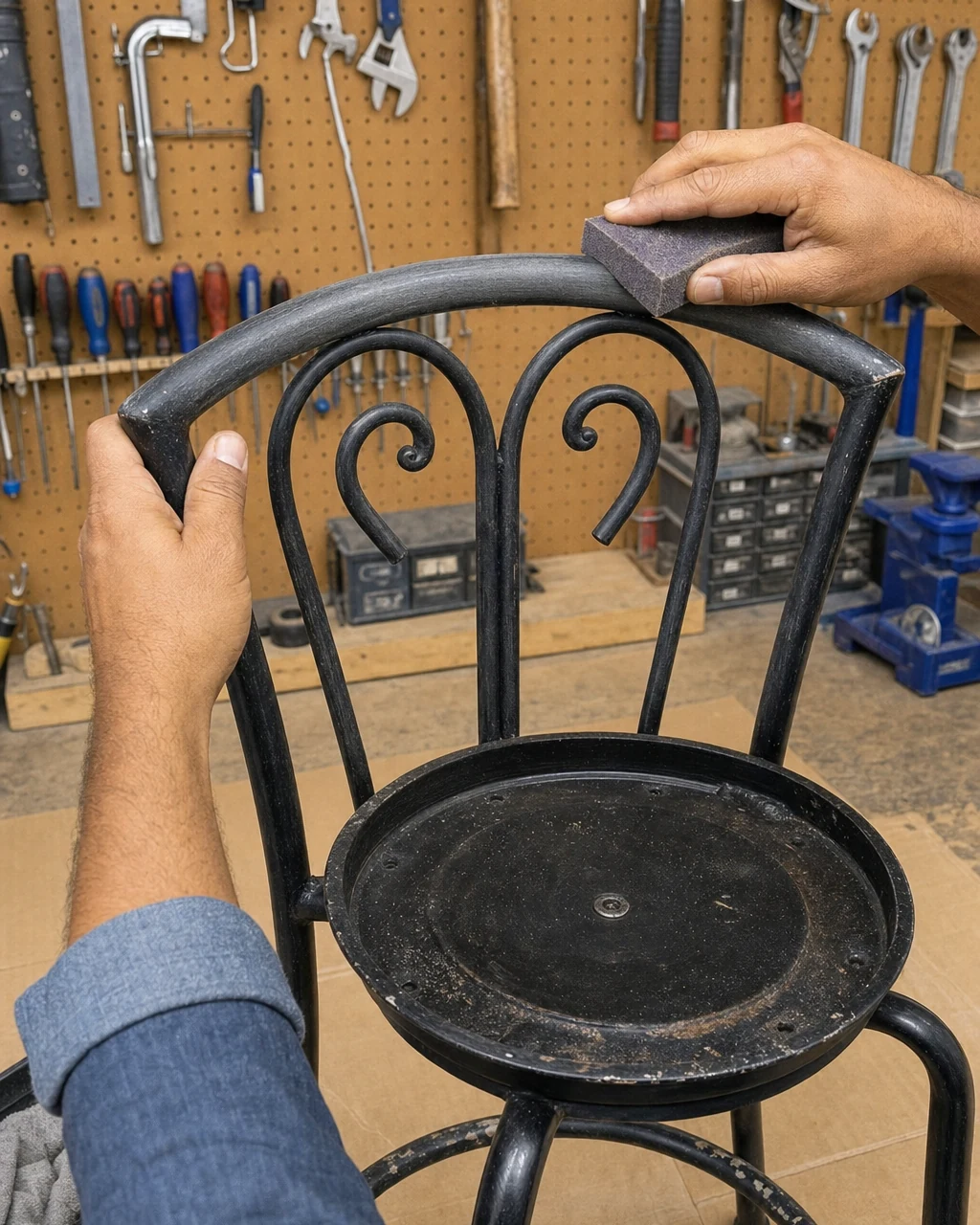
Vigorously rub a sanding sponge along the curved tubular metal backrest and legs to dull the original glossy black finish. This creates a matte, scuffed surface that ensures the new paint adheres permanently. Always wear a dust mask while sanding old paint to protect your lungs from fine airborne particles.
Wipe down the entire metal frame and the swivel bearings with a heavy-duty degreaser and clean rags. Removing all sticky dust and grease is critical for a flawless finish. This thorough cleaning ensures the mechanical parts rotate smoothly once the stool is fully reassembled and placed in your kitchen.
Step 3: Apply Textured Bronze
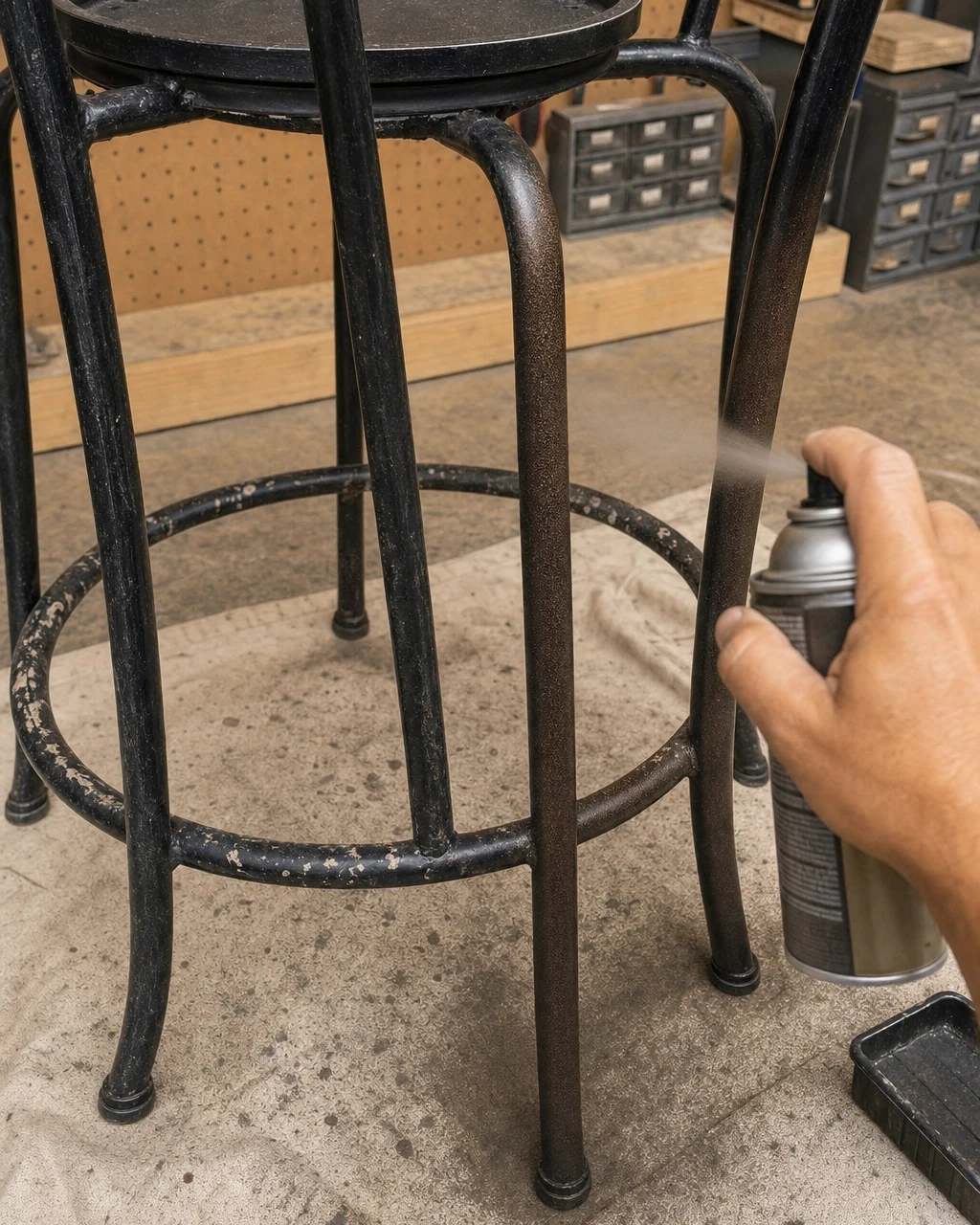
Place the scuffed, dry metal frame on a drop cloth in a well-ventilated area. Spray the legs and backrest with textured oil-rubbed bronze paint to mimic the look of heavy cast iron. Spray paint only in a well-ventilated area while wearing a respirator to ensure complete safety during application.
Materials checklist
Apply three light, even coats rather than one heavy layer to prevent drips on the tubular steel. Allow the frame to dry for at least two hours until the textured finish is completely cured. This durable coating hides minor metal imperfections and establishes a solid base for the patina.
Step 4: Add Copper Patina
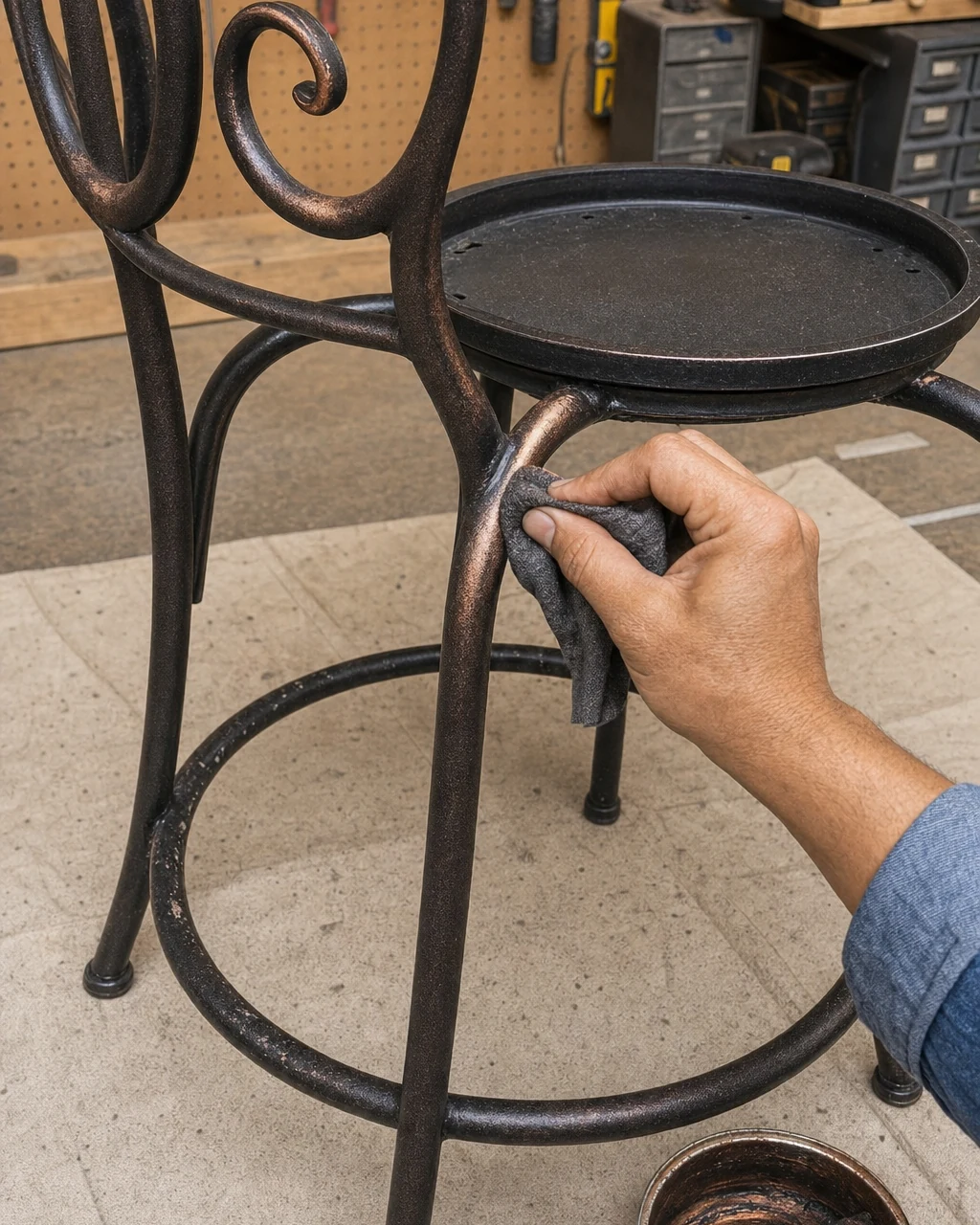
Wipe a wax-loaded rag across the raised metal joints, welded scrolls, and circular footrest. The antique copper gilding wax leaves a bright metallic highlight against the dark bronze base. Work in a ventilated space as gilding wax can have strong fumes during the hand-rubbed application process.
| Item | Cost |
|---|---|
| Flea market stool purchase | $8 |
| Cognac faux leather | $14 |
| Textured bronze spray paint | $8 |
| Copper gilding wax | $10 |
| Heavy-duty degreaser | $6 |
| Sanding sponges | $4 |
| Upholstery staples | $3 |
| Total investment | $53 |
| Estimated resale value | $115 |
| Value gain | $62 |
Buff the wax smooth with a clean rag to create an authentic aged Tuscan metal effect. This technique adds instant character without requiring complex painting skills. The warm metallic highlights beautifully contrast the dark textured paint, transforming the basic steel frame into a visually rich, rustic centerpiece.
Step 5: Reupholster the Seat
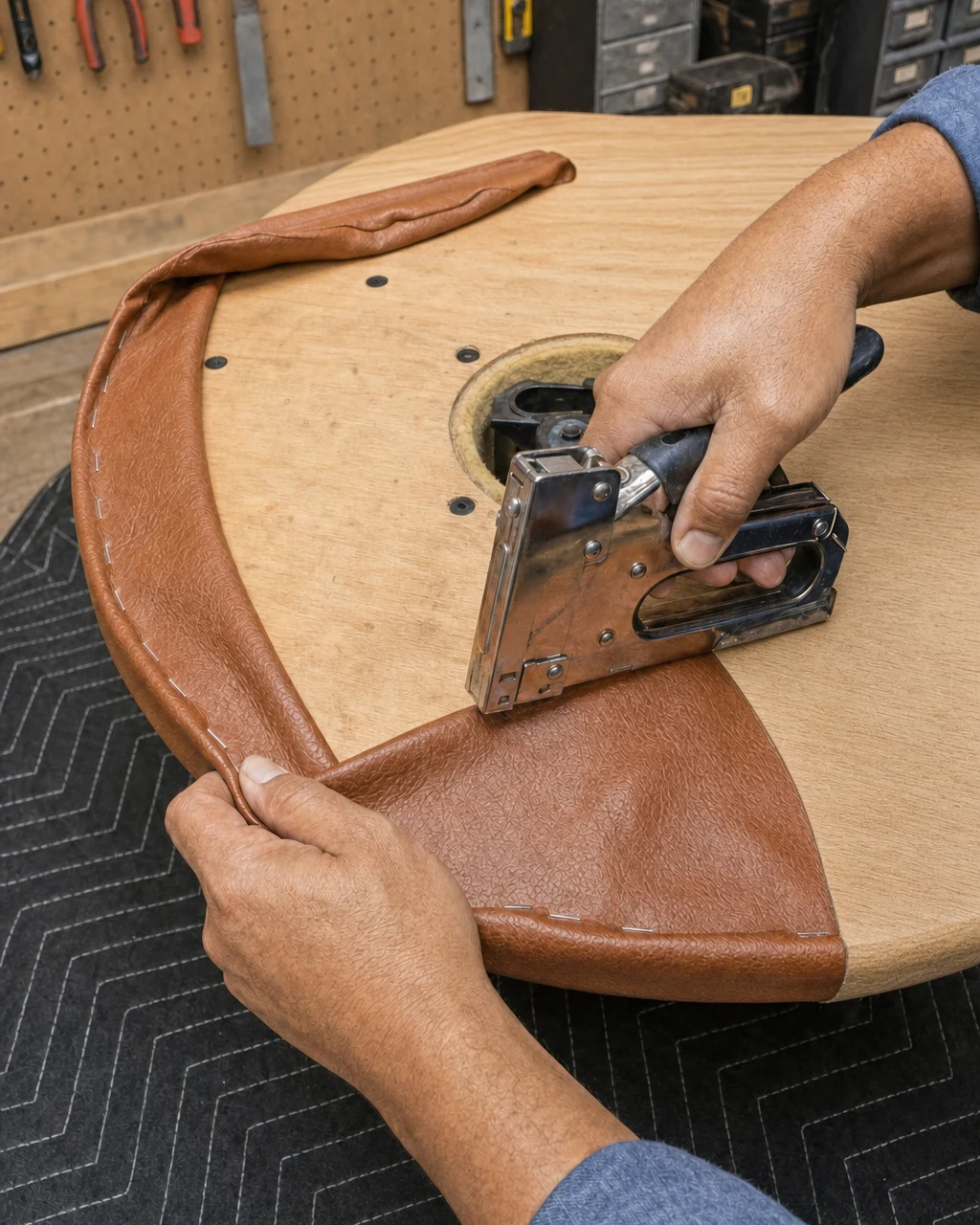
Cut the new cognac faux leather to size using fabric scissors. Stretch the material directly over the old cracked vinyl cover to provide extra padding for the wooden seat base. Keep your fingers away from the staple gun discharge area while securing the heavy-weight fabric to the plywood.
Pull the fabric taut to prevent wrinkles during daily use, folding the edges neatly underneath the base. Press a heavy-duty staple gun into the folded edge to secure the upholstery tightly. This straightforward technique ensures the smooth cognac finish remains flawless and comfortable for years of regular seating.
Step 6: Reassemble the Components
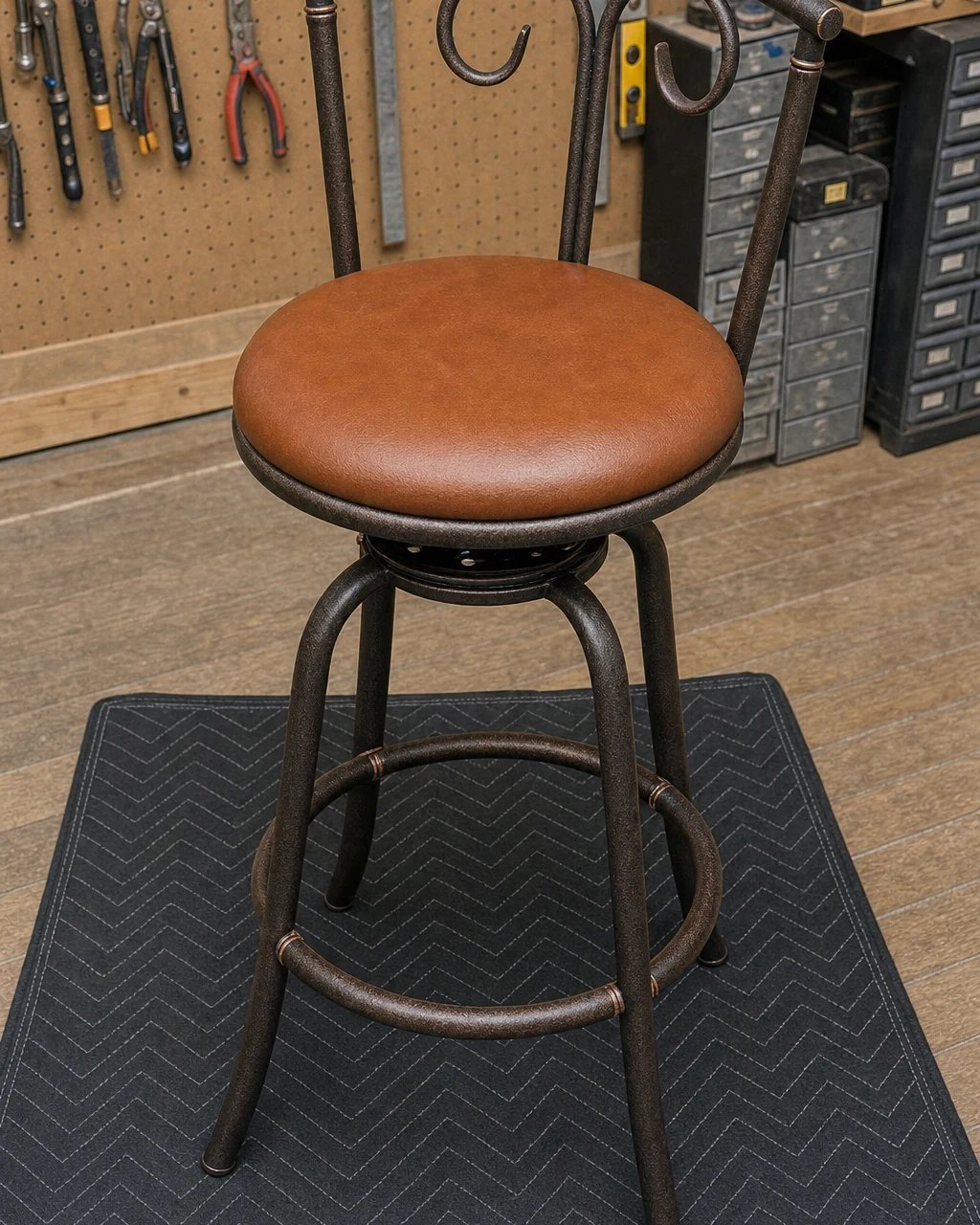
Align the newly upholstered cognac seat with the painted dark bronze swivel plate. Ensure the screw holes match up perfectly before driving the hardware back into place. Use a Phillips screwdriver to tighten the four original machine screws through the plate and into the wooden underside of the cushion.
Assessing the Tuscan Transformation Value
Ensure all screws are fully tightened so the seat is secure, guaranteeing the swivel mechanism remains safe. This project required a total investment of $53, yielding an estimated resale value of $115. While this represents a potential value gain of $62, the true reward is the aesthetic upgrade.
Step 7: Position at the Island
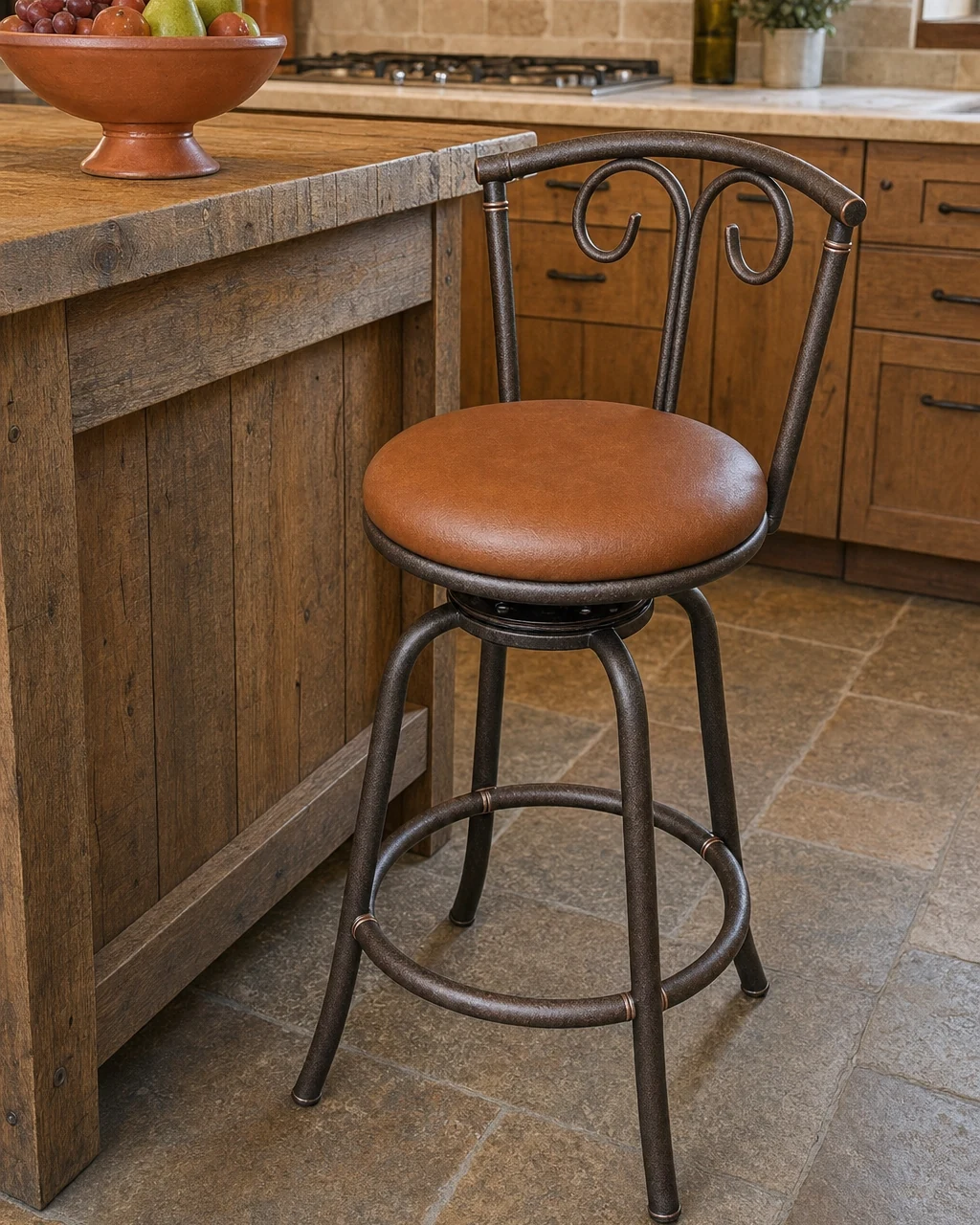
Move the fully assembled, Tuscan-style bar stool into your kitchen setting. Lift the stool by the metal base, not the swivel seat, when moving it to protect the new hardware connections. The warm copper tones and supple cognac leather instantly elevate a basic seating area with rich, inviting textures.
Styling the Rustic Kitchen Space
Arrange the finished stool beside a rustic wooden kitchen island. The combination of a durable textured finish, hand-rubbed patina, and premium faux leather elevates this mass-produced piece. These carefully chosen materials beautifully complement natural stone tile backsplashes and terracotta accents, matching the aesthetic level of high-end catalog furniture.