
This Soapstone Goddess Became a Window Bench
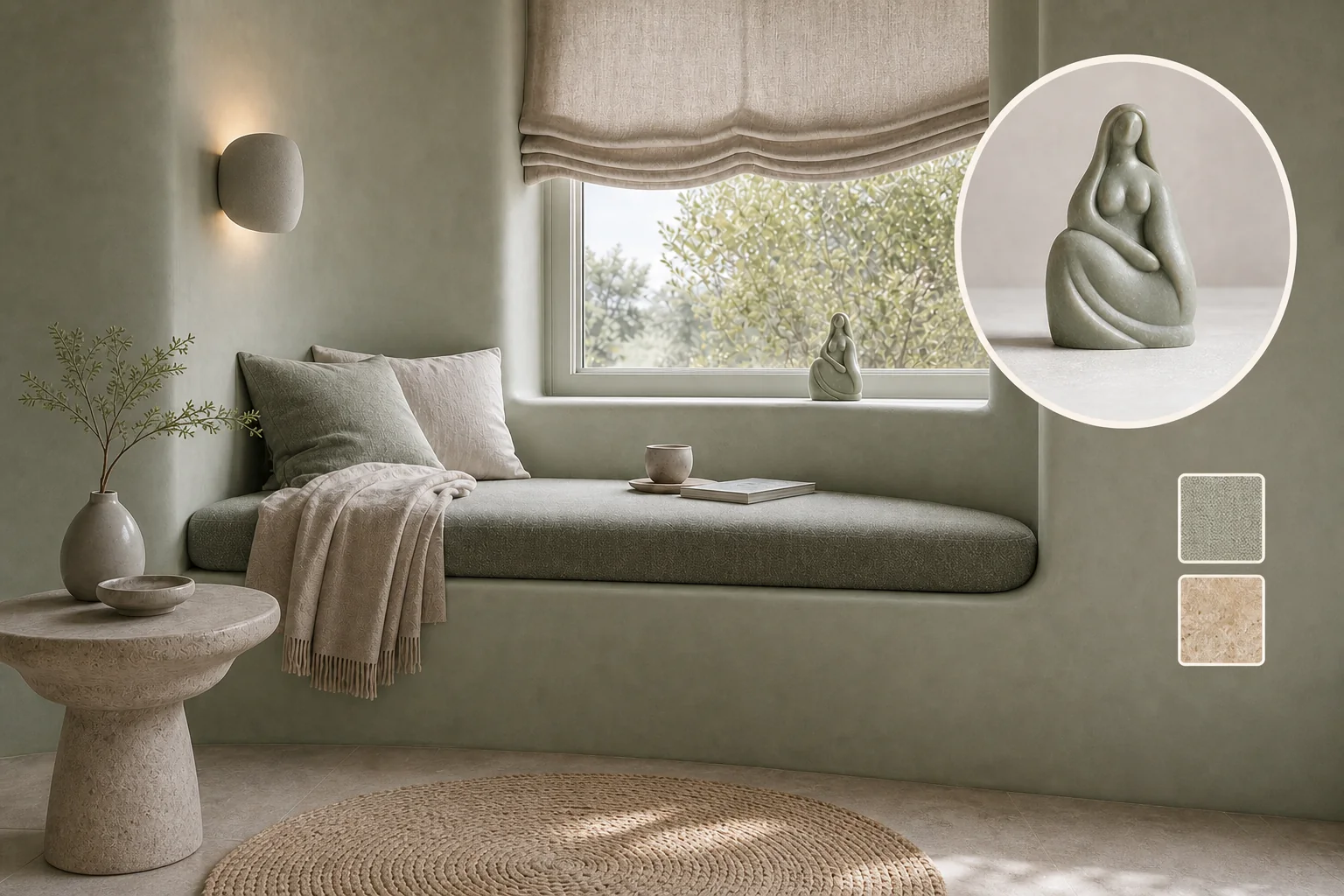
Explore how a small, hand-carved soapstone figurine translates into a deeply calming monolithic reading alcove that feels seamlessly sculpted from the surrounding walls. Strict monochromatic restraint prevents the fluid, draped shapes from feeling overly romantic, ensuring the light-absorbing volumes invite pure rest and perfectly capture the object’s tranquil atmosphere.
Sculpting a seamless alcove
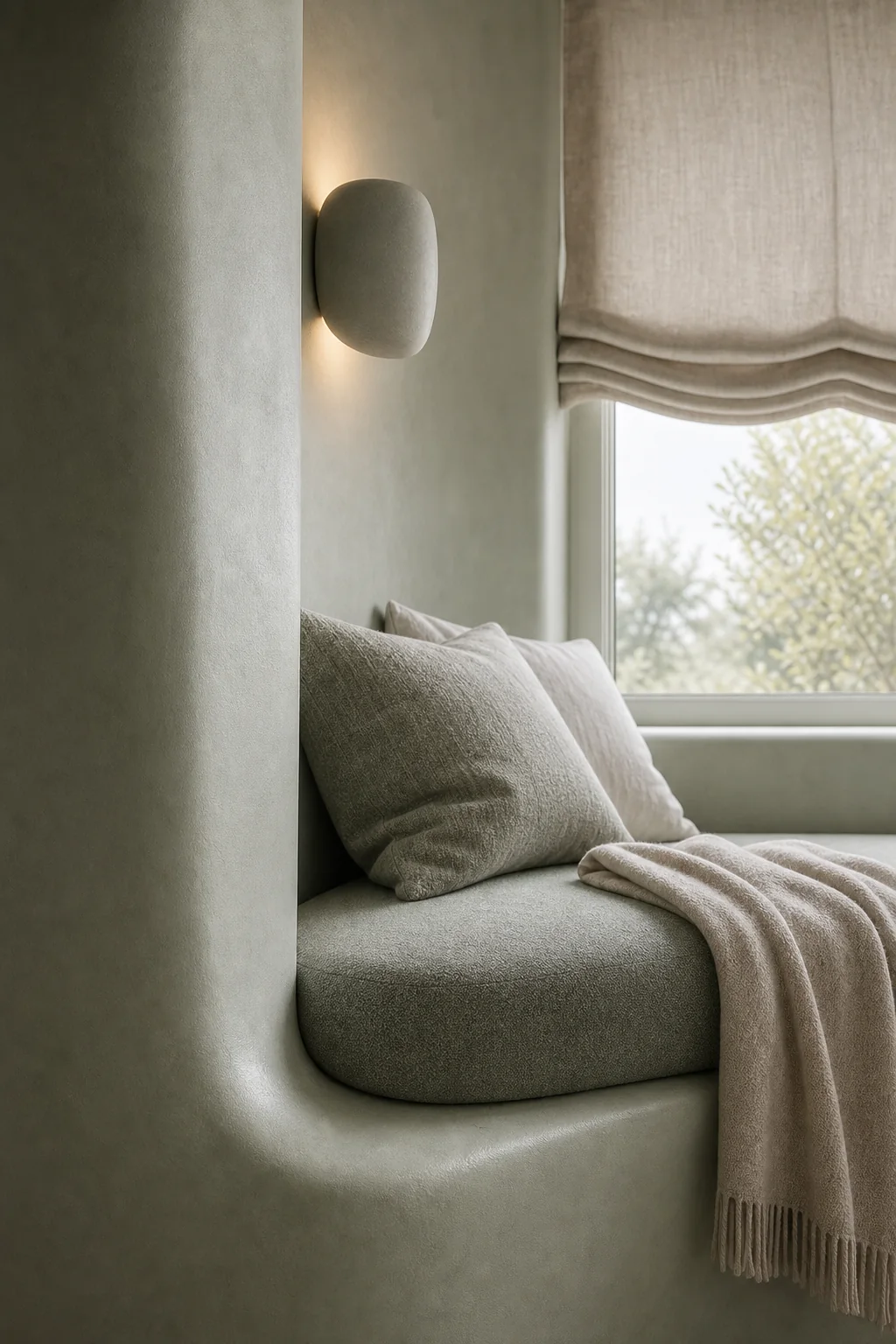
By eliminating sharp right angles, the architecture itself adopts the figurine’s continuous, sculpted nature. Curved plaster corners mimic the solid carved stone block, transforming a standard window seat into an enveloping retreat. To achieve this seamless foundation, frame the bench base flush with the surrounding walls, creating a single unified volume. Use flexible corner bead to radius the transitions between the walls and the seating surface before applying the final finish. These structural implementation steps ensure the nook feels like a permanent, carved monolith rather than a temporary add-on.
- Frame the bench base and deep window alcove with standard lumber, ensuring the seating area is flush with the surrounding walls.
- Install flexible corner bead along all internal right angles to replace sharp corners with smooth, sweeping radiused curves.
- Apply the pale sage Tadelakt plaster continuously over the alcove walls and bench base for a seamless finish.
- Measure, cut, and fit the custom brushed wool seat cushion so it sits snugly without overhanging the monolithic base.
Drenching the nook in mineral sage
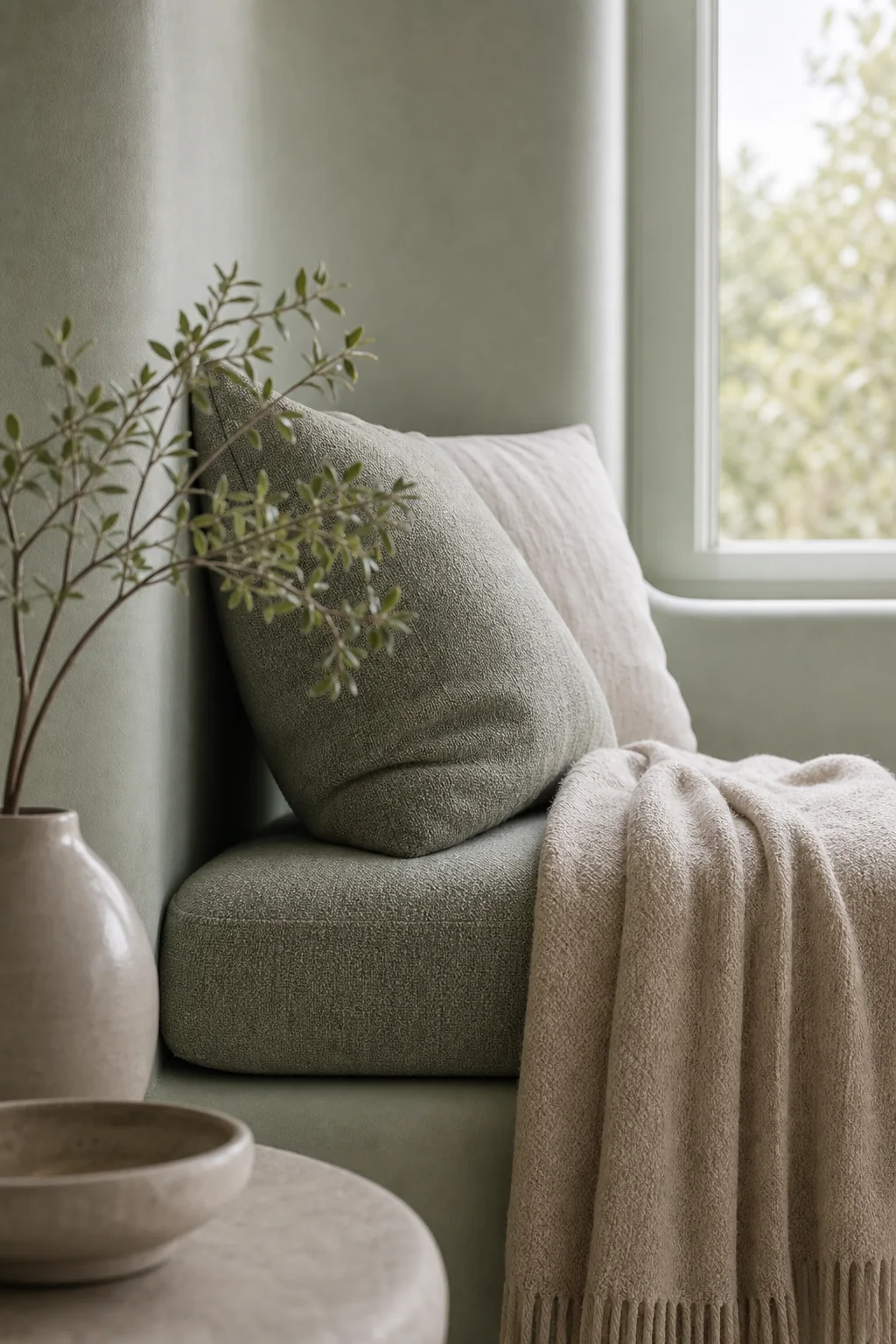
A strict, single-color application washes over different materials to reinforce the illusion of a single carved object. Pale sage plaster matches the raw stone’s dusty hue, creating an immersive environment that feels intentionally carved rather than assembled. This monochromatic pale sage strategy maps directly from the source object’s defining traits to specific room applications. Keep the ceiling of the alcove the same sage tone to enhance the enveloping feel, ensuring the entire nook reads as one continuous piece of carved stone. The mapping below details exactly how these visual traits become physical room elements.
| Source trait | Visible evidence | Room move |
|---|---|---|
| Carved monolith | The solid, seamless carving of the soapstone block | A built-in window bench with curved, seamless plaster corners that feels sculpted directly from the surrounding wall |
| Mineral sage | The pale, dusty green hue of the raw soapstone material | A monochromatic pale sage palette applied across both the plaster alcove walls and the dense seat cushion |
| Powdery matte | The smooth, slightly powdery tactile finish of polished soapstone | Matte Tadelakt plaster on the walls paired with a dense, light-absorbing brushed wool textile for the upholstery |
| Draped fluidity | The soft, flowing lines of the goddess’s carved garments | A relaxed, pooling linen Roman shade and a rounded, sculptural ceramic wall sconce providing a soft halo of light |
Matching textile to plaster
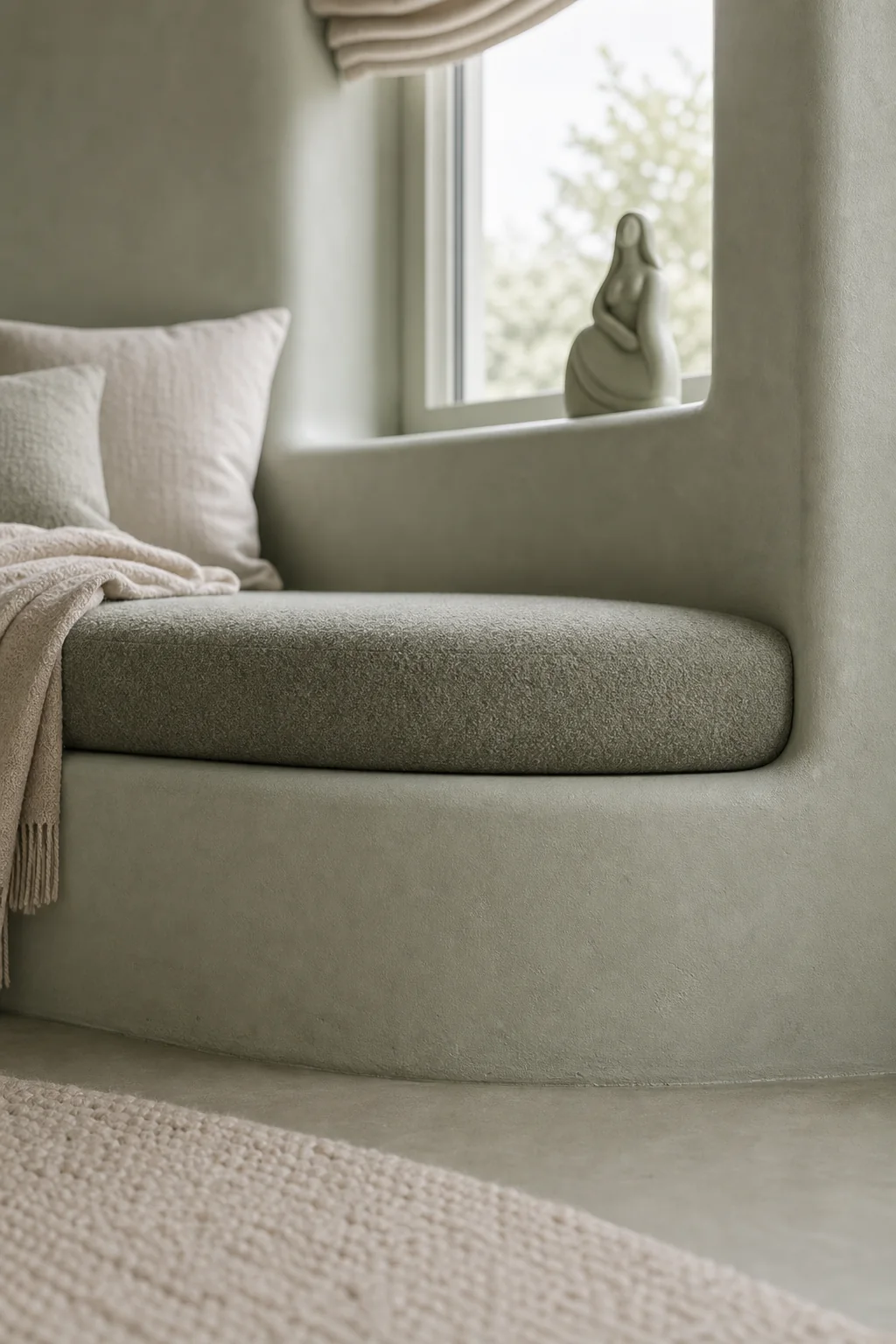
Dense wool upholstery perfectly matches the sage plaster wall, completely blurring the line between architecture and furniture. You can easily control the intensity of this effect depending on your comfort level. A subtle approach might simply paint the alcove a soft sage with a standard square cushion, avoiding complex plasterwork. A balanced execution uses seamless Tadelakt plaster, exact color-matching between the wall and wool cushion, and a draped linen shade for softness. For a bold statement, extend the sage plaster out into the main room and introduce a heavily textured bouclé for the seating surface.
Translating powdery matte surfaces
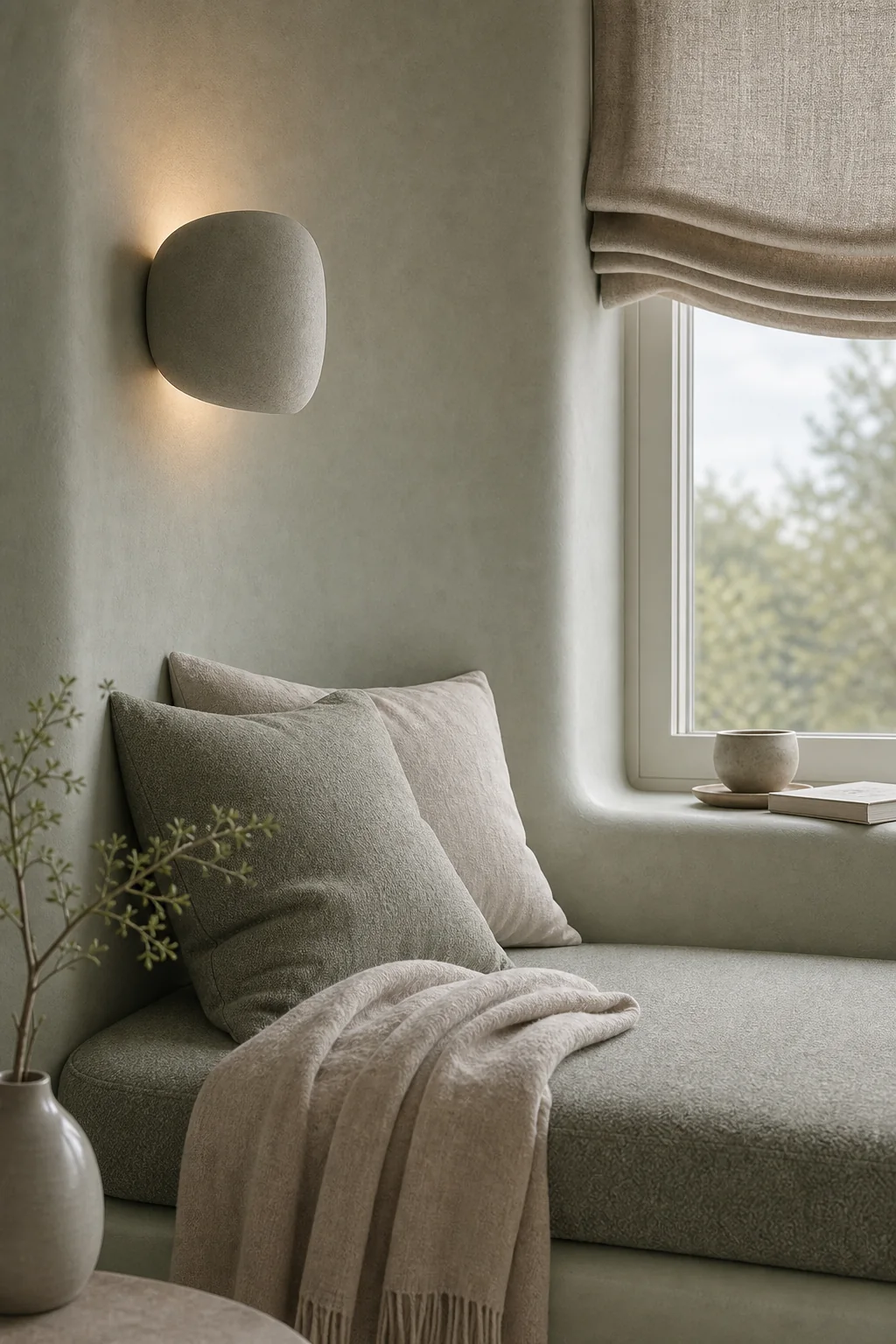
Light-absorbing textures replace the coldness of actual stone with inviting, tactile warmth. Brushed wool and Tadelakt recreate the figurine’s powdery finish, ensuring the space remains visually soft and physically comfortable. Avoiding glossy or reflective finishes within the alcove is crucial to maintaining the serene atmosphere that defines the design. Select a dense, brushed wool for the seat cushion to mimic the dense but soft look of soapstone, ensuring the fabric has a felted face with no visible sheen. This curated material checklist will help you achieve the exact sensory experience of the original stone.
Introducing draped fluidity
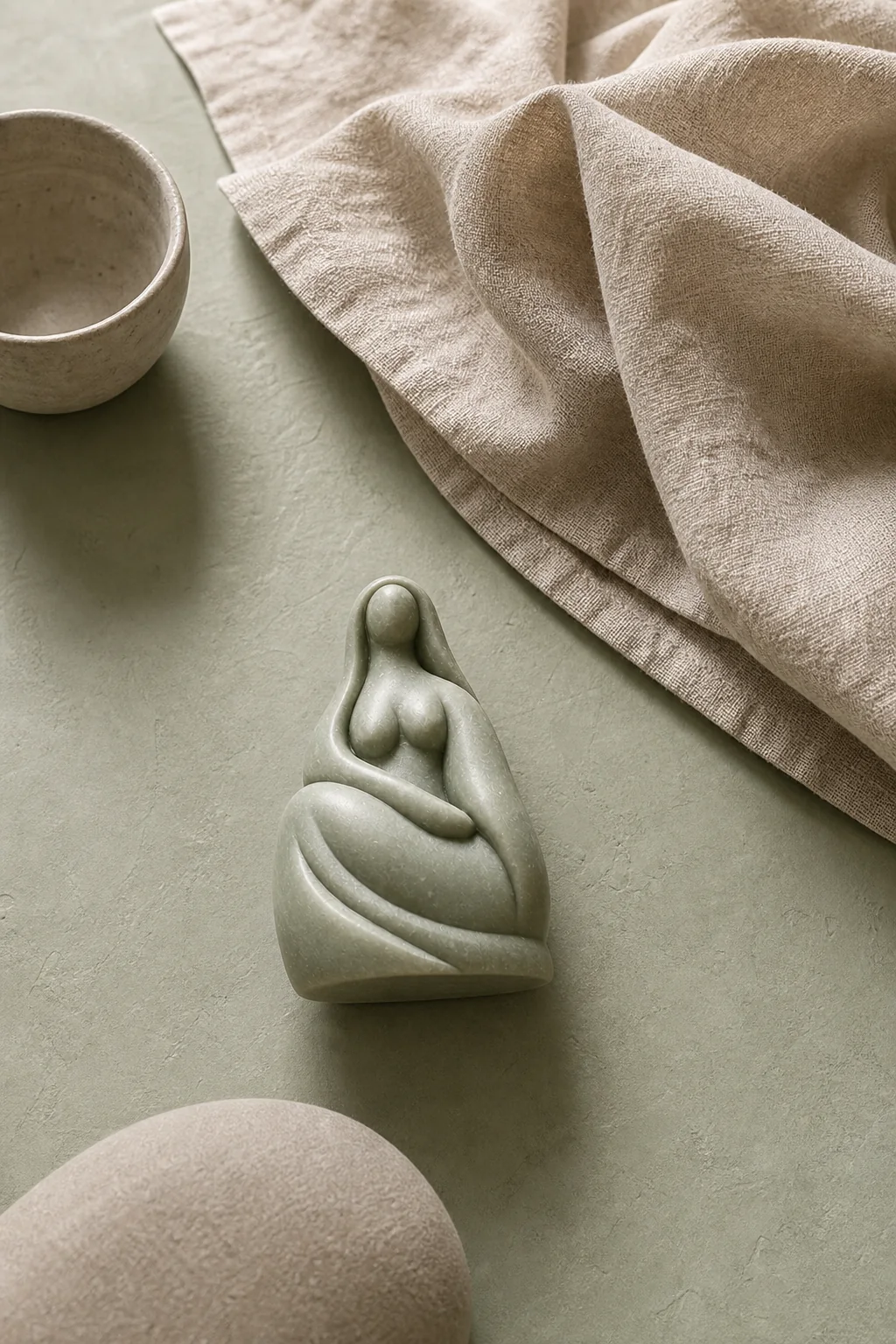
Soft, pooling fabrics and rounded accents break up the heavy architecture with gentle, rhythmic movement. A relaxed linen shade echoes the goddess’s flowing garments, ensuring the heavy masonry feel of the bench does not become visually oppressive. These soft, pooling fabrics introduce crucial organic movement to the structured alcove. Install a washed linen Roman shade that falls with natural, unpressed folds, and choose a wall sconce with a rounded, organic shape to complement the draped lines. This careful balance prevents the solid, monolithic base from feeling too rigid or austere.
Position the sconce to cast a soft, diffused wash of light down the plaster wall, highlighting the curved corners without creating harsh shadows. Seek out organic, hand-thrown shapes with concealed bulbs to maintain the serene, glare-free environment required for a comfortable reading space.
Adding soft light halos
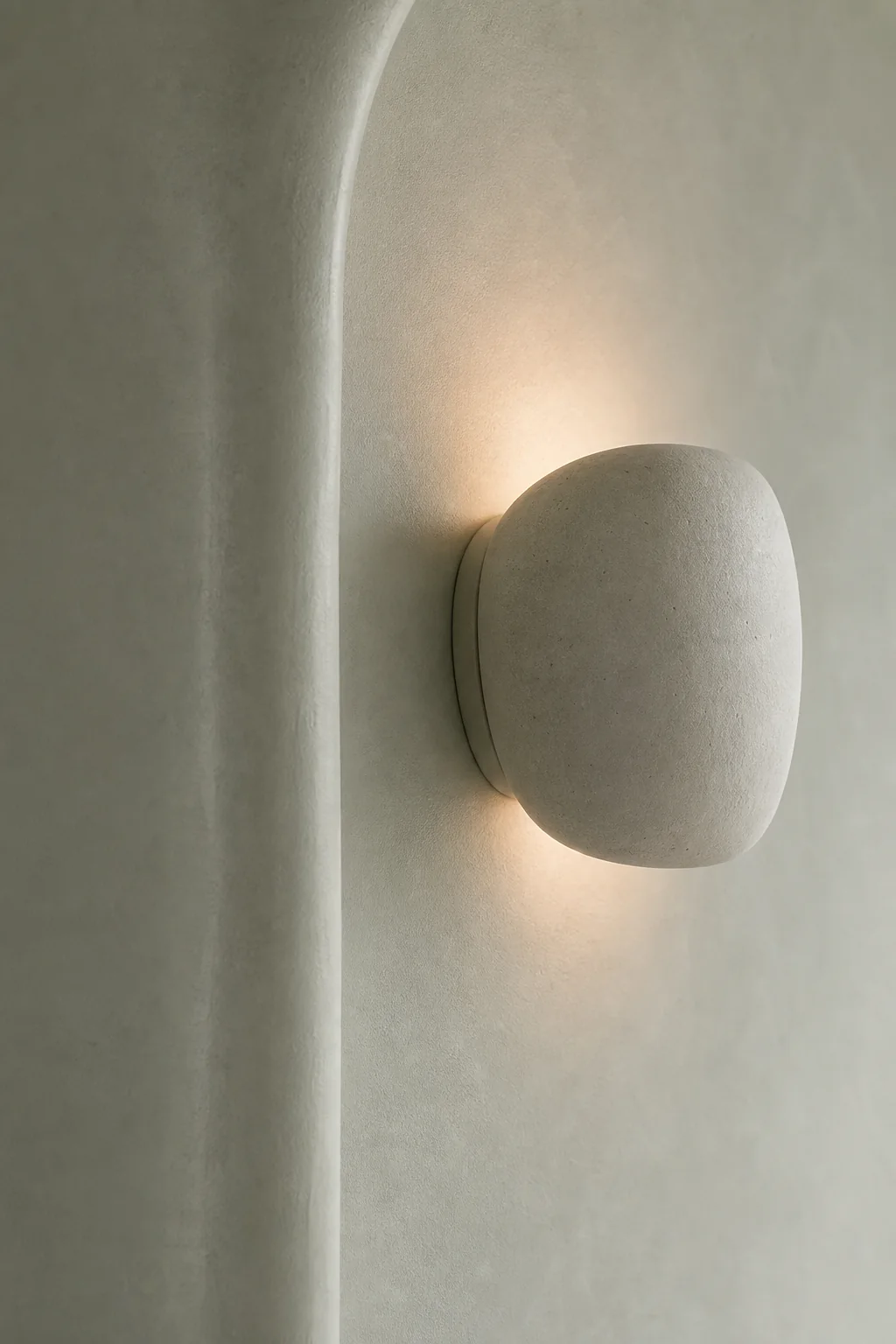
A rounded ceramic sconce highlights the seamless plaster curves, casting a gentle glow that enhances the powdery matte surfaces. This final layer of illumination ensures the deep alcove remains a highly functional reading space while preserving the tranquil, sculptural atmosphere inspired by the original carved soapstone figurine. By keeping the light source indirect and soft, the fixture acts as a natural extension of the room’s draped fluidity, wrapping the reader in a warm, glare-free halo that perfectly completes the translation from a small tabletop object to an immersive architectural retreat.