
Mid-Century Piano Bench Upcycle with a Woven Macrame Seat
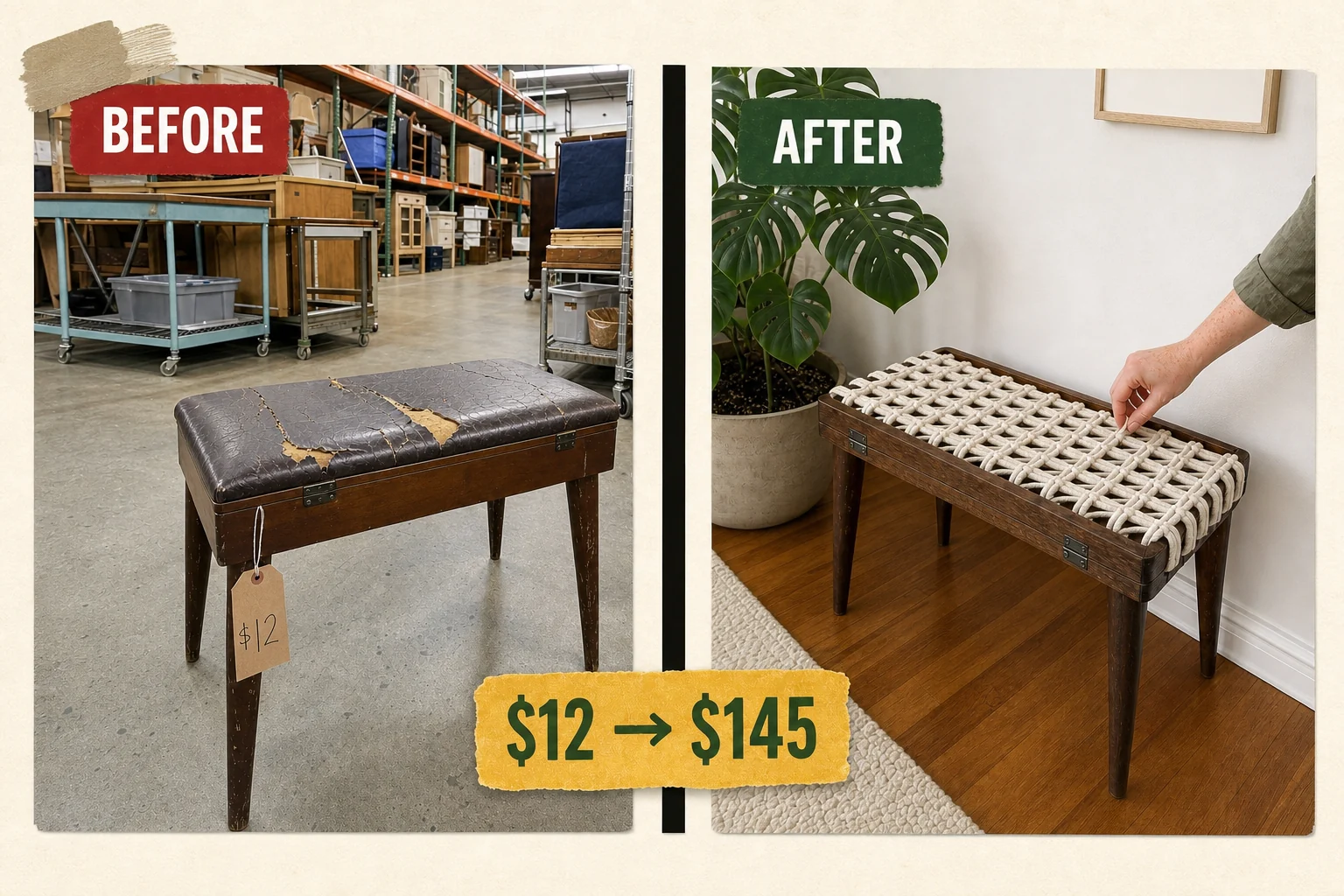
Tucked under discarded cabinet doors at a community reuse center, this mid-century piano bench had a rock-solid base but a ruined seat. Replacing the cracked vinyl with a hand-knotted macrame cover creates a highly textured, modern accent piece.
Evaluating the Thrifted Bench
The discovery at the community reuse center revealed a piece with immense potential hidden beneath significant wear. The dark walnut vinyl seat suffered from deep splits exposing crumbly yellow foam, making the surface uncomfortable and visually dated. White scuff marks and dull patches on the tapered walnut legs made the otherwise solid mid-century base look entirely neglected.
- Cracked vinyl upholstery with deep splits exposing crumbly yellow foam on the seat top.
- Scuffed wood finish with white marks and dull patches on the tapered walnut legs.
Despite these surface flaws, the functional steel hinges and tapered leg profile remained completely intact. Transforming this neglected find into a bespoke artisan piece requires a modest budget, as outlined in our editorial estimate at the end of this guide. The rock-solid mid-century base provides the perfect foundation for a highly textured woven textile surface.
Step 1: Assess the Found Bench
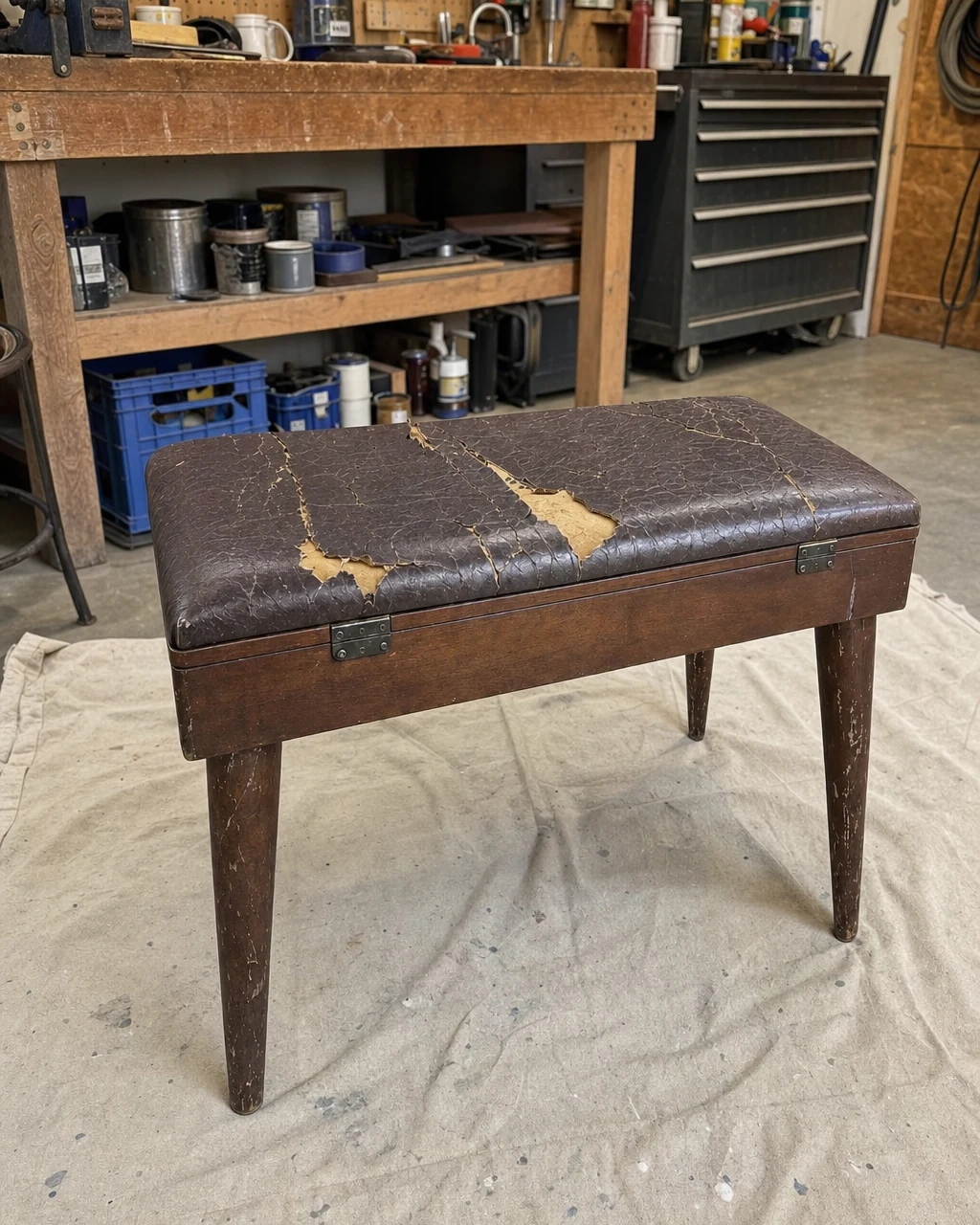
Set the bench on a canvas drop cloth to inspect the structural integrity of the steel hinges and the extent of the vinyl damage. Use a screwdriver to check the hardware, ensuring the solid wood frame and screwed-in tapered legs are secure. Evaluating the frame dictates the correct cord yardage required. Ensure the bench is stable before applying weight or pressure during inspection.
Step 2: Strip the Old Upholstery
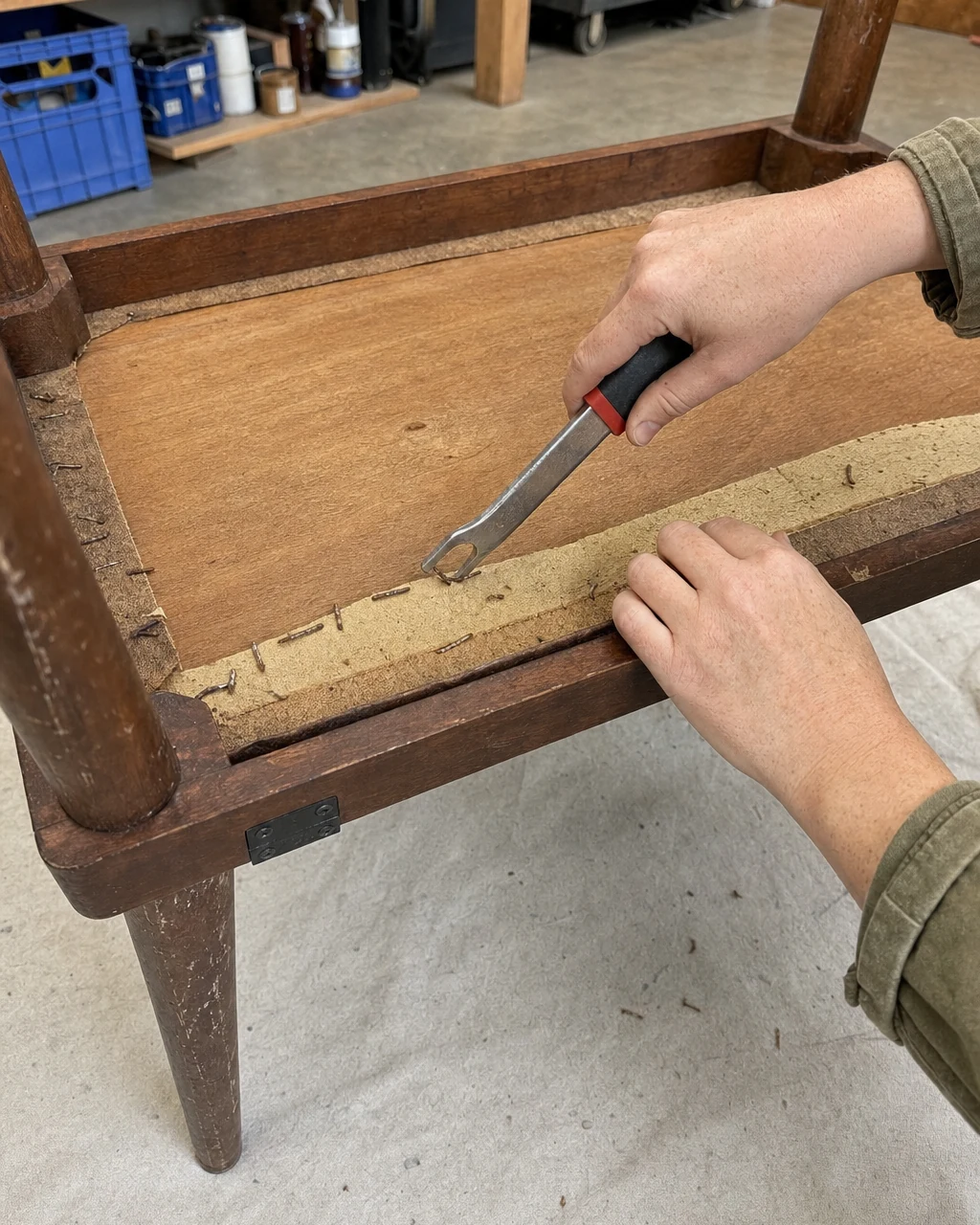
Pry the rusty staples out of the wooden lid’s underside using a metal staple puller and pliers. Remove all the cracked vinyl and degraded yellow foam completely to expose the bare wood underneath, preparing a clean surface for the new textile. Old foam degrades into sticky dust requiring immediate bagging. Wear safety glasses when prying out staples to protect your eyes from flying metal.
Step 3: Condition the Wood Base
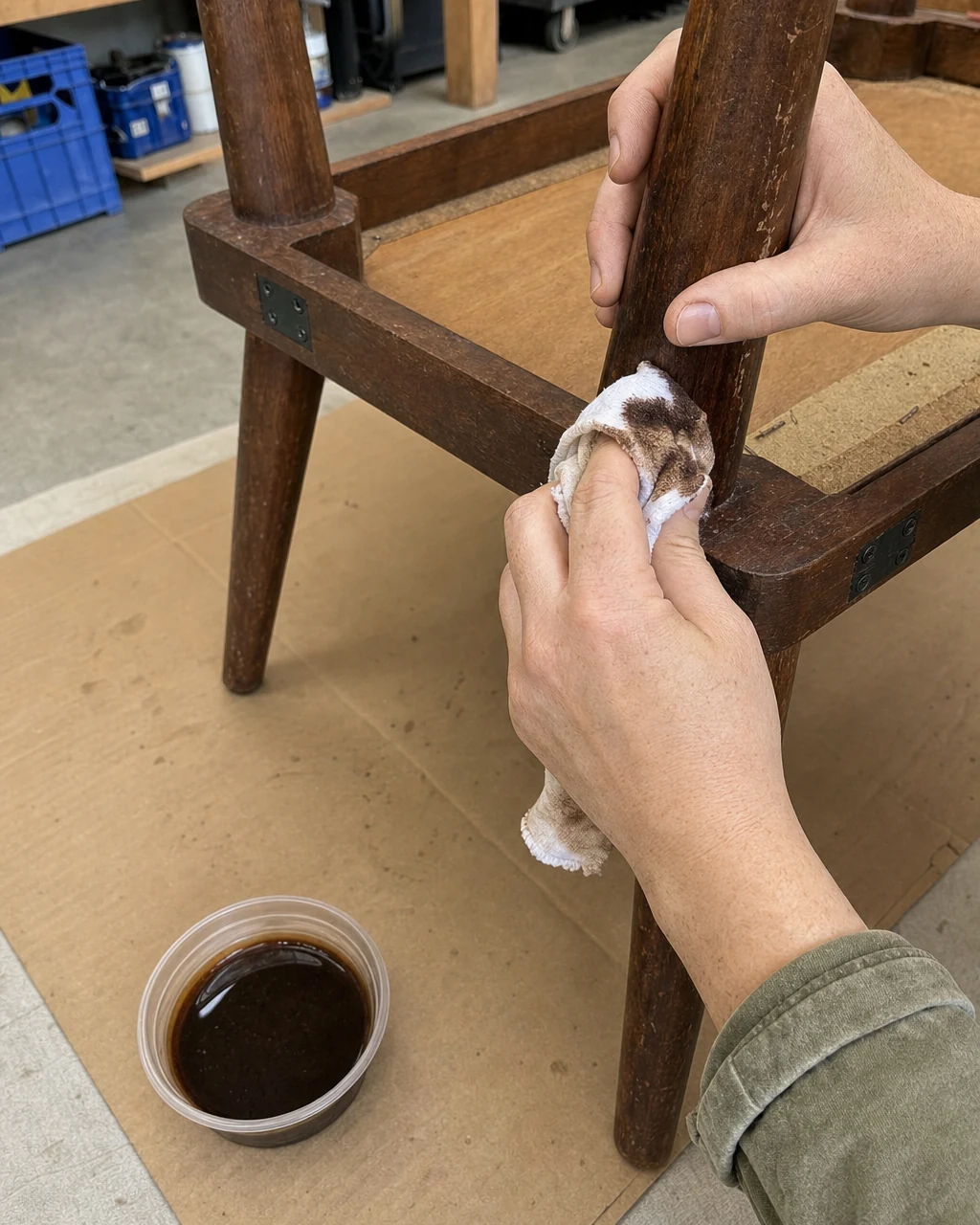
Wipe dark walnut Danish oil into the scuffed wooden legs and frame using clean cotton rags. Allow the oil to penetrate the scratches and restore the rich finish, reviving the mid-century base without the need for heavy chemical strippers. Conditioning oil penetrates scratches effectively, hiding surface scuffs while enhancing the natural beauty. Dispose of oil-soaked rags in water to prevent spontaneous combustion.
Materials checklist
Step 4: Anchor the Warp Cords
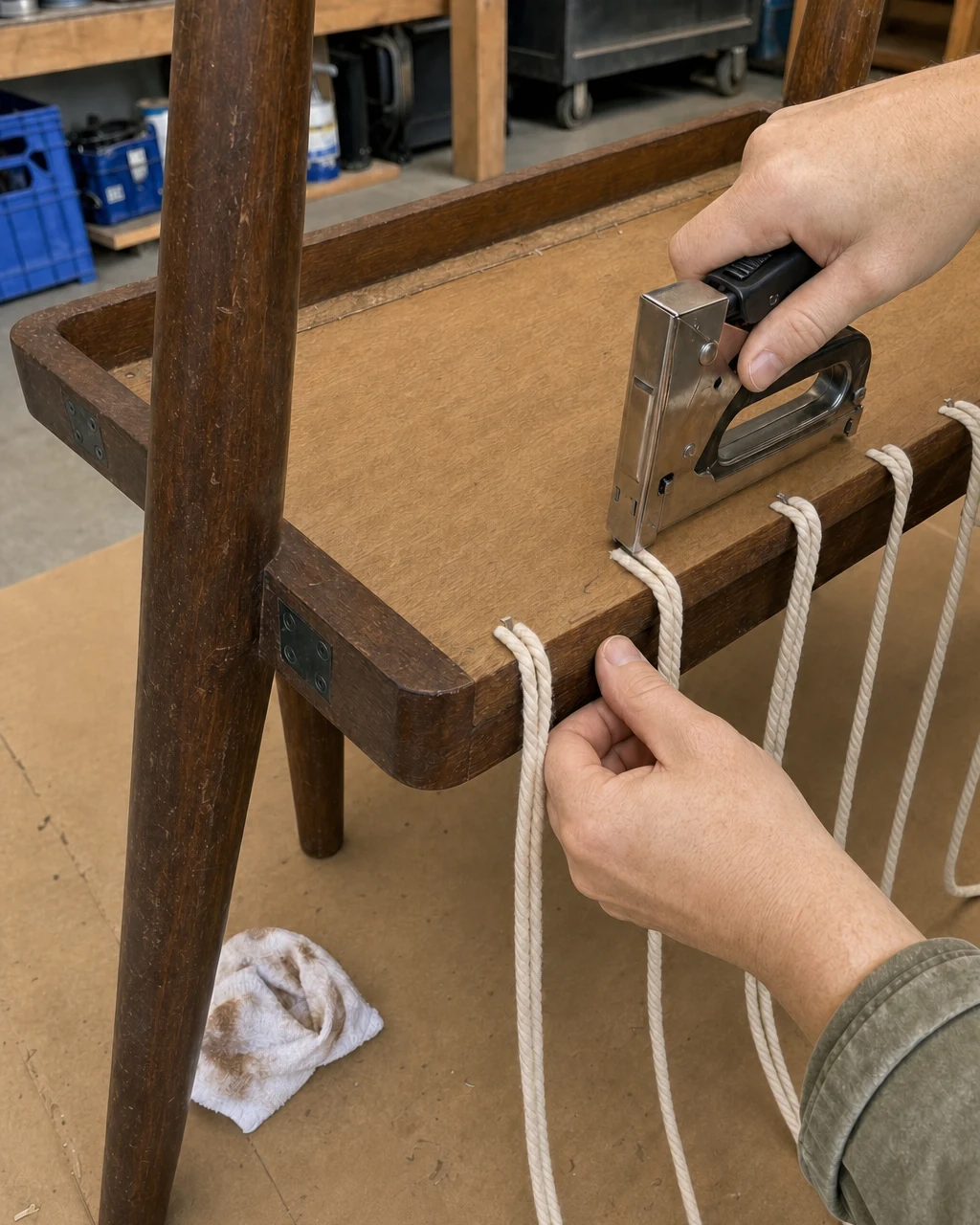
Cut the thick cotton cord into manageable lengths using fabric scissors. Staple the vertical warp cords securely to the underside of the bare wooden lid at one-inch intervals using a heavy-duty staple gun. Heavy staples prevent the tensioned anchor cords from slipping during the weaving process. Keep fingers clear of the staple gun discharge area when anchoring the thick cords.
Step 5: Knot the Macrame Seat
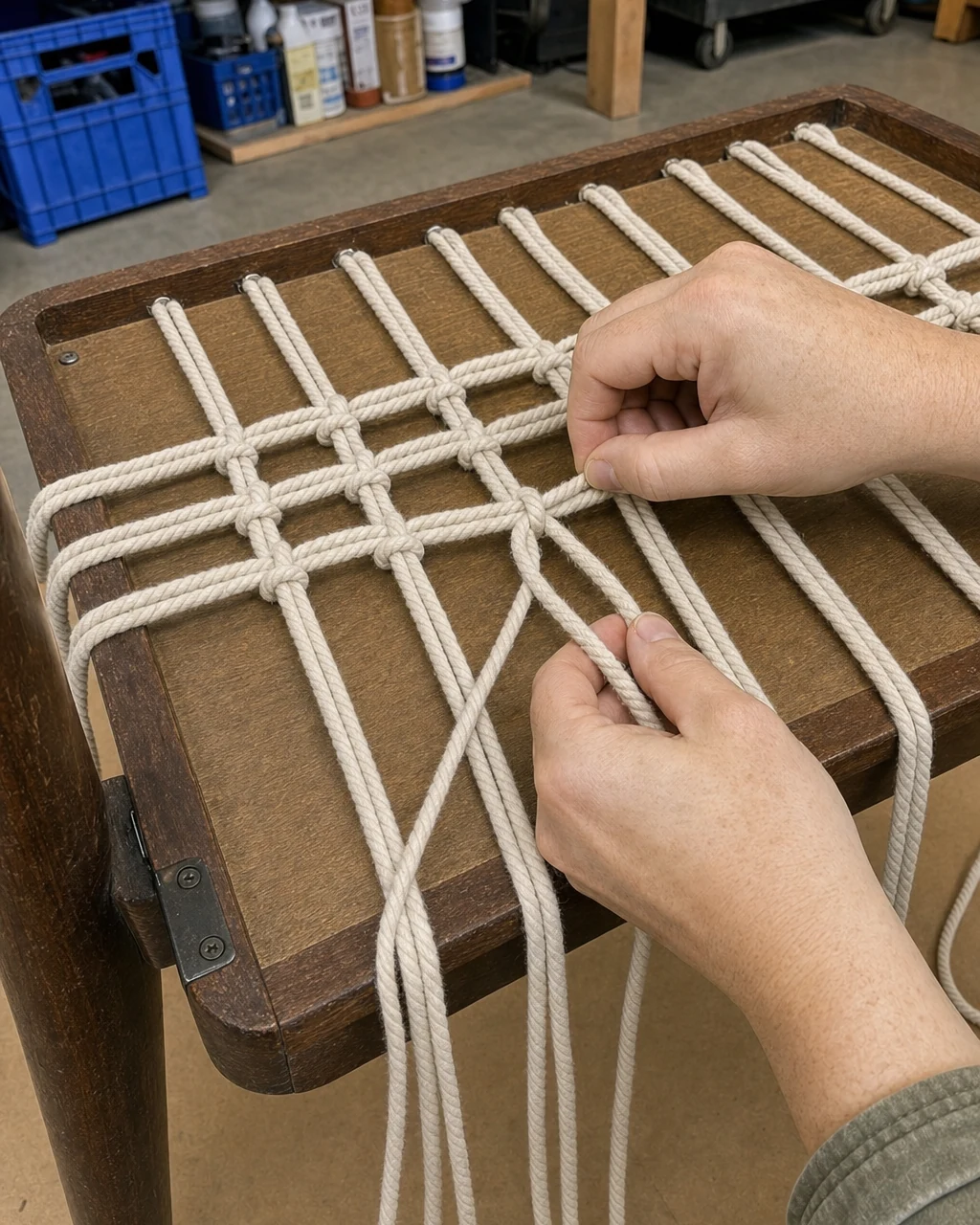
Weave and tie the horizontal cotton cords into tight, alternating square knots across the top surface of the wooden lid. Maintain consistent pulling tension to keep the geometric knot pattern perfectly straight, then staple the remaining ends underneath with the heavy-duty staple gun. Consistent tension keeps the geometric pattern straight. Take frequent breaks to avoid hand fatigue when pulling thick cotton knots tight.
Step 6: Review the Finished Bench
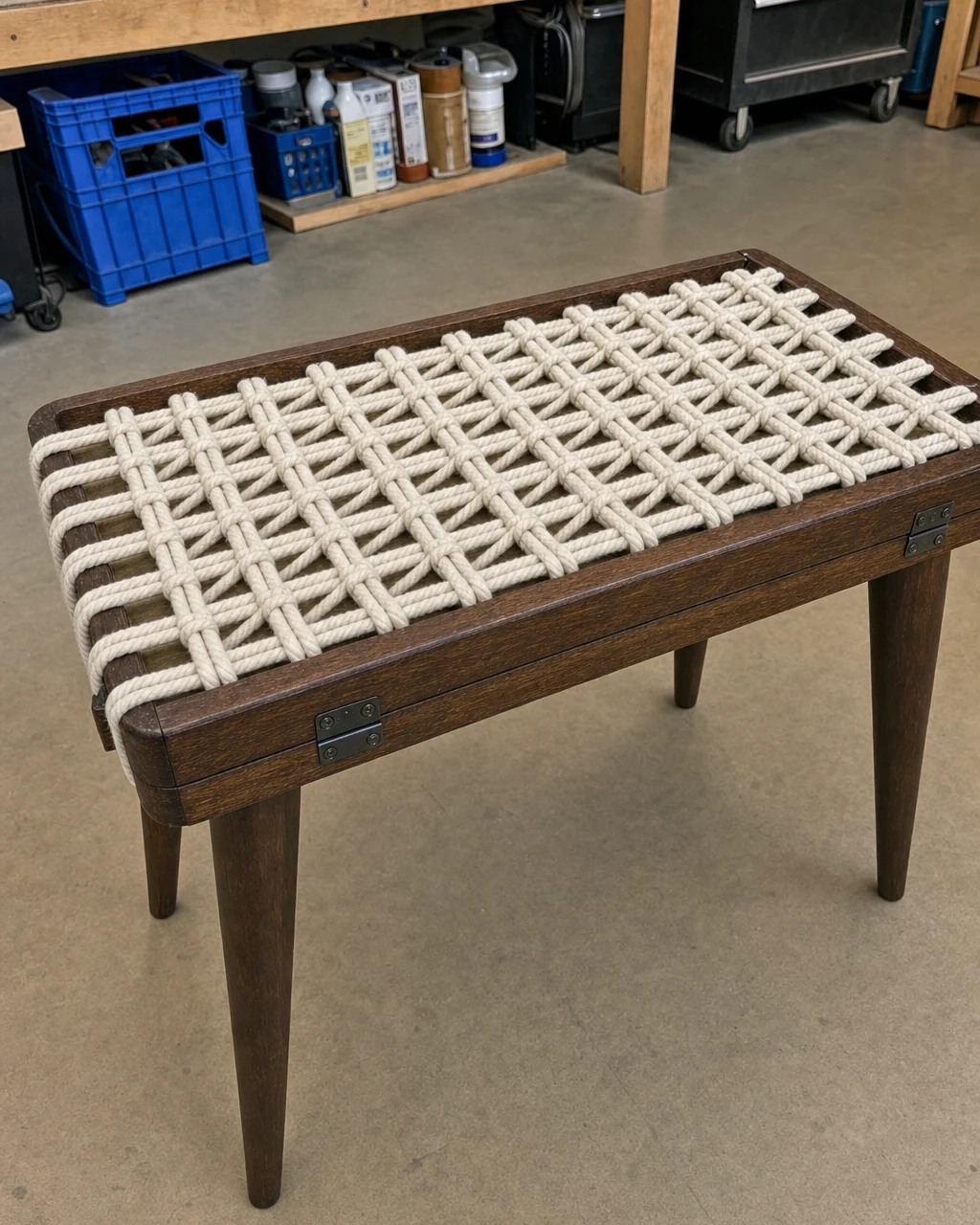
Clear the workbench of tools and wipe down the area with a cleaning sponge. Review the completed macrame-topped bench under the bright shop lights to ensure all knots are uniform and the oiled walnut legs are fully dry. Thick cotton cord adds immense tactile value and daily durability to the finished piece. Ensure the floor is clear of cut cord scraps to prevent slipping.
Step 7: Style in the Home
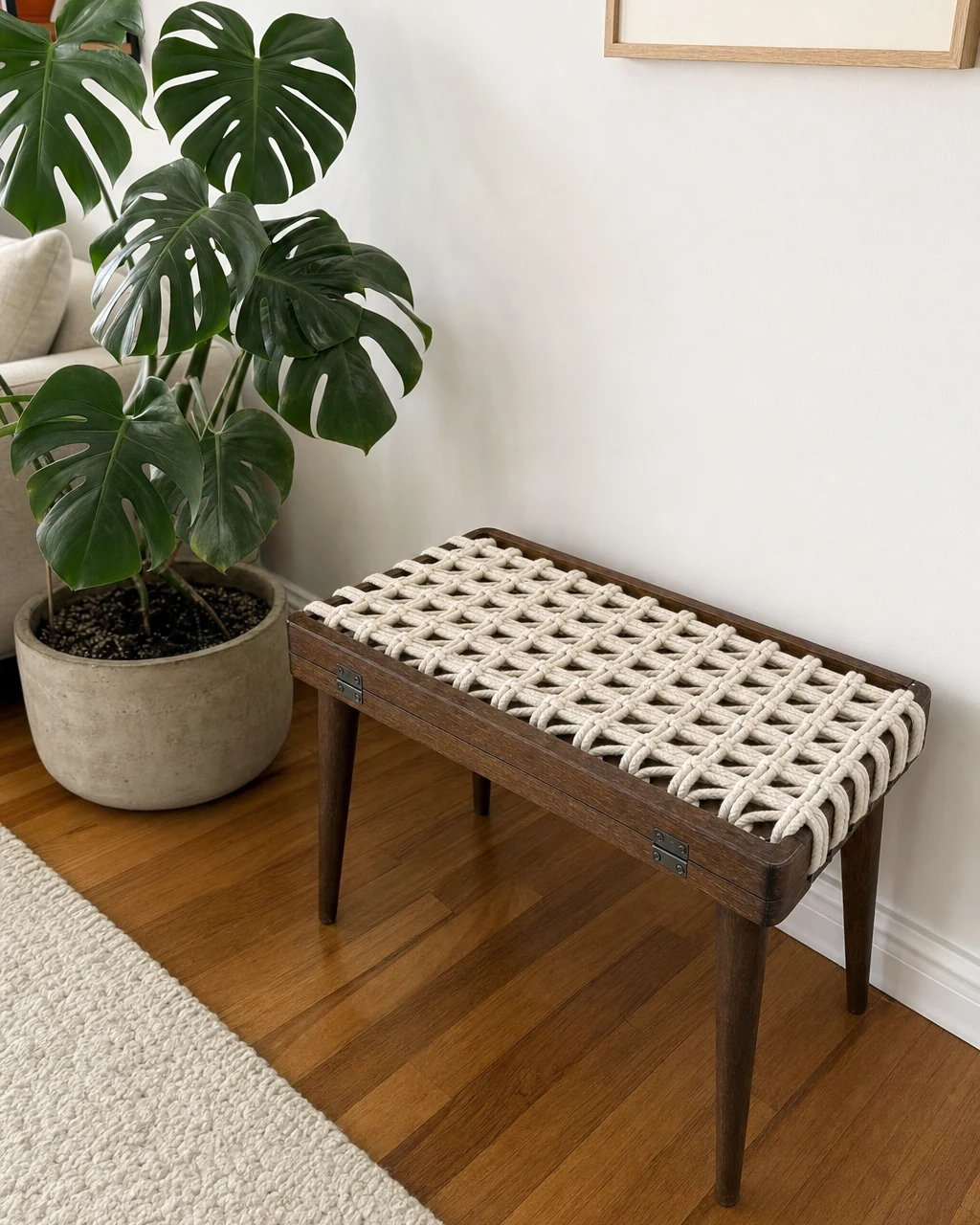
Move the finished bench into a styled living space, positioning it against a white wall next to a potted monstera plant. Make leveling adjustments to the splayed legs, allowing the piece to function as a highly textured, modern accent. A textured statement piece elevates any empty corner. Lift by the wooden base, not the macrame cords, when moving it.
Valuation and Resale Potential
Hand-knotted macrame furniture commands a premium in boho-modern decor markets, elevating a basic thrift find into a bespoke artisan piece. Replacing flat shiny vinyl with chunky geometric macrame knots completely changes the texture, pattern, and material dimensions of the bench. The rich walnut-stained wood and natural cotton cord create a striking contrast that maximizes the estimated resale value.
| Item | Cost |
|---|---|
| Purchase Price | $12 |
| Natural Cotton Cord | $24 |
| Danish Oil Walnut | $14 |
| Heavy-Duty Staples | $4 |
| Materials Total | $42 |
| Total Investment | $54 |
| Estimated Resale Value | $145 |
| Value Gain | $91 |