
The 5-Step Coffee Table Styling Guide: Pro Decor Secrets
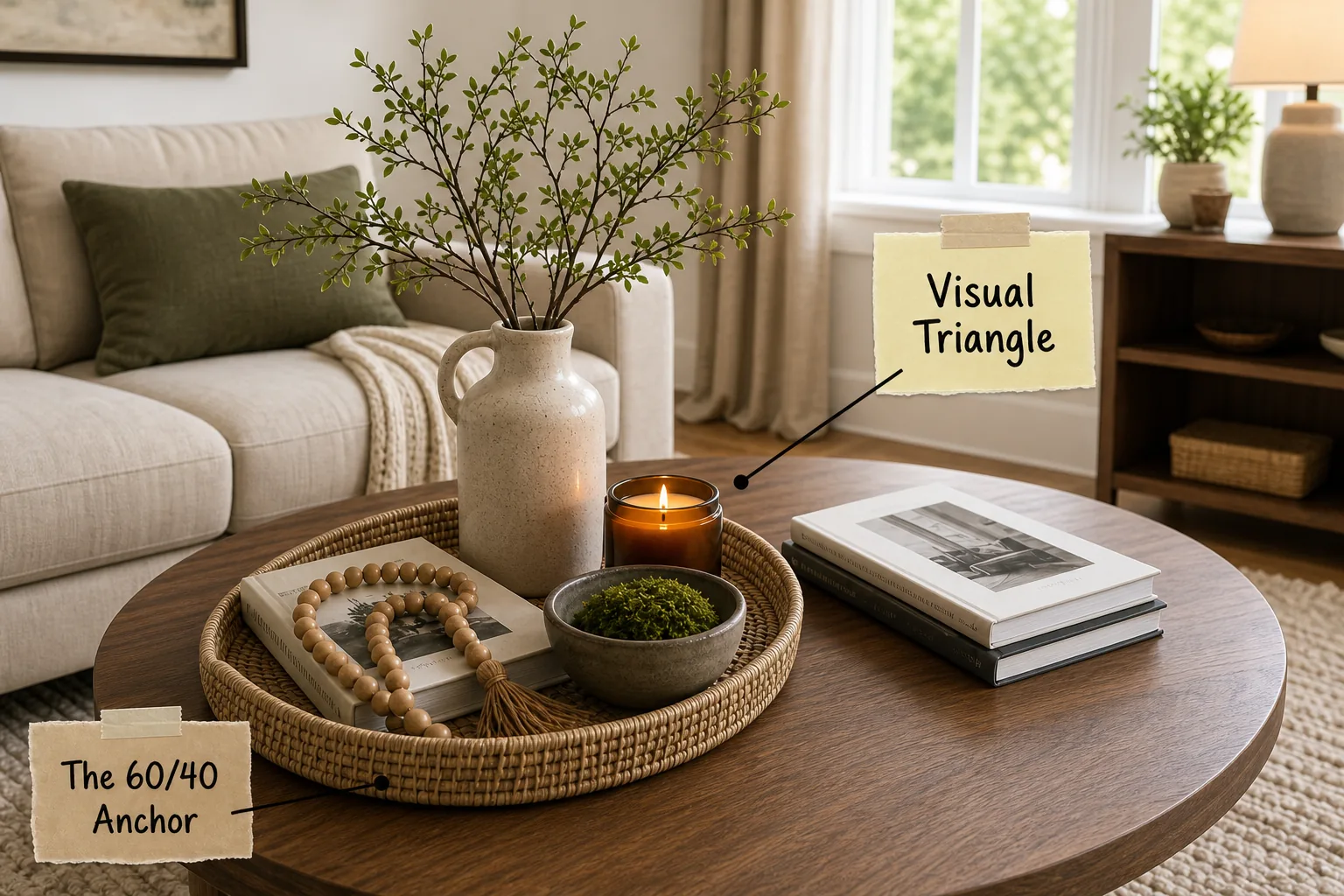
You will be able to confidently arrange your coffee table using a reliable formula for scale, grouping, and texture with this complete 5-Step Coffee Table Styling Guide. Master these foundational rules of proportion to transform your living room centerpiece into a perfectly balanced focal point.
The 5-Step Coffee Table Styling System
Intentional styling requires a proven framework rather than haphazardly placing objects until they look acceptable. Establishing a clear, sequential method ensures your living room centerpiece remains visually balanced while effortlessly accommodating the practical demands of your daily household routine.
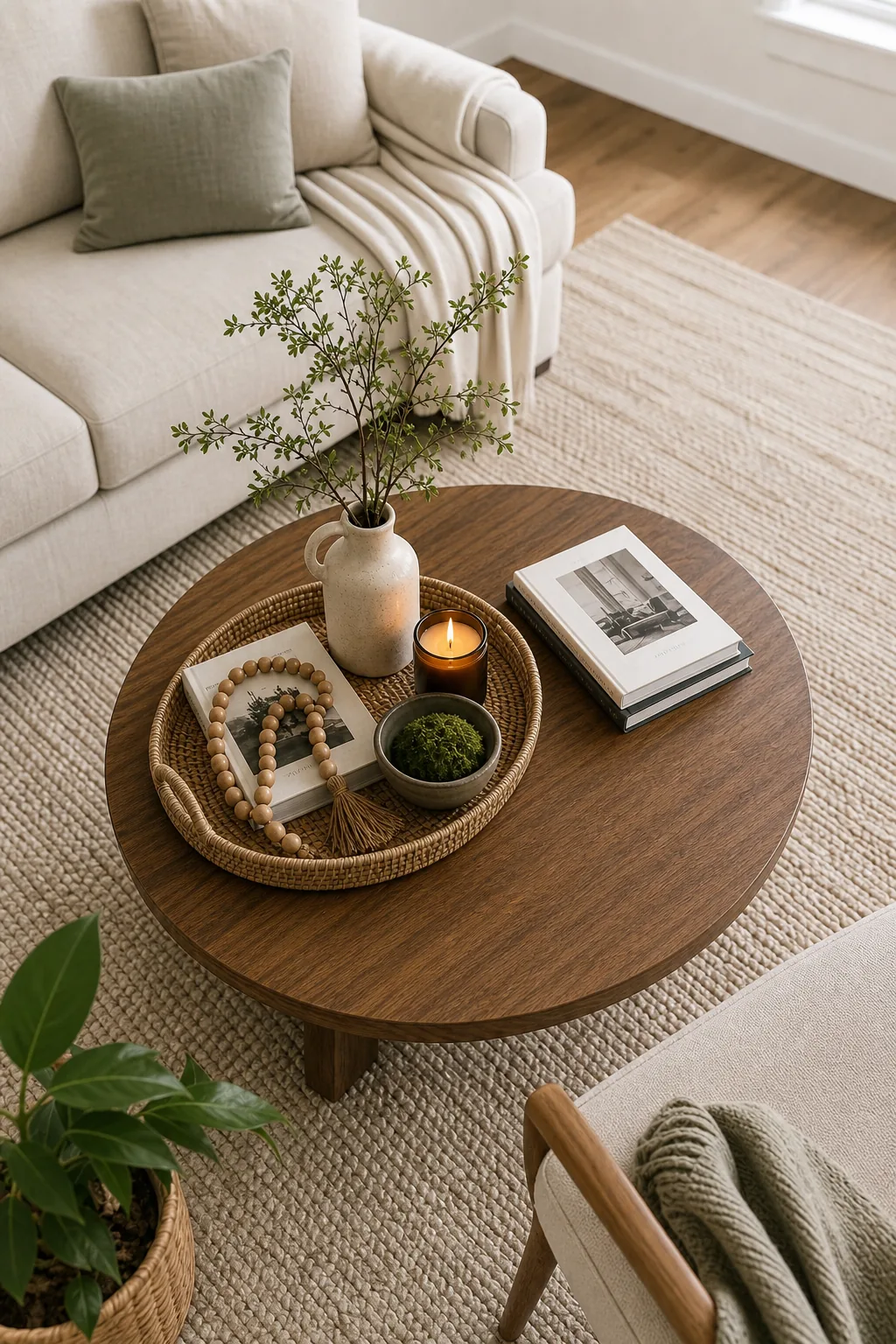
Executing this reliable formula transforms any flat surface into a curated, professional display. Follow these five distinct sequential phases to build a structurally sound and aesthetically pleasing arrangement that easily withstands the demands of daily living.
- Set the primary foundation using a properly scaled containment tray.
- Reserve dedicated bare surface area to prevent visual overwhelming.
- Introduce staggered vertical heights to force the eye upward.
- Cluster distinct decorative elements into naturally resolved odd numbers.
- Soften rigid geometry by draping natural, tactile materials.
Evaluating Your Living Room Flow
Before placing any objects, you must evaluate the surrounding traffic patterns and seating clearances in your living space. A beautifully styled table quickly becomes a frustrating obstacle if the decorative elements obstruct your view of the television or block natural conversation pathways.
Maintaining a minimum clearance of eighteen inches between the table edge and your seating ensures comfortable legroom. This crucial spatial buffer prevents guests from accidentally knocking over your carefully arranged decorative layers when sitting down or standing up.
Step 1: Establish the 60/40 Anchor
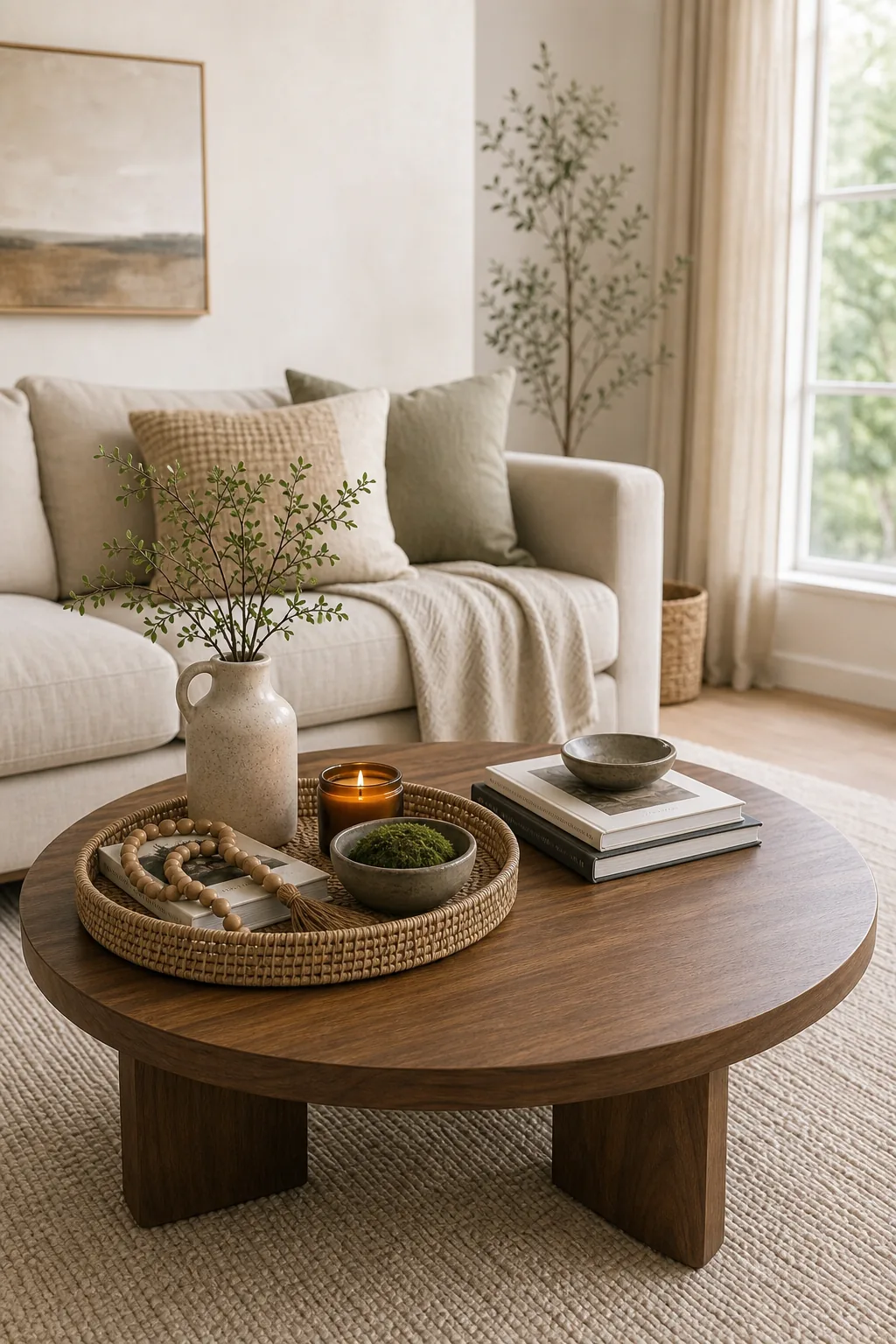
The foundation of any successful arrangement relies on The 60/40 Anchor, a structural rule dictating that primary decor must occupy roughly 60 percent of the table’s total surface area. A large woven tray acts as this vital physical boundary.
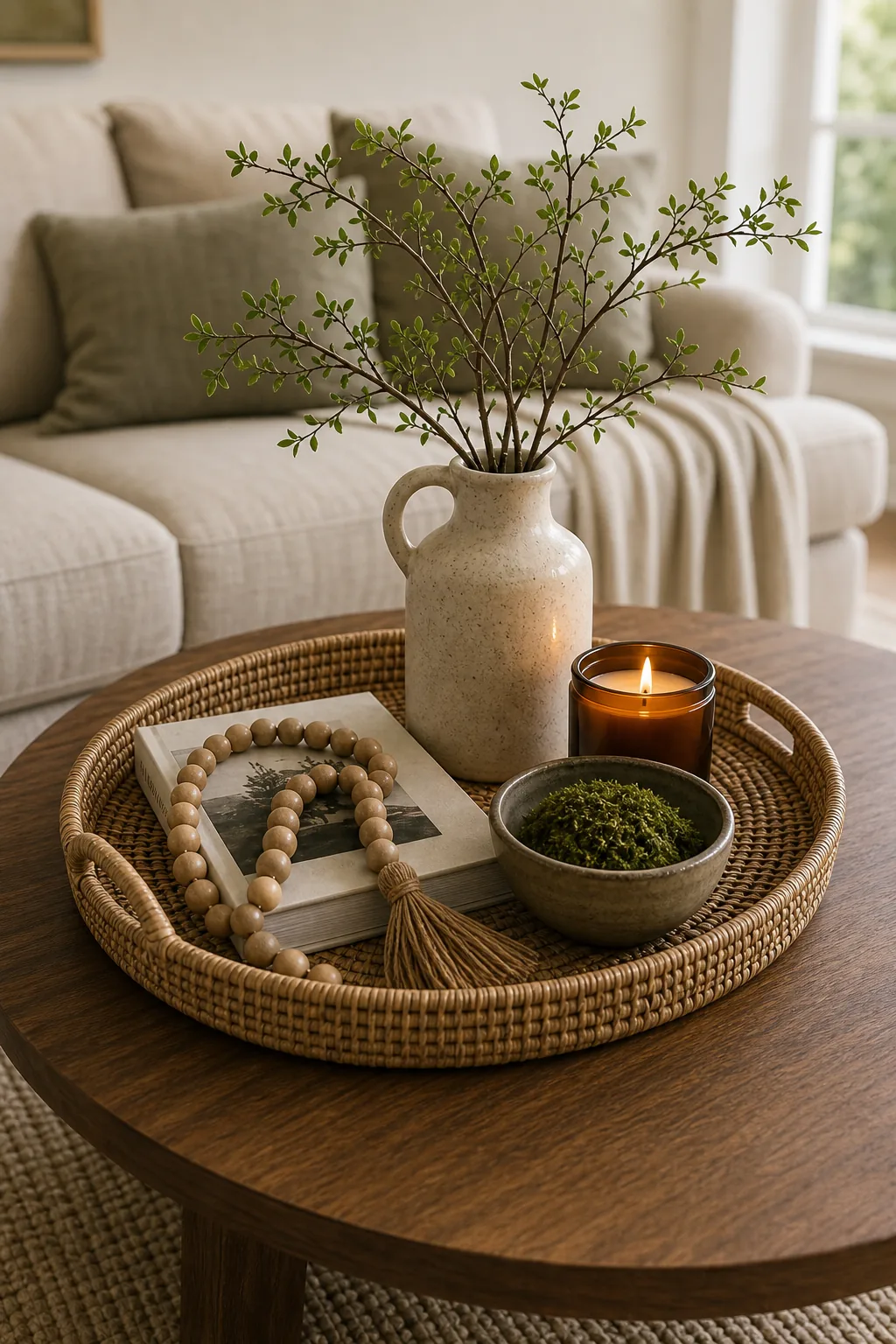
Containing your heaviest elements within this designated zone prevents small pieces from floating aimlessly across the wood. This centralized grounding mechanism instantly establishes a purposeful focal point while providing a definitive boundary for your primary decorative layers.
Selecting the Perfect Base Tray
Measuring your table is the only reliable way to determine the correct tray dimensions for your specific furniture piece. Leaving a four-inch perimeter of bare wood around the outside of the tray ensures the container never looks like it is sliding off the edge.
Step 2: Protect Your Negative Space
Intentionally leaving exactly 40 percent of your wood surface completely bare creates essential Negative Space that gives the eye a critical place to rest. This deliberate emptiness highlights your curated objects and actively prevents a cluttered, chaotic appearance.
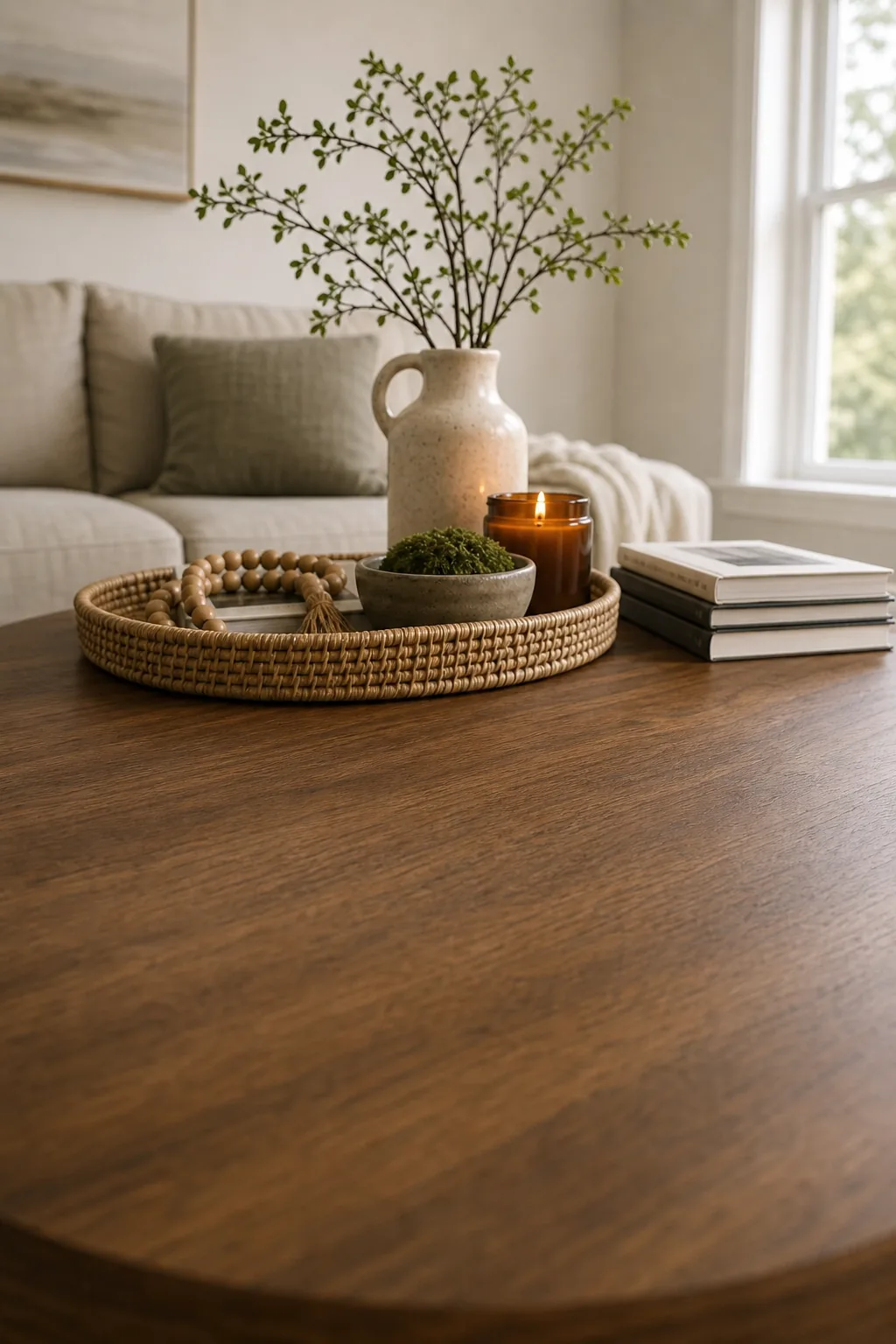
Protecting this untouched wooden expanse keeps the overall living room arrangement from feeling overwhelmingly heavy. A generous breathing zone allows the structural beauty of the furniture itself to act as an active, highly visible design element.
Understanding Scale and Proportion
Evaluating the visual weight of your room dictates exactly how heavy or delicate your table accessories should be. A massive sectional sofa requires robust, thick-walled ceramics, while a slender mid-century loveseat pairs beautifully with delicate glass and thin metallic accents.
| Furniture Scale | Recommended Decor Weight | Ideal Materials | Visual Effect |
|---|---|---|---|
| Heavy Sectional | Thick, chunky profiles | Stoneware, carved wood | Grounds the room |
| Mid-Century Sofa | Slender, airy profiles | Clear glass, thin brass | Maintains lightness |
| Plush Armchairs | Soft, rounded shapes | Textured ceramic, linen | Enhances coziness |
| Minimalist Loveseat | Sleek, geometric lines | Polished marble, steel | Creates sharp contrast |
Matching the physical heft of your decorative objects to the surrounding upholstery ensures the centerpiece feels proportionally appropriate. Ignoring this critical scale relationship often results in a table that looks either overwhelmingly crowded or awkwardly sparse and unfinished.
Step 3: Build a Visual Triangle
Creating vertical interest requires establishing a high, medium, and low point to form an invisible Visual Triangle. Placing your tallest vase, a medium candle, and low books in this staggered formation forces the eye upward and prevents a flat appearance.
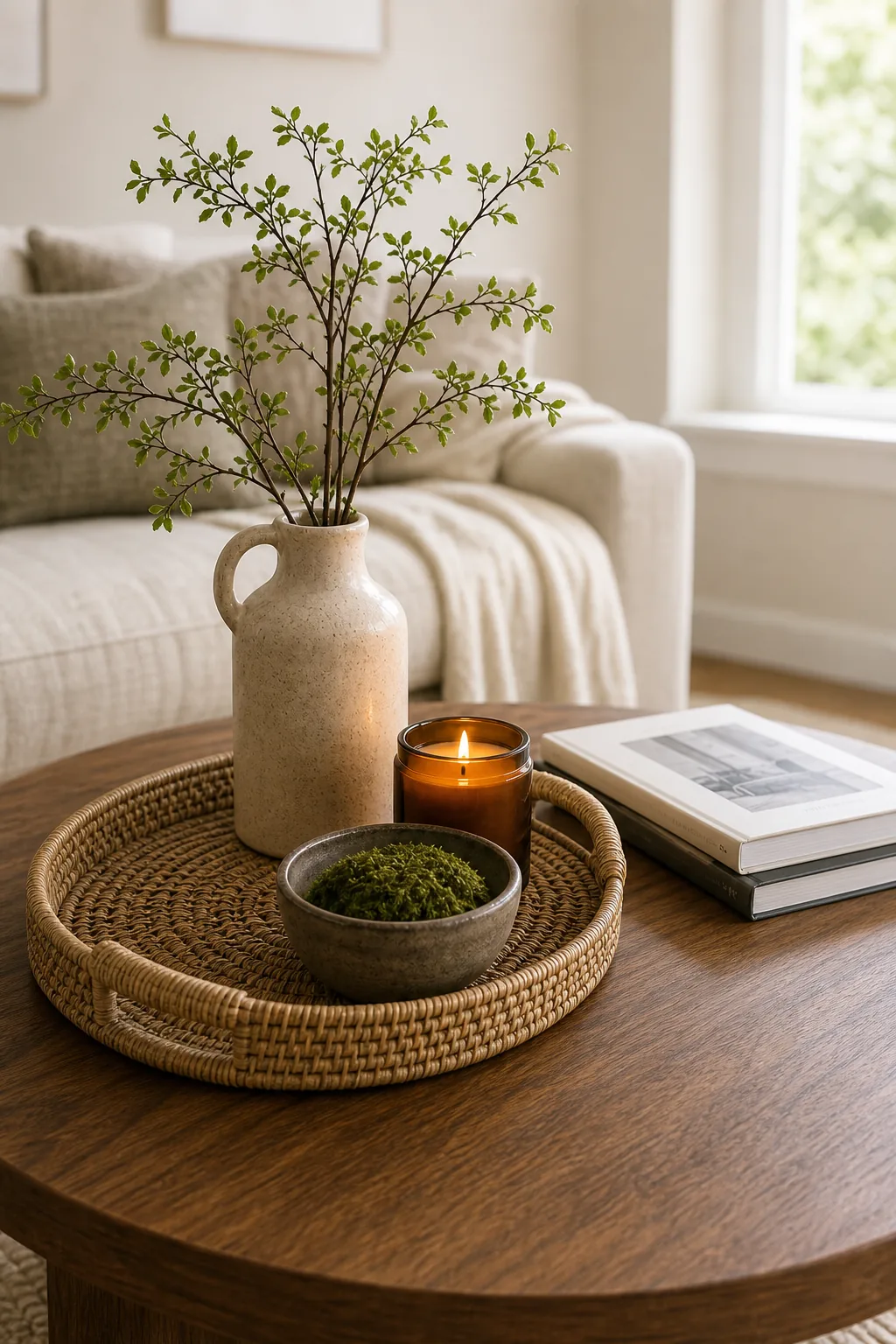
Start by positioning your highest botanical element near the center or back of the tray. Step down to the ambient lighting, and finish the slope with your horizontal reading materials to complete the dynamic, eye-catching composition.
Sourcing Statement Branches and Stems
Selecting the right botanical element dictates the overall wingspan and architectural height of your highest vertical peak. Foraging fresh seasonal greenery from your own yard provides the most authentic, cost-effective way to introduce lively volume to your living room.
- Spring: Clip budding cherry blossoms or vibrant forsythia branches to introduce early color.
- Summer: Forage leafy oak stems or broad monstera leaves for lush, voluminous greenery.
- Autumn: Harvest dried eucalyptus or deep crimson maple branches to reflect seasonal warmth.
- Winter: Utilize stark birch twigs or fragrant pine boughs for dramatic, sculptural texture.
Always trim your stems so the lowest leaves begin just above the rim of the vessel. This precise pruning technique ensures the foliage feels proportional and prevents drooping branches from obscuring the smaller decorative items resting below.
Step 4: Master the Odd Grouping Rule
When guests ask about the Odd Grouping Rule?, the psychological answer is that asymmetrical numbers force the brain to actively process the arrangement. Placing a tight cluster of exactly three distinct objects inside the anchor tray creates an immediate sense of completion.

Even numbers naturally divide the viewer’s attention, creating a highly symmetrical appearance that feels overly formal. A trio of items, like a vase, a candle, and a textured bowl, feels effortlessly resolved and inherently balanced within the tray.
The Psychology of Three in Design
Human perception naturally seeks out patterns, and a trio represents the smallest possible sequence that can form a recognizable group. This cognitive preference explains why a cluster of three distinct shapes consistently feels more satisfying and balanced than a pair.
Varying the physical textures within your three-piece grouping further enhances this psychological satisfaction. Placing a smooth glass cloche next to a rough concrete planter and a matte wax pillar candle guarantees a rich, multi-dimensional display that demands attention.
Step 5: Layer in Organic Texture
Introducing tactile warmth is essential to break up the rigid, straight lines of stacked books and trays. Incorporating a dedicated zone of Organic Texture, like draped wooden beads, introduces inviting, natural irregularities that draw the hand.

Casually cascading these tactile elements over a linen cover instantly reduces the formality of the display. Adding a small, rough-hewn bowl filled with preserved moss provides an additional punch of earthy contrast against smooth, polished glass.
Mixing Materials for Visual Contrast
A truly dynamic display relies on contrasting material finishes to ensure individual items stand out brightly against one another. Distributing matte, glossy, rough, and metallic surfaces evenly across your arrangement prevents the entire collection from looking flat, heavy, or monotonous.
Choosing the Right Coffee Table Books
Selecting hardcovers with neutral, matte spines allows them to act as structural risers without adding distracting visual noise. These architectural volumes elevate tiny accents that would otherwise get entirely lost inside a deep tray boundary.
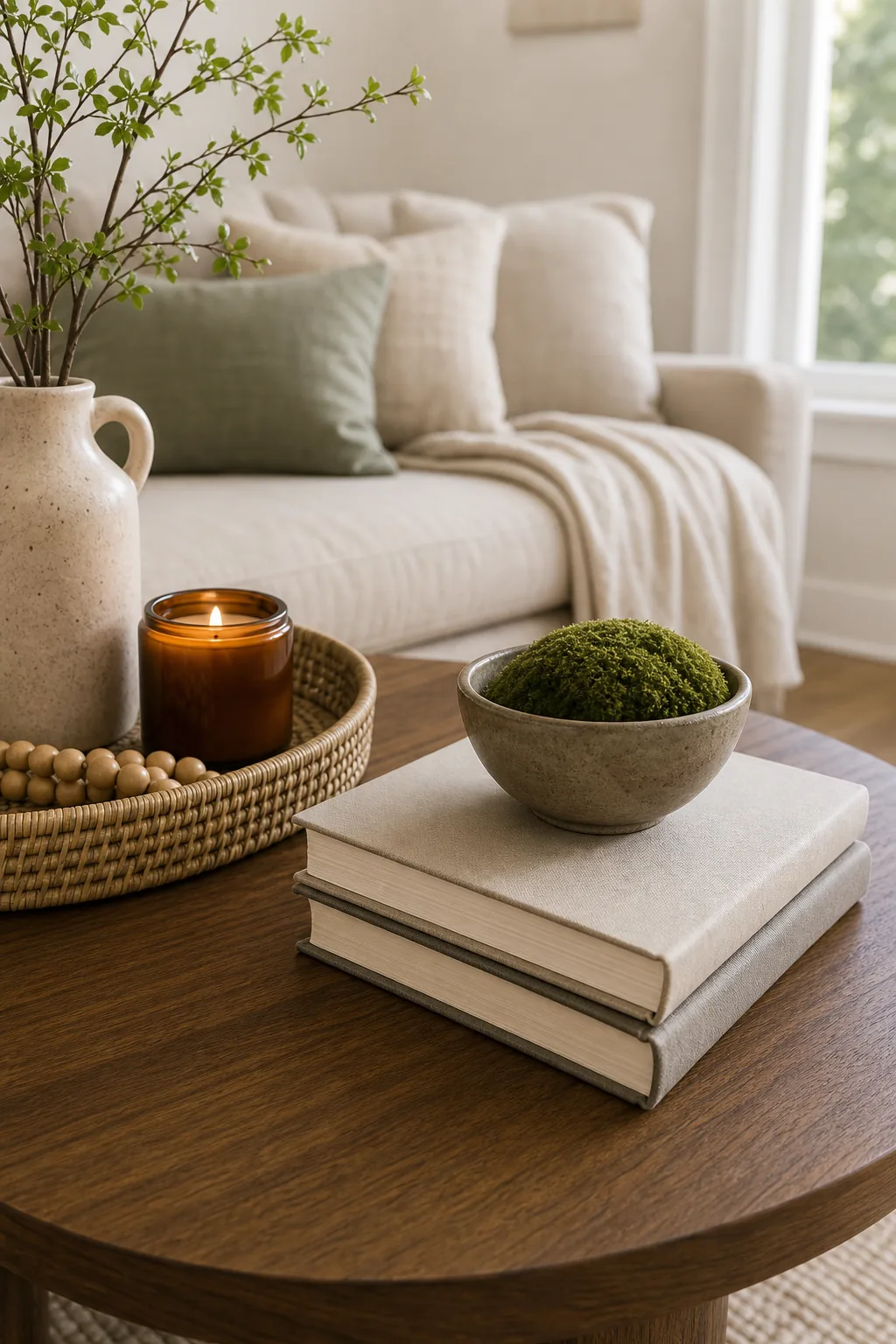
Always remove glossy paper dust jackets to reveal the elegant, solid-color linen or embossed boards underneath. Stacking two or three thick volumes creates a substantial, architectural base that seamlessly bridges the height gap between your tallest and shortest items.
Sizing Decor for Different Table Shapes
Adapting these foundational rules to fit a rectangular or square surface requires creatively adjusting the footprint of your primary grouping. On a long rectangular table, push the containment tray slightly off-center to preserve a larger, more functional block of continuous bare wood.
Common Styling Mistakes to Avoid
Reviewing your finished display ensures the centerpiece accommodates your everyday living rather than just serving as a static exhibition. A heavily layered surface quickly becomes a nuisance when you need a clear place to set down a coffee mug.
Even with a solid five-step foundation, a few common pitfalls can make your table feel cluttered rather than curated. Check your final arrangement against these frequent styling errors.