
Luxury Living Room Scale Secrets & Measurement Cheat Sheet
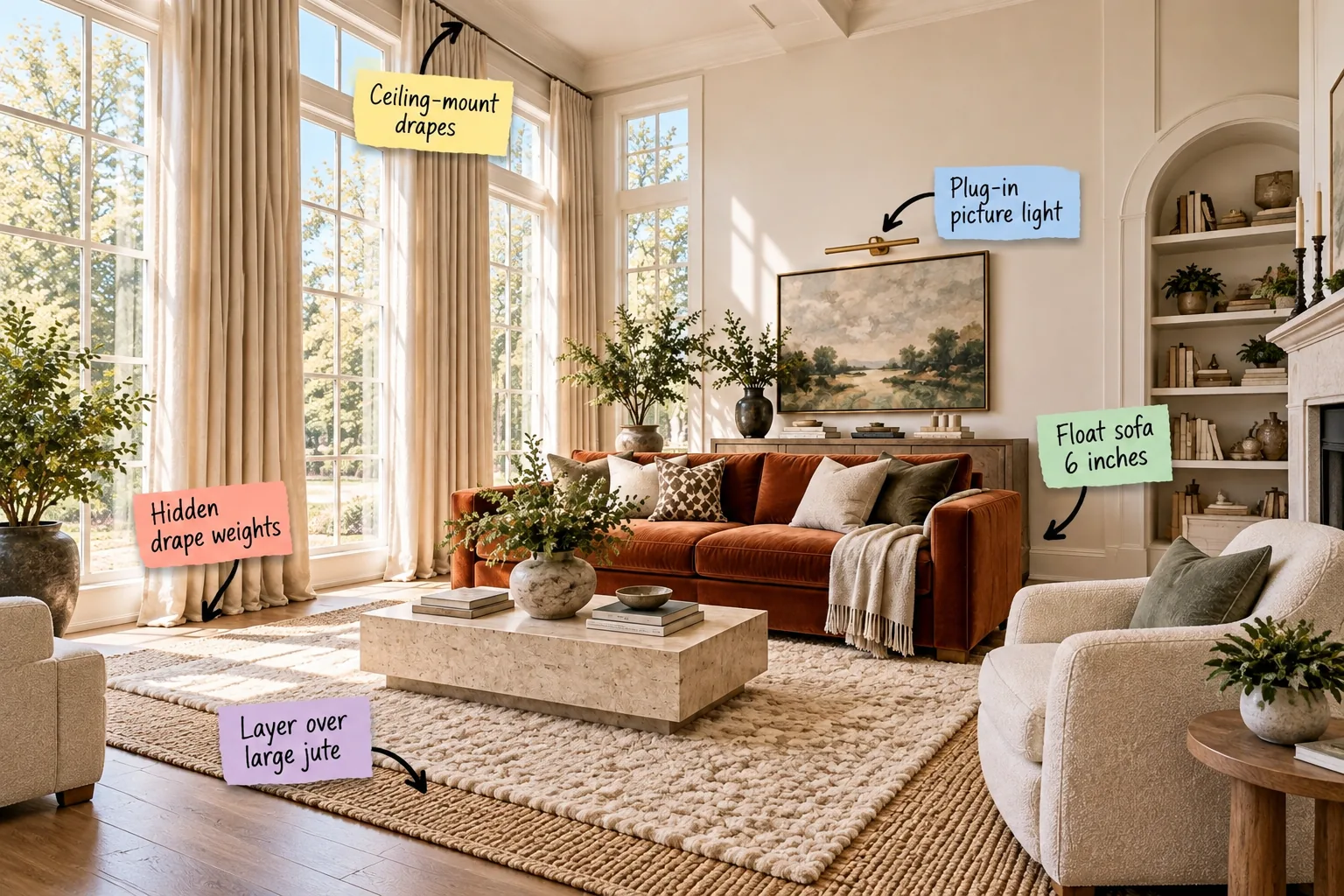
Getting a living room to feel effortlessly expensive comes down to a precise set of proportions, which is why I am sharing my exact designer measurement cheat sheet for rugs, drapes, and furniture spacing. We will build your room’s balance from the ceiling down to the floor plan so you can arrange everything with absolute confidence.
Maximize Height with Ceiling-Mount Drapes
Mounting your curtain track flush against the ceiling draws the eye upward, instantly making standard ceiling heights feel grand and architectural. You should extend the rod 10 to 12 inches past the window frame on each side to maximize natural light.
Select the Right Fabric Weight for Drapes
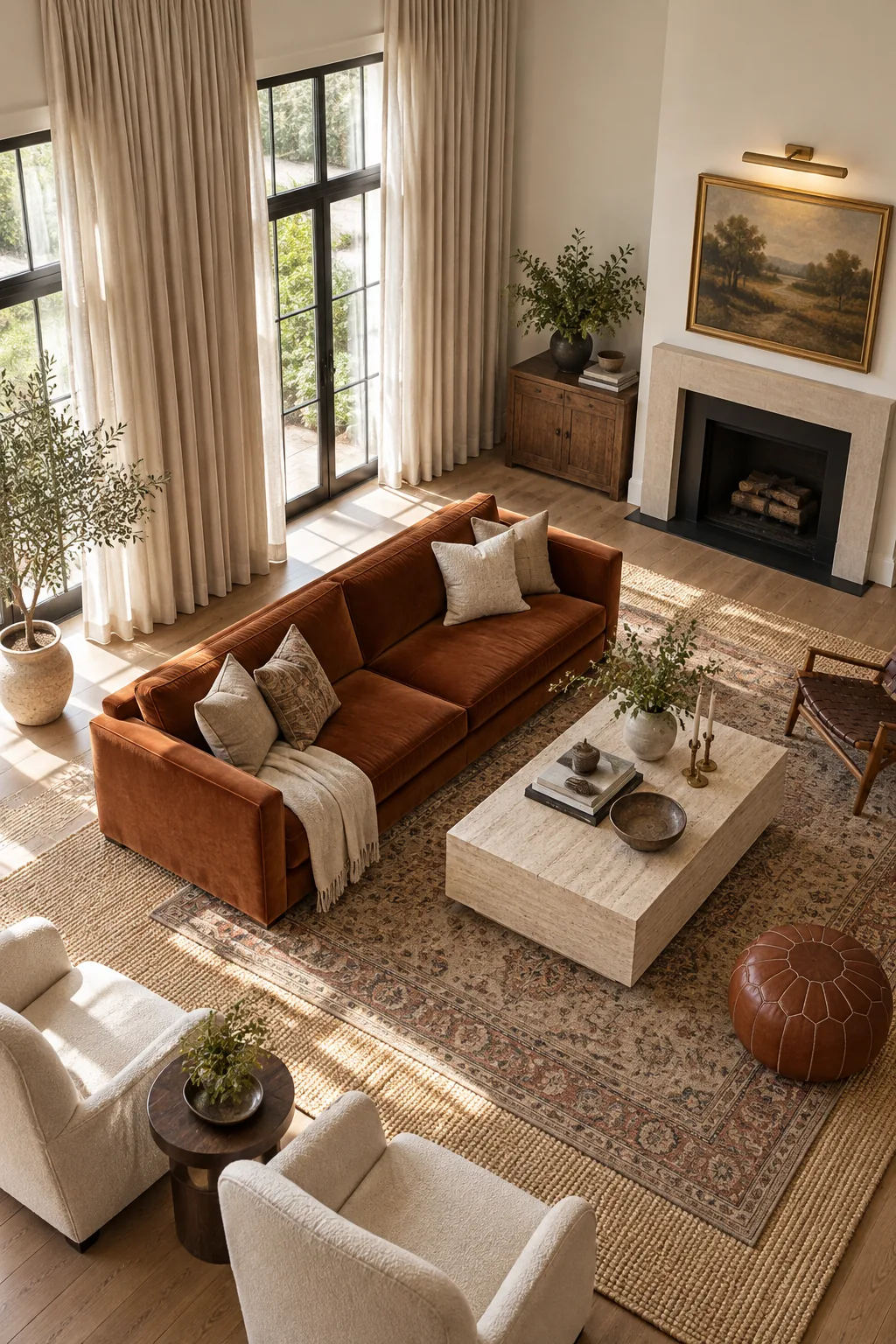
Choosing a substantial linen or heavy cotton blend ensures your window treatments hang with a luxurious, deliberate structure. Sheer fabrics often lack the necessary visual weight to ground a large living room, so I always specify lined panels for a truly expensive aesthetic.
Measure the Ideal Drape Fullness
Achieving that rich, custom look requires ordering panels that are significantly wider than your actual window measurements. You must calculate a minimum of two times fullness so the fabric forms deep, elegant folds even when the curtains are pulled completely closed across the glass.
| Window Width | Panel Width Needed |
|---|---|
| 30 inches | 60 inches |
| 40 inches | 80 inches |
| 50 inches | 100 inches |
| 60 inches | 120 inches |
Elevate Art Using a Plug-In Picture Light
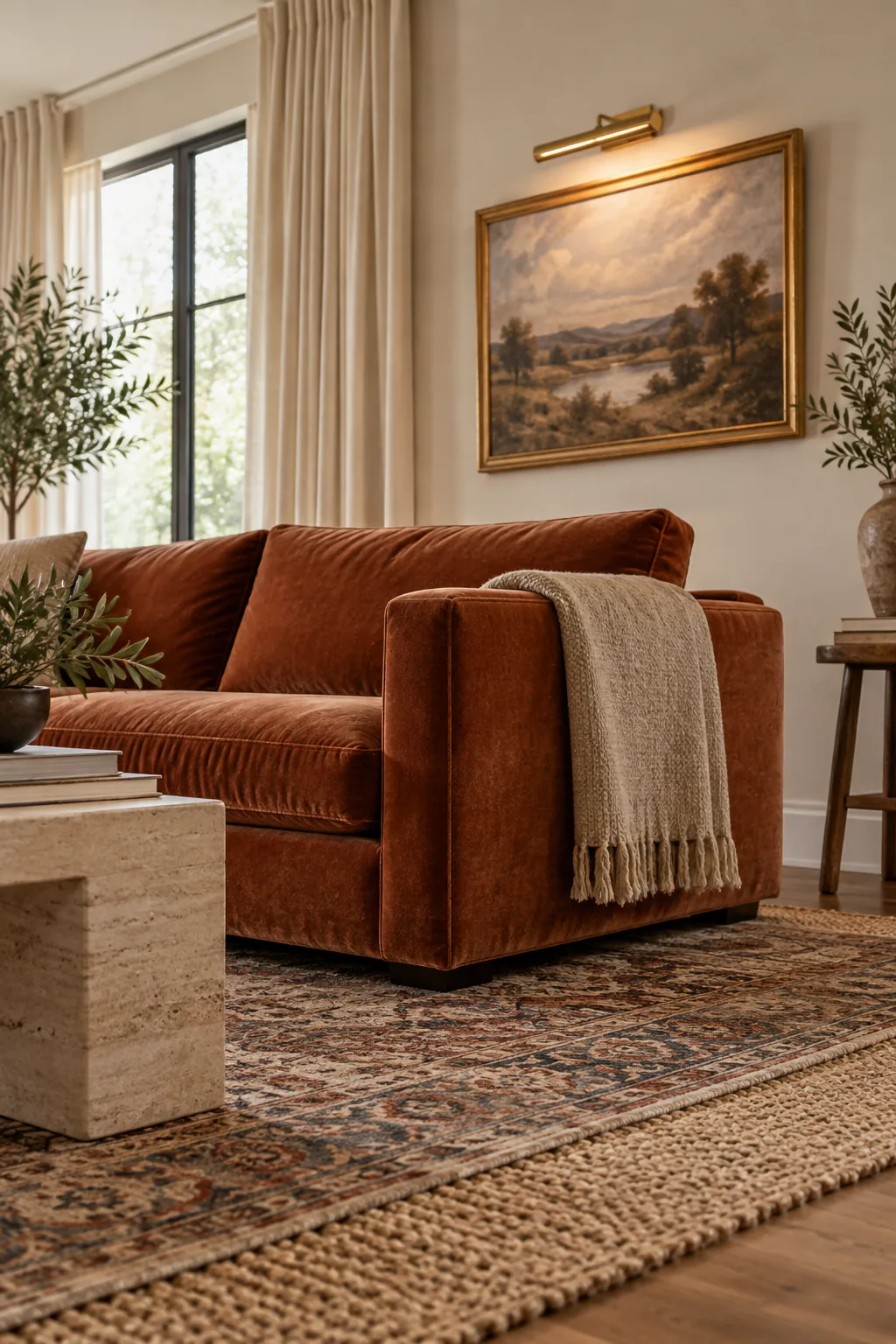
Adding a sleek brass plug-in picture light creates a high-end, layered lighting effect without the steep expense of hardwiring into your drywall. In my own Denver living room, I mount the fixture exactly 2 to 3 inches above the top edge of the art frame.
Hide Cords with Paintable Covers
You can easily disguise the trailing wire of a plug-in fixture by installing a slim, paintable cord cover directly onto the drywall. Painting this plastic channel the exact same color as your wall perfectly camouflages the hardware, maintaining a flawless and tailored presentation.
Scale Your Art to the Wall Space
Hanging undersized artwork is a guaranteed way to make a large living room feel cluttered and disjointed. Always select a canvas or frame that fills at least two-thirds of the available wall width to ensure the piece commands the necessary visual authority.
Center Art at Proper Eye Level
Galleries and museums consistently hang artwork so the center of the piece sits precisely 57 to 60 inches from the floor. Applying this exact 60-inch center height rule in your home ensures the art relates perfectly to human scale and surrounding furniture.
Anchor the Room by Layering Over Large Jute
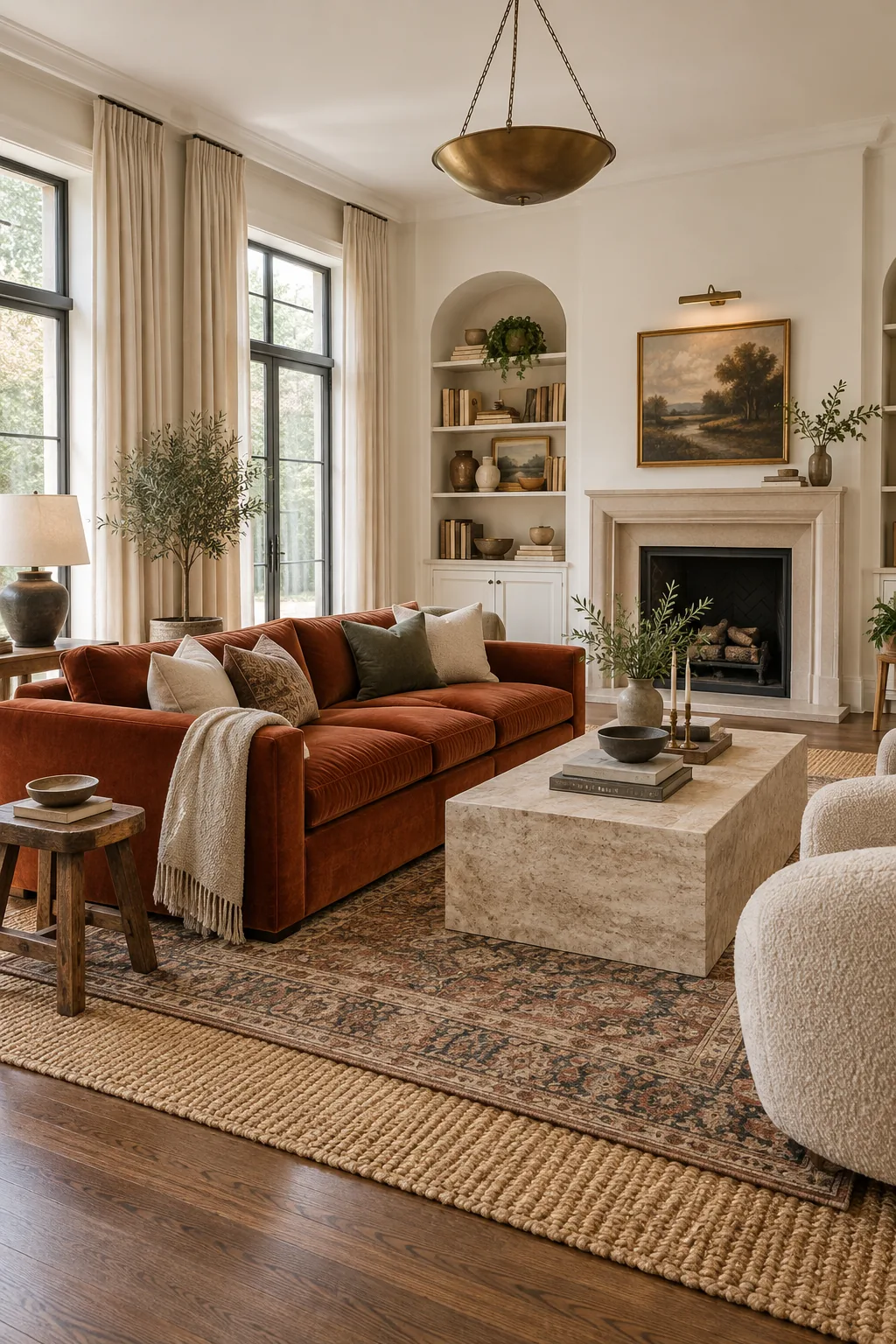
Using an affordable, oversized jute rug as a textured base allows you to layer a smaller, more expensive patterned rug on top without losing scale. Size the natural fiber base to leave exactly 12 to 18 inches of bare floor against the baseboards.
Choose the Perfect Top Rug Material
Placing a vintage wool or low-pile silk rug over your chunky jute base creates a beautiful friction between rugged and refined textures. This deliberate contrast in materials adds immediate warmth and complexity, making the seating arrangement feel curated over time rather than purchased instantly.
Secure the Rug Layers Firmly
Layered rugs will inevitably shift and buckle under foot traffic if they are not properly anchored together. You must place a high-quality felt rug pad between the floor and the jute, plus a thin non-slip grip pad between the two rugs to maintain sharp alignment.
Float the Sofa 6 Inches from the Wall
It is tempting to maximize floor space by pushing all your seating outward, but creating a minimum 6-inch gap behind the sofa introduces necessary breathing room. This slight separation allows natural shadows to form, instantly making a cavernous space feel intentional and intimately scaled.
Align the Sofa with the Room’s Architecture
Instead of angling your primary seating toward a corner, always orient the main sofa parallel to the room’s longest wall or dominant architectural feature. This parallel alignment establishes a strong structural grid, bringing a calming, subconscious sense of order to the entire living space.
Size the Coffee Table for Reach
When testing layouts in my studio, I always ensure the coffee table is scaled to keep drinks within an effortless, seated reach. You must maintain 14 to 18 inches of clearance between the front edge of the sofa and the table for comfortable legroom.
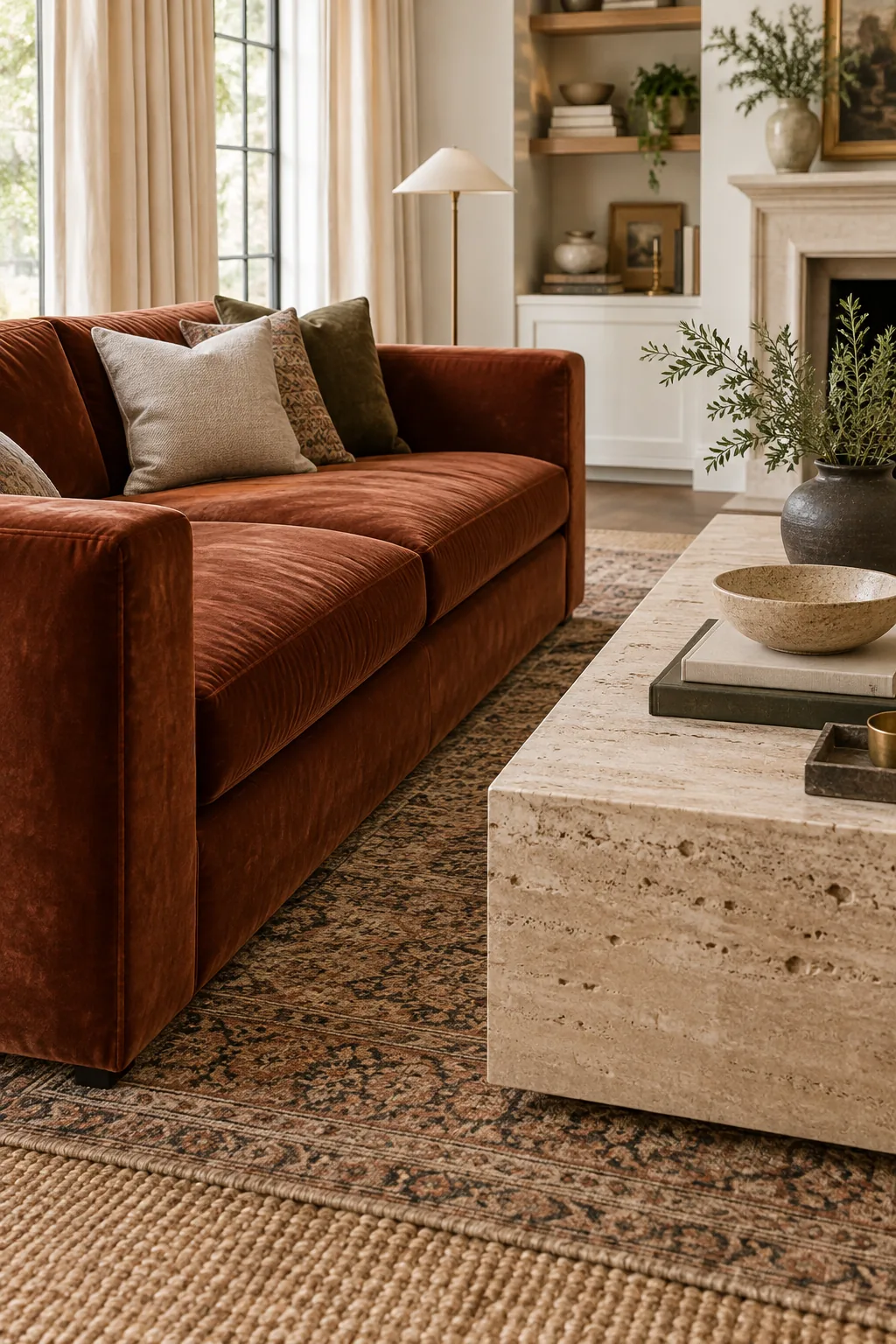
Balance the Coffee Table Height
A coffee table that sits too high disrupts the horizontal sightlines and makes the seating area feel cramped. Select a design that measures exactly one to two inches lower than your sofa seat to maintain a sleek, uninterrupted flow across the center of the room.
Select a Contrasting Table Material
Pairing a plush velvet or soft linen sofa with a dense, heavy travertine or blackened steel coffee table grounds the arrangement perfectly. This deliberate tension between soft upholstery and hard, cold stone elevates the room’s sophistication far beyond a matching furniture set.
Space Accent Chairs for Conversation
Secondary seating needs to engage directly with your primary sofa so the room functions beautifully for entertaining and daily conversation. Keep all accent chairs within an 8-foot radius of the main sofa to maintain an intimate, connected conversation zone.
Angle Chairs to Invite Flow
Placing accent chairs squarely facing the sofa can feel overly formal and block natural walking paths through the room. Turning the chairs at a gentle 15 to 20-degree angle inward softens the arrangement and subtly invites guests to sit down and relax.
Position Side Tables for Functionality
Every single seat in your living room should have immediate access to a small resting surface for a drink or a book. Position these accent tables within 3 to 4 inches of the chair arms so guests never have to lean awkwardly to set down a glass.
Match Side Table Height to Sofa Arms
A side table that towers over the adjacent chair creates a harsh visual jaggedness that ruins the room’s harmony. Ensure the tabletop sits exactly level with or slightly below the armrest to keep the horizontal planes smooth and visually relaxing.
Achieve a Custom Hang with Hidden Drape Weights
You can mimic the heavy, expensive drape of custom window treatments by sliding small lead weights into the bottom hem of your curtain panels. This simple hidden technique forces lightweight fabrics to hang crisply and perfectly straight down to the floor.
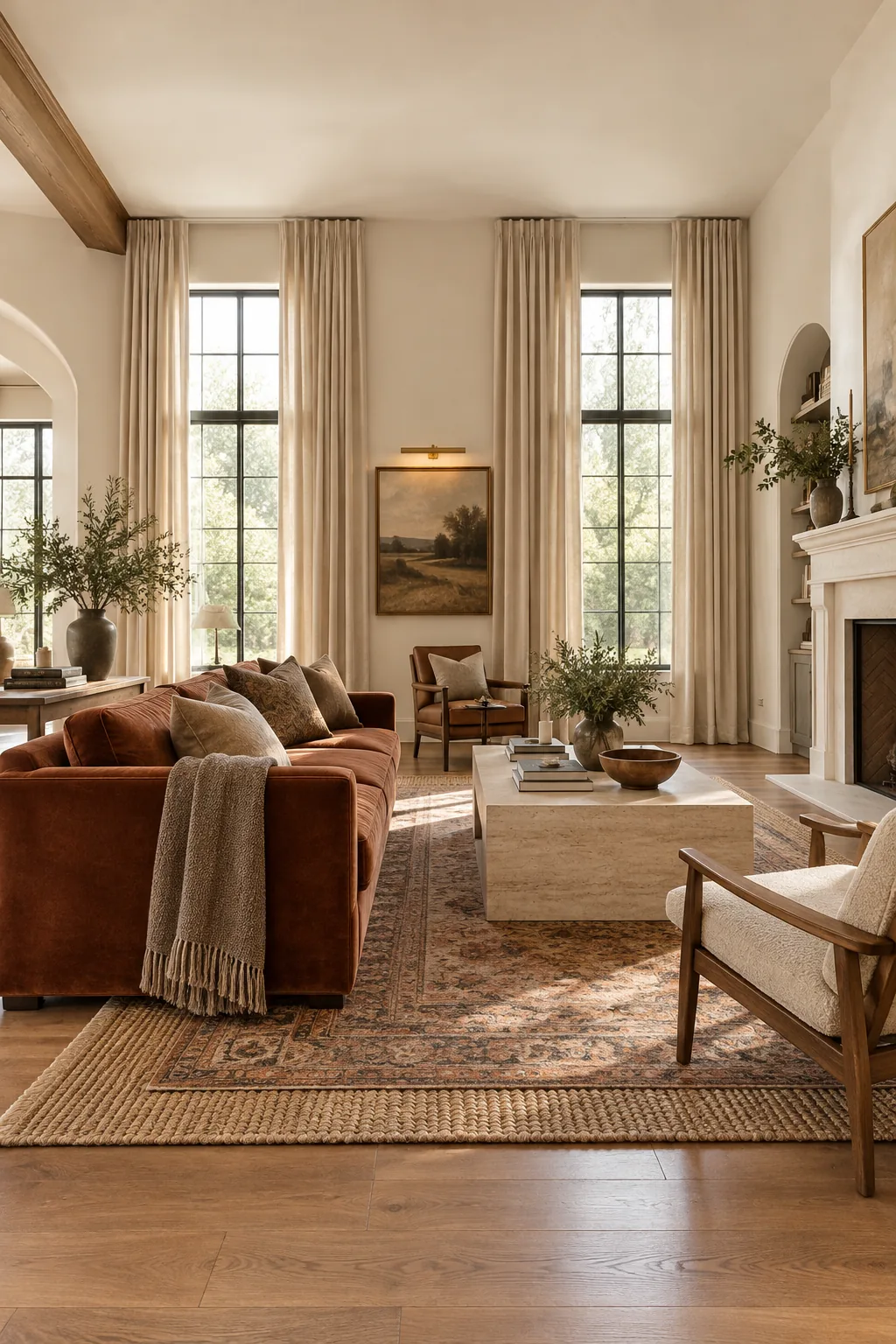
Steam the Panels for a Tailored Finish
Even the most expensive weighted linen drapes will look cheap if they are hung straight out of the packaging with visible fold lines. Spending thirty minutes with a handheld fabric steamer relaxes the fibers, allowing the panels to fall into deep, permanent, elegant pleats.
Layer Ambient Lighting at Eye Level
Relying solely on overhead recessed lighting casts harsh, unflattering shadows that destroy the luxurious mood of a living room. Introducing table lamps and floor lamps at seated eye level creates a warm, glowing perimeter that softens the architecture and makes the space feel welcoming.
Space Floor Lamps for Balance
Tucking a tall floor lamp into a dark, empty corner instantly expands the room’s perceived footprint during the evening hours. Keep the lamp base at least 12 inches away from the corner walls so the light can bounce softly behind the shade without creating hot spots.
Define Traffic Paths with Clearances
Navigating your living room should never require guests to squeeze past heavy furniture or awkwardly side-step around the coffee table. You must preserve a minimum 36-inch clear walkway for all primary traffic paths to ensure the room feels spacious and functions effortlessly.
5 Ways to Style a High-End Living Room
Explore these distinct variations to see how perfect scale translates across different interior styles.
Organic Modern Neutral Space: Embrace a calming tone-on-tone palette with a curved boucle sofa and a massive bleached jute rug.
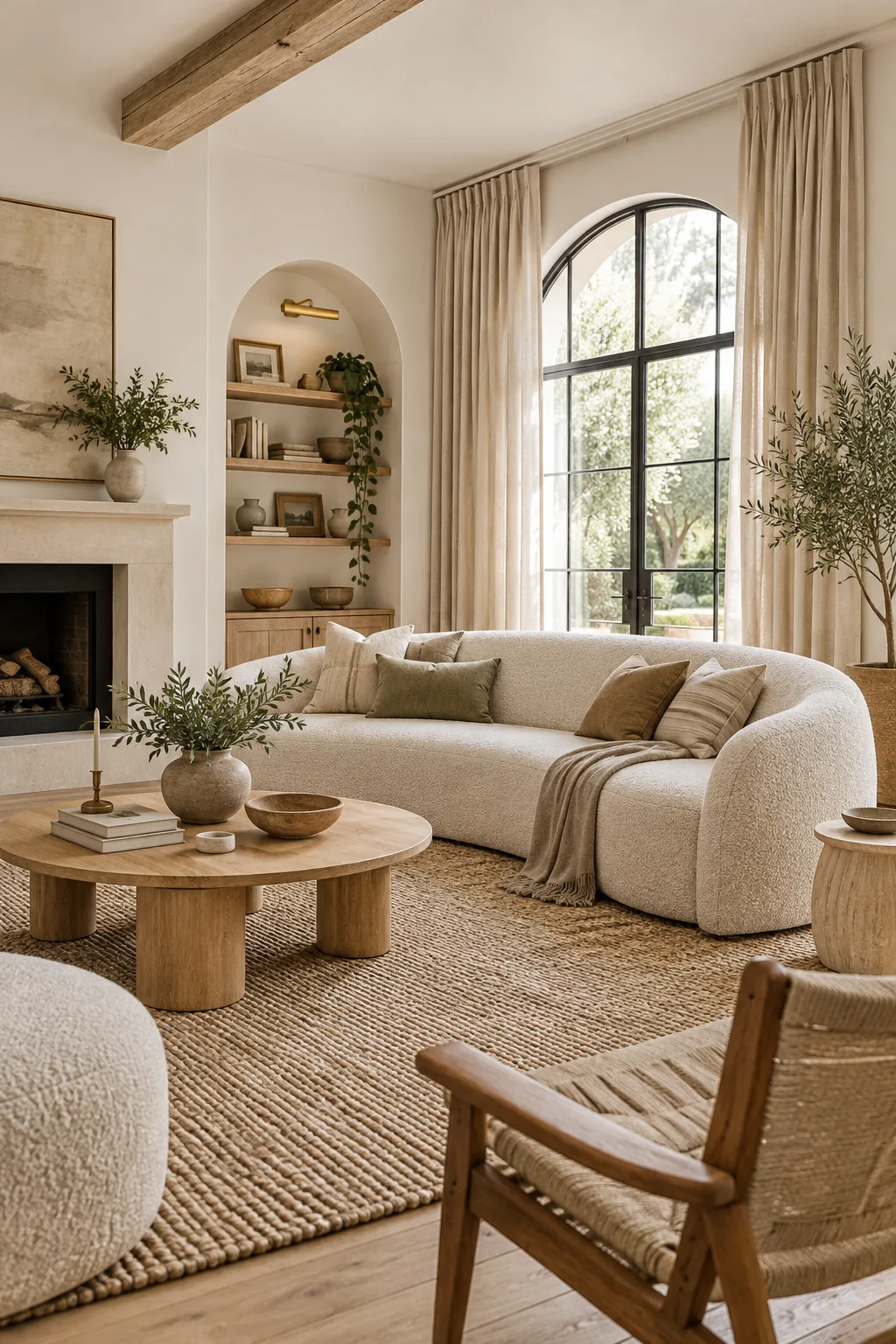
Moody Transitional Dark Walls: Paint the walls and ceiling deep charcoal to make your brass picture lights pop dramatically.
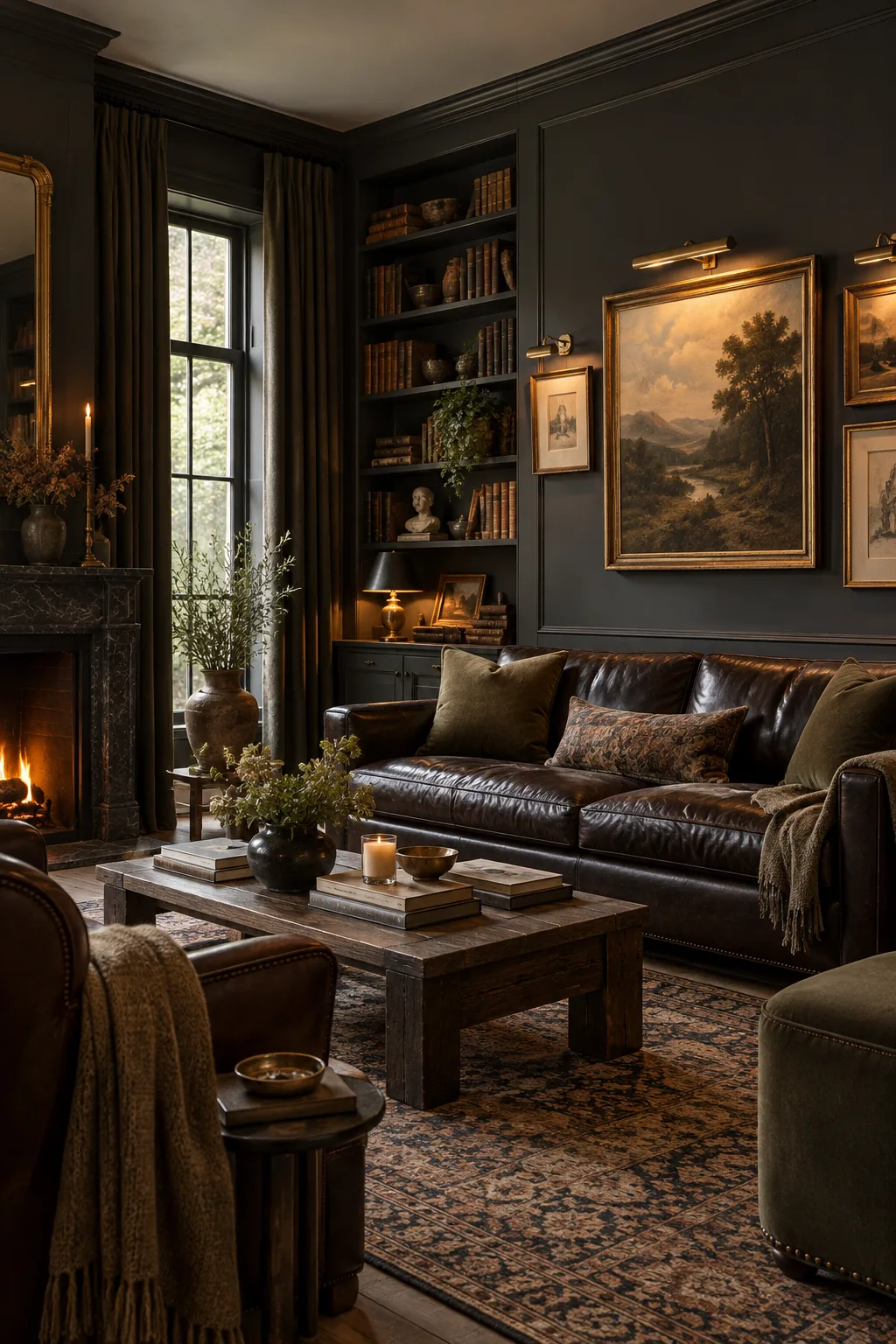
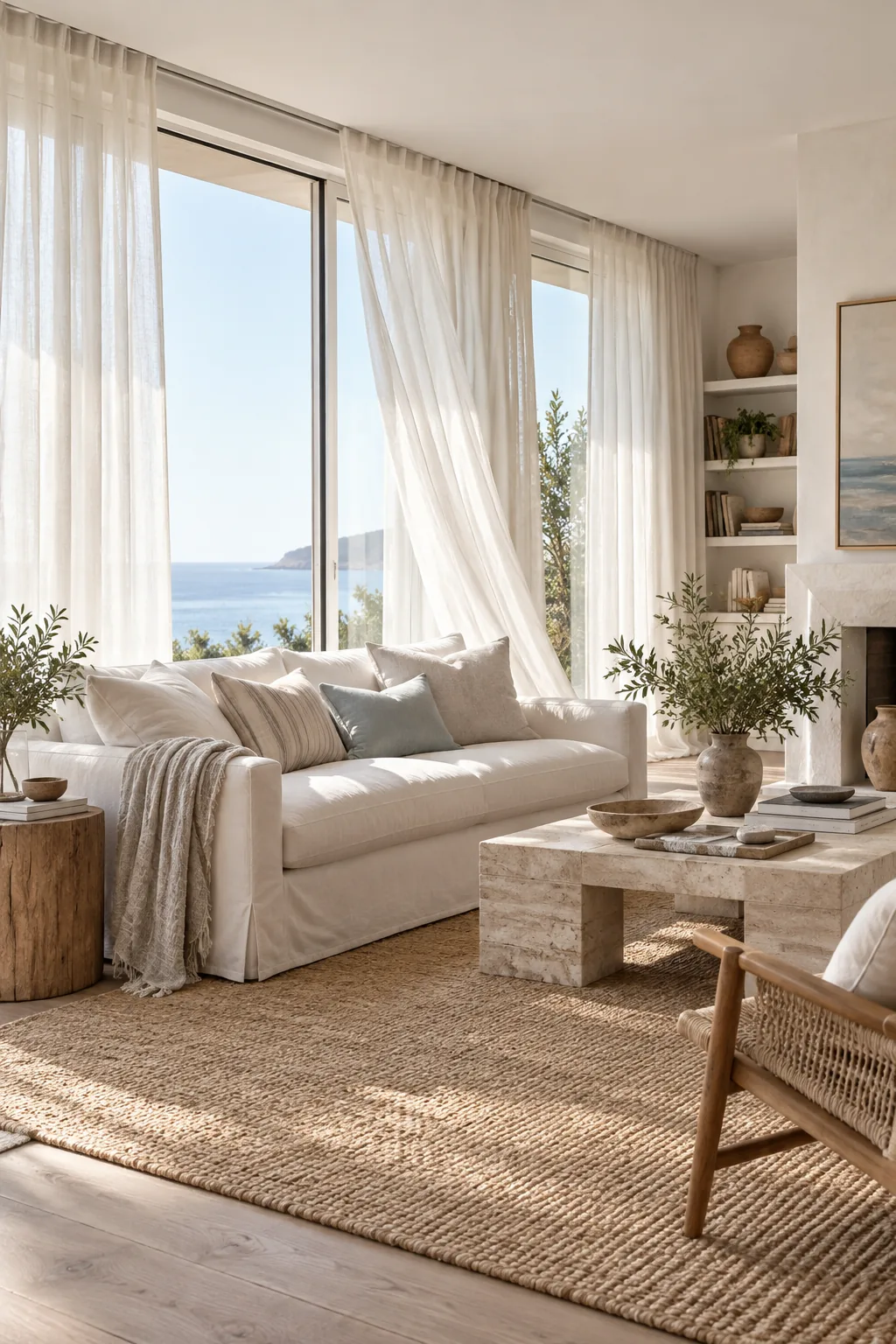
Minimalist Coastal Linen Look: Keep the look breezy and open with sheer linen ceiling-mount drapes and a casual slipcovered sofa.
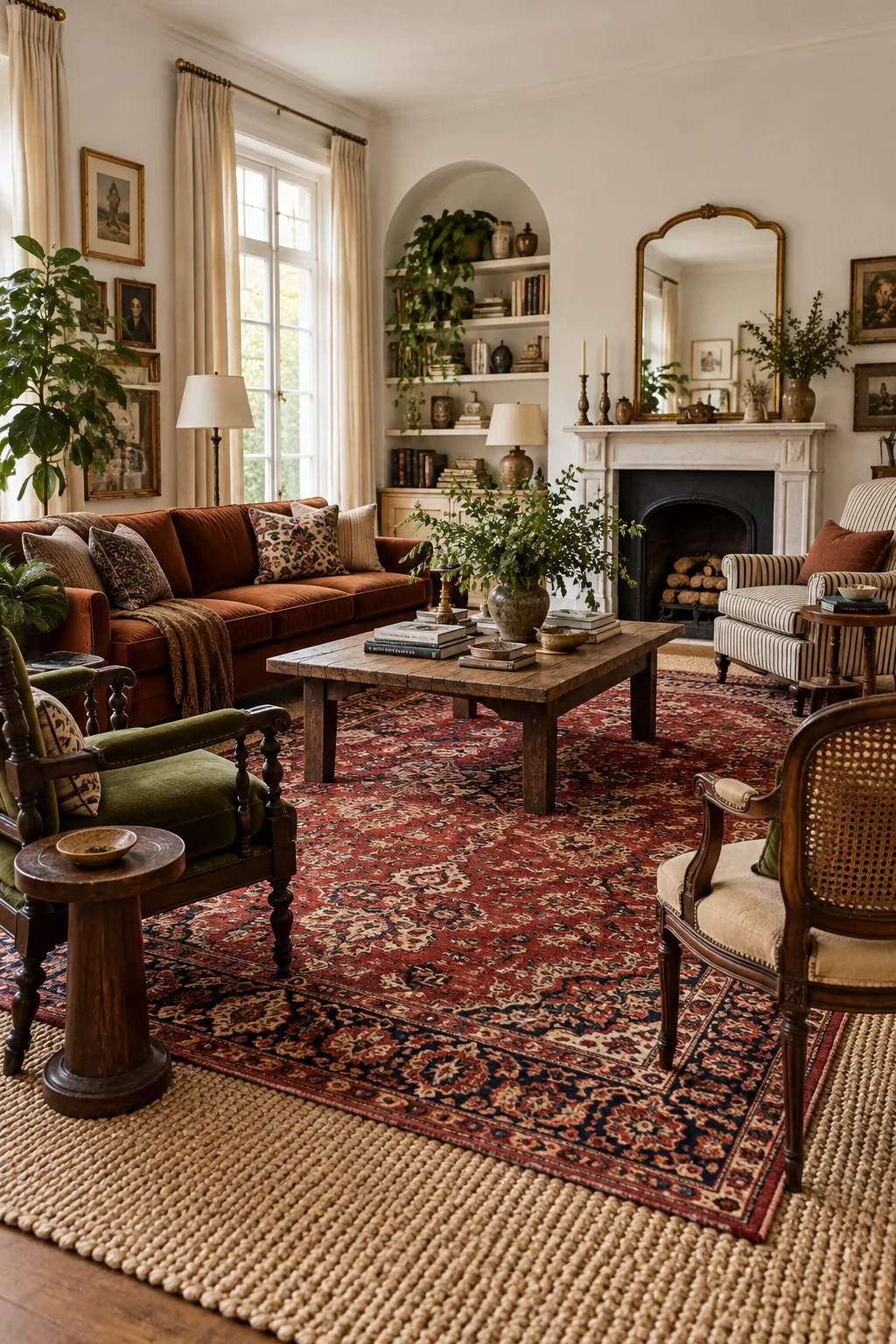
Eclectic Vintage Layered Rugs: Layer a vibrant vintage Persian rug over your neutral sisal base to introduce rich colors and patterns.
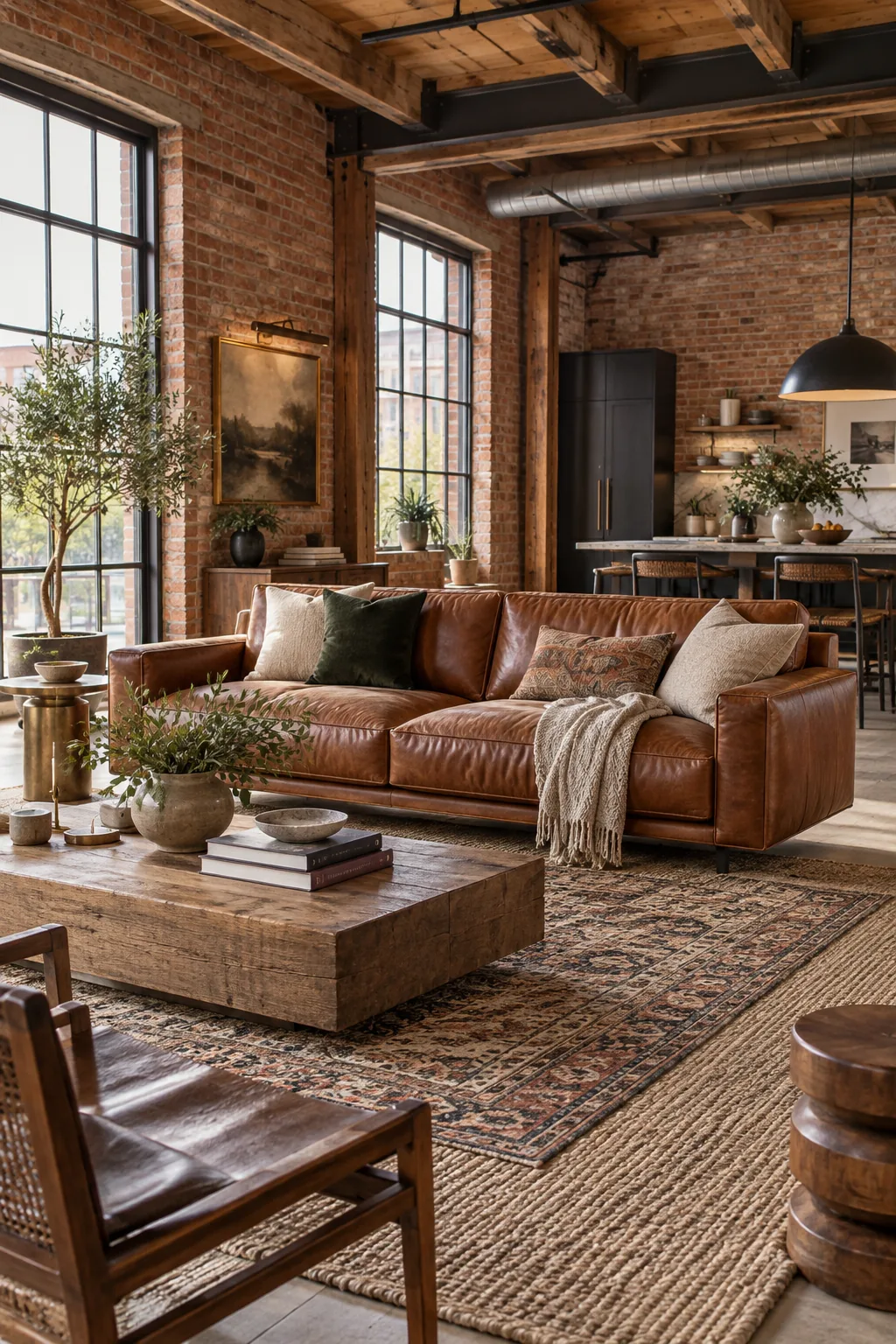
Warm Industrial Loft Scale: Float a rich leather sofa in the exact center of an open floor plan to clearly define the zone.
The Complete Designer Measurement Cheat Sheet
Applying these exact spatial measurements unifies your entire living space, transforming a random collection of furniture into a cohesive, balanced environment.
Keep these standard designer measurements handy before you drill any holes, move heavy furniture, or unroll a new rug.