
Dutch Golden Age Meets California Casual: Library
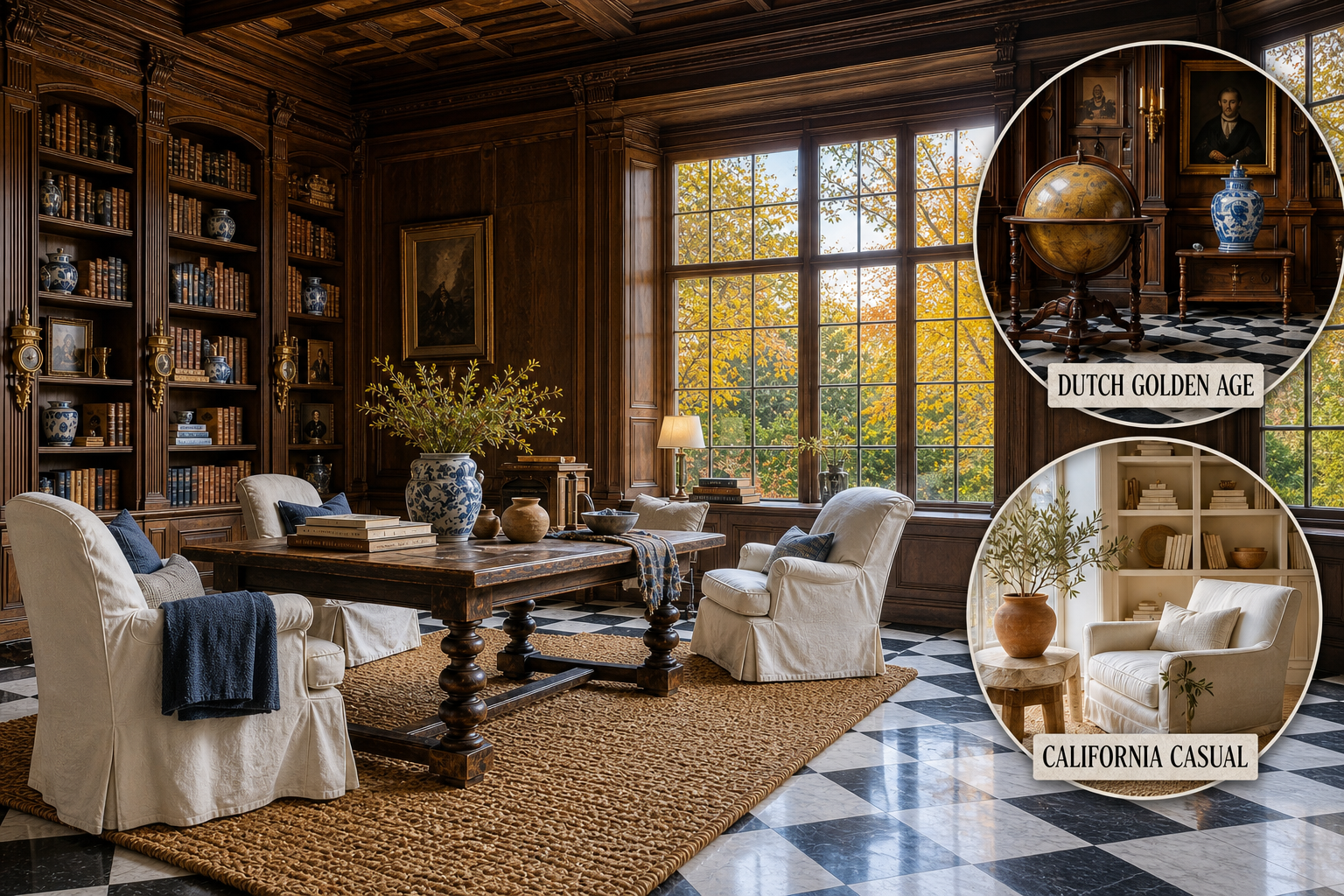
The heavy formality of 17th-century mercantile wealth clashes with the sun-bleached ease of modern West Coast living. We resolve this by letting grand architectural casework anchor the room while oversized linen slipcovers and raw textures provide barefoot comfort.
The Heritage Shell
Dutch Golden Age dictates a grand, uncompromising architectural shell. Intricate dark oak casework and a classic black-and-white checkerboard marble floor establish immediate historic gravity, demanding immense respect without requiring a delicate, museum-like reverence that would ultimately stifle relaxed daily living.
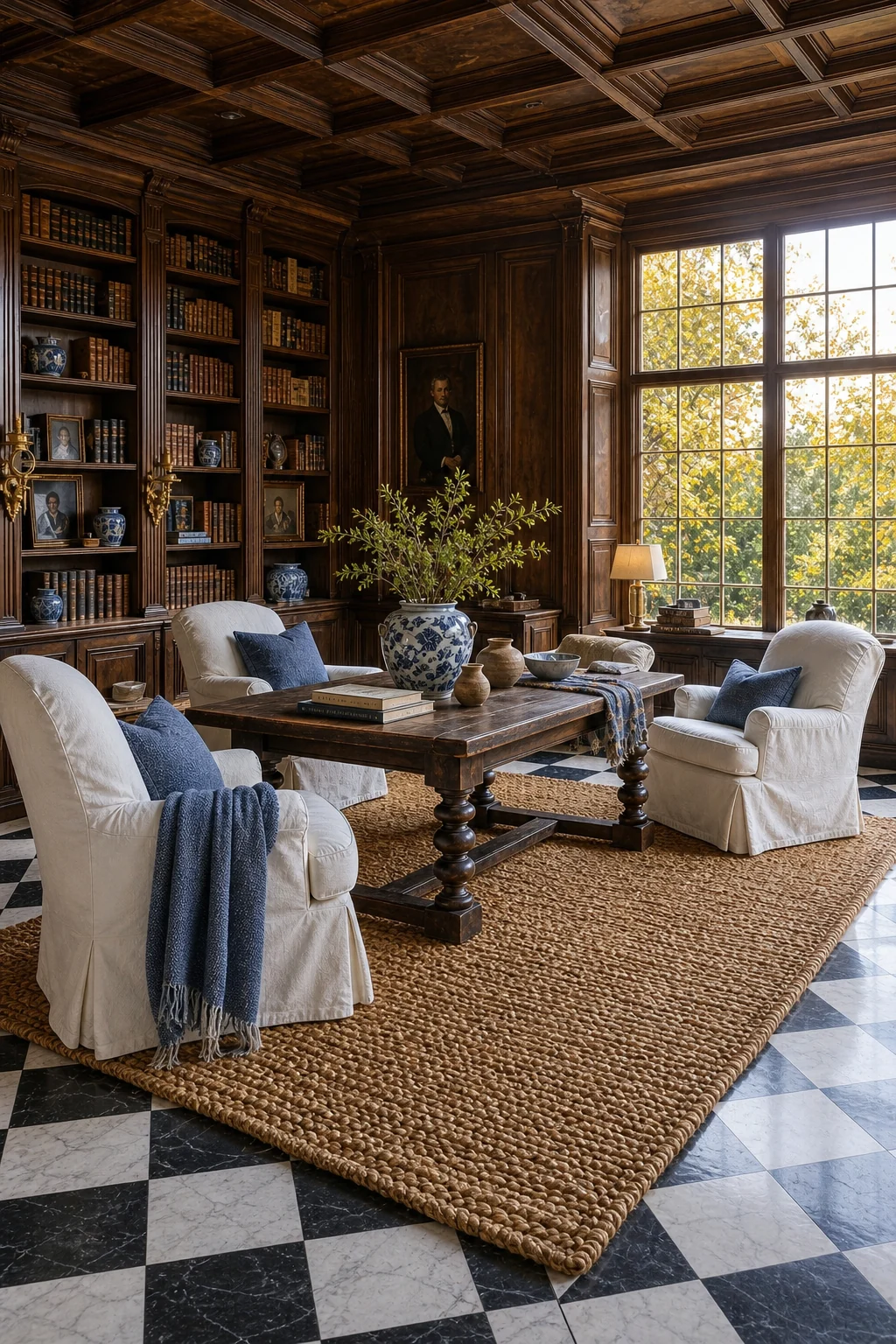
Seeing this massive architectural framework establishes the necessary boundaries. The intricate carvings and rigid stone floors create a profound sense of permanence, challenging us to introduce unexpected softness to prevent the space from feeling like a preserved historical artifact.
This foundational layer provides a dark, imposing backdrop that effectively anchors the much lighter elements to come. Notice how the heavy woodwork commands attention below, setting a deeply formal tone that prepares us for an intentional disruption of coastal textures.
The Coastal Softness
We break the historical formality by introducing California Casual seating. Slouchy, oversized warm-white linen slipcovered armchairs invite barefoot relaxation into the imposing space, creating an immediate, highly necessary visual contradiction that successfully softens the rigid architectural boundaries of the room.
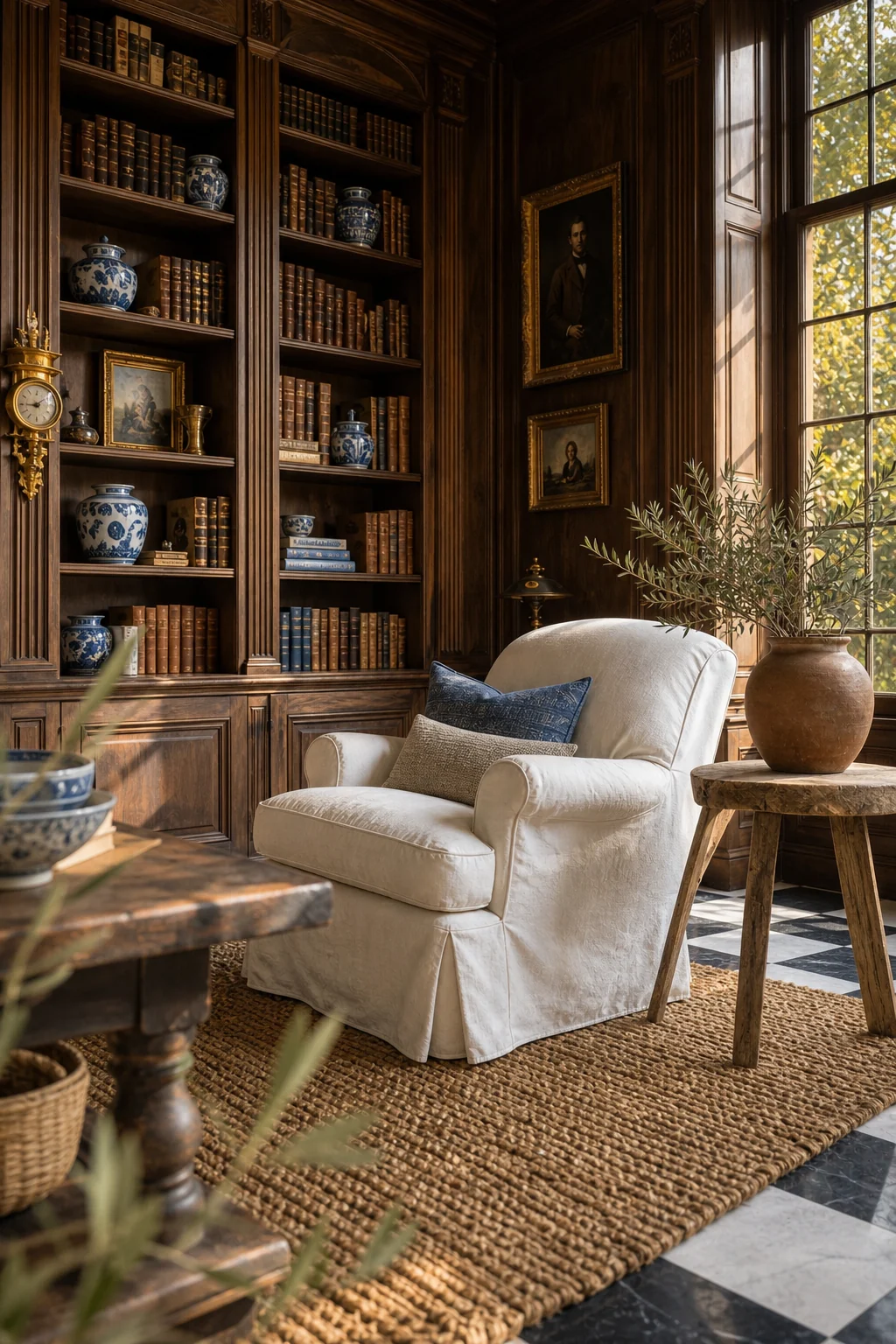
Observing these relaxed textiles against the dark oak reveals the core tension. A chunky braided jute rug softens the austere marble floor below, shifting the overall mood from rigid mercantile wealth to restful, modern West Coast living without losing structural elegance.
- Choose seating with deep, relaxed proportions to guarantee barefoot comfort during leisurely reading sessions in the library.
- Select warm-white linen fabrics to sharply contrast the dark, formal oak casework surrounding the perimeter of the room.
- Layer chunky natural jute rugs directly over the formal marble floor to introduce essential organic, sun-bleached texture.
- Avoid tight upholstery, favoring loose slipcovers that drape naturally and embrace perfectly imperfect, casual wrinkles for everyday ease.
Bridging the Centuries
Faded indigo accents serve as the perfect aesthetic bridge. This specific hue echoes both pristine 17th-century Delftware and the relaxed, everyday familiarity of vintage denim, tying the two distinct eras together effortlessly without feeling forced, overly thematic, or historically inaccurate.
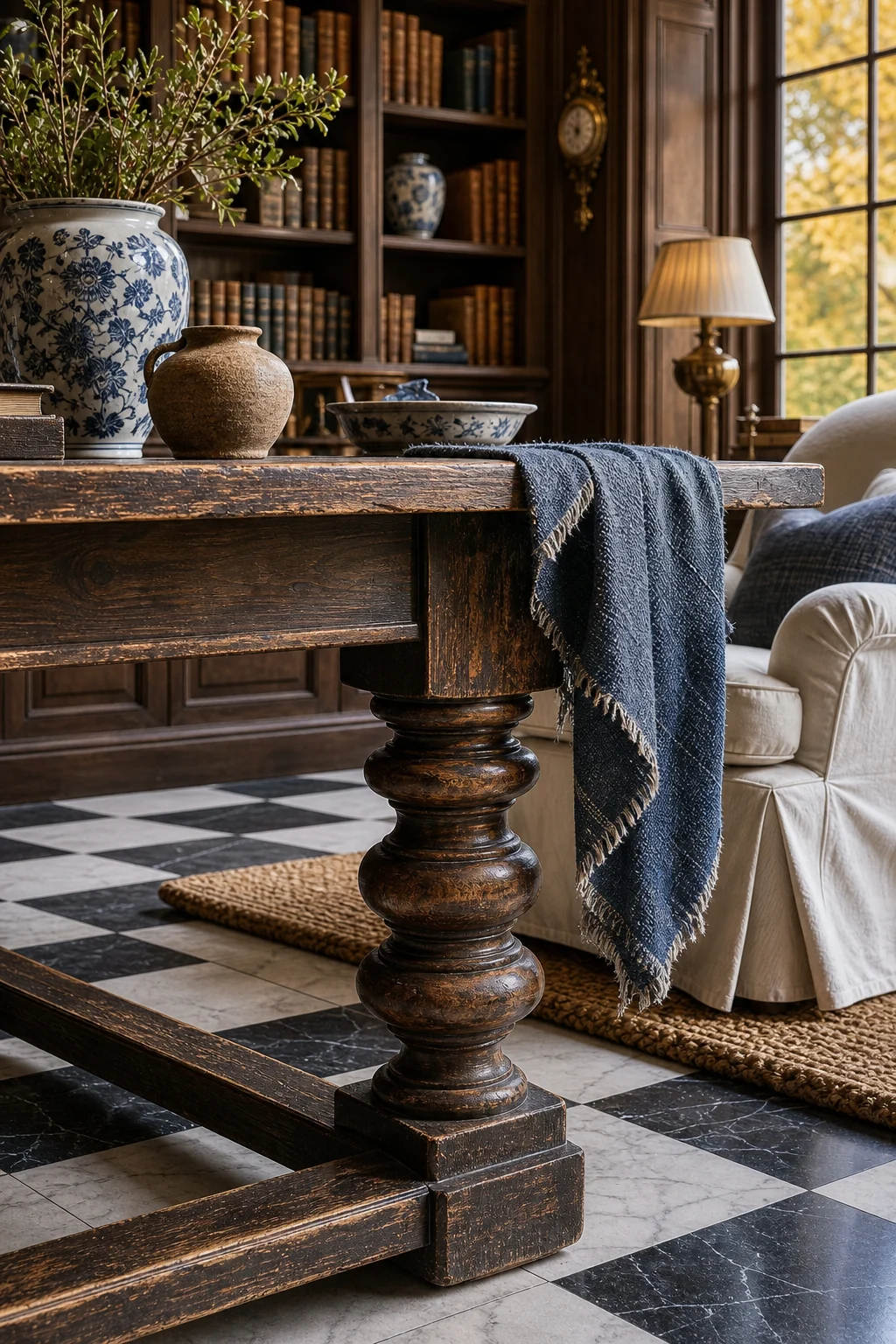
The close-up reveals how matte wood and faded indigo soften the rigid marble. These subtle material transitions ensure the heavy historical elements remain grounded while adopting the unpretentious, highly tactile qualities essential for comfortable, everyday modern living and relaxed entertaining.
Matte finishes on the dark woods remove any lingering formal gloss. This crucial texture adjustment ensures the heavy turned-wood legs and intricate carvings feel highly tactile and approachable, leading directly into the detailed material interactions shown in the next vignette.
Assembling the Library
A massive library table featuring heavy turned legs anchors the center of the room. Surrounding it with relaxed linen seating creates a deliberate, balanced tension between historical weight and modern comfort, ensuring neither distinct aesthetic overpowers the other during daily use.
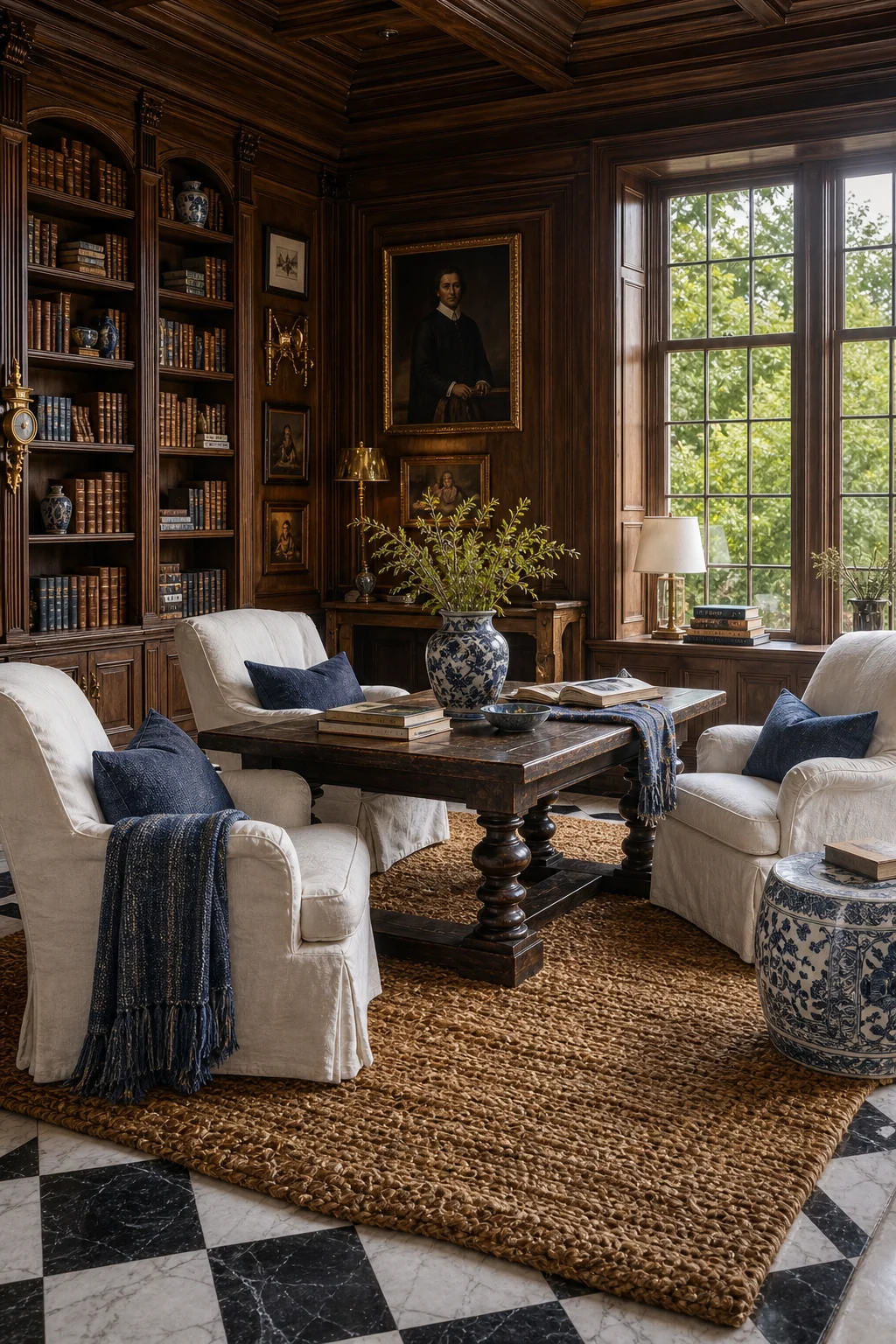
This layout prevents either aesthetic from dominating the visual hierarchy. The immense weight of the historic table requires the visual softness of the slipcovers to remain approachable, ensuring the room feels exceptionally lived-in, highly functional, and deeply inviting for everyone.
| Design Layer | Dutch Golden Age Role | California Casual Role | The Bridge Decision |
|---|---|---|---|
| Shell | Intricate dark oak casework and classic checkerboard marble floors providing immense historic gravity. | Sun-bleached, airy spatial flow relying on raw architectural textures and unpretentious materials. | Matte finishes on the dark wood to remove formal gloss while retaining essential heritage gravity. |
| Large Furniture | Heavy turned-wood tables featuring imposing, formal silhouettes that demand visual respect and attention. | Slouchy, oversized seating with relaxed, low-profile frames designed specifically for barefoot lounging. | Pairing the massive historic table with deep, barefoot-friendly lounge chairs to balance the visual weight. |
| Textiles | Rich, heavy drapery and structured formal upholstery fabrics that emphasize mercantile wealth. | Breezy, un-ironed natural fibers like raw cotton and durable sisal for everyday comfort. | Warm-white linen slipcovers and chunky braided jute rugs that soften the dark, imposing room. |
| Lighting | Moody chiaroscuro with deep, dramatic shadows across the space to highlight architectural carvings. | Bright, even daylight that highlights organic textures and lifts the overall atmospheric mood. | Abundant filtered daylight through mullioned windows to lift midtones in the dark wood surfaces. |
| Accents | Pristine blue-and-white Delft pottery and antique brass hardware showcasing pristine historical craftsmanship. | Matte unglazed ceramic vessels and found organic objects that prioritize tactile warmth over perfection. | Faded indigo accents and terracotta forms bridging historic motifs with effortless coastal ease. |
Illuminating the Dark
Abundant filtered daylight replaces traditional moody chiaroscuro. Large mullioned windows reveal golden autumn leaves and flood the room with generous, soft fill, fundamentally altering how the heavy architecture is perceived and preventing the space from feeling historically oppressive or overly dark.
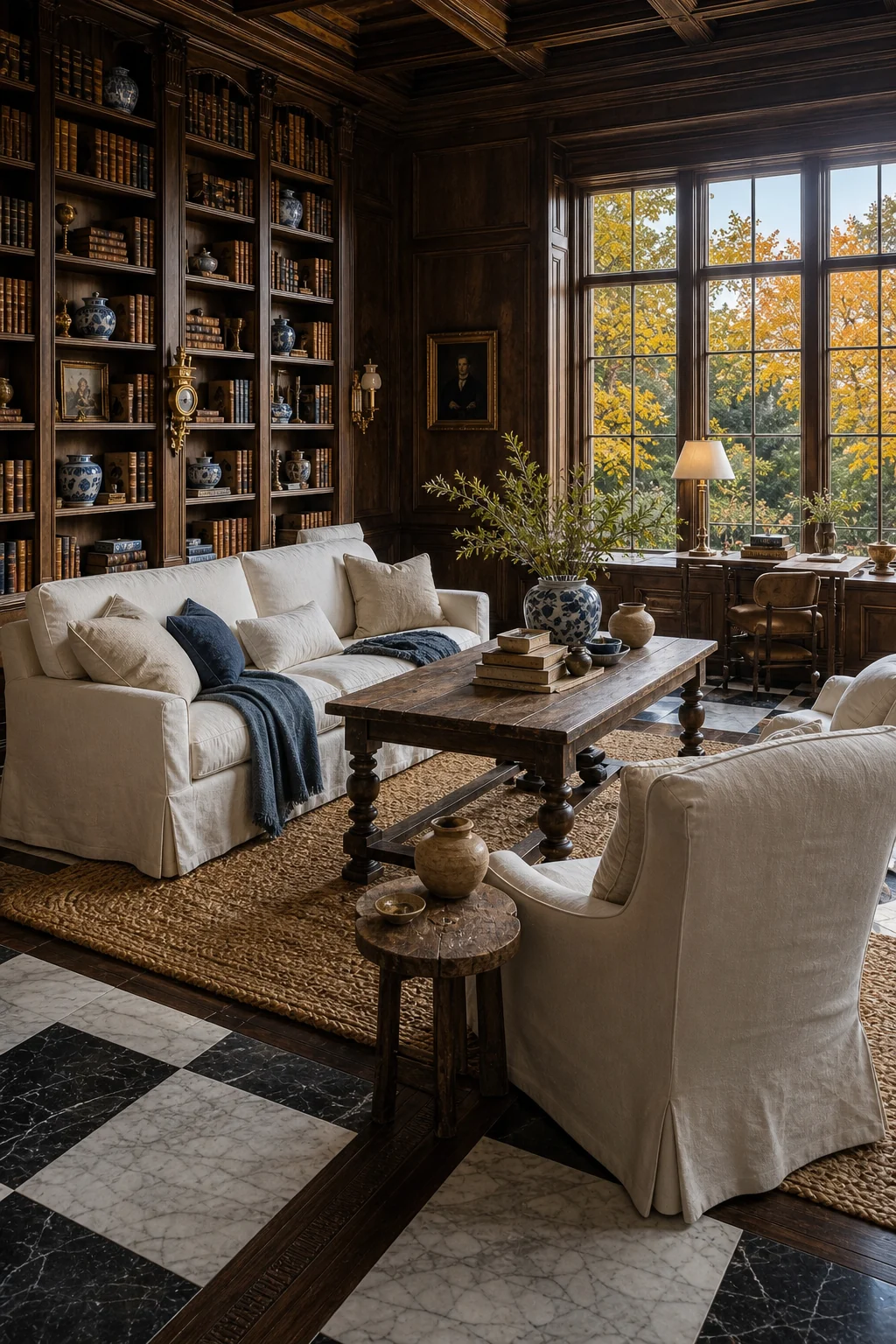
This bright lighting strategy lifts midtones throughout the entire space. It ensures clear detail in every dark wood surface without feeling gloomy, effectively neutralizing the heavy, imposing qualities often associated with historic wood paneling and formal 17th-century mercantile wealth.
- Maximize natural light to prevent a heavy, museum-like atmosphere from dominating the library space during the daytime.
- Use sheer window treatments to diffuse harsh sunlight softly across the dark oak woodwork and reduce glare.
- Ensure daylight reaches the deepest corners of the casework to highlight the natural grain without harsh shadows.
- Avoid crushed blacks and dramatic shadows, favoring even, daylight-balanced fill to lift the midtones across all surfaces.
Curating the Surfaces
Styling relies on matte unglazed ceramics to bridge historic motifs with coastal ease. These raw textures soften the intricate dark wood shelves, replacing high-gloss antiques with earthy, tactile forms that invite interaction and significantly reduce the room’s overall structural formality.
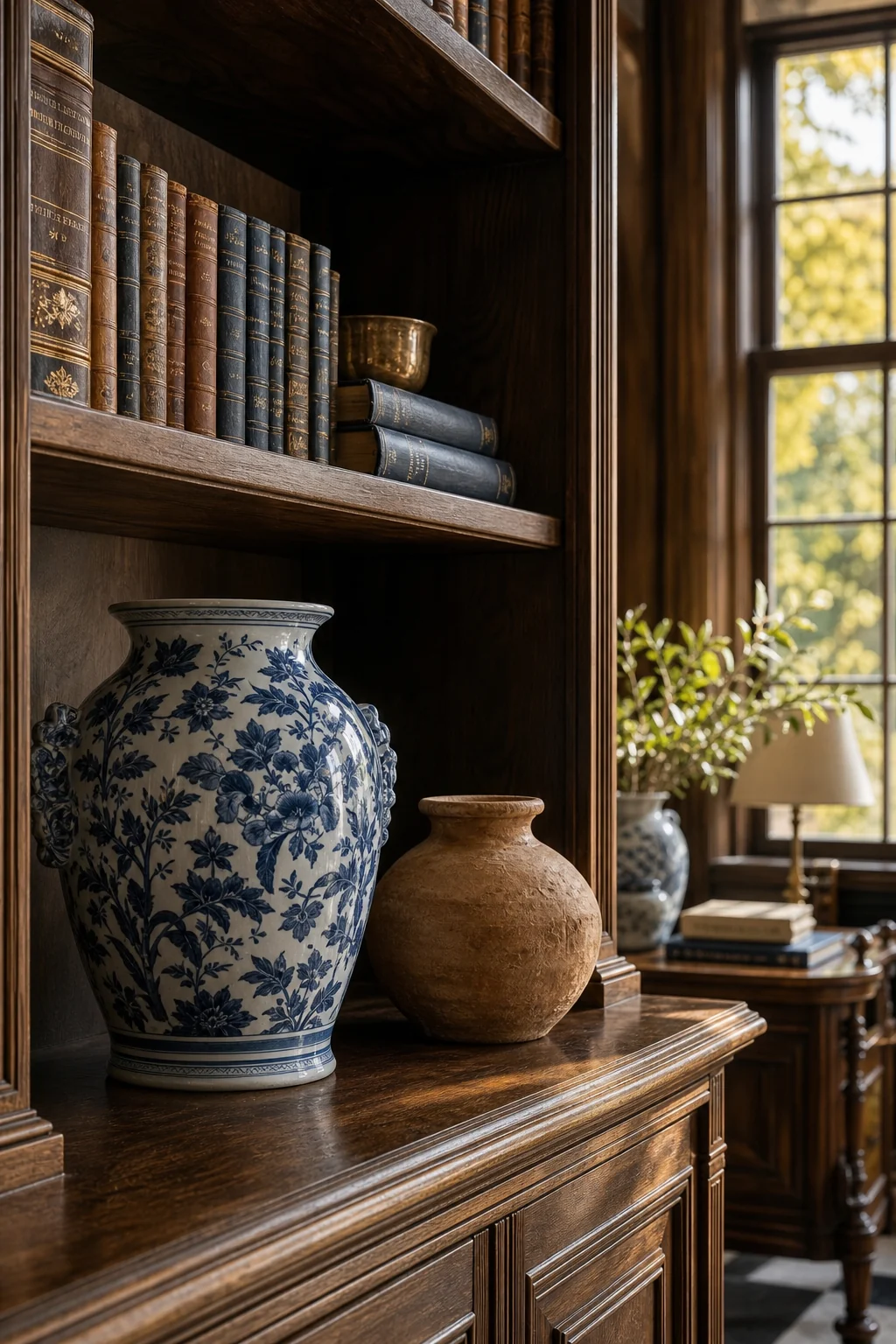
Focus on sourcing foundational pieces that prioritize tactile warmth over pristine perfection. The friction between formal mercantile wealth and barefoot living thrives on these small, organic details scattered strategically across the rigid, highly structured architectural shell of the library.
- Source oversized warm-white linen slipcovered armchairs to encourage relaxed, everyday lounging and reading in the formal space.
- Anchor the floor with chunky braided natural jute rugs to soften the marble beneath your bare feet.
- Display matte unglazed terracotta and ceramic vessels on open shelves to introduce raw textures against the oak.
- Incorporate faded indigo throw pillows and textiles to echo historic Delftware with casual, unpretentious familiarity and warmth.
Beyond the Reading Room
This aesthetic translates beautifully into transitional spaces. A hallway or small study benefits immensely from the exact same mix of heavy heritage architecture and relaxed, un-ironed textiles, proving the concept works effortlessly beyond the primary living areas of the home.
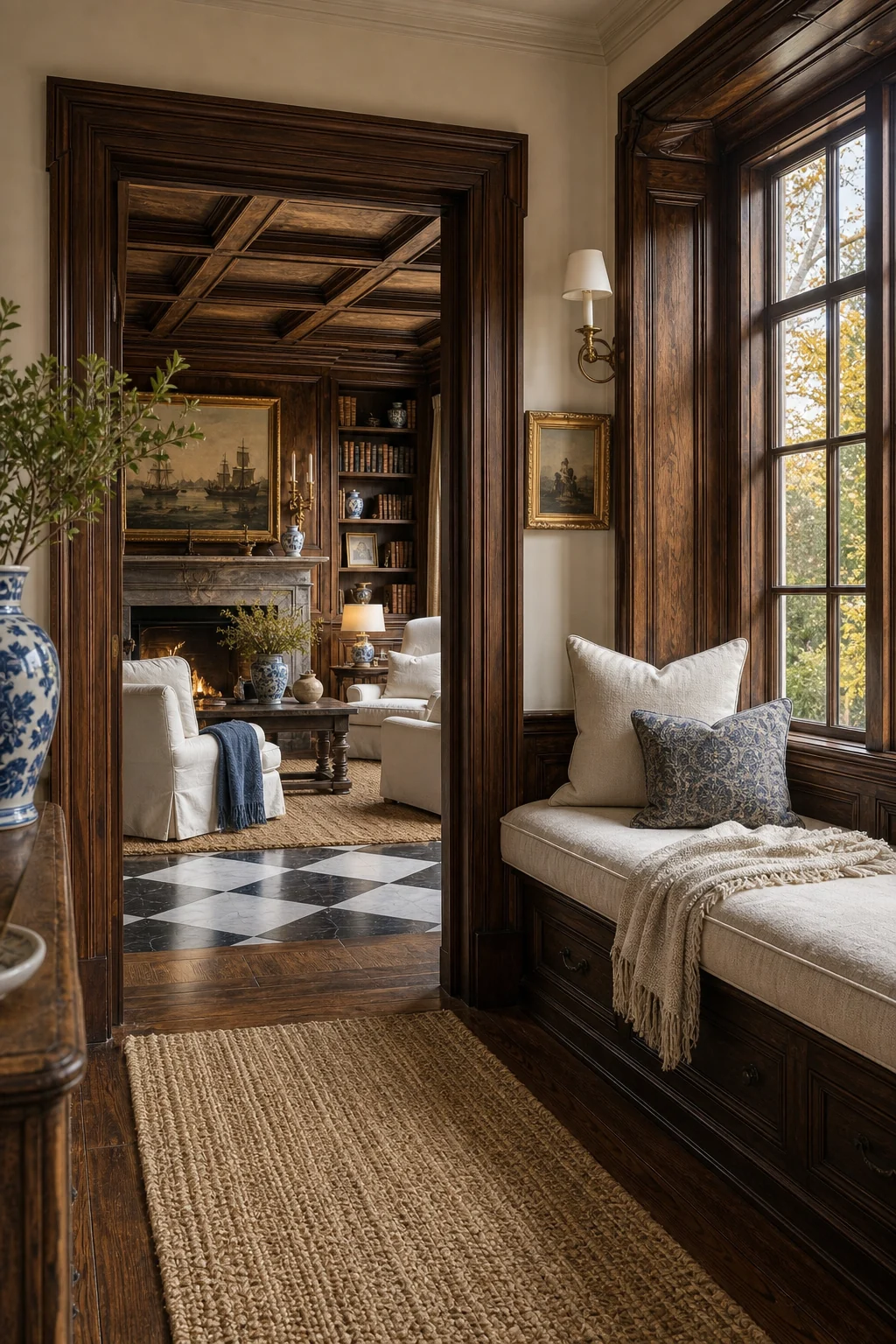
Applying these accessible modifications prepares any secondary space for the same relaxed textiles seen below. Even a built-in window seat can capture this resolved contradiction perfectly, bringing necessary coastal softness to rigid, dark wood paneling and ensuring the home feels cohesive.
Thick linen cushions and a sisal floor runner complete this transitional nook. This deliberate layering proves that the friction between formal mercantile wealth and barefoot West Coast living remains profoundly inviting regardless of the room’s specific square footage or primary function.
Finding the Balance
Success requires strict commitment to the mix. Letting either style dominate results in a disjointed split personality or a generic, uninspired room that loses all of its deliberate, curated tension and ultimately falls flat visually, ruining the careful architectural balance.
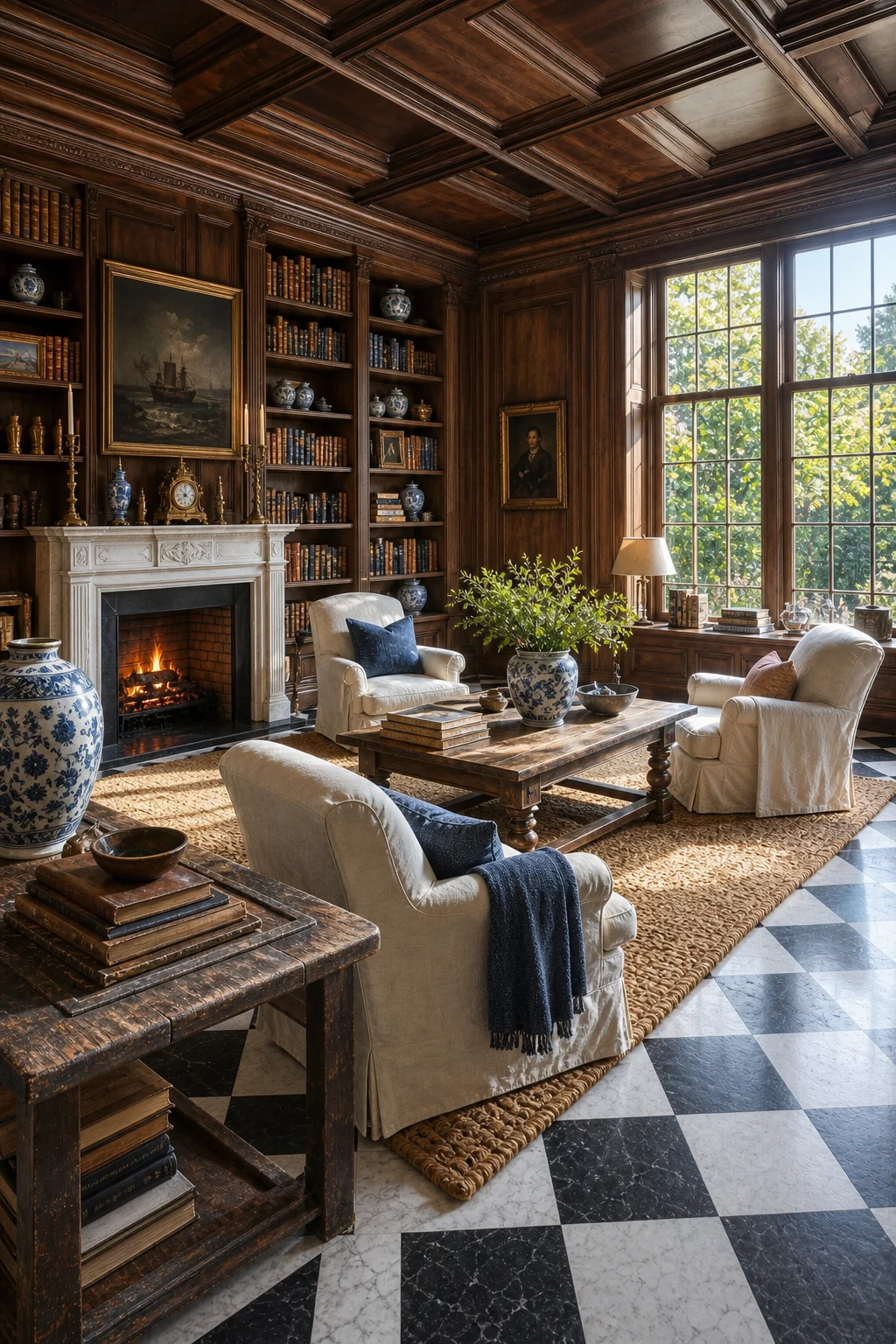
Embrace the contradiction fully, allowing the heavy architecture to challenge the relaxed seating. The friction between formal mercantile wealth and barefoot West Coast living is exactly what makes the space profoundly inviting, highly aspirational, and effortlessly livable for modern routines.
- Avoid high-gloss wood finishes, which quickly turn the room into a sterile, uninviting museum costume rather than a home.
- Do not use delicate coastal furniture, as it will look entirely lost against the heavy, imposing oak casework.
- Prevent crushed shadows by ensuring ample daylight, avoiding a gloomy, historically oppressive atmospheric dominance in the space.
- Never over-style the open shelves, leaving breathing room to highlight the raw, organic ceramic textures and natural forms.