
Scandinavian Meets Dutch Golden Age: Dining Room
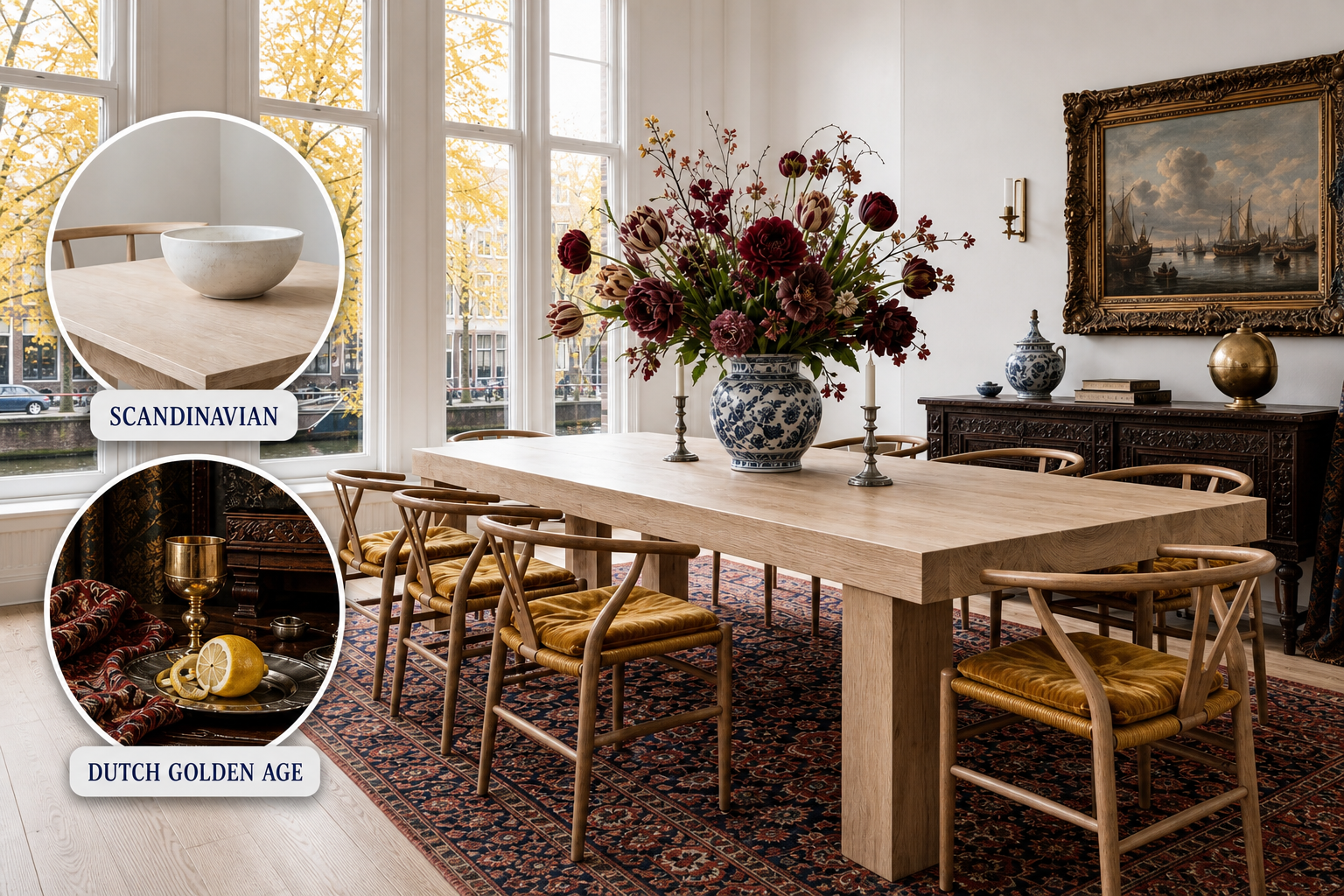
The austere functionalism of modern Nordic design clashes directly with the heavy, shadow-drenched abundance of 17th-century Dutch interiors. We resolve this by letting Scandinavian architecture dictate the bright shell while Dutch Golden Age aesthetics control the rich, tactile layers.
The Scandinavian Foundation
Scandinavian design demands a rigorous, unadorned architectural shell to breathe properly. This luminous foundation prevents heavier historical elements from feeling oppressive, setting the stage for a deliberate visual tension that defines the entire dining room.
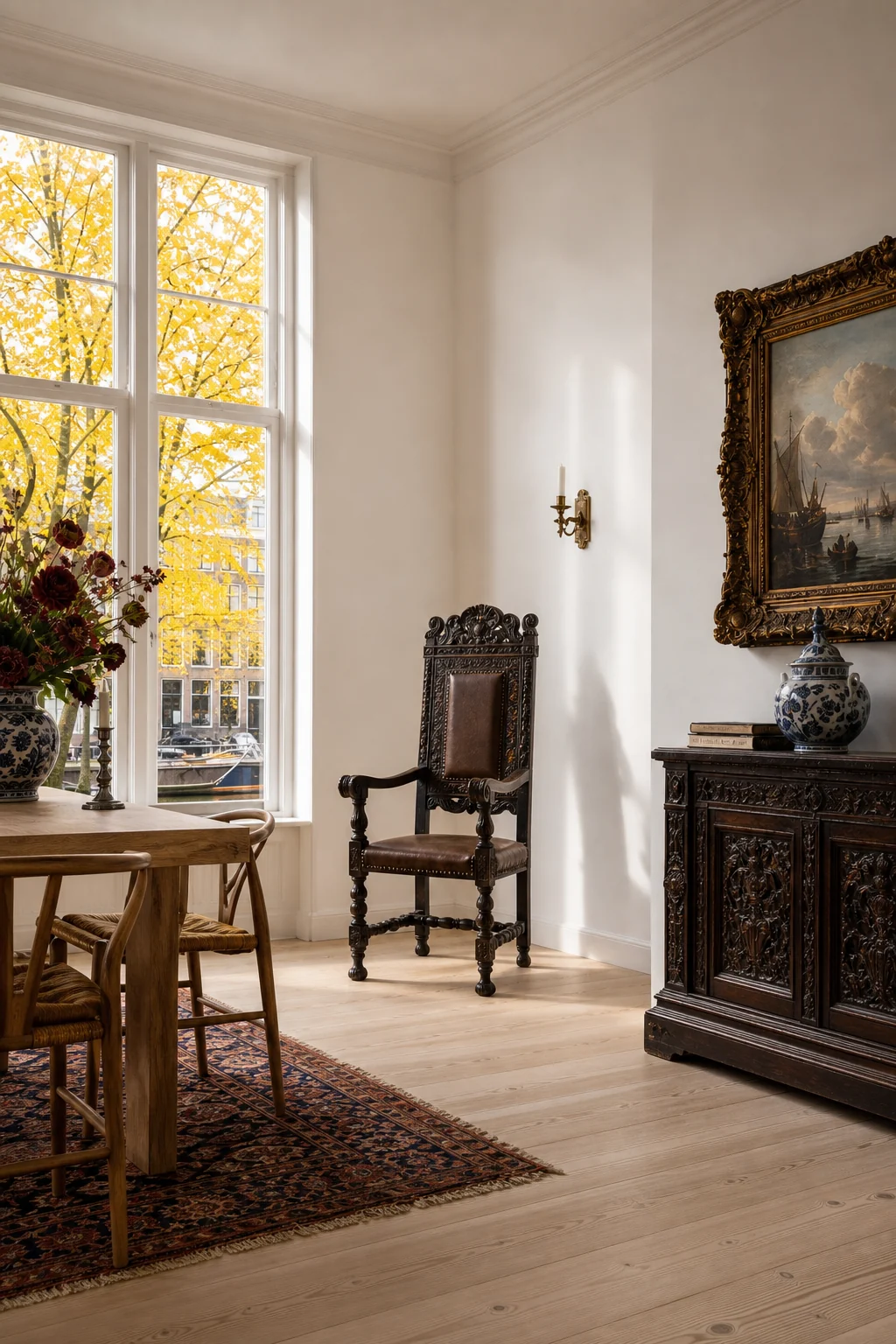
Notice how pale Dinesen Douglas fir floors and crisp gallery-white walls establish an immediate sense of modern minimalism. This bright, austere backdrop acts as a crucial palate cleanser, preparing the eye for the intense opulence that follows.
By maintaining this strict architectural restraint, the room easily absorbs intense historical richness. It entirely avoids the gloomy, museum-like atmosphere that so often plagues traditional period restorations or overly themed historic homes, keeping the energy light and forward-looking.
The Dutch Golden Age Opulence
Dutch Golden Age aesthetics introduce an unapologetic, tactile opulence that completely shatters modern minimalism. These heavy elements provide the necessary visual gravity to anchor such a bright room, preventing it from floating into sterile austerity.
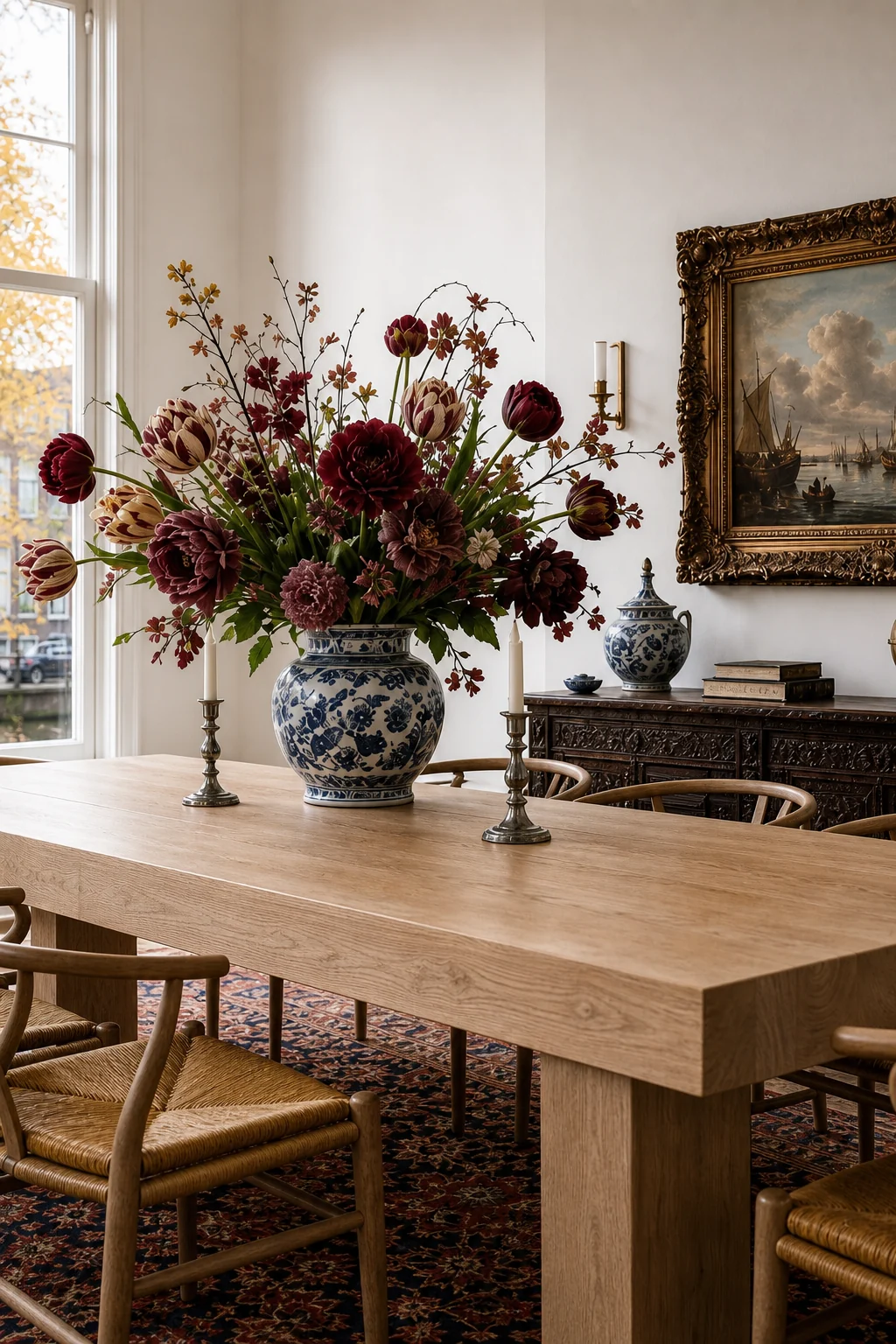
An oversized floral still-life arrangement immediately draws the eye inward. Deep ochre velvet, bruised burgundy florals, and intricate antique Persian rugs introduce intense, concentrated drama that demands your full attention without overwhelming the surrounding pristine white architecture.
By clustering these heavy details together, you create highly intentional moments of tension. The eye instantly appreciates the profound contrast between a meticulously detailed botanical arrangement and the severely blank white wall sitting quietly just behind it.
Bridging the Eras
Successful integration relies entirely on shared material properties rather than matched eras. You must find the precise physical qualities that seamlessly connect these two wildly contrasting aesthetic worlds, forging a cohesive narrative out of apparent contradictions.
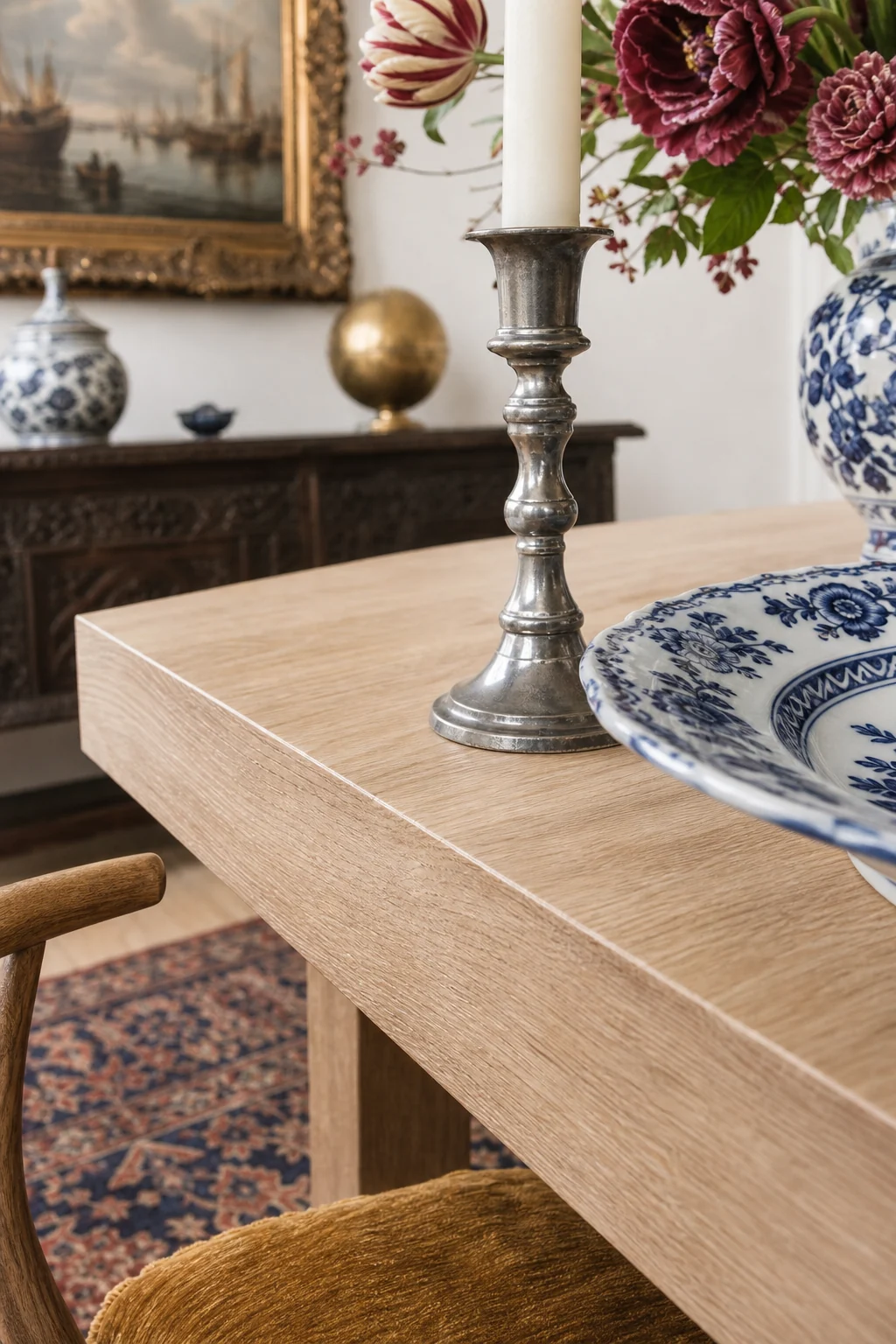
The matte finish of a pale oak dining table perfectly echoes the soft, unglazed presence of antique pewter and ceramics. This shared lack of shine beautifully unifies the disparate objects, making them feel like deliberate companions rather than accidents.
- Match the visual temperature of your matte wood finishes to ensure a seamless transition between the two eras.
- Ensure all metallic accents share a muted, unpolished, and naturally aged patina rather than a highly reflective shine.
- Limit high-gloss surfaces exclusively to small glass elements that bounce light without disrupting the dominant matte palette.
- Balance clean modern lines against the heavy visual weight of tapestries to prevent the room from feeling cluttered.
Building the Dining Room
Constructing the primary dining zone requires a deliberate, almost rigid assignment of roles. Every single piece must clearly belong to either the modern architectural shell or the rich historical overlay, leaving absolutely no room for confusing transitional furniture.
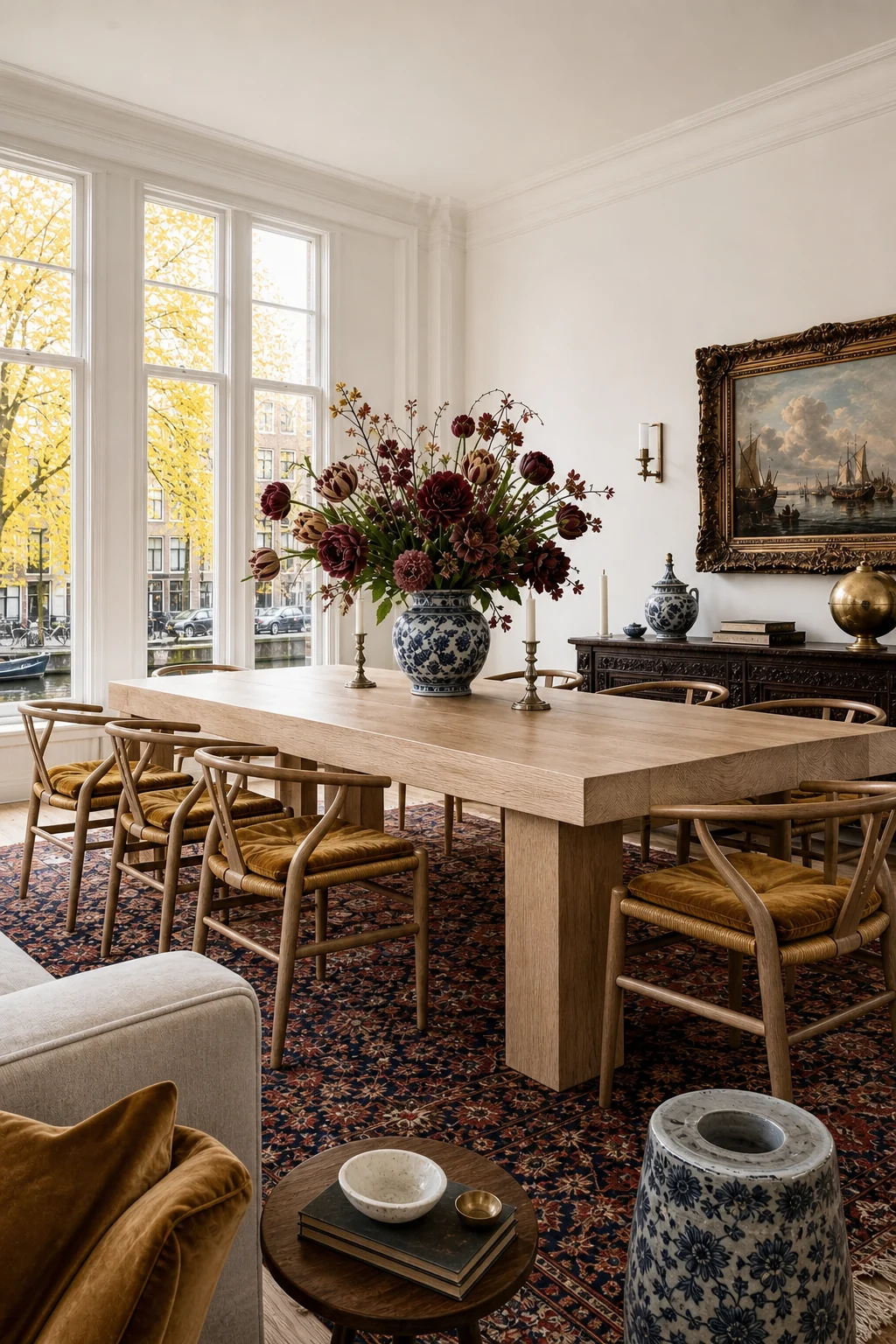
A massive Scandinavian table commands the center of the floor plan, while deep ochre velvet softens the seating. This strict division of labor prevents visual confusion, establishing clear boundaries between the functional modern core and the decorative historical flourishes.
| Design Layer | Scandinavian Role | Dutch Golden Age Role | Bridge Decision |
|---|---|---|---|
| Shell | Crisp gallery-white walls and pale Dinesen Douglas fir floors. | No architectural contribution; relies entirely on the bright envelope. | Stark white walls act as a blank canvas for heavy silhouettes. |
| Large Furniture | Massive, clean-lined pale oak dining table and minimalist chairs. | Heavy carved walnut sideboards and dark antique console tables. | Simple geometric forms prevent ornate carvings from feeling cluttered. |
| Textiles | Unadorned windows allowing maximum natural light penetration all day. | Deep ochre velvet cushions and intricate antique Persian rugs. | Rich colors are restricted entirely to the floor and seating planes. |
| Lighting | Abundant, diffused autumn daylight pouring in from bare windows. | Muted, unpolished pewter candlesticks with simple, unfragranced wax tapers. | Bright exposure lifts the midtones of dark historical metal finishes. |
| Accents | Single minimalist white ceramic bowls featuring flat matte finishes. | Oversized botanical still-life arrangements and classic Delft blue ceramics. | Shared matte and semi-matte textures unify the contrasting historical eras. |
Light and Architecture
Generous autumn daylight fundamentally alters how we perceive traditionally dark historical artifacts. Abundant natural illumination serves as the ultimate unifier for this specific aesthetic pairing, transforming heavy period pieces into vibrant, sculptural focal points within the room.
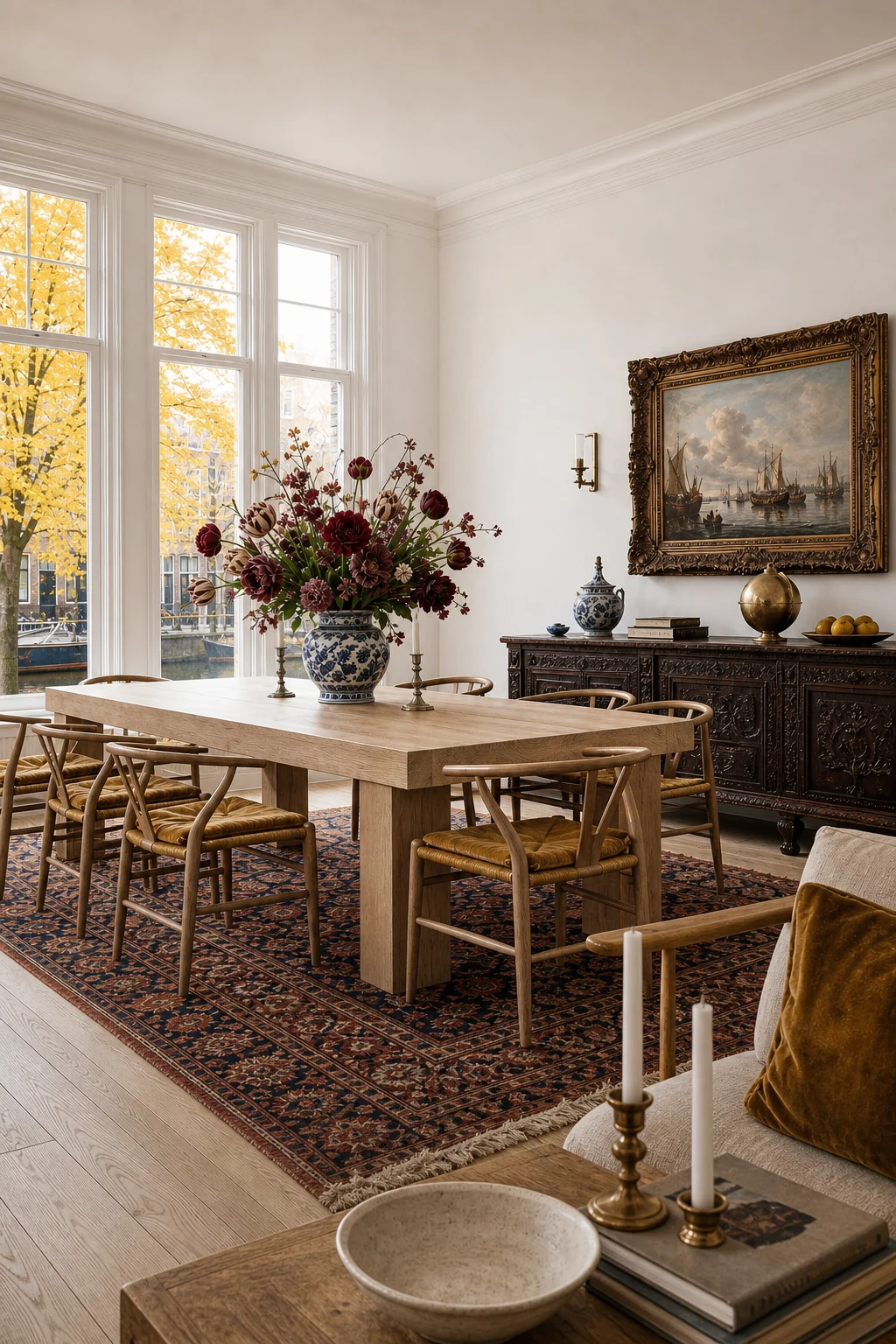
Unadorned, tall Scandinavian windows flood the space, significantly lifting the midtones of heavy textiles. This crucial exposure prevents an antique Persian rug from fading into crushed, gloomy shadows, ensuring its intricate woven details remain entirely visible and celebrated.
This abundant exposure forces intricate historical patterns to read as vibrant rather than dusty or antique. The bright spatial volume always dominates the visual hierarchy, keeping the overall atmosphere exceptionally fresh, aspirational, and firmly rooted in the present day.
Styling the Details
Surface styling is exactly where the contradiction becomes intimate, tangible, and highly tactile. The tabletop requires a careful, deliberate curation of historical abundance set forcefully against stark modernism, creating a micro-environment that perfectly encapsulates the room’s design philosophy.
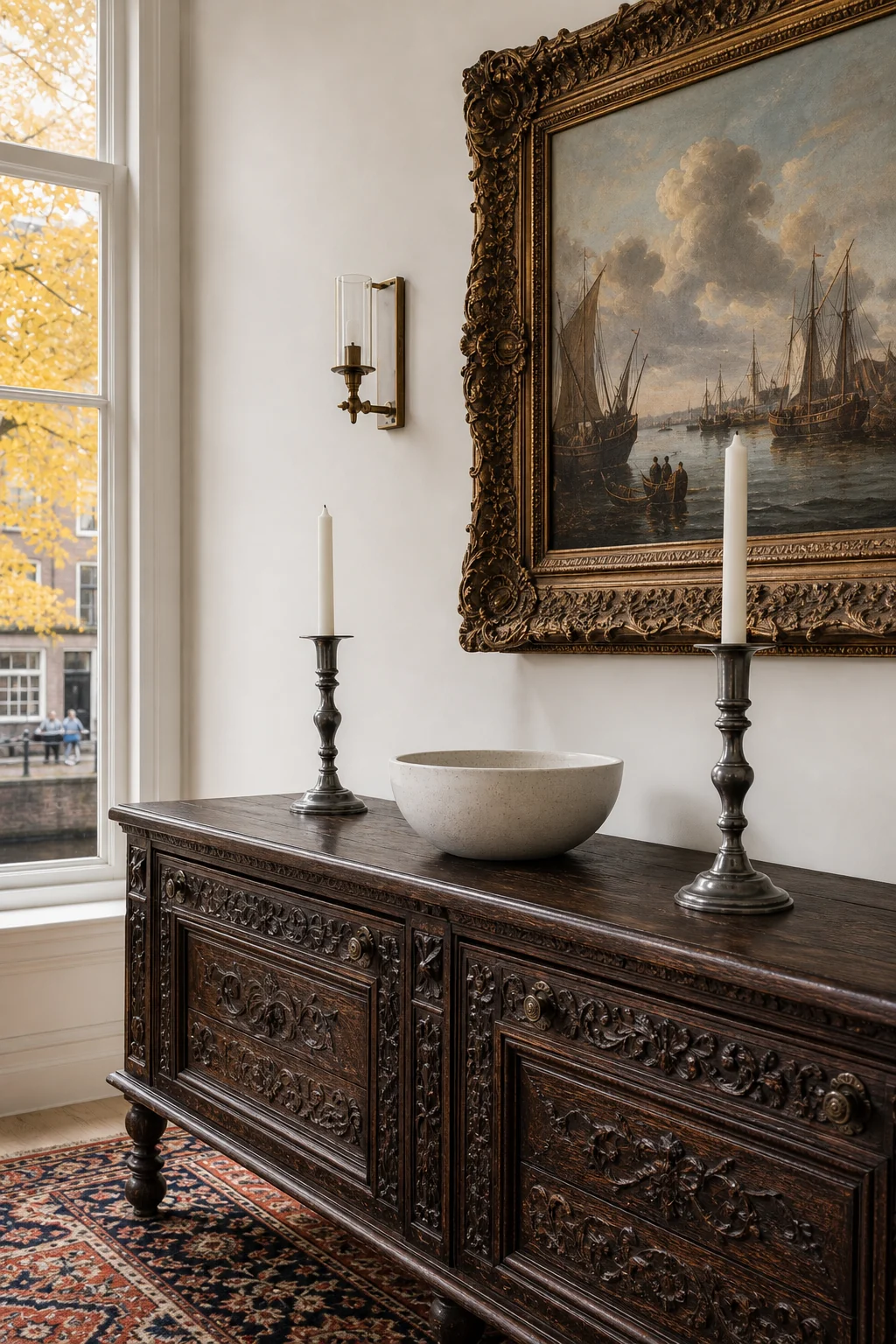
A massive, asymmetrical 17th-century floral arrangement feels incredibly fresh when flanked by severe Nordic geometry. Delft blue ceramic vases provide rich, saturated color without ever overwhelming the pale wood, proving that historical opulence can thrive in a minimalist setting.
- Anchor the foundation heavily with an intricate antique Persian area rug that introduces deep colors to the floor.
- Choose minimalist white-soaped oak dining chairs for sharp contrast against the ornate textiles and heavy carved details.
- Source oversized botanical arrangements displayed prominently in Delft blue vases to recreate the drama of a classic painting.
- Select unpolished antique pewter candlesticks outfitted with simple wax tapers to provide authentic ambient lighting during dinner parties.
Adapting the Look
This precise tension translates beautifully beyond the main dining space directly into transitional zones. The exact same principles of bright architectural shells and dark historical accents apply to smaller footprints, ensuring the entire home feels remarkably cohesive.
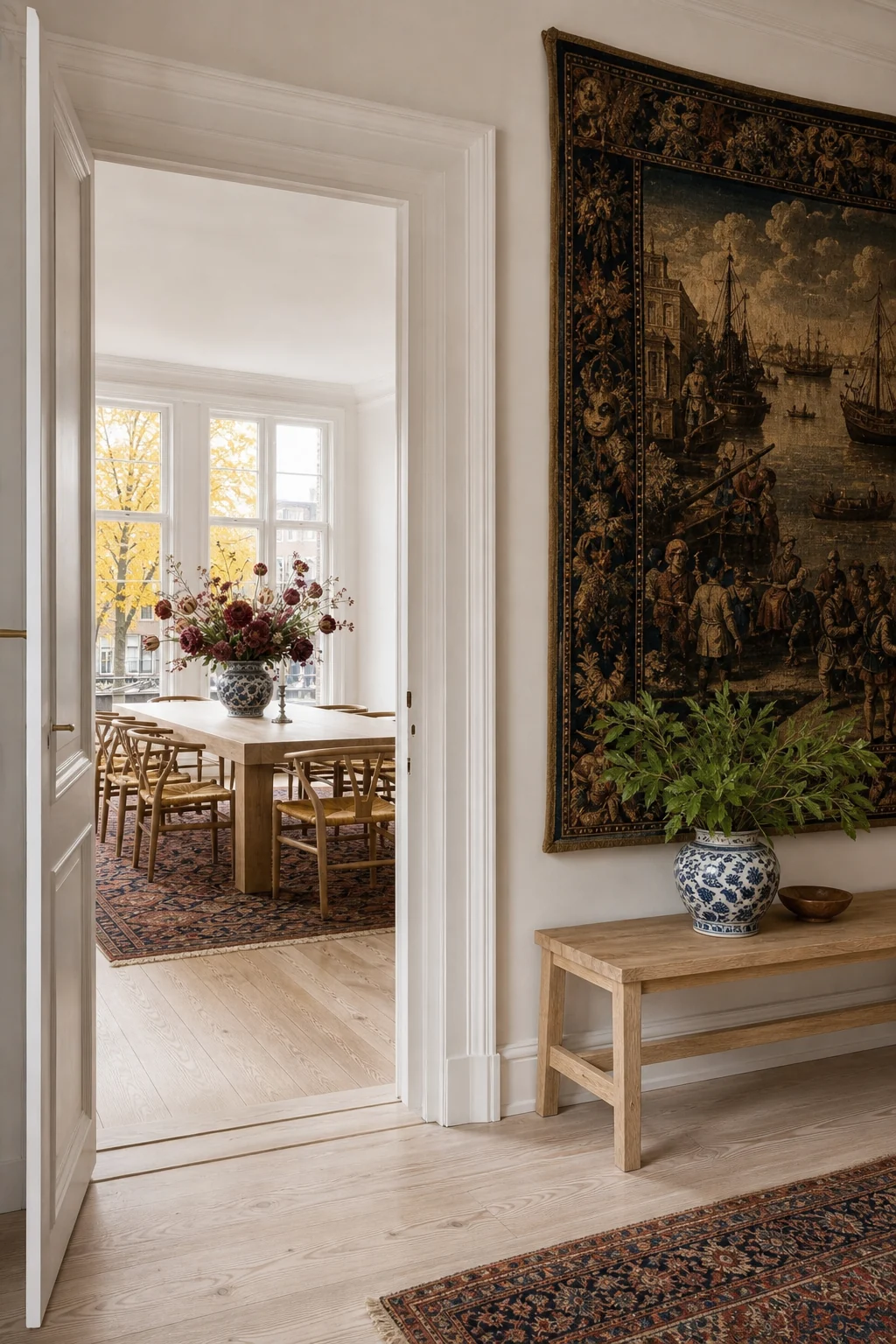
A bright, minimal hallway instantly gains profound character when anchored by a single, heavily carved Dutch walnut console. The historical contrast remains incredibly powerful even with significantly fewer pieces, proving that this aesthetic relies on quality over sheer quantity.
- Scale down the heavy historical furniture for smaller transitional footprints while preserving the signature dark walnut and velvet.
- Keep the oversized floral moments completely intact for maximum visual drama, allowing them to serve as standalone focal points.
- Maintain pale wood flooring continuously through every structural doorway threshold to ensure the bright Scandinavian foundation remains unbroken.
- Limit dark paint colors to small, easily contained decorative objects rather than applying them to broad architectural wall surfaces.
Avoiding the Costume
A room ultimately fails when it looks like a curated museum exhibit or a confused antique shop. Achieving true harmony requires strict, unwavering discipline regarding spatial volume, ensuring the modern architecture always dictates the overall mood.
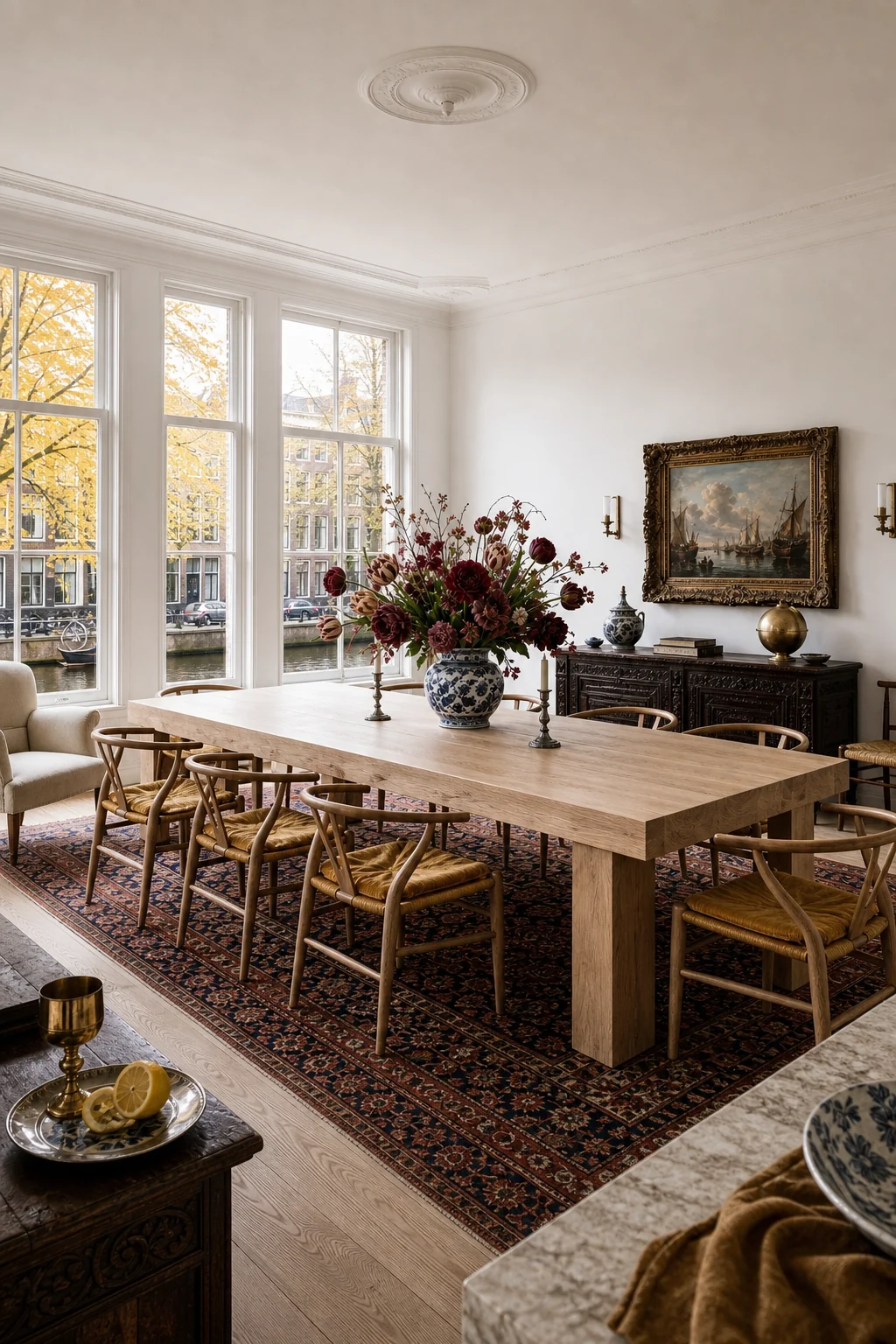
You must let the crisp gallery-white walls completely dominate the room’s overall spatial volume. When dark historical elements are tightly restricted to specific focal points, the contradiction resolves perfectly, yielding a space that feels both impossibly rich and effortlessly light.
- Never cover the tall architectural windows with heavy historical drapery that blocks the crucial autumn daylight from entering.
- Avoid washing the entire room’s walls in dark, moody paint that would instantly destroy the bright Scandinavian shell.
- Do not mix competing historical eras outside of this specific pairing, as introducing mid-century pieces ruins the tension.
- Resist the urge to clutter modern surfaces with excessive antique styling, maintaining the discipline required for minimalist backdrops.