
Egyptian Revival Meets California Casual: Living Room
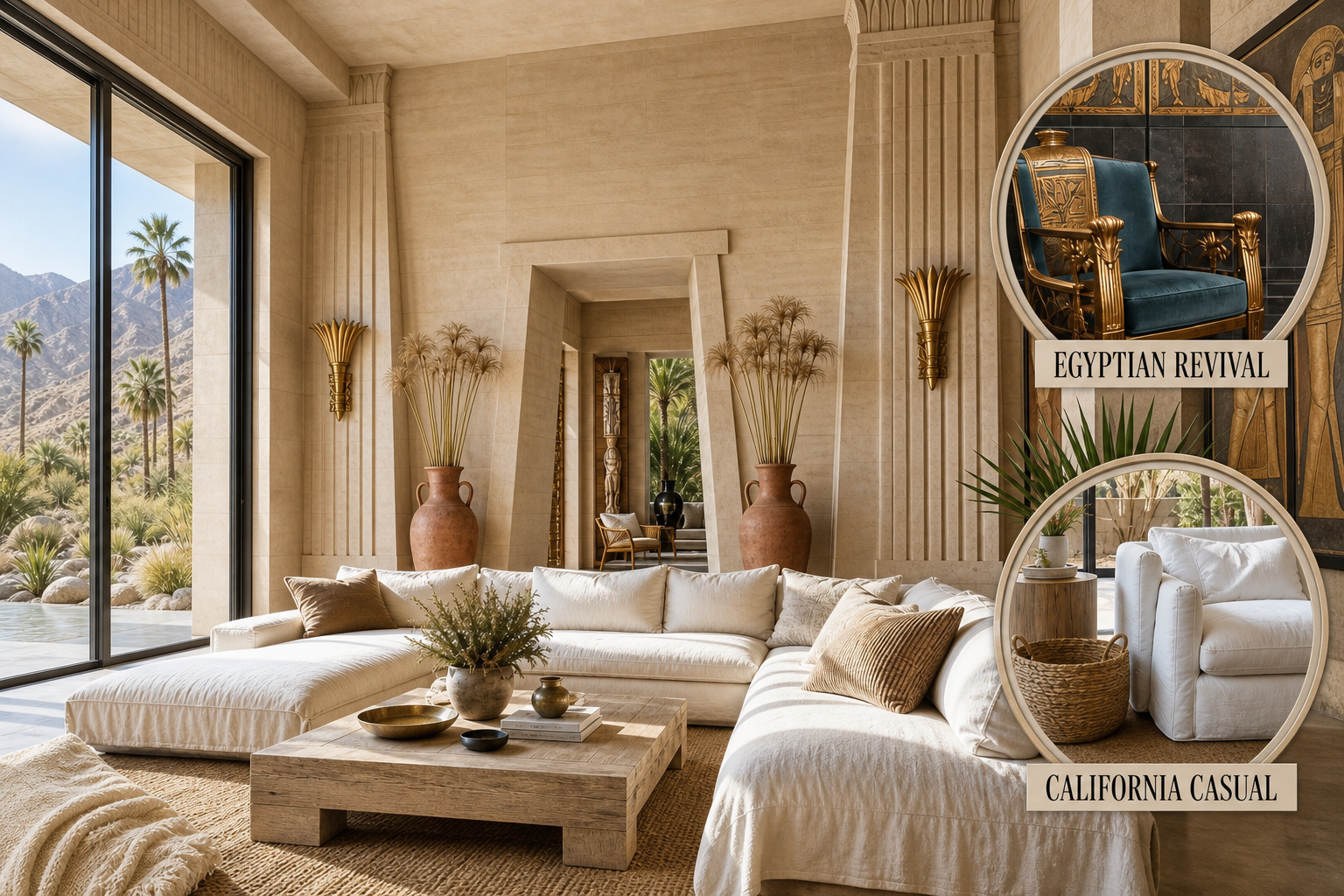
The theatrical monumentality of ancient stone clashes with the slouchy, effortless comfort of modern coastal-desert living. We resolve this profound contradiction by letting Egyptian Revival dictate the symmetrical architectural shell while California Casual softens the space through oversized washed linen.
Establishing the Monumental Shell
To anchor this aesthetic contradiction, the room’s perimeter must command absolute authority. We rely on the imposing verticality of ancient temples to set a highly dramatic stage. This rigid framework provides the necessary discipline for the relaxed furnishings to follow.
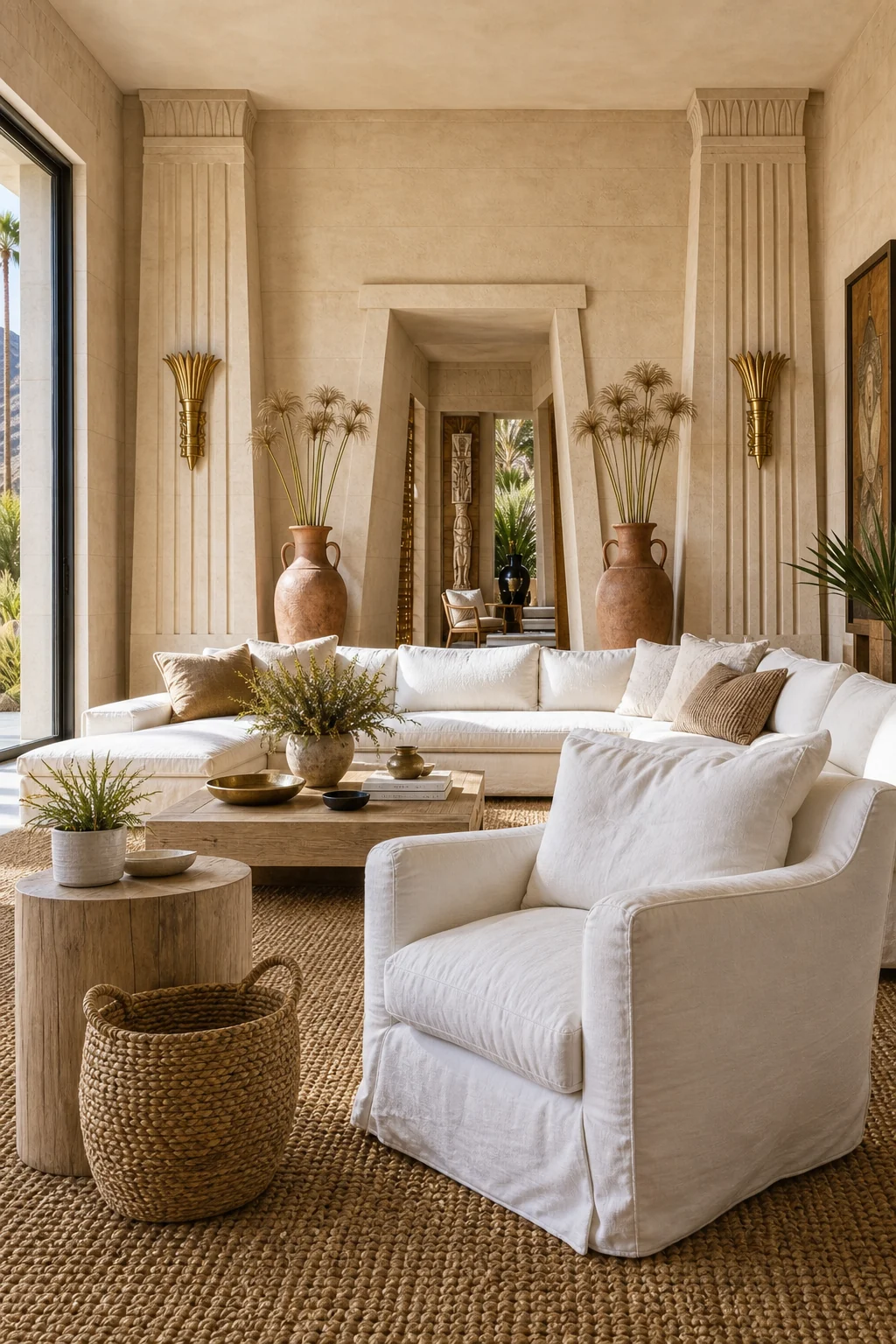
Notice how the fluted limestone walls establish an immediate sense of permanence. This heavy masonry shell acts as a rigid container, ensuring the slouchy linen chair in the foreground feels intentionally curated rather than merely messy or accidentally unkempt.
Grounding with Relaxed Comfort
Against such an imposing backdrop, the furnishings must deliberately underwhelm to maintain balance. A low, horizontal seating arrangement immediately grounds the verticality of the monumental architecture. This intentional drop in elevation brings the massive stone scale back down to human proportions.
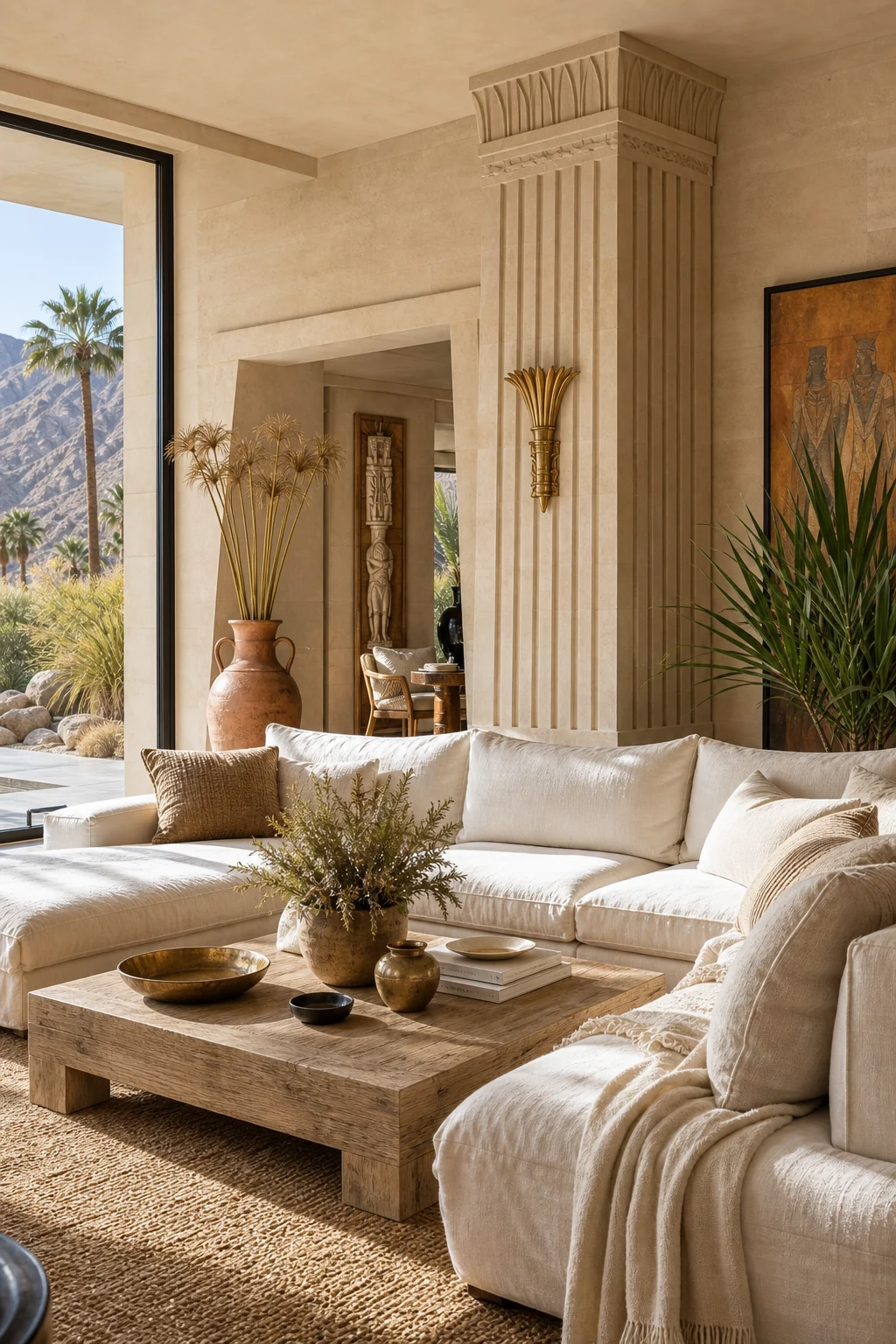
The visual weight of the stone column requires an equally substantial but much softer counterpoint. The oversized washed linen sectional absorbs the room’s acoustic echoes, inviting barefoot lounging while effortlessly standing up to the sheer mass of the surrounding walls.
- Select unironed, slipcovered white linen to provide a crucial tactile contrast against the rigid, heavy stone surfaces.
- Choose a raw bleached oak coffee table to introduce warm organic texture without adding unwanted modern shine.
- Anchor the floor with a chunky hand-woven jute area rug to absorb excess acoustic echoes and soften footsteps.
- Maintain a low seating profile to ensure the ancient architectural verticality remains the primary visual focus.
- Avoid tailored upholstery completely, favoring loose wrinkles that emphasize the breezy, effortless coastal-desert lifestyle aesthetic.
Bridging the Desert Palette
A shared warm desert palette acts as the crucial diplomatic tie between these eras. Sand, limestone, and bleached terracotta allow both distinct aesthetics to speak the exact same language. This tonal harmony ensures the contrasting silhouettes never compete for your attention.
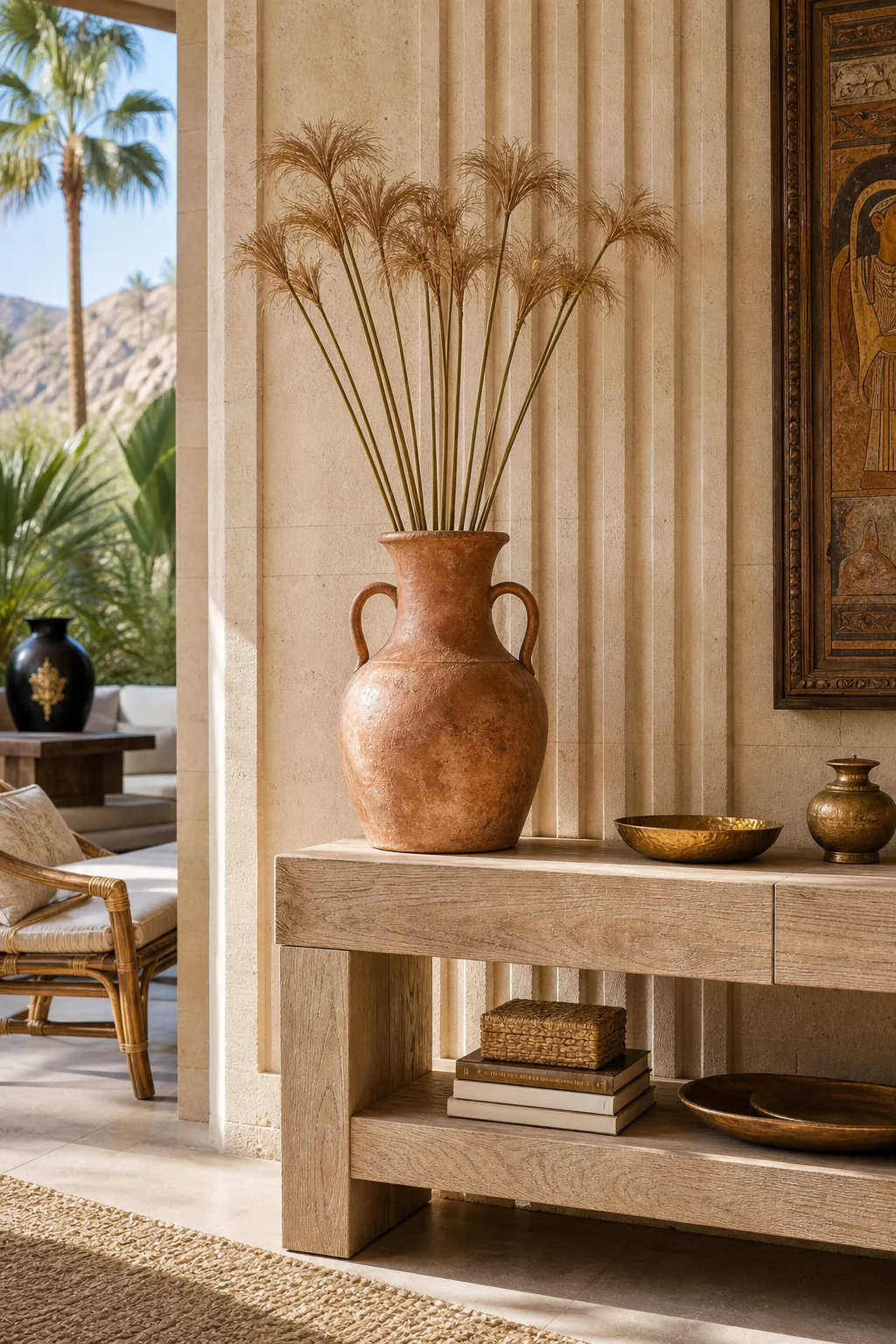
This close-up reveals how dried papyrus connects ancient botanical motifs to the modern Palm Springs landscape. The weathered terracotta vessel bridges the gap between historical artifact and casual desert styling, proving that shared earth tones effortlessly unify disparate eras.
Assembling the Seating Zone
Bringing these disparate elements into a single functional zone requires careful, deliberate layering. The central seating area proves that ancient grandeur and modern lounging can coexist beautifully. We achieve this by assigning strict, uncompromising roles to the architecture and the upholstery.
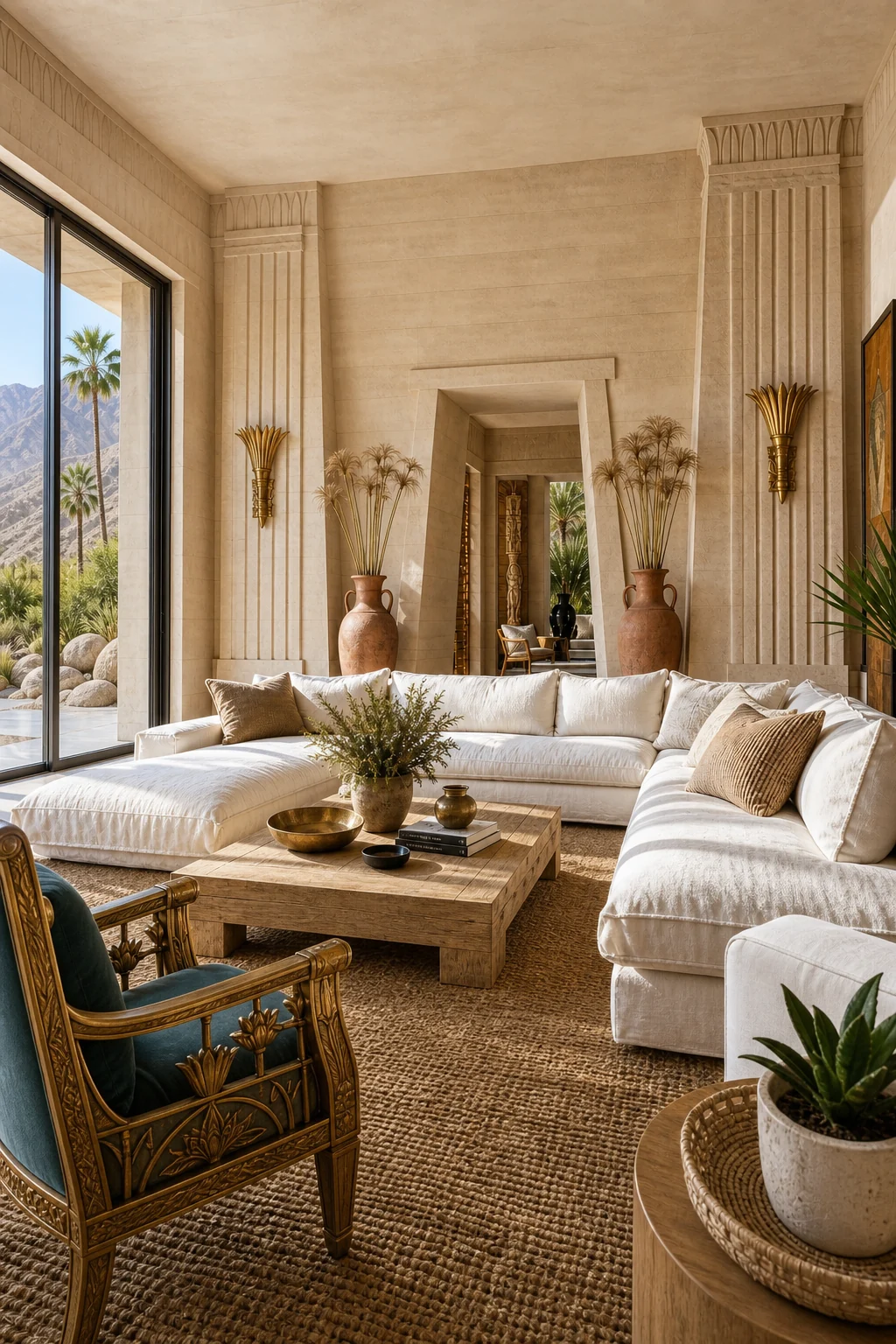
The low horizontal grounding profiles of the California Casual furniture allow the Egyptian Revival architecture to soar. This deliberate contrast prevents the room from feeling top-heavy, ensuring the heavy masonry feels protective rather than overwhelmingly formal, sterile, or oppressive.
| Design Layer | Egyptian Revival Role | California Casual Role | Bridge Decision |
|---|---|---|---|
| Architectural Shell | Symmetrical fluted limestone walls echoing ancient temples to command absolute authority. | Airy indoor-outdoor flow maximizing natural desert breezes and relaxed barefoot movement. | Shared warm desert sand and limestone palette connecting both distinct aesthetics. |
| Large Furniture | Pylon-tapered statement pieces providing rigid structure and historical architectural weight. | Oversized slouchy linen seating designed exclusively for maximum everyday lounging comfort. | Low horizontal grounding profiles stabilizing the room against the soaring verticality. |
| Woven Textiles | Structured geometric weaves honoring historical motifs and ancient artisanal craftsmanship traditions. | Chunky hand-woven jute rugs adding casual comfort and soft underfoot texture. | Bleached natural fibers neutralizing the heavy stone and absorbing acoustic echoes. |
| Room Lighting | Burnished brass lotus sconces adding theatrical drama and monumental historical character. | Diffused ambient sunlight softening the rigid masonry and inviting coastal-desert warmth. | Matte unlacquered finishes preventing unwanted modern glare and maintaining organic harmony. |
| Styling Accents | Monumental terracotta vessels anchoring the room corners with heavy sculptural presence. | Woven seagrass baskets holding casual everyday items to ensure genuine livability. | Dried papyrus and palms connecting ancient botanical motifs directly to the landscape. |
Illuminating the Textures
Natural light fundamentally changes how heavy stone reads in a living space. Generous daylight streaming through modern glass sliders softens the rigid architectural geometry. This brightness keeps the atmosphere breezy and inviting, preventing the masonry from feeling like a dark tomb.
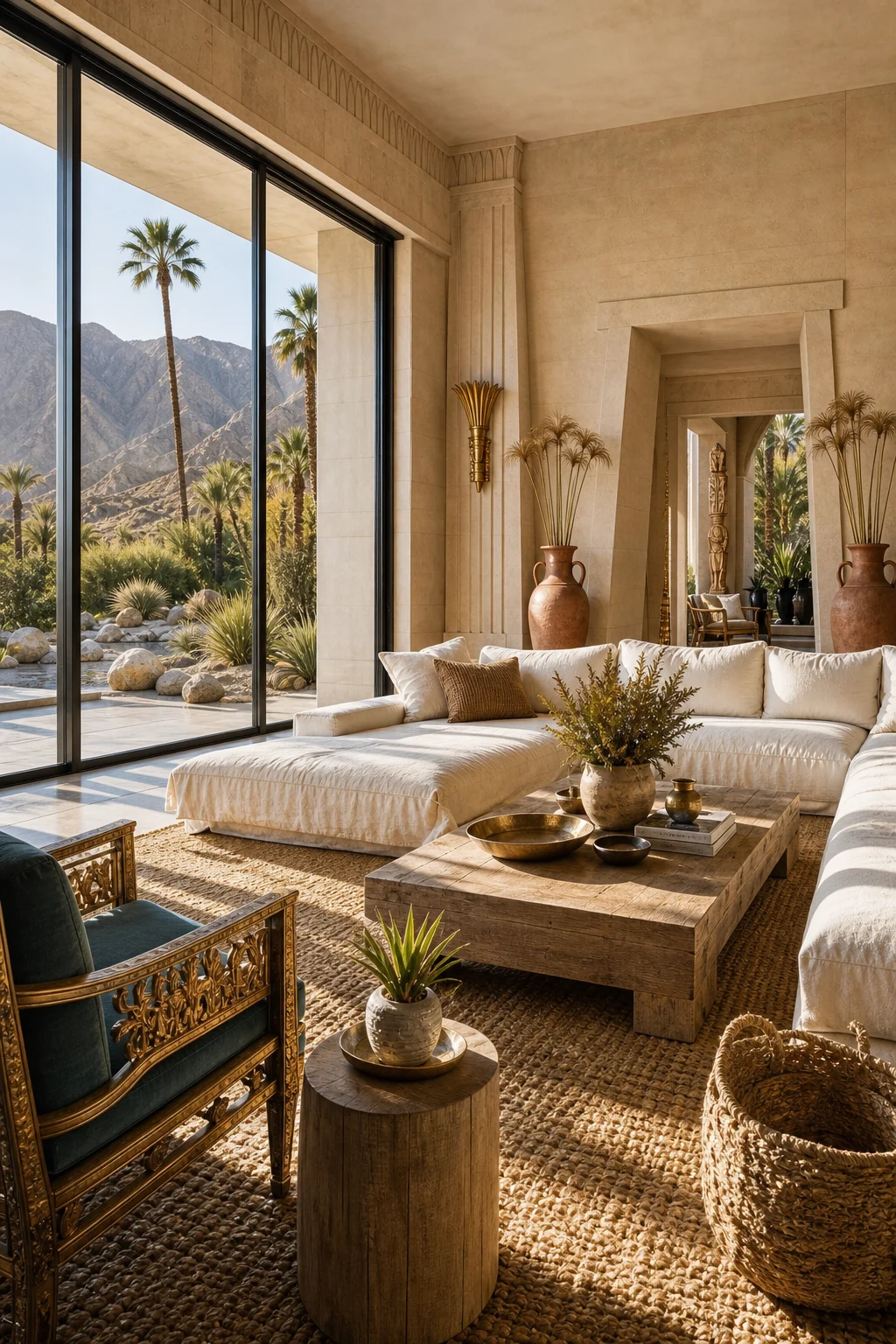
Notice how the low autumn sun rakes across the wall, highlighting the reeded stone textures. This dynamic lighting connects the ancient column fluting with the modern slatted wood accents, using deep shadows to emphasize the rich depth of the natural materials.
- Maximize natural daylight through large glass sliders to soften the imposing, heavy masonry walls and brighten the space.
- Install burnished brass lotus-motif wall sconces to provide warm, theatrical evening ambiance and authentic historical character.
- Ensure deep shadows remain open and lifted to preserve the airy, effortless coastal-desert feel throughout the day.
- Use raking sunlight to emphasize the tactile contrast between rough limestone fluting and soft, slipcovered white linen.
- Avoid harsh overhead recessed lighting that flattens the rich, weathered textures of the natural stone and wood materials.
Curating the Finishing Touches
Smaller styling moments prevent the room from feeling like a sterile, untouchable gallery. Tabletop vignettes introduce tactile, everyday objects that bridge the monumental architecture with the surrounding desert landscape. These intimate details make the grand space feel genuinely livable and welcoming.
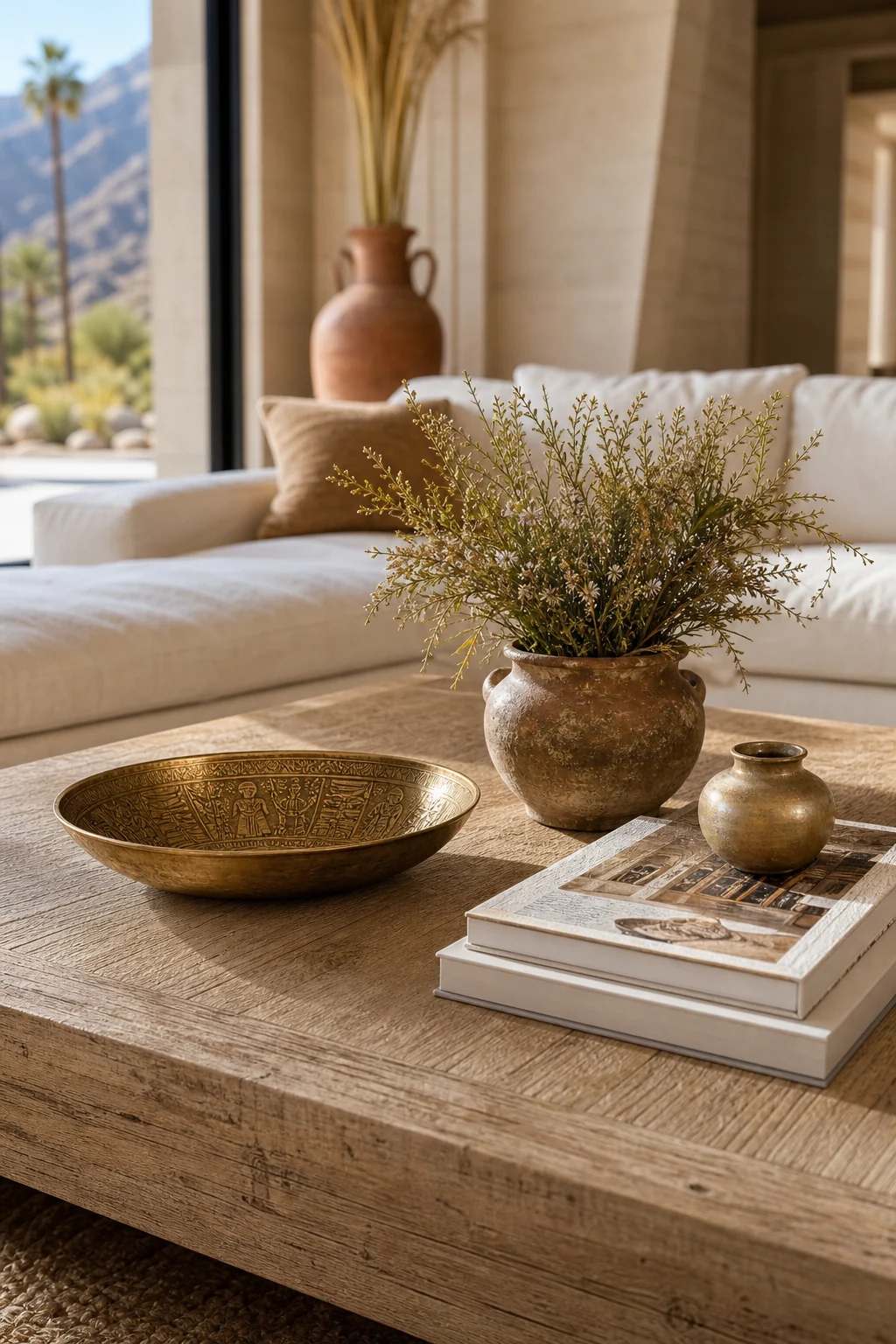
The arrangement on the raw bleached oak table demonstrates perfect restraint. Combining a burnished brass bowl with casual stacked books ensures the space remains a comfortable home. This careful balance is crucial for maintaining the relaxed, barefoot lifestyle aesthetic.
- Source oversized washed white linen sectionals to guarantee maximum lounging comfort against the rigid, uncompromising stone architecture.
- Find chunky hand-woven jute area rugs to add essential floor texture and absorb ambient noise in large rooms.
- Select burnished brass lotus-motif wall sconces to inject authentic historical character without introducing excessive, unwanted modern shine.
- Hunt for raw bleached oak coffee tables to ground the central seating area with inviting, organic warmth.
- Incorporate oversized terracotta vessels to hold dried botanicals, beautifully bridging the ancient and modern desert themes together.
Translating the Look
You do not need custom stonework to capture this feeling in transitional spaces. The core logic translates easily to a hallway or entryway through strategic, heavily textured material choices. Even a modest corridor can evoke this powerful historical presence with care.
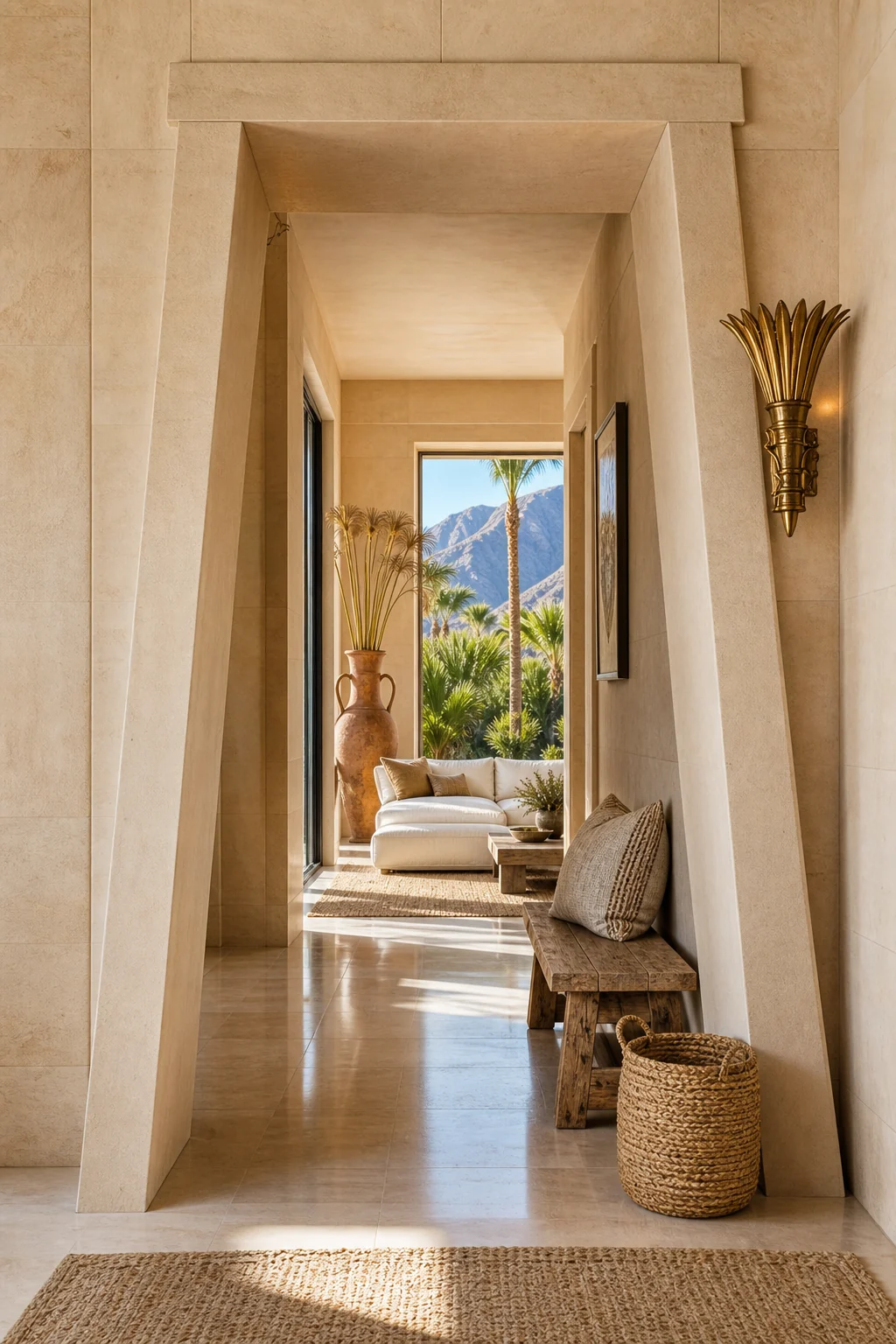
A simple pylon-tapered architectural doorway instantly establishes the Egyptian Revival framework. Pairing it with a humble raw oak bench and a seagrass basket immediately injects that essential California Casual ease, proving the concept works outside the main living area.
Avoiding the Theme Park Trap
The greatest risk in this pairing is creating a space that feels like a movie set. Success relies on absolute restraint, ensuring the relaxed coastal-desert vibe always tempers the historical drama. The imposing architecture must never overpower the room’s everyday livability.
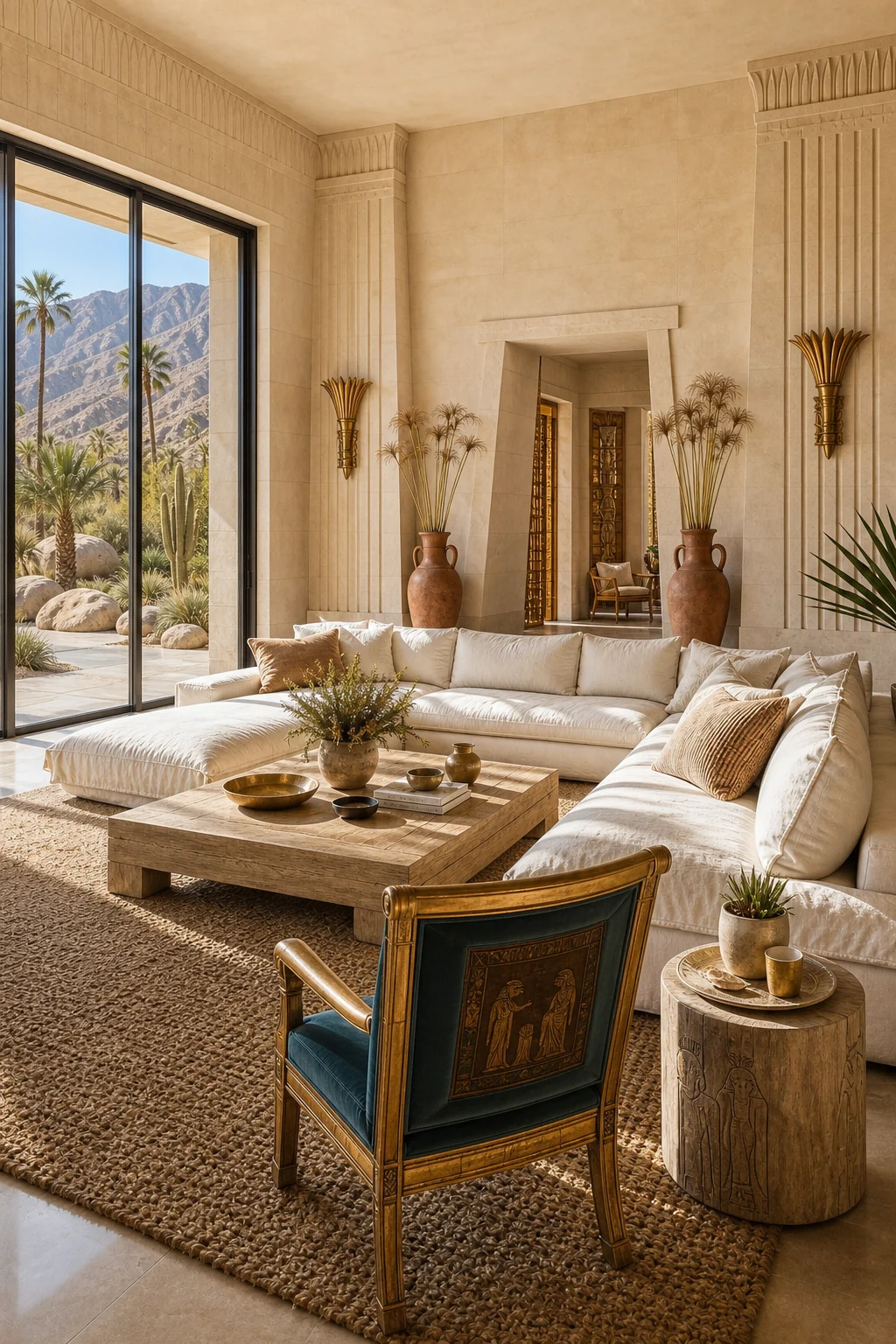
This wide view proves the concept works by maintaining a strict visual hierarchy. The monumental architectural shell commands the perimeter, while the slouchy linen furniture claims the center. This decisive separation resolves the contradiction, delivering epic history alongside barefoot comfort.
- Commit to strict symmetry for all permanent architectural interior elements to honor the historical monumentality of ancient temples.
- Keep all upholstered furniture low, horizontal, and visibly relaxed to ground the soaring, heavy stone walls effectively.
- Unify both distinct styles using a single warm desert palette composed of sand, limestone, and bleached terracotta.
- Eliminate all polished or reflective surfaces entirely, relying exclusively on matte, burnished, or heavily weathered natural finishes.
- Introduce dried papyrus and palm fronds to connect the ancient botanical motifs directly to the surrounding natural landscape.