
Cottagecore Meets Japanese Traditional: Living Room
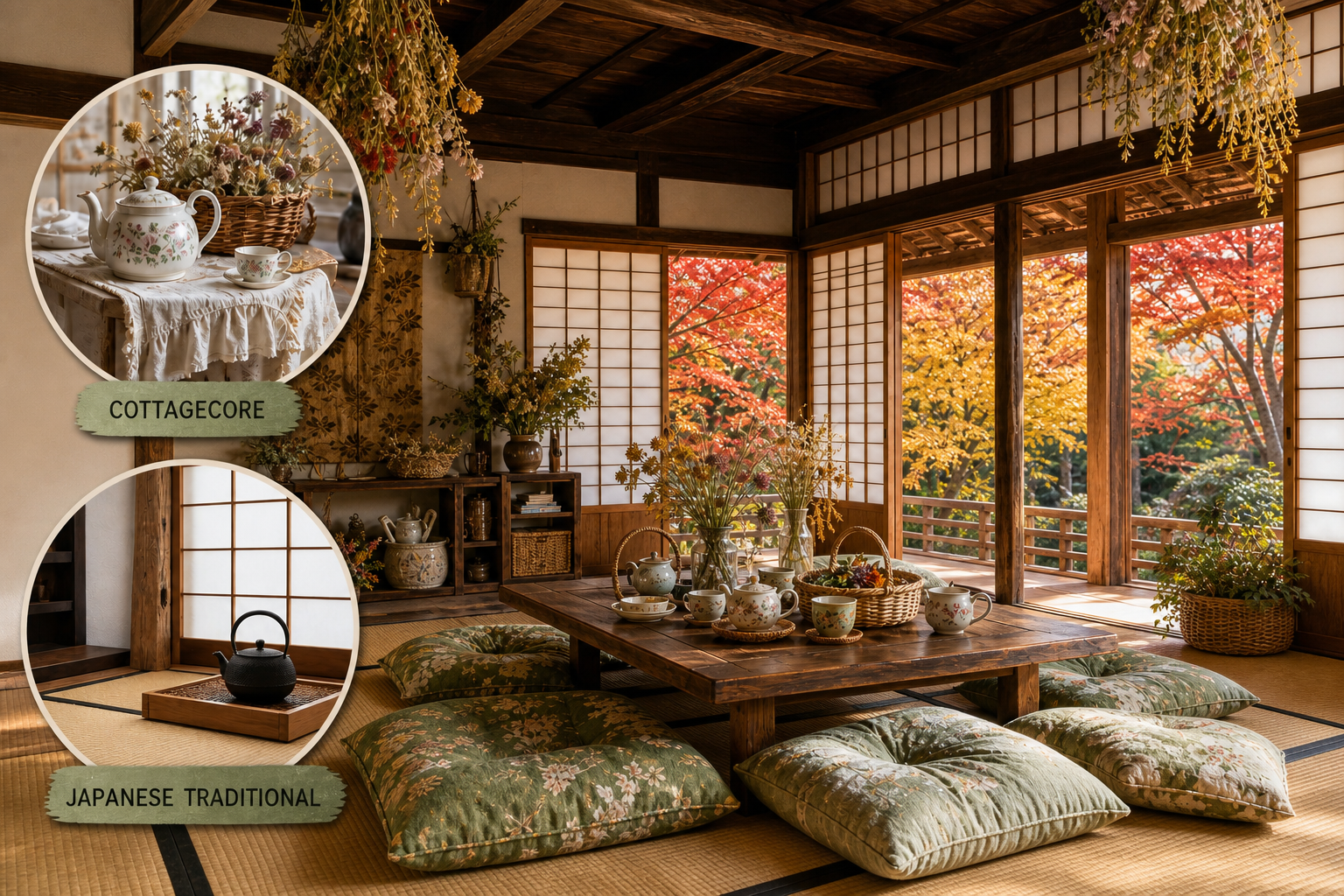
Discover how to bring cozy, tactile warmth into a minimalist architectural shell without ever losing a sense of serenity. This intentional approach beautifully resolves the direct clash between maximalist European rural fantasy and the geometric restraint of classic Japanese interiors.
Grounding the Floral Fantasy
Cottagecore thrives on nostalgic abundance, relying heavily on dried botanicals, vintage collections, and heavily patterned fabrics. Bringing these highly expressive, maximalist elements into a rigorous architectural shell requires shifting their placement entirely to avoid overwhelming the serene, disciplined atmosphere of the foundational room.
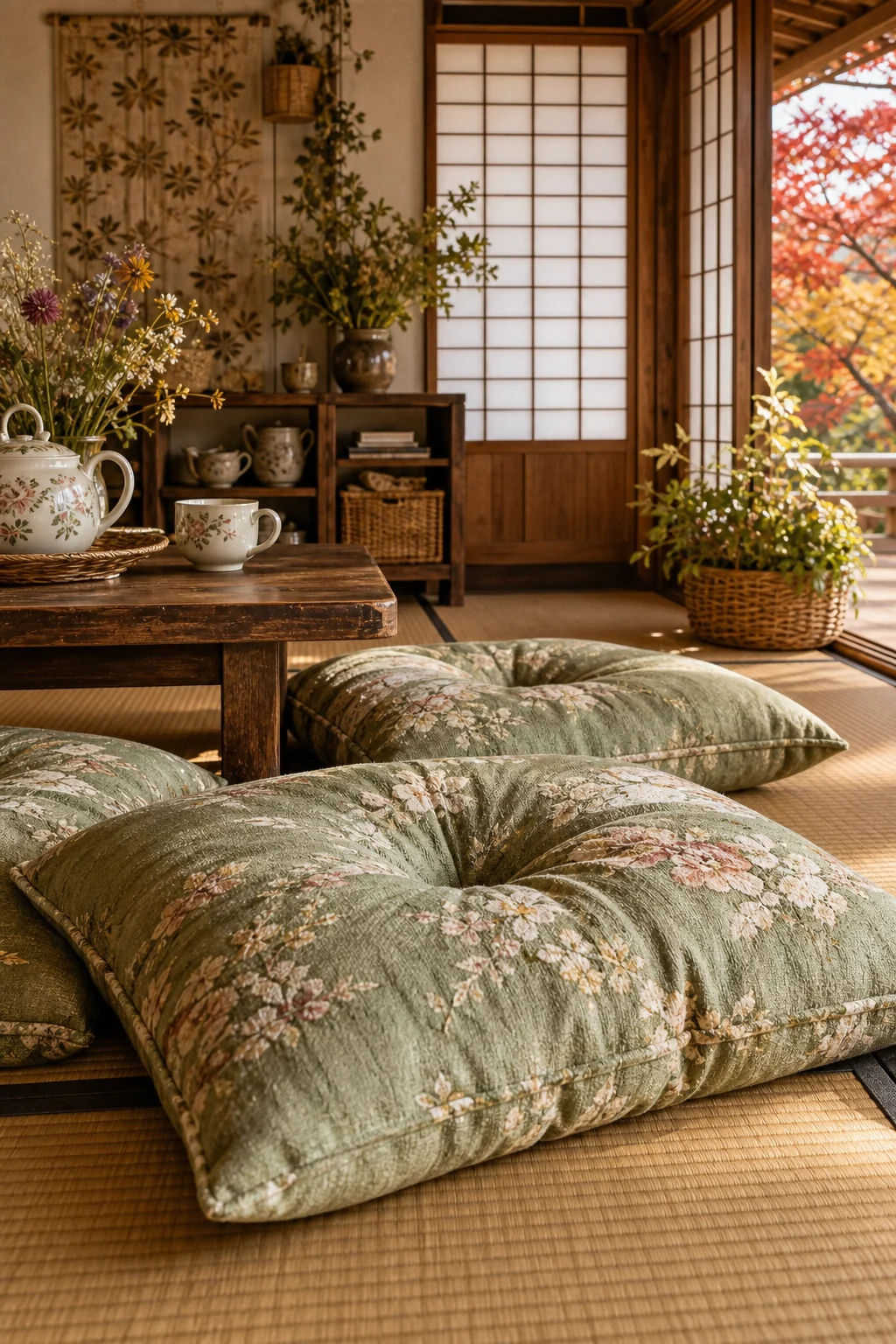
Relocating plump, tufted floral-print linen directly to the floor instantly changes the room’s entire dynamic. These plush textiles introduce immediate tactile warmth while deeply respecting the foundational Japanese traditional architecture, keeping the crucial upper sightlines completely clear, open, and visually unobstructed.
By lowering the visual weight, you allow the upper half of the room to breathe freely. This deliberate grounding ensures that the vibrant botanical patterns feel highly intentional and perfectly contained rather than chaotic, messy, or overly dominant in the space.
Softening the Geometric Shell
A classic Japanese traditional interior provides a highly disciplined, rigorous visual grid. The dark timber post-and-beam architecture creates a grounding framework that naturally prevents nostalgic rural elements from feeling unanchored, overly cluttered, or visually confusing to the eye of the casual observer.
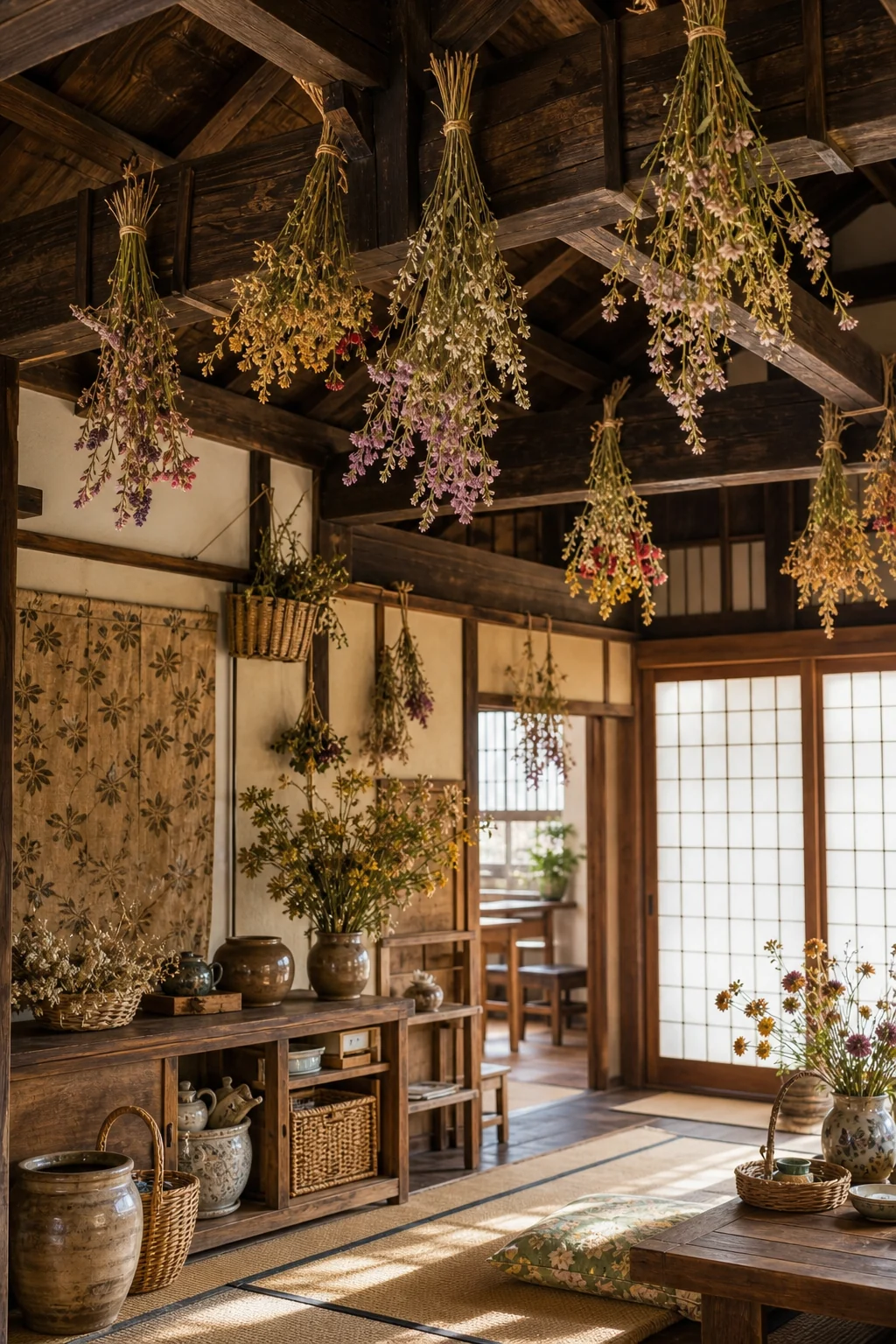
Looking upward reveals exactly how this strict structural shell beautifully frames organic shapes. Translucent paper shoji screens gently diffuse harsh sunlight, allowing the rustic botanical elements to shine brightly without ever compromising the room’s inherent architectural dignity and profound quiet strength.
- Hang dried wildflower and herb bundles directly from the exposed dark timber rafters for striking organic contrast.
- Allow translucent shoji screens to soften and beautifully diffuse harsh afternoon sunlight across the floral textiles.
- Keep structural wooden pillars entirely free of decorative hangings to maintain the rigorous geometric boundaries perfectly.
Weaving the Textures Together
Connecting these distinct aesthetic languages requires specific materials that speak fluently to both historical traditions. Shared woven textures act as the ultimate peacemaker between European rural fantasy and disciplined Asian minimalism, bridging the stylistic gap effortlessly, naturally, and with great elegance.
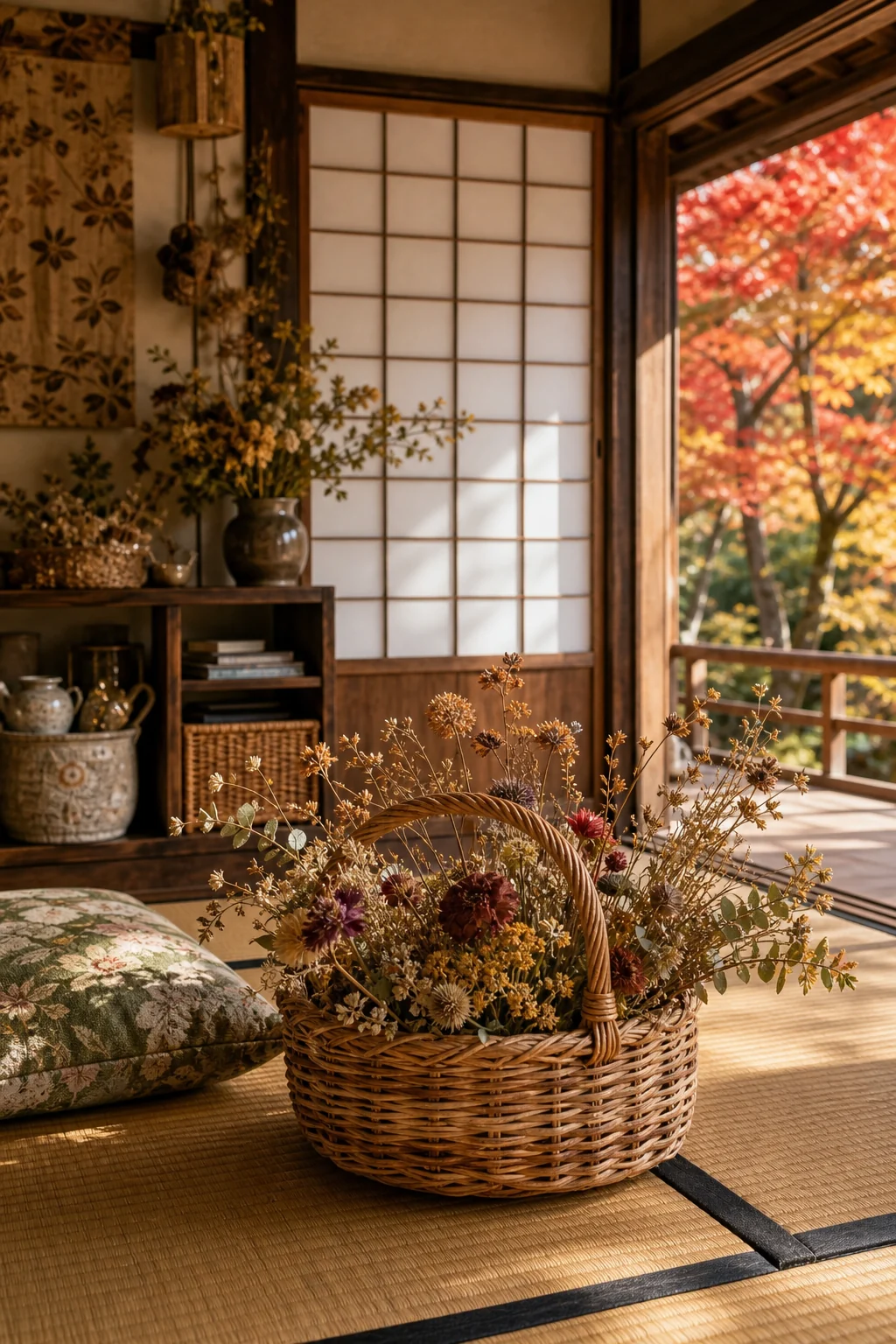
A rustic wicker gathering basket looks completely natural resting directly on woven igusa tatami mat flooring. This vital tactile connection seamlessly links the two distinct cultural aesthetics into one coherent, harmonious environment that feels both carefully curated and effortlessly, authentically lived-in.
Maintaining a unified autumnal craft palette of amber, sage, and warm roasted oak further strengthens this essential bond. When the natural colors and textures align perfectly, the contrasting silhouettes suddenly feel like they belong to the exact same cohesive interior world.
Centering the Seating Area
The functional heart of this hybrid living room relies entirely on establishing a shared low visual datum line. A low wooden chabudai table perfectly anchors the space, serving as the primary gathering point for daily life, entertaining, and quiet afternoon reflection.
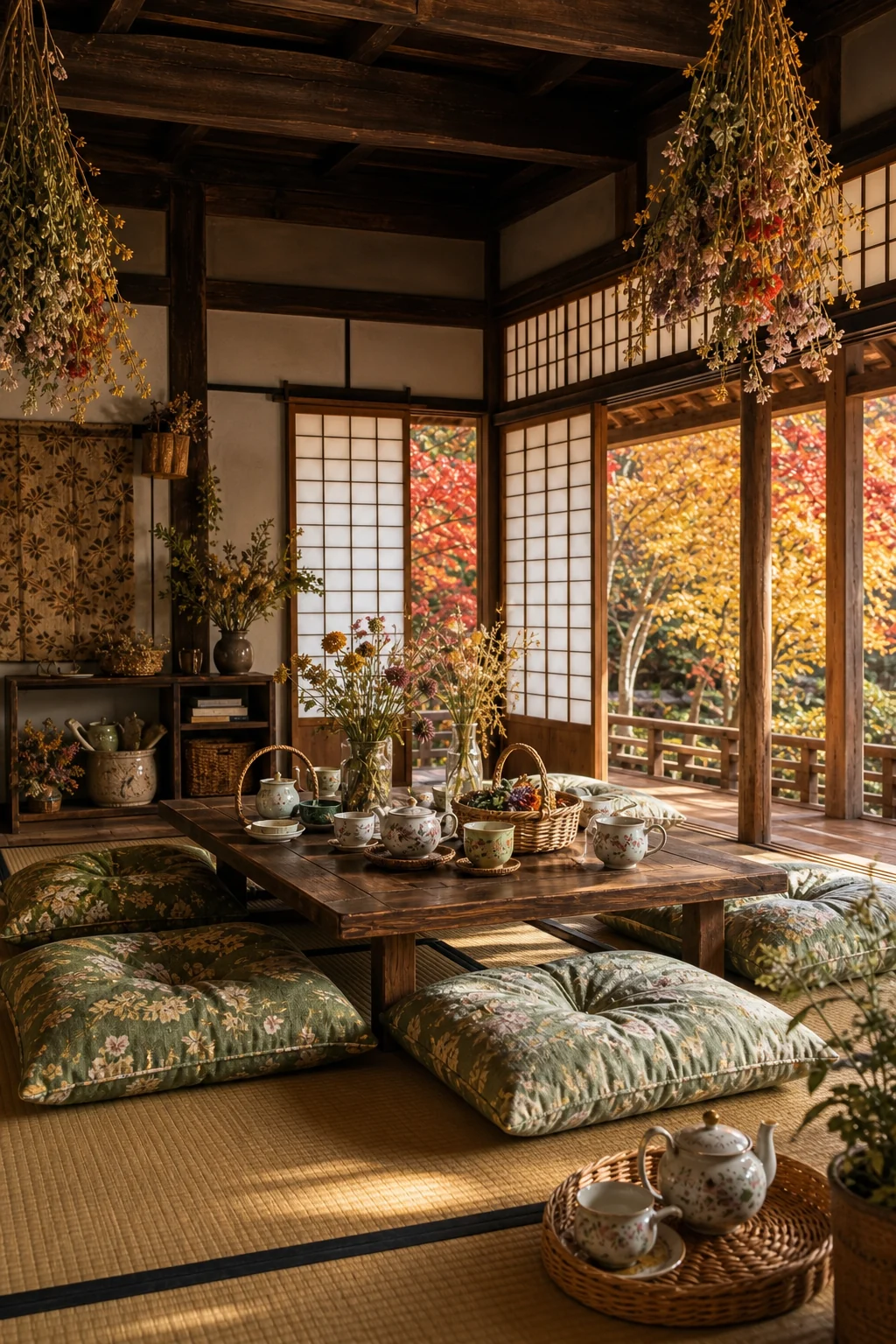
Surrounding this traditional centerpiece with faded sage green cushions creates an incredibly inviting, intimate seating arrangement. This specific composition successfully merges the rigorous architectural shell with incredibly cozy, low-profile craft objects, ensuring the room remains highly functional and deeply, undeniably comfortable for guests.
| Design Layer | Cottagecore Role | Japanese Traditional Role | Bridge Decision |
|---|---|---|---|
| Architectural Shell | Soft, faded color palette | Dark timber and shoji screens | Warm amber and roasted oak tones |
| Large Furniture | Cozy, low-profile craft objects | Floor-level chabudai tables | Shared low visual datum line |
| Textiles | Plump floral-print linen | Woven igusa tatami mats | Natural, unbleached organic fibers |
| Accents | Vintage mismatched ceramics | Restrained cast-iron kettles | Tactile, hand-crafted rustic finishes |
By adhering strictly to this translation framework, every new furniture addition serves a specific, calculated purpose. The table provides functional structure, while the surrounding textile elements offer the necessary softness to invite lingering conversations, relaxed weekend afternoons, and peaceful evening reading.
Illuminating the Timber Frame
Generous golden daylight is absolutely essential for keeping the dark roasted timber from feeling oppressive or visually heavy. Bright, balanced exposure ensures that the intricate floral patterns remain highly visible, cheerful, and incredibly inviting throughout the entire duration of the day.
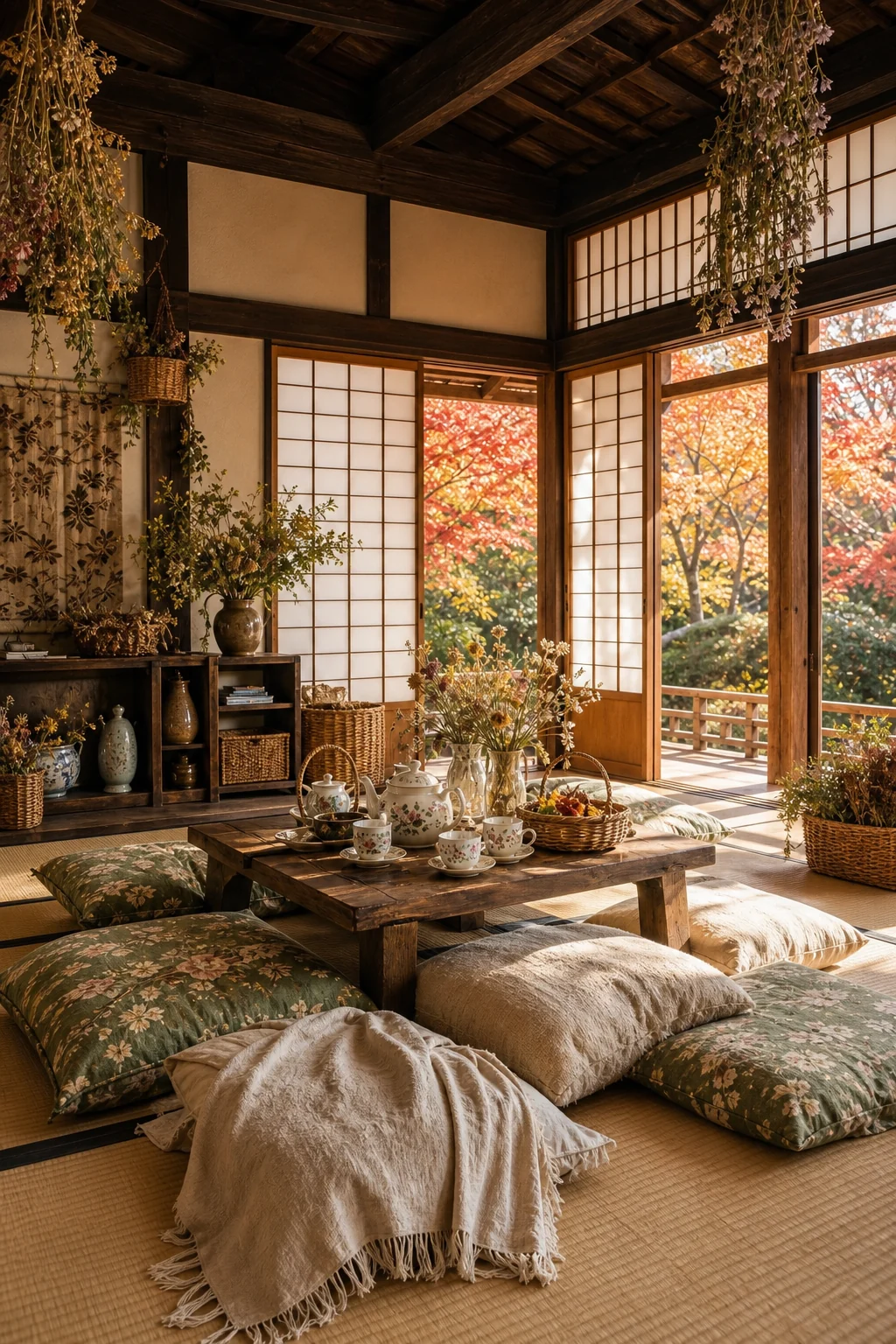
Natural light washing over soft unbleached linen gently reflects ambient window light back into the center of the room. This crucial illumination keeps deep shadows open, revealing the essential architectural details of the impressive, historically rooted timber frame construction techniques used throughout.
- Maximize natural daylight to beautifully highlight the dark roasted timber without creating harsh, distracting shadows anywhere.
- Use soft unbleached linen textiles to gently reflect ambient window light into darker interior corners effectively.
- Ensure deep shadows remain open to reveal the subtle architectural details of the impressive post-and-beam construction.
Curating the Nostalgic Clutter
Tabletop styling requires a careful, deliberate edit of vintage objects against restrained geometric trays. The primary goal is to display cherished collections while maintaining generous pockets of empty space to honor the minimalist foundation of the entire architectural living room shell.
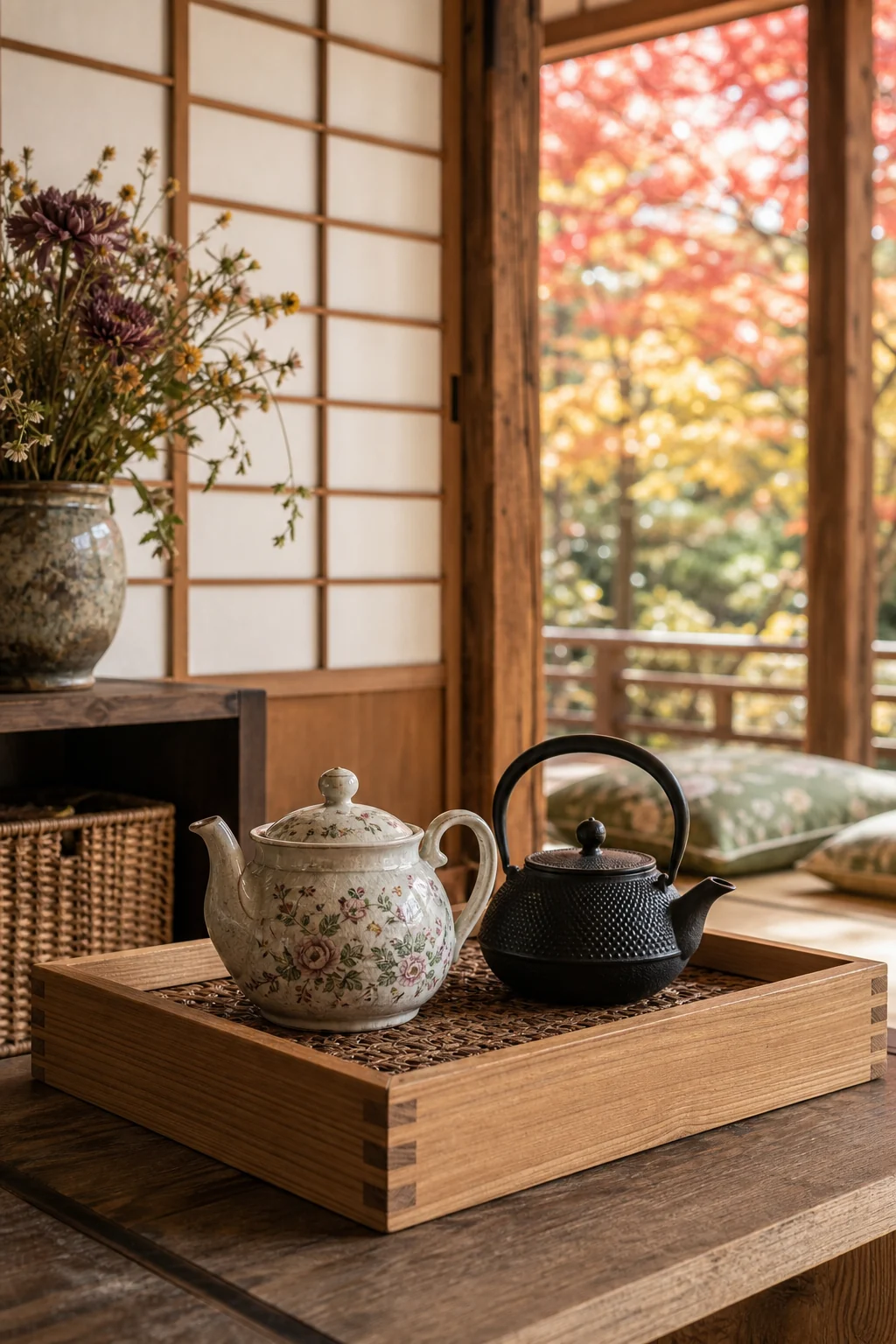
Pairing a vintage mismatched ceramic tea set alongside a single cast-iron tetsubin kettle creates a perfect, balanced dialogue. These highly tactile, rustic finishes beautifully soften the rigorous wooden console beneath them, adding warm personality without ever sacrificing the underlying serene atmosphere.
- Group vintage mismatched ceramic tea sets on low wooden trays to contain the visual clutter effectively and beautifully.
- Pair a minimalist cast-iron tetsubin kettle with delicate floral porcelain to create immediate, striking material contrast.
- Contain loose dried herbs within rustic woven wicker gathering baskets to maintain highly organized, intentional displays.
Translating the Thresholds
Passageways and sliding doors offer brilliant, fleeting moments to subtly shift the delicate balance of materials. Carrying this specific hybrid logic into transitional spaces ensures the entire home feels cohesive, highly intentional, and deeply connected rather than disjointed, chaotic, or randomly assembled.
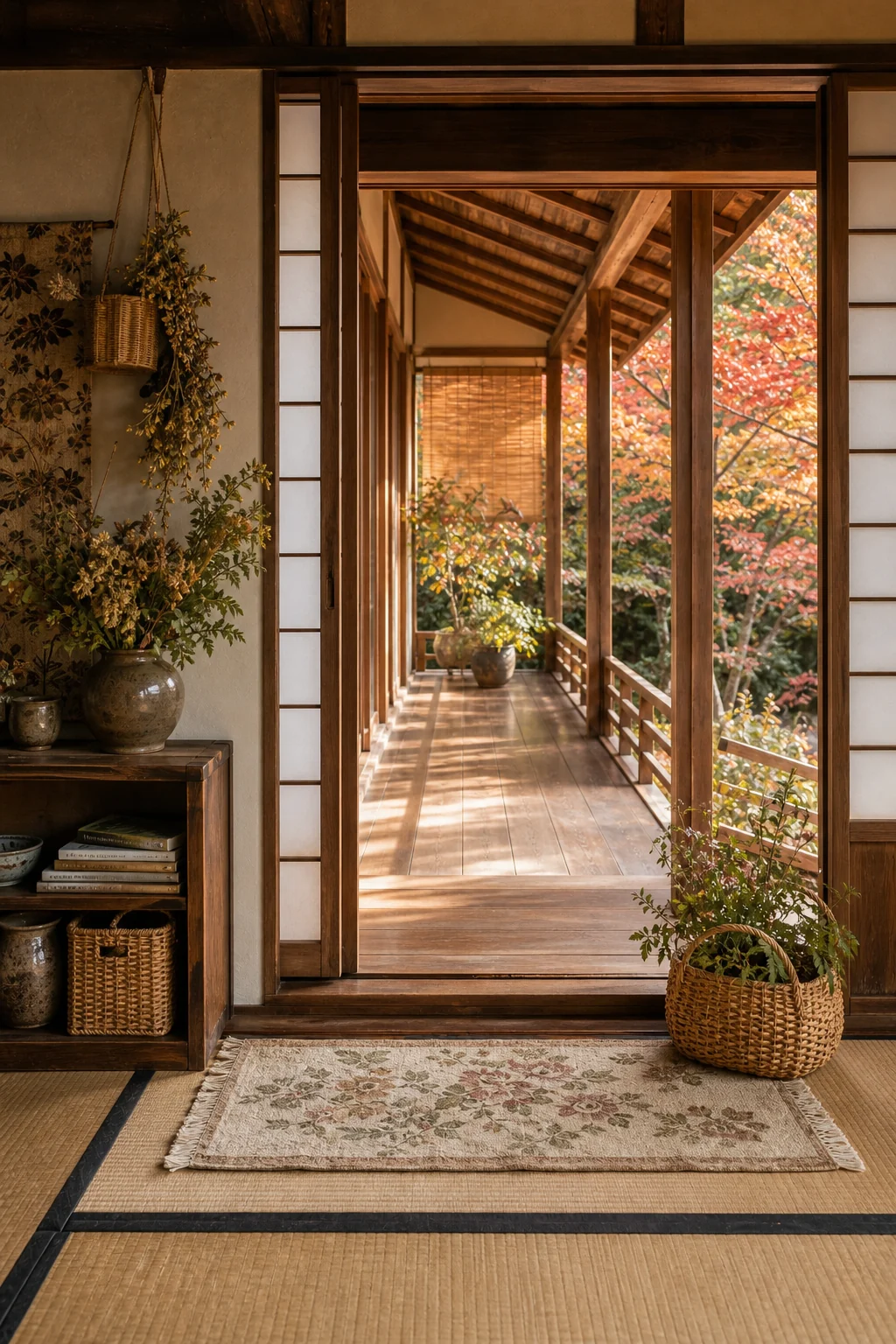
Seeing woven tatami mats meet a small rustic floral rug proves the immense versatility of this approach. These subtle threshold moments perfectly maintain the unified autumnal craft palette as you move gracefully between different rooms in the beautifully designed house.
Allowing these transitional zones to remain relatively sparse provides a necessary visual palate cleanser. It ensures that the maximalist moments in the main seating area feel earned and deliberate, rather than overwhelming the senses as you navigate through the tranquil home.
Maintaining the Serene Balance
Stepping back reveals a living room that feels incredibly inviting yet architecturally profound. Achieving this specific success relies entirely on strict adherence to the shared autumnal palette of amber, sage, and roasted oak to prevent visual fragmentation or confusing aesthetic clashes.
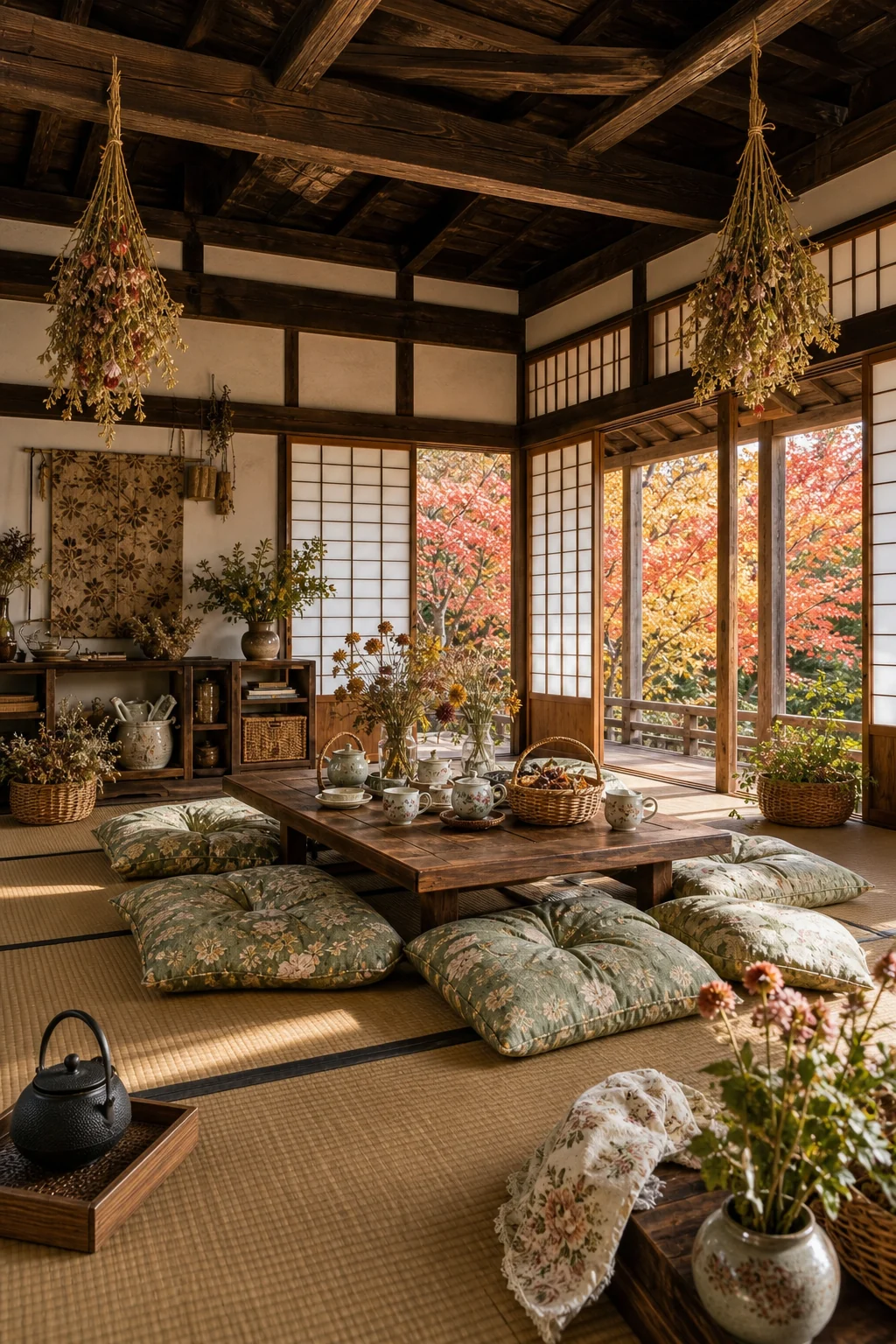
The rigorous geometry of the Japanese traditional shell perfectly contains the Cottagecore warmth. This deliberate, careful resolution proves that maximalist comfort and serene minimalism can indeed coexist beautifully in one physical space when guided by strict material rules and thoughtful placement.
- Avoid overwhelming the serene space with excessive or loud wall art that breaks the disciplined architectural grid.
- Prevent a split personality by strictly sharing the unified autumnal craft palette across all chosen decorative objects.
- Never block sliding shoji screens with large, heavy furniture pieces that disrupt the essential natural light flow.