
Ryokan Meets Witchcore: Bathroom
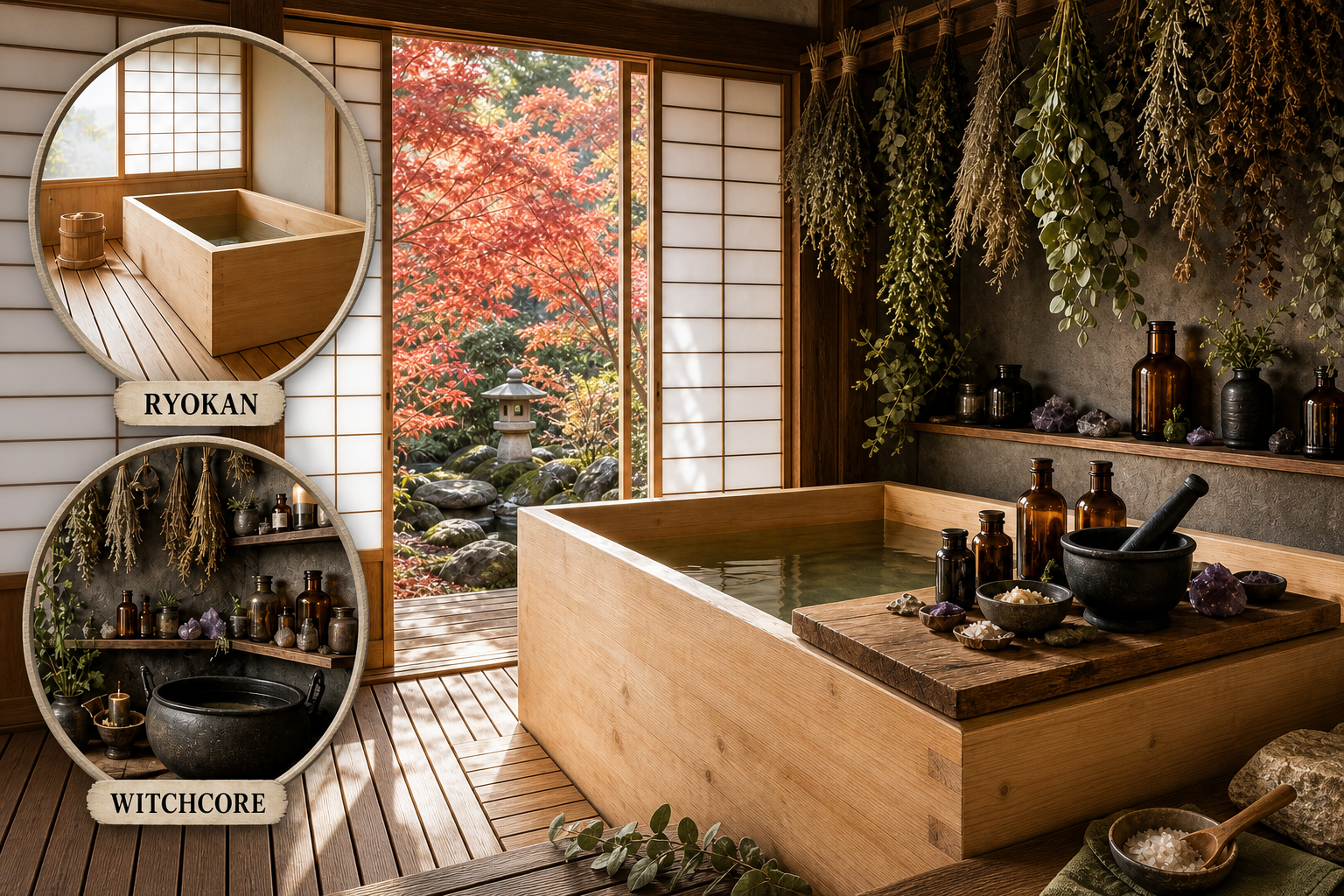
Ryokan design demands absolute spatial emptiness, while witchcore thrives on the accumulated clutter of botanical foraging. By using traditional Japanese architecture as a disciplined stage, mystical apothecary tools become purposeful bathing rituals rather than chaotic, overwhelming messes.
Style A language
The foundation of this bathing space relies on strict Japanese geometric restraint. A deep hinoki soaking tub establishes an immediate sense of disciplined calm, demanding an entirely clear perimeter to let the eye rest and fully appreciate the emptiness and the surrounding architecture.
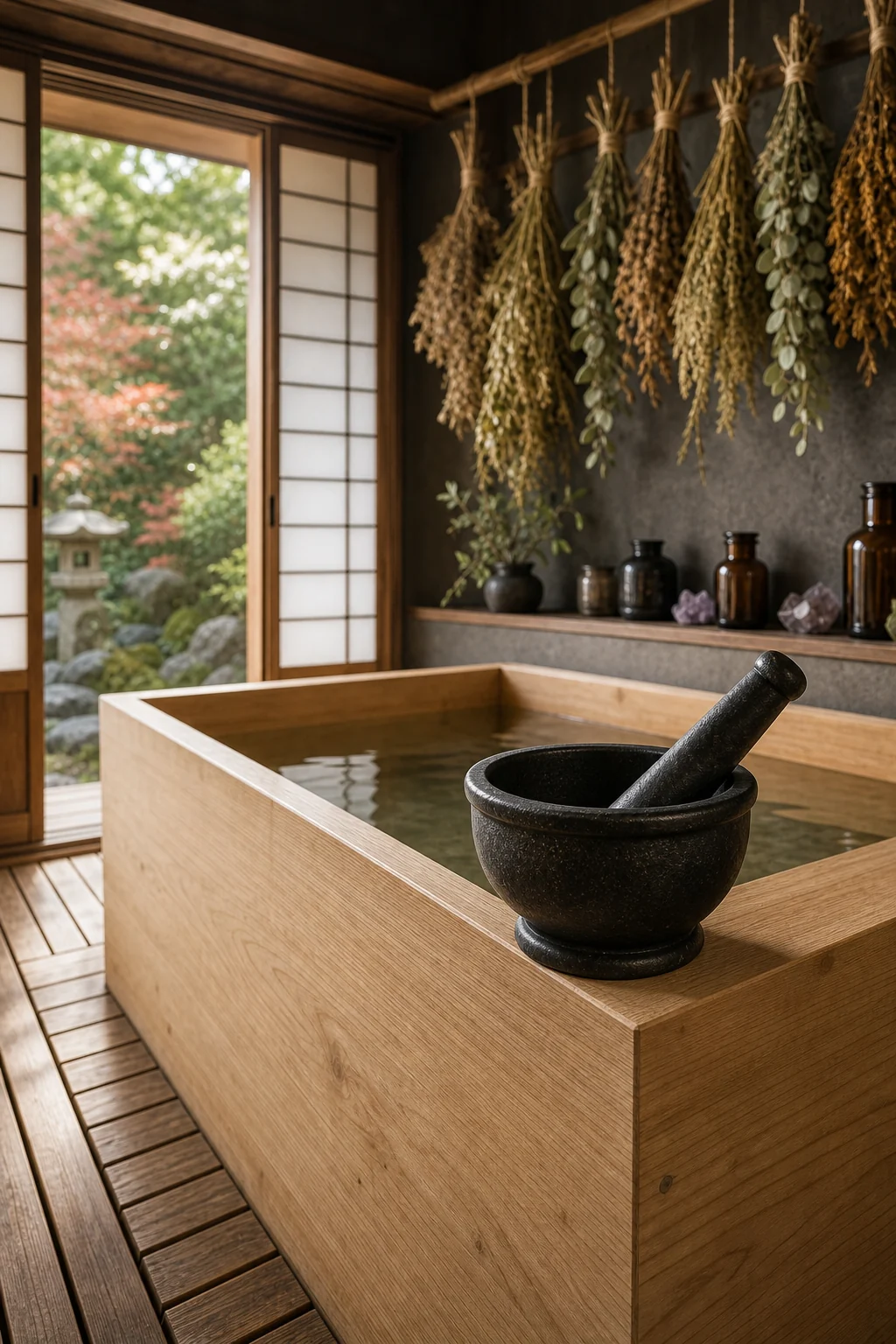
Notice how the pristine, sharp edges of the blonde wood provide a secure visual anchor. This architectural emptiness creates a deliberate void, waiting to be activated by heavier, darker elements without ever feeling overwhelmed, cluttered, or visually cramped in any way.
Maintaining this strict spatial discipline ensures the room retains its essential spa-like serenity. The underlying ryokan framework acts as a quiet, confident host, capable of supporting intense visual textures precisely because its own geometry remains completely uncompromising and pure at all times.
Style B language
Mystical apothecary tools require a deliberate display to avoid overwhelming the minimalist shell. Bundles of dried mugwort and eucalyptus transform raw foraging into a structured visual layer, introducing organic complexity to the otherwise rigid, highly controlled architectural lines of the space.
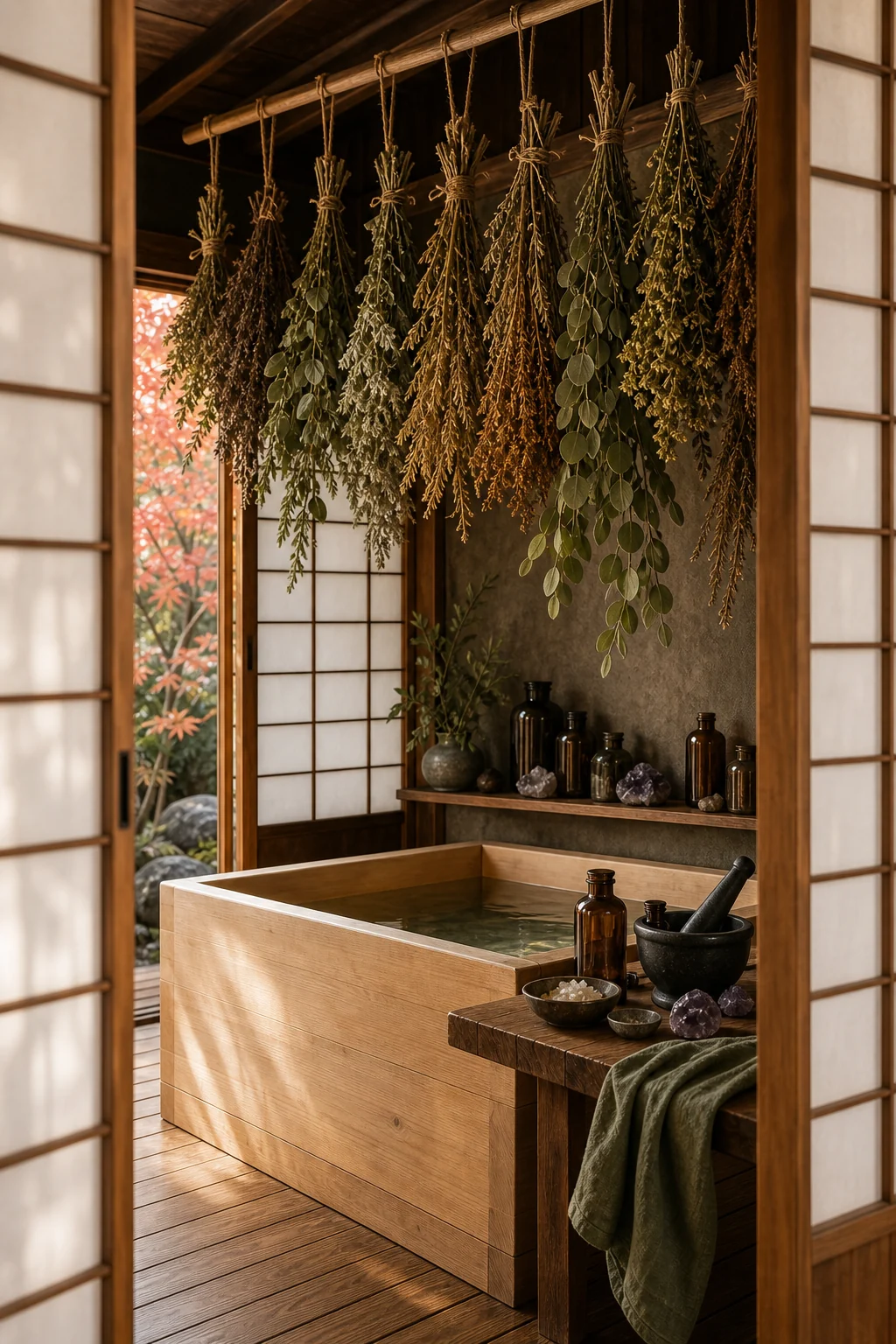
Suspended against the clean geometry of the room, these natural elements feel like necessary ingredients rather than forgotten debris. Organizing this botanical accumulation requires strict curation to maintain serenity, turning chaotic herbs into a beautiful, intentional, and fragrant canopy above the tub.
- Hang dried herbs in uniform, evenly spaced bundles to maintain strict visual rhythm overhead and prevent chaotic tangles.
- Group amber glass bottles by height to create a deliberate, organized silhouette on your rustic wooden display shelves.
- Store loose bath salts in lidded dark ceramic jars to conceal powdery, chaotic textures from the serene environment.
The bridge
Unpolished, raw natural materials seamlessly connect both aesthetics. The shared warm palette of blonde cedar, amber glass, and forest green bridges the gap between structured emptiness and mystical accumulation, ensuring neither style feels alien or disconnected from the other in the room.
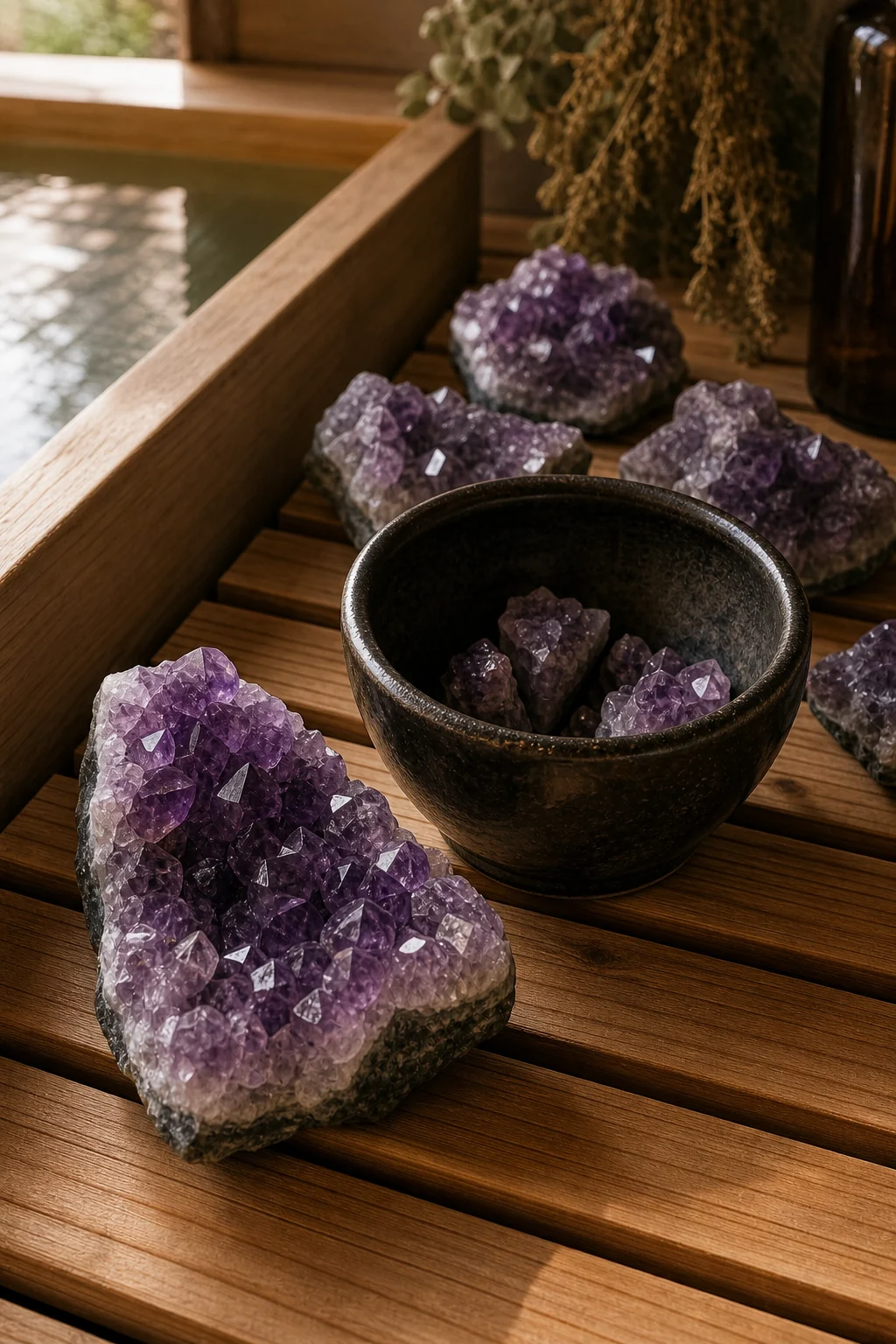
The jagged edges of raw amethyst contrast beautifully against the smooth, linear grain of the floor mats. This shared reverence for authentic tactile surfaces unites the opposing design languages into a single, cohesive narrative of deeply grounded earthy mindfulness and relaxation.
By eliminating plastics and high-gloss finishes, the room achieves a timeless, grounded atmosphere. The transition from a smooth bamboo ladle to a heavy iron cauldron feels entirely natural because both objects share a fundamental, unrefined honesty in their material composition and daily use.
Build the room
Constructing this hybrid requires balancing the visual weight of heavy iron with airy wooden structures. The room functions as a cohesive sanctuary where every botanical element serves a clear, defined purpose within the larger, highly disciplined architectural framework of the space.
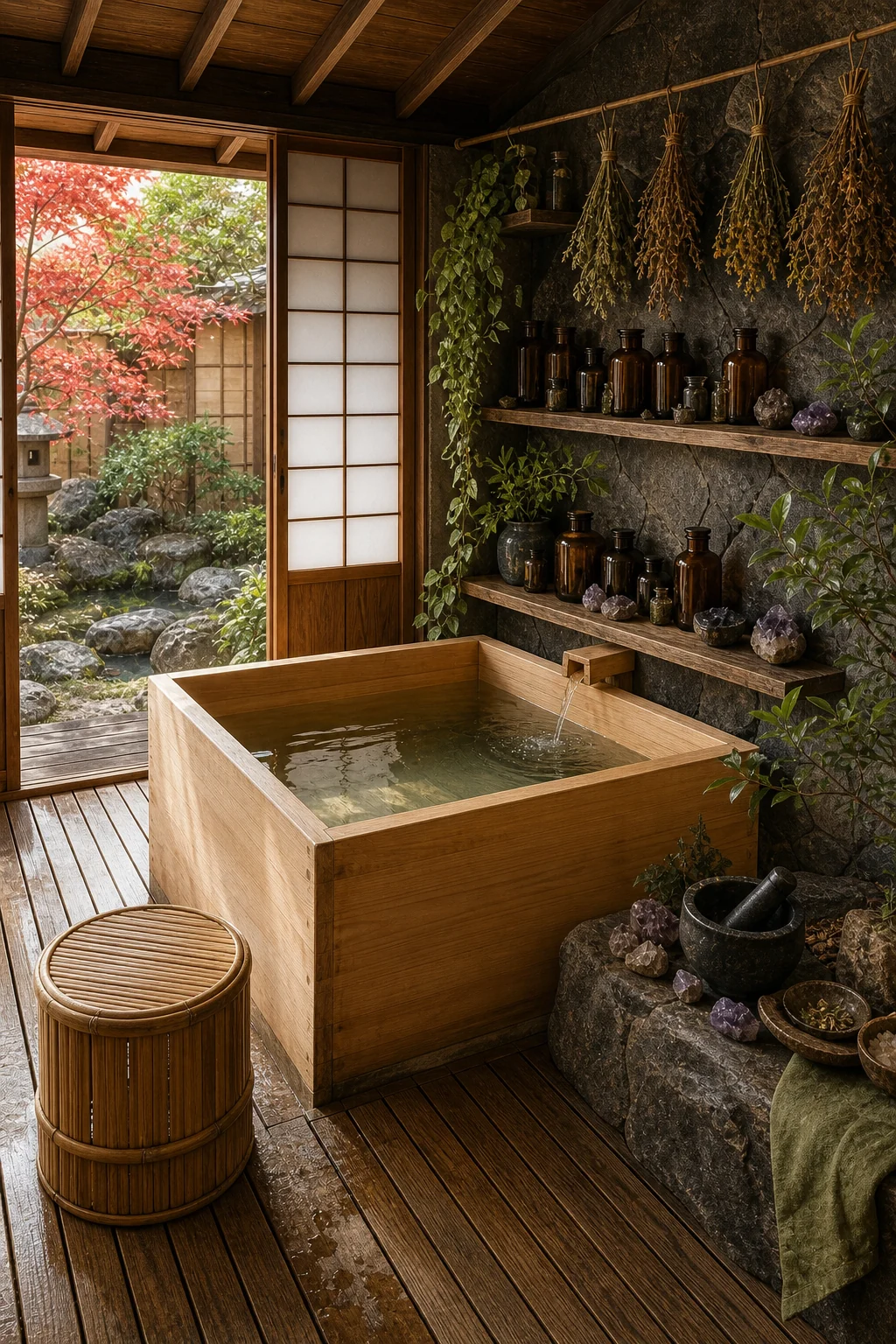
By assigning specific zones for bathing and storage, the layout prevents visual competition. The translation table below maps exactly how each layer contributes to this resolved, functional bathing vignette, ensuring the resulting space feels perfectly calibrated and entirely intentional in its design.
| Design Layer | ryokan Role | witchcore Role | Bridge Decision |
|---|---|---|---|
| Shell | Pristine slatted cedar flooring and shoji screens | Dark, textured stone accent walls | Unfinished, tactile natural surfaces |
| Furniture | Deep, square hinoki wood soaking tub | Rustic, heavy wooden apothecary shelving | Clean geometric lines in raw materials |
| Lighting | Soft, diffused daylight through paper | Flickering pillar candles in dark holders | Warm, atmospheric illumination |
| Accents | Smooth bamboo ladles and wooden stools | Cast-iron cauldrons and raw crystals | Purposeful ritualistic tools |
This structured approach guarantees that the heavy apothecary elements never overwhelm the delicate wooden architecture. By treating every addition as a necessary component of the bathing ritual, the room achieves a profound sense of balanced tranquility and lasting visual harmony for the user.
Light and architecture
Generous autumn daylight prevents the dark apothecary elements from feeling gloomy. Crisp illumination filtering through translucent paper screens ensures the amber glass and cast iron read clearly against the wood, highlighting their rich, earthy textures without creating muddy shadows in the corners.
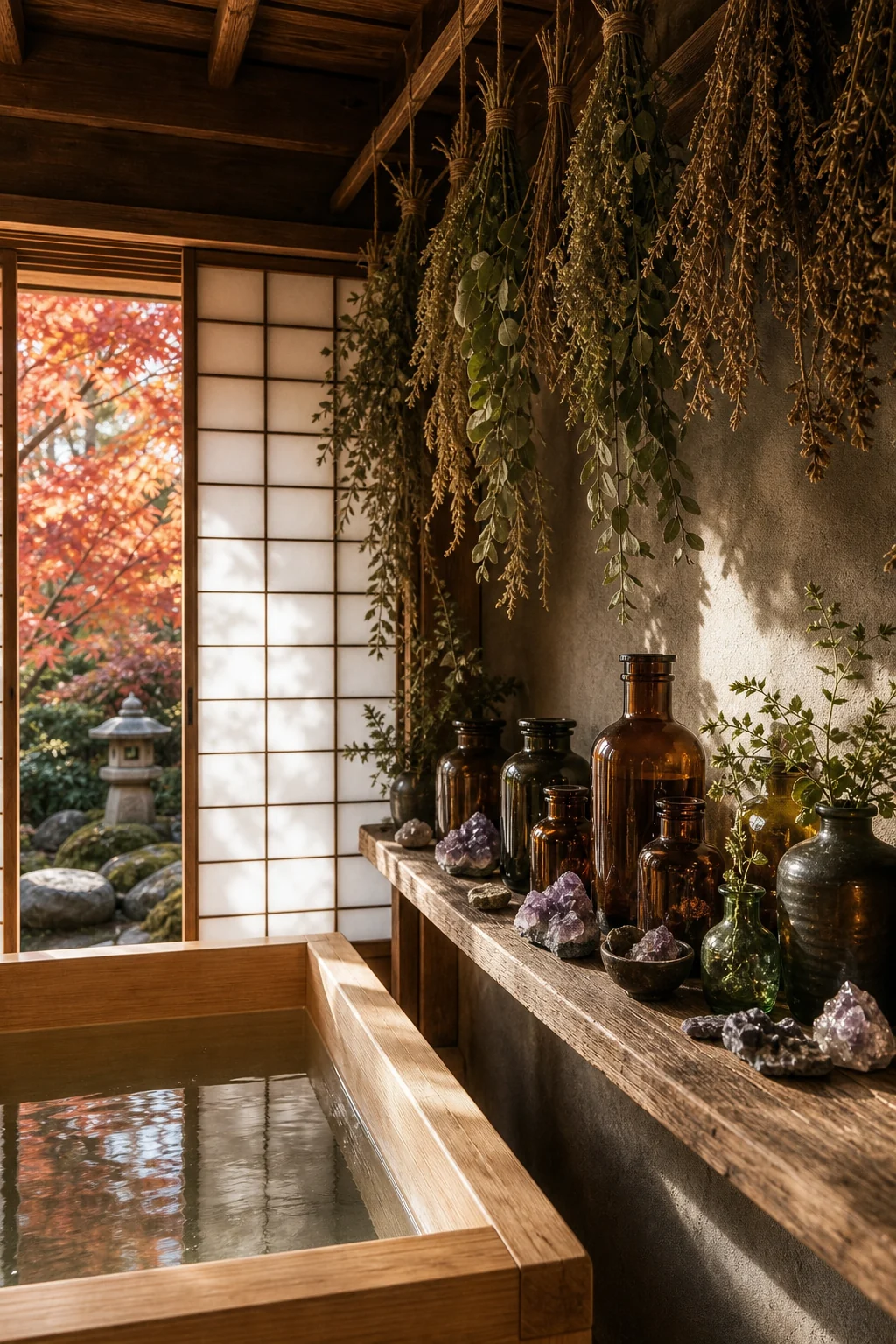
The soft diffusion of the shoji screens lifts the midtones, illuminating the rich colors of the botanical ingredients. Proper lighting ensures the mystical atmosphere remains inviting and spa-like, rather than descending into a dark, oppressive, or uninviting cavernous environment during the day.
- Maximize natural light to lift heavy stone textures and prevent the compact bathing room from feeling visually small.
- Use translucent screens to soften harsh direct sunlight and create a gentle, ambient glow across the wooden surfaces.
- Place amber glass where it can catch the daylight to emphasize its luminous qualities and rich jewel tones.
Style the details
Curating the apothecary shelf demands strict editing to maintain the spa-like atmosphere. Grouping functional bathing tools together creates a deliberate, mystical vignette that respects the overarching geometric restraint of the surrounding traditional Japanese architecture and its inherent peacefulness and calm.
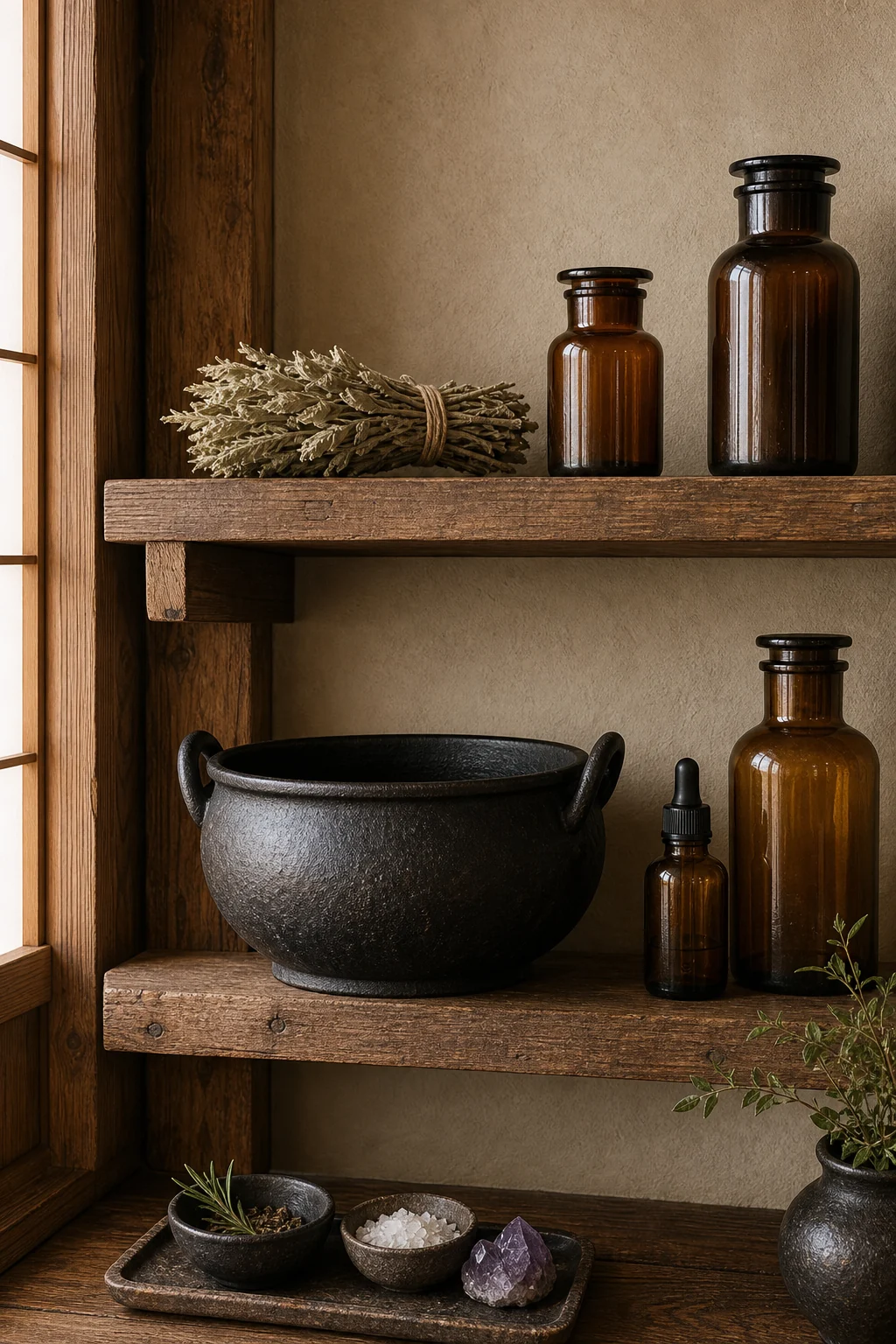
A heavy mortar and pestle grounds the arrangement, while the translucent bottles add a luminous quality. Focus your sourcing on functional, unrefined apothecary elements that actively support the bathing ritual rather than merely decorating the space with unnecessary clutter and visual noise.
- Source heavy cast-iron mortars and pestles to grind fresh botanical bath salts directly before your daily soaking ritual.
- Collect amber and dark green apothecary glass bottles for storing essential oils, keeping the visual palette perfectly cohesive.
- Display raw, unpolished amethyst or clear quartz clusters alongside your bathing tools to introduce natural, earthy textural contrast.
- Hang dried eucalyptus and mugwort bundles to release natural aromatics in the steam while providing a beautiful canopy.
Adapt it
Translating this concept to a standard bathroom starts at the entryway. Swapping standard tile for slatted wooden floor mats instantly introduces a traditional foundation for your botanical additions, setting a mindful tone immediately upon entering the private bathing sanctuary and closing the door.
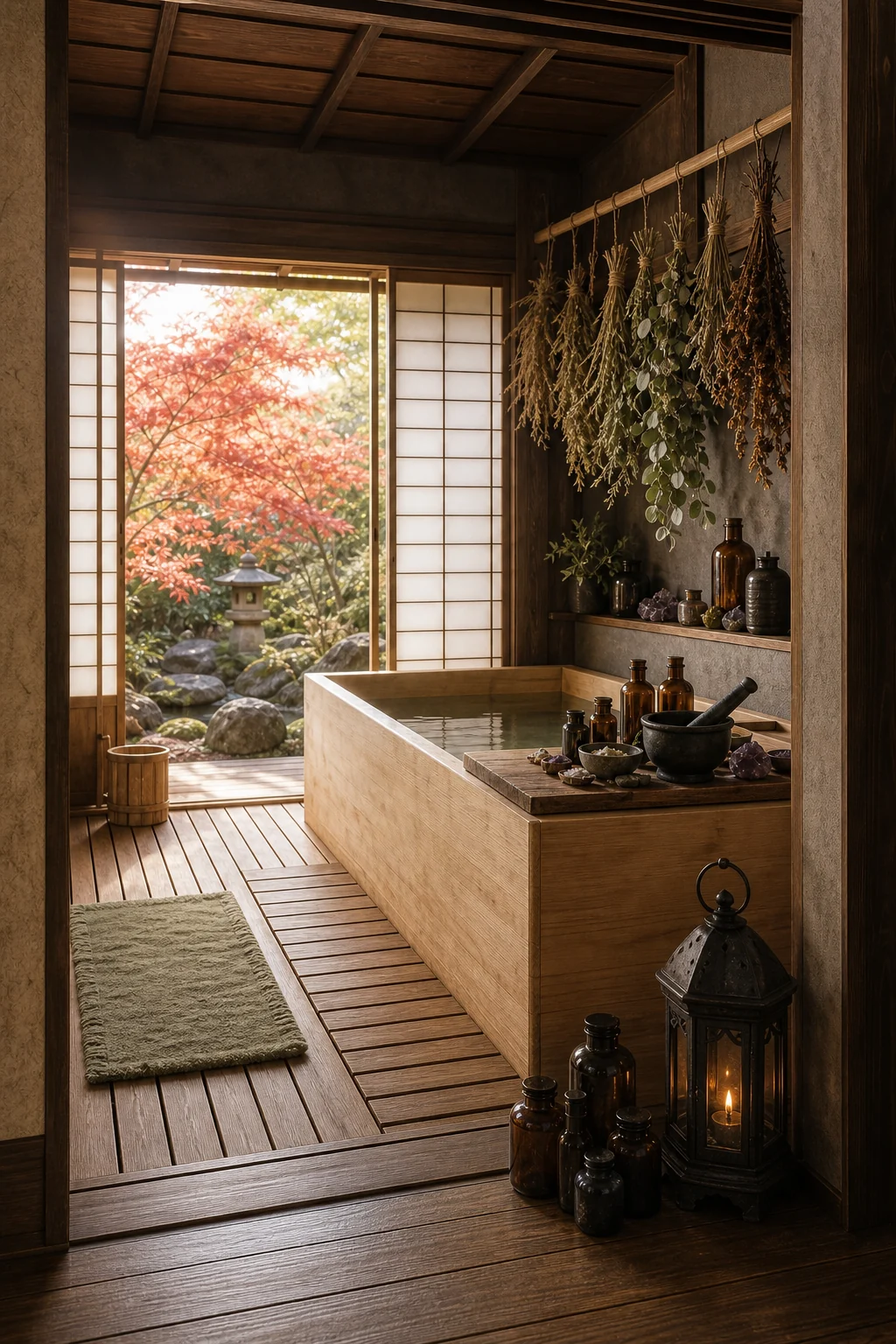
A dark iron lantern placed on the slatted wood immediately establishes the hybrid aesthetic before you even reach the tub. You can achieve this specific mood without undertaking major architectural renovations or replacing your existing plumbing fixtures at all in the room.
Small, intentional upgrades create a massive visual impact when unified by a consistent material palette. Focusing on tactile accessories allows you to capture the essence of the design without committing to permanent, expensive architectural changes that disrupt your daily life or budget.
Avoid the costume
The most common failure mode is allowing the botanical foraging to become chaotic clutter. When the apothecary tools overwhelm the empty space, the room loses its essential, disciplined calm and begins to feel like a theatrical set rather than a sanctuary for relaxation.
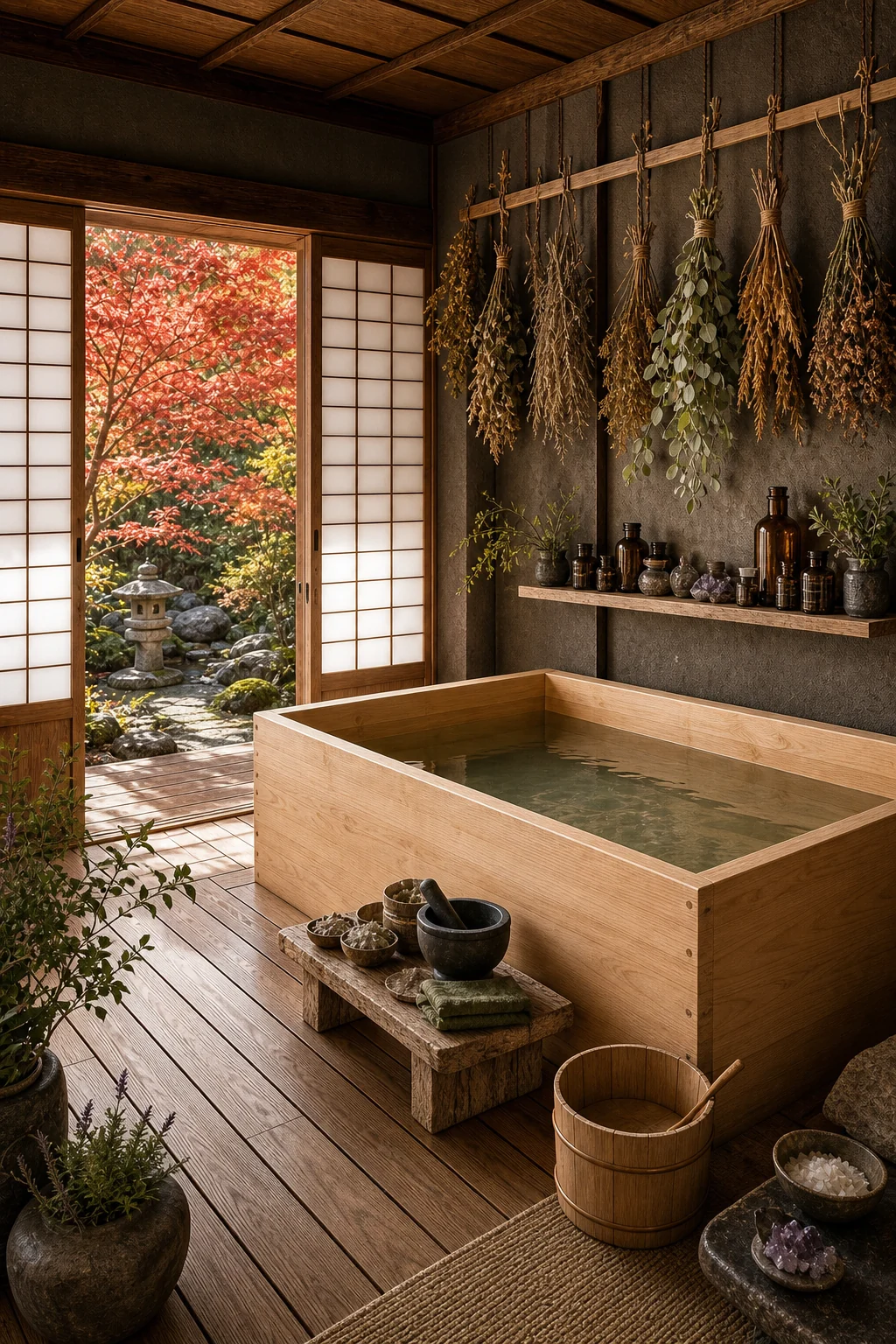
By confining the mystical elements to specific vertical planes and designated trays, the floor remains completely pristine. Follow these strict boundaries to ensure the space remains a serene retreat rather than a disorganized, overwhelming storage closet filled with random debris and dust.
- Avoid fake cobwebs or overly theatrical gothic props that ruin the authentic natural atmosphere of the peaceful bathing space.
- Never let dried plants shed into the bathing water or onto the pristine wooden floor, requiring constant daily maintenance.
- Keep the floor entirely clear of decorative objects to preserve the essential spatial emptiness that defines the ryokan experience.