
Neo Traditional Meets Brutalism: Dining Room
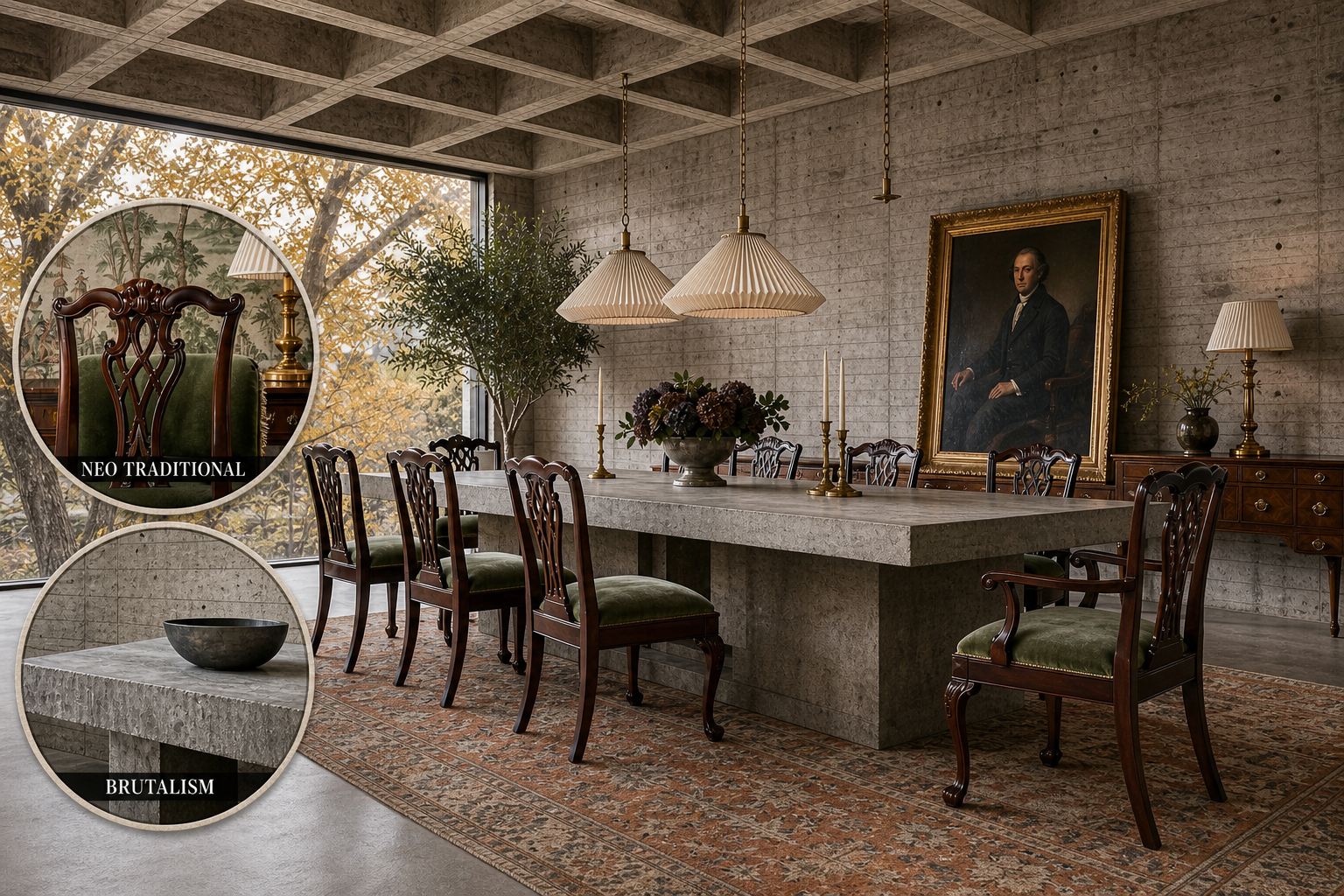
The delicate historicist ornament of neo traditional design clashes directly with the uncompromising raw austerity of brutalism. We resolve this profound tension by letting concrete dictate the monumental shell while tactile antique textiles and warm woods control the human layer.
The Neo Traditional Anchor
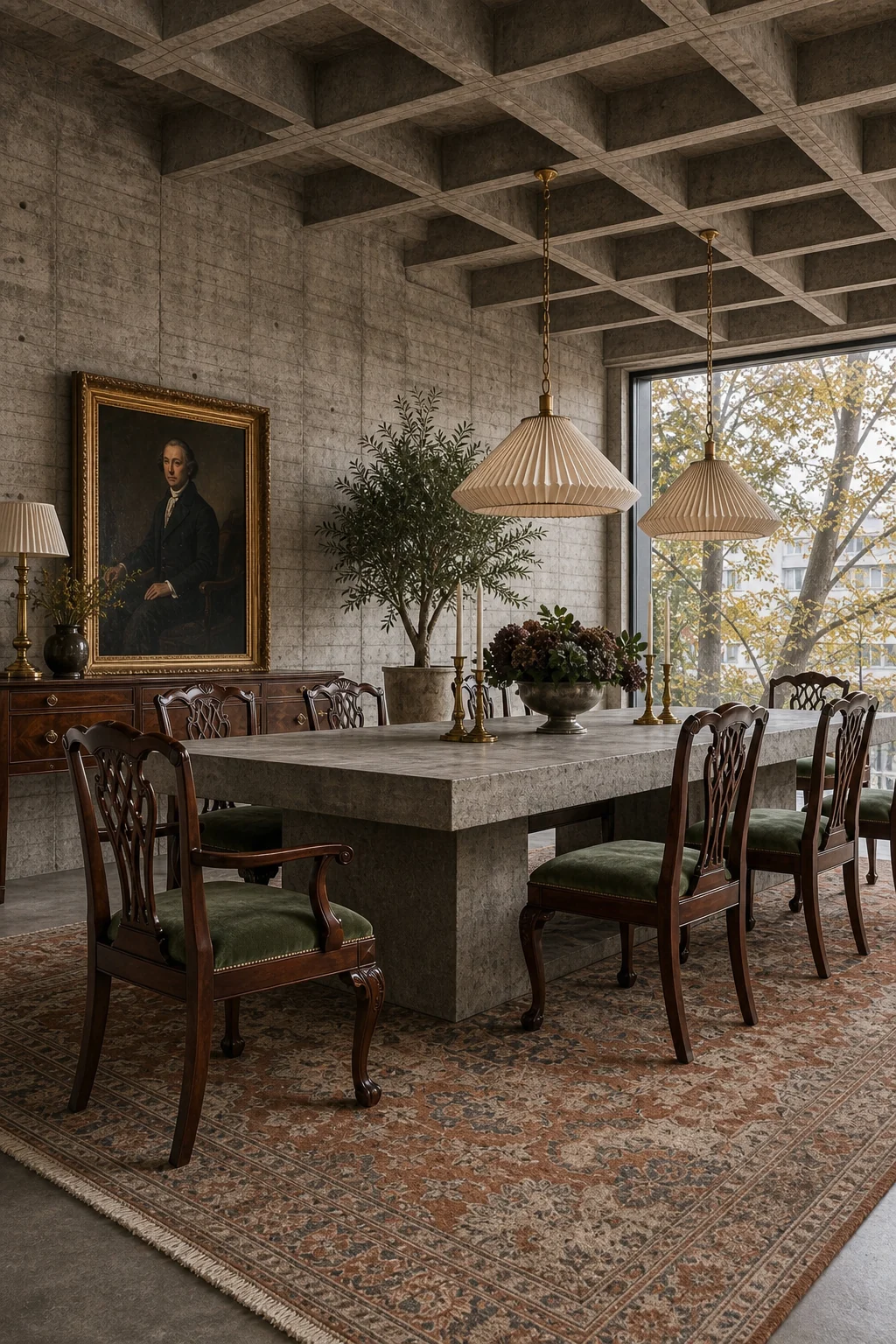
To successfully anchor a room against heavy architecture, delicate spindle chairs will simply disappear. You need the substantial visual weight of historicist neo traditional design, relying on intricate silhouettes and rich velvet upholstery to hold focus against massive concrete walls.
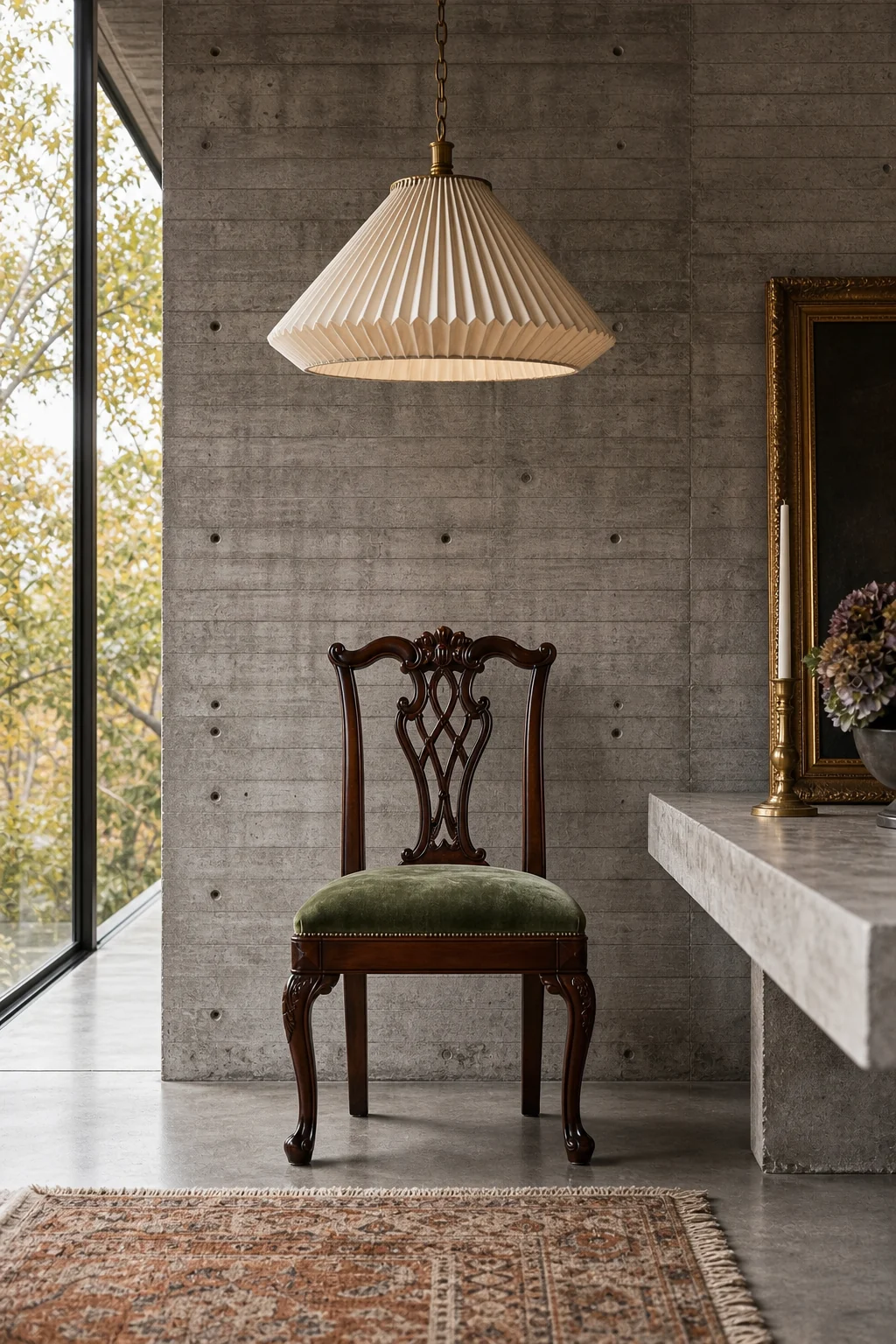
Notice how the dark mahogany and intricate back splats demand immediate visual attention. These ornate, classical forms provide the necessary gravity to stand up to monumental surroundings without ever feeling dwarfed or visually overpowered by the harsh architectural shell.
The deliberate choice of muted sage green velvet softens the dark wood, introducing a critical tactile layer. This plush upholstery invites genuine human comfort, creating an essential counterpoint to the unforgiving, austere surfaces that define the rest of the room.
The Brutalist Foundation
The foundation of this dining room relies entirely on the uncompromising honesty of brutalism. We embrace unadorned, heavy architectural massing to create a space that feels deliberately monumental, ensuring the raw concrete reads as an intentional choice rather than an unfinished basement.
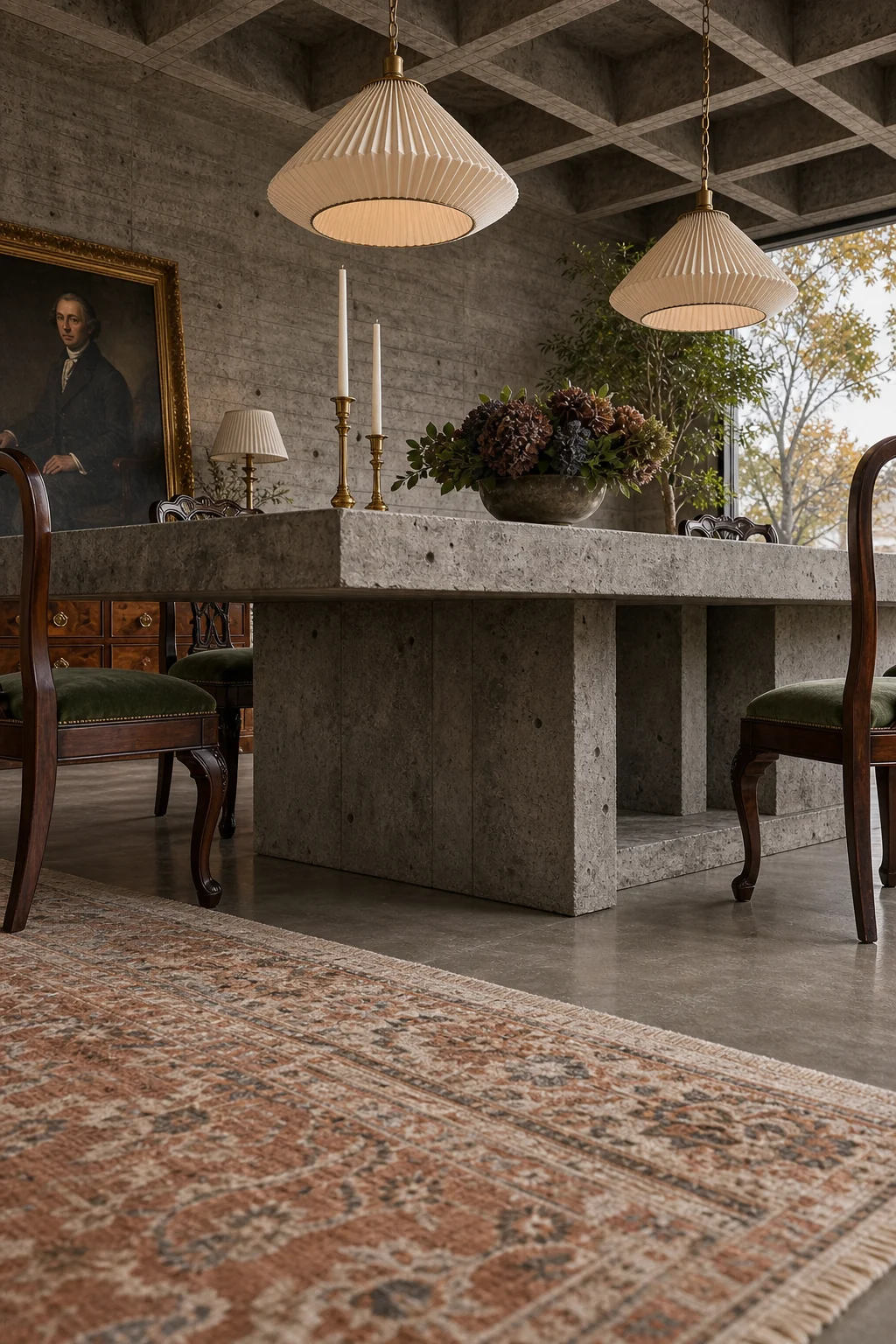
A heavy waffle-slab ceiling and board-formed raw concrete walls establish an austere, commanding base. This monolithic shell dictates the room’s overarching scale, providing a cold, highly textured backdrop that actively demands a warm, historicist counterpoint to become truly habitable.
Without this heavy geometric massing, the delicate antiques would feel entirely disconnected and floating. The uncompromising concrete foundation grounds the entire composition, forcing the elegant traditional elements to work much harder to claim their rightful space within the dining room.
Bridging the Divide
Connecting these opposing eras requires careful material transitions that deeply respect both distinct aesthetics. The faded greys and taupes of an antique rug perfectly echo the tones of the raw concrete floor, visually grounding the classical neo traditional elements within the modern shell.
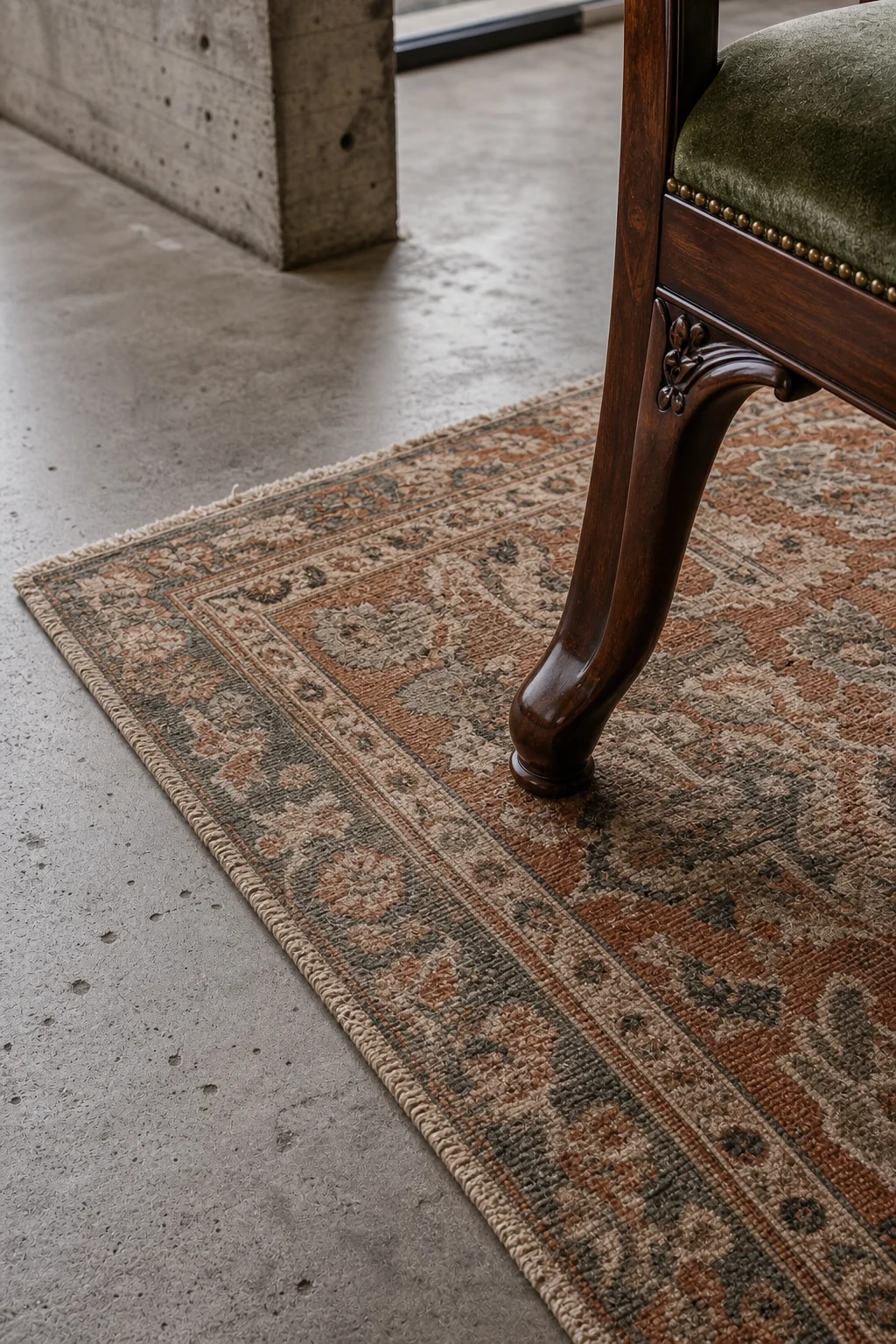
Successful bridging relies on overlapping material qualities rather than perfectly matching them. The tactile warmth of faded terracotta threads actively softens the coldness of polished concrete, uniting the entire room through a highly disciplined, shared palette of beautifully muted, earthy tones.
- Match the dark mahogany’s substantial visual weight directly to the monumental scale of the raw concrete architecture.
- Echo the muted tones of the cold concrete floor using the faded greys of a Persian antique rug.
- Wash the concrete with soft daylight to highlight architectural texture while simultaneously illuminating rich traditional velvet textiles.
- Unify the two disparate eras by relying on a shared, disciplined palette of oxidized brass and sage green.
Building the Vignette
Assembling the core dining setup requires strict role division to maintain the necessary aesthetic tension. A massive geometric concrete dining table interacts directly with velvet-upholstered mahogany chairs, creating immediate tactile friction between the hard architecture and the soft furnishings.
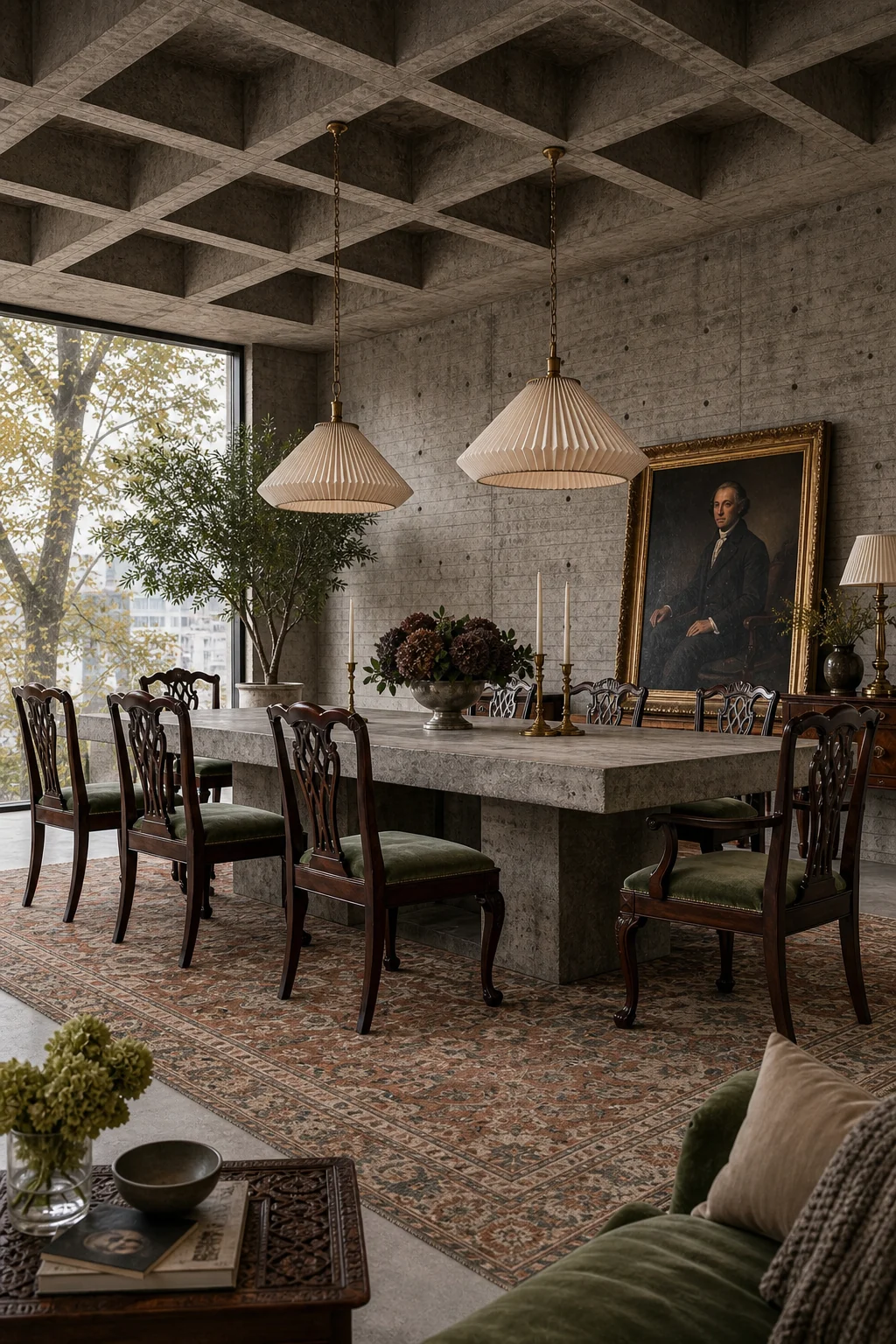
The success of this integrated vignette relies on letting brutalism provide the unyielding surface while neo traditionalism provides the human comfort. This deliberate role division creates a cohesive environment where neither style dilutes the powerful impact of the other.
| Design Layer | neo traditional Role | brutalism Role | Bridge Decision |
|---|---|---|---|
| Shell | Historicist artwork and warm, muted color palettes | Board-formed raw concrete walls and heavy waffle-slab ceiling | Muted grey tones in the classical art perfectly echo the concrete. |
| Large Furniture | Chippendale-style mahogany dining chairs with intricate back splats | Monumental, geometric concrete dining table with heavy massing | The heavy visual weight of mahogany matches the monumental concrete scale. |
| Textiles | Faded Persian Oushak rug and sage green velvet upholstery | Unadorned, hard architectural surfaces requiring essential acoustic softening | Faded terracotta and taupe threads perfectly match the raw concrete floors. |
| Lighting | Pleated silk pendant lampshades with oxidized brass hardware | Exposed industrial window frames and raw architectural ceiling voids | Soft, diffused light washes the concrete to beautifully highlight its texture. |
| Accents | Gilt-framed classical oil portraits and oxidized brass candlesticks | Austere matte steel bowls and unadorned, heavy geometric forms | Authentic patina and age replace applied ornamentation, uniting the disparate objects. |
By adhering strictly to this translation table, you prevent the room from descending into chaotic eclecticism. Every object serves a specific structural or tactile purpose, ensuring the final dining space remains a deliberately resolved contradiction rather than a random, uncurated assortment.
Lighting the Monolith
Soft, diffused autumn daylight from large London windows washes the concrete shell. This natural illumination lifts the midtones and beautifully highlights the board-formed texture without creating harsh, dramatic shadows that would overpower the delicate historicist details of the furniture.
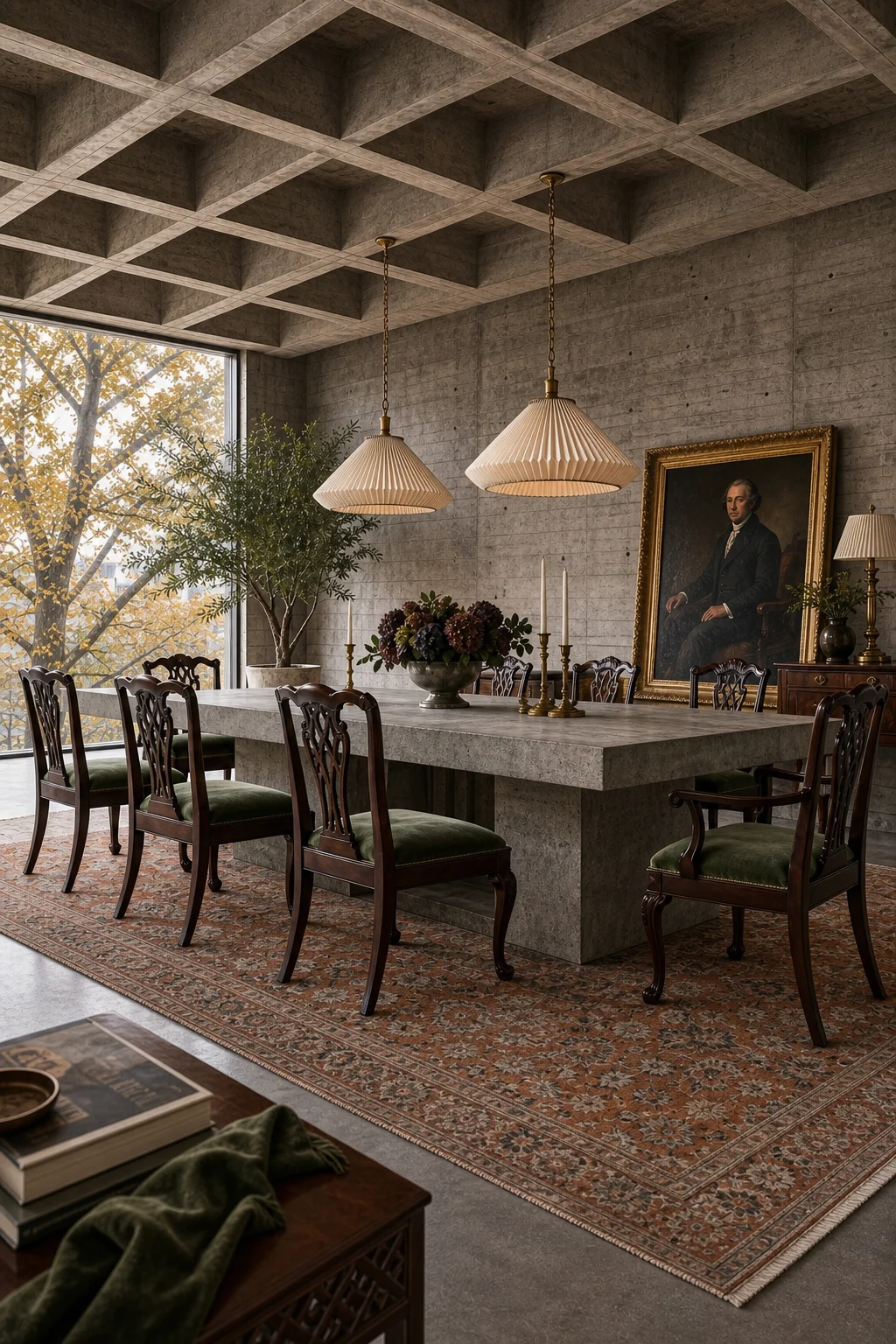
To counteract the heavy waffle-slab ceiling, twin pleated silk lampshades cast a warm, intimate glow. This localized illumination pulls focus directly down to the dining table, fostering intimacy and softening the monumental architectural voids lingering above the seating area.
The interplay between the cool daylight on the raw concrete and the warm incandescent glow on the mahogany creates a beautifully layered atmosphere. This dual lighting strategy ensures the room feels inviting during autumn evenings while fully respecting its austere foundations.
Styling the Surfaces
Decorating the concrete ledges and tables requires historicist artifacts that hold their own against the heavy architecture. We rely on natural patina to replace applied ornamentation, keeping the styling grounded and preventing the room from feeling overly precious or delicate.
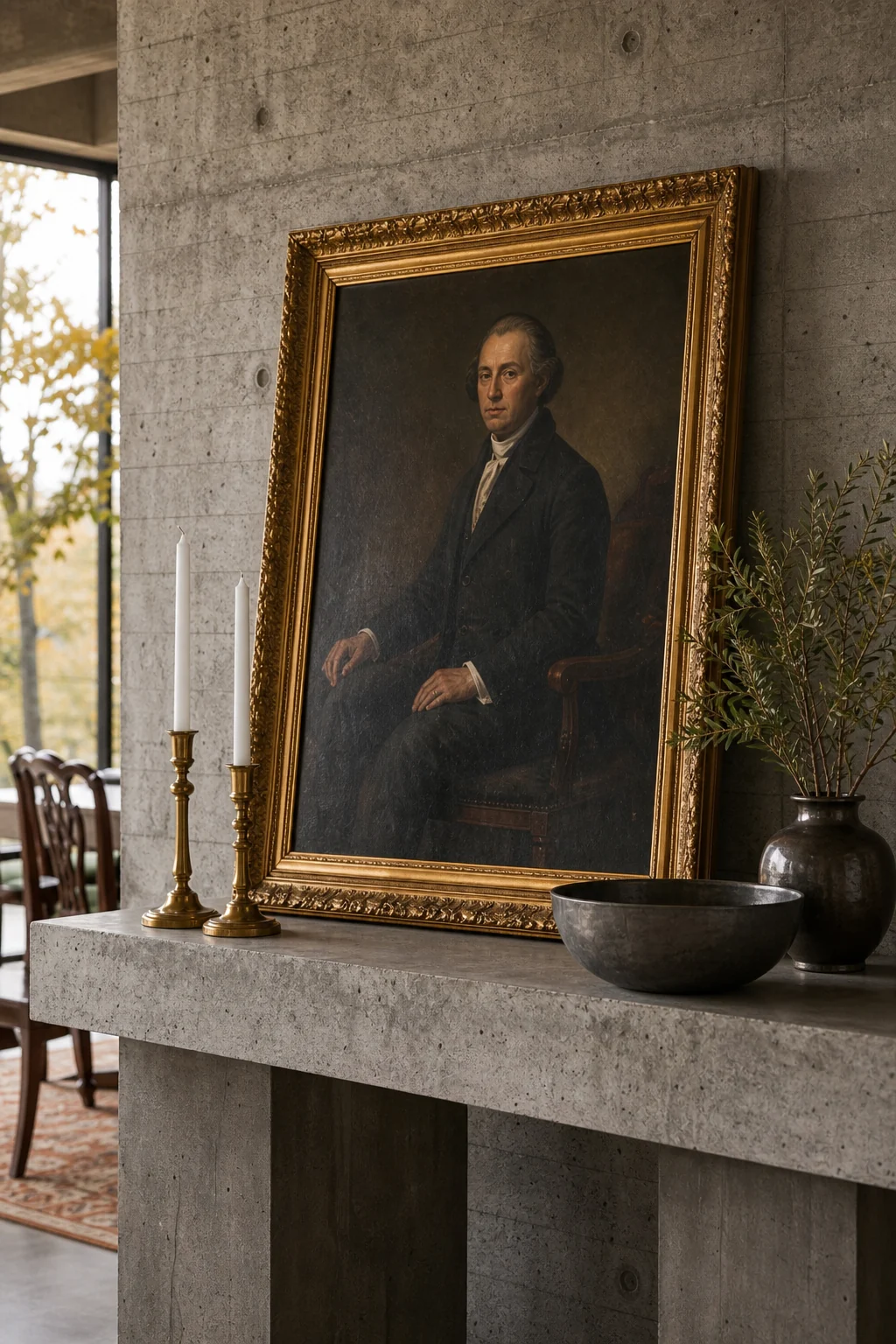
Notice the specific interaction of a gilt-framed classical portrait leaning casually against the raw concrete wall. This relaxed, unmounted placement prevents the traditional elements from feeling overly stiff, introducing a vital sense of effortless elegance to the highly austere space.
- Source Chippendale-style mahogany dining chairs featuring plush velvet upholstery and intricate, solid back splats.
- Find faded Persian Oushak rugs in muted terracotta and grey to echo the raw flooring.
- Select pleated silk pendant lampshades with oxidized brass hardware to provide soft, localized table illumination.
- Invest in a monumental geometric dining table crafted from either raw or highly polished concrete.
- Collect gilt-framed classical oil portraits specifically designed to lean casually against bare architectural concrete walls.
Adapting the Look
You do not need a custom poured-concrete house to achieve this specific aesthetic tension. Translating this logic to a standard home simply involves introducing heavy geometric forms into traditional spaces to permanently disrupt the expected, predictable historicist flow.
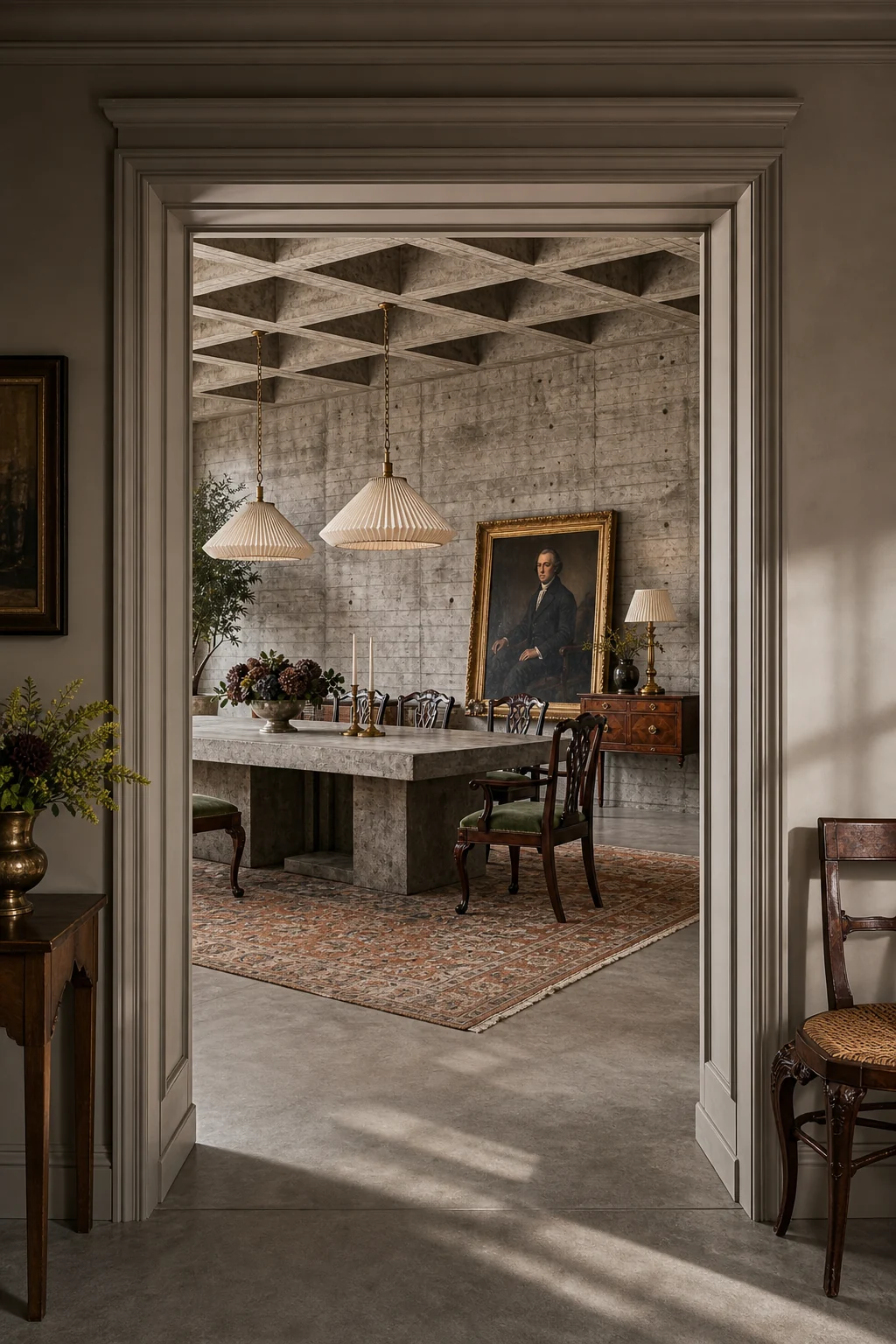
Focus on bringing a monumental concrete table into a classic dining room, or adding rich historicist textiles to a modern, austere apartment. The deliberate contrast itself generates the essential design energy, regardless of which style serves as the foundational base layer.
- Introduce a heavy concrete console table into a traditional dining space to test the aesthetic.
- Swap modern light fixtures for pleated silk shades to immediately soften harsh, contemporary room architecture.
- Use a faded terracotta rug to bridge the visual gap between warm woods and cool floors.
- Lean classical oil portraits against bare walls instead of hanging them in a formal gallery.
Avoiding the Costume
The greatest risk when merging these eras is the room feeling like a theatrical movie set. You must prioritize authentic materials over cheap imitations to ensure the architectural tension remains grounded, believable, and deeply respectful of both distinct design traditions.
This resolved contradiction works only when neither style compromises its core identity. The clash itself is the design, demanding absolute commitment to both the raw austerity of the concrete and the refined elegance of the antique neo traditional textiles.
- Avoid fake concrete wallpaper; authentic, heavy texture is absolutely required to visually anchor the room.
- Do not cluster all traditional items together; distribute them evenly across the entire dining space.
- Prevent concrete dominance by ensuring every chair features plush, tactile velvet upholstery for necessary comfort.
- Skip modern minimalist chairs; historicist mahogany silhouettes are essential for providing the necessary visual weight.