
Beaux-Arts Meets Wabi Sabi: Dining Room
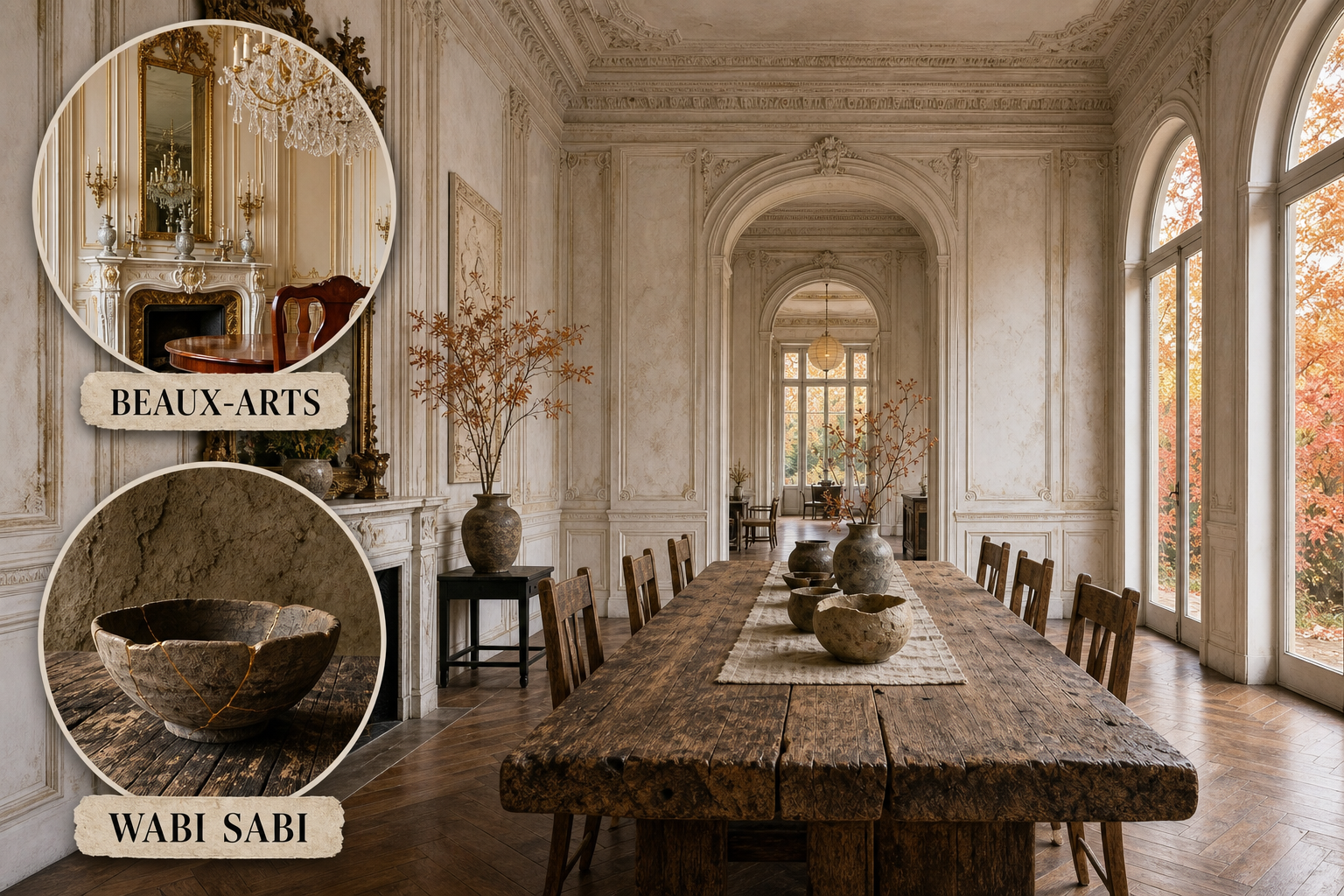
The pursuit of absolute classical perfection and monumental permanence clashes directly with the humble acceptance of transience, asymmetry, and decay. We resolve this contradiction by letting beaux-arts control the grand architectural scale while wabi sabi dictates the raw, unpolished materiality.
Monumental Architecture
Start by establishing a shell of uncompromising symmetry and monumental scale. Grand arched windows and elaborate cornices provide the rigid, formal proportions required by classical design, setting a highly structured, aspirational stage for the organic, earthy textures to follow.
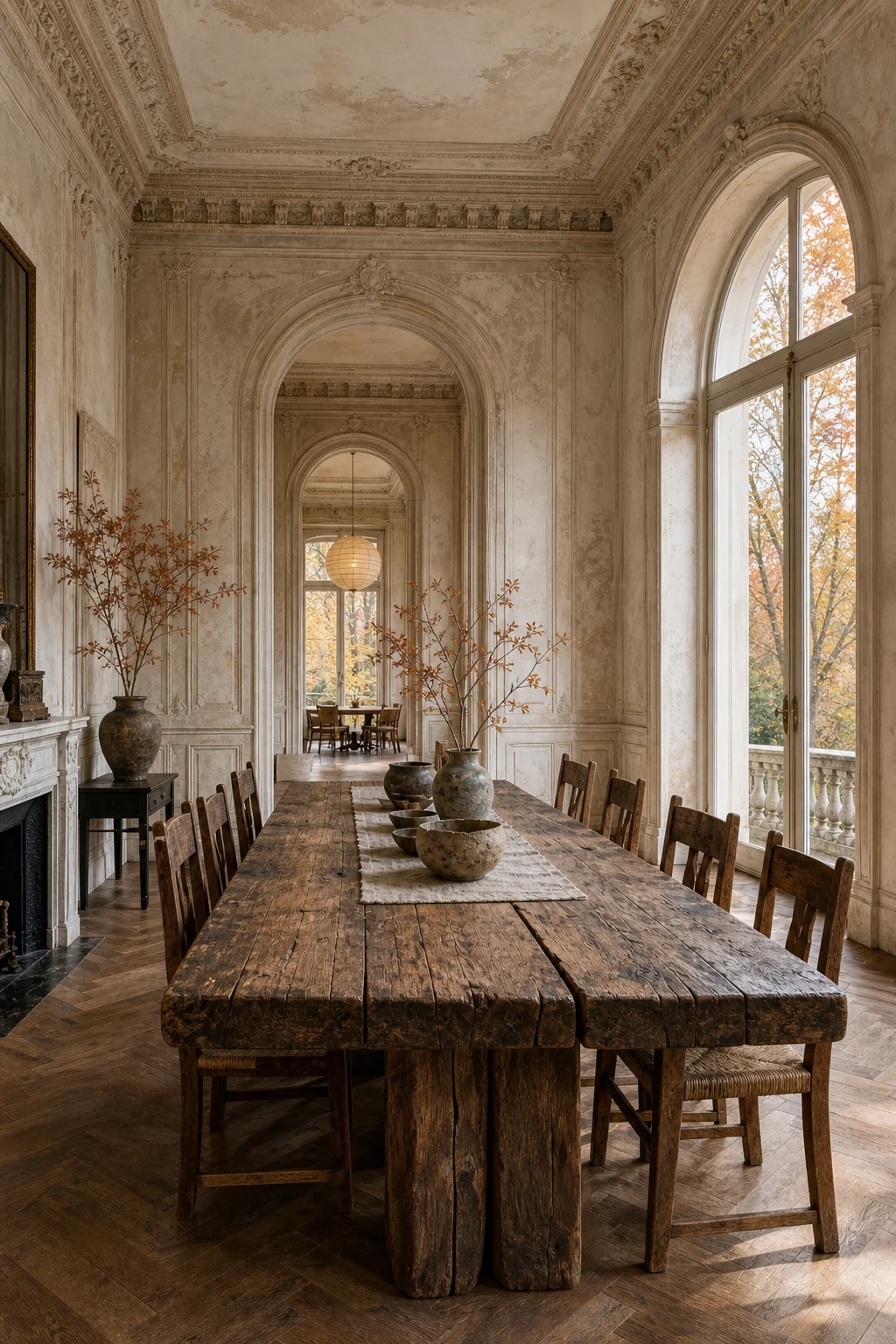
Notice how the classical moldings remain entirely unpainted, rendered instead in a raw, uneven chalky plaster. This deliberate omission strips away expected formality, instantly grounding the lofty architecture in a tactile, earthy reality without ever sacrificing its majestic, imposing presence.
With the architectural shell deliberately stripped of its traditional luxurious finishes, the room feels both imposing and remarkably vulnerable. This vital tension between grand scale and humble surface perfectly prepares the dining space for equally heavy, organic furniture silhouettes.
Raw Materiality
To successfully ground those towering ceilings, introduce heavy, organic forms that deliberately defy rigid classical geometry. A massive, asymmetrical timber dining table provides the necessary visual weight, acting as a rustic, tactile anchor within the highly formalized architectural envelope.
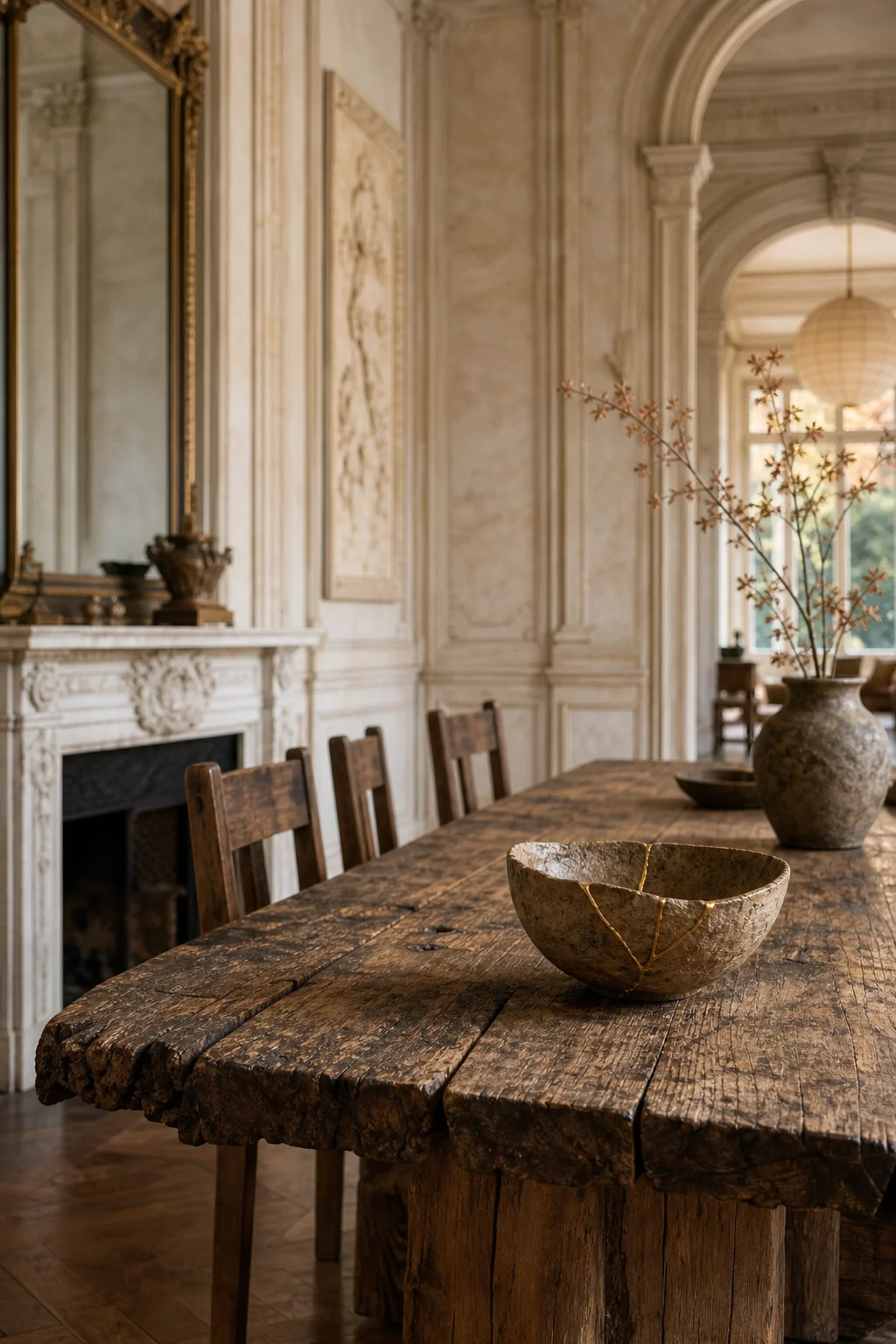
Observe the deep grain and natural splits running through the solid wood surface. These tactile imperfections celebrate transience and decay, pulling the eye downward from the ornate ceiling to focus entirely on the rough-hewn timber resting quietly below.
- Select solid, rough-hewn timber with deeply visible grain and natural, unpolished splits.
- Embrace asymmetrical furniture silhouettes that deliberately defy rigid classical geometry and perfect proportions.
- Choose unglazed, hand-pinched ceramics featuring highly irregular edges and deeply tactile surface textures.
- Prioritize heavy, massive wood slabs to effectively echo the monumental beaux-arts room scale.
The Monochromatic Bridge
Unifying ornate classical forms with humble surfaces requires a strict, shared color palette. Warm stone, ash, and faded linen prevent the contrasting styles from competing, allowing the grand architectural shell and the rustic furniture to merge into one seamless environment.
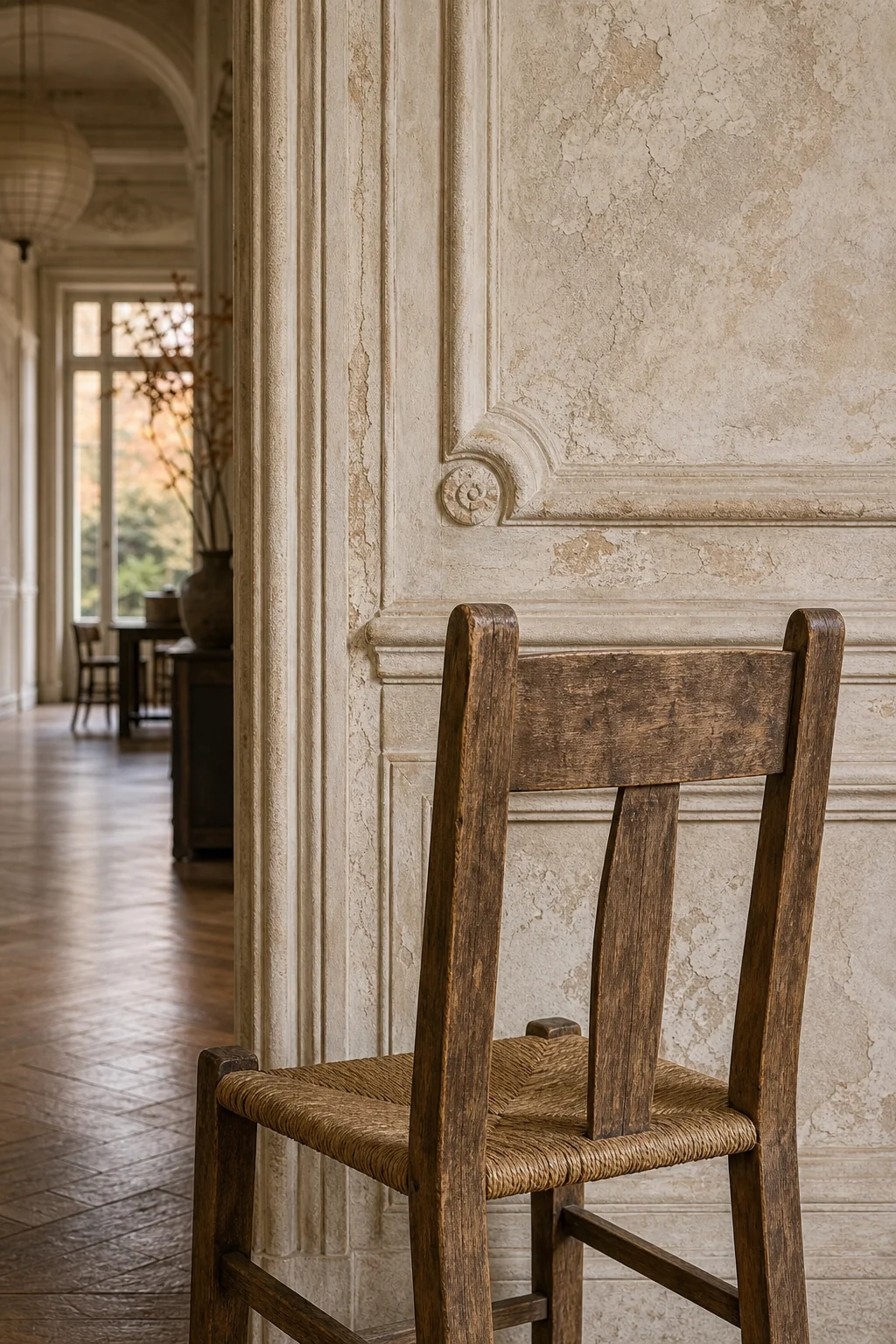
See how the weathered oak chair back blends effortlessly into the raw plaster wall behind it. By maintaining a shared monochromatic palette, the intricate classical carvings read purely as organic texture rather than formal, applied decoration demanding immediate attention.
This cohesive landscape of earthy midtones effectively softens the transition between the two distinct design languages. With color completely eliminated as a source of conflict, you can safely move forward to assemble the primary seating arrangement without visual clutter.
Anchoring the Dining Space
Center the room with a seating arrangement that honors both distinct traditions simultaneously. Simple, weathered oak chairs surround the heavy table, sitting quietly beneath the grand classical ceiling without ever attempting to match its historical formality or strict symmetry.
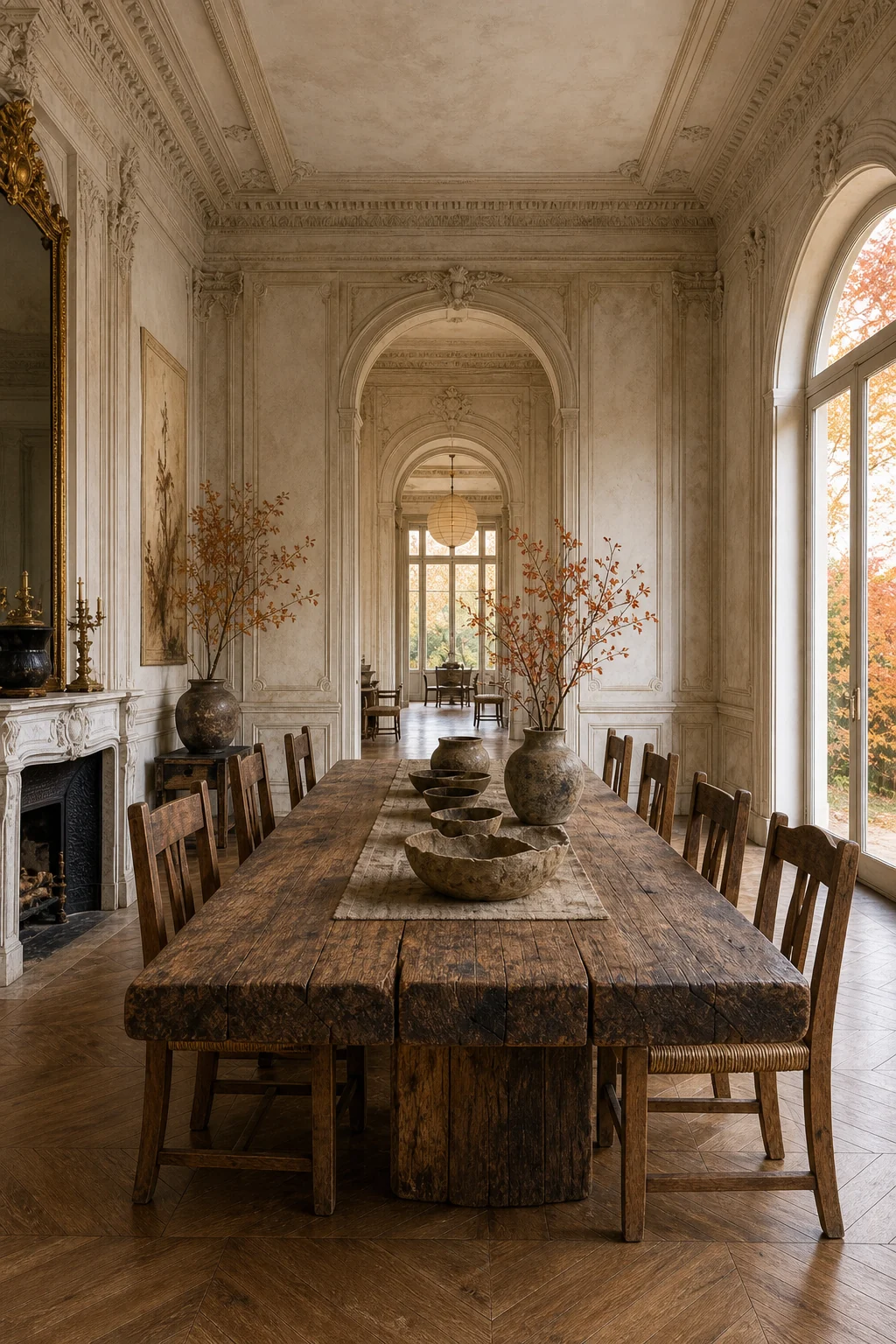
The resulting composition feels inviting, aspirational, and deeply serene. The massive wabi sabi timber table easily holds its own against the towering beaux-arts enfilade layout, proving that raw, humble materials can successfully command a truly monumental architectural space.
| Design Layer | beaux-arts Role | wabi sabi Role | Bridge Decision |
|---|---|---|---|
| Architectural Shell | Grand symmetrical arched windows and elaborate cornices | Uneven, unpainted, time-worn plaster walls | Unpainted classical moldings rendered in raw chalky plaster |
| Large Furniture | Monumental room proportions and formal enfilade layout | Rough-hewn, asymmetrical solid timber dining table | Heavy, massive slabs of raw wood echoing classical scale |
| Textiles | Structured, formal drapery silhouettes and heavy fabrics | Faded, unironed organic linen with frayed edges | Simple linen runners softening the grand architectural formality |
| Lighting | Symmetrical placement and monumental crystal chandeliers | Soft, diffused, paper or ceramic lampshades | Large-scale, simple paper lanterns replacing ornate crystal fixtures |
| Accents | Classical marble busts or formal gilded urns | Hand-pinched, irregular raku ceramics with kintsugi repair | Sculptural but rustic clay vessels displayed symmetrically on tables |
Mapping out these specific material translations ensures the room never feels like a chaotic eclectic mix. Every single choice deliberately balances the rigid symmetry of the architecture against the organic, welcoming warmth of the heavily textured rustic furnishings.
Filtering Autumn Light
Allow natural light to reveal the tactile imperfections of the hybrid space. Soft, golden illumination highlights the uneven plaster and deeply grained wood, transforming the raw architectural shell into a dynamic, shifting canvas throughout the course of the day.
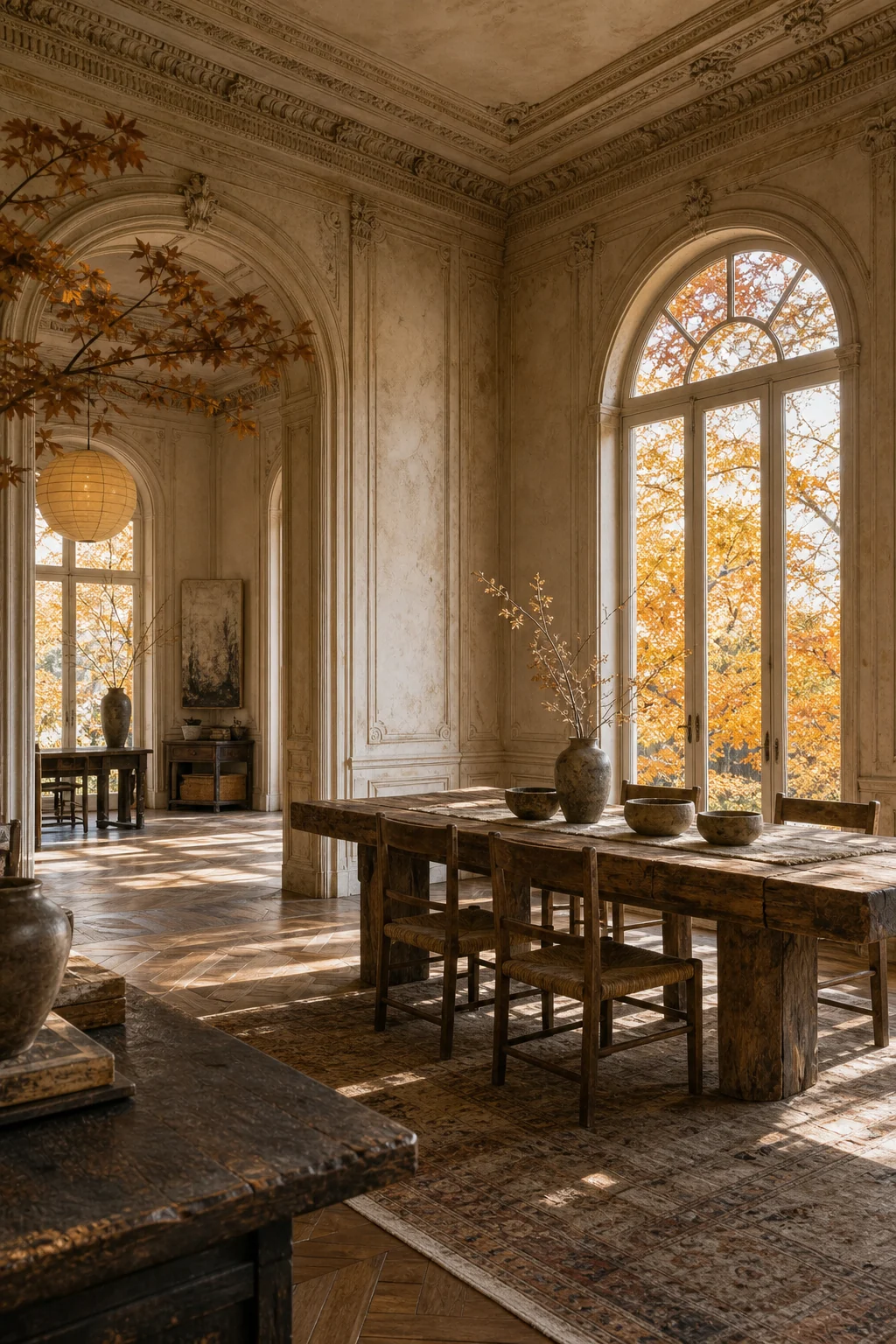
Watch how the golden autumn light catches the rough edges of the unpainted cornices. This gentle, directional illumination emphasizes the time-worn chalky plaster, celebrating the exact material flaws that traditional classical design would typically attempt to hide or smooth.
- Maximize natural daylight to continuously emphasize the chalky plaster textures and intricate carvings.
- Use diffused, warm bulbs to perfectly mimic the gentle, inviting glow of autumn light.
- Avoid harsh, direct spotlights that completely flatten organic material variations and ruin the mood.
- Position reflective, oxidized bronze accents to catch and scatter ambient afternoon rays across surfaces.
Curating the Tabletop
Keep the dining centerpiece grounded and profoundly tactile. A collection of irregular clay vessels resting on a faded linen runner offers a quiet focal point that respects the monumental scale of the room without ever feeling overly precious or fragile.
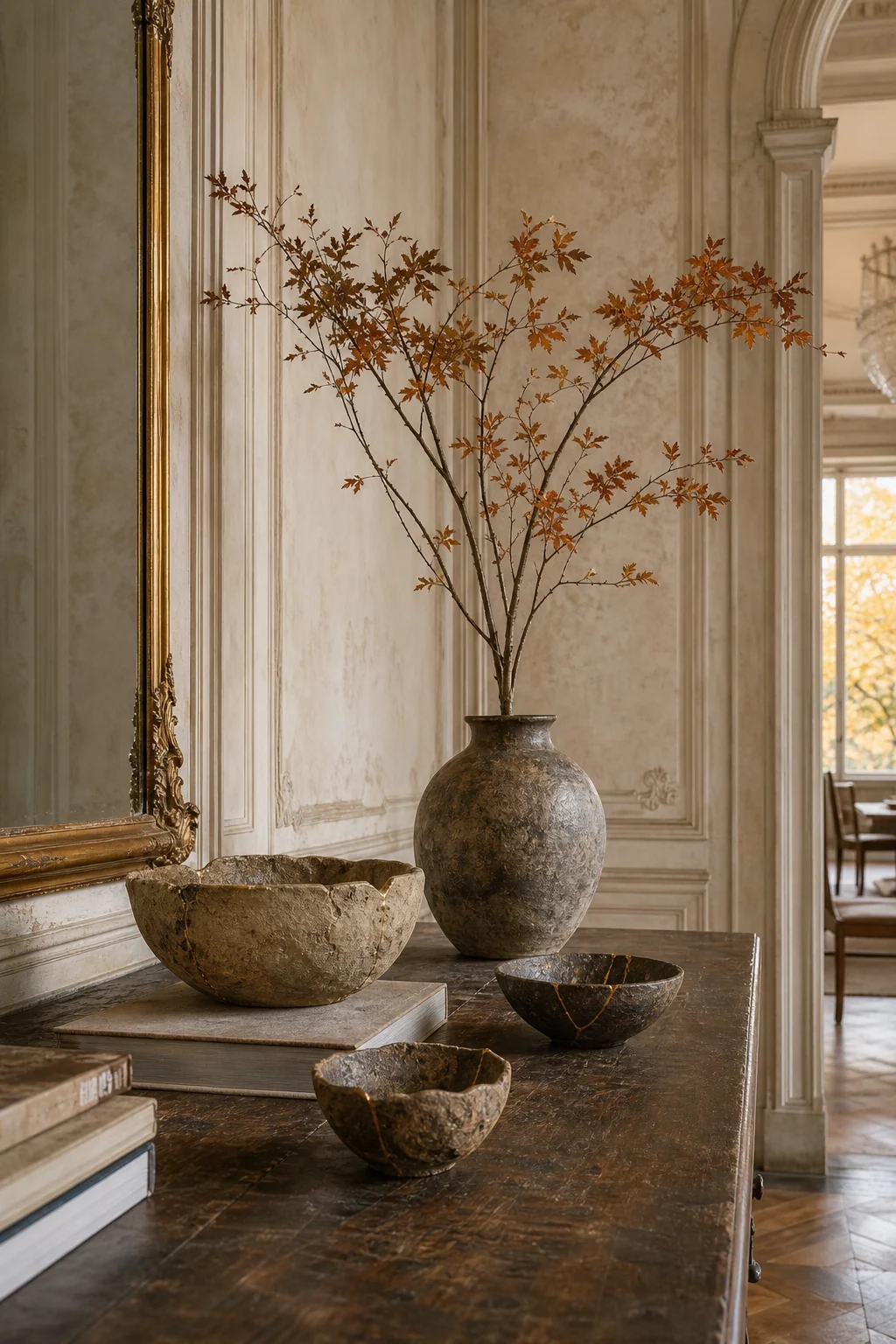
The irregular, hand-pinched raku ceramics replace formal crystal centerpieces perfectly. Their dark, organic silhouettes contrast beautifully against the pale, raw plaster walls, reinforcing the critical tension between classical architectural structure and humble, everyday utilitarian objects.
- Source hand-pinched raku bowls featuring highly uneven, organic rims and deeply textured, unglazed surfaces.
- Drape faded, heavyweight linen table runners with naturally frayed edges across the solid timber.
- Gather reclaimed, rough-hewn solid oak dining chairs that showcase decades of natural, gentle weathering.
- Incorporate matte, oxidized bronze candle holders or flatware to provide subtle, muted metallic warmth.
Adapting the Enfilade
Translate this logic to connecting spaces by focusing entirely on stark material contrast. A weathered console table placed against an unpainted classical wall creates an immediate, striking vignette that carries the overarching design narrative into adjacent hallways and narrow thresholds.
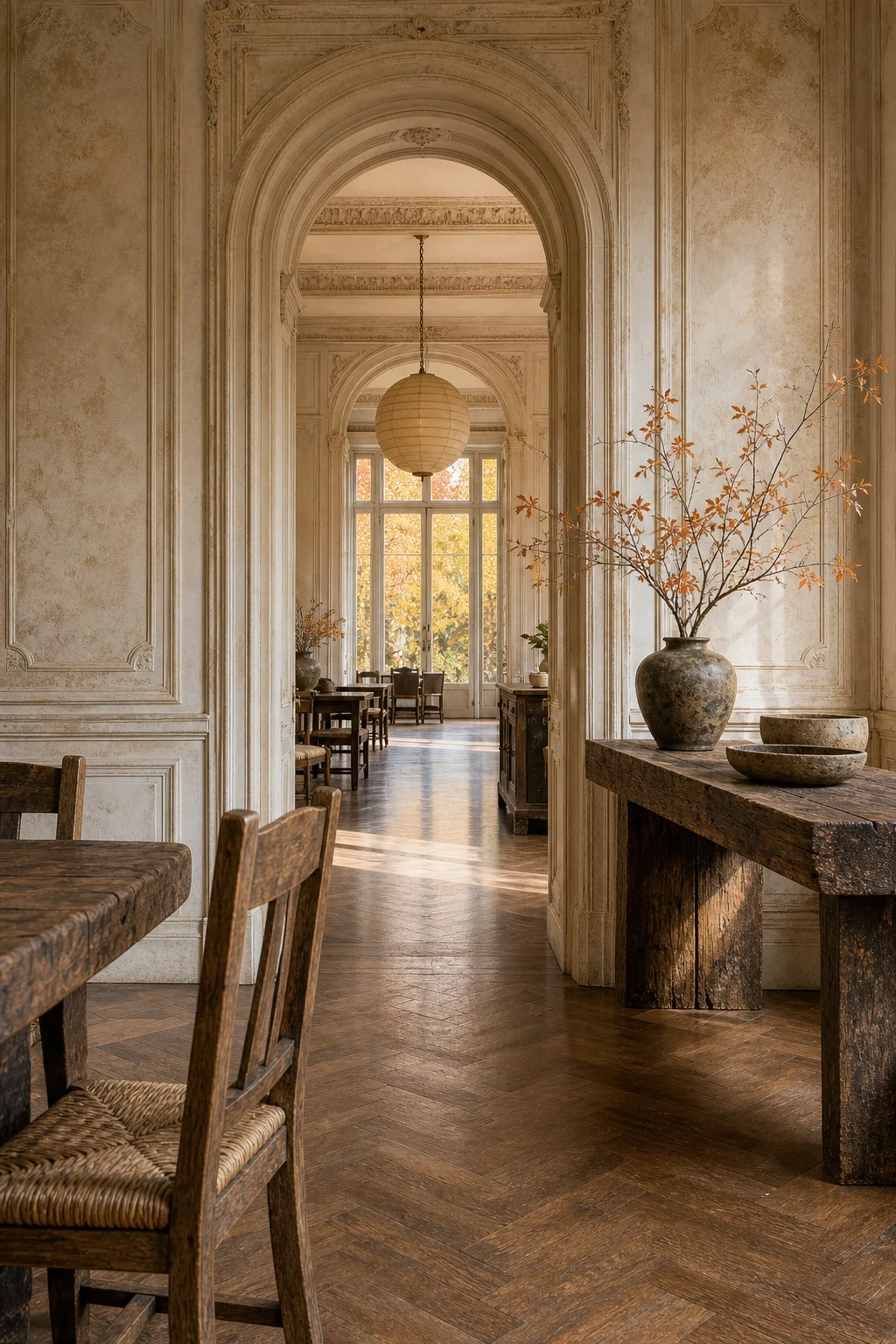
The juxtaposition of a rustic, weathered dark wood console against elaborate classical moldings proves this concept scales down easily. You can achieve this same visual tension in a smaller passage simply by pairing ornate architectural forms with deeply rough surfaces.
Mastering these smaller threshold moments ensures the entire home feels completely cohesive. Once you understand how to gracefully strip the formality from classical details, you must also learn to protect the space from creeping luxury and unnecessary, shiny embellishments.
Avoiding the Museum Trap
Resist the urge to polish, refine, or gild the architectural shell. This delicate tension only succeeds if the classical architecture remains entirely stripped of its traditional luxurious finishes, forcing the raw, humble materials to carry the entire visual weight.
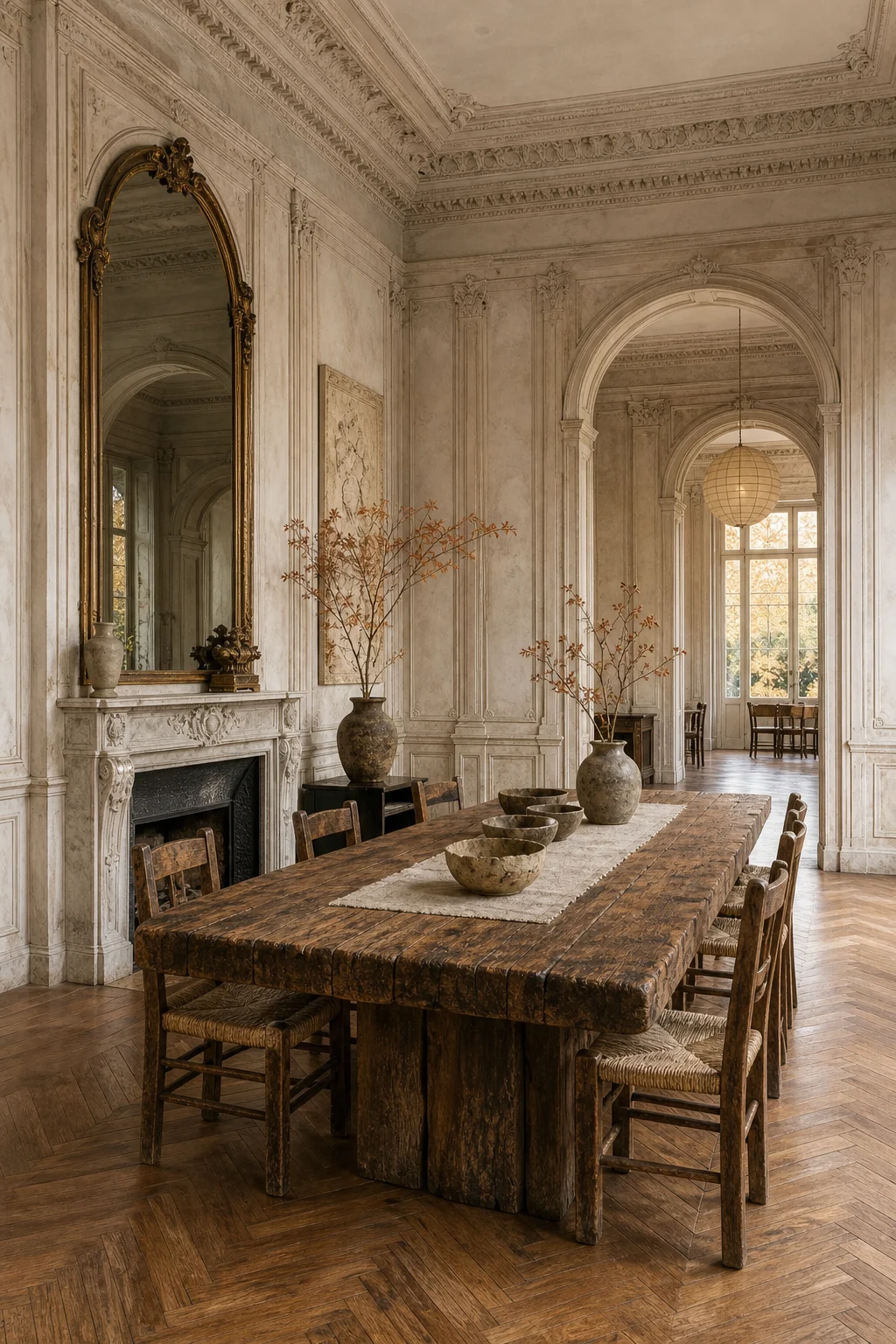
Notice how the elaborate fireplace mantel is rendered entirely in raw plaster. Adding polished marble or gold leaf here would instantly ruin the humble aesthetic, turning the room into a disjointed museum rather than a serene, perfectly balanced sanctuary.
- Never add gold leaf or polished marble to the architectural shell, which ruins humility.
- Avoid painting walls stark white, which immediately isolates the rustic furniture and breaks cohesion.
- Do not use delicate, formal chairs that clash awkwardly with the heavy timber table.
- Reject perfectly symmetrical tabletop styling in favor of loose, organic arrangements of clay vessels.