
Royalcore Meets Organic Modern: Library
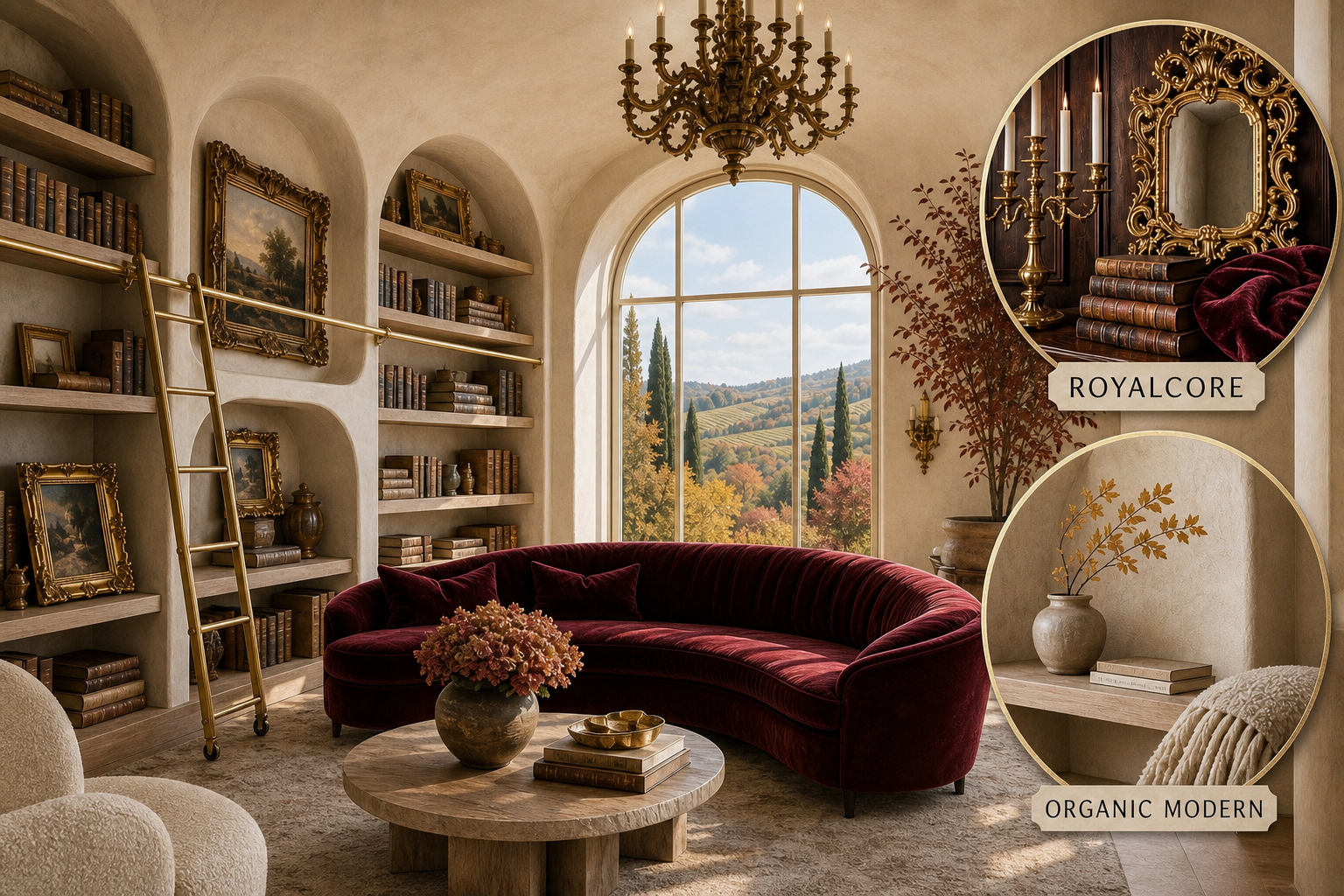
The heavy, gilded ornamentation of royalcore clashes directly with the raw, unadorned simplicity of organic modern. We resolve this by letting organic modern dictate the sweeping architectural shell while royalcore acts as the jewelry through rich velvet and antique brass.
The Royalcore Anchor
Royalcore demands palatial luxury, introducing heavy ornamentation and deep, saturated colors that command immediate visual attention. When placed inside a minimalist space, these intensely regal elements require a remarkably soft backdrop to prevent visual exhaustion and maintain a deeply soothing atmosphere.
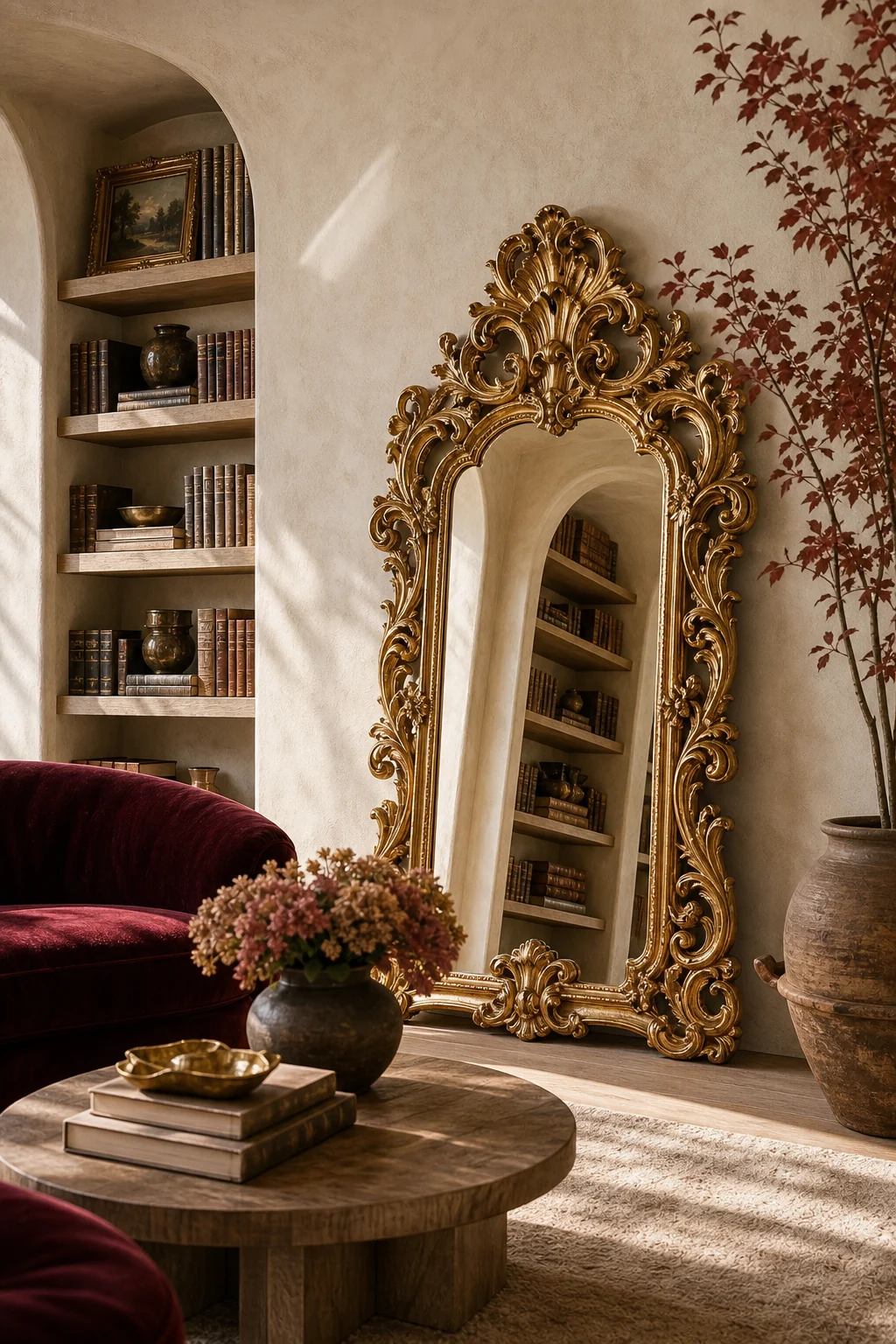
Notice how the intricate antique frame breathes easily against the muted wall treatment. This deliberate negative space prevents the ornate detailing from feeling oppressive, allowing the gilded baroque elements to stand out as curated historical artifacts rather than overwhelming daily clutter.
By isolating these heavy traditional pieces, you transform potential chaos into deliberate focal points. The ornate gold leaf becomes a striking punctuation mark against the quiet, earthy background, establishing a luxurious tone without compromising the room’s inherent natural tranquility and warmth.
The Organic Modern Foundation
Organic modern provides a soothing, highly tactile shell that grounds the room’s grander ambitions. Sweeping curvilinear built-in shelving crafted from matte bleached Tuscan chestnut beautifully softens the strict formality traditionally expected in a classic, heavy reading room or formal study.
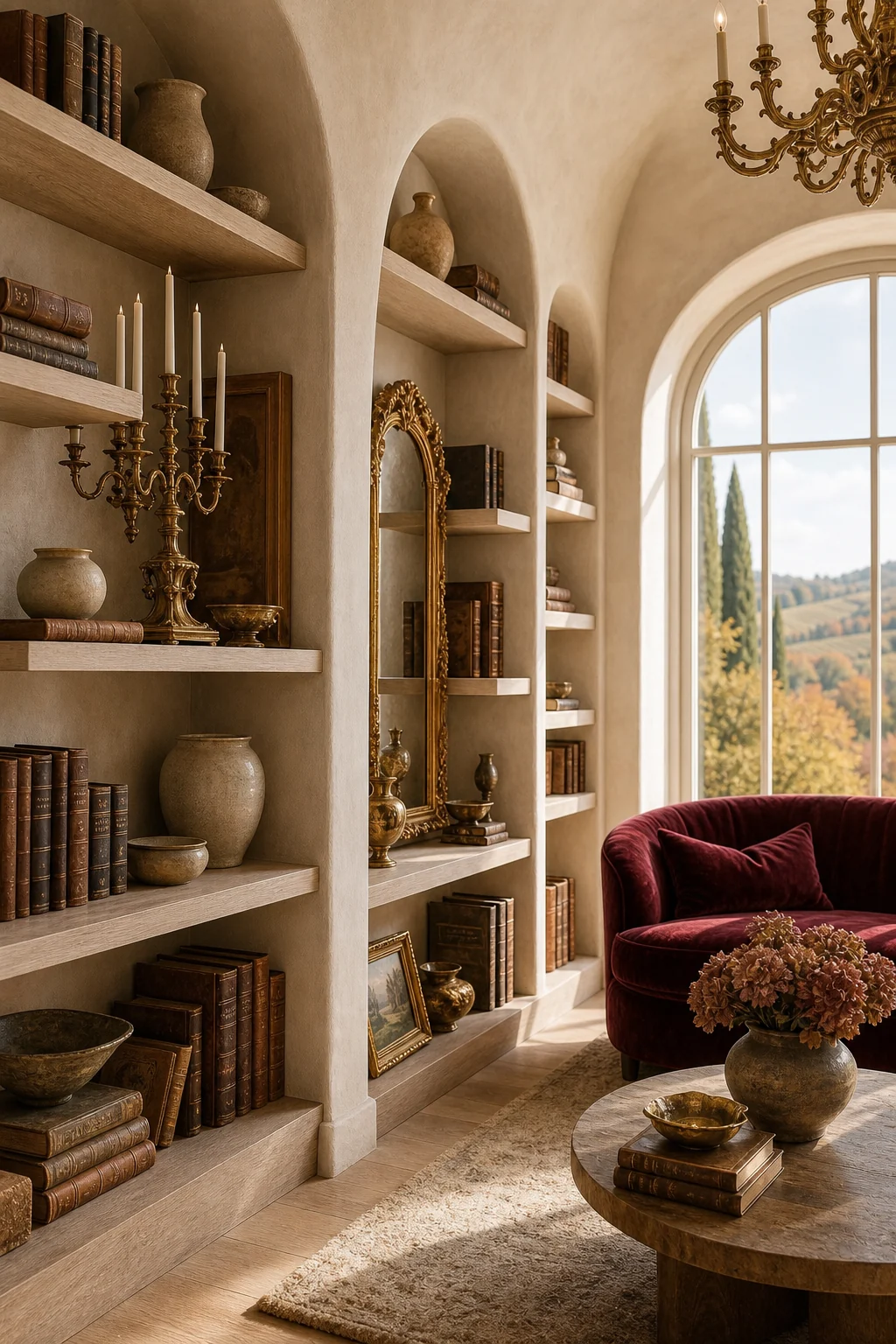
The gentle curves of the woodwork immediately relax the rigid symmetry typically associated with palatial estates. By wrapping the room in continuous, fluid lines, the architecture embraces a biophilic softness that makes the formal accents feel approachable and deeply lived-in.
- Keep plaster walls completely unpainted to highlight their natural tactile texture and subtle earthy variations.
- Choose matte bleached wood finishes over dark, glossy traditional library stains to maximize ambient brightness.
- Embrace asymmetrical shelf styling to intentionally break rigid palatial symmetry and introduce relaxed visual movement.
- Prioritize sweeping curvilinear built-ins over sharp, traditional ninety-degree corners to enhance the room’s biophilic flow.
Bridging the Contradiction
Connecting these aggressive opposites requires materials that belong to both aesthetic worlds simultaneously. Unlacquered brass serves as the perfect material bridge, seamlessly linking royal gold-leaf accents with the earthy, raw metals typically favored in nature-inspired, minimalist interiors across the home.
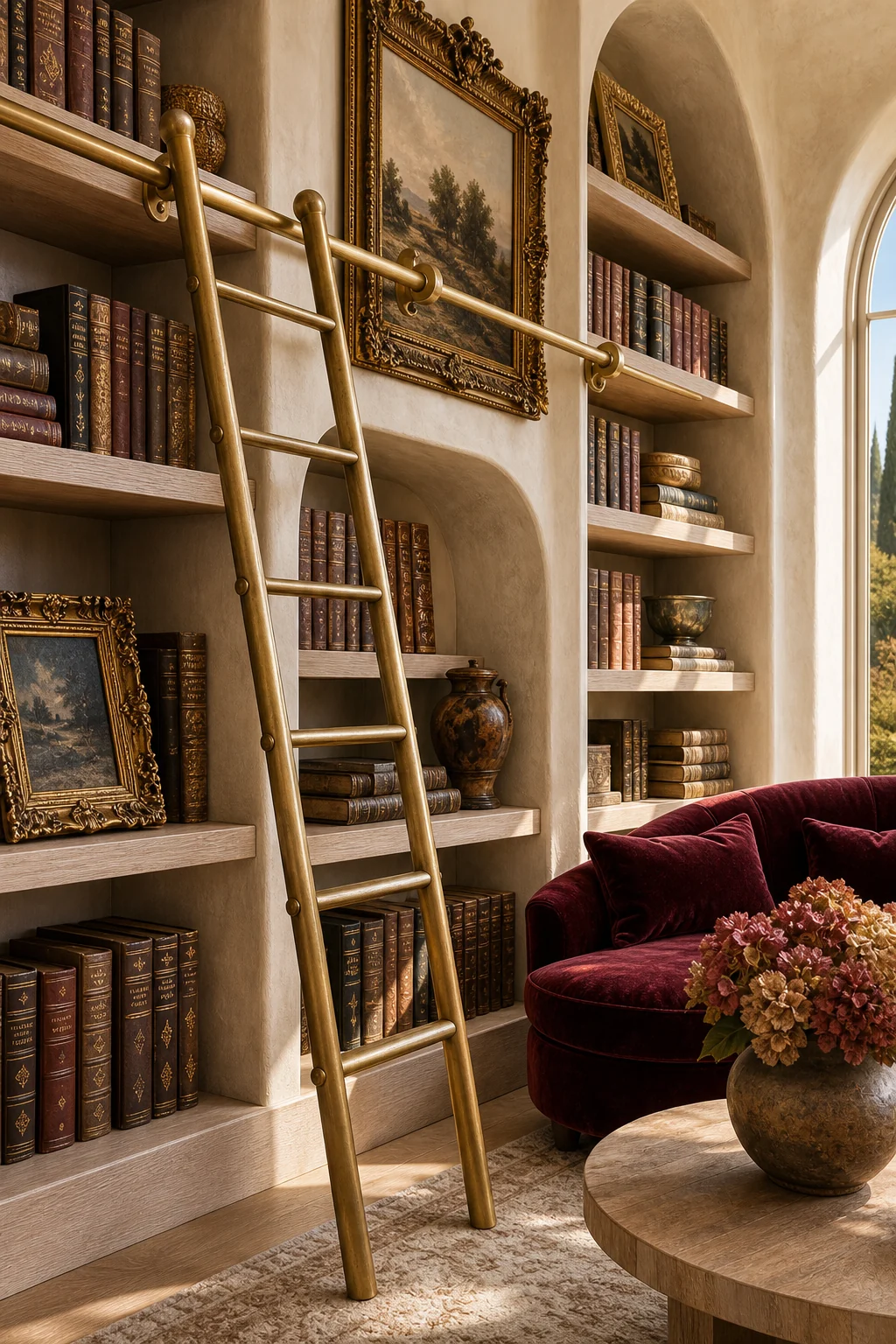
Because unlacquered brass is a living finish, it patinas heavily over time. This natural aging process brings a grounded, organic quality to formal library ladders, ensuring they feel beautifully weathered rather than stiffly manufactured or overly polished for daily use.
When the color palette shares the same underlying warmth, the contrast between raw plaster and polished silk feels intentional rather than accidental. The earthy tones act as a visual mortar, holding the disparate textures firmly in place without clashing uncomfortably.
Building the Seating Vignette
A successful seating area anchors the room’s dual personality in a single functional grouping. A deep burgundy silk-velvet sofa introduces undeniable royalcore luxury, while its fluid, curved silhouette honors the organic modern mandate for soothing, biophilic shapes and relaxed posture.
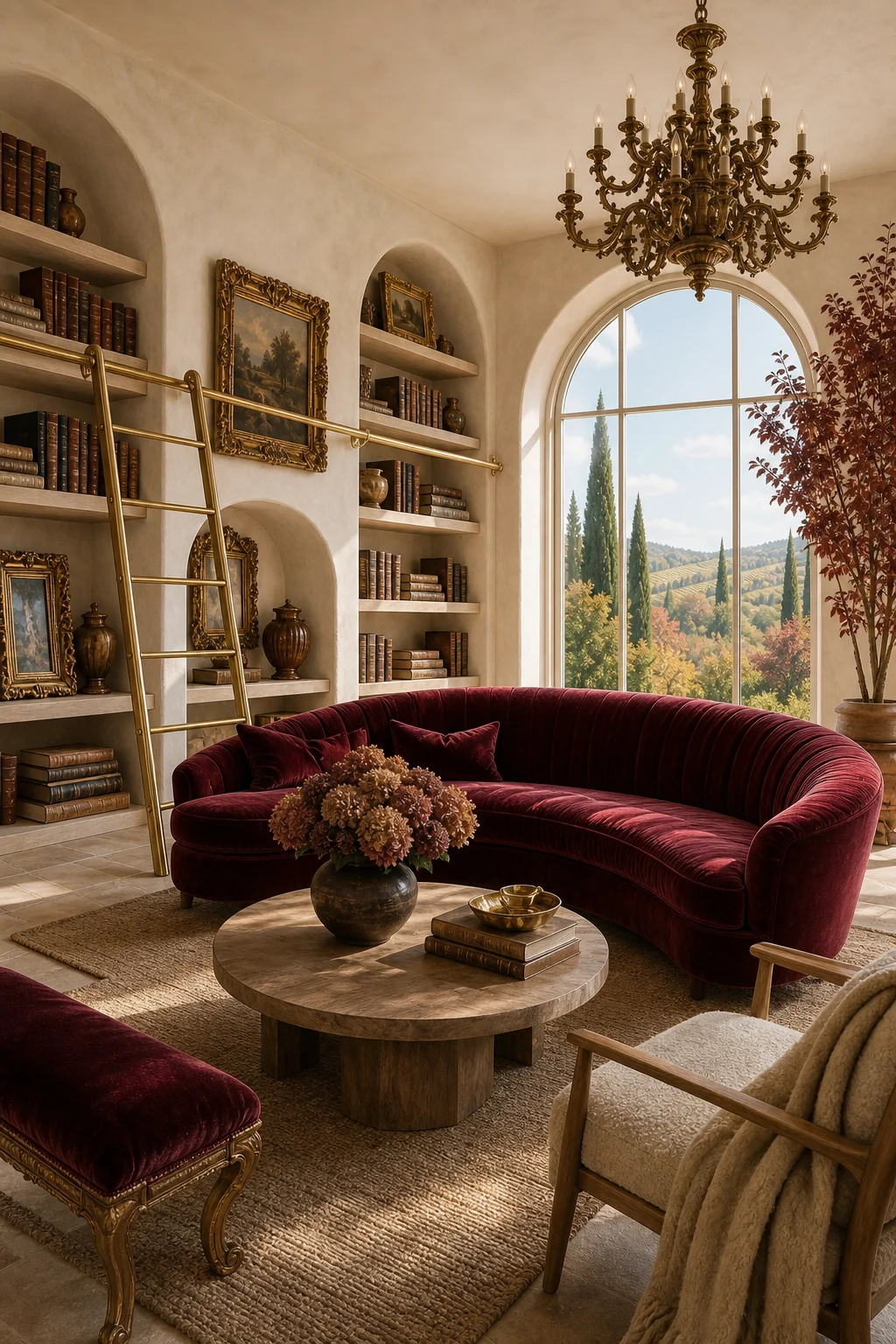
Placing this heavy, saturated velvet piece directly onto a textured natural fiber rug creates immediate tactile friction. The juxtaposition proves that opulent materials can feel deeply relaxing when they are grounded by rough, unpretentious organic textiles in a shared space.
| Design Layer | Royalcore Role | Organic Modern Role | Bridge Decision |
|---|---|---|---|
| Shell | Traditional wainscoting proportions | Hand-troweled raw plaster walls | Sweeping architectural arches instead of rigid corners |
| Large Furniture | Formal library seating arrangements | Curvilinear, biophilic silhouettes | Matte bleached wood finishes on all built-ins |
| Textiles | Deep burgundy silk-velvet upholstery | Nubby bouclé and raw linen throws | A shared warm palette of faded terracotta and ochre |
| Lighting | Intricate, heavy antique chandeliers | Maximizing crisp, generous natural daylight | Unlacquered brass fixtures that patina naturally |
| Accents | Gilded baroque frames and leather books | Minimalist, wabi-sabi ceramic vases | Grouping ornate and raw objects on shared surfaces |
This layered approach ensures neither aesthetic dominates the physical space. By assigning specific structural roles to each style, the contradiction resolves into a cohesive environment where every texture serves a distinct, balanced purpose without fighting for visual supremacy or attention.
Illuminating the Architecture
Sweeping architectural arches soften formal palatial symmetry into pure organic fluidity. Generous autumn daylight pours through these raw plaster openings, lifting the midtones and illuminating the intricate details of heavy, traditional brass chandeliers hanging majestically in the center of the room.
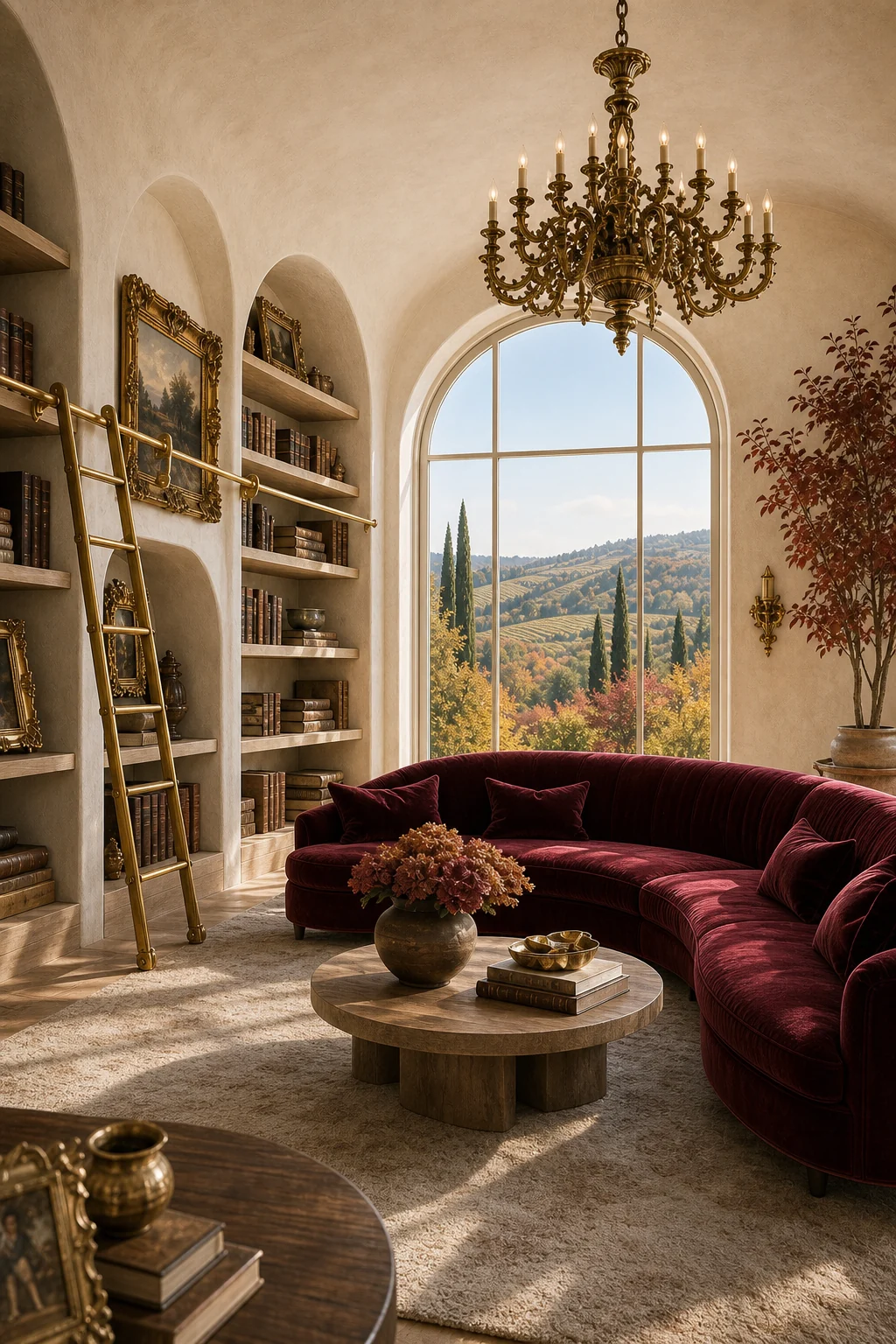
Natural light is the crucial equalizer in this complex design equation. Crisp, abundant daylight prevents the saturated burgundy velvets and heavy gilded metals from turning the library into a dark, oppressive cavern, keeping the overall atmosphere bright and effortlessly uplifting.
Without sufficient daylight, the heavy historical elements will inevitably drag the room’s energy down. Maximizing the natural solar gain ensures the organic modern shell remains the dominant atmospheric force, keeping the space firmly rooted in the relaxed, comfortable present day.
Curating the Surfaces
Surface styling requires a strict edit to maintain the delicate balance between opulence and restraint. Pairing a minimalist wabi-sabi ceramic vase with a polished brass candelabra creates a deliberate visual friction that makes both contrasting objects sing beautifully together on shelves.
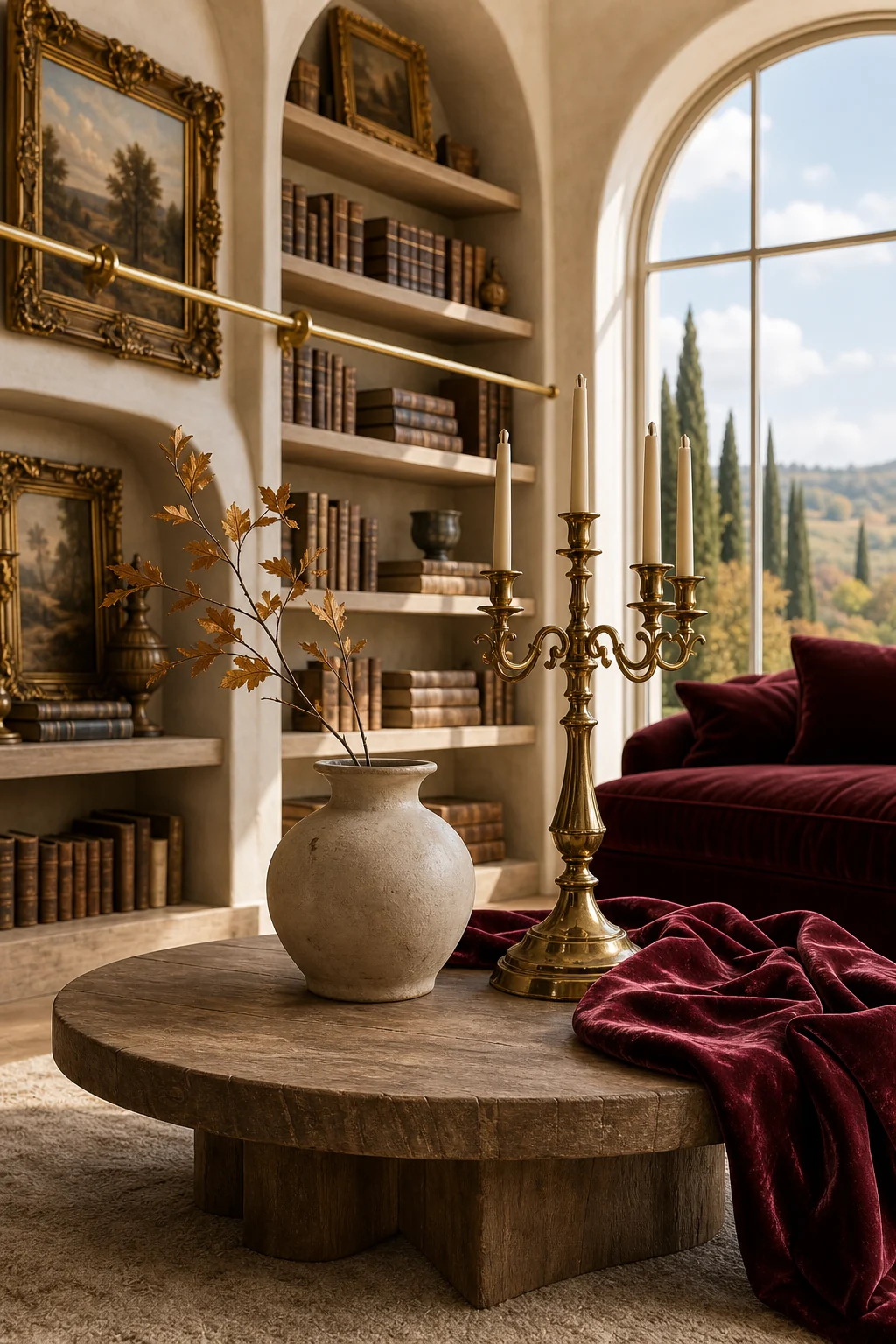
This close-up interaction reveals the core philosophy of the entire room. By forcing a raw, matte texture to sit directly beside a highly polished, intricate antique, you celebrate the design tension rather than trying to hide or minimize its impact.
- Anchor tabletops with raw, heavily textured ceramic vessels to establish a necessary baseline of earthiness.
- Introduce striking visual shine exclusively through authentic antique brass or delicate gold-leaf accent pieces.
- Use simple linen-bound books to neutralize the heavy visual weight of traditional dark leather tomes.
- Group contrasting objects closely together on shared surfaces to emphasize their dramatically opposing tactile textures.
Adapting the Threshold
This aesthetic tension translates beautifully to transitional spaces and smaller reading nooks. A raw plaster archway framing a glimpse of dark mahogany wainscoting proves the concept works effectively beyond the grand scale of the main library architecture, suiting modest homes.
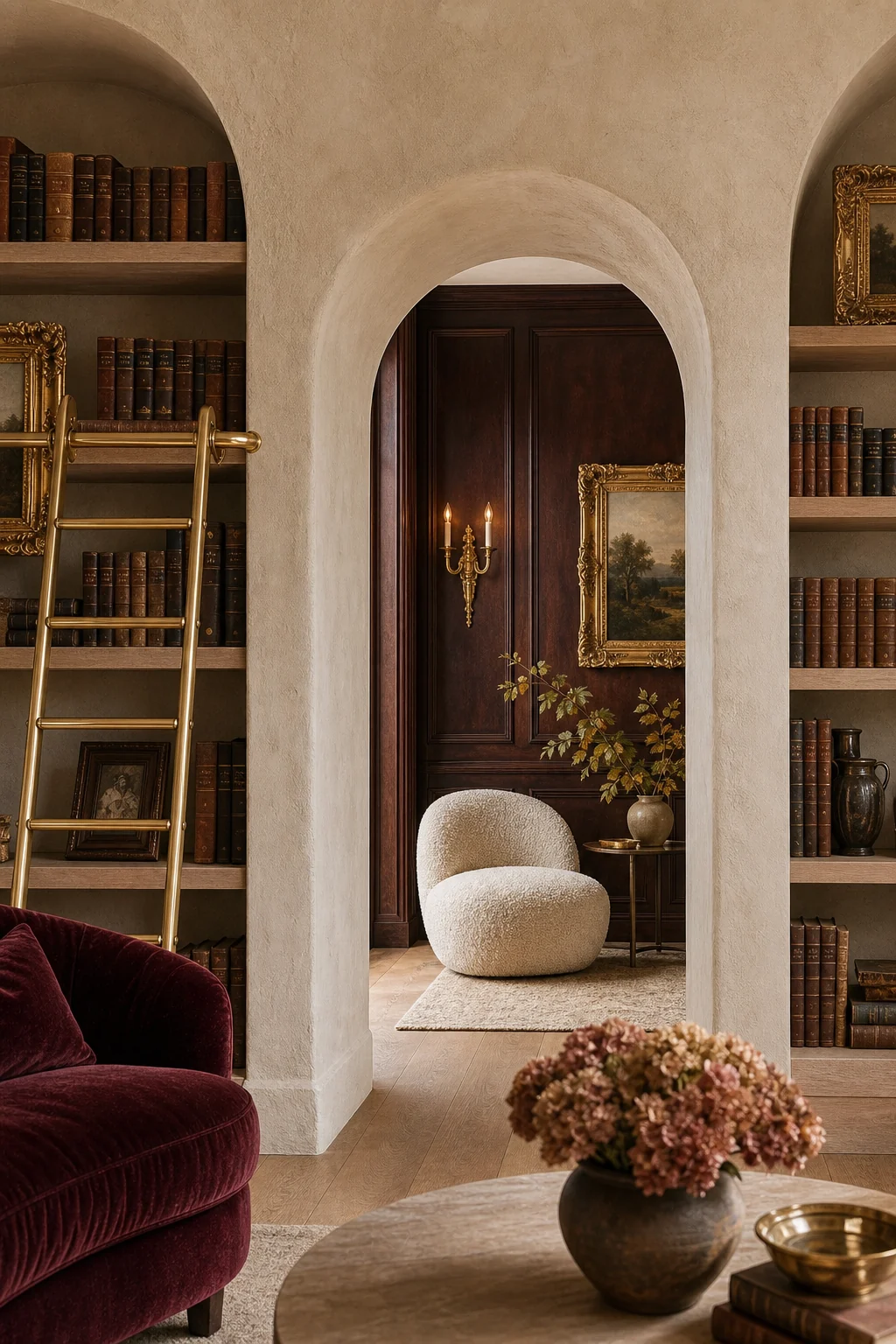
Even a brief visual threshold can communicate the entire design narrative. The rough, hand-troweled plaster opening acts as a palate cleanser, preparing the eye for the concentrated burst of traditional luxury waiting just inside the smaller, intimate alcove or reading nook.
- Apply a limewash treatment to standard drywall to convincingly mimic expensive custom plaster wall finishes.
- Invest in one striking statement piece of antique brass lighting to anchor the entire vignette.
- Use a single velvet accent chair instead of a massive curved reading sofa for tighter spaces.
- Introduce organic modern biophilic curves through round rugs or arched mirrors rather than custom built-in architecture.
Avoiding the Museum Trap
The most common failure mode is allowing the ornate elements to overpower the room, creating a stiff, historical costume. The space must remain a relaxed, nature-inspired home, rather than devolving into a rigid, untouchable museum exhibit lacking genuine personal comfort.
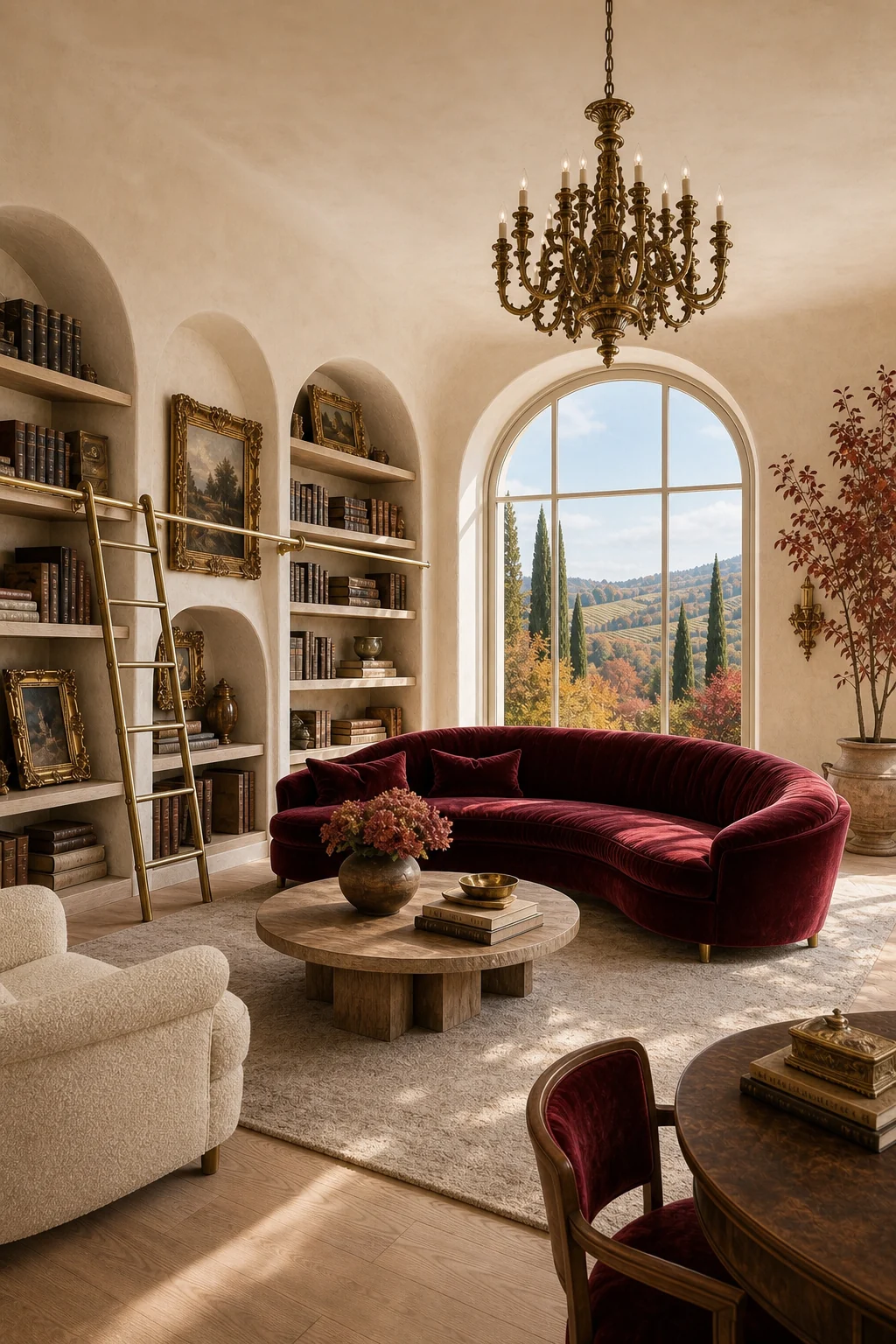
When executed correctly, the final room feels both undeniably grand and effortlessly soothing. The sweeping bleached wood shelves and warm white plaster provide a quiet sanctuary that allows the heavy, luxurious details to exist without demanding constant, exhausting visual attention.
- Ensure the organic modern architecture remains the visually dominant force throughout the entire physical room.
- Restrict heavy ornamentation strictly to lighting fixtures, art frames, and small curated accents on shelves.
- Verify that all primary seating silhouettes feature soft, welcoming biophilic curves rather than rigid wooden frames.
- Confirm the overarching color palette remains firmly grounded in warm, earthy terracotta and ochre midtones.