
French Traditional Meets Minka: Living Room
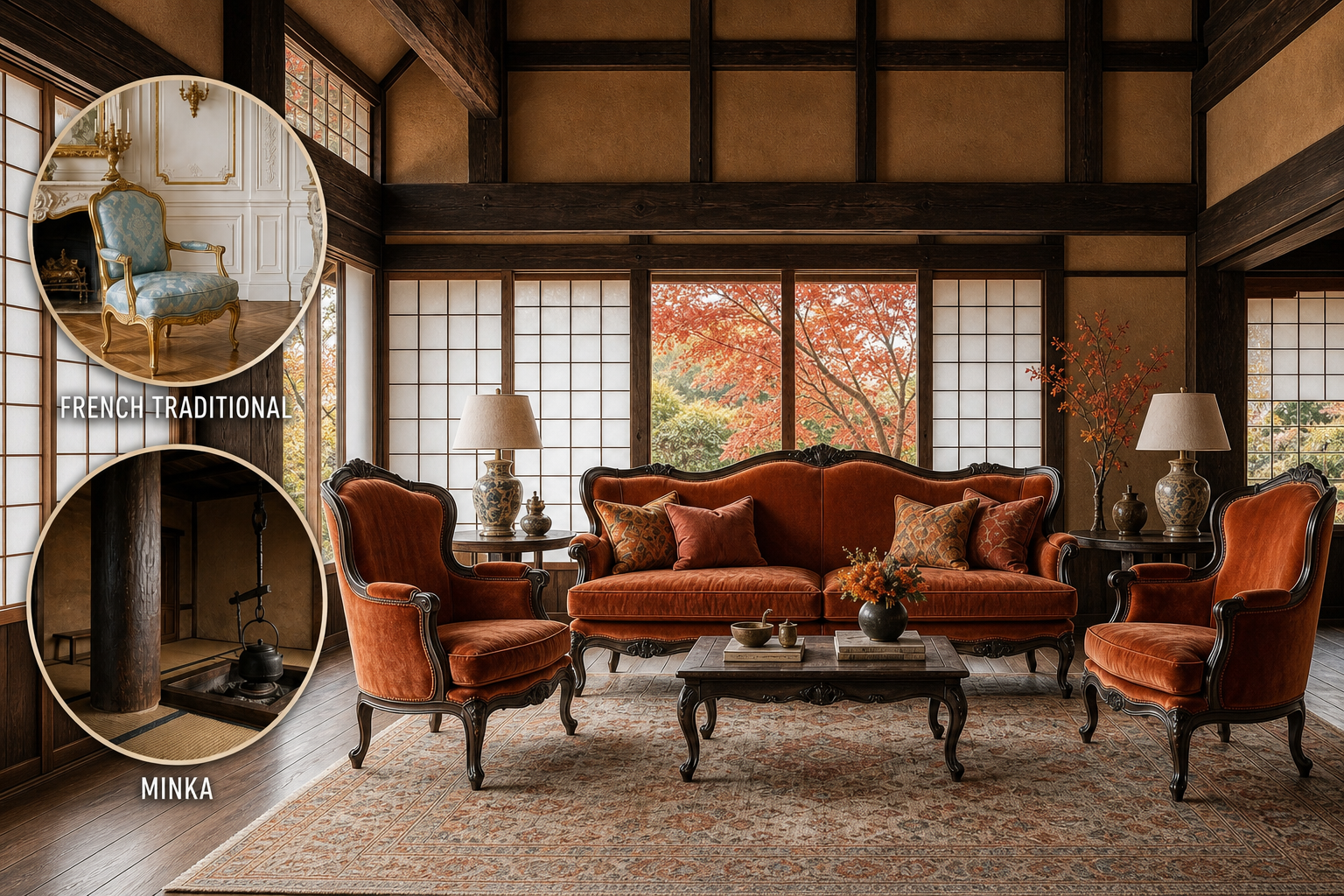
Delicate, aristocratic french traditional decor naturally clashes with the heavy, raw structural honesty of a Japanese minka. We resolve this profound architectural tension by stripping the ornate European frames of their gilt to perfectly match the dark, rustic agrarian timbers.
Style A language
French traditional design relies on formal symmetry, plush textiles, and highly ornamented cabriole silhouettes to establish a commanding aristocratic presence. These refined elements bring an undeniable elegance to any space, but they require careful, deliberate handling to avoid feeling overly precious.
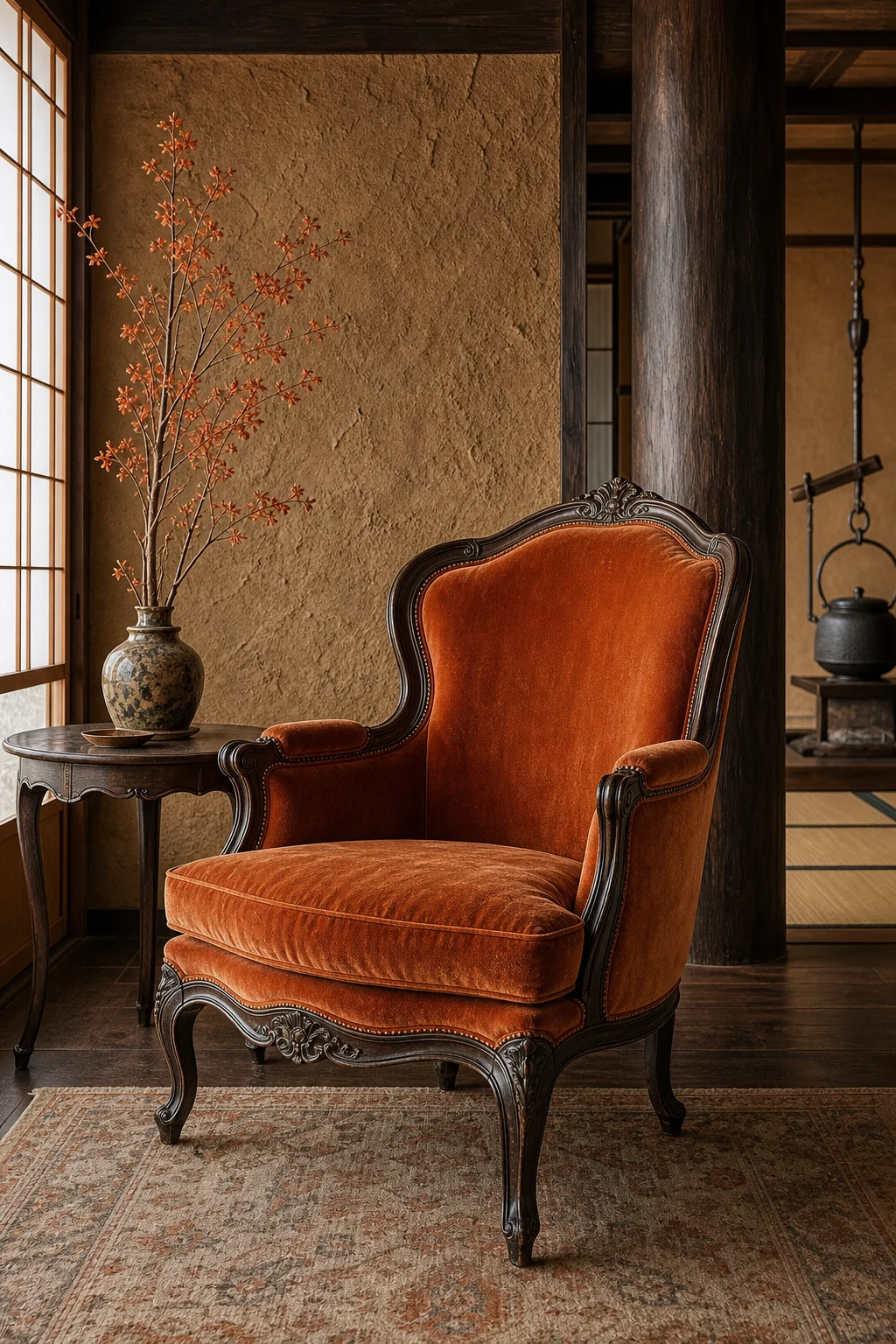
To prevent these delicate shapes from feeling flimsy against a raw architectural backdrop, they require a heavy grounding counterpart. The ornate, sweeping curves of a Louis XV chair must adapt significantly to survive outside the pristine, controlled environment of a Parisian salon.
Removing the reflective gold leaf completely alters the core personality of the furniture. It shifts the visual focus from ostentatious wealth to the underlying quality of the intricate wood carving, allowing the pieces to feel deeply substantial rather than merely decorative.
- Prioritize a strict, symmetrical furniture arrangement to maintain the necessary European formality and rigorous spatial order.
- Select plush silk-velvet upholstery in rich, saturated jewel tones to elegantly soften the room’s hard agrarian edges.
- Anchor the central seating area with a beautifully faded, antique Aubusson-style woven wool rug for essential textural warmth.
Style B language
A minka provides a remarkably robust, agrarian shell defined by heavy structural honesty and raw, natural textures. This architecture never hides its construction; instead, it boldly celebrates the massive wooden joints and the tactile, organic imperfections of the earth.
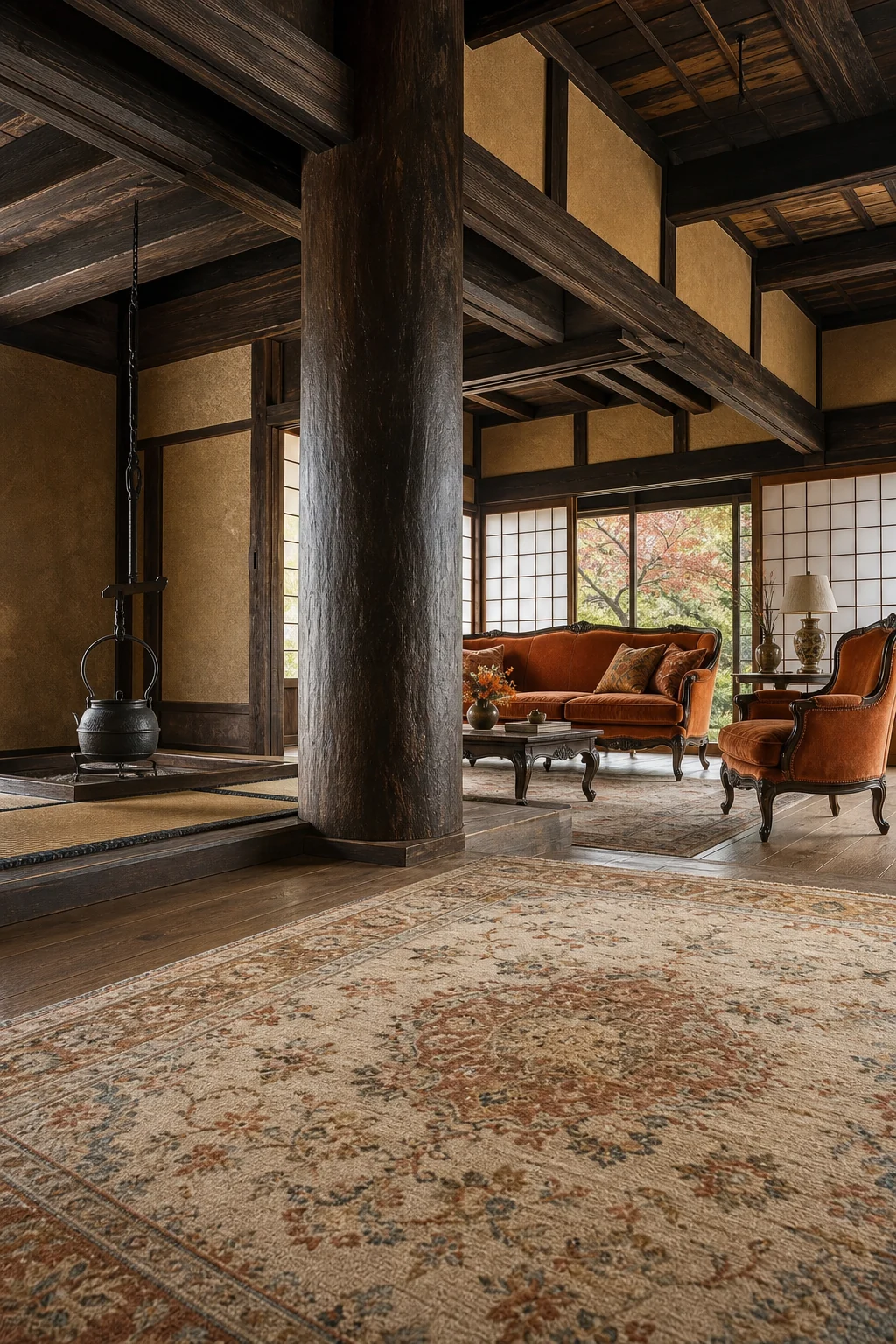
Massive dark timbers and highly textured earthen walls create a powerful visual weight that firmly anchors the entire room. This architectural envelope demands furnishings that respect its low, horizontal sightlines and its prevailing atmosphere of enduring, quiet permanence.
- Expose the massive, smoked chestnut structural timbers overhead to establish a rigid, dominant agrarian ceiling grid.
- Apply textured clay-beige earthen walls to actively absorb ambient light and provide essential tactile warmth throughout the space.
- Install wide-plank Japanese cedar flooring to create a rustic, historically accurate foundation for the delicate European seating.
The bridge
The transition relies on establishing a shared material language across both distinct aesthetics to prevent jarring visual fragmentation. When two styles possess such opposing historical contexts, they must communicate through finish, texture, and color rather than matching shape.
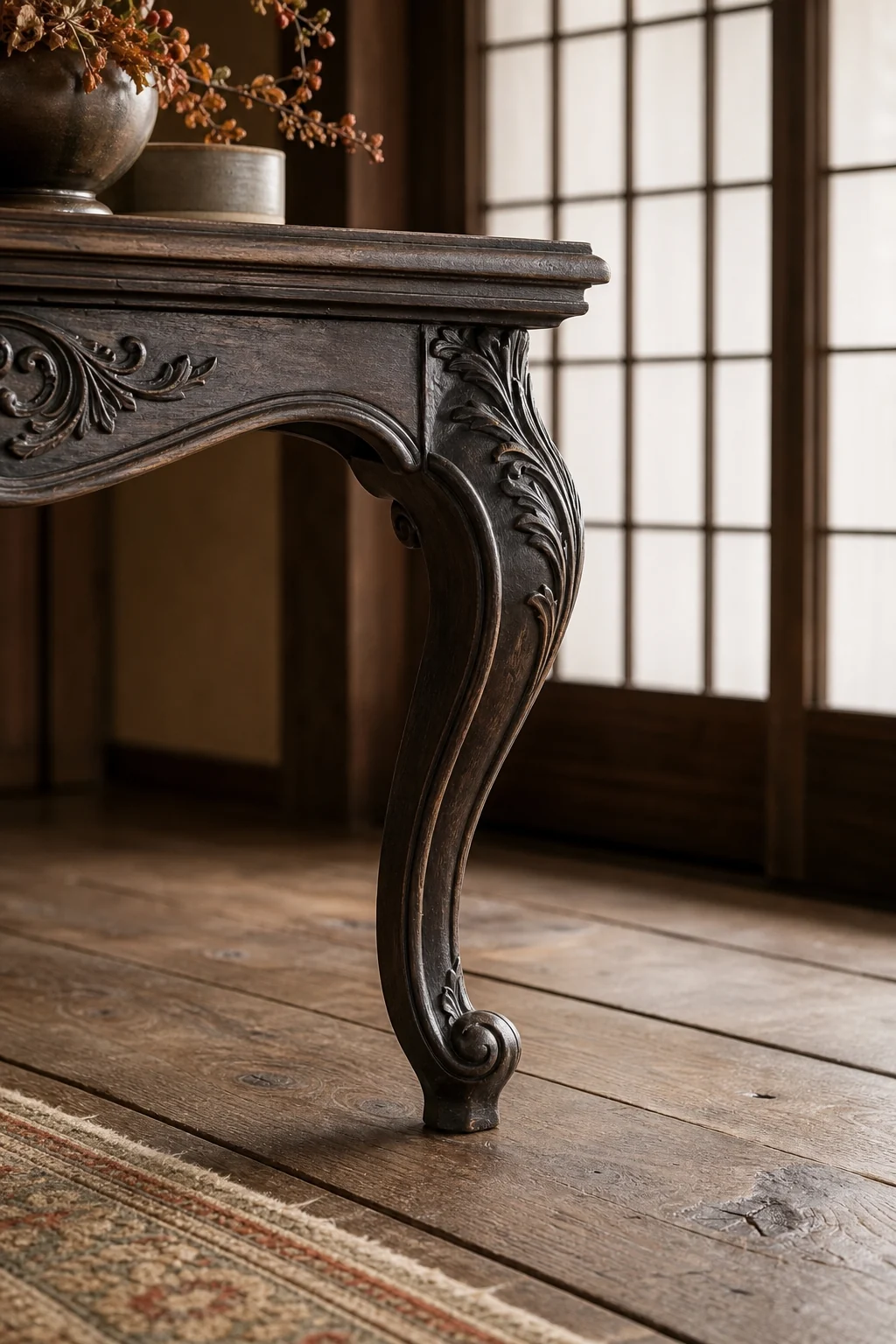
By finishing the carved European wood frames in a dark, matte stain, they perfectly echo the smoked Japanese timbers above. This single, decisive material choice forces two radically opposing historical periods into an immediate, harmonious, and grounded conversation.
This dark matte finish effectively removes the aristocratic pretension from the formal European seating. It allows the intricate cabriole legs to read as honest, masterful craftsmanship rather than ostentatious display, perfectly aligning with the traditional Japanese appreciation for natural materials.
Build the room
A successful layout respects the low sightlines of traditional Japanese interiors while rigorously maintaining strict European symmetry. The furniture must sit closer to the floor, honoring the horizontal datum line established by the surrounding ancient architecture.
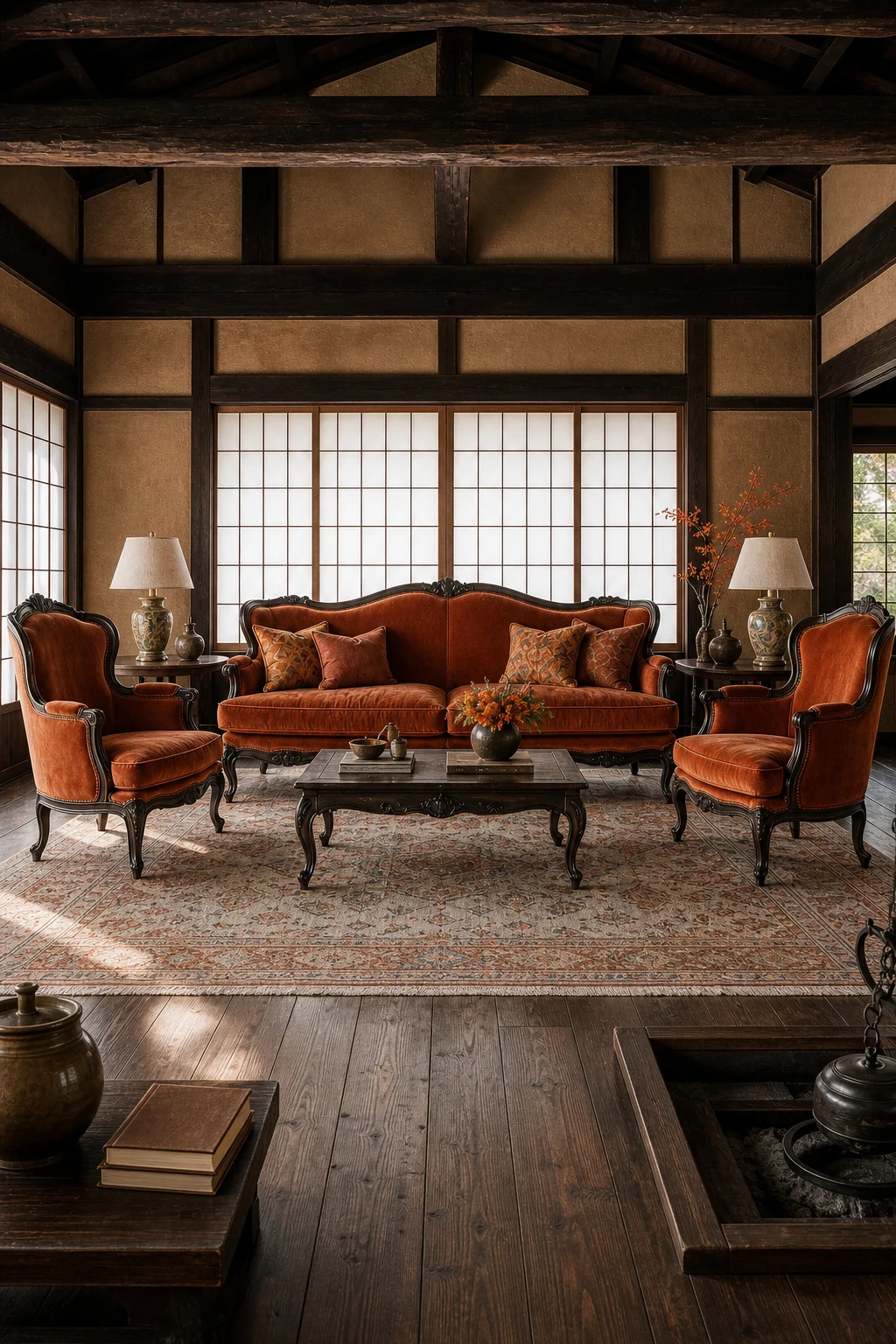
Low-slung French seating creates a formal arrangement that floats comfortably within the heavy timber grid. We use the massive wooden pillars to perfectly frame the conversation area, ensuring the delicate silhouettes remain protected rather than visually overwhelmed.
| Design Layer | Style A: french traditional | Style B: minka | Bridge Decision |
|---|---|---|---|
| Shell | Symmetrical spatial planning and formal architectural proportions | Exposed dark structural timbers and textured clay earthen walls | Use the rigid structural timber grid to frame the formal seating layout. |
| Furniture | Ornate, carved cabriole silhouettes with delicate, sweeping legs | Low-slung, horizontal datum lines favoring floor-level daily living | Ungilded European frames stained dark matte to exactly match rustic wood. |
| Textiles | Plush silk-velvet fabrics and antique Aubusson woven wool rugs | Natural, unrefined woven textures and simple, organic plant fibers | Autumnal earth tones that visually connect the interior to nature outside. |
| Lighting | Formal table lamps, ornate sconces, and directional highlights | Diffused, glowing paper shoji screens offering soft ambient illumination | Soft, omnidirectional light that lifts shadows and highlights the velvet sheen. |
| Accents | Aged brass fixtures and classical European decorative motifs | Hand-thrown wabi-sabi ceramics and raw, unpolished organic branches | Matte accessory finishes that absorb rather than reflect the ambient light. |
This structural alignment ensures the delicate velvet upholstery feels intentionally placed and highly secure. The formal symmetry of the seating provides a necessary sense of elegant order, contrasting beautifully against the organic, hand-hewn irregularities of the agrarian ceiling beams above.
Light and architecture
Translucent paper screens transform harsh, direct sunlight into a bright, beautifully even glow that unifies the disparate textures. This architectural feature is absolutely essential for blending the reflective qualities of the silk with the matte surface of the clay.
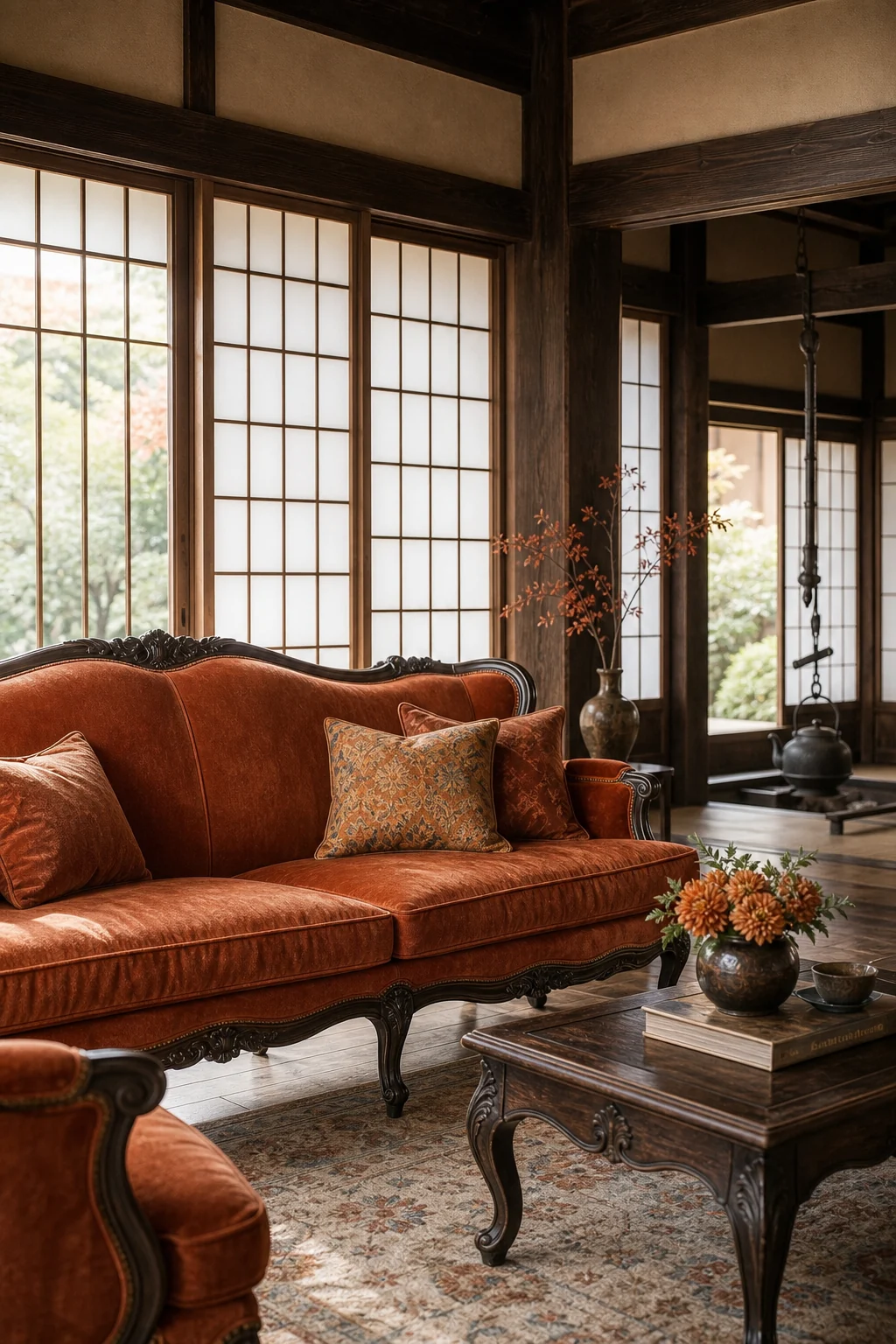
This diffused illumination softens the ornate European silhouettes and expertly highlights the rich sheen of the silk-velvet upholstery. It gently lifts the midtones, revealing every intricate detail in the dark wood without washing out the room’s inherent, moody warmth.
Shoji lighting acts as the ultimate visual equalizer in the space. It removes the harsh glare that would normally expose the stylistic differences, wrapping both the rustic earthen walls and the refined upholstery in the exact same atmospheric warmth.
Style the details
Smaller accents must carefully bridge the gap between aristocratic refinement and rustic utility without leaning too far in either direction. The accessories you choose will ultimately dictate whether the room feels like a cohesive home or a chaotic antique shop.
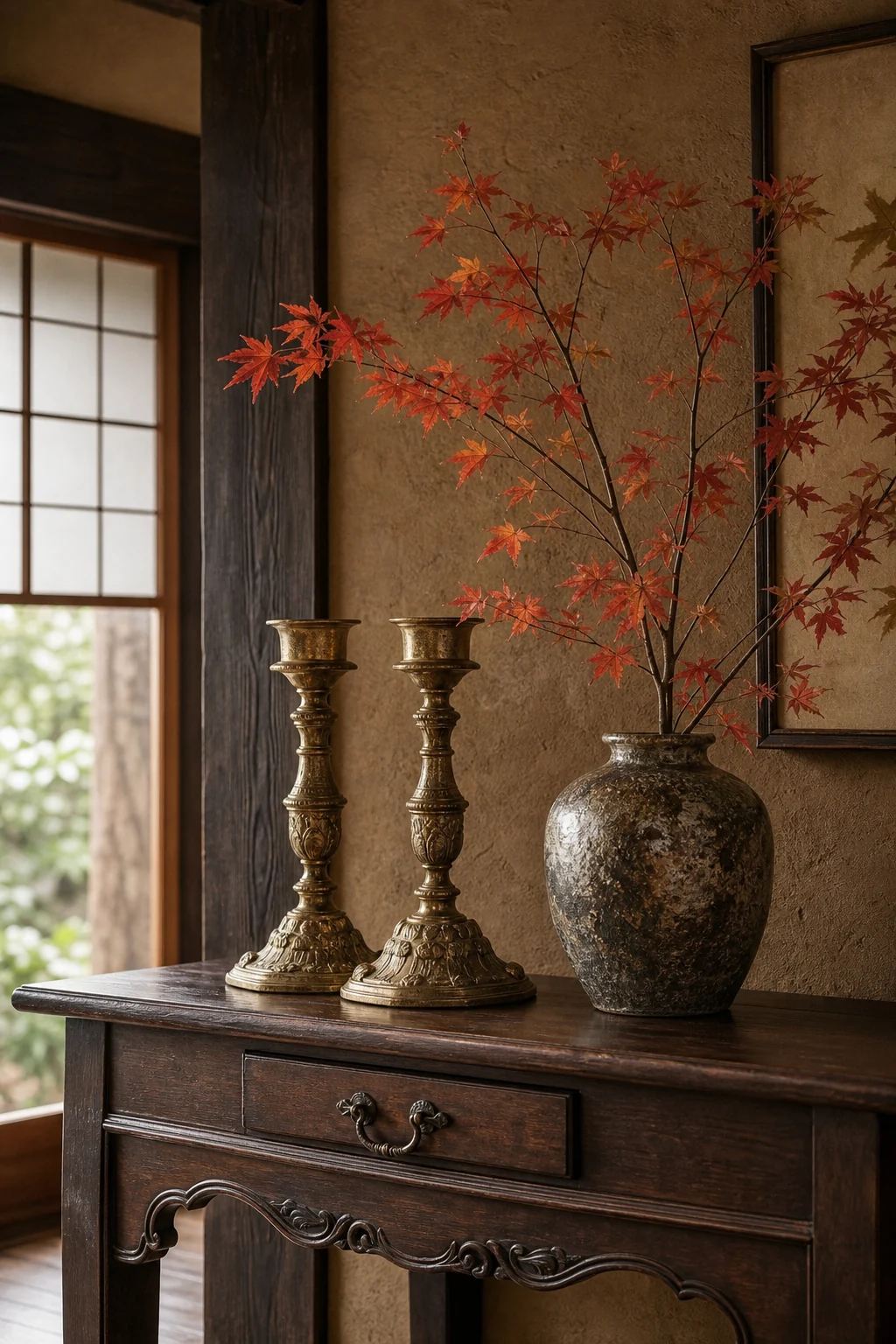
Select objects that feature classical European motifs but execute them in raw, unpolished, and honest materials. Matte finishes that absorb light will always integrate better against earthen walls than highly polished, reflective surfaces that demand constant visual attention.
- Source elegant seating with matte dark-stained carved wooden frames to firmly anchor the space.
- Incorporate rich ochre and persimmon velvet pillows for a soft, highly tactile visual contrast.
- Select aged matte brass candleholders to introduce subtle, non-reflective warmth to the dark corners.
- Display rustic Japanese ceramic vessels holding vibrant, seasonal maple branches to connect with nature.
Adapt it
This specific logic easily translates to transitional spaces, hallways, or narrow entryways where a full, formal seating arrangement is physically impossible. The tension between the two styles scales down beautifully to create smaller, much more intimate architectural moments.
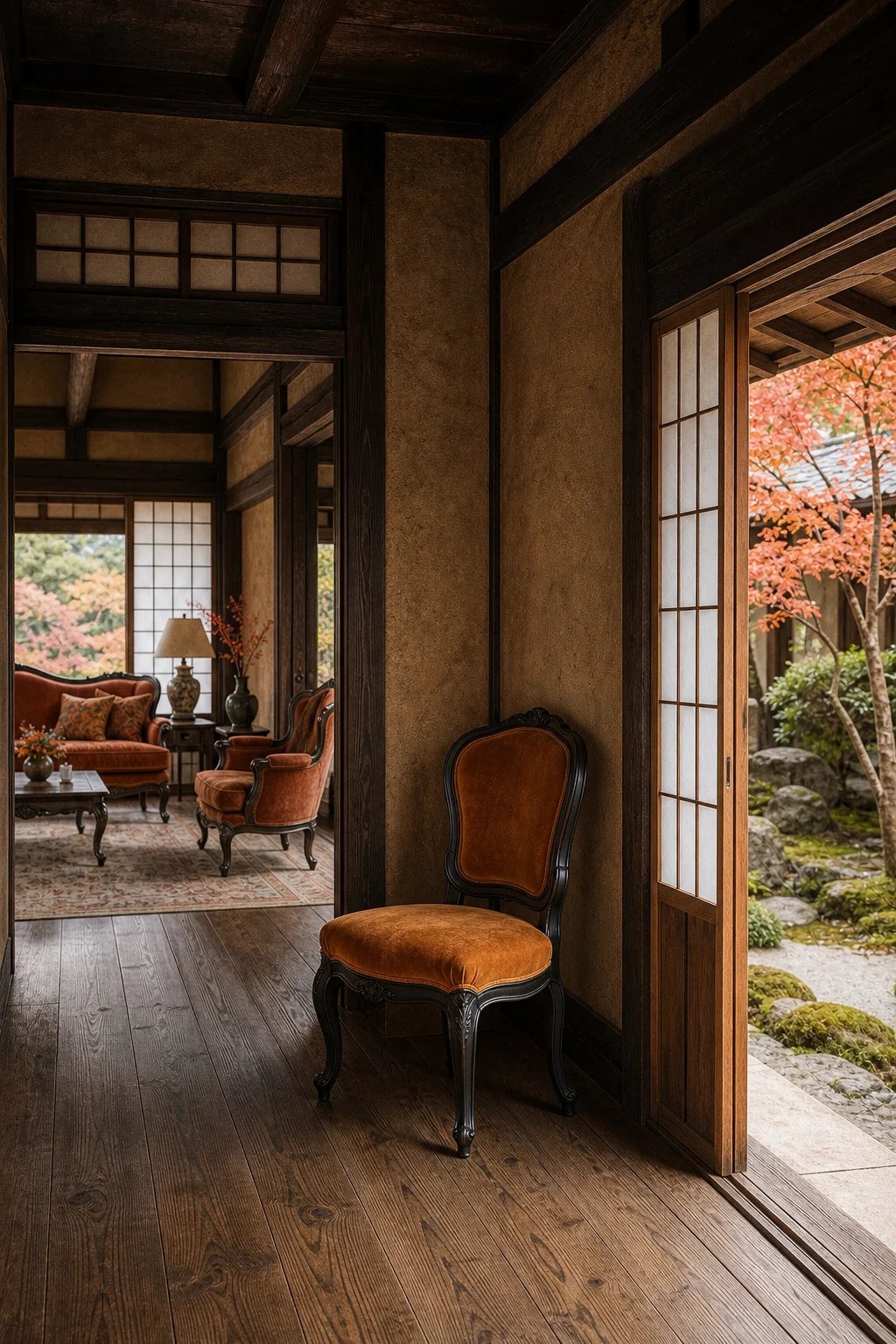
A single carved European chair placed against a rough clay wall establishes the stylistic tension instantly. By isolating just one highly ornamented silhouette against a raw background, the visual causality becomes even more striking and undeniable.
Avoid the costume
Without strict discipline, this ambitious integration can easily devolve into a chaotic museum display or a confusing thematic collision. Maintaining the exact balance of weights and finishes is absolutely critical to keeping the space feeling authentic and grounded.
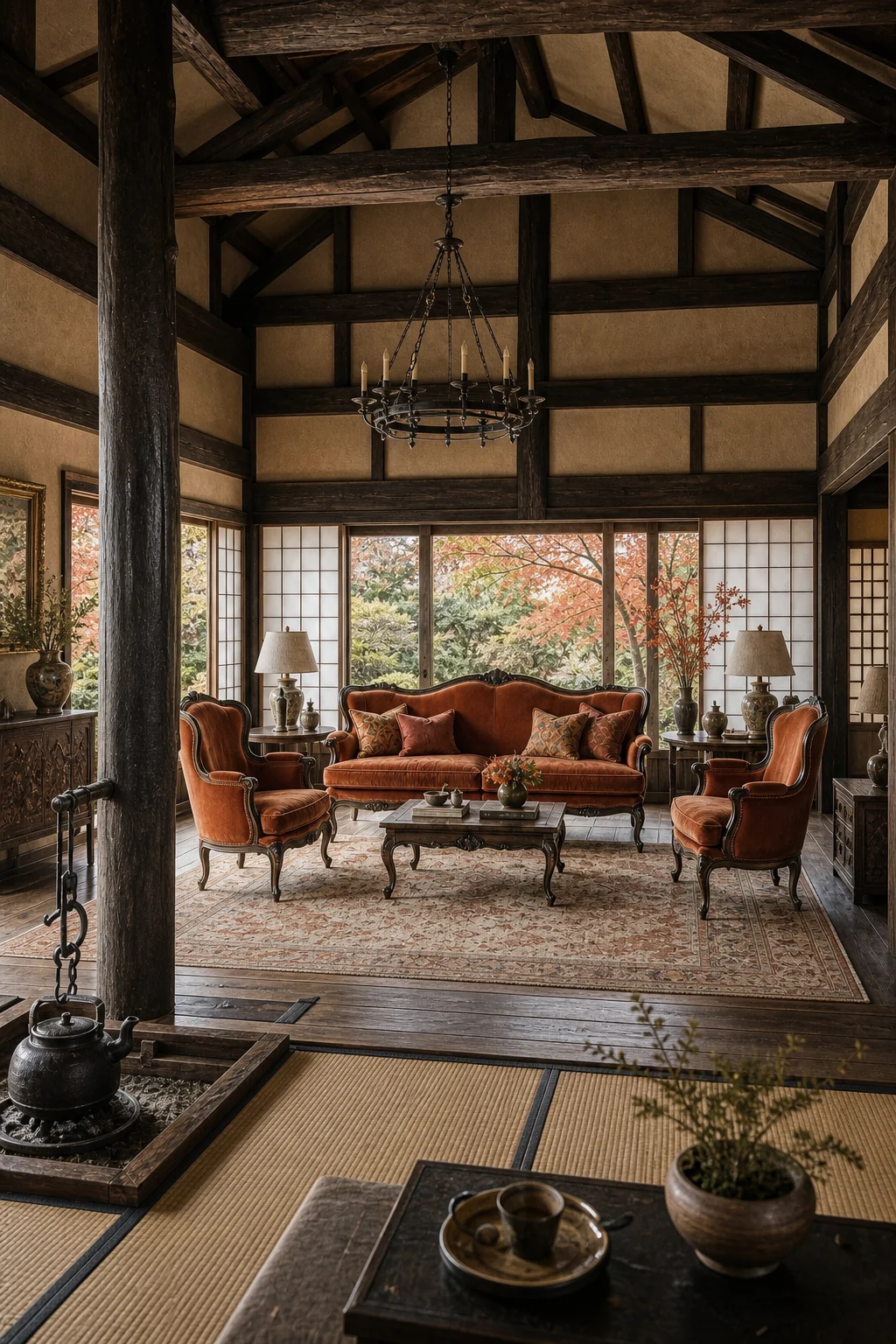
Success ultimately requires balancing the opposing visual weights perfectly. If the European furniture retains its original bright gold leaf, it will look completely out of place, resembling a wealthy tourist stranded awkwardly inside a quiet rural barn.
- Never use highly polished, reflective fabrics that actively fight the glowing, diffused shoji lighting.
- Avoid delicate, spindly side tables that simply cannot stand up to the heavy, massive timbers.
- Leave the earthen walls completely unpainted to preserve their essential raw and natural texture.